Gallery wall ideas become more interesting when the collection has something personal to say. A few photographs, original drawings or prints you enjoy can create a stronger display than a large set bought only to fill a rectangle. Begin with the pieces, then decide how the wall can support them.
This guide focuses on arranging framed art and pictures as a group. The layouts range from orderly grids to looser collections, with options for a sofa wall, a narrow section and a display that changes over time. Pick one organizing idea before mixing several, especially if this is your first gallery wall.
Measure the available wall around furniture, switches, doors and lights. Try the arrangement on the floor, photograph it, and test full-size paper outlines on the wall using a method suitable for the finish. The final hanging method needs to match the wall, frame, weight and product instructions; a good-looking mock-up does not establish that the fixing is suitable.
The images are original AI-generated decor concepts, not installation diagrams or photographs of completed client projects.
Compare Gallery Wall Ideas at the Actual Viewing Distance
Lay out the complete frames and photograph the group before testing paper outlines on the wall. Next, view it from the usual seat and the entrance rather than only close to the surface. For example, a faint small drawing can disappear inside a large mat even though the outer frame fits the plan. Keep the work you enjoy readable, then select the appropriate fixing separately from the temporary layout method.
Start with the collection and one organizing line
Choose a shared edge, center line or outer boundary to make the group readable. Measure the actual frame sizes, including mats and hanging positions. Look at the mock-up from the entrance and normal sitting position before making holes. Follow the instructions for each fixing and avoid assuming that removable strips work on every painted or textured surface.
When the frame sizes change, test the layout again
Keep the outside measurements of each frame with your layout photograph. Replacing an 8-by-10-inch picture with another of the same print size can still change the display if the new frame or mat is wider. Compare the complete frames before reusing the existing hanging positions. If you prefer to change pictures frequently without rehanging every frame, compare these picture ledge ideas. A ledge has its own depth, frame-fit, fixing and load requirements, so it is a separate display choice rather than an automatic substitute for every gallery wall.
1. Begin Gallery Wall Ideas With a Clear Six-Frame Grid
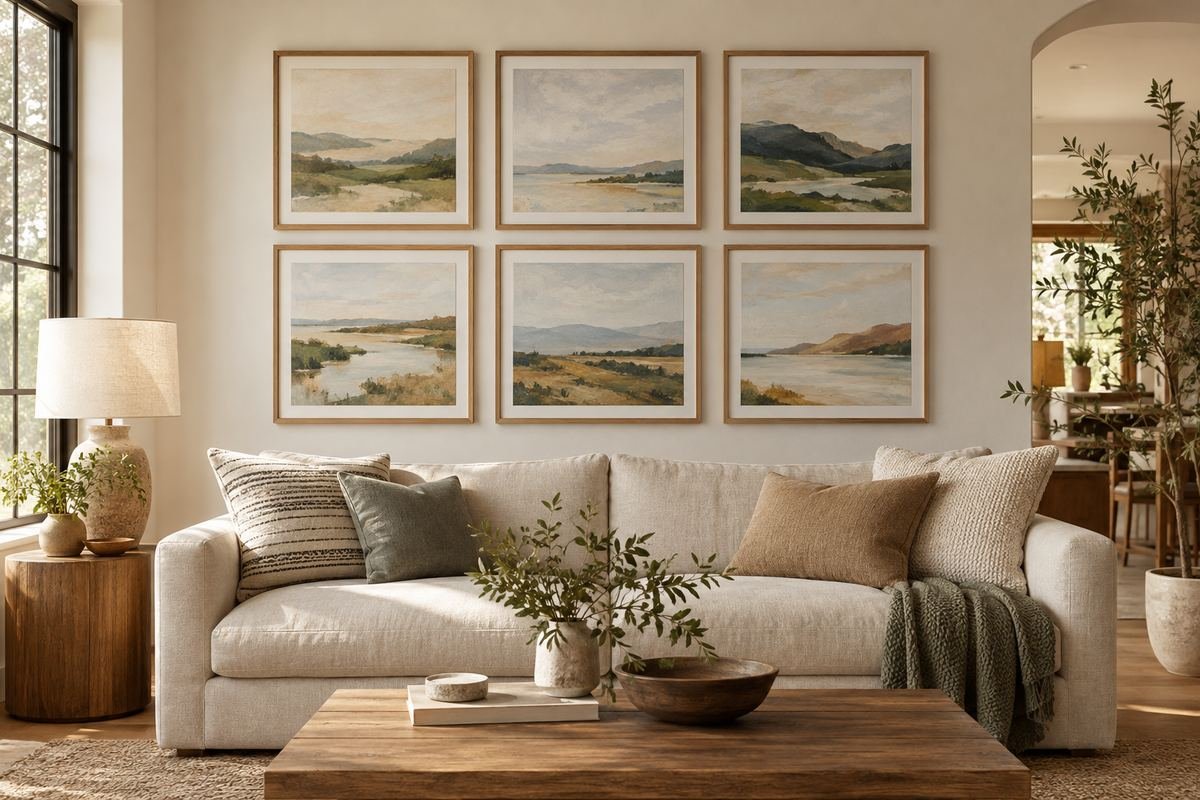
A two-by-three grid makes a clear starting point when the pictures share a format. Matching outside frame dimensions let the arrangement read as one group even when the photographs have different subjects.
Lay out all six before deciding on the gap. Check the total width against the furniture beneath it and keep the spacing consistent throughout; a small repeated discrepancy becomes noticeable across an orderly grid.
Practical tip: Measure the entire group, not just one frame.
2. A larger anchor with smaller companions

One substantial piece can give a mixed collection a center of attention. Arrange the smaller works around it so they support the main image instead of competing to become several separate focal points.
Try the largest frame slightly off-center and look at the visual weight on either side. The group can feel balanced without every frame being mirrored by an identical shape opposite it.
Practical tip: Let one piece lead the collection.
3. Black-and-white photographs in a quiet row

A shared monochrome palette can connect photographs from different places or dates. A single row suits a long wall where a large multi-row collection would feel too busy.
Compare the frames at their final size and keep a deliberate top or center line. Select photographs with enough difference in scale and subject that the repetition feels calm rather than like several nearly identical images.
Practical tip: Choose variety within the shared palette.
4. Family pictures with generous mats
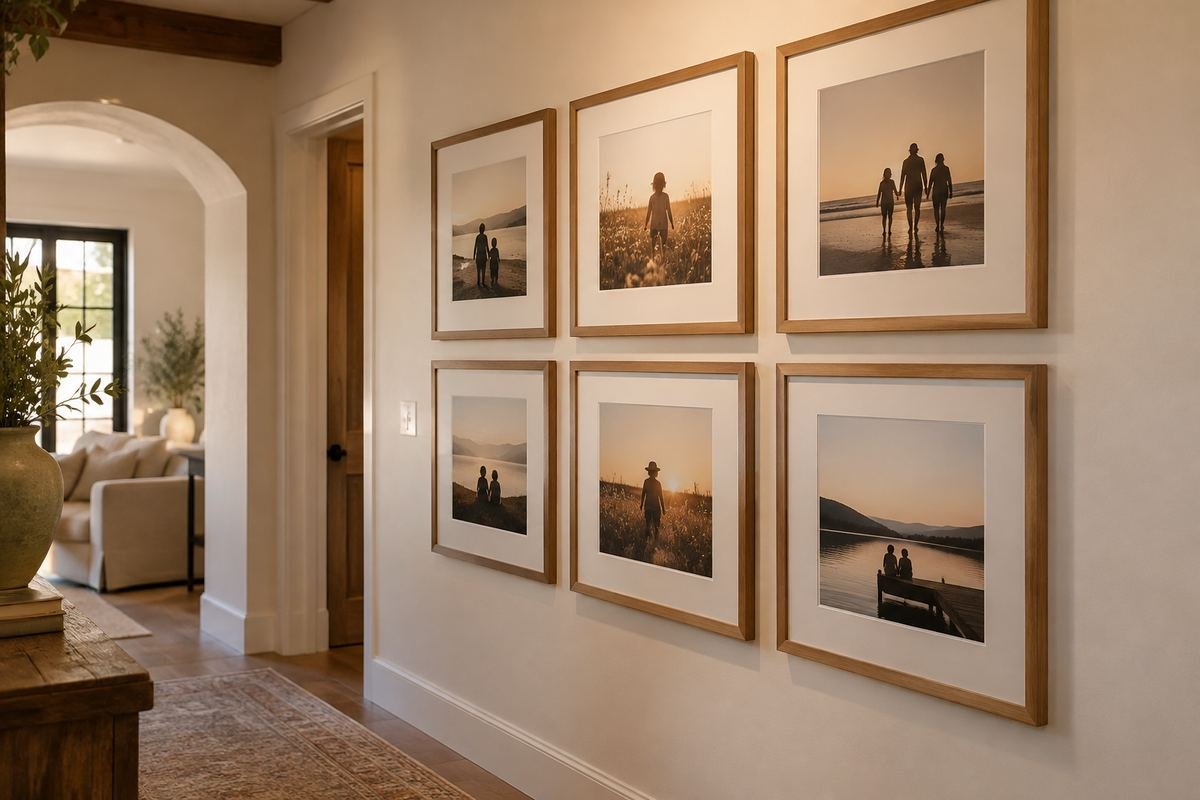
Wide mats can give small personal photographs room to breathe. Matching mats make a group feel considered while allowing the images themselves to remain informal and different.
Use copies for a display when the originals are valuable or fragile. Check the light exposure and choose framing materials appropriate to the pictures rather than placing irreplaceable prints where they receive harsh daily sunlight.
Practical tip: Display a copy when preservation matters.
5. A gallery aligned along its bottom edge

A shared lower edge can bring order to frames of different heights. It gives the eye one clear line while allowing the top of the collection to form a more relaxed silhouette.
Test the line in relation to the furniture and any nearby trim. Different frame depths can cast different shadows, so look at the group in the room’s evening light as well as during the day.
Practical tip: Use one strong line to organize varied sizes.
6. Organize Gallery Wall Ideas Along One Top Edge
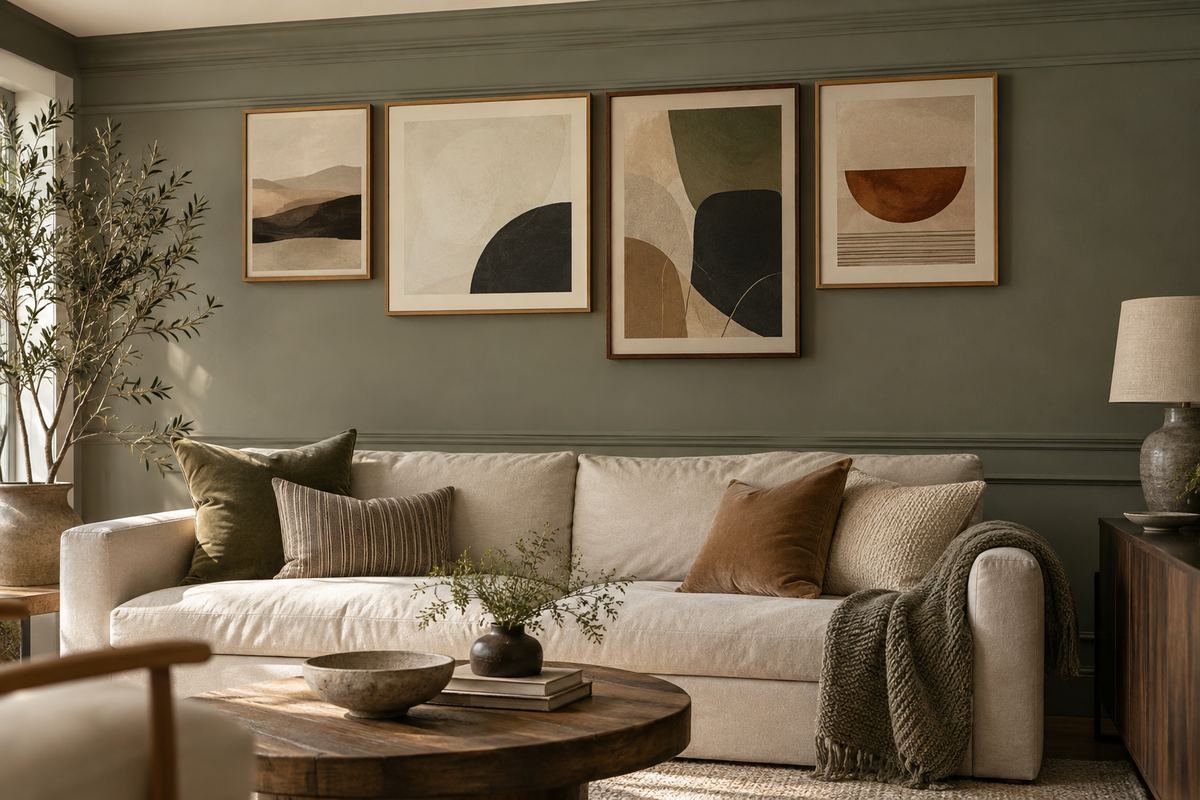
Aligning the top of the frames creates a clear ceiling for the group. It can work when a collection includes tall and short pieces but needs to sit neatly beneath an architectural line.
Check that the lower ends remain visually balanced. A single very tall frame may pull the arrangement downward, so trial the proportions before assuming that one shared edge solves every difference.
Practical tip: Look at both the top line and the lower outline.
7. A compact cluster for a narrow wall

A small wall can hold a complete collection when the frames are chosen for its actual width. A vertical cluster may work better than squeezing a wide arrangement between a doorway and a corner.
Include the door swing and trim in the mock-up. Leave switches and other access points usable, and check how the collection looks while walking through the space rather than viewing it only straight on.
Practical tip: Measure the usable wall between obstacles.
8. A horizontal group above the sofa

A low wide arrangement can relate naturally to the sofa beneath it. Keep the collection connected visually so it reads as one display rather than several separate pictures scattered across the room.
Check the arrangement from the usual seats and the entrance. Leave practical space around the furniture, and use suitable fixings so the art stays secure where people sit and move below it.
Practical tip: Judge the group from the seated position.
9. A two-column arrangement in a hallway
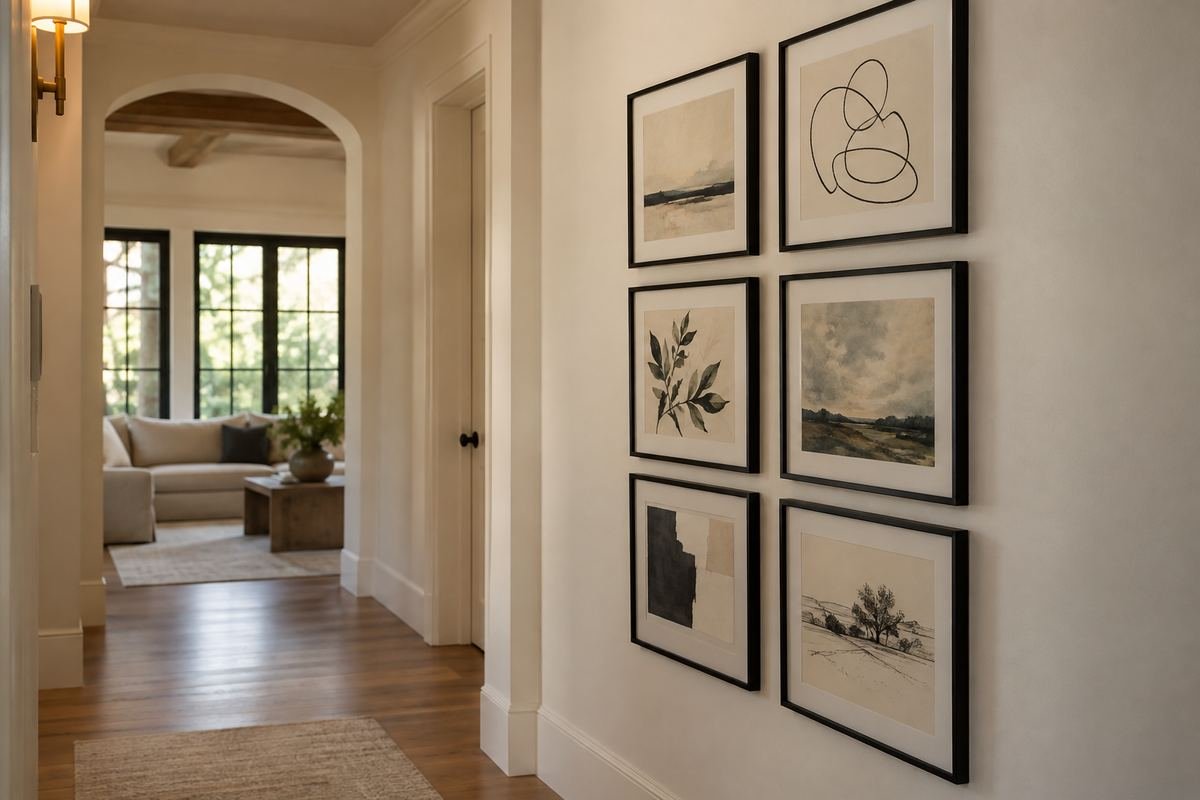
Two slim columns can create rhythm along a hallway without requiring oversized art. Repeating the frame widths helps the collection feel ordered in a space normally seen while moving.
Keep protruding frames and objects out of a tight walking route. Compare the display from both ends of the hall and make sure it does not compete with every doorway for attention.
Practical tip: Choose shallow frames for a narrow route.
10. A stair gallery that follows the rise

A stair wall can carry a collection along the direction of movement. Start with a coherent line through the group so the pictures relate to the staircase rather than hanging at unrelated heights.
Plan and install with appropriate access and professional help where needed. Do not improvise a platform on stair treads; the photograph shows an arrangement, not a safe method for reaching a high wall.
Practical tip: Resolve installation access before buying the frames.
11. A restrained palette of three colors

A limited palette can connect different subjects and frame sizes. Choose colors already present in a textile or furniture detail so the gallery has a relationship with the room.
Include some quieter images to give the stronger colors room. The palette should guide the selection without forcing every piece to contain all three colors in the same proportions.
Practical tip: Give the strongest color a supporting cast.
12. Connect Gallery Wall Ideas Through Wood Frames
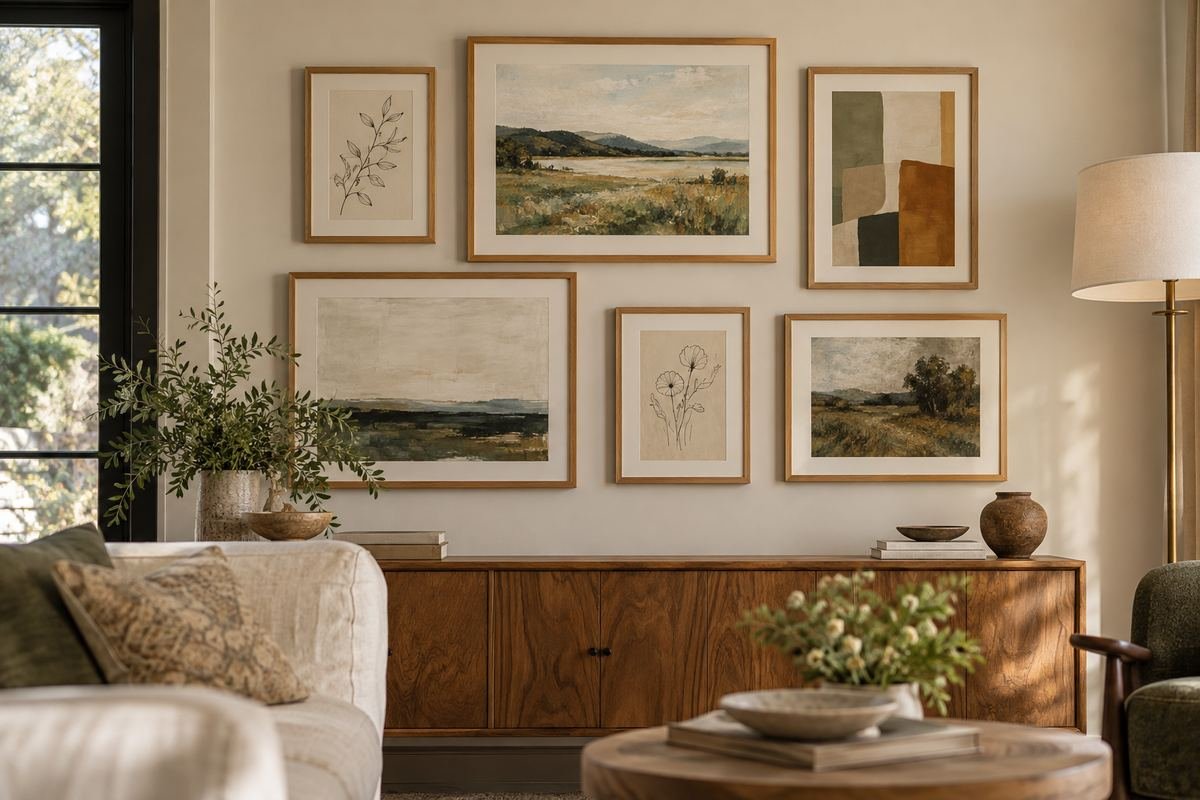
One wood family can unite a collection of drawings, photographs and paintings. Slight variation in profile can add interest while the repeated material keeps the wall visually connected.
Compare wood undertones in the actual room. A mix that looks harmonious online can appear very orange or gray beside the floor, so test a few frames before expanding the collection.
Practical tip: Compare the frames beside the room’s wood finishes.
13. Mixed frames with matching mats

Matching mat color gives mixed frames a shared quiet layer. It can help an inherited or gradually collected group feel deliberate without making every frame identical.
Let the artwork determine the mat opening and avoid trimming a valuable piece to fit a convenient frame. Check the complete group before ordering several mats in a color that may look different against the wall.
Practical tip: Choose mats after selecting the actual images.
14. A pair of rows with different frame sizes
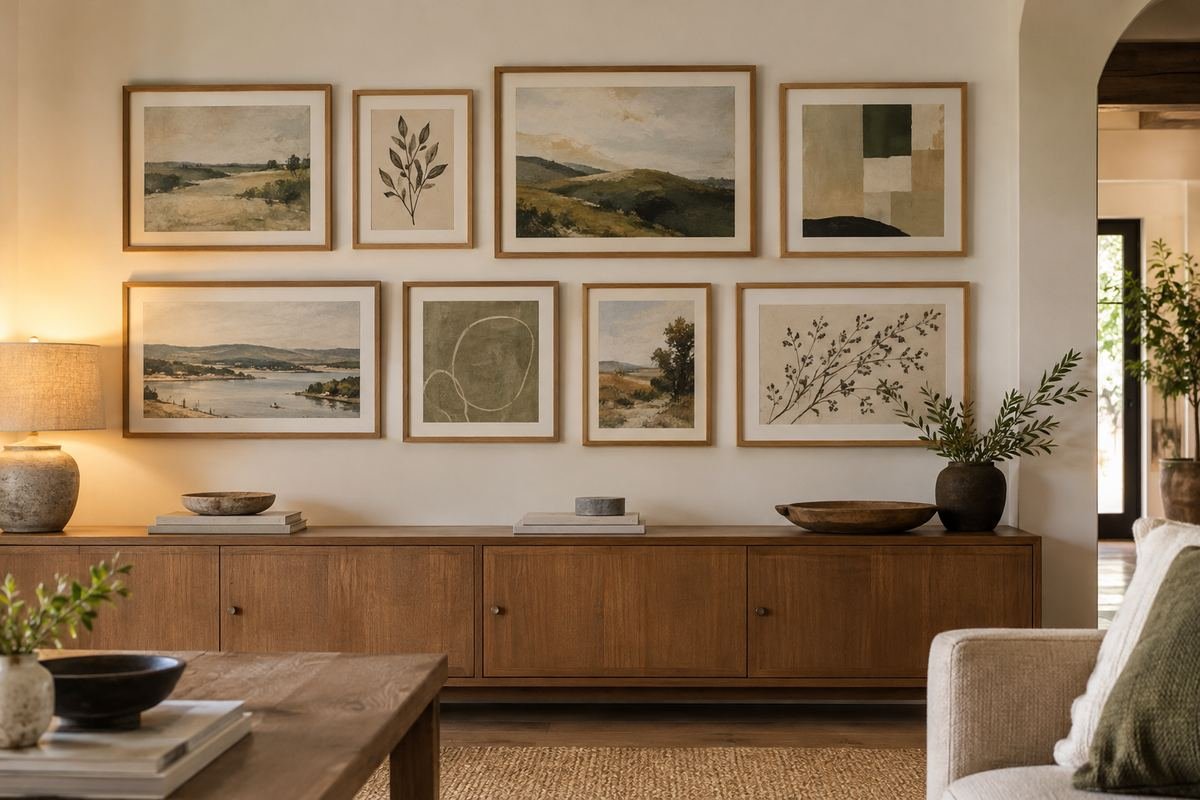
Two horizontal rows can organize a mixed collection while leaving room for variety. A repeated center line or shared gap between rows gives the display enough structure to feel settled.
Decide which edges matter before hanging. Trying to align every outside edge of differently sized frames can make the plan unnecessarily complicated and weaken the simple rhythm.
Practical tip: Choose the alignment rule before measuring.
15. Three generous pieces instead of many small ones

A gallery does not need to contain dozens of frames. Three substantial related works can provide a complete composition and may suit a room where small pieces would feel fussy.
Check the total width and frame weight before purchasing. A small number of large works still needs careful planning and appropriate fixings; fewer holes does not mean a lighter installation.
Practical tip: Compare the collective width with the wall.
16. A dense salon arrangement with a clear boundary
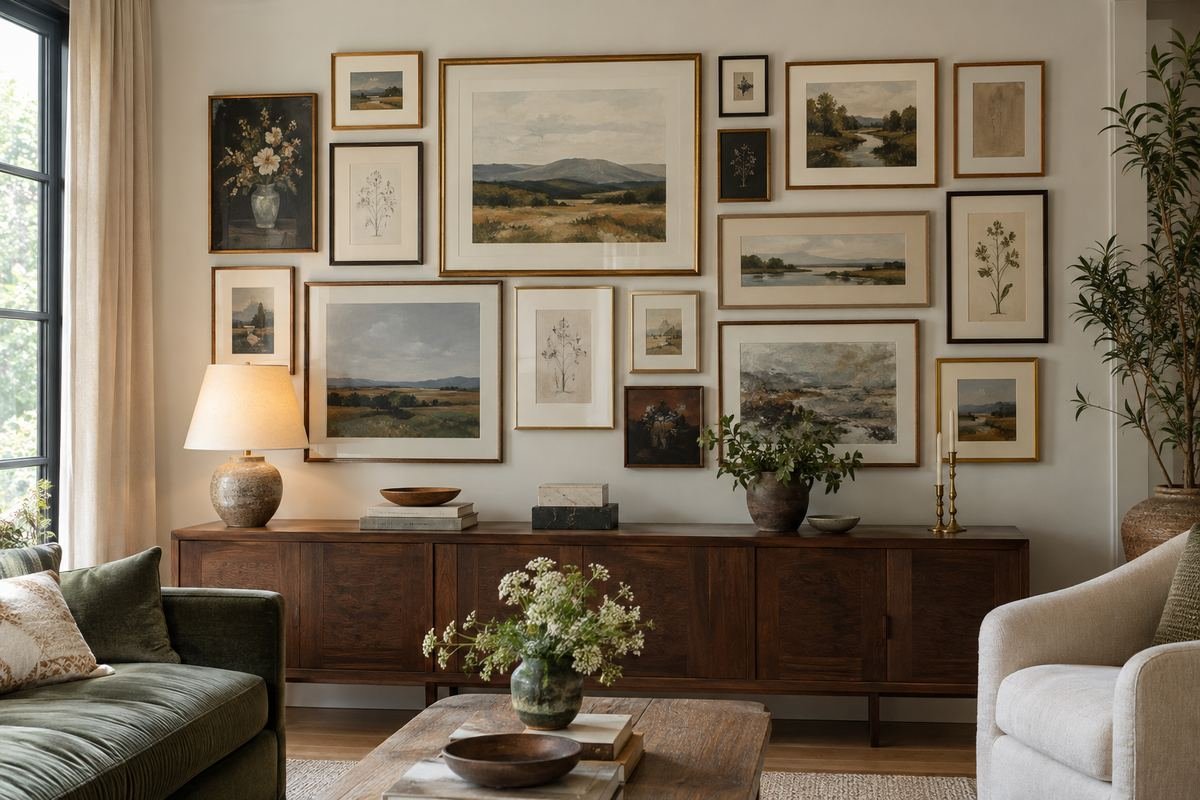
A fuller collection can feel intentional when its outside shape is considered. Let the frame sizes vary while keeping the whole group within an outline that responds to the wall.
Build the layout on the floor first and remove pieces that create awkward holes. Dense does not need to mean crowded everywhere; a little space around the entire group helps it read as a collection.
Practical tip: Edit the outline as carefully as the center.
17. A small group around one personal object

A meaningful flat object can become part of a picture collection when it is displayed appropriately. A framed textile sample or a small shadow box can introduce a different texture among paper works.
Consider the item’s weight, depth and preservation needs. Keep projecting pieces away from narrow routes, and use a display method intended to support the object rather than treating it like a lightweight print.
Practical tip: Check depth as well as frame size.
18. Make Changing Gallery Wall Ideas Easy to Maintain

A consistent frame format can make changing drawings feel like a considered family collection. Use copies or suitable mounts so different paper sizes can fit without cutting important parts of the work.
Choose frames that can be opened and secured appropriately when pictures change. Keep the display manageable; a small selection that rotates may be easier to enjoy than a wall packed with every drawing at once.
Practical tip: Make changing the artwork part of the plan.
19. Travel memories grouped by a shared place

A group of your own photographs and small paper memories can tell the story of a place. Select a few related colors or subjects to connect the collection without turning the wall into a crowded scrapbook.
Protect fragile pieces and avoid using original travel documents that contain private information. Copies and personal photographs can provide the memory while keeping sensitive details out of a public room display.
Practical tip: Use copies for delicate or personal documents.
20. Original line drawings with room between them

Simple drawings can suit a quiet room where a busy art palette would compete with the furniture. Generous negative space around the lines becomes part of the gallery’s visual rhythm.
Compare the size of the actual drawing with the mat and frame. A large frame does not always make a tiny faint drawing readable from across the room, so test the view from where it will be seen.
Practical tip: Test the artwork at the normal viewing distance.
21. A picture ledge for a flexible collection

A purpose-made ledge can support a changing small collection when installed and loaded as instructed. It allows a layered arrangement without a new hanging position for every frame.
Check the ledge depth, retaining lip and stated load, and follow guidance for securing frames where required. Avoid placing a heavily layered group above a bed or busy seating simply because the arrangement looks casual.
Practical tip: Treat a ledge as loaded furniture on the wall.
22. A gallery that leaves space for future pieces

A collection can begin with fewer frames than the wall could hold. Give the first group a complete shape while leaving an adjacent area where a later addition would make sense.
Photograph the current layout and note the frame sizes. Future pieces can respond to that structure, but there is no need to reserve empty nails or hang placeholder art you do not enjoy.
Practical tip: Let the collection grow at a natural pace.
23. A color-rich collection on a quiet wall

Bright art can bring energy to a neutral room without changing the wall finish. Use a restrained framing approach so the pictures provide the color while the edges remain visually calm.
Look for a relationship among the images rather than matching every shade. A shared warmth, recurring shape or similar balance of strong and pale areas can be enough to connect a varied group.
Practical tip: Connect the images through more than exact color matches.
24. A compact gallery above a home-office cabinet

A small art group can give a work area personality without crowding the desktop. Position the collection where it can be enjoyed from the room while keeping practical storage access clear.
Consider video-call backgrounds, light reflections and cabinet doors when choosing the layout. Avoid highly reflective glazing directly opposite a bright window if it makes the art difficult to see during the hours you use the room.
Practical tip: Test the group during normal working hours.
25. Test Gallery Wall Ideas With Full-Size Templates

Paper outlines make it easier to judge the total arrangement before committing. Include every frame’s outside dimensions so the mock-up shows the actual occupied wall rather than just the image area.
Use a temporary attachment method suitable for the finish and mark hanging positions accurately from the frames. Once the layout works, choose and install the real fixings according to their instructions and the wall conditions.
Practical tip: Separate the layout test from the fixing decision.
Frequently Asked Questions
How do I keep a gallery wall from looking random?
Choose one clear organizing element, such as a repeated frame finish, a common image palette or an aligned edge. Test the entire group together rather than hanging isolated pieces one at a time without a plan.
Do the frames have to match?
Matching frames are one useful option, especially for a grid. Mixed frames can work when another feature connects the collection, such as a small color palette, similar mats or a shared theme in the images.
Can I hang a gallery wall with removable strips?
Check the exact strip and frame instructions, the wall surface and the supported weight. Suitability varies, and wallpaper, heavily textured walls or unsuitable finishes may be excluded. Extra strips do not automatically raise the stated product capacity.
Choose the Details That Work in Your Home
Lay out a small group you enjoy, decide what connects it and test the full-size arrangement. Add only the pieces that improve the collection. A gallery wall can grow with your home without needing to fill every available inch on the first day.
For related ideas, explore Dining room wall decor ideas, Wall ideas for different rooms, Accent wall ideas.
Planning References
IKEA picture wall planning ideas; Command picture-hanging instructions; Command frequently asked questions. Follow the instructions for the exact products you choose.
Optional digital guide for this topic
If you prefer a structured workbook, explore this related paid guide.