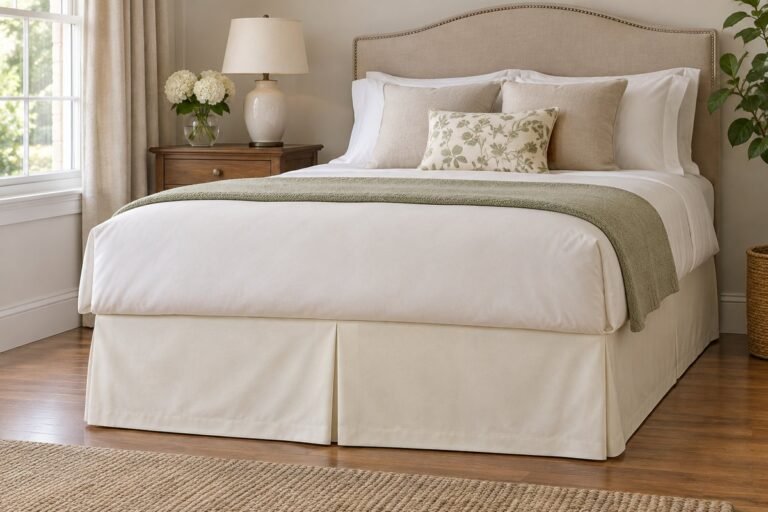
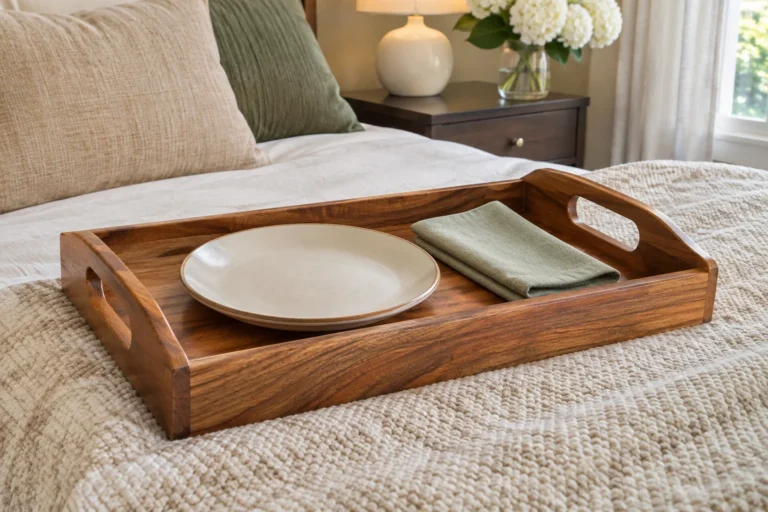
Useful nightstand organization ideas give each nightly essential a predictable place while leaving enough clear surface to put something down. Begin with what is used beside the bed, then decide which objects belong on top, in a drawer or elsewhere in the room. A larger collection does not automatically need a larger table.
These 23 arrangements focus on organizing existing adult bedside furniture. They are alternatives for different belongings and routines, rather than instructions to fill one nightstand with every suggested container. Keep lighting and charging equipment in their intended positions according to their instructions, and store medicines or other items requiring secure storage appropriately elsewhere.
Contents
- 1. Limit the top tray to the current nightly group
- 2. Divide a shallow drawer into a few open compartments
- 3. Give the glasses case a full-length slot
- 4. Keep a notebook and pen along one clear edge
- 5. Use a short upright file for active books
- 6. Separate an e-reader from a paper-book stack
- 7. Put frequently used remotes in one front compartment
- 8. Reserve a small spot for the closed earbud case
- 9. Keep soft sleep accessories in a loose pouch
- 10. Contain hair ties in one small lidded box
- 11. Use separate soft positions for small jewelry
- 12. Fit the tissue package into its intended space
- 13. Keep one current care item upright in a washable insert
- 14. Store disconnected spare cables in a separate pouch
- 15. Give an unplugged phone a dedicated landing place
- 16. Compare a tiered accessory tray by height as well as footprint
- 17. Use a removable upper insert only in an intended two-level system
- 18. Choose a shelf bin that pulls out without scraping
- 19. Divide a shared surface by the users' actual belongings
- 20. Leave a guest tray mostly empty on purpose
- 21. Use one visible cue when similar boxes hide different contents
- 22. Test drawer travel with the top arranged normally
- 23. Make the reset one simple return movement
Sort by the movement you make at bedtime
Place the usual non-sensitive belongings on a separate clear surface and divide them into nightly use, occasional use and items that belong elsewhere. Try reaching the nightly group while sitting in bed with the bedding arranged normally. Measure the usable tabletop around the lamp base and the drawer's inside width, depth and closing height. Handles, runners and a sloping back can reduce the space that a rectangular organizer appears to have.
Choose an arrangement that fits your situation
- Small objects scatter across the top: Define one modest nightly group in a shallow accessible tray
- The drawer closes only when items are pressed down: Measure filled height and choose lower inserts or fewer contents
- Books hide small electronic devices: Separate their return positions and keep only active reading material
- Two people share one surface: Give each a small clear position while retaining shared access
- The room is used by guests: Leave useful empty surface and a genuinely available compartment
1. Limit the top tray to the current nightly group

A tray works best when it defines a small working collection rather than becoming a second crowded tabletop. Place the glasses case and one other regular essential inside, leaving surrounding surface visible. Choose its size from those actual objects. If the tray repeatedly overflows, move occasional supplies to the drawer before replacing it with a larger catch-all.
2. Divide a shallow drawer into a few open compartments

A small set of separate inserts can stop loose objects sliding into one mixed pile. Begin with two or three groups and leave a little space to lift an insert out. Compare the filled height with the drawer's closing clearance. Equal-size compartments are unnecessary when the contents include a long case, a small pouch and a notebook.
3. Give the glasses case a full-length slot
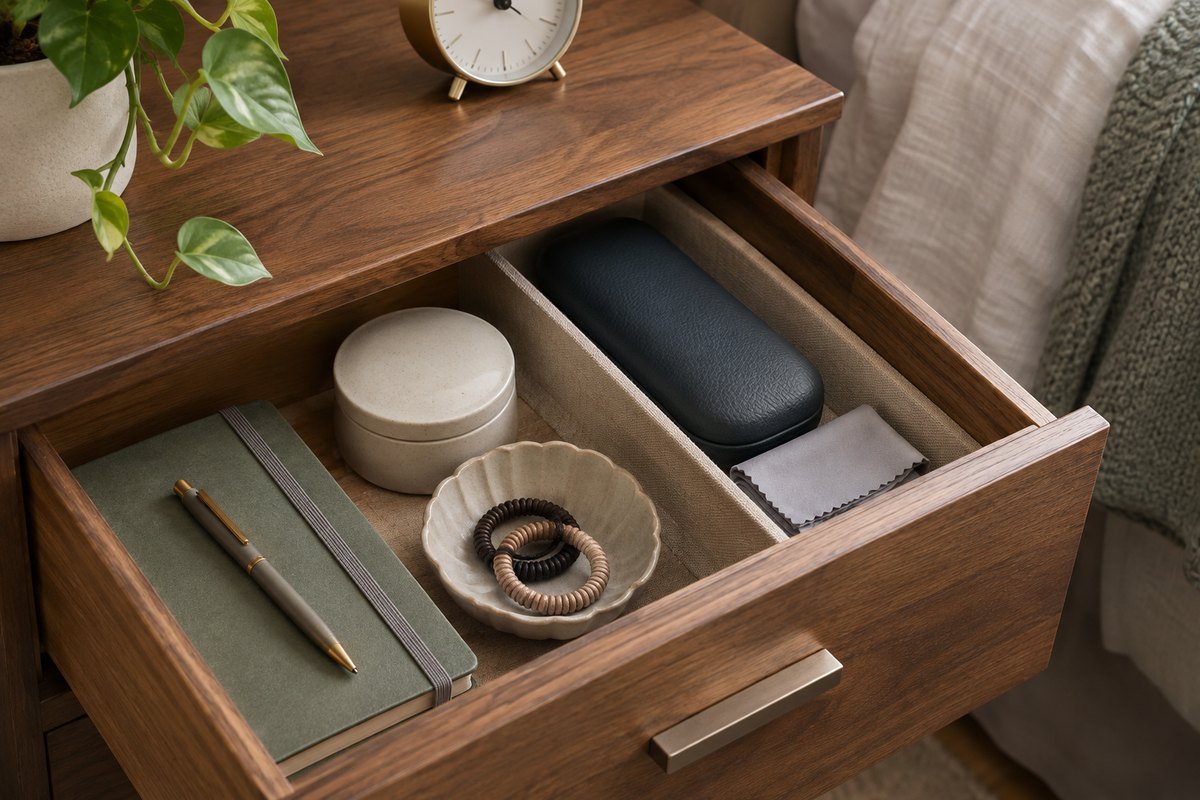
A long narrow position can make a case easy to locate without placing bare lenses among jewelry and pens. Check its opening movement as well as its closed length. Put the case where it can be lifted directly instead of wedging it beneath another organizer. Keep care accessories appropriate to the eyewear together without treating a decorative tray as protective packaging.
4. Keep a notebook and pen along one clear edge
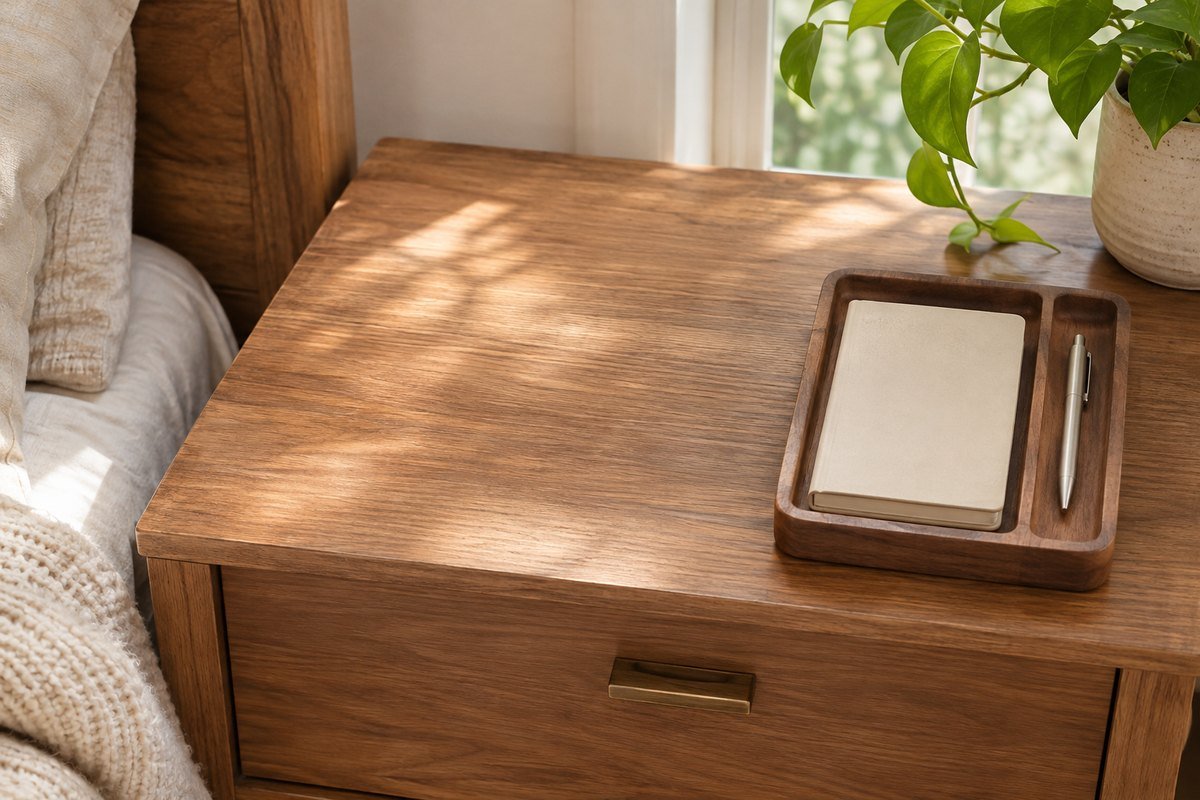
A slim notebook can occupy a flat lane rather than forming the bottom of a miscellaneous stack. Place its pen in a separate narrow recess so it does not roll beneath the bed. Check that the notebook can come out without moving the lamp. A larger stationery reserve belongs elsewhere if only one book and pen are used here.
5. Use a short upright file for active books

An upright position can make two current books easier to remove than the bottom volume of a tower. Choose a holder that supports them without leaning into a lamp or off the furniture edge. Keep the collection short enough to grasp one book directly. Finished books can return to the main bookcase so the bedside group remains a working selection.
6. Separate an e-reader from a paper-book stack

A slim device can disappear beneath a large paperback even when both belong to the same reading routine. Give it its own accessible position or a purpose-designed stand, with the screen protected as appropriate. Compare the stand's base and access with the case fitted. This position is for storage; charging and device operation still follow the equipment's actual instructions.
7. Put frequently used remotes in one front compartment

A short dedicated compartment keeps the current controls from scattering across the tabletop. Choose a depth that leaves them visible and enough clearance to grip the sides. Avoid stacking controls so the lower one requires emptying the holder. Keep spare parts and replacement batteries in the appropriate separate storage rather than mixing them into the working group.
8. Reserve a small spot for the closed earbud case

A compact case is easy to lose in a large drawer. A small front insert can make its return position obvious without needing a deep organizer. Compare the lid's opening path and keep the case fully supported. This arrangement stores the closed case; it does not establish that a confined container is suitable for charging electronic equipment.
9. Keep soft sleep accessories in a loose pouch

A soft pouch can separate a sleep mask or similar textile from hard objects. Choose one that is easy to open and does not compress the contents into an awkward bundle. Keep the pouch for the current clean working item rather than every spare. The accessory's care instructions determine how it is cleaned and stored between uses.
10. Contain hair ties in one small lidded box

A low box can stop a modest group of hair accessories spreading through the drawer. Keep the lid simple to open and leave enough space above it if it stays in the compartment. Move surplus accessories to their main storage. The small container gives one category a boundary without turning the bedside into a full dressing station.
11. Use separate soft positions for small jewelry

A removable insert can keep a ring and watch from becoming tangled with other belongings. Compare the lining and instructions with the materials of the pieces being stored. Keep the collection small and use appropriate secure storage when needed. A decorative dish is a convenient landing position, not proof of scratch protection or a substitute for a jewelry-care recommendation.
12. Fit the tissue package into its intended space

A tissue box can occupy a substantial part of a narrow top. Compare the package or cover's complete outside dimensions with the remaining landing space. Keep the opening unobstructed and test taking a tissue without dragging the box over another object. Choose a cover only when it improves the arrangement; another decorative shell can increase the footprint considerably.
13. Keep one current care item upright in a washable insert

A single closed lotion container or similar ordinary item can have a defined upright position if it belongs to the bedtime routine. Keep it separate from paper and electronics and follow its storage directions. Choose an insert whose care method suits both the container and furniture. A large back-up collection is better kept in its appropriate main storage.
14. Store disconnected spare cables in a separate pouch

Spare leads can be grouped loosely by their actual connectors rather than threaded through a tray of unrelated objects. Keep only the useful, undamaged spares and leave the working charging setup in its intended ventilated position. An organizer for disconnected storage is not a charging enclosure. Put obsolete parts elsewhere for appropriate handling instead of keeping them indefinitely beside the bed.
15. Give an unplugged phone a dedicated landing place

A defined spot can keep a phone from ending up beneath a book or pillow. Test the holder with the actual case and check how easily the phone is removed. Choose a stable position fully within the furniture surface. If the device is charged here, follow its maker's charging instructions rather than assuming that every decorative phone holder is an approved charger.
16. Compare a tiered accessory tray by height as well as footprint

A tall organizer can separate small objects vertically while occupying little tabletop width. Check comfortable reach into each tier and the view from the pillow before choosing it. Yamazaki's cited four-tier example is 32.5 centimeters tall despite its narrow base. That measurement illustrates why the complete volume matters; it is not a recommendation that every bedside needs a tall accessory tower.
17. Use a removable upper insert only in an intended two-level system

A shallow lift-out tray can separate nightly items from occasional supplies below when the organizer is designed for that arrangement. Keep the upper part light enough to handle comfortably and provide a clear place to put it during access. Avoid balancing unrelated boxes over a drawer. If lifting the tray becomes a daily obstacle, keep the active group on one level instead.
18. Choose a shelf bin that pulls out without scraping

A low bin can define a small category on an open lower shelf. Measure the clear opening around legs and braces, then check the filled removal route. Leave enough room for a hand instead of choosing the widest possible box. The container should come out directly without moving the table or catching on bedding beside it.
19. Divide a shared surface by the users' actual belongings

One bedside surface between two guest beds may need two modest return positions. Separate the groups with two small trays or an intended divided insert, leaving shared controls accessible. Match the available area to the people using it rather than dividing every compartment equally. Each side should be able to take an item without disturbing the other person's collection.
20. Leave a guest tray mostly empty on purpose

A guest needs space for belongings that arrive with them. Offer a clear landing area with perhaps a blank note card and pen, then leave the rest available. Keep personal reserves out of the drawer intended for visitors. An empty usable compartment often contributes more than a display of objects the guest must relocate before unpacking.
21. Use one visible cue when similar boxes hide different contents

Two identical closed containers can create repeated searching. A small removable marker or contrasting front detail can distinguish their categories without a complex labeling system. Keep the cue easy for the household to understand. If only one box is needed, skip the extra identifiers rather than buying several containers to make a coordinated display.
22. Test drawer travel with the top arranged normally

The filled organizer should still work when the bed is dressed and the nightstand is in its everyday position. Open the drawer fully, remove the longest object and close it without shifting nearby furniture. A shallow organizer can be too tall once a case is added. Reduce its size or change the grouping when the routine depends on pressing objects down.
23. Make the reset one simple return movement
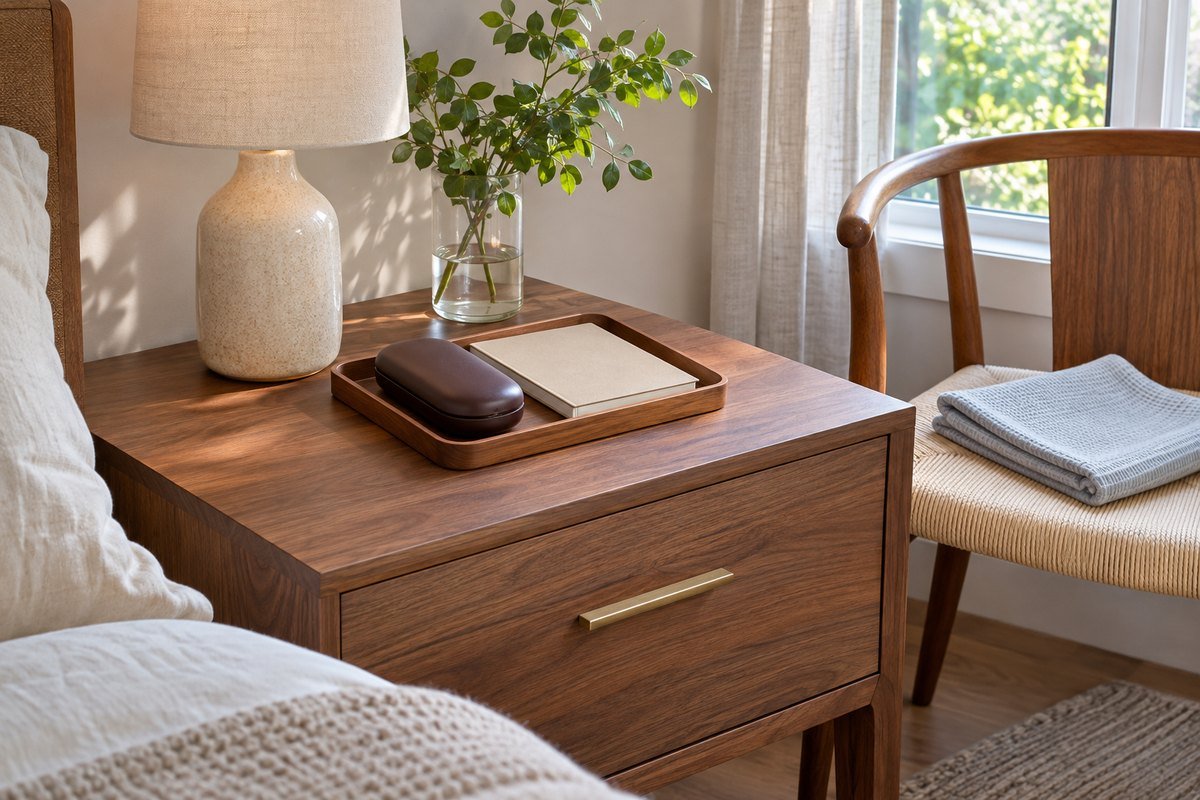
Keep only the items that earn their place through regular use. After an ordinary night, return each object to its defined position and move unrelated papers or spare supplies elsewhere. Choose small groups that lift out for cleaning according to the furniture and organizer instructions. When the reset requires dismantling a display, simplify the collection before adding another organizer.
Draw a bedside return map before ordering inserts
Trace the usable tabletop and drawer interiors on paper. Draw the lamp footprint and mark anything that must remain unobstructed. Lay the actual nightly objects over the sketch and give each a direct removal route. For a hypothetical drawer with 12 inches of usable width, inserts 4 inches and 6 inches wide would leave 2 inches before accounting for their actual outside walls, imperfect corners or fitting tolerance. Measure the products' outside dimensions and the drawer itself; the arithmetic is a planning example, not a promise of fit.
Height deserves its own entry. IKEA's cited TAVELAN set lists both trays at 3 3/8 inches high in its product-inclusion details, which may rule them out for a shallow drawer even when the widths fit. Distinguish those product dimensions from package measurements. Yamazaki's cited tiered tray lists a 32.5-centimeter total height and 7.5-centimeter space between shelves. Compare the complete organizer with the actual glasses case and retrieval movement. Keep the map for future changes so the nightstand stays organized around its contents rather than around a matching set of boxes.
A practical next step
Organize the nightstand around the objects actually used there and the movements needed to reach them. A clear return position, a drawer that closes easily and some empty surface form a more useful bedside than a crowded collection of coordinated containers.
For the surrounding room, small nightstand ideas when the furniture itself needs to change. Desk cable management for the room's working area.
The images are original AI-generated design concepts, not photographs of tested products or verified installations.
Sources and care references
- IKEA: TAVELAN 504.657.56 product-inclusion dimensions and care
- Yamazaki: Tower four-tier accessory tray dimensions and shelf spacing
Optional digital guide for this topic
If you prefer a structured workbook, explore this related paid guide.