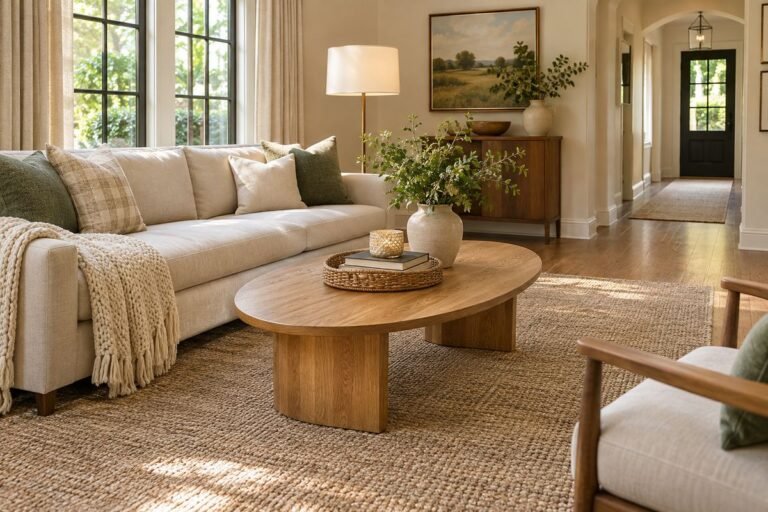
Nesting tables are useful when a room needs more than one surface occasionally but cannot spare the same floor area all day. The important question is where each table goes when it is being used. A beautifully nested pair can still create an awkward passage when the smaller table is pulled out.
These arrangements consider the parked position, the working position and the move between them. Choose tables intended to fit together, and check their actual instructions. Similar finishes or a lower height do not by themselves prove that two unrelated tables can nest.
Contents
- 1. Park a round pair beside the sofa arm
- 2. Use a square pair against straight furniture
- 3. Choose a narrow rectangular pair for an end position
- 4. Use low nesting tables as a flexible coffee-table group
- 5. Give two chairs a table each when guests arrive
- 6. Place the parked pair outside a sectional's open end
- 7. Choose a set with an accessible lower shelf
- 8. Use the small table for a temporary reading surface
- 9. Keep the nesting direction away from a tight passage
- 10. Let a pale finish blend with a small room
- 11. Use dark metal for a clear outline
- 12. Connect warm wood to the surrounding furniture
- 13. Choose contrast between the two surfaces deliberately
- 14. Check transparent tops from the seated viewpoint
- 15. Give each table a simple everyday role
- 16. Keep a guest-use table easy to retrieve
- 17. Let a small apartment keep one adaptable surface group
- 18. Keep cabinet doors independent from the table pair
- 19. Plan the pair around a rug's actual edge
- 20. Keep the smaller piece useful when fully nested
- 21. Compare lifting with sliding before deciding
- 22. Keep a plant on the part that normally stays parked
- 23. Use nesting tables beside a sofa bed thoughtfully
- 24. Finish by returning the whole arrangement
Measure both arrangements before choosing a set
Record each tabletop, the legs' complete footprint and the space needed to slide or lift the smaller table out. IKEA's LACK and SONHULT product descriptions show that sets can be used in different combined and separated arrangements; that flexibility remains model-specific. Follow the chosen set's care and assembly guidance. Tables should serve as tables, rather than improvised seats or steps.
Compare the storage or placement options
- Mostly one surface needed: Choose a parked pair whose smaller table can be retrieved comfortably when required.
- Two regular seating positions: Compare both table heights and their full deployed footprints.
- Rug boundary nearby: Check complete support for every foot in each normal position.
- Guest bed or recliner: Map the furniture's full movement and a temporary parking position.
1. Park a round pair beside the sofa arm
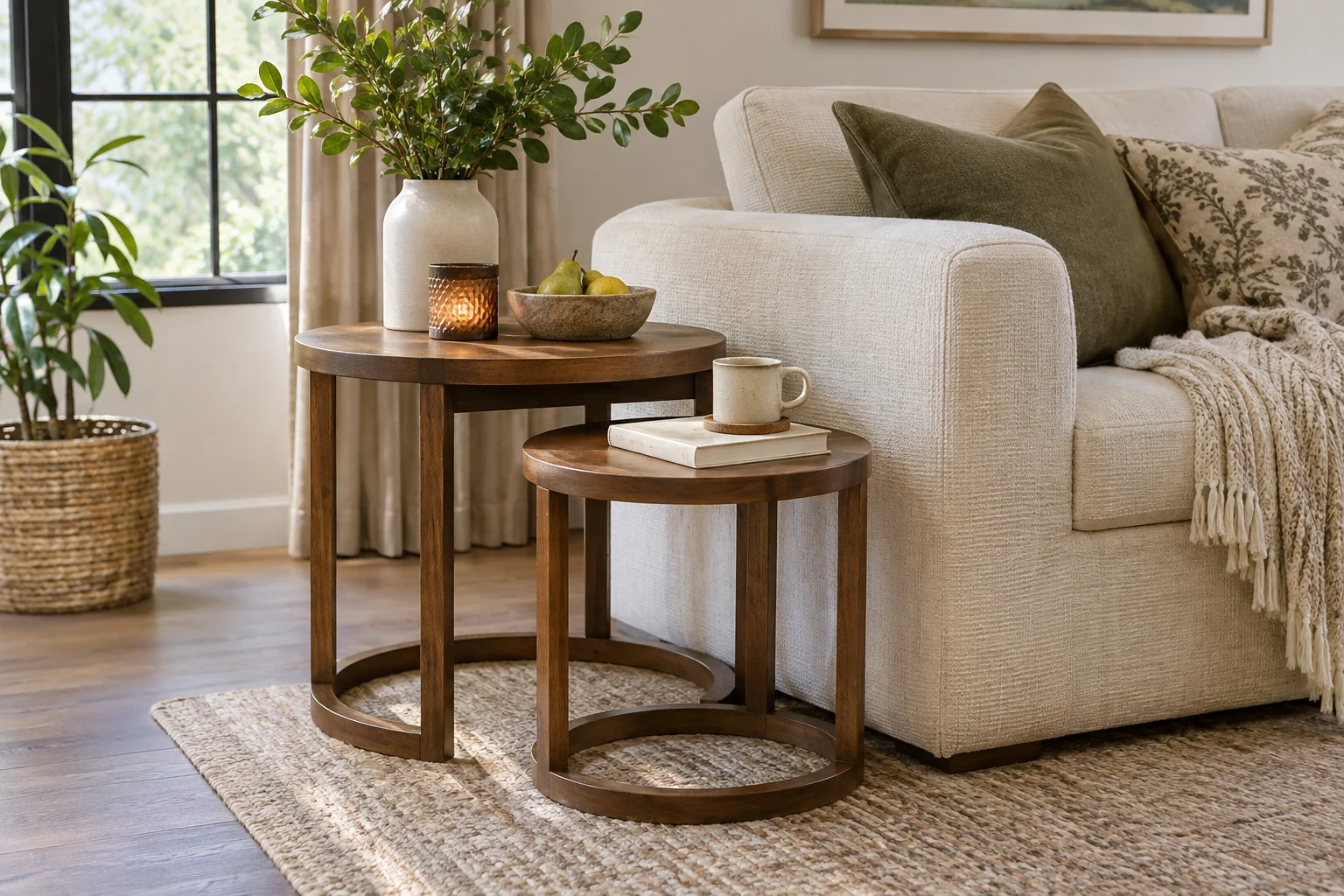
Round nesting tables can make a quiet end-of-sofa arrangement when both bases fit outside the normal approach to the seat. Keep the smaller table accessible from the side you will actually use. Pull it out with the sofa and nearby furniture occupied. A shape that looks soft and compact in a product photograph still needs a complete working footprint in your room.
2. Use a square pair against straight furniture

A square set can relate neatly to a boxy sofa or low cabinet. Align it loosely with the furniture, then leave room for the smaller table to move without scraping its neighbor. Check the corners in the deployed arrangement as well as the nested one. Avoid choosing the set by the largest tabletop alone; the legs and lower rails may determine the real nesting space.
3. Choose a narrow rectangular pair for an end position
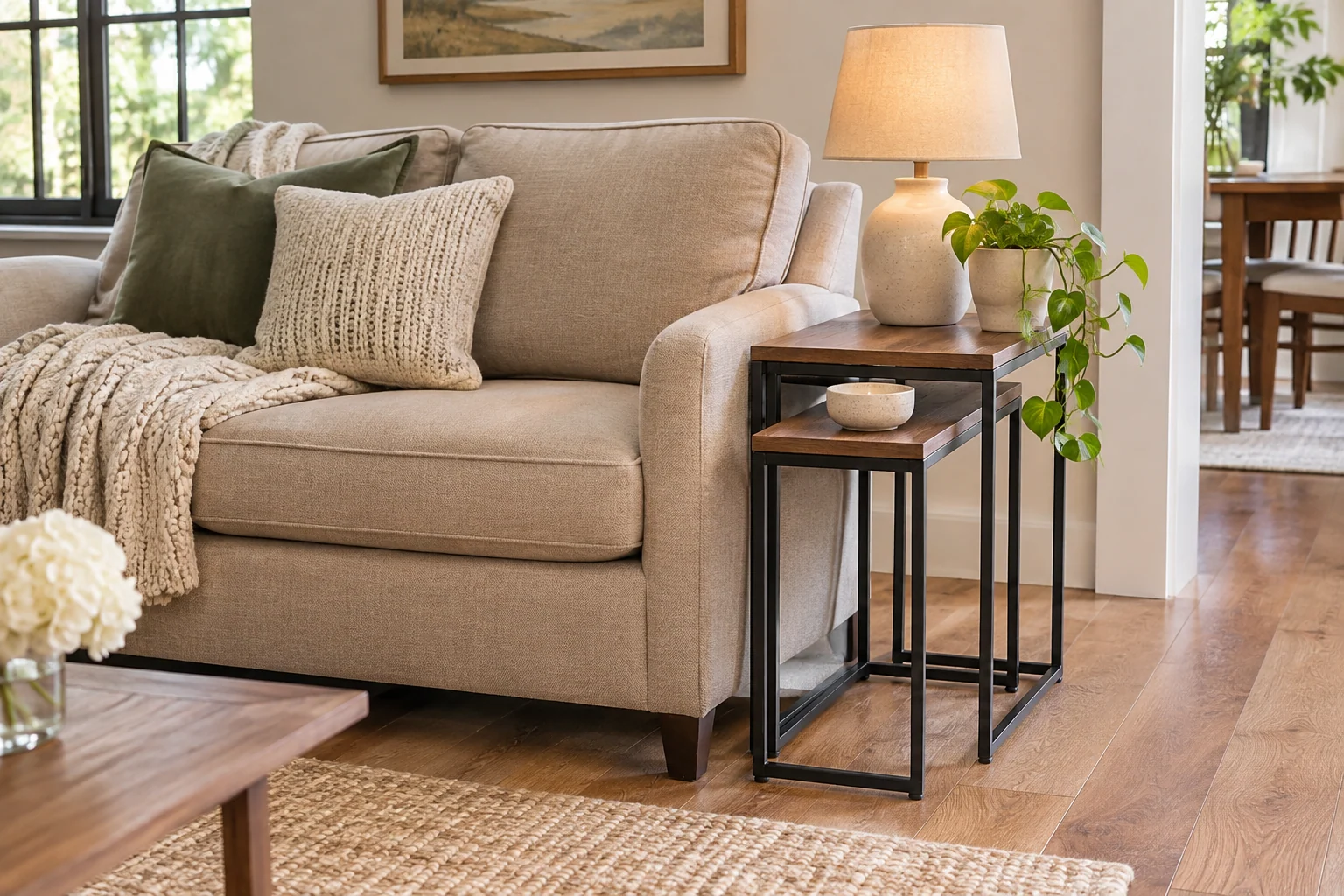
A rectangular set may provide a useful length of surface without the depth of a large square table. Orient it around the seat and passing route rather than automatically against the wall. Test where the small table lands when pulled out. The longer top should remain fully supported in its intended configuration, without bridging two separate tables to imitate a single surface.
4. Use low nesting tables as a flexible coffee-table group
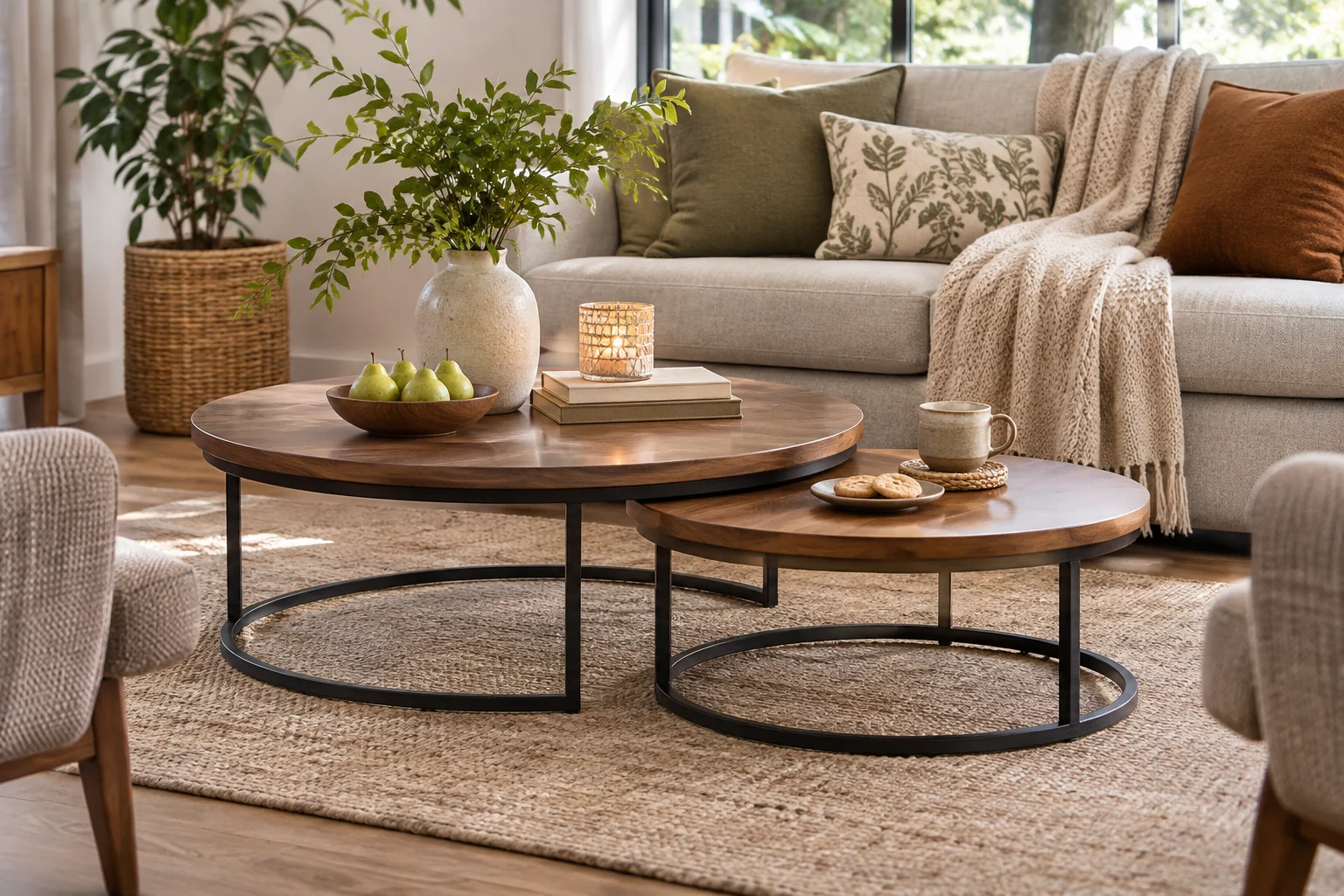
A low pair can create a central surface that changes with the seating arrangement. Position the larger table for ordinary use, then decide when the smaller one is needed. Keep each stable in its own intended footprint. This arrangement suits a room that genuinely benefits from two movable surfaces; a single larger table may be simpler when the pair would always stay fully spread.
5. Give two chairs a table each when guests arrive
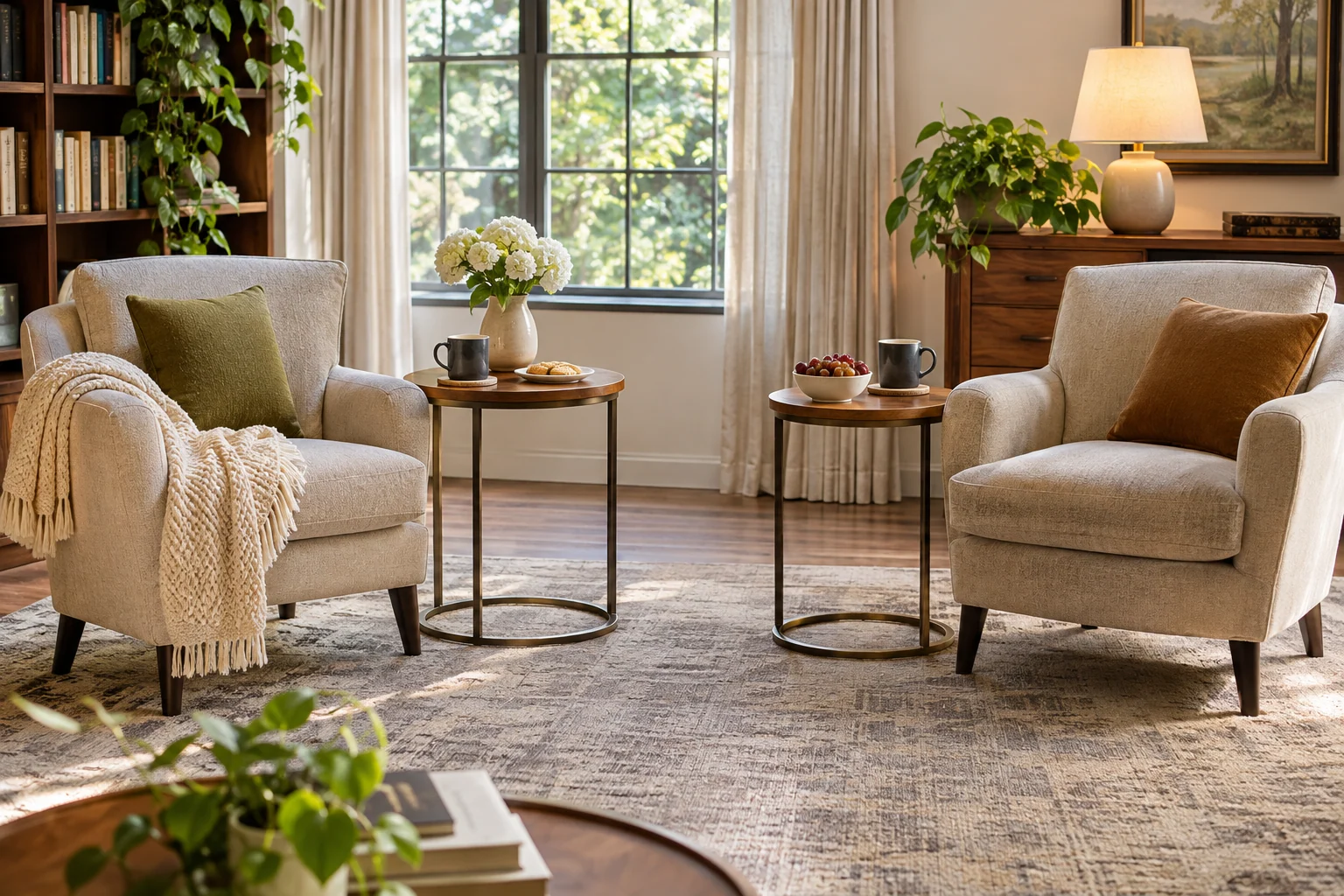
A nested set can serve one chair most days and separate into two surfaces for conversation. Check the height and reach from each seat so the second table does not become a low obstacle at someone's feet. Keep the move simple and preserve a home for the pair afterward. Furniture that is easy to return is more likely to retain its intended flexibility.
6. Place the parked pair outside a sectional's open end
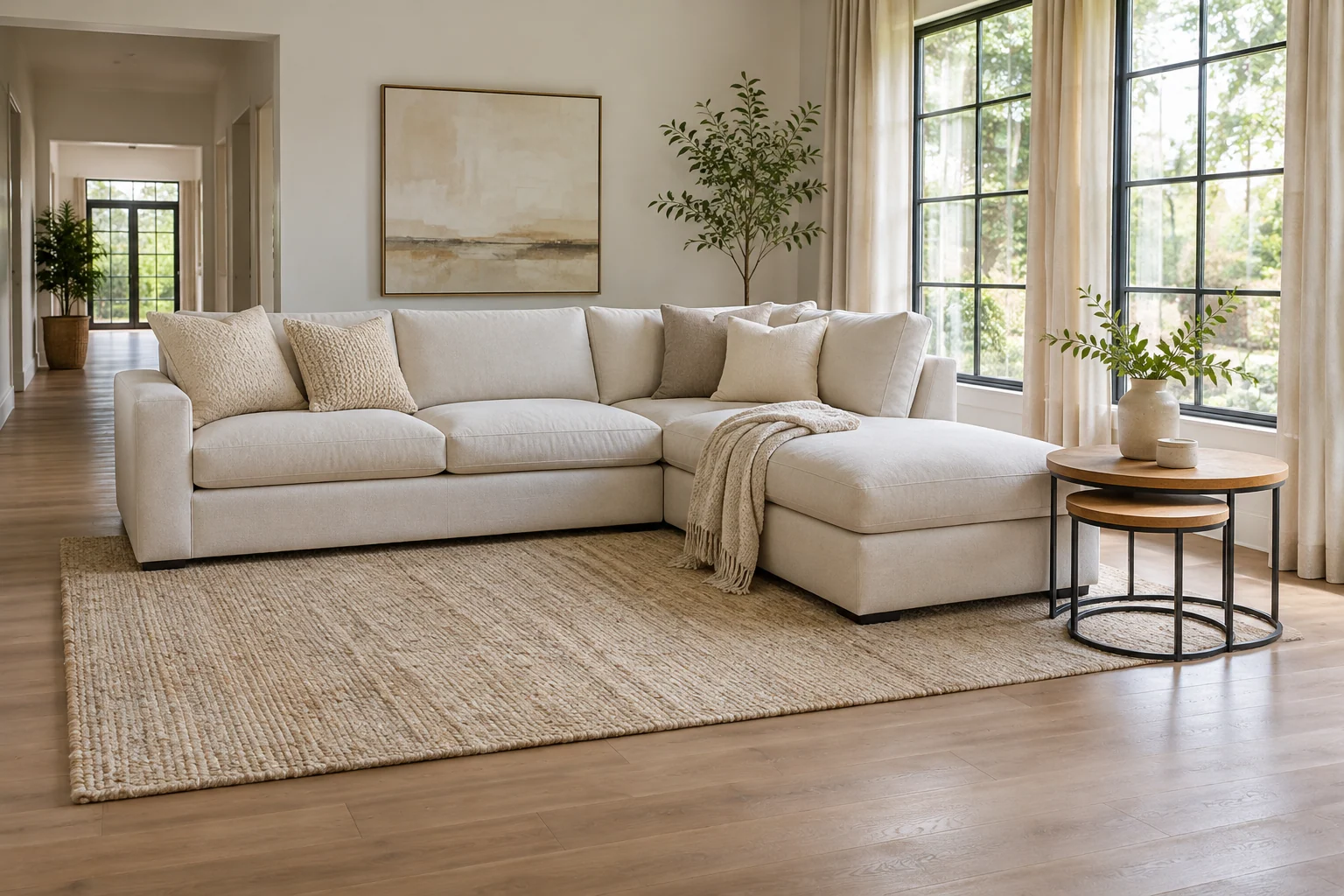
An outer sectional seat may benefit from a side surface while the smaller table serves a different position occasionally. Keep the parked set outside the chaise or footrest area. Try the deployed table where it will be needed instead of assuming it can simply go in front of the sofa. A different corner may offer a clearer route for moving it.
7. Choose a set with an accessible lower shelf
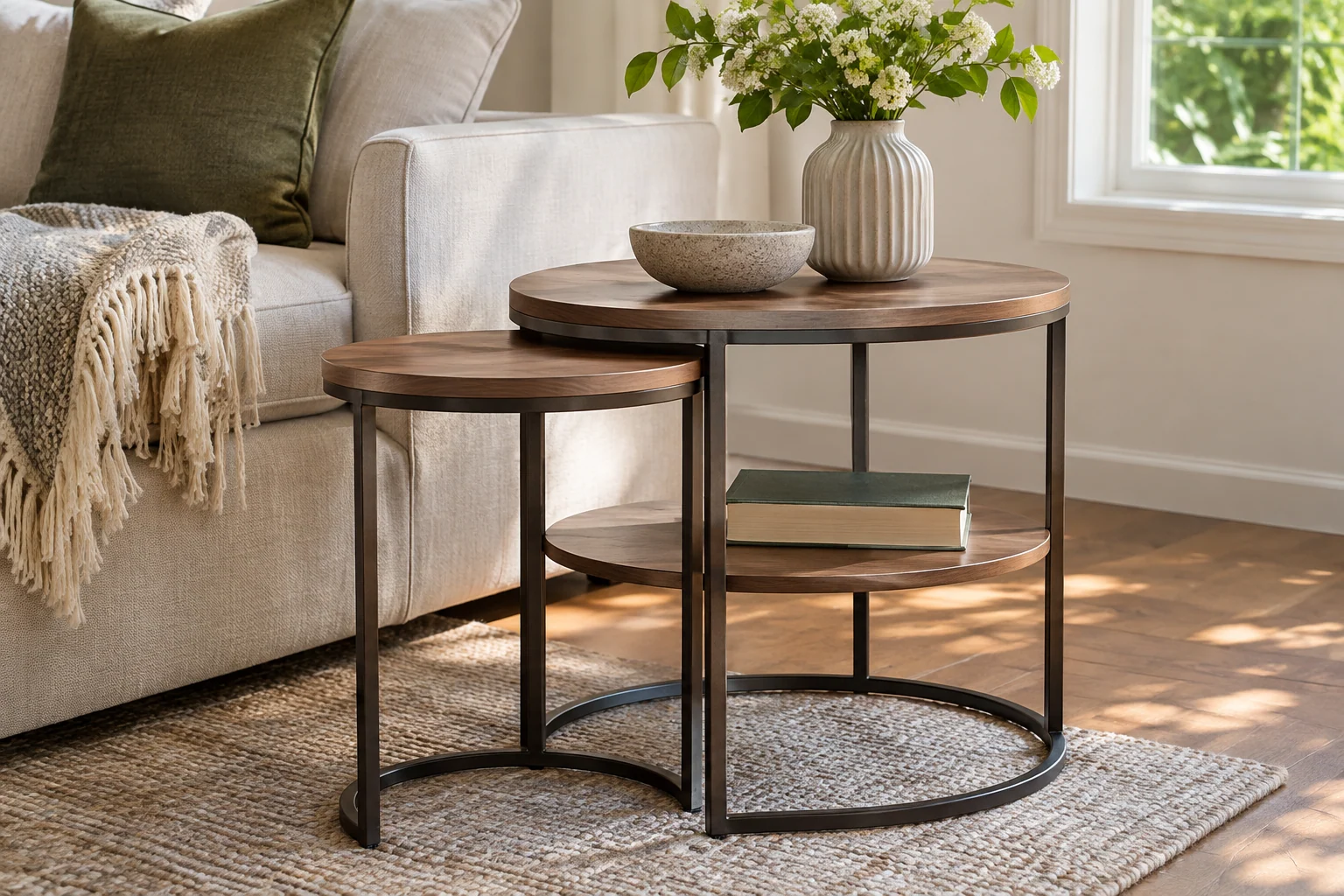
A purpose-designed shelf can give the smaller table a home for a modest book or remote. Check that stored objects do not interfere with nesting or make the table awkward to move. Keep the shelf's use within the product's intended loading guidance. If every move requires unloading a decorative arrangement, the extra storage is working against the reason for choosing movable furniture.
8. Use the small table for a temporary reading surface
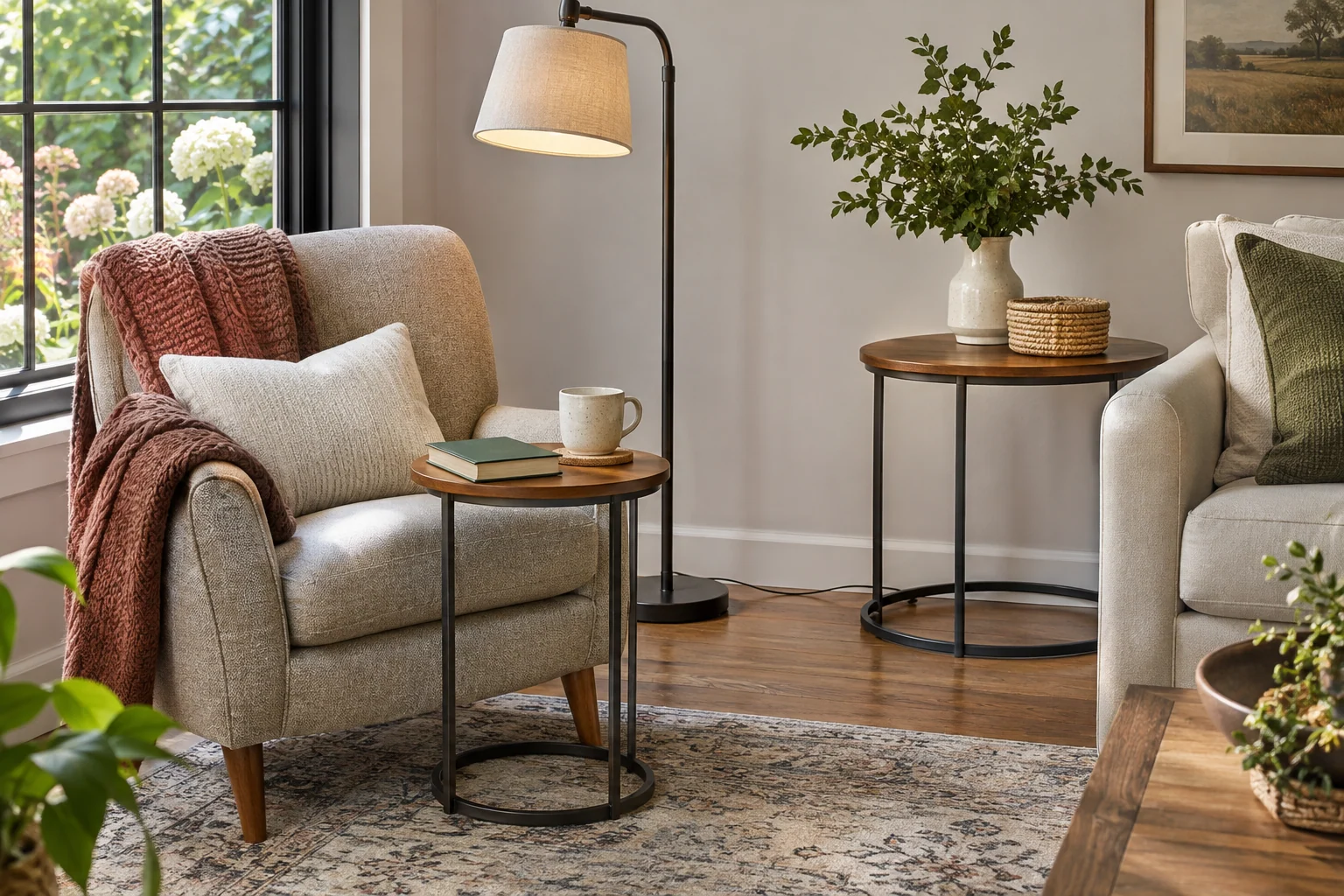
A movable small table can sit near a reading chair when needed, then return to the pair. Test its reach with a book open and the chair in its usual position. Keep the lamp and cord independent from the table's movement. A portable surface should not require moving a heavy lamp or pulling a cord taut each time it changes place.
9. Keep the nesting direction away from a tight passage
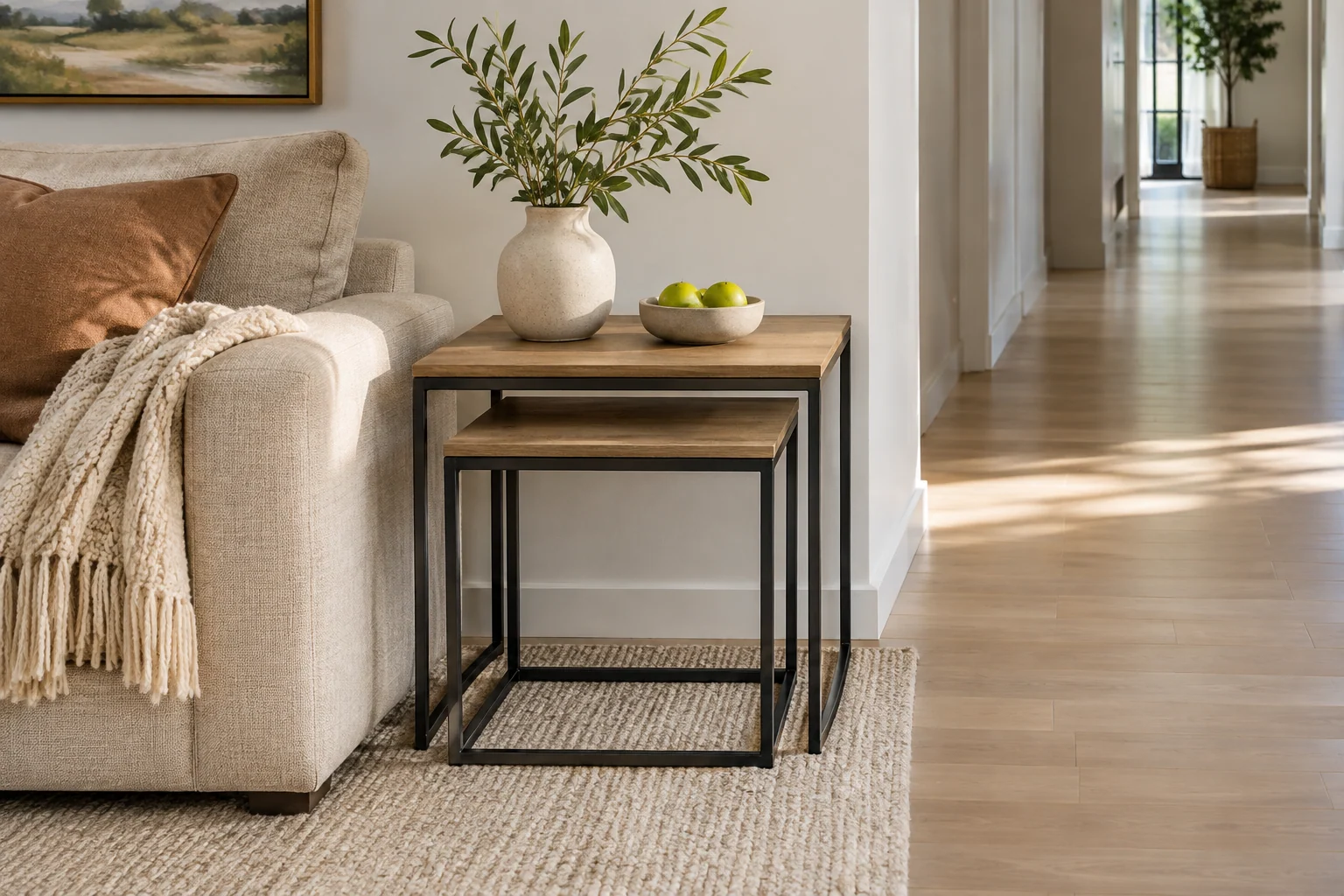
The open side of a nesting set should suit the direction you will retrieve the smaller piece. If pulling it out means standing in a narrow doorway, rotate the arrangement or choose another position. Test the move with ordinary furniture and baskets in place. The useful floor saving is the space you retain during normal activity, not just the area shown by the parked pair.
10. Let a pale finish blend with a small room
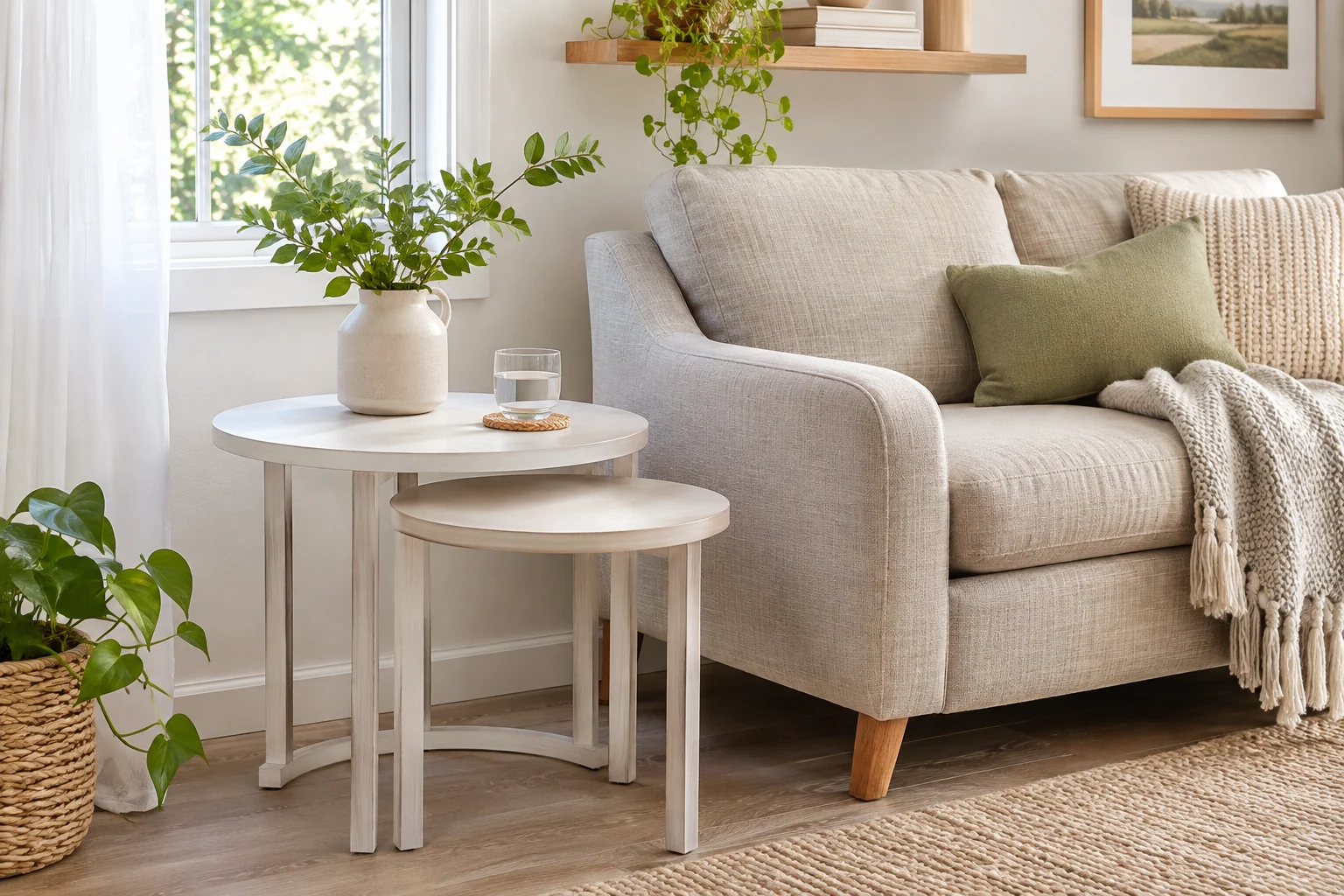
A pale set can sit quietly beside a light sofa or wall, leaving the furniture grouping visually simple. Add contrast through a small ordinary object rather than loading both surfaces with accessories. Check care instructions for the actual finish; white paint, laminate and lacquer are not interchangeable materials. Choose the finish around the room's use as well as its photograph.
11. Use dark metal for a clear outline
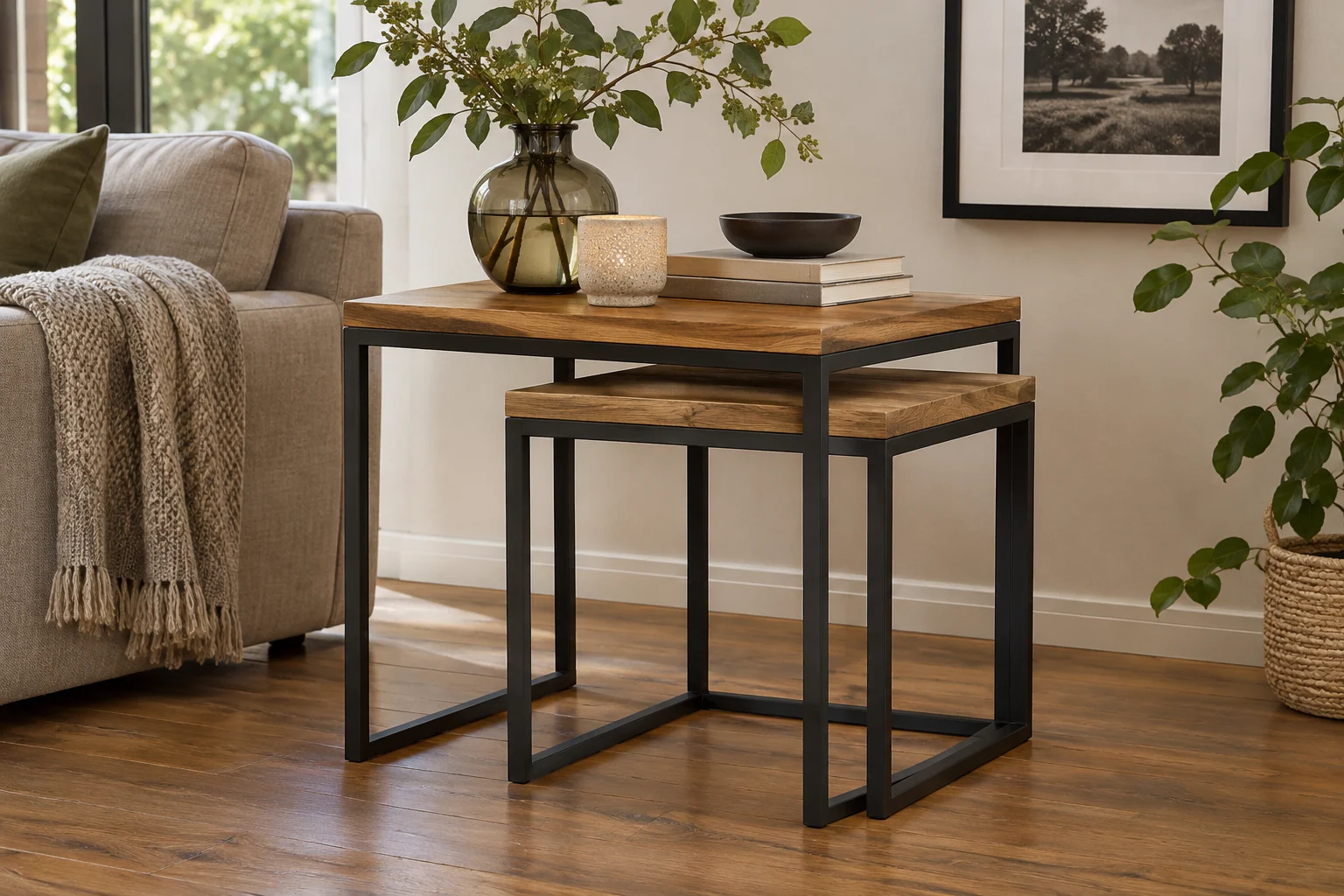
A slim dark frame can connect other metal details in the room while making the tables' separate forms easy to see. Inspect the complete leg arrangement when nested, especially around a rug edge. Thin-looking furniture still needs stable level support. Keep all feet on the intended surface rather than positioning one table half on and half off an uneven rug boundary.
12. Connect warm wood to the surrounding furniture
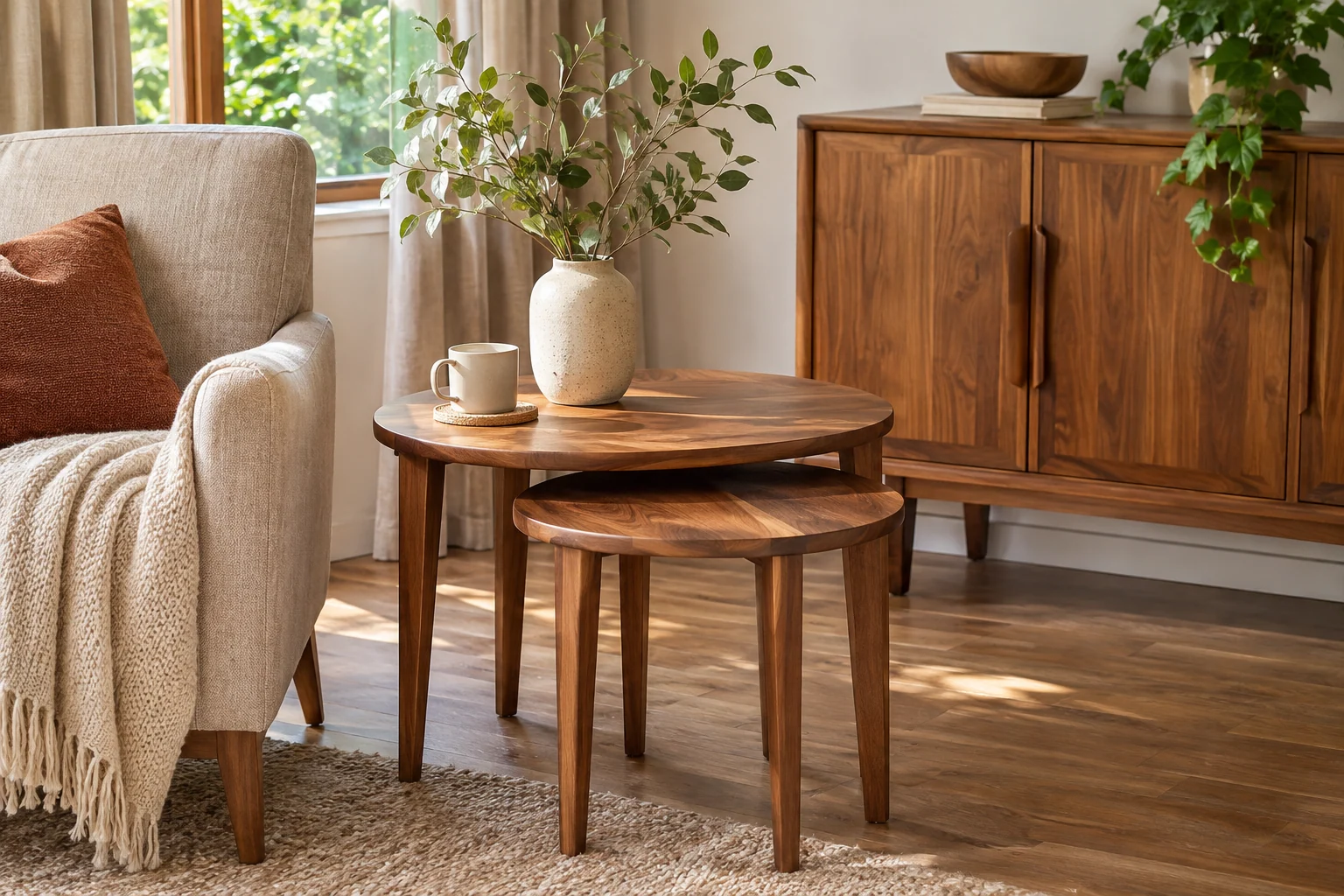
A wood or wood-effect set can echo a cabinet without matching its finish exactly. Look for a similar warmth or simple repeated shape. Leave enough visual space around the tables to appreciate that connection. The practical checks remain the same as for other materials: loaded footprint, reach, movement and the specific finish's care guidance.
13. Choose contrast between the two surfaces deliberately
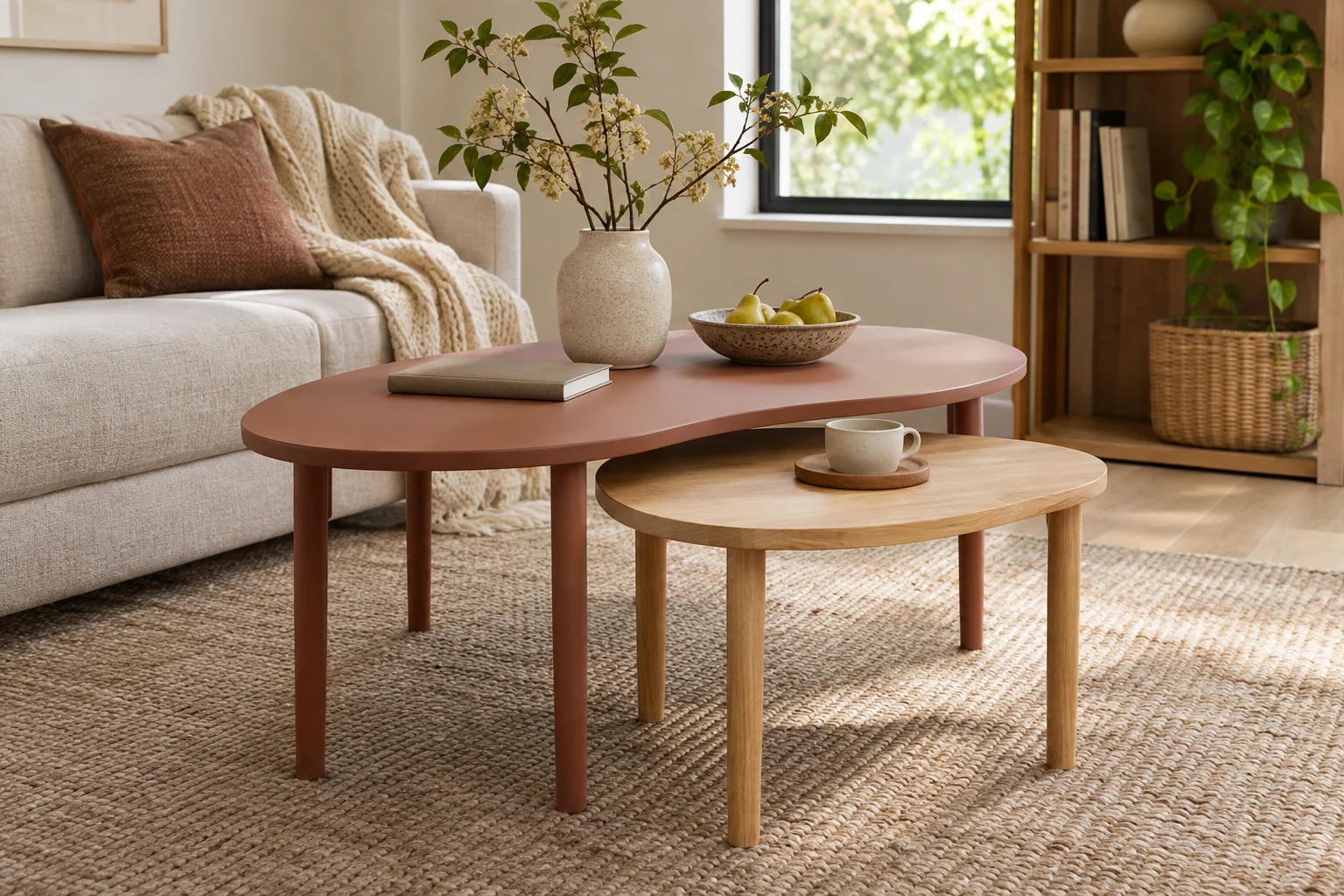
A set with two related colors or materials can make the smaller piece feel intentional when separated. Repeat one of those colors elsewhere in a modest way if the room needs a connection. Avoid adding more decorative objects simply to explain the difference. The tables should work together through their actual proportions and intended nesting arrangement.
14. Check transparent tops from the seated viewpoint
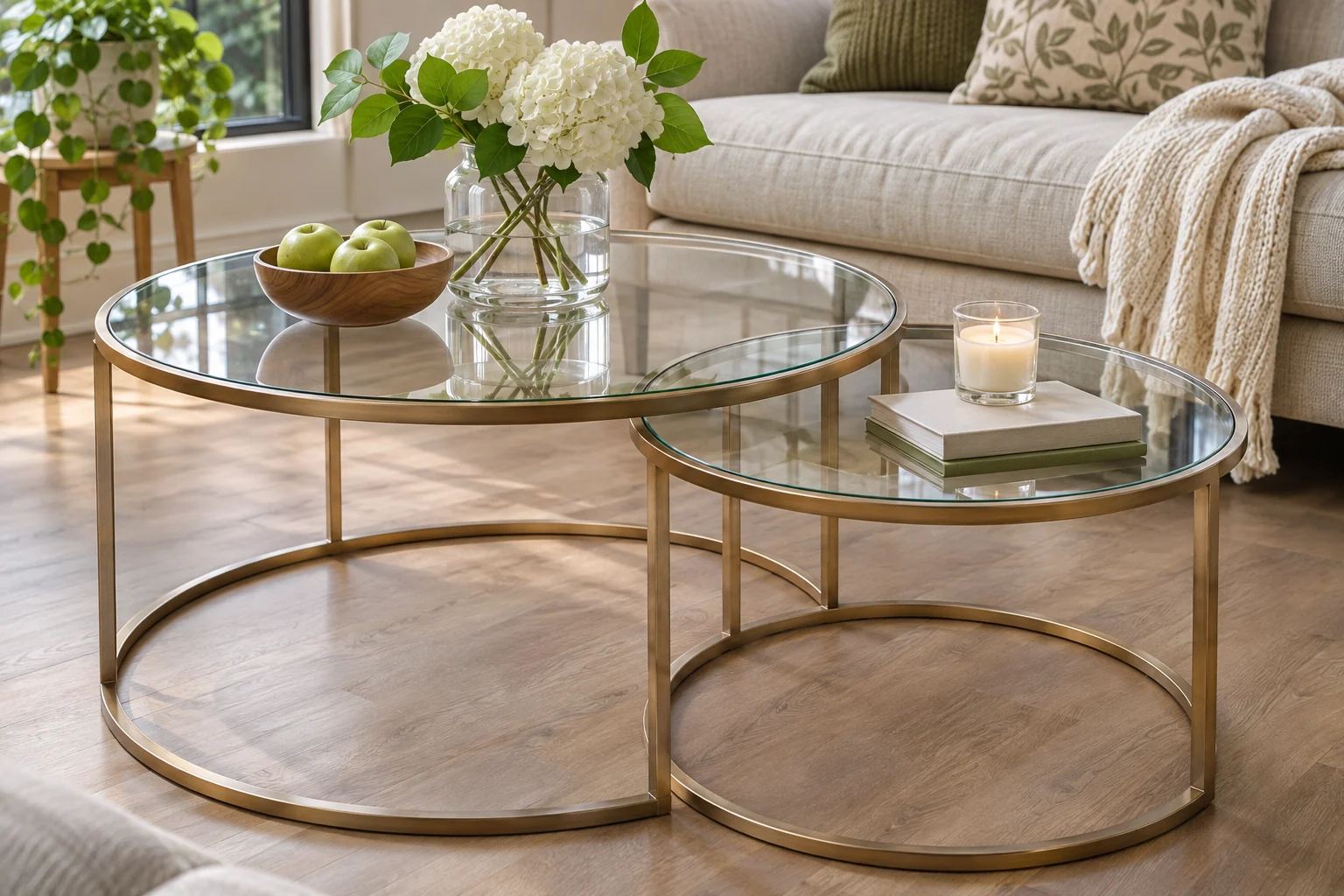
A transparent surface may show more floor through the arrangement, but it also reveals rails, legs and whatever sits beneath it. View the pair from the sofa and doorway before deciding it feels visually light. Follow the maker's use and care instructions for the actual material. A clear top is a design choice, not proof of suitability for every household or activity.
15. Give each table a simple everyday role
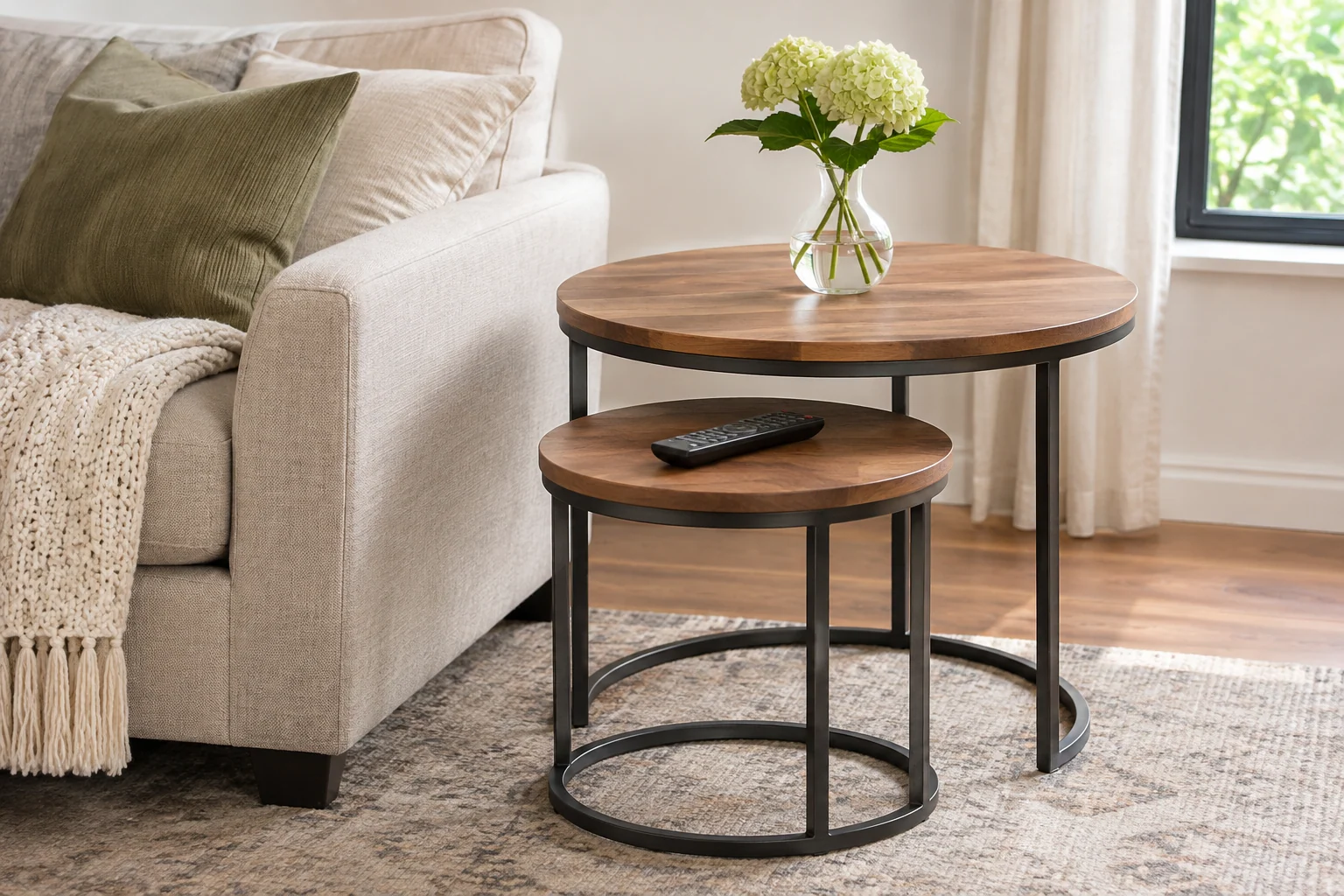
For a regularly separated pair, assign the larger surface to the main seating group and the smaller one to a second seat. Leave room for what people actually put down. A permanently crowded display can make a movable table less useful than a fixed cabinet. Keep the styling modest enough that both surfaces remain available without clearing them first.
16. Keep a guest-use table easy to retrieve
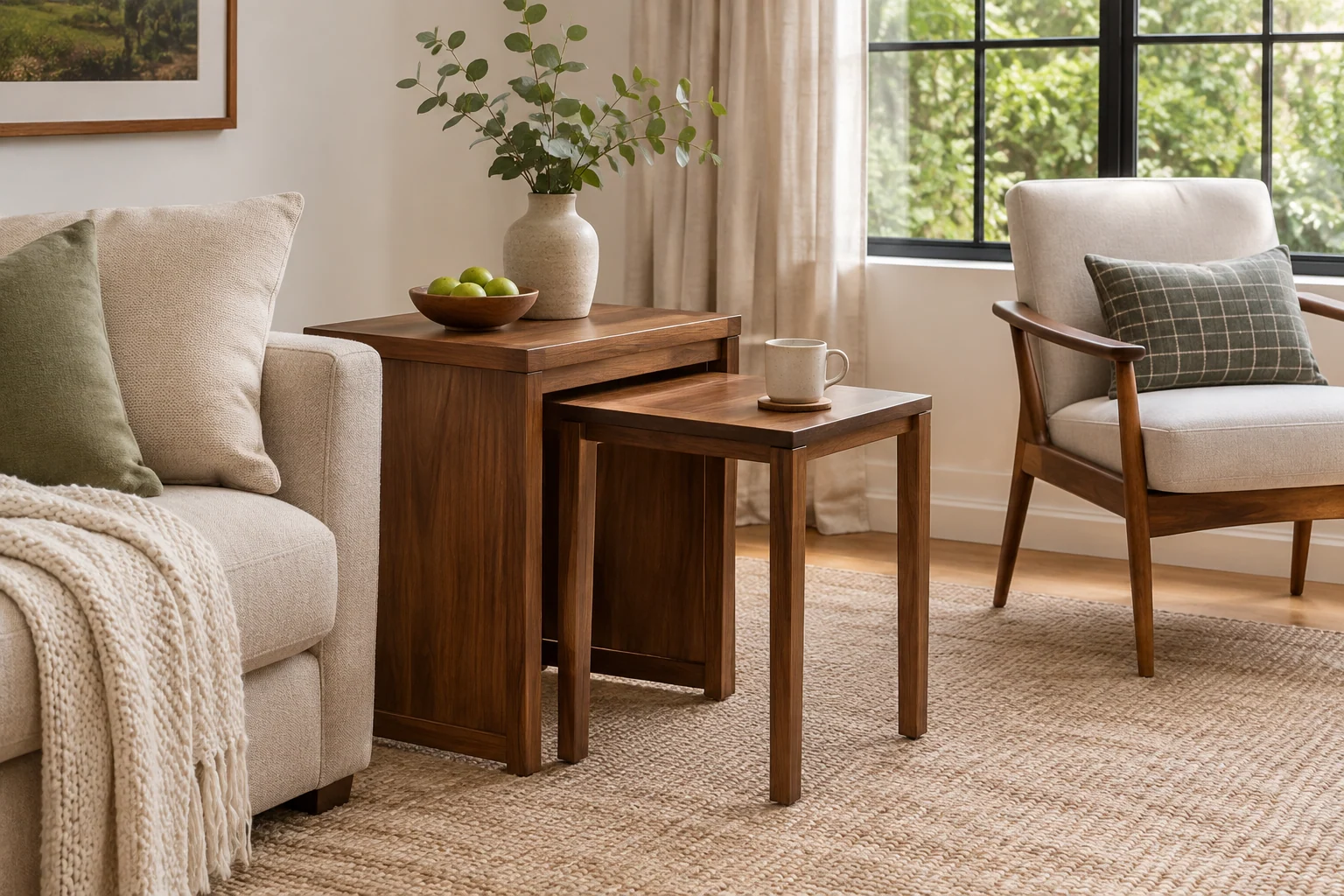
If the smaller table is mainly for visitors, avoid placing it behind a large plant, lamp or storage basket. The nested arrangement needs a clear removal route. Try retrieving it without lifting the larger table or moving the sofa. When that cannot be done comfortably, change the orientation or choose a set with a movement better suited to the room.
17. Let a small apartment keep one adaptable surface group
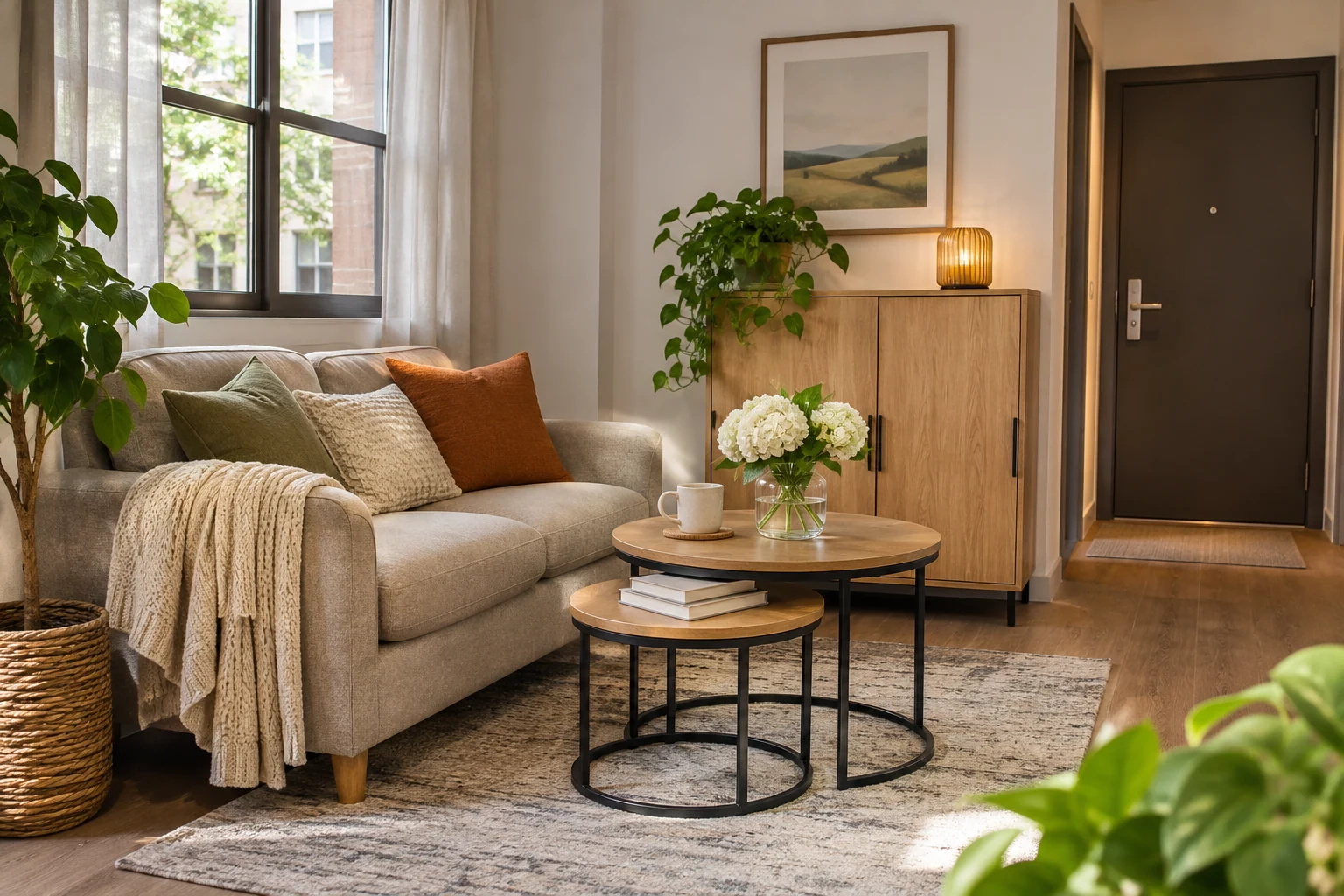
A compact room may benefit from one nested group instead of several fixed occasional tables. Decide which seats need a surface at the same time, then test the pair in those positions. Keep the entrance, storage doors and ordinary walking route usable. The arrangement should reduce furniture friction, rather than distribute small tables into every available gap.
18. Keep cabinet doors independent from the table pair
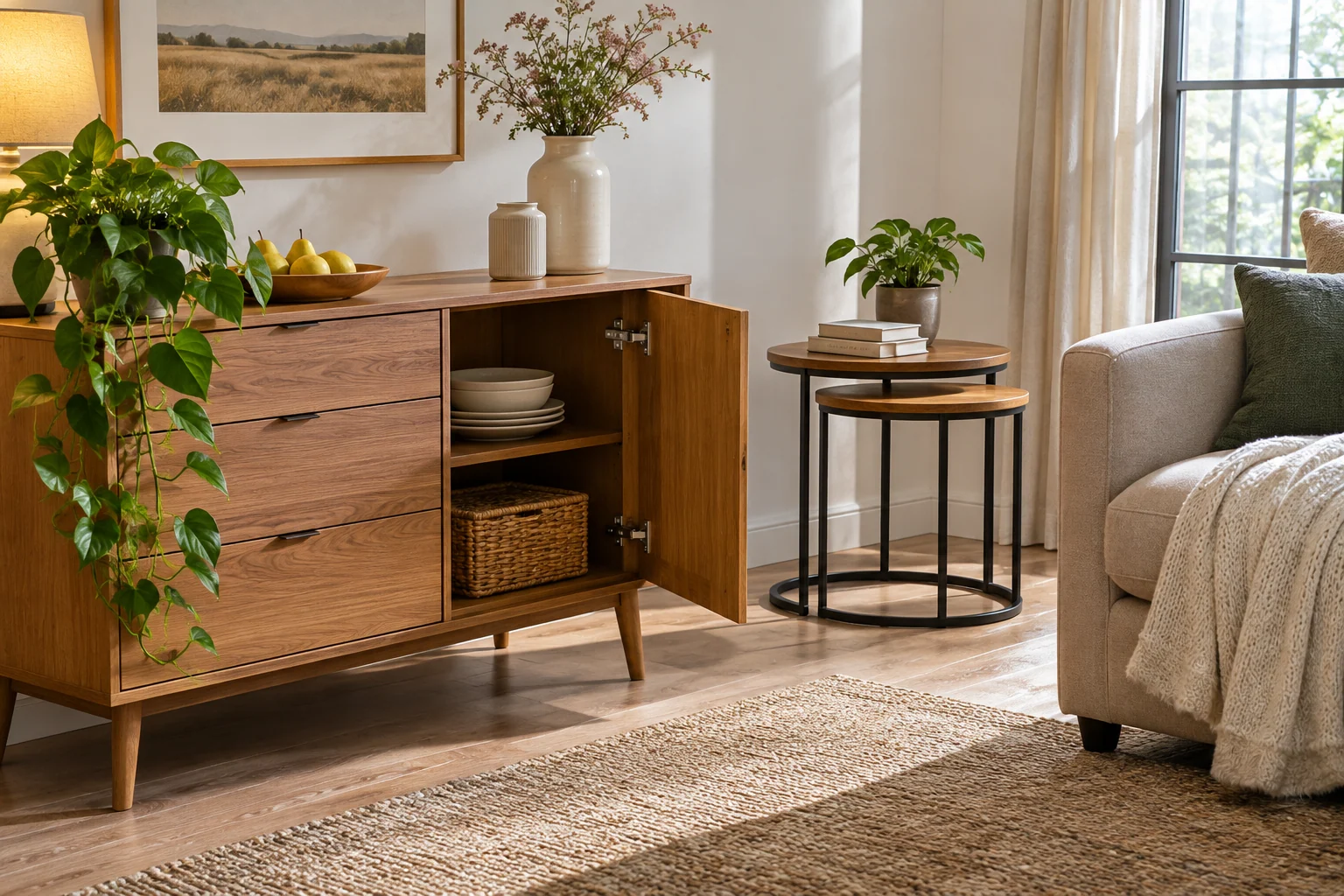
A low sideboard can be a useful neighbor, but its doors or drawers should open without first moving both tables. Check the cabinet with the smaller table deployed as well as nested. A little visual overlap from the doorway may conceal a practical conflict. Move the set to the seating side if the storage unit is used frequently.
19. Plan the pair around a rug's actual edge
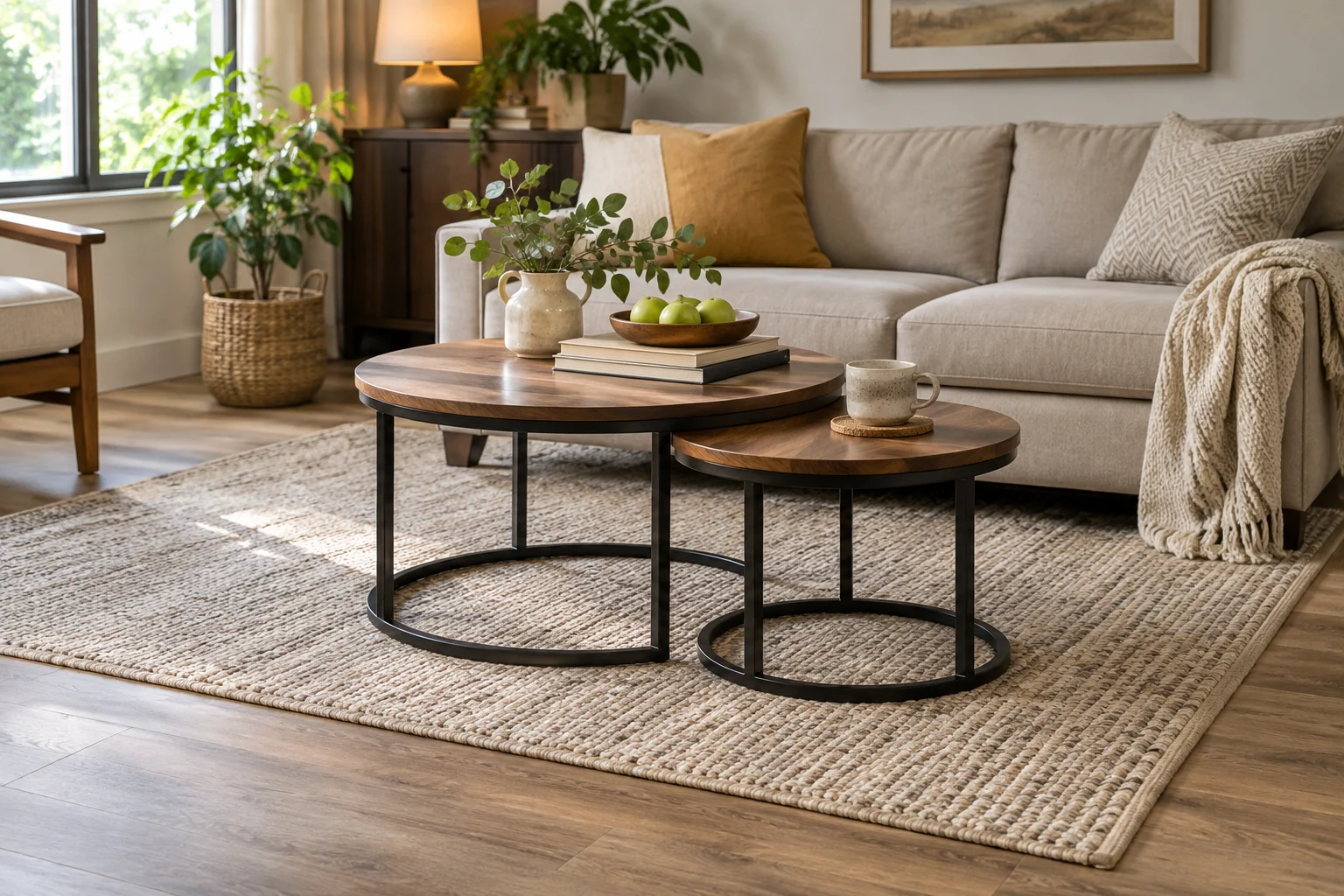
A rug can connect the seating area, but it should not leave table feet at inconsistent levels. Check the whole footprint of both pieces in their normal positions. If the smaller table crosses the rug boundary whenever it moves, test how it sits there and consider another parked position. The goal is stable use, without inventing a universal rule that every table must sit on the rug.
20. Keep the smaller piece useful when fully nested
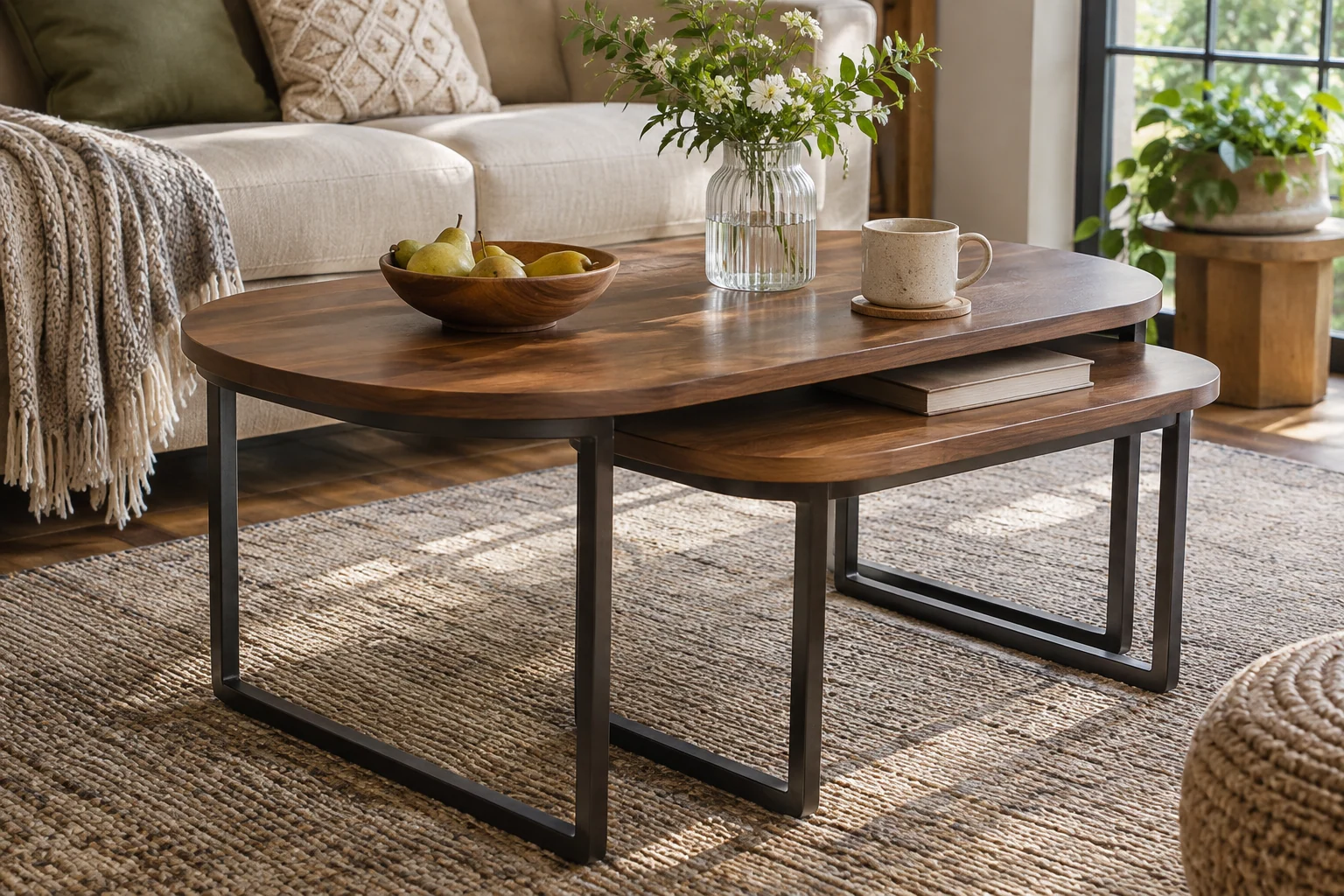
Some sets leave part of the small surface visible when nested, while others conceal it almost completely. Choose around the use you need and the manufacturer's intended arrangement. Do not assume the lower piece remains an accessible shelf simply because its top can be seen. A protruding book or tray can prevent the pieces returning smoothly to their parked positions.
21. Compare lifting with sliding before deciding
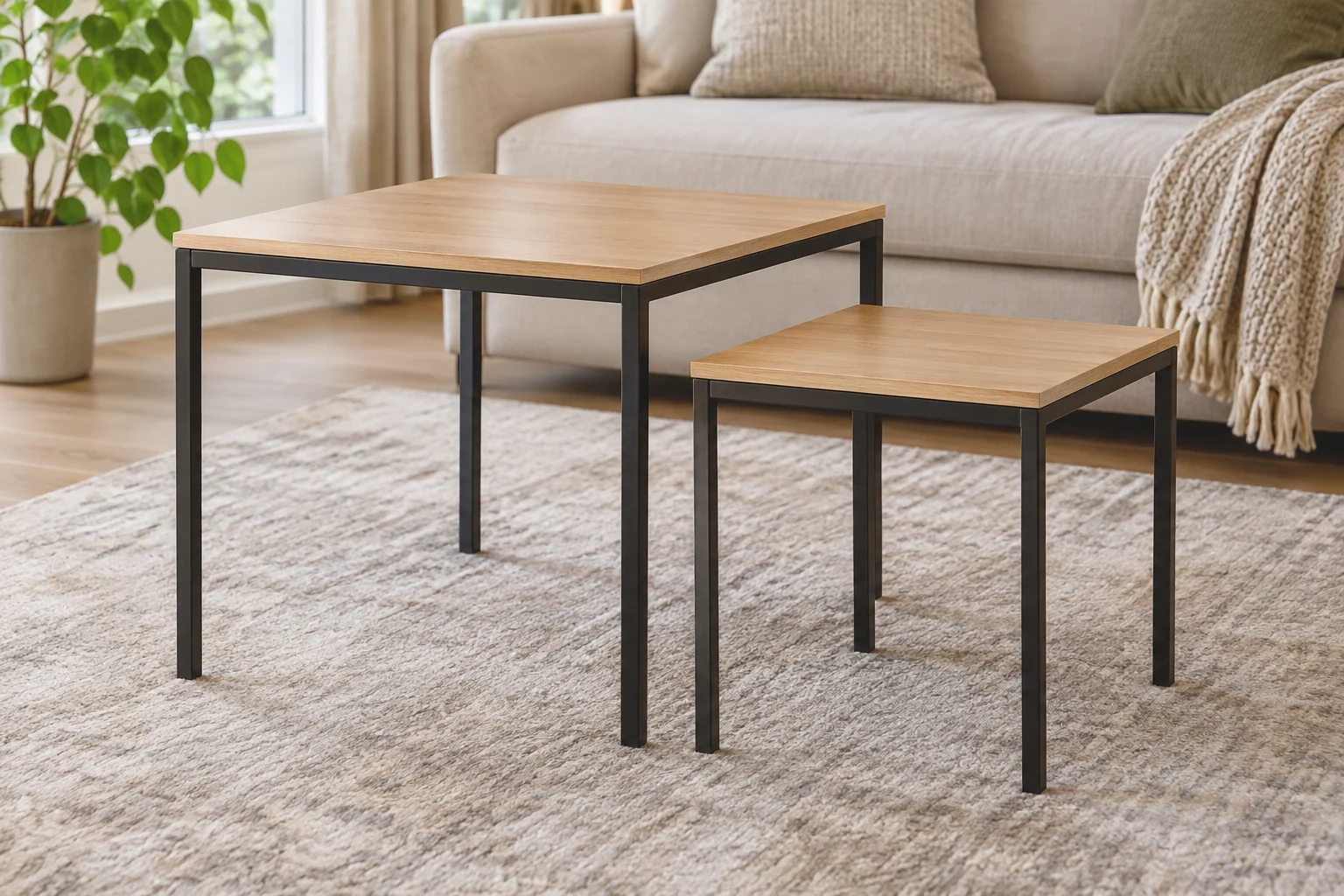
A set that slides smoothly on one floor may be awkward on another, and some forms need to be lifted to separate. Consider the table's actual weight, instructions and your comfortable handling. Avoid dragging it by a delicate edge or adding improvised fittings to make it move. Choose a movement that works for the household instead of depending on frequent awkward lifting.
22. Keep a plant on the part that normally stays parked
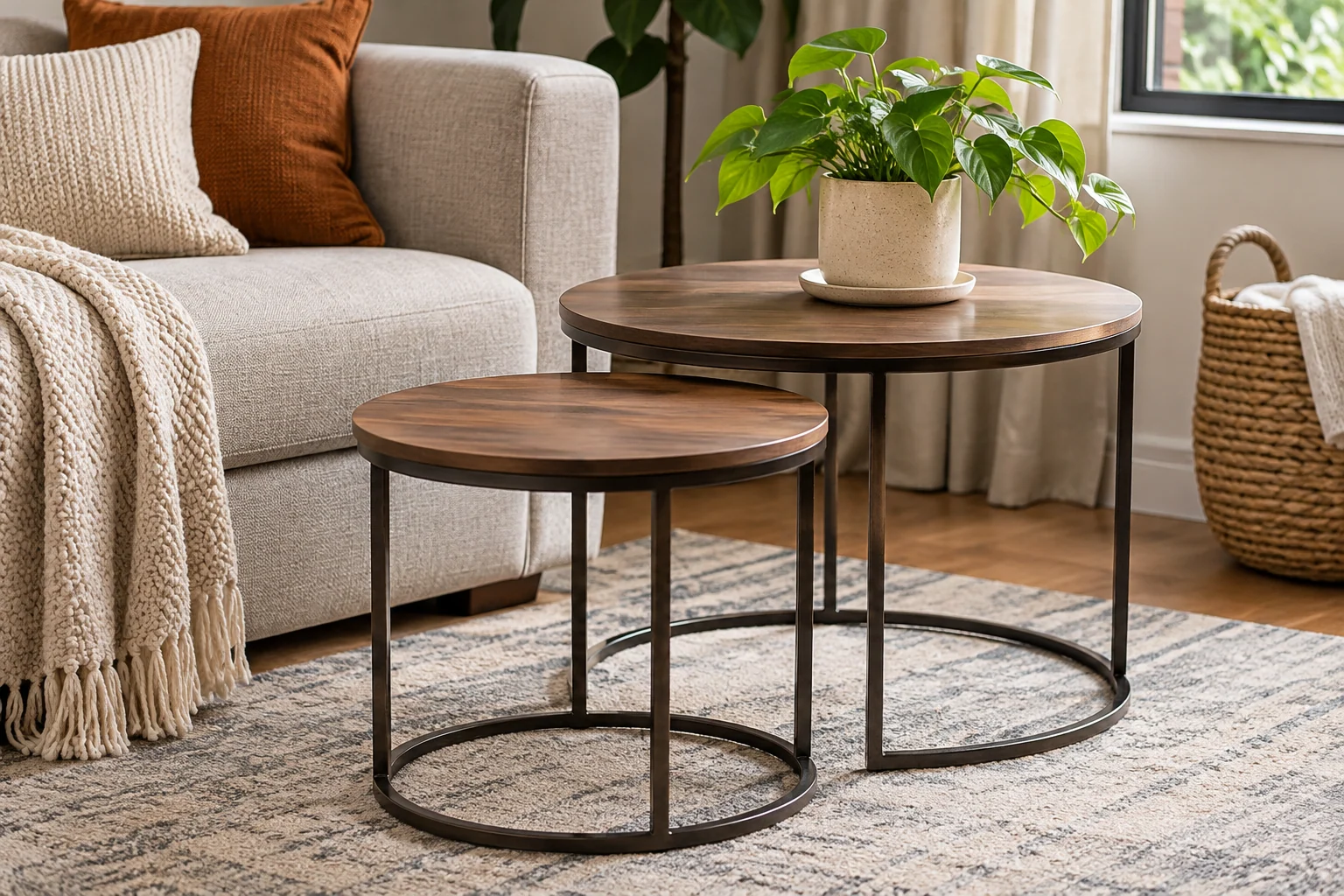
A small planter may suit the larger table if that piece usually remains in one position and the product can support the intended use. Protect the surface as appropriate for its finish and keep watering away from furniture that could be damaged. Leave the movable table uncomplicated. A collection of plants on both surfaces can turn a flexible set into a fixed display.
23. Use nesting tables beside a sofa bed thoughtfully
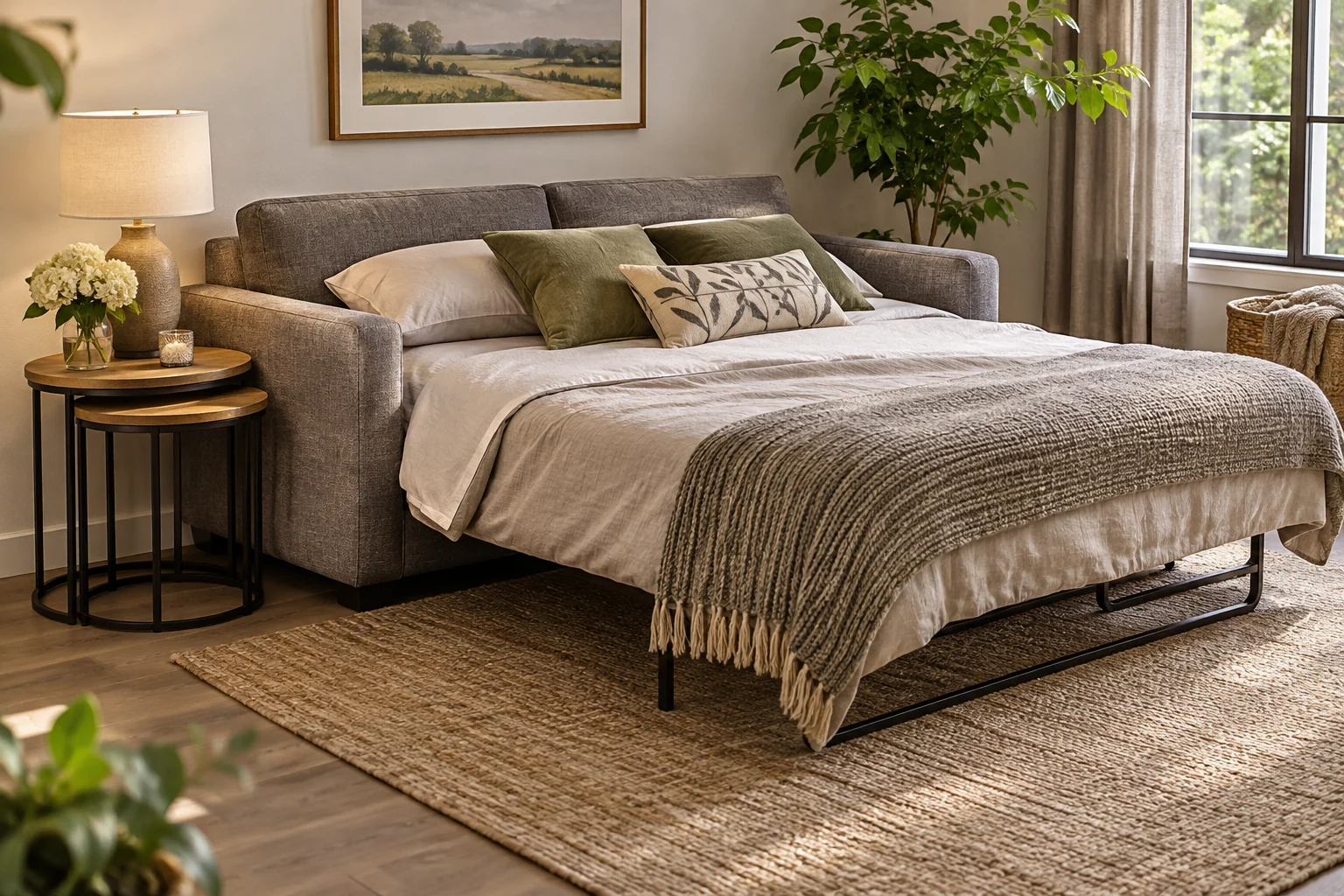
A guest-sleeping arrangement changes the room's footprint. Decide where the complete pair will park when the bed is open, then test access around the deployed bed. Keep a useful surface reachable without trapping the tables between moving furniture. A set that fits neatly beside the closed sofa may still need a completely different temporary home overnight.
24. Finish by returning the whole arrangement
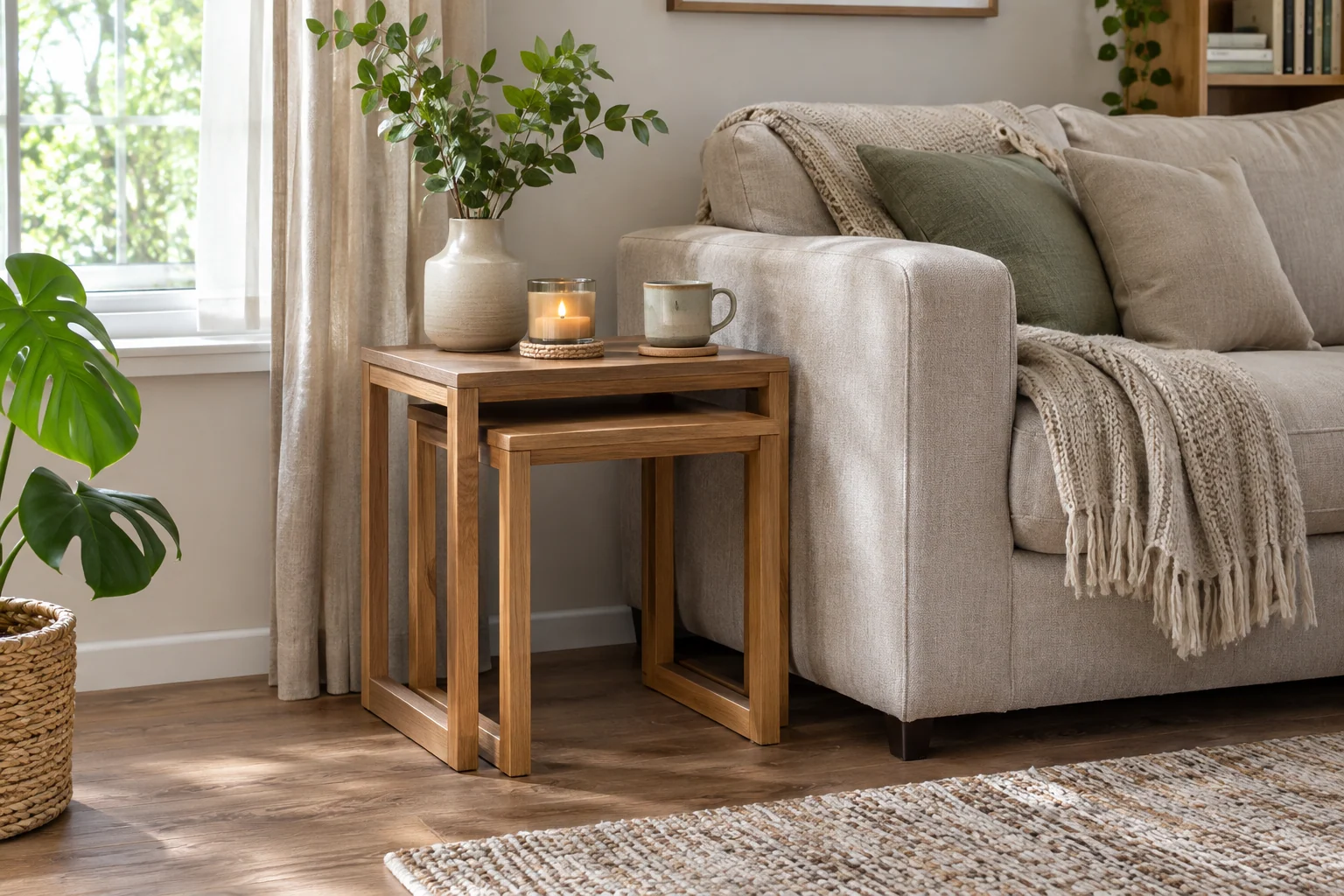
After using both tables, put them back without rearranging the room. Notice whether a rug, ornament or neighboring chair makes that return awkward. Correct the specific obstacle before adding another accessory. A nesting set earns its place through the repeated movement between useful positions; the final parked photograph is only one part of that decision.
The two-position footprint check
Draw the parked pair and the separated arrangement at the same scale. Include all feet, tabletop projections, storage doors and the route used to carry the smaller table. For an illustrative 24-inch-deep open area, a 16-inch-deep table leaves 8 inches of depth in that particular outline; it does not establish a comfortable or compliant passage. Use your actual movement test and the set's dimensions rather than treating the arithmetic as a clearance standard.
A practical next step
Choose nesting tables around their movement, not just their matching tops. When the pair works tucked away, pulled out and returned, its material and shape can become a useful part of the room instead of another arrangement to work around.
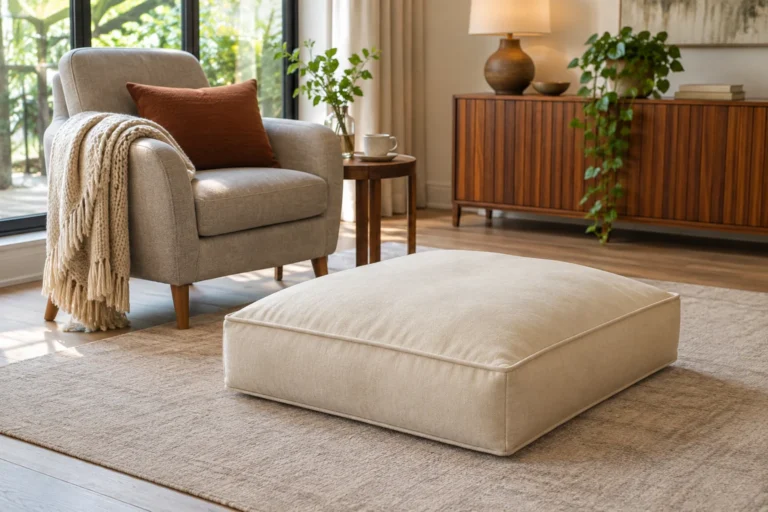
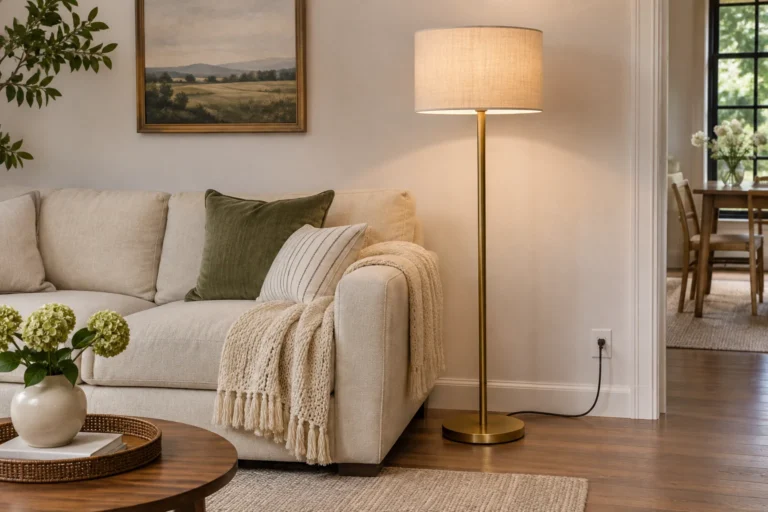
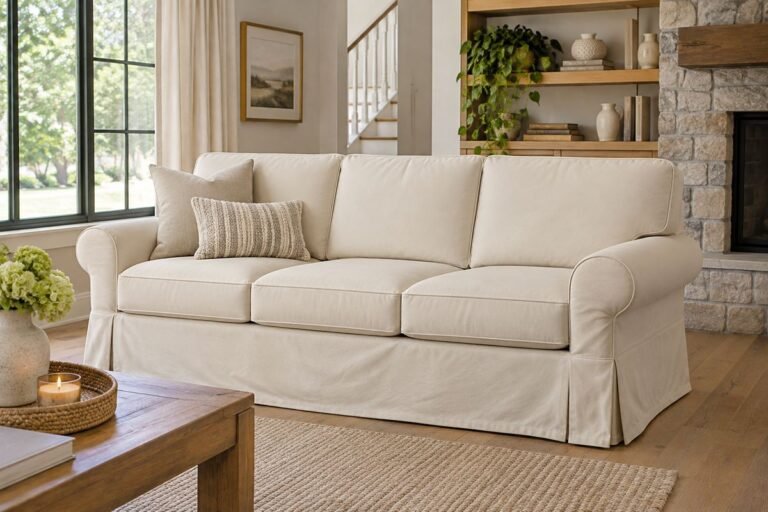
The images are original AI-generated design concepts. They illustrate arrangements rather than tested products, installations or measured performance.
Sources and care references
Related reading on Nestroxe
Optional digital guide for this topic
If you prefer a structured workbook, explore this related paid guide.