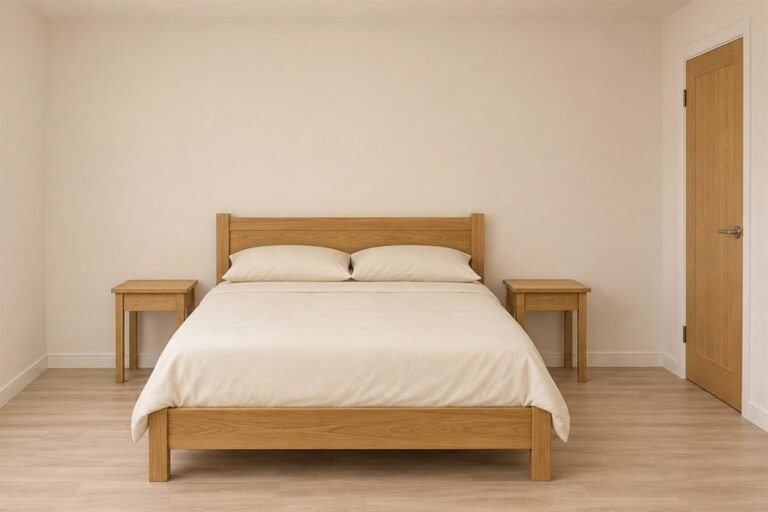
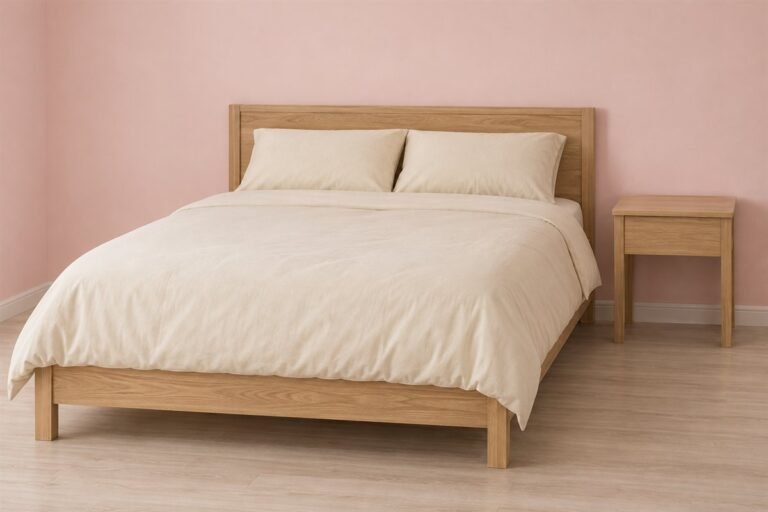
Modern bedroom ideas are more useful when they explain how the furniture and materials work together. A clear bed outline, quieter storage and one substantial texture can give the room a considered direction without requiring an all-white space or a complete matching furniture suite.
Start with the useful bed, floor and storage you plan to keep. This guide compares warm wood, plain upholstery, restrained patterns and practical activity areas. Choose a few relationships that suit the room rather than collecting every modern-looking object in one arrangement.
All 26 images are original AI-generated decor concepts. They show room and material relationships, not named products, measured layouts, tested furniture or promises about sleep.
Contents
- 1. Keep a useful bed and simplify its background
- 2. Use a slim wood frame as a clear horizontal line
- 3. Balance plain upholstery with a substantial wood bedside
- 4. Let one curved headboard soften straighter furniture
- 5. Compare a low bed with the room’s taller storage
- 6. Use paired bedside cabinets when both sides need them
- 7. Connect different bedside pieces through one quiet finish
- 8. Try a wall-mounted bedside as a complete supported choice
- 9. Give reading light a precise role beside the bed
- 10. Let one table lamp supply a softer outline
- 11. Use bedding texture instead of another printed pattern
- 12. Keep a broad bedding stripe as the main repeat
- 13. Use warm gray with clearly visible wood
- 14. Let a muted green wall carry the color
- 15. Use a restrained black outline within warm white
- 16. Try muted clay with a quieter pale bed
- 17. Let a broad wood headboard be the main material feature
- 18. Contain vertical slats within one bed-wall field
- 19. Choose one larger graphic instead of many small marks
- 20. Keep the ceiling quiet when the bed wall already leads
- 21. Make closed wardrobe fronts part of the room palette
- 22. Use a low dresser without filling its whole top
- 23. Position a plain dressing mirror for the useful view
- 24. Give a reading chair a complete occupied corner
- 25. Keep a bedroom desk separate from the bedside job
- 26. Leave the bed end open when another piece has no job
Make a visual-hierarchy card before buying the next piece
Write down the main thing you want to notice when entering the bedroom, the quieter surfaces that support it and the furniture needed for ordinary life. Include an existing piece you want to keep. Compare one change with that card so the room develops through a clearer relationship rather than a growing collection of matching accessories.
An original visual-hierarchy card for a modern bedroom
- Keep: Name the useful bed, floor, cabinet or textile that remains the starting point.
- Lead: Choose one larger feature: the bed outline, a material field or a substantial color area.
- Support: Give nearby walls, storage and the largest textile a quieter role where useful.
- Use: Record bedside reach, clothing storage and any separate reading or desk activity.
- Compare: View actual samples together and test complete furniture footprints.
- Edit: Defer one optional purchase until the room has been used through an ordinary day.
1. Keep a useful bed and simplify its background

A modern bedroom can begin with the bed you already enjoy using. Give its outline a quieter wall and keep the bedding comparatively plain for the first comparison. This lets you see whether the room needs a new furniture piece or simply fewer competing details.
Keep one substantial existing finish, such as the timber floor, in view while you edit. Remove an optional decorative layer before buying a matching replacement. The aim is a clearer relationship between the bed and room, not an obligation to empty every surface or replace older useful furniture.
2. Use a slim wood frame as a clear horizontal line
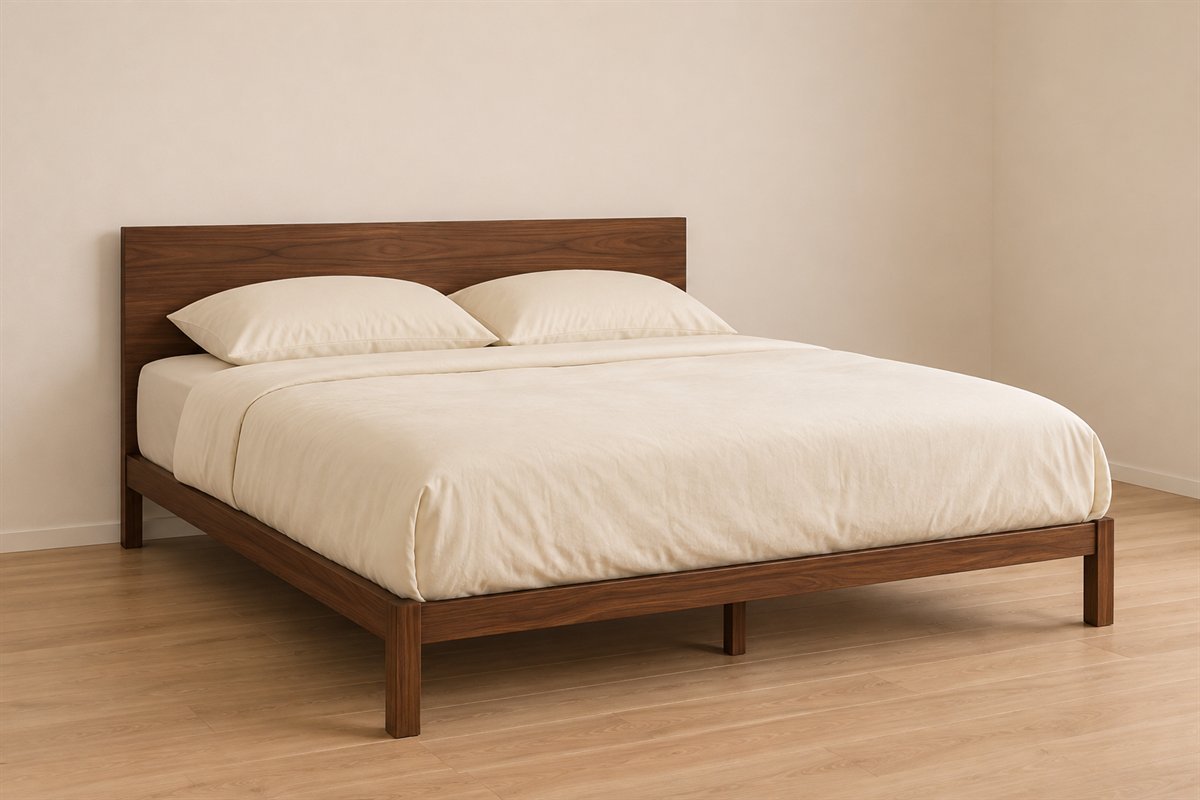
A restrained wood bed can establish the room’s main horizontal outline. Let a quiet pale wall and simple textile keep that line readable. Compare the timber with the floor rather than ordering a full matching suite to make the room feel connected.
The complete frame still needs to work with the mattress and room. Include projecting rails, legs and the headboard when checking the actual footprint. A slim appearance is a design choice, not proof that a bed is smaller, stronger or compatible with every mattress system.
3. Balance plain upholstery with a substantial wood bedside

A plain upholstered bed can give a modern room a softer main surface. One simple wood bedside cabinet adds a different material without requiring a patterned headboard or elaborate wall. Keep the cabinet top clear while judging the furniture shapes together.
Compare a real fabric swatch with the wood and bedding under ordinary light. Choose the cabinet for its useful contents and reach from the finished mattress. The upholstered surround may be broader than its mattress label suggests, so include its actual outside dimensions before settling the arrangement.
4. Let one curved headboard soften straighter furniture

A restrained rounded headboard can sit within a room of straighter cabinet fronts and wall lines. Keep it as the one clear curved feature rather than repeating a rounded outline on every item. Plain bedding leaves its shape easier to understand.
Check the entire headboard width and support with the chosen bed. A curved silhouette still needs the correct attachment or mounting arrangement. Compare its real fabric or finish beside the other furniture and leave the surrounding wall quiet if the outline already supplies enough detail.
5. Compare a low bed with the room’s taller storage

A lower bed silhouette can make a tall wardrobe the stronger vertical feature. Give the two forms a quiet shared palette so the contrast is about proportion rather than unrelated finishes. The bed need not compete with the wardrobe’s height to feel important.
Compare the finished mattress height and the way the occupant gets in and out before choosing a low frame. Keep wardrobe opening and access in the same plan. A modern-looking low profile is useful only when it suits the people and routine as well as the photograph.
6. Use paired bedside cabinets when both sides need them

Two simple bedside cabinets can give a bed a balanced setting while providing useful storage for both occupants. Keep their fronts straightforward and compare the full group from the doorway. Symmetry can be a practical arrangement rather than a compulsory modern style rule.
Test the cabinet tops from the actual mattress and note what each side must hold. Include drawers and nearby openings in the footprint. A photograph with matching tops does not establish comfortable reach; use the real bed and users to settle the furniture relationship.
7. Connect different bedside pieces through one quiet finish

Different bedside pieces can work when they share a restrained material or color relationship. A small table on one side and a drawer cabinet on the other can serve different routines without making the bed group look accidental. Let the wall and bedding remain simpler.
Choose each piece by the actual use and reach. They do not need to contain the same number of drawers or form a perfectly matched pair. Compare their broadest visible surfaces and keep another repeated feature limited so the asymmetry remains easy to understand.
8. Try a wall-mounted bedside as a complete supported choice

A modest wall-mounted bedside can give the bed group a clearer lower outline. Keep its shape simple and leave the floor below visible. This may suit a room where a larger cabinet is unnecessary, provided the actual contents and location work.
Choose a unit and fixing arrangement intended for the supporting wall and load. Compare its height with the finished mattress and keep switches usable. A floating appearance does not remove the cabinet’s projection or prove support, so use the full product and room information when planning.
9. Give reading light a precise role beside the bed

A restrained wall light can leave a small bedside surface available for ordinary belongings. Keep the fitting visually simple while comparing it with the headboard. Its main job should remain useful light and reachable control from the actual reading position.
Test glare and the beam with the pillows normally used. Use suitable equipment and appropriate installation rather than copying a height from a generated image. A quiet modern fitting can be attractive without becoming a decorative substitute for a workable bedside-light arrangement.
10. Let one table lamp supply a softer outline
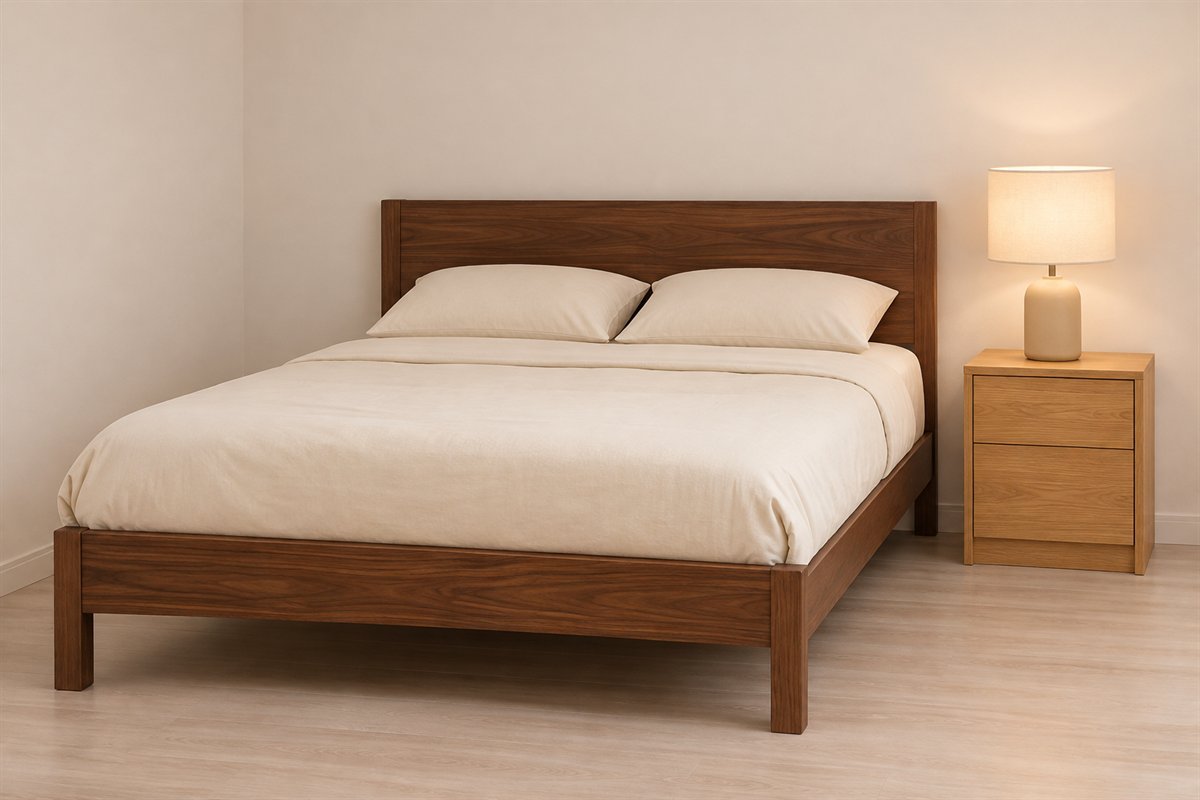
A simple shaded lamp can add a different shape beside a straight-edged bed and cabinet. Keep the shade and base restrained so the bedside group remains readable. The lamp can provide enough curved detail without several decorative objects around it.
Try the actual light from the pillow and seated positions before choosing the shade solely by appearance. Include stable support, switch reach and the real cabinet-top space. A warm-looking illustration cannot establish the bulb specification or prove comfortable illumination in your room.
11. Use bedding texture instead of another printed pattern

Plain bedding can still have visible weave and a relaxed surface. Compare a textured cover with a smoother sheet in related pale tones. This gives the bed some variety while allowing a clear furniture shape to remain the stronger room feature.
Choose the real textiles for feel, warmth and care rather than a modern label. Avoid adding a thick layer that is moved to the floor every evening. A limited useful bedding set can be complete without many decorative cushions or a different print on every surface.
12. Keep a broad bedding stripe as the main repeat

A restrained stripe can give an otherwise plain modern room a clear textile pattern. Choose the repeat from the whole made bed rather than a tiny fabric square. A simple headboard and quieter wall let the bedding remain the feature.
Compare the stripe with any retained curtains or rug before adding another print. Decide which pattern should lead when the room is viewed from the entrance. Check the actual cover’s care and dimensions separately; a pleasing stripe does not identify the fabric construction or its performance.
13. Use warm gray with clearly visible wood

A warm-gray wall can give wood furniture a quieter surrounding field. Keep the bedding pale enough to distinguish the bed outline. This is a possible modern palette direction rather than a requirement for every contemporary room to be gray.
Compare the wall sample beside the actual wood and largest textile. Gray can show different undertones under the bedside light, so repeat the comparison when the room is normally used. If the timber looks dull beside one candidate, test another before replacing useful furniture.
14. Let a muted green wall carry the color
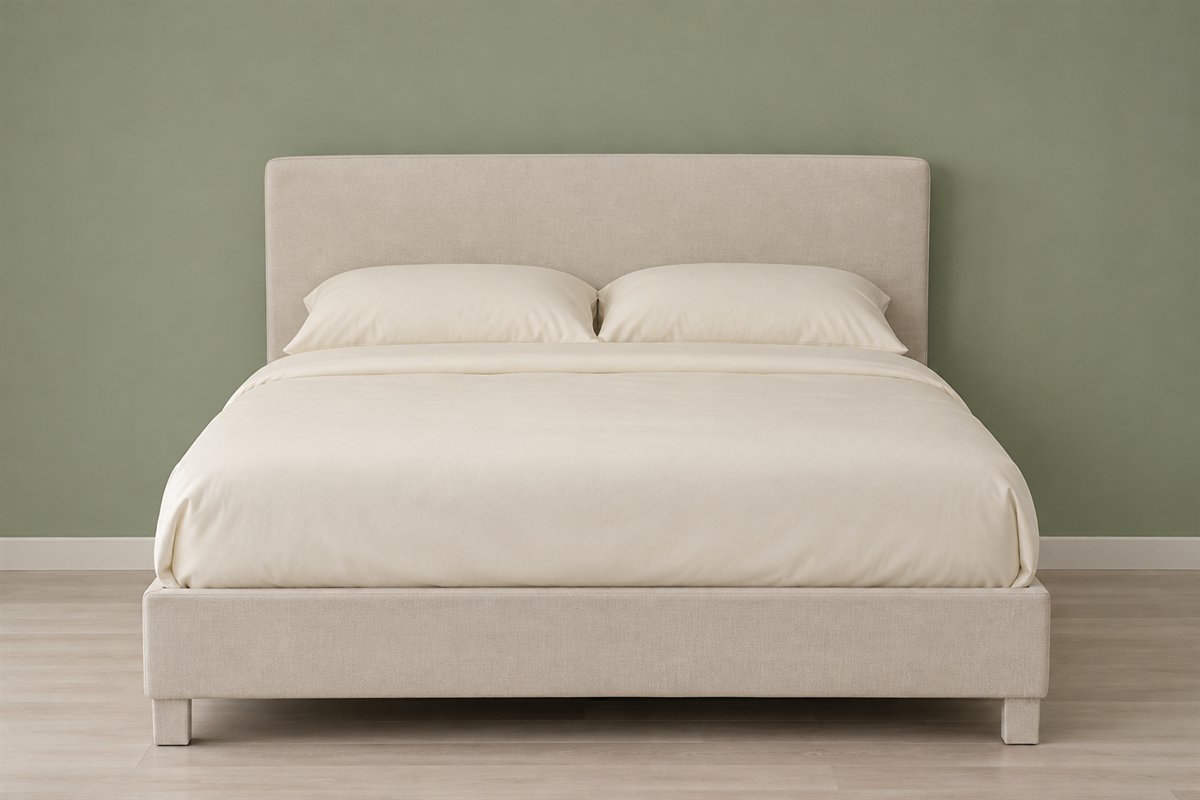
A muted green bed wall can be enough color in a room with plain pale furniture. Keep the remaining larger surfaces quieter while you settle the green. You do not need a set of green cushions and accessories to explain the wall choice.
Test the actual coating beside the headboard, bedding and fixed floor. Choose the undertone you enjoy under the room’s ordinary lights. A green palette is an appearance preference; it does not establish better sleep, healthier air or a measured change in how large the room feels.
15. Use a restrained black outline within warm white
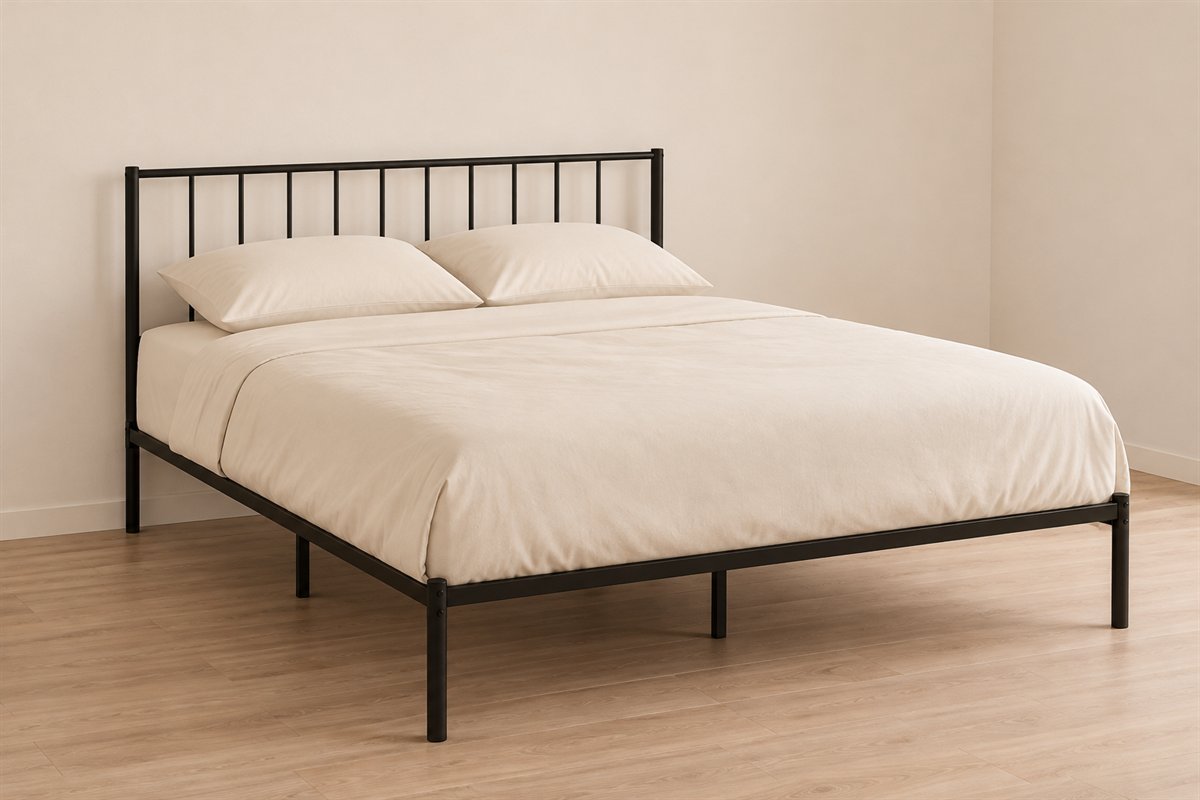
A slim dark bed frame can introduce definition while warm-white walls and pale bedding keep the room comparatively simple. Let the dark outline remain visible rather than repeating black across every cabinet and wall. A broad pale field can support that single stronger line.
Compare the real frame with the floor and any existing dark hardware. Similar depth may be enough without an exact finish match. Choose the complete frame and mattress support by their instructions; an open black outline cannot prove a lighter weight or a smaller usable footprint.
16. Try muted clay with a quieter pale bed

A restrained clay wall can provide a warmer direction for a modern bedroom. Keep the bed and textiles plain while comparing the larger color field. The wall can supply the decorative emphasis without another headboard pattern or collection of matching objects.
Check the clay beside the actual floor, particularly where the wood already has a red-brown note. Compare a muted and a clearer candidate in the same positions. Keep the one that gives the retained surfaces a considered relationship instead of assuming all earthy colors will automatically work together.
17. Let a broad wood headboard be the main material feature
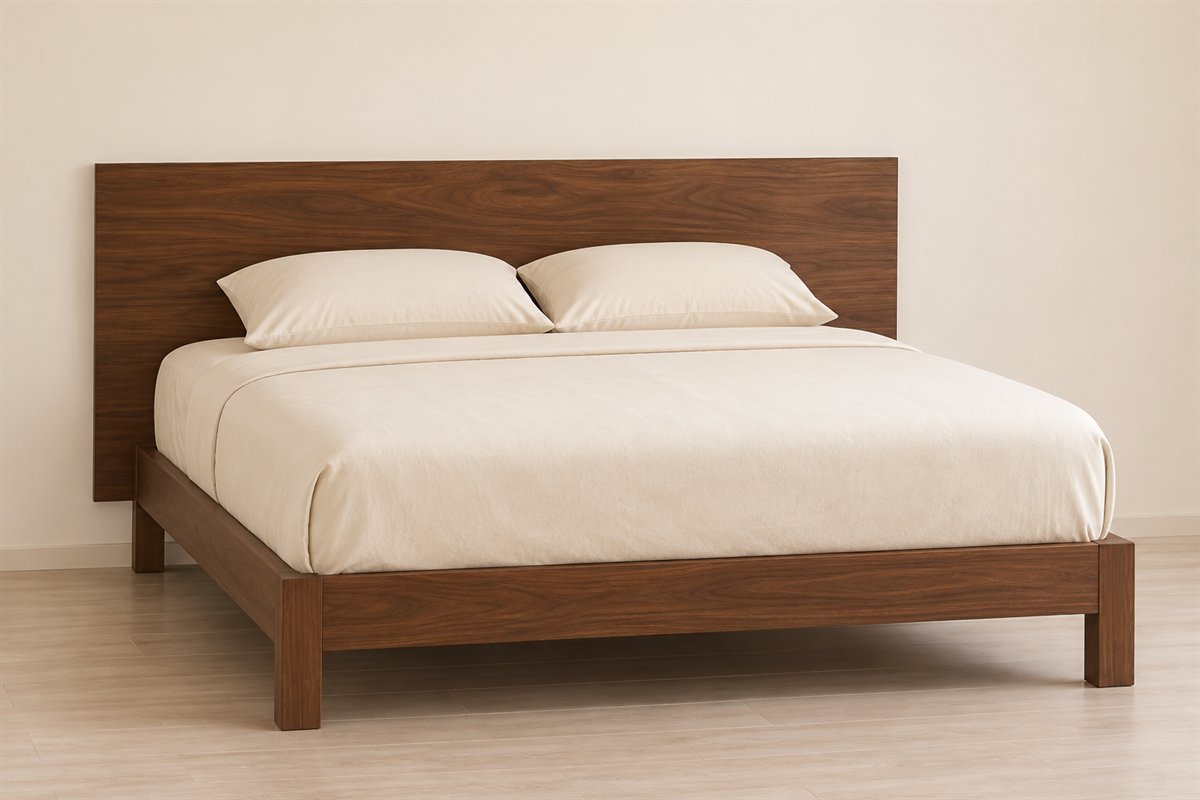
A broad plain wood headboard can connect the bed group through one substantial material surface. Keep the wall and bedding quiet so the grain remains readable. Compare the whole panel with the bed and any useful bedside pieces rather than selecting only an attractive small sample.
Check openings, controls and the actual mounting or frame connection before extending the panel. A broad modern outline should not cover equipment that needs access. Choose the wood or wood-look product for its own use and care rather than assuming the generated grain identifies a particular material.
18. Contain vertical slats within one bed-wall field

A restrained slat field can provide the bedroom’s main repeated line. Give it a clear boundary and keep bedding and neighboring cabinet fronts simpler. The complete room matters more than a close-up of one attractive timber strip.
Compare the actual slat width, spacing and finished depth with a useful sample. Resolve support and all adjoining edges before choosing the final field. A repeated wood pattern is a visual texture; it does not establish a tested acoustic rating or make the bed wall a technical sound treatment.
19. Choose one larger graphic instead of many small marks

A single restrained abstract can give a plain modern bedroom a personal focal point. Keep the frame and surrounding wall simple enough for the image to read from the doorway. Choose work you enjoy rather than a print selected only because it repeats the bedding color.
Test the full frame outline before fixing it. Use suitable secure support for the actual object and wall, especially in relation to the bed. Compare reflections in the ordinary light and keep several smaller matching pictures optional if the larger piece already supplies the pattern.
20. Keep the ceiling quiet when the bed wall already leads
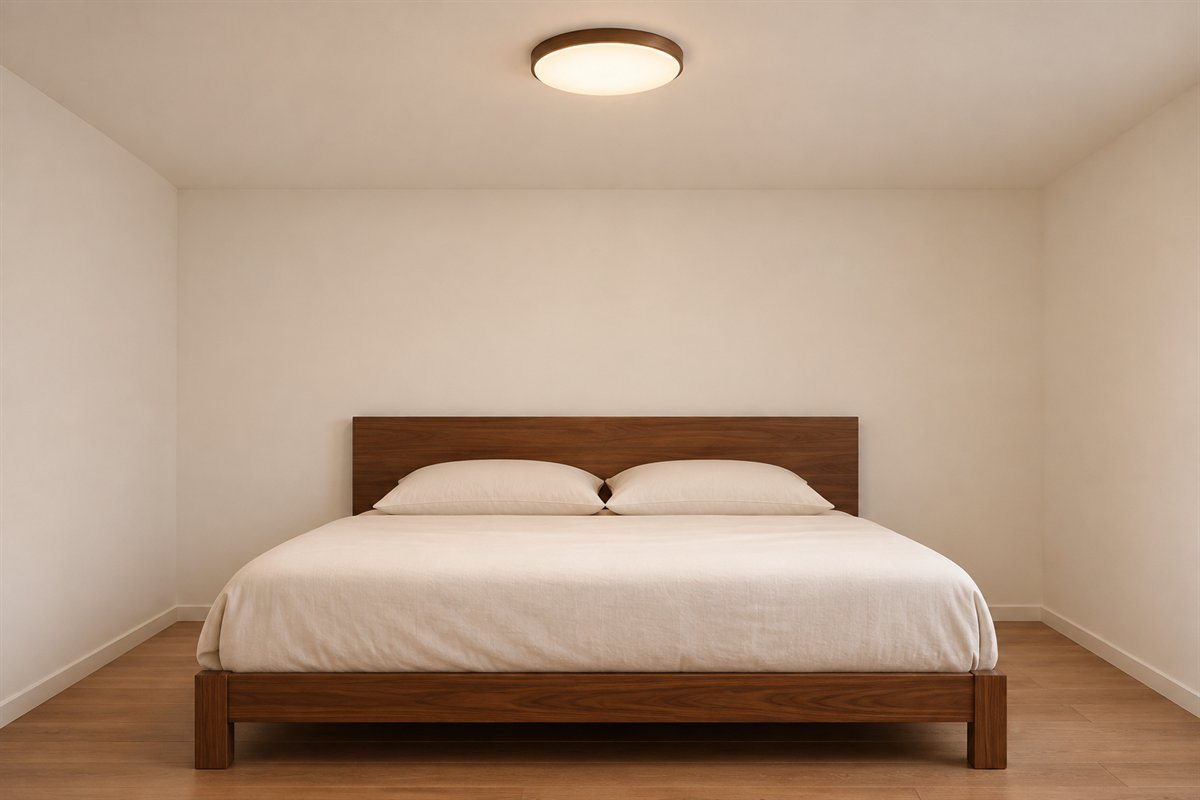
A plain ceiling can let a strong headboard or wood bed wall remain the main feature. There is no need to add a cove, decorative beam or dramatic pendant to every modern room. Compare the complete upper view from the bed before introducing another permanent layer.
If the existing plane needs work, identify its condition and appropriate finish first. A decorative ceiling cannot solve an unresolved defect or substitute for useful room light. Keep the changes connected to the actual project and choose the simpler overhead option when it already completes the room.
21. Make closed wardrobe fronts part of the room palette

Plain closed wardrobe fronts can provide a quiet background for the bed rather than another decorative feature. Compare their broad color with the wall and headboard. Useful storage can be visually restrained without needing to match every small bedside object.
Allocate the actual contents and check the opening arrangement before choosing the front style. Follow the selected cabinet’s support and restraint instructions. A seamless-looking image cannot establish capacity or fit, so keep the product dimensions and operation with the room plan.
22. Use a low dresser without filling its whole top

A low simple dresser can provide a horizontal companion to the bed and a useful home for folded clothing. Leave a clear working portion on top rather than treating every inch as a display area. Its broad outline may supply enough visual balance beside a taller wardrobe elsewhere.
Choose the drawer interiors from the actual belongings and keep the full opening useful. Use appropriate restraint and support for the selected furniture. If the dresser has no storage job, compare the room without it before ordering another matching unit to complete a supposed bedroom set.
23. Position a plain dressing mirror for the useful view

A restrained full-length mirror can support dressing while giving the room another clear vertical shape. Test its actual view near the storage used for clothes. Choose the position from the routine rather than filling the only empty wall automatically.
Check the reflection from the bed and entrance before fixing it. Use a mirror intended for the selected mounting arrangement and suitable secure support. A larger reflection changes the visual composition, but it does not create physical floor space or establish that a leaning object is appropriately restrained.
24. Give a reading chair a complete occupied corner
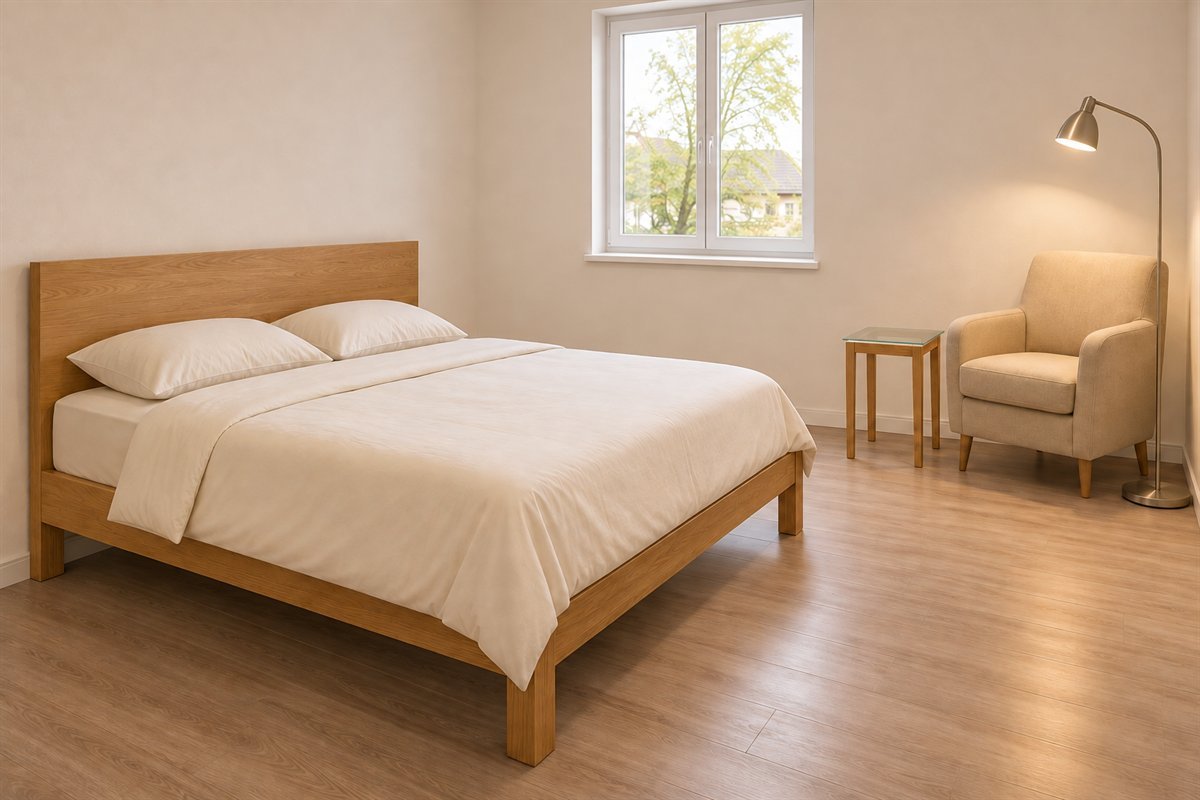
One simple chair can add another useful activity to a modern bedroom when its whole group fits. Keep its outline restrained and leave room to approach, sit and stand. A small reachable table and useful light matter more than styling the chair with several cushions.
Try an existing chair in the position before buying a new one. Check the normal bed and wardrobe route while the chair is occupied. If the corner is comfortable only when the table or lamp is removed, a simpler arrangement may better serve the room.
25. Keep a bedroom desk separate from the bedside job

A modest desk can belong to the room when it has a clear work role and a place to put its contents away. Give the chair its real occupied position while comparing the layout. The desk should not consume the surface needed for ordinary bedside use.
Check the screen position, glare and the room after work has finished. Keep storage limited to what the actual task needs. If work repeatedly spreads across the bed, review the return routine or another work location before choosing a larger desk because it has a cleaner-looking modern shape.
26. Leave the bed end open when another piece has no job
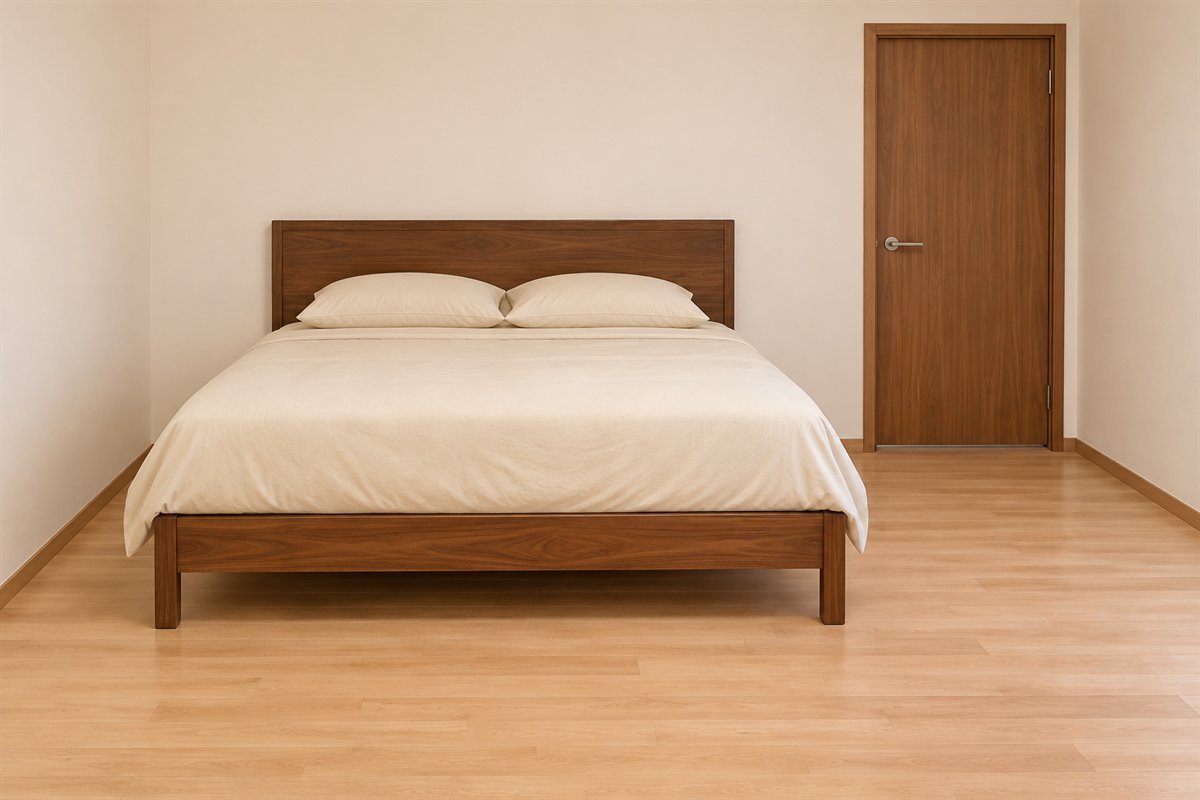
A clear bed end can be a deliberate part of a modern bedroom. The frame, bedding and a quieter floor may already make a complete composition. A bench, ottoman or decorative stool is optional when the room does not need another seat or storage volume.
Walk the ordinary routes, make the bed and open nearby storage before deciding the empty area is missing something. Keep the furniture that supports those tasks. The modern quality comes from a considered set of relationships, not a required number of pieces or an image with every gap filled.
Three modern directions can begin with the same useful bed
A warm modern room might keep a wood frame, plain ivory bedding and one substantial textile texture. A stronger contrast direction could retain that bed while giving one larger wall a deeper tone. A softer version might use a pale wall and plain upholstery elsewhere. None requires every item to be new or part of a single range.
Choose the direction from the surfaces already present. A strongly grained floor may need less patterned furniture, while a plainer floor can leave room for a more expressive headboard. Keep the ordinary lamps and window coverings in the comparison so the preferred version is not judged only in an ideal daytime photograph.
Modern is a useful description of an intended visual mix, not a fixed furniture specification. Keep your own familiar objects when they have a role. One older bedside table can belong with a newer bed if their scale, reach and material relationship work.
A worked example with an oak bed and a crowded dresser
Imagine a hypothetical bedroom keeping a serviceable oak bed and cream curtains. The proposed shopping list adds a large headboard panel, two new lamps, a bench and matching dresser ornaments. Before ordering, describe the actual issue: several small displays compete with the bed, while everyday items have no clear return place.
Try the hierarchy card first. Keep the oak bed as the main furniture line, give the dresser top a useful clear area and compare one plain bedding textile beside the curtains. Put the displaced everyday items in a genuinely accessible drawer rather than moving them into a new decorative basket on the floor.
Use the room for an ordinary evening and morning before revisiting the bench and headboard. The smaller edit may be enough, or it may identify a specific storage need. This is an original hypothetical example, not a measured client room, product test or claim that removing objects resolves every layout problem.
Judge furniture with its full use, not only its outline
A bedside unit includes the drawer when open. A wardrobe includes its door movement and retrieval position. A reading corner includes the occupied chair, and a desk includes the person sitting at it. Keep those states in the plan while comparing the quiet modern silhouette.
Use the complete outside frame dimensions rather than only the mattress label. Include the actual rail, headboard and projecting legs, then retain the selected frame and mattress support instructions. For storage furniture, follow appropriate restraint guidance and resolve suitable support for the actual wall-mounted product.
A commercial reference may offer one suggested walking gap, but no single number settles every room or user. Test the real routine with the actual furniture and applicable requirements. A generated open-looking room does not establish a measured clearance, safe mounting or product compatibility.
Keep materials personal and the daily reset manageable
Wood, plain cloth, restrained metal and a limited print can create enough variety without a large accessory group. Handle actual swatches and compare the broad surfaces together. A textile’s visual softness does not establish its fiber, laundering method or suitability for the user.
Keep a sensible home for anything removed from the bed at night. Check the bedside switches, window-covering movement and clothing-storage return before calling the arrangement complete. If a decorative item repeatedly moves out of the way, reconsider whether that particular item needs to remain.
IKEA’s bedroom styling guide starts with the bed and connects storage, dressing and personal finishes. BoConcept likewise relates the room to intended use before a style imitation. These are commercial references for practical comparisons. Our hierarchy card, hypothetical example and 26 room concepts are original and do not copy a brand’s products or photographs.
What makes a bedroom look modern?
A considered relationship between furniture outlines, larger finishes and useful storage can create a modern direction. It need not be all white or completely empty. Choose which feature should lead and keep competing details selective.
Can modern bedrooms use warm wood?
Yes. Compare a substantial wood frame, headboard or cabinet with quieter surrounding finishes. Keep the real floor and grain in the comparison rather than assuming every timber item must match exactly.
Do I need matching bedside tables?
No. Choose each piece for its contents, reach and complete footprint. A related finish or restrained palette can connect different useful pieces without requiring identical drawers or dimensions.
How do I make a modern bedroom less plain?
Try one substantial texture, a clearer material contrast or a meaningful larger artwork. Compare it with the bed and retained textiles before adding several small decorative objects.
Does a modern bedroom need a low bed?
No. Choose the finished bed height and support for the user, mattress and room. A lower outline is one visual option, not a requirement or a guarantee of comfort.
A practical next step
Keep the useful bed and choose a clear hierarchy around it. Compare real materials, give storage and lighting their ordinary jobs, and let optional pieces wait until they have a purpose. A personal modern bedroom can be warm, practical and complete without a matching set.
Compare complete bed-frame dimensions and mattress support. Plan a bedroom makeover around the everyday routine. Explore other personal bedroom style directions.
Images are original AI-generated bedroom decor concepts, not named products, measured layouts or tested furniture. The visual-hierarchy card and hypothetical example are original planning aids.
Sources and care references
- IKEA: connecting the bed, storage and personal finishes
- BoConcept: bedroom purpose, furniture and layout considerations
Optional digital guide for this topic
If you prefer a structured workbook, explore this related paid guide.