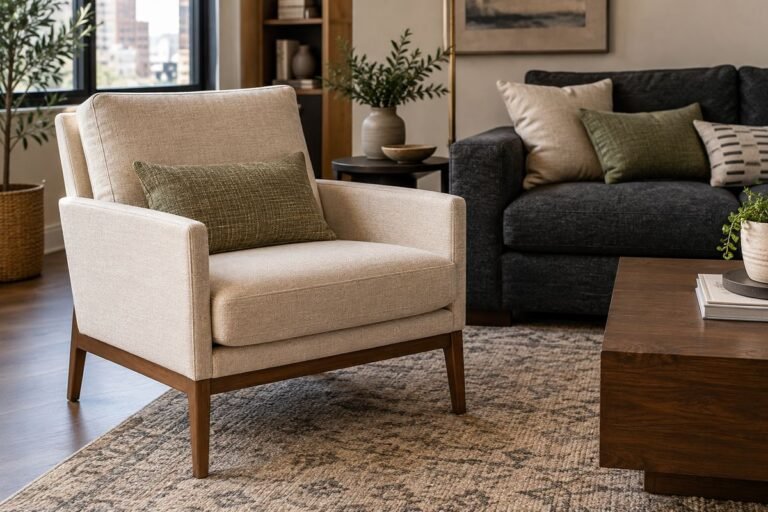
A sofa slipcover can change the largest fabric surface in the living room while keeping a frame you already enjoy. The most convincing result begins with a compatible cover and seams that follow the furniture rather than a color chosen in isolation.
Use these ideas to plan the fit, fabric appearance and surrounding palette. They describe decor concepts, not promises that one ready-made cover will suit every sofa or repair worn cushions and structural problems.
The images are original AI-generated decor concepts, not installation diagrams or photographs of completed client projects.
Browse These 25 Sofa Slipcover
Jump to an idea
- Start with a model-specific fitted cover
- Choose a tailored skirt for a softer outline
- Expose the legs with a shorter fitted hem
- Use warm white with a textured rug
- Choose oatmeal for a gentle neutral base
- Ground a bright room with navy
- Try muted olive with warm wood
- Use dusty blue with cream accents
- Choose clay as a warm furniture accent
- Use charcoal with a lighter lower layer
- Choose a fine stripe for quiet movement
- Use a broad stripe as the main pattern
- Try a small-scale check in a simple room
- Let a textured solid replace busy pattern
- Use separate cushion covers for a clearer fit
- Preserve the bench-seat silhouette
- Use piping to define the sofa shape
- Choose a relaxed cover with intentional folds
- Coordinate a sectional by its actual modules
- Use a contrasting armchair instead of a matching set
- Relate the cover to existing curtains
- Keep a spare compatible cover as a planned option
- Choose care requirements that fit the household
- Give a floated sofa a finished back view
- Finish with fewer pillows and a visible cover
Make a Sofa Slipcover Fit Record Before Choosing Fabric
Record the brand, model, approximate purchase period, arm profile, cushion count and whether the cushions are removable. Add photographs of the front, side, back and existing fastening details. Model-specific covers are not interchangeable: IKEA’s UPPLAND cover listing, for example, specifies that it fits the UPPLAND frame only. Follow the exact cover’s fitting instructions and care label.
| Sofa detail | Possible approach | What to establish |
|---|---|---|
| Known removable-cover model | Exact compatible replacement | Model, version and included pieces |
| Unusual arms or cushions | Custom fitted cover | Full measurements and maker consultation |
| Simple compatible shape | Suitable ready-made fitted cover | Maker size range and return terms |
| Moving mechanisms or special features | Only an approved compatible cover | Full operation and required openings |
A Five-Line Cover Comparison Card
Make one card for each candidate: exact compatible sofa; pieces included; fabric and color sample; wash/dry method; and the route for removing and refitting it. For example, a three-seat sofa with three separate seat cushions needs a different cover set from a bench-seat design, even if both are described as three-seaters. Confirm the number and shape of covers rather than relying on the seat label.
The Seated Fit Trial
After fitting a compatible cover as instructed, photograph the empty sofa, sit in the usual place and stand up again. Compare the arm seam, front hem and cushion edges in the second photograph. A relaxed fold may suit the design, while a seam pulled far off the arm suggests a fit problem. Keep the trial free of decorative pillows so the cover itself remains visible.
1. Start with a model-specific fitted cover
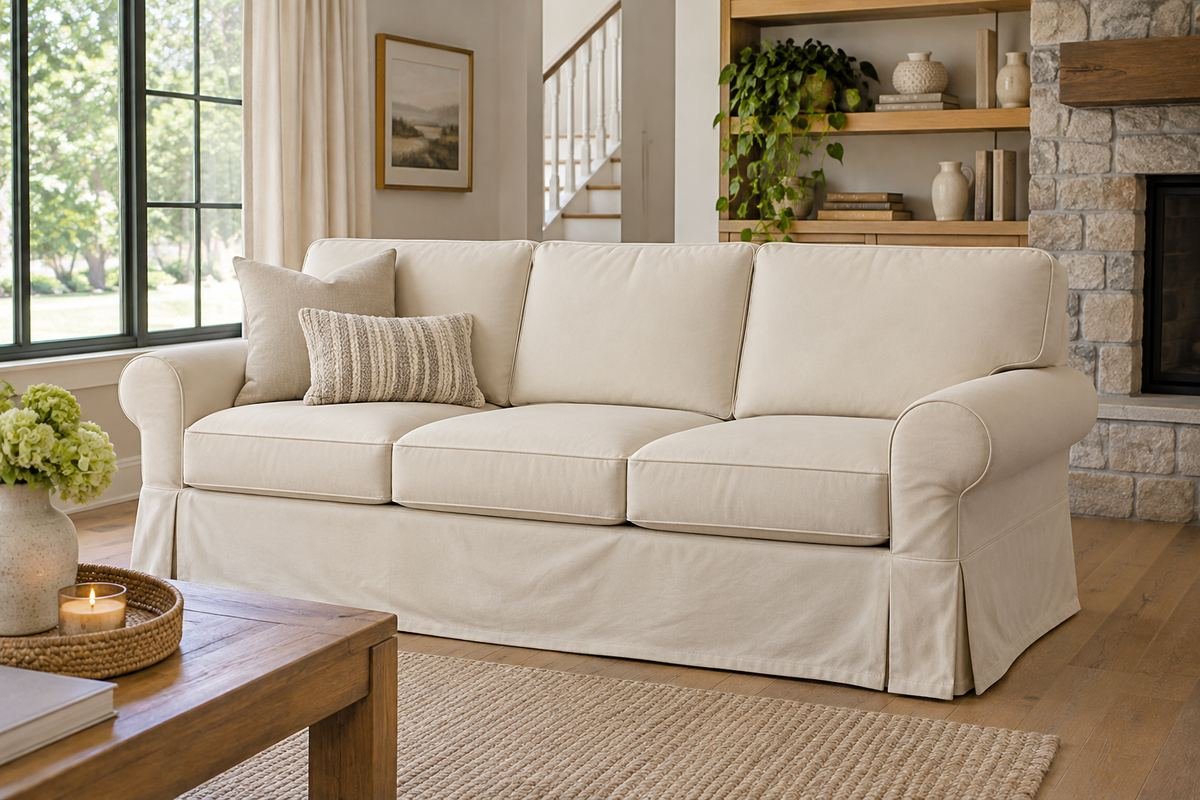
A cover made for the exact sofa model has a clearer starting point for arms, cushions and fastenings. It can preserve the familiar furniture outline while replacing a tired fabric appearance.
Match the version and included pieces rather than assuming the brand name alone establishes compatibility. Lay out the cover set according to its instructions before fitting it. Keep your existing cover until the new one has been checked on the actual sofa.
Practical tip: Photograph the sofa label and cushion layout for the compatibility record.
2. Choose a tailored skirt for a softer outline
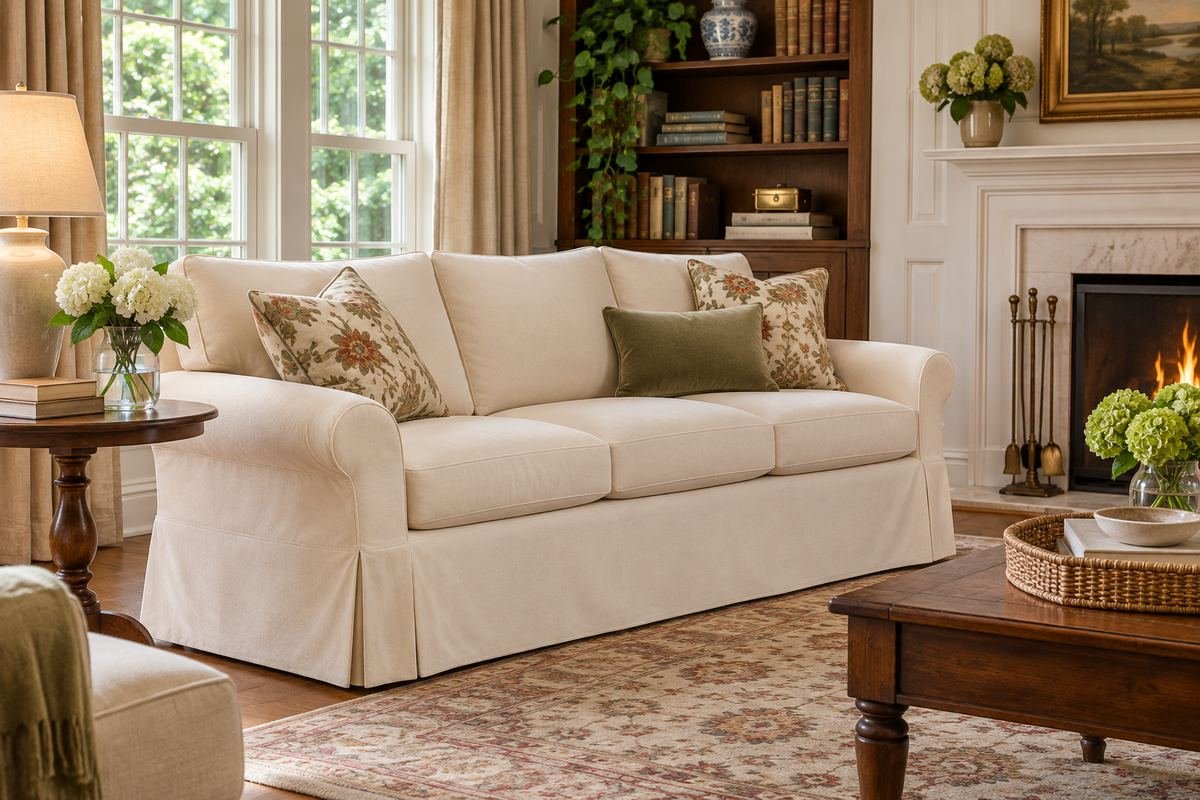
A fitted skirt can soften a sofa base and create a relaxed, complete fabric silhouette. It is useful when the visible legs do not contribute much to the room’s design.
Choose the skirt length from the actual furniture and floor. It should follow the cover design without bunching into a cleaning obstacle. Keep folds intentional and confirm that the hem does not interfere with any moving furniture parts.
Practical tip: Review the front hem from the doorway and from a seated position.
3. Expose the legs with a shorter fitted hem
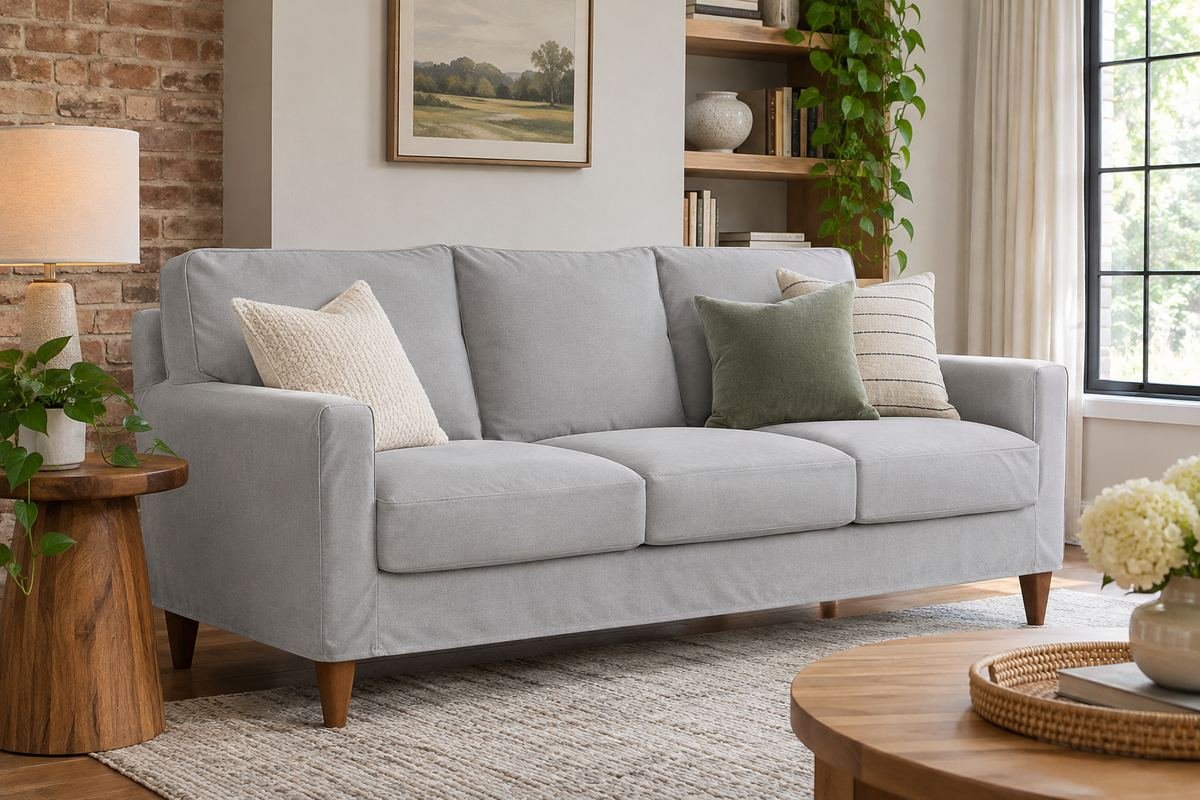
A shorter fitted cover can preserve a sofa’s leg detail and show more floor beneath it. This can suit a room where the furniture already has an attractive light base.
Establish whether the chosen cover is designed to end at that point. Folding an overly long cover underneath can disrupt the fit and fastenings. Coordinate the exposed wood or metal with one other room detail while allowing the upholstery to remain the main surface.
Practical tip: Compare the intended finished hem with the sofa’s original outline.
4. Use warm white with a textured rug
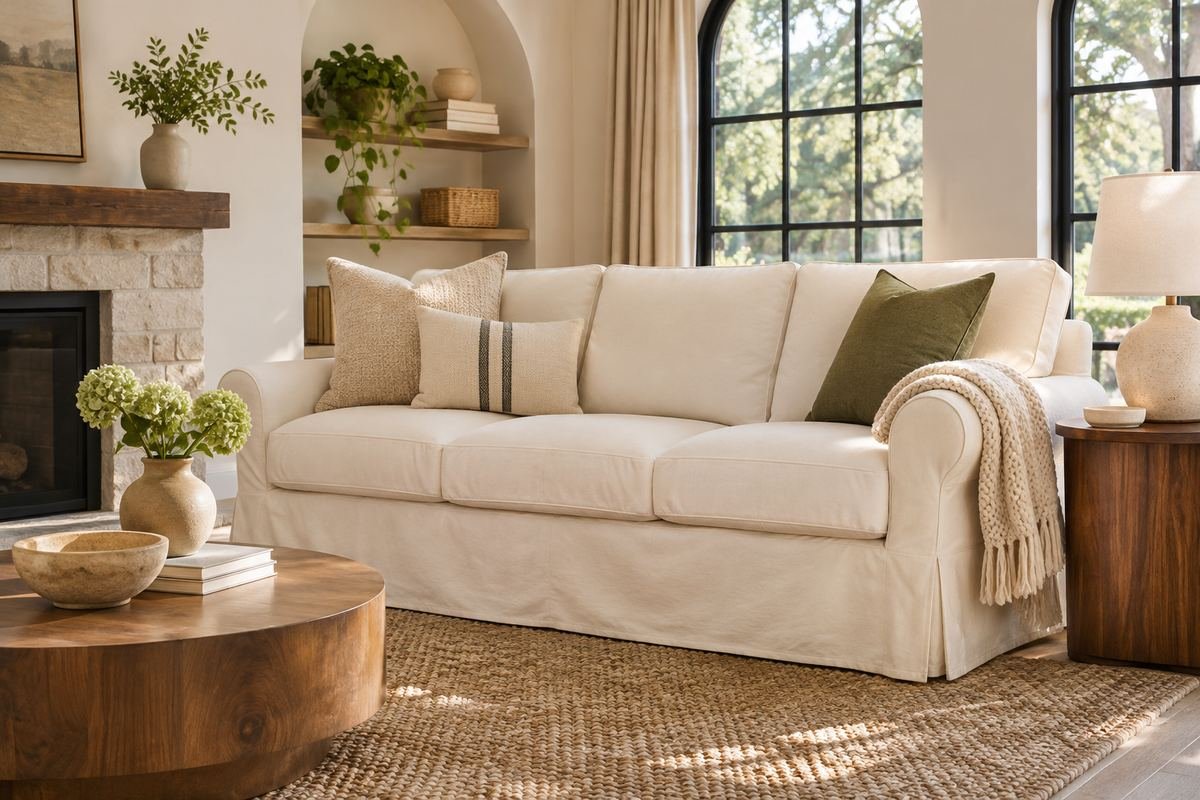
Warm white can create a quiet background for changing cushions and artwork. A textured rug and wood furniture help the large pale fabric surface feel considered rather than empty.
View the fabric sample beside the wall paint and existing floor. Different whites can look cream, gray or pink together, particularly after dark. Choose the care requirements from your routine and the actual product instead of assuming a light washable cover will be effortless.
Practical tip: Compare the sample on the sofa during daylight and evening use.
5. Choose oatmeal for a gentle neutral base
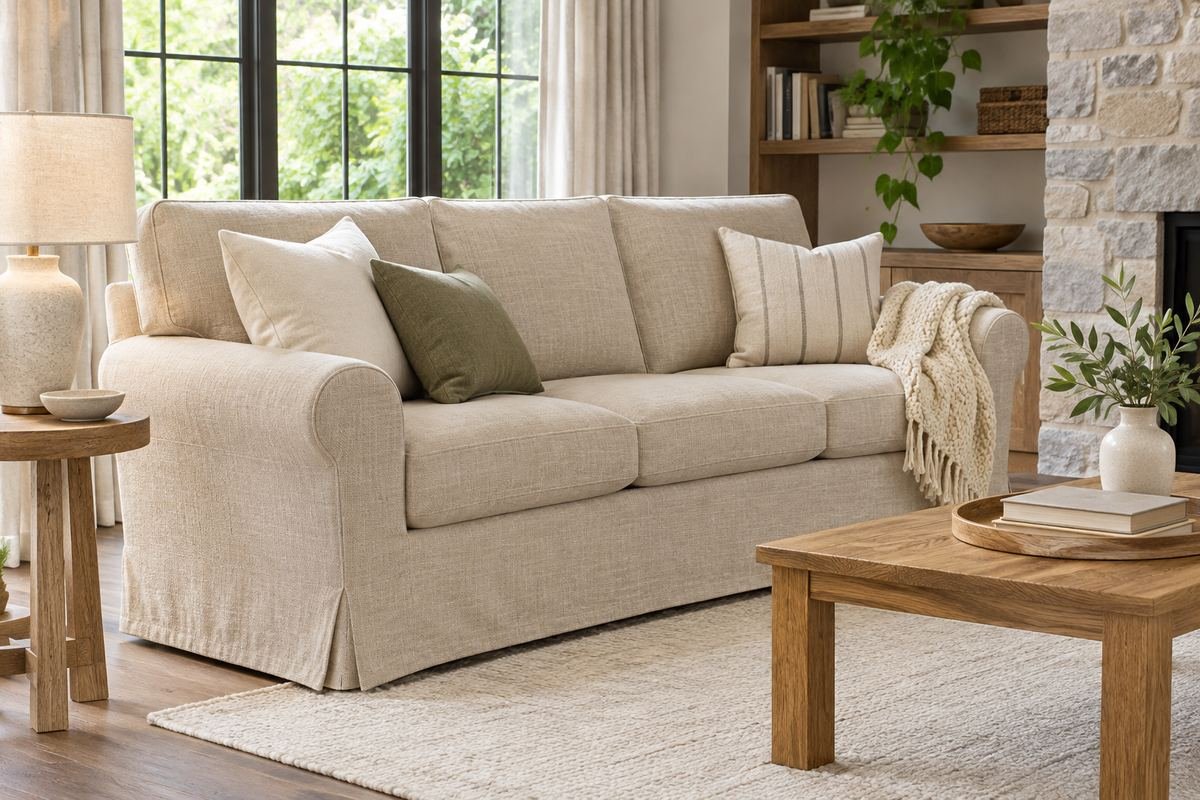
Oatmeal offers a warmer alternative to a crisp white cover. The small tonal variation can work with natural wood, woven accessories and cream walls without adding a strong new color.
Look at the sample across a cushion-sized area where possible. A tiny swatch may hide the overall weave or contrast. Relate the cover to the room’s existing warm surfaces and use a slightly different tone in the rug so the furniture edge stays visible.
Practical tip: Hold the sample against both the floor and the largest nearby textile.
6. Ground a bright room with navy
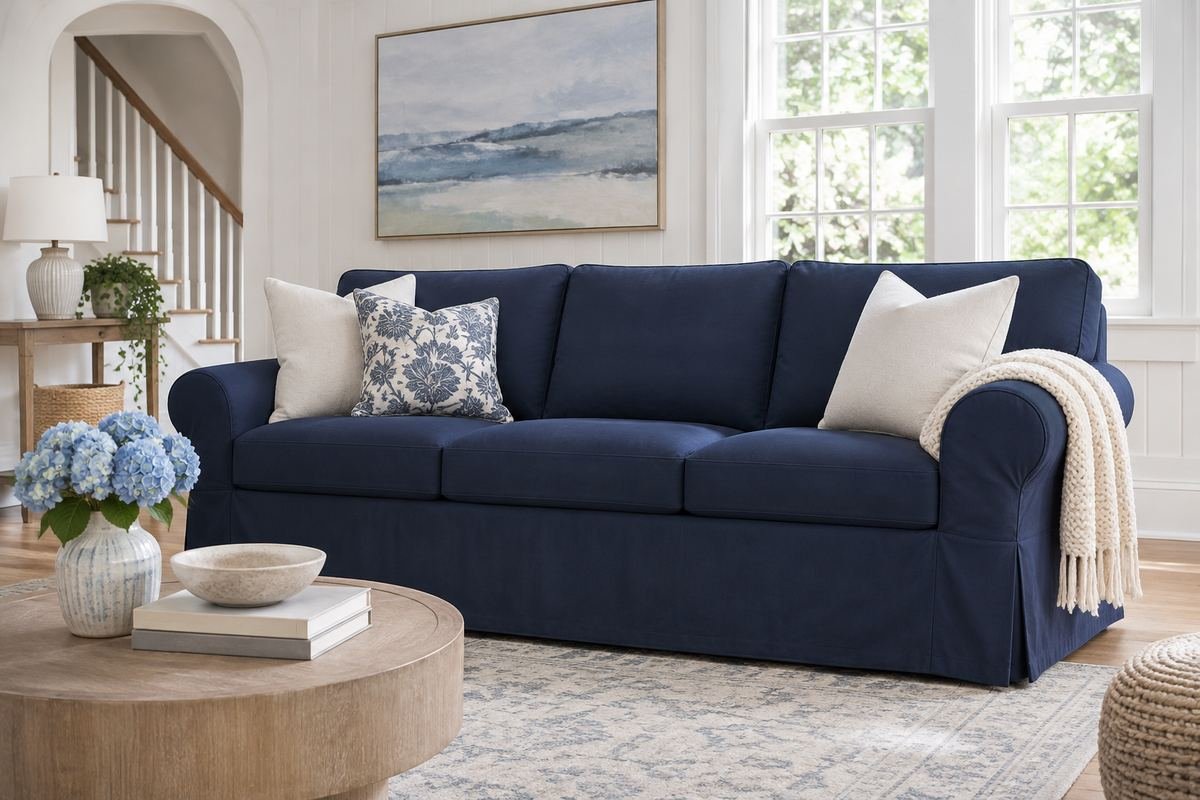
A navy cover can give a bright room a defined seating anchor. Pale walls and a lighter rug keep the larger dark fabric area from becoming the only visual feature.
Repeat the color sparingly in a small artwork or patterned cushion. Check the sample for visible lint and the way the fabric changes in side light. Dark color alone does not establish resistance to stains, fading or everyday wear.
Practical tip: See the sample under the lamp used for evening reading.
7. Try muted olive with warm wood
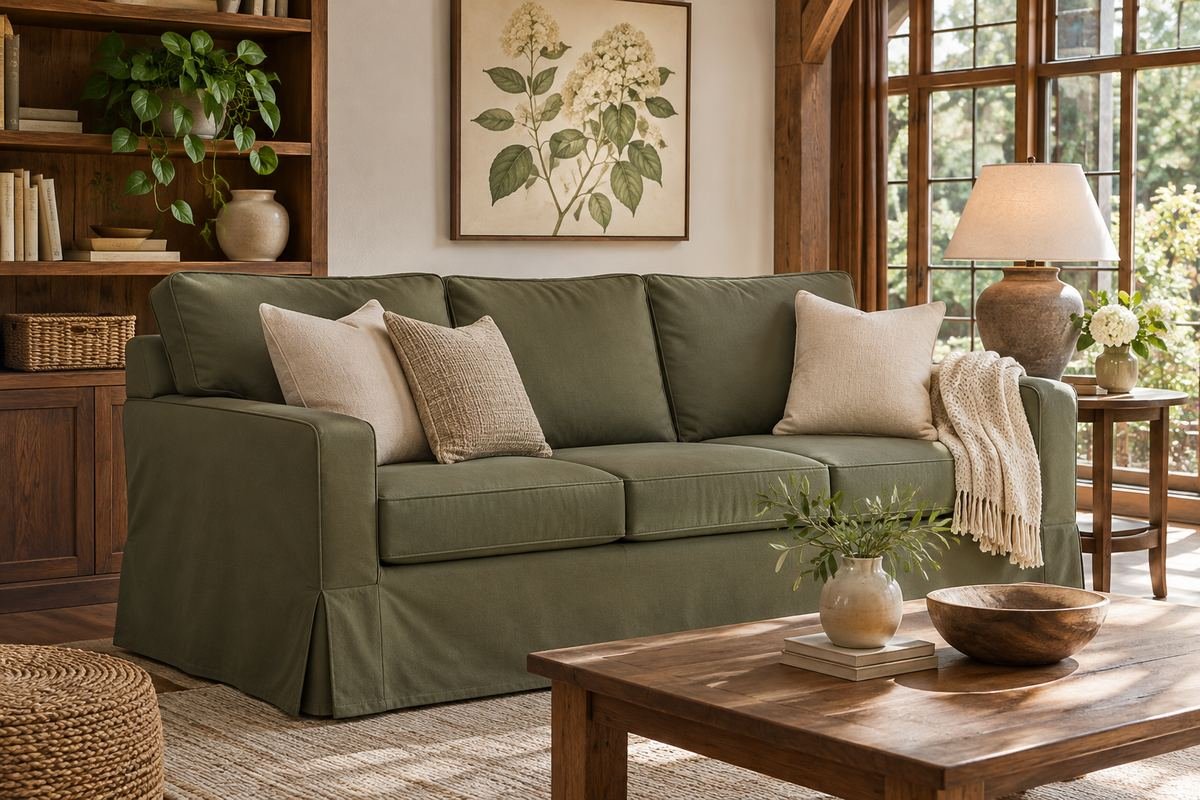
A muted olive cover can connect natural wood and subdued landscape colors. It creates a distinct color choice without needing a full room of matching green accessories.
Compare the green against fixed flooring and nearby curtains. A yellow-based olive may feel very different beside cool gray finishes. Keep one small repeated green detail and allow the sofa fabric to carry most of the color.
Practical tip: Choose the green from a physical sample rather than a screen image.
8. Use dusty blue with cream accents
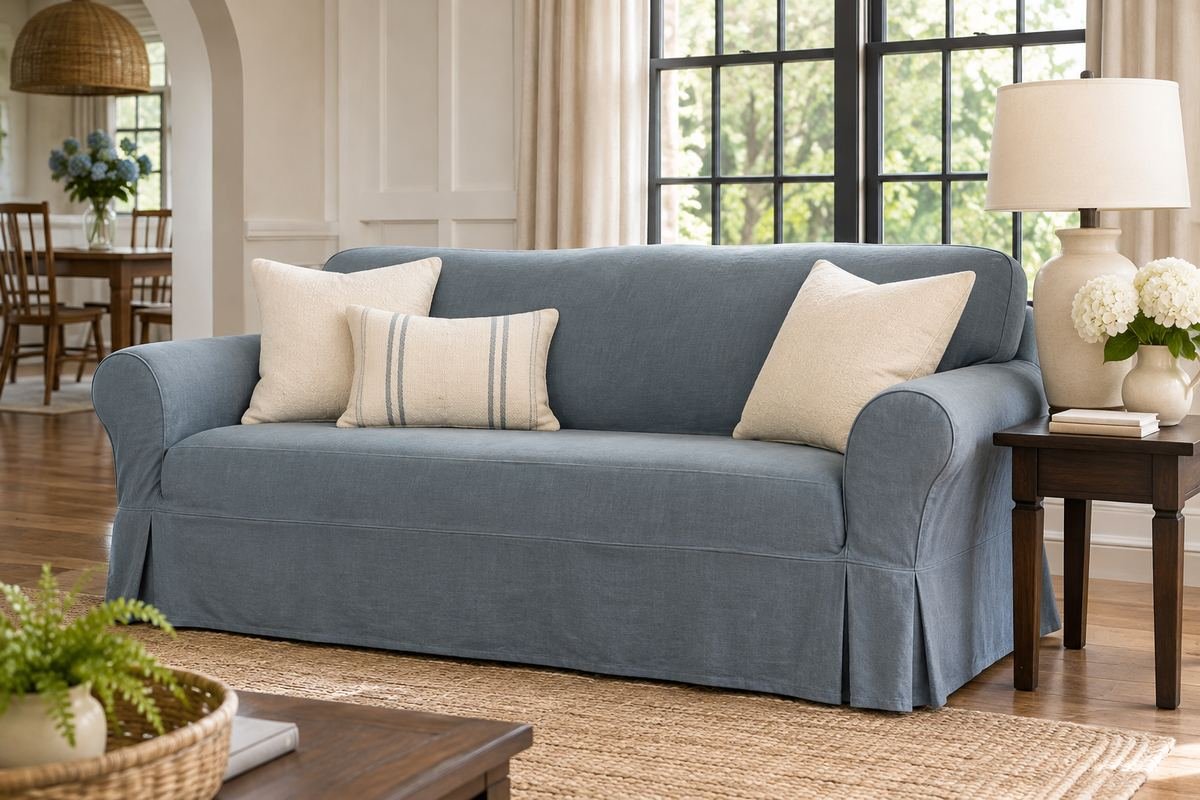
Dusty blue can bring color to a room while remaining gentle beside cream and oak. A cover with a clear fitted outline keeps the soft palette from looking loose or unfinished.
Balance the blue with a small number of warmer details. Too many similarly pale blues can flatten the room, so vary the value or texture around the sofa. View the cover near the window where changing daylight will affect it most.
Practical tip: Keep one darker accent to define the otherwise soft palette.
9. Choose clay as a warm furniture accent
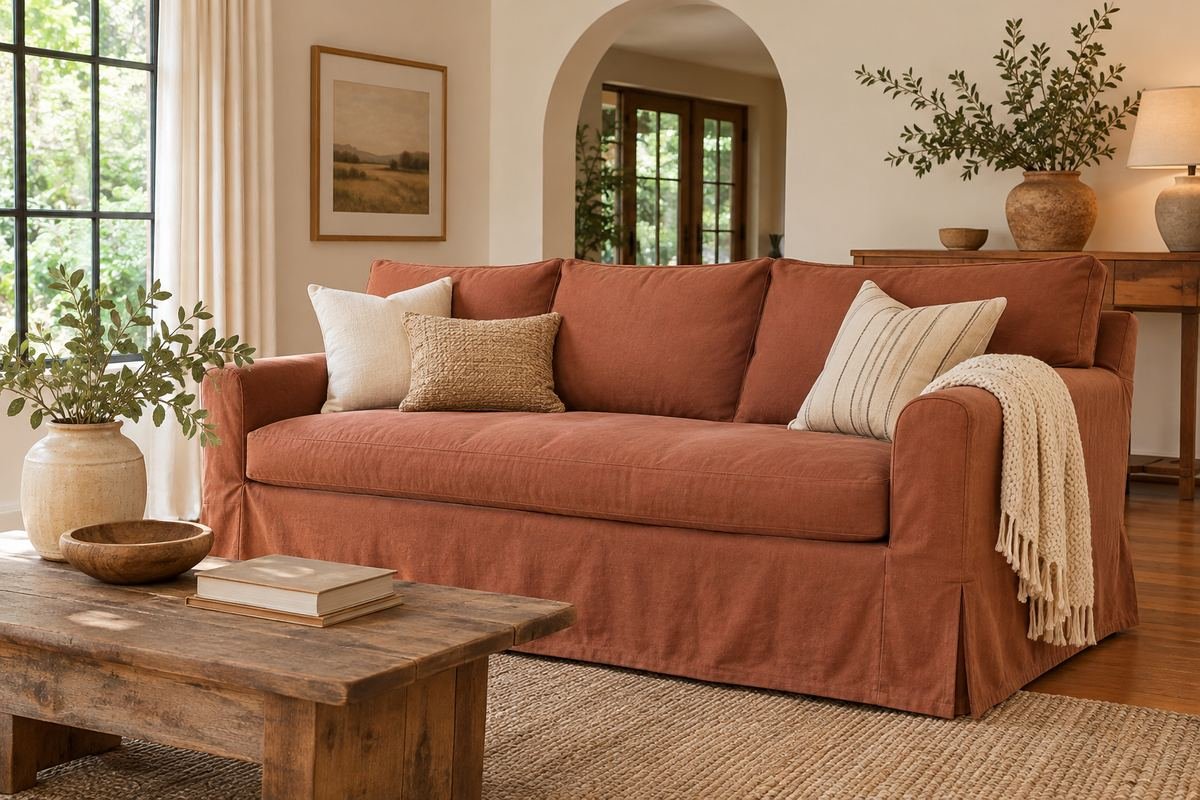
A muted clay cover can make the sofa the main color statement. It works especially well when surrounding walls and larger storage furniture are visually quieter.
Relate the undertone to wood, stone and existing rugs. Keep additional orange or red accents modest so the sofa does not compete with several equally strong areas. A physical fabric sample helps establish whether the shade feels soft or unexpectedly bright at home.
Practical tip: Try the sample beside the rug before buying new accent cushions.
10. Use charcoal with a lighter lower layer
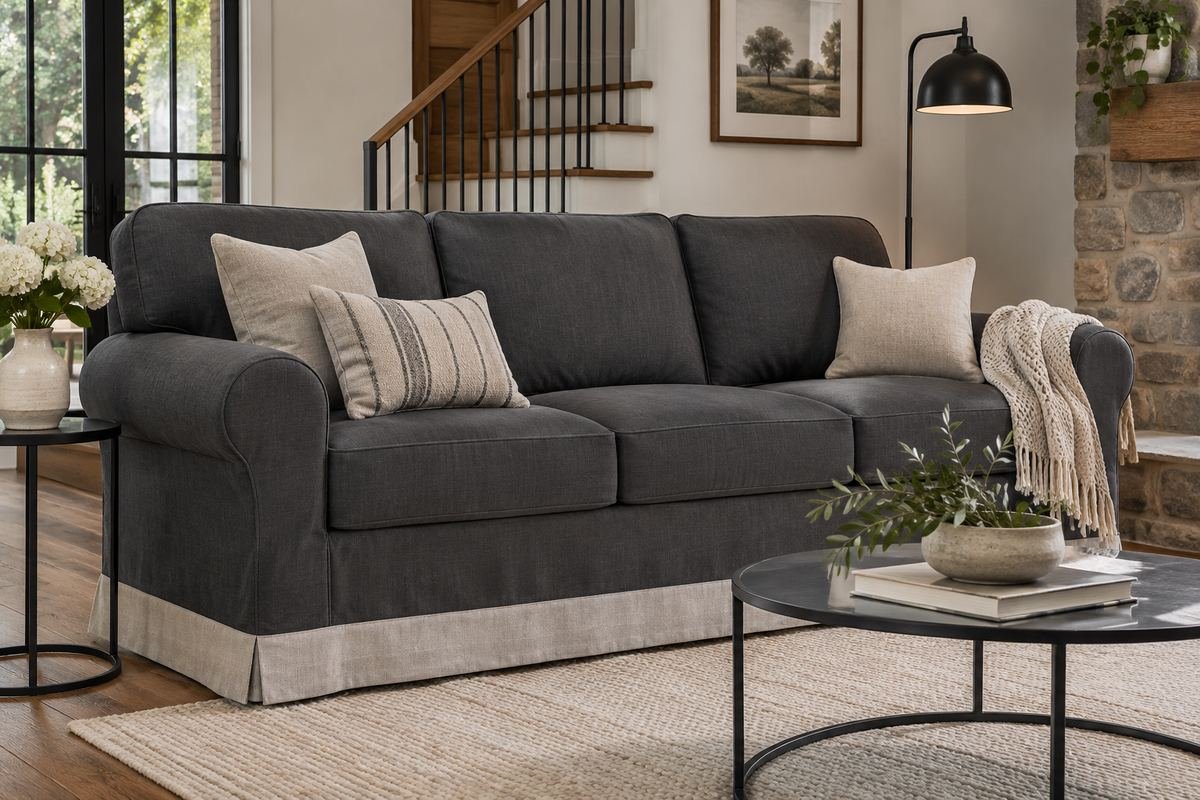
A charcoal cover can suit a room with existing black metal details or darker art. A lighter rug creates a readable outline beneath the sofa and avoids a continuous dark band at floor level.
Compare the fabric texture as well as the color. A flat charcoal and a mottled weave can look quite different across a whole sofa. Use a small pale cushion group to connect the seating with the walls without hiding the fitted cover.
Practical tip: Check how clearly the sofa base separates from the floor.
11. Choose a fine stripe for quiet movement
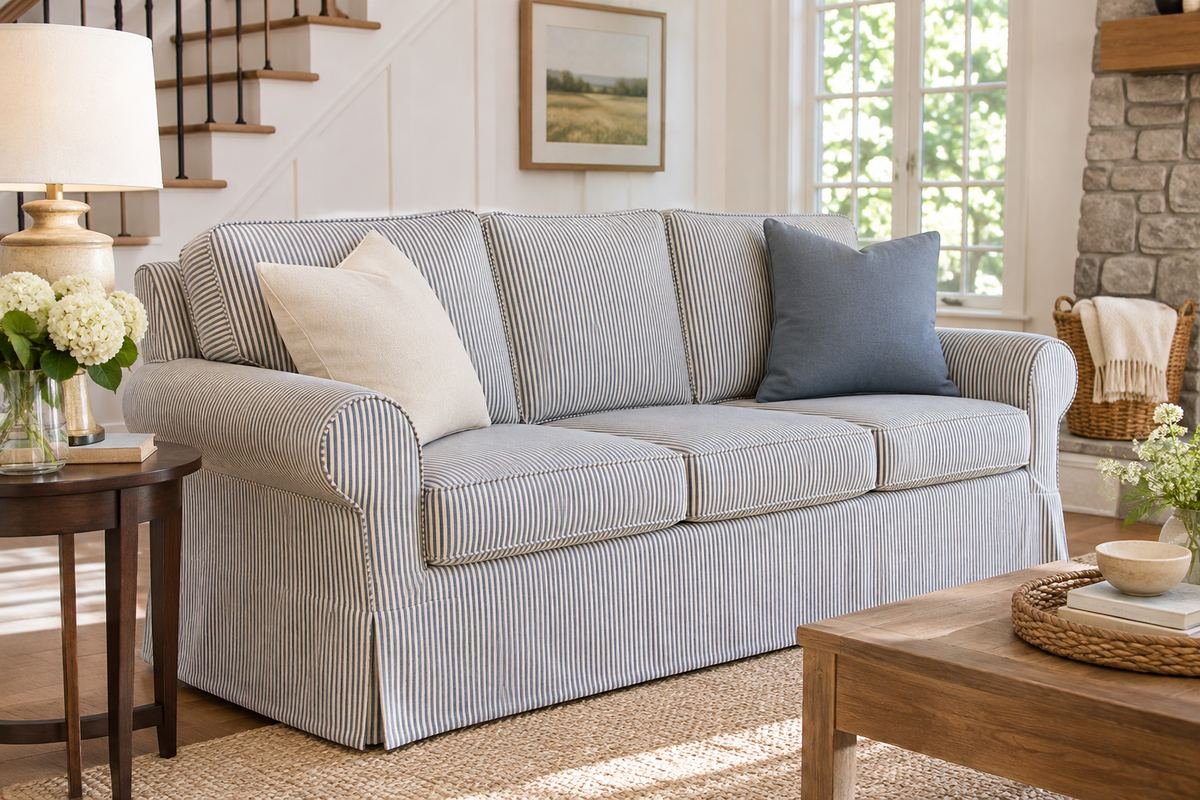
A narrow stripe can add pattern without requiring a bold multicolor cover. It can give a simple sofa more visual interest while remaining compatible with solid cushions.
The pattern direction and matching at seams are part of the final appearance. Review the actual product photographs or custom maker’s plan for arms, cushions and skirts. A striped cover should follow the furniture shape rather than appear twisted after fitting.
Practical tip: Use plain surrounding textiles so the stripe remains easy to read.
12. Use a broad stripe as the main pattern
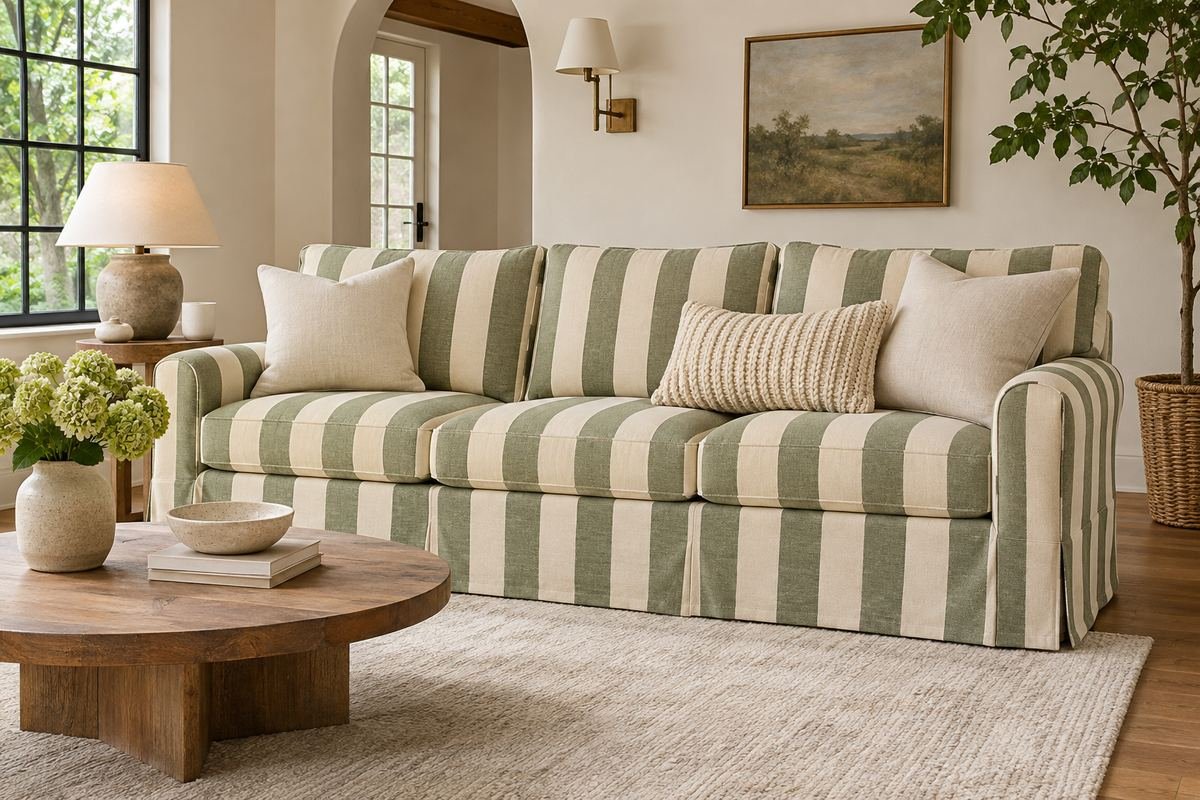
A broad stripe can make a familiar sofa a strong focal piece. It suits a room where the rug, curtains and larger nearby textiles can remain comparatively quiet.
Establish how the stripe meets cushion edges and arm profiles before ordering. Wide pattern repeats may look different on a compact loveseat and a long sofa. Keep the cover proportions visible rather than concealing most of the pattern with decorative pillows.
Practical tip: View a full furniture-scale illustration of the stripe placement.
13. Try a small-scale check in a simple room
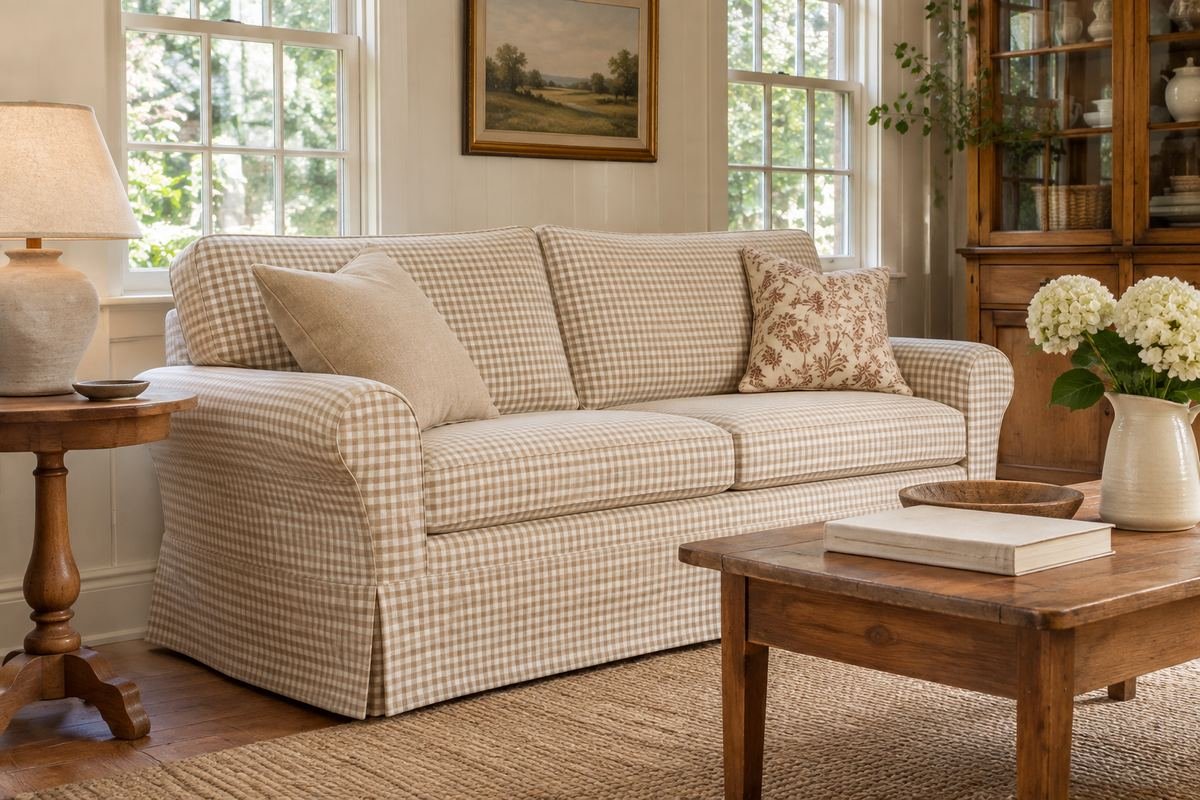
A small check adds a collected, informal character to a plain sofa. The repeated pattern can relate to traditional wood furniture without turning the room into a themed set.
Keep other patterns at a different scale or use mostly solids. Check the maker’s seam and pattern matching details, especially across separate cushions. The cover still needs compatible dimensions; a pattern cannot disguise a shape that does not fit.
Practical tip: Look at the check from across the room as well as up close.
14. Let a textured solid replace busy pattern
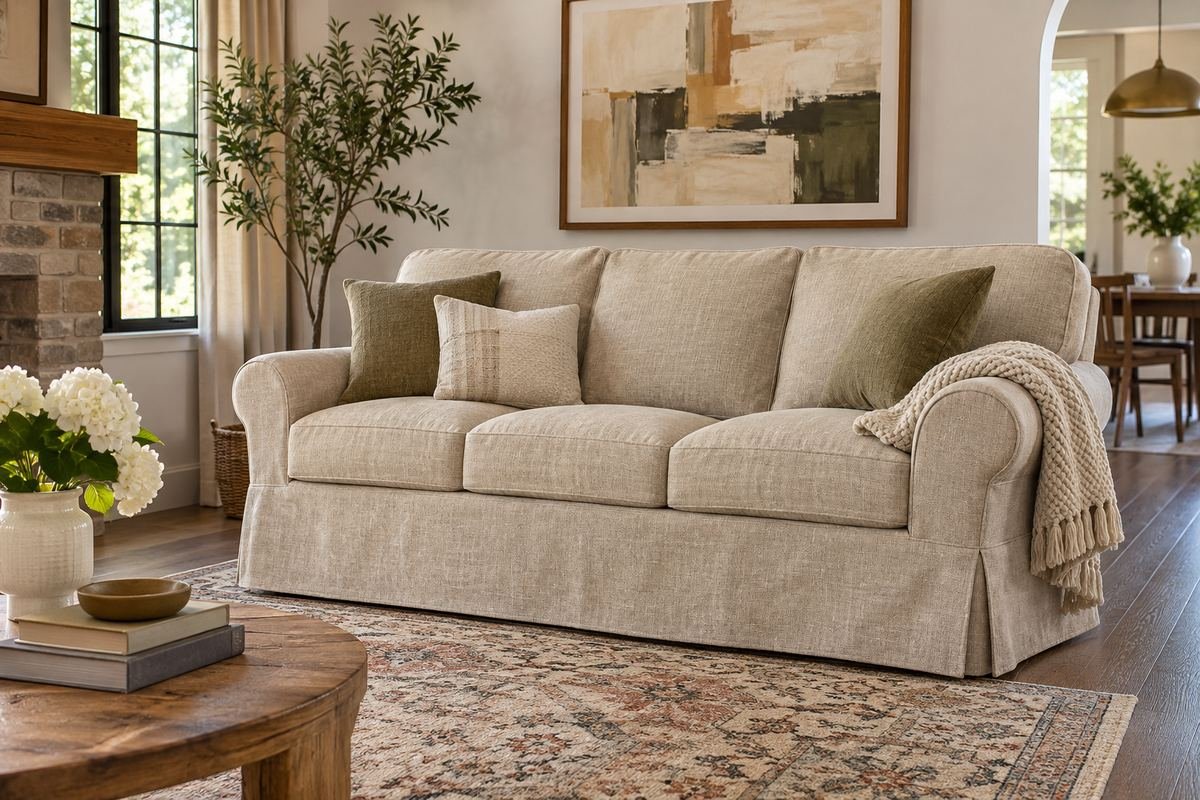
A textured solid can provide depth when a patterned cover would compete with artwork or a detailed rug. Small variations in weave become the interest across the larger fabric area.
Request a sample and feel the surface where it will meet skin during normal sitting. Texture, snagging and cleaning requirements depend on the fabric construction. Avoid selecting from the color name alone when the sofa is used for long relaxed evenings.
Practical tip: Compare the sample beside the room’s busiest existing pattern.
15. Use separate cushion covers for a clearer fit
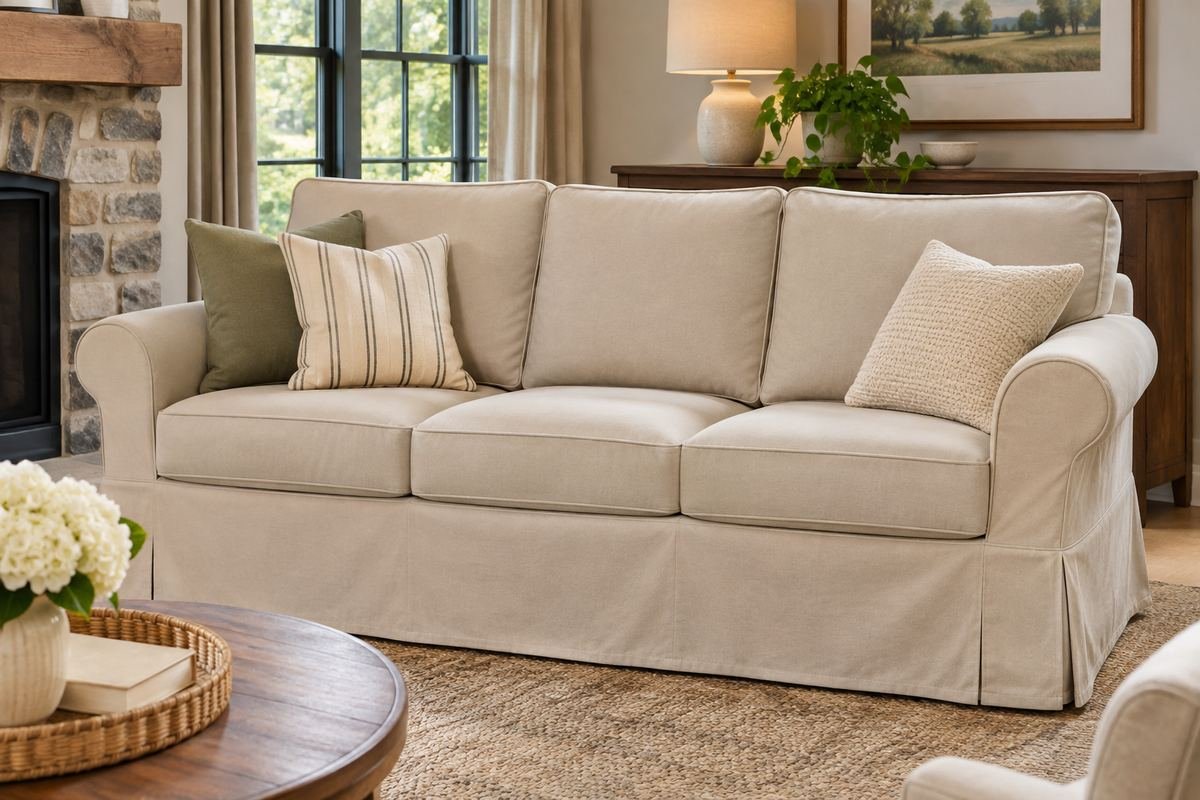
Individual cushion covers can make the sofa’s construction readable and allow the cover to follow each piece. They can suit a sofa designed with removable seat and back cushions.
Match the exact cushion number, shape and fastening arrangement. Do not assume cushions are reversible or that one side uses the same fabric unless the maker confirms it. Follow the fitting sequence so the covers do not pull the frame cover out of place.
Practical tip: Record whether any seat or back cushion has a distinct left or right shape.
16. Preserve the bench-seat silhouette
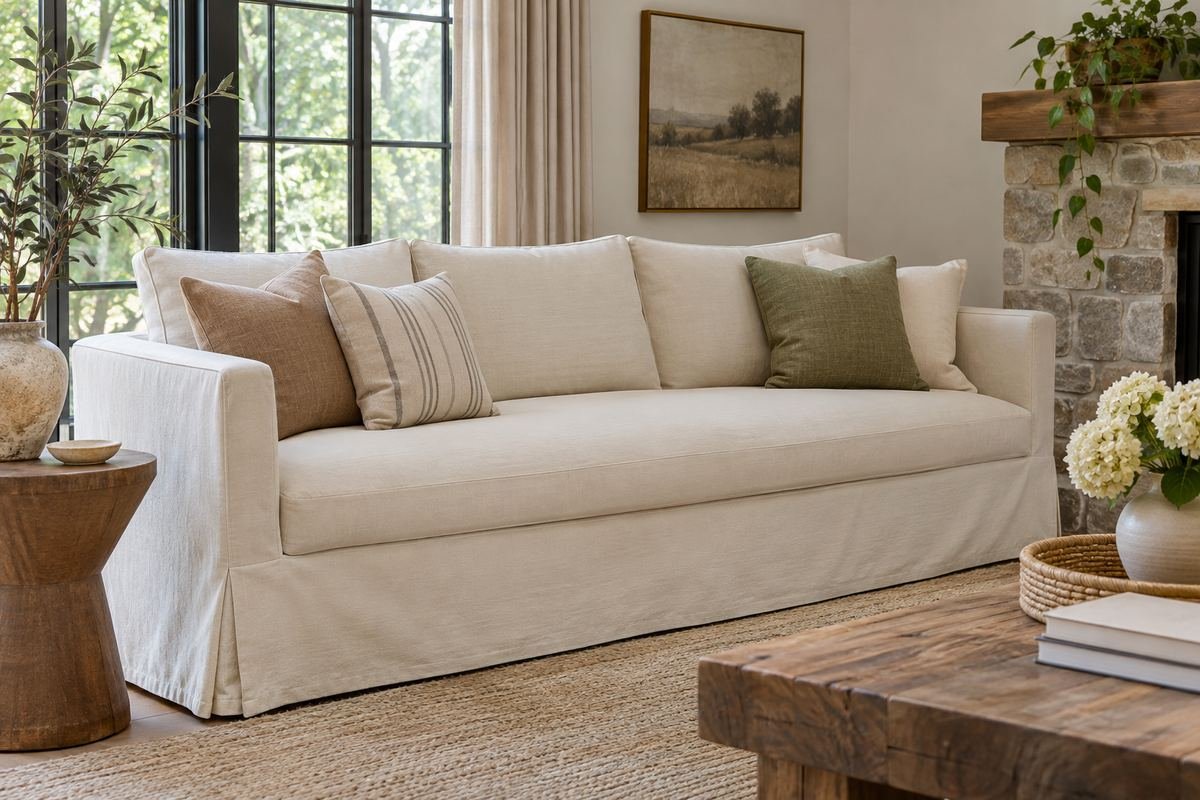
A bench-seat sofa can look especially calm with one continuous seat cover. It keeps the long horizontal line clear and reduces the number of visible fabric divisions.
Choose a compatible cover for the actual bench cushion rather than combining separate smaller covers. Confirm the cushion depth and its relationship to the arms. Keep the pillow arrangement modest so the simple seat shape remains part of the finished look.
Practical tip: Photograph the bench cushion without pillows for the fitting record.
17. Use piping to define the sofa shape
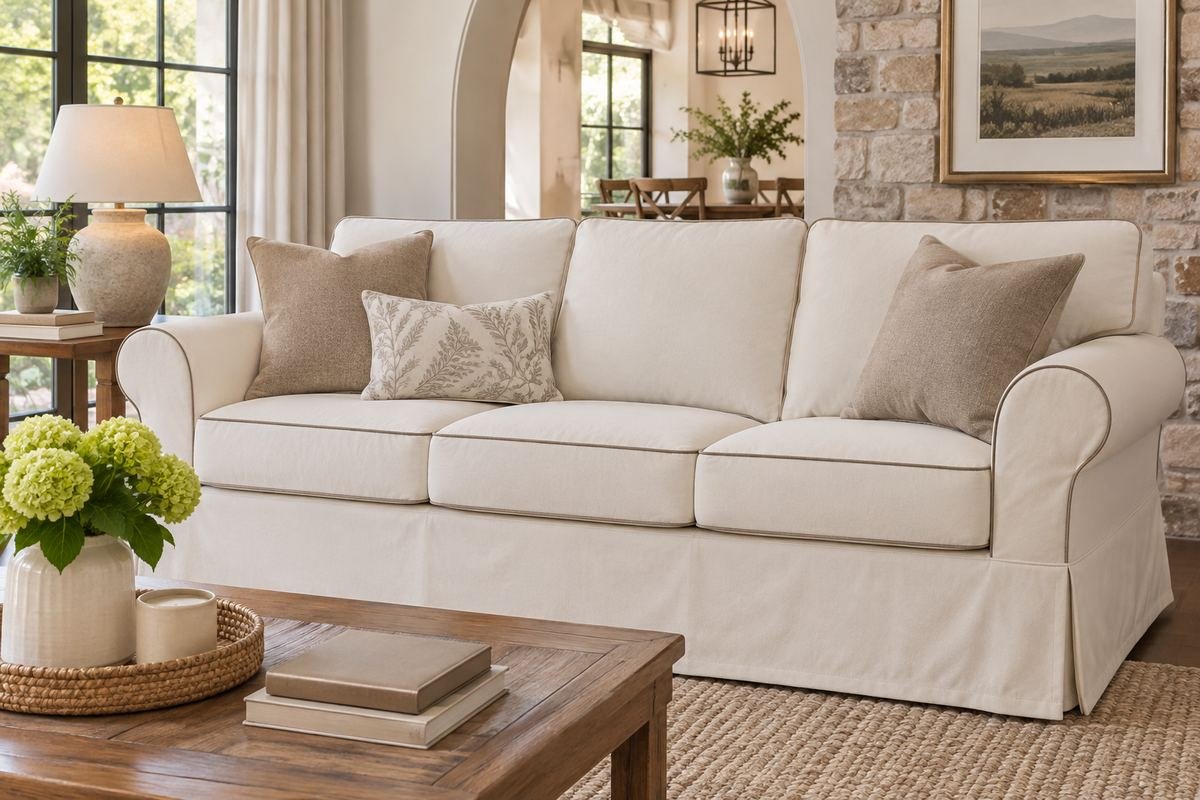
Subtle piping can outline an arm or cushion edge and give a fitted cover a more tailored appearance. It is useful when the main fabric is quiet and the furniture shape deserves emphasis.
Choose piping as part of the designed cover rather than adding improvised trim. A close tone feels restrained, while strong contrast makes every seam more visible. Review where the detail will meet across separate covers before deciding how much contrast to use.
Practical tip: Start with a low-contrast piping sample for a quieter result.
18. Choose a relaxed cover with intentional folds
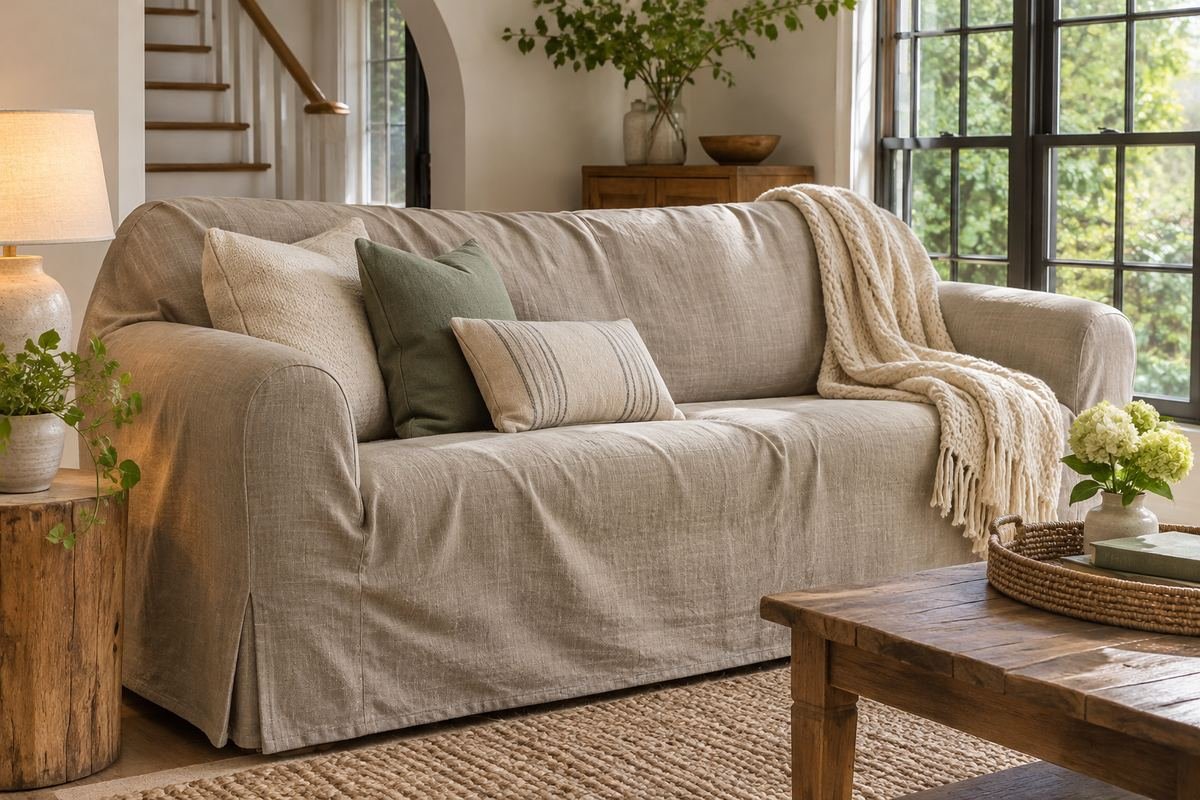
A relaxed fitted cover can suit an informal sitting room. A little ease in the fabric is different from a cover that continually pulls off the arms or gathers under the seat.
Follow the product’s intended tuck points and fastening system. Avoid adding loose pins or improvised components where they are not instructed. Run the seated fit trial to establish whether the folds settle naturally or whether the cover needs a different size or construction.
Practical tip: Assess the cover after someone has sat down and stood up.
19. Coordinate a sectional by its actual modules
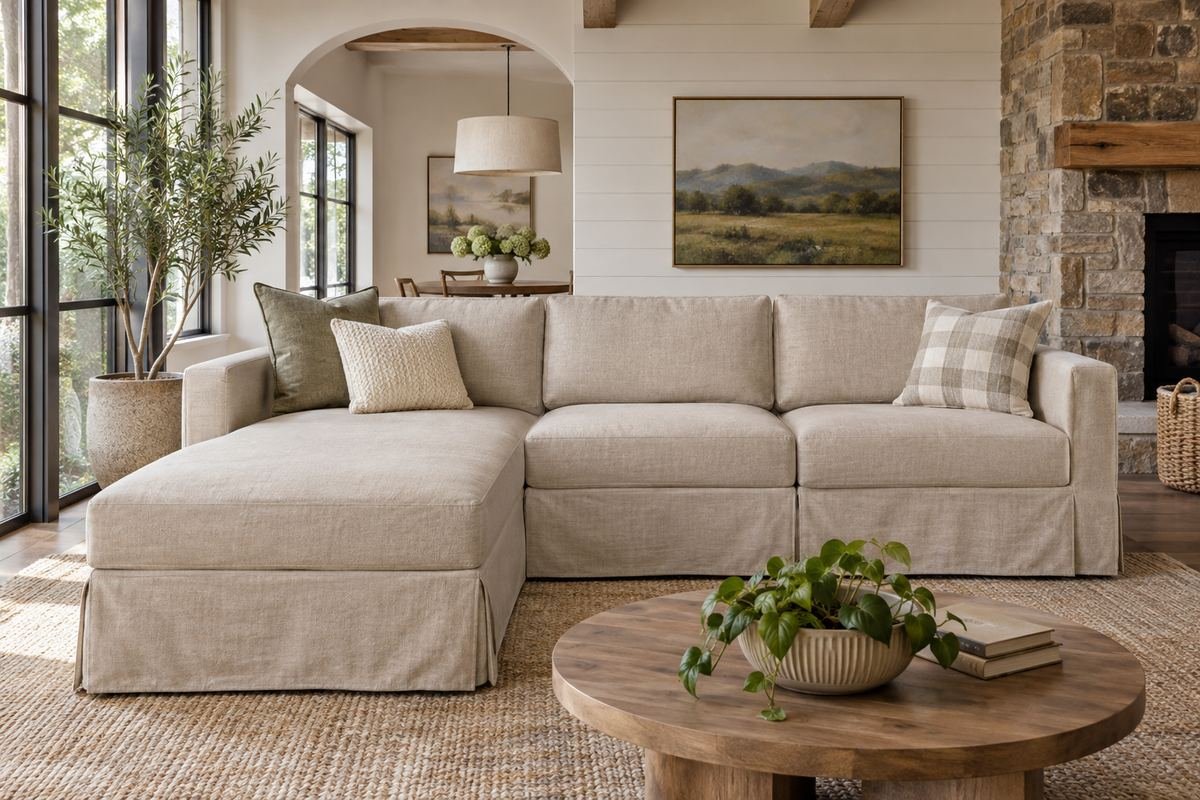
A sectional cover plan needs to follow the modules, corner and chaise orientation. Matching color across the pieces can make a large seating group feel coherent.
Confirm every module and the correct side of any chaise. Allow access to the furniture’s intended connectors and follow compatibility instructions. Do not cover a moving mechanism or required opening with a generic fabric panel simply to obtain a uniform appearance.
Practical tip: Draw the sectional from above and number its actual modules.
20. Use a contrasting armchair instead of a matching set
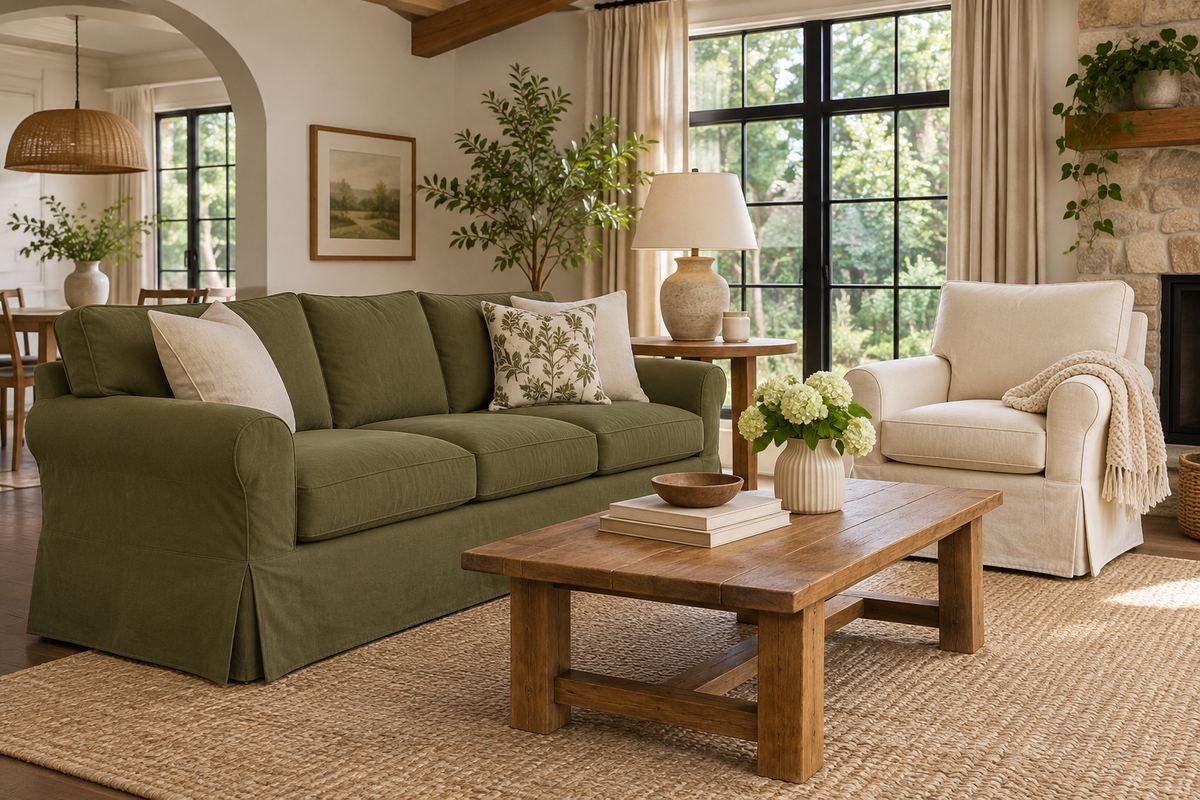
A new sofa cover does not require an identical chair fabric. A contrasting chair can make the room feel collected while the shared palette keeps the pieces related.
Connect the two through a small repeated color, wood tone or textile texture. Keep the contrast deliberate: an olive sofa with a cream chair may need only one patterned cushion between them. Too many connecting accessories can hide both furniture outlines.
Practical tip: Choose one clear relationship between sofa and chair.
21. Relate the cover to existing curtains
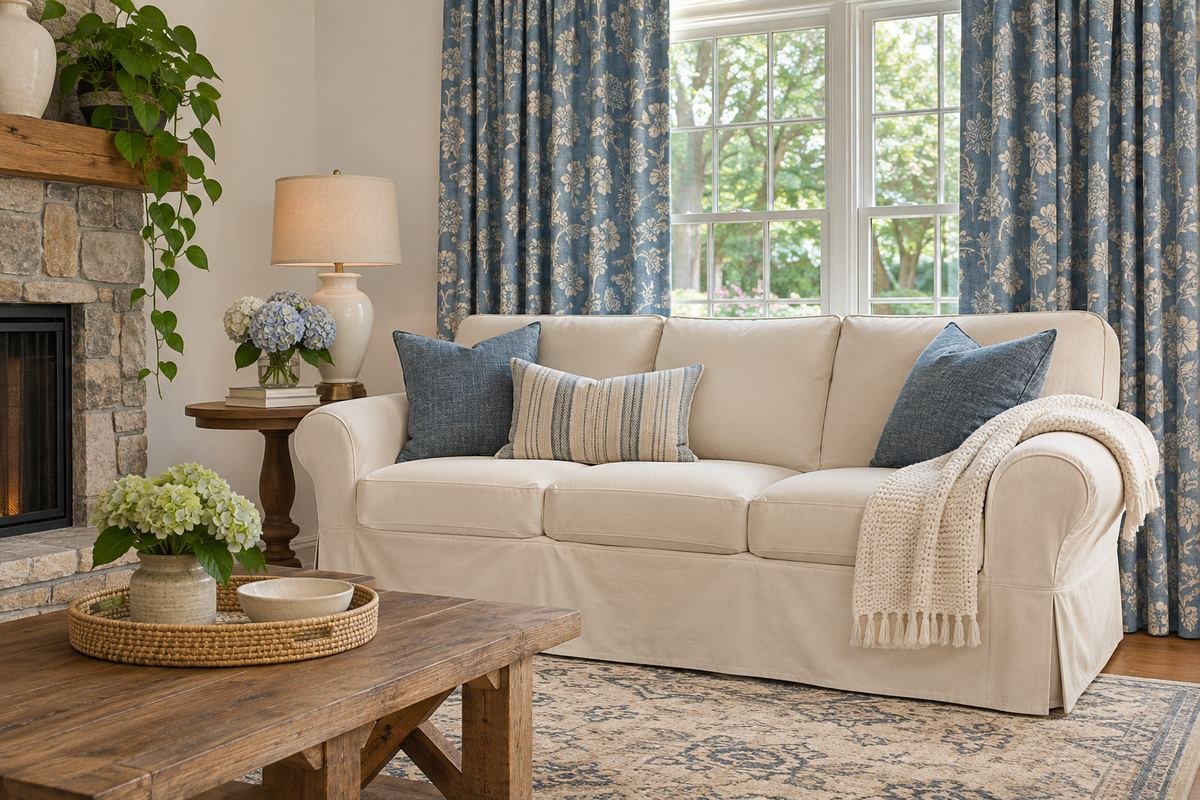
Curtains occupy a large fabric area near the sofa, so compare them before finalizing a cover. A quieter sofa can support patterned curtains, while a patterned cover may need a simpler window treatment.
Bring the actual samples together under the room’s lighting. Similar color names do not guarantee matching undertones or fabric sheen. Keep the intended curtain movement and sofa position in mind so the arrangement works beyond a close styling photograph.
Practical tip: Place both samples vertically near the window for a realistic comparison.
22. Keep a spare compatible cover as a planned option
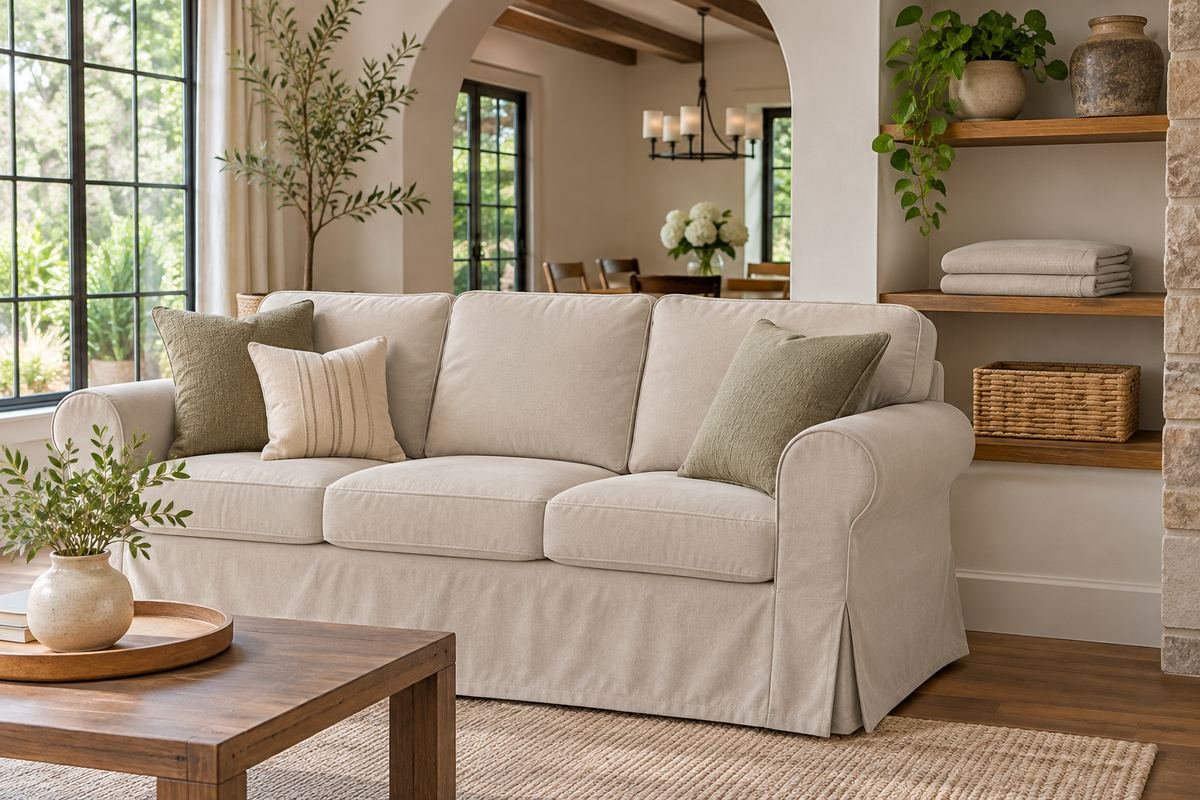
A spare cover can make a cover change easier when the main set is being cared for. It is useful only when it fits the same sofa and there is a practical place to keep it.
Store the complete clean dry set together according to the textile guidance. Keep its product label and compatibility record with the project notes. Avoid accumulating several colors before you know whether removal, drying and refitting work in your household.
Practical tip: Trial the care routine with one set before planning a collection.
23. Choose care requirements that fit the household
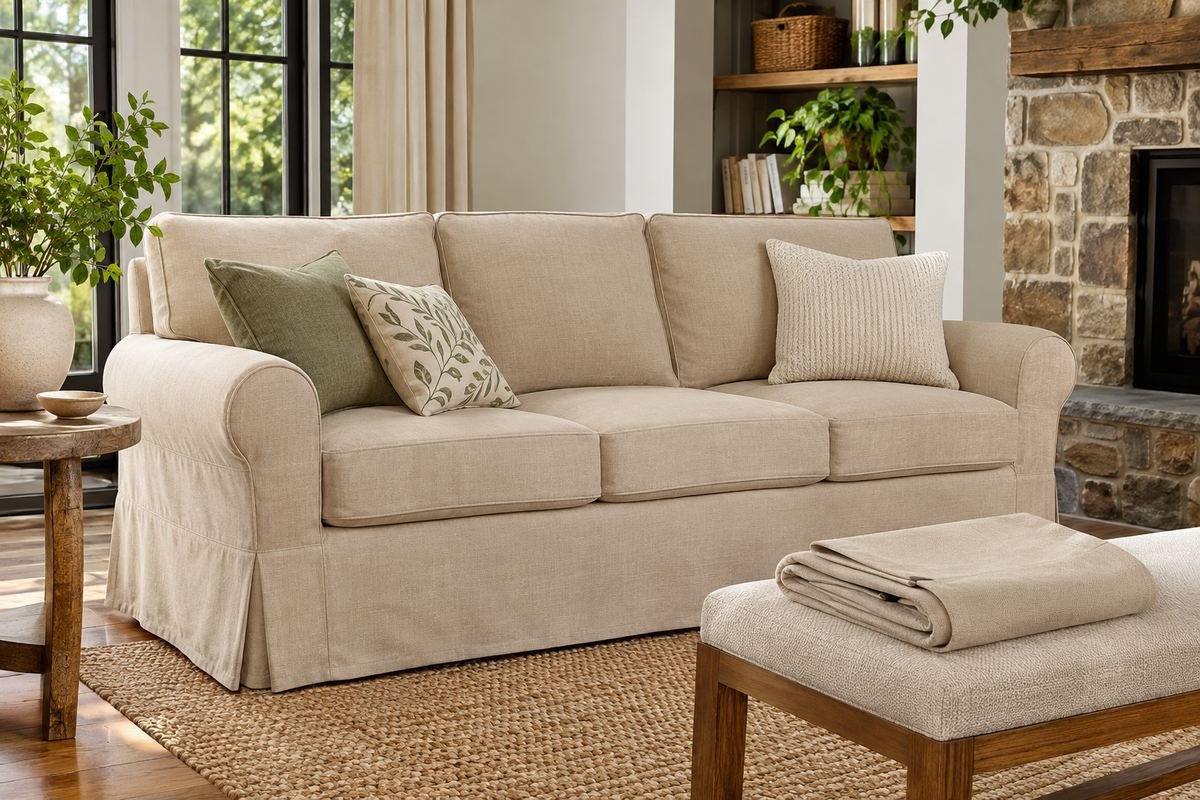
The best-looking fabric still needs a realistic cleaning route. A removable cover may require separate washing, air drying or professional care depending on its exact label.
Read the complete instructions before treating removable as a synonym for easy. Establish where the cover can dry and whether your laundry equipment can handle it as directed. Keep the product’s instructions available rather than transferring another fabric’s wash settings.
Practical tip: Write washing, drying and refitting as three separate care steps.
24. Give a floated sofa a finished back view
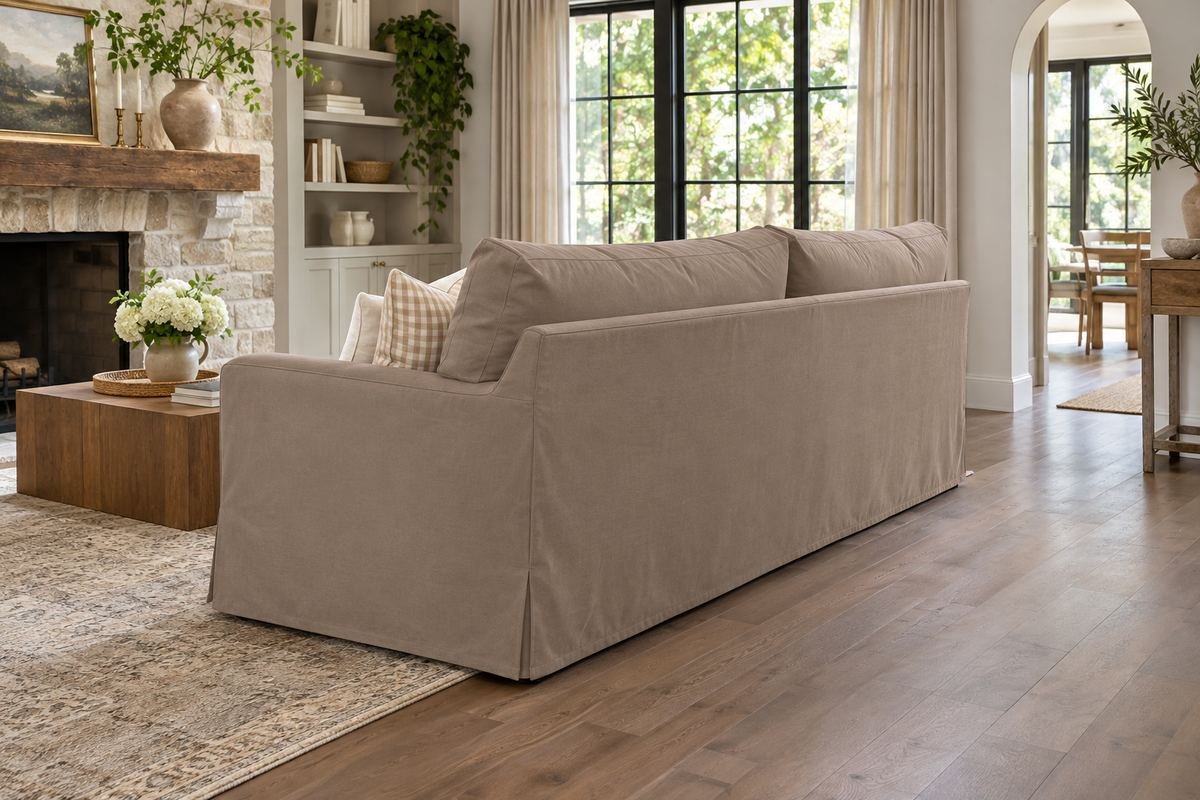
A sofa standing away from the wall is seen from more than the front. A compatible cover with a coherent rear panel can make that view feel as complete as the seating side.
Inspect rear seams, fastenings and the hem before ordering. Leave access to any furniture features that the maker requires. Keep a console or lamp from hiding a fit problem that will reappear whenever the sofa moves.
Practical tip: Include a clear rear photograph in any custom fitting request.
25. Finish with fewer pillows and a visible cover
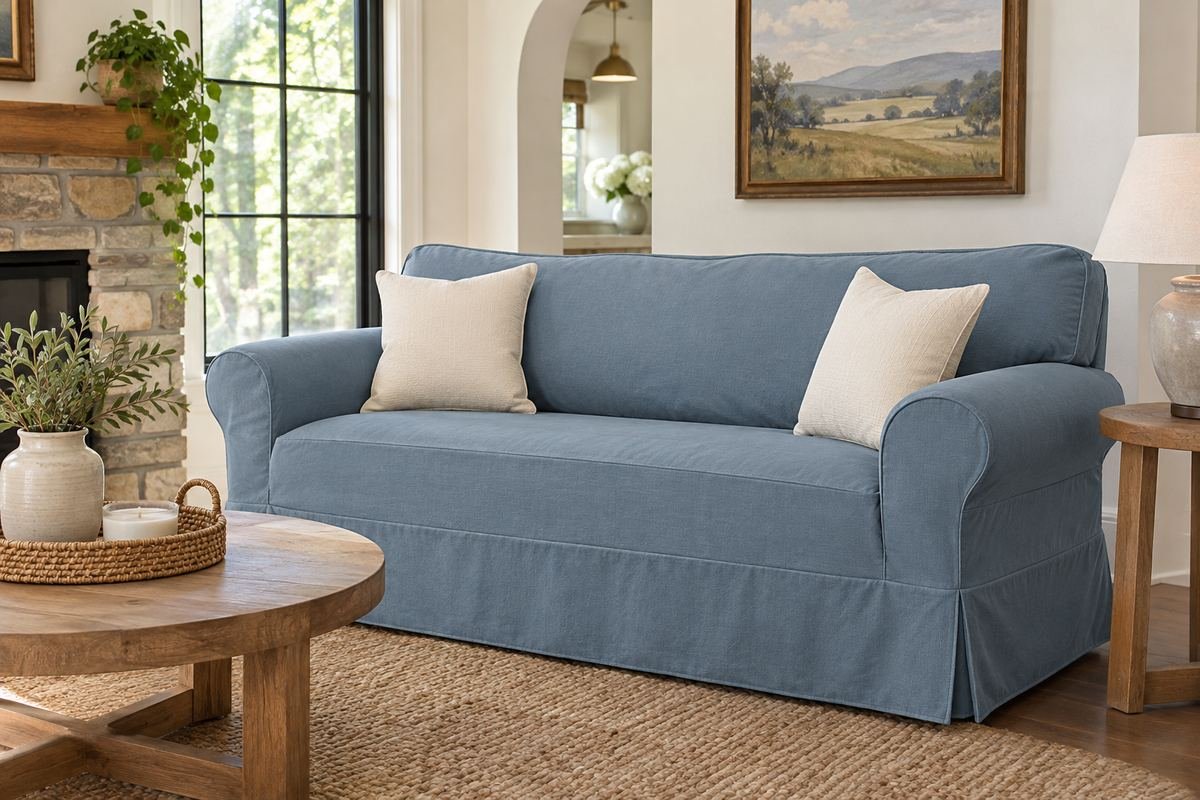
A fresh cover can carry the room’s fabric story on its own. A restrained pillow group shows the arms, seat and texture while leaving the sofa useful for sitting.
Choose accents after the fitted cover is in place and has passed the ordinary seated trial. If the arrangement needs many cushions to conceal loose edges, return to the fit rather than adding more layers. Sofa slipcover styling feels complete when the furniture looks comfortable and stays straightforward to use.
Practical tip: Leave at least one generous seat position free of decorative layers.
Frequently Asked Questions
Will any three-seat cover fit my three-seat sofa?
No. Arm shapes, cushion layouts, frame sizes and sofa versions can differ. Use the cover maker’s exact compatibility information and measurements. A general seat-count label is not enough to establish fit.
Can every removable cover go in the dryer?
No. Read the exact cover label. The IKEA UPPLAND Blekinge white and KIVIK Gunnared beige examples cited here both prohibit tumble drying, while their other care details differ. Do not transfer one fabric’s instructions to another.
Can a slipcover fix sagging cushions?
A cover can change appearance but does not repair a frame, spring or cushion problem. Establish whether the sofa remains sound and comfortable before investing in a fitted cover.
Choose the Details That Work in Your Home
Choose a sofa slipcover by compatibility first, then use color, texture and a few surrounding accents to make it feel intentional. A cover that follows the sofa’s shape and fits your care routine will be easier to enjoy than a beautiful fabric that never sits correctly.
For related ideas, explore throw pillow combinations, living room curtain ideas, sofa table ideas.
Planning References
IKEA: sofa and armchair cover categories; IKEA UPPLAND Blekinge white cover: compatibility and care example; IKEA KIVIK Gunnared beige cover: material and care example. Follow the instructions for the exact products you choose.
Optional digital guide for this topic
If you prefer a structured workbook, explore this related paid guide.