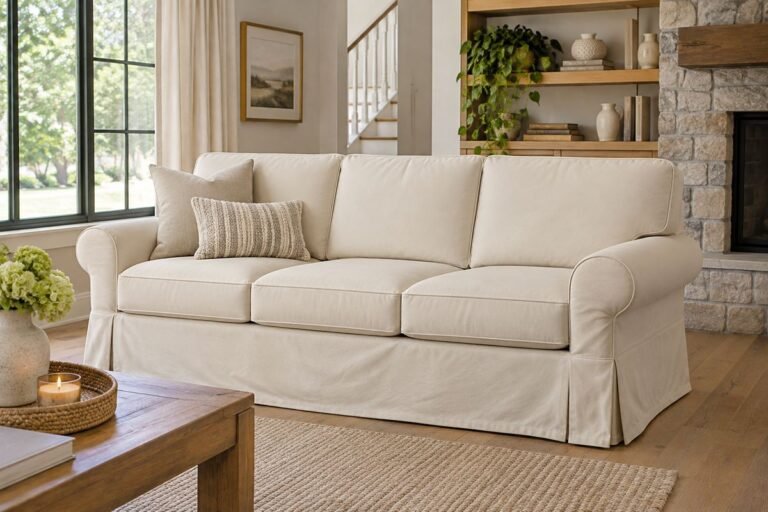
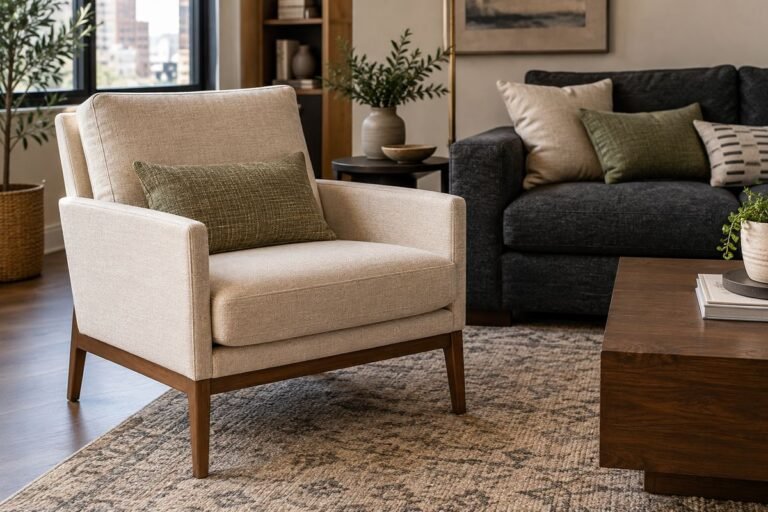
A living room coffee table has to serve the seats around it. Its outline, height and storage matter more than a beautiful display if you cannot put down a mug or walk past the sofa comfortably.
Begin with the tasks: a shared surface for conversation, somewhere to keep remotes, an occasional game or a piece that moves out of the way. These ideas focus on choosing and placing the furniture, with styling kept deliberately light.
The images are original AI-generated decor concepts, not installation diagrams or photographs of completed client projects.
Browse These 26 Living Room Coffee Table
Jump to an idea
- Use an oval table in a long seating group
- Choose a round table for an angled conversation group
- Use a rectangle for a straight sofa
- Try a square table inside a generous sectional
- Pair two compact square tables
- Choose nesting tables for occasional guests
- Use an upholstered ottoman with a stable tray
- Add a drawer for small daily belongings
- Choose a lower shelf for a small book collection
- Use enclosed storage for an active family room
- Consider a purpose-made lift-top model
- Keep the base visually open
- Ground a pale room with a dark wood table
- Bring warmth to a cool palette with oak
- Use a painted table as one controlled color accent
- Choose rounded corners on a rectangular top
- Use a sculptural pedestal as the main furniture detail
- Try a textured woven table in a relaxed room
- Choose a glass top to reveal the rug
- Use a stone-look surface with a simpler base
- Place an off-center table toward the seats that use it
- Use separate tables for a deep sectional
- Choose a low table only when it suits the seating
- Keep a compact table in front of a recliner route
- Use a small tray to protect one daily landing area
- Leave the center useful after the room is styled
Plan a Living Room Coffee Table Around the Occupied Seats
Measure the sofa length, seat-cushion height, available floor area and the routes people actually use. Ethan Allen recommends starting with the seating measurements when choosing an occasional table. Mark a candidate outline on the floor, then sit down, stand up and walk through the room. Product operating clearances and your household’s needs should decide the final position.
| Main need | Useful starting form | Tradeoff to test |
|---|---|---|
| Easy movement around a compact group | Round or oval | Enough reachable tabletop |
| Broad sectional seating | Square or paired tables | Access from the inner corner |
| Hidden daily belongings | Drawer or enclosed storage | Opening space toward the sofa |
| Occasional extra surfaces | Nesting or movable pair | Parking space when not in use |
A Footprint Worksheet with a Worked Example
Copy five measurements: sofa length, seat height, table length, table depth and the narrowest passage left after placement. For an 84-inch sofa, a 56-inch-long paper outline represents two-thirds of the sofa length, a common starting proportion discussed by Ashley. It is only a first mockup: a 48-inch table may work better when a doorway crosses one end. Make both outlines and test the occupied room before choosing.
The Three-Position Trial
Place a mug-sized coaster at the front seat, the end seat and the inside corner of a sectional. Test reaching each coaster without leaving the seat, then stand and pass the table. Finally open any drawer or lift mechanism according to its instructions. Record which position fails; that result tells you whether to change the table shape, move it or add a separate side table.
1. Use an oval table in a long seating group
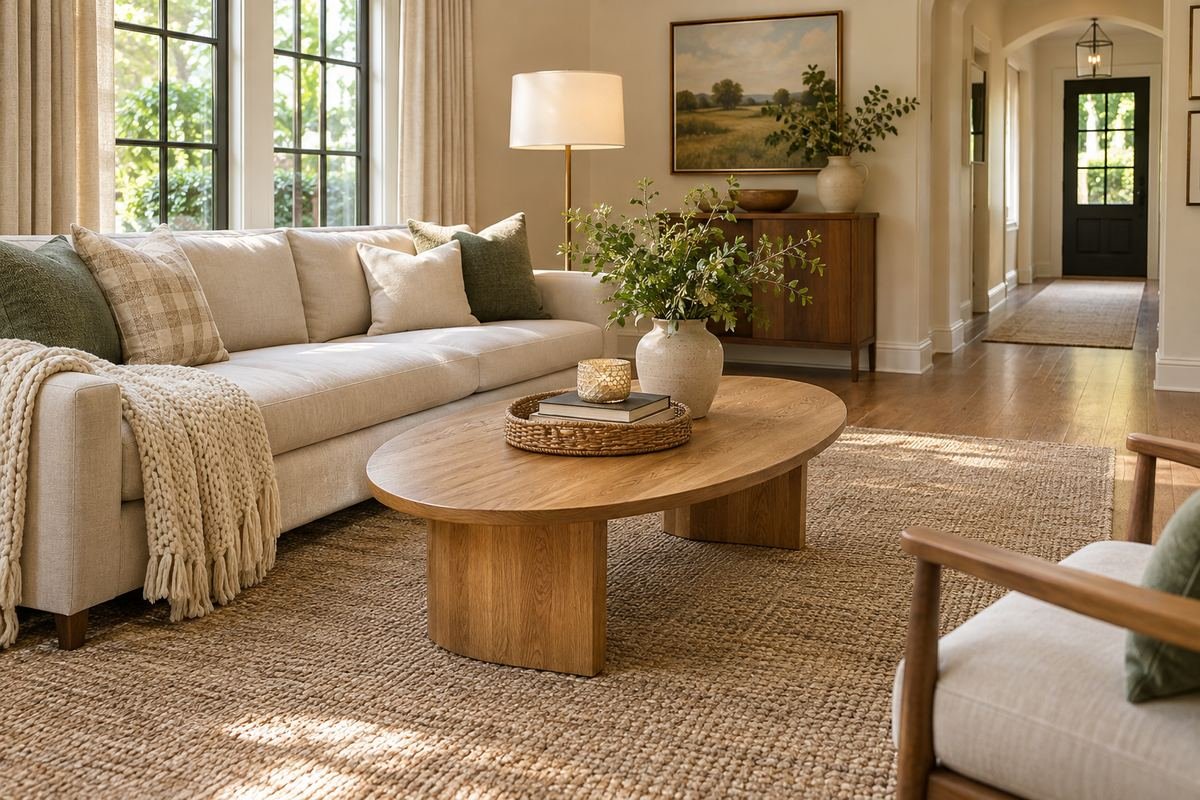
An oval offers useful length in front of a sofa while softening the ends beside a passing route. It can suit a room where a rectangular top feels abrupt near the doorway.
Mark the complete curve rather than only its widest rectangle. A pedestal or inset legs can alter where feet fit underneath, so include the base in the trial. Keep enough surface near the seats that people do not need to reach toward the far end.
Practical tip: Test the narrower end beside the room’s busiest route.
2. Choose a round table for an angled conversation group

A round table can give several differently angled chairs a shared center. Its curved edge also changes the appearance of a room dominated by rectangular windows and cabinetry.
Choose diameter from actual reach rather than the empty rug. If the circle must grow too large for everyone to use it, a small table beside the distant chair may be more useful. Check the broadest part of the base as well as the top.
Practical tip: Place a coaster in front of each occupied seat during the trial.
3. Use a rectangle for a straight sofa
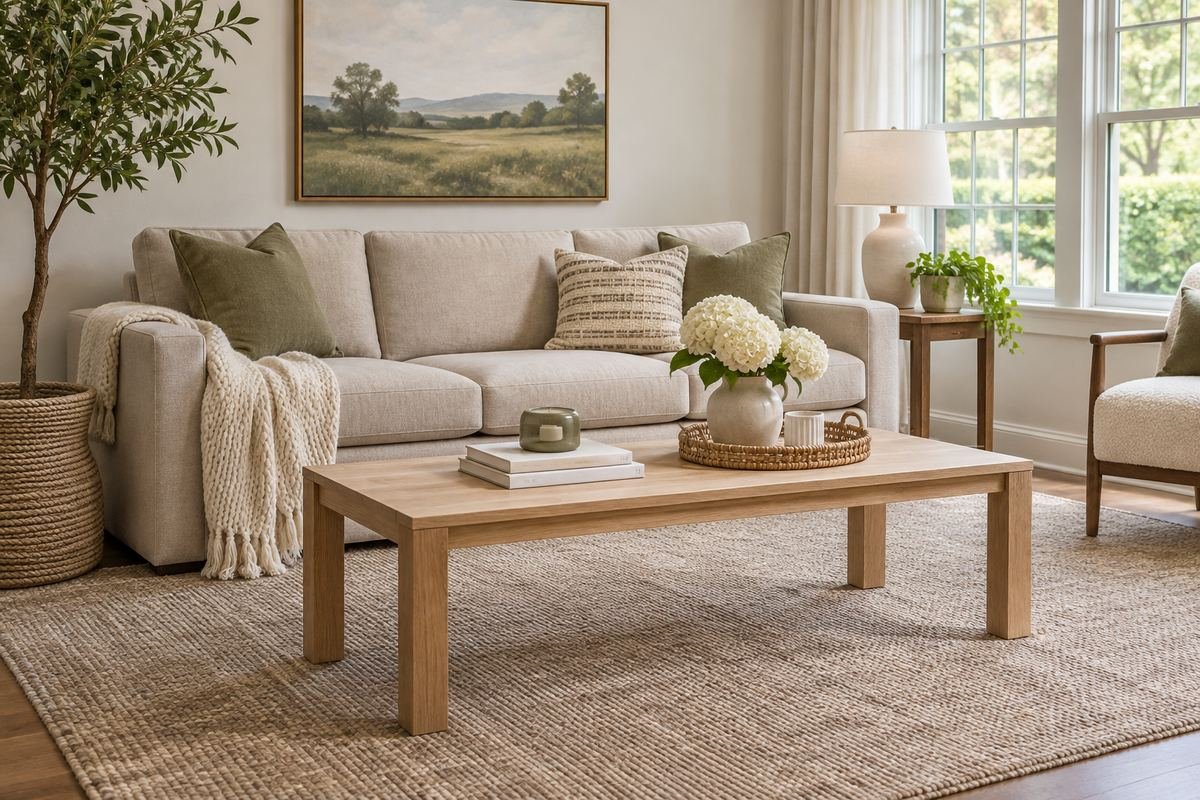
A rectangular top can serve a long sofa without taking as much depth as a large square. Its straight sides make it easy to relate to a rug or a wall of cabinets.
The end nearest a doorway may need more room than the quiet end. Tape the full outline and walk both routes before choosing the length. Keep the table close enough to use while preserving the way people stand up from the sofa.
Practical tip: Try a shorter paper outline before assuming the longest one is best.
4. Try a square table inside a generous sectional
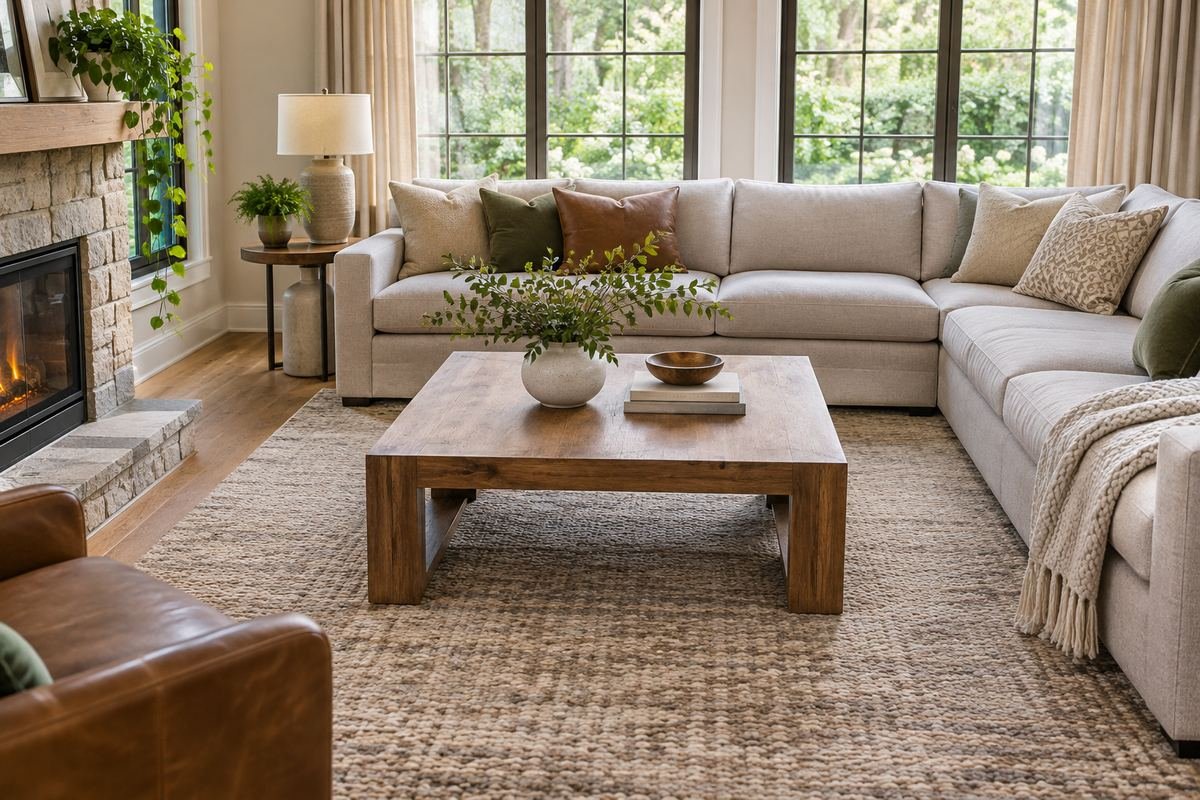
A square can fill the middle of an L-shaped sectional and offer surface toward both arms. It suits a broad seating area where a narrow rectangle leaves one side poorly served.
The inner corner often feels different from the end seats. Test reaching from that corner and leaving the sofa with another person seated nearby. A table that fills the center completely can make the group awkward even when the proportions look balanced.
Practical tip: Leave the sectional exit route visible in the floor mockup.
5. Pair two compact square tables
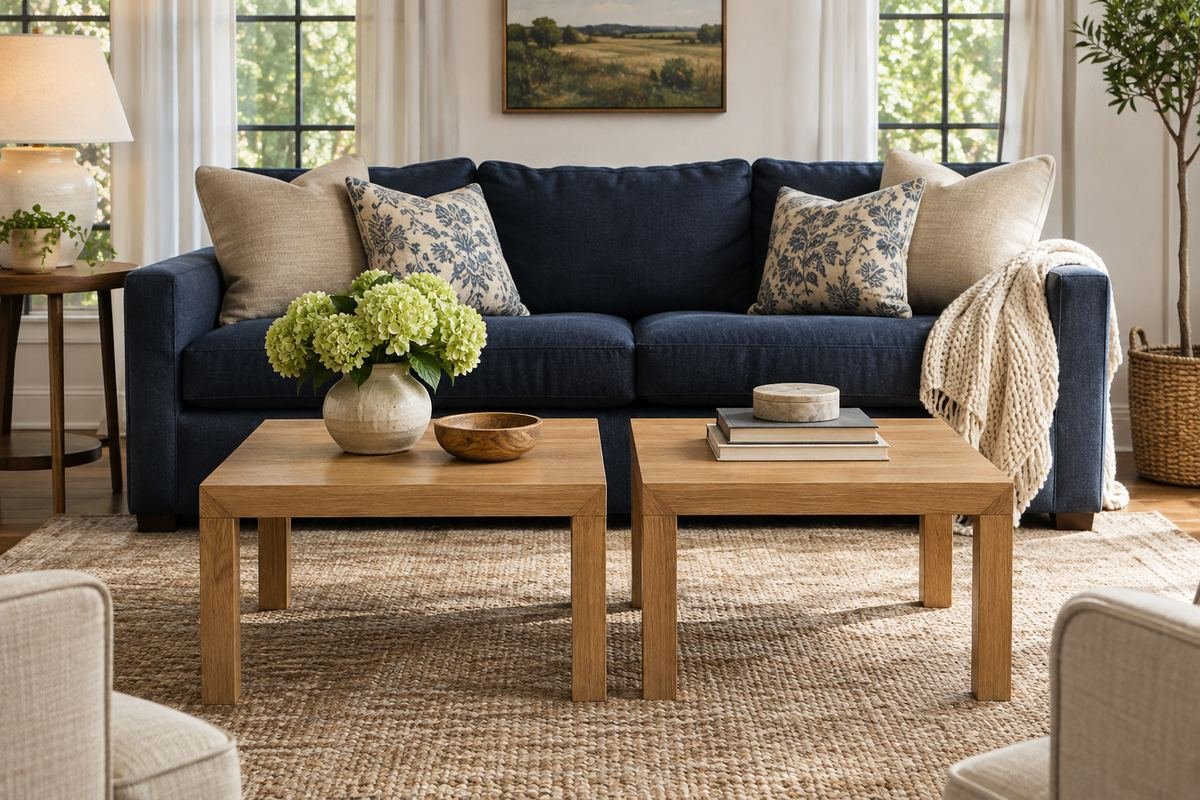
Two smaller squares create a combined surface that can separate for a different activity. They can work where one heavy table would be difficult to reposition.
Include the gap between the tables in the overall footprint. Each piece should stand securely on the actual floor and have a useful home when separated. Keep the tops at compatible heights if they will usually read as a single group.
Practical tip: Decide where both pieces will sit on an ordinary evening.
6. Choose nesting tables for occasional guests
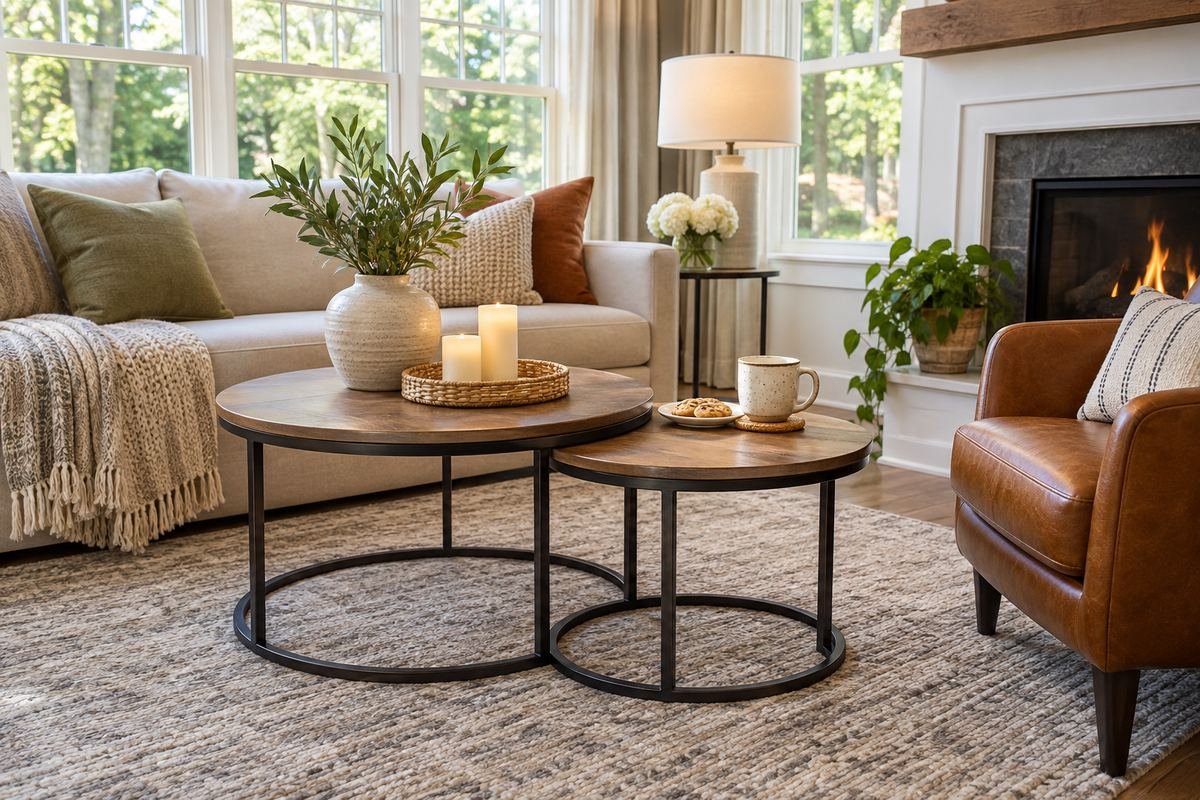
A nesting pair can provide a smaller everyday footprint and an extra surface when another chair is used. The benefit comes from moving one table into a reachable position.
Check the full extended arrangement and the parking position beneath the larger table. Avoid buying a pair that only works when pulled into the walking route. A modest difference in height should come from the product design, not improvised stacking.
Practical tip: Map the extended position before considering the nested size.
7. Use an upholstered ottoman with a stable tray
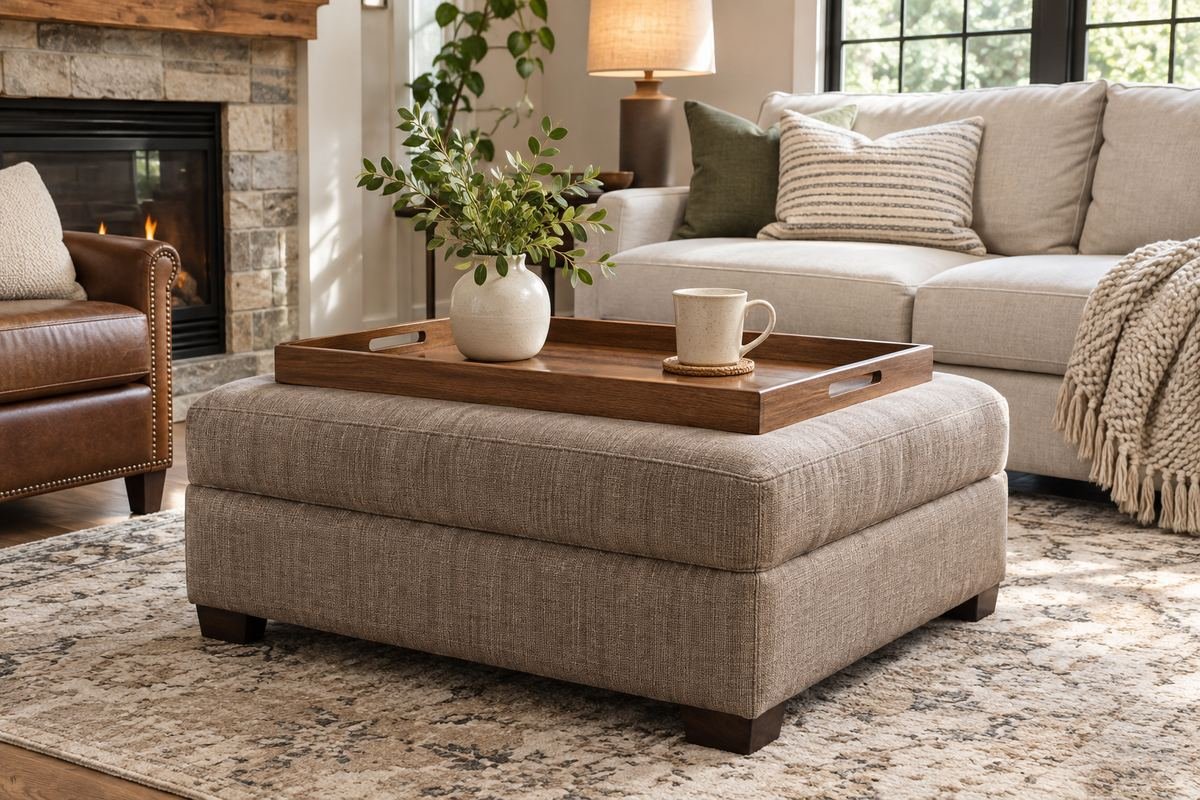
A broad upholstered ottoman can bring textile softness to the seating group. A suitable flat tray creates a defined place for a cup while leaving part of the upholstery visible.
The tray should sit steadily on the actual cushion and remain easy to lift. Follow the furniture maker’s intended uses and care guidance. If most of the surface must stay covered to function, a firm-topped table may better suit the room.
Practical tip: Test the tray with an empty cup before making it a daily surface.
8. Add a drawer for small daily belongings
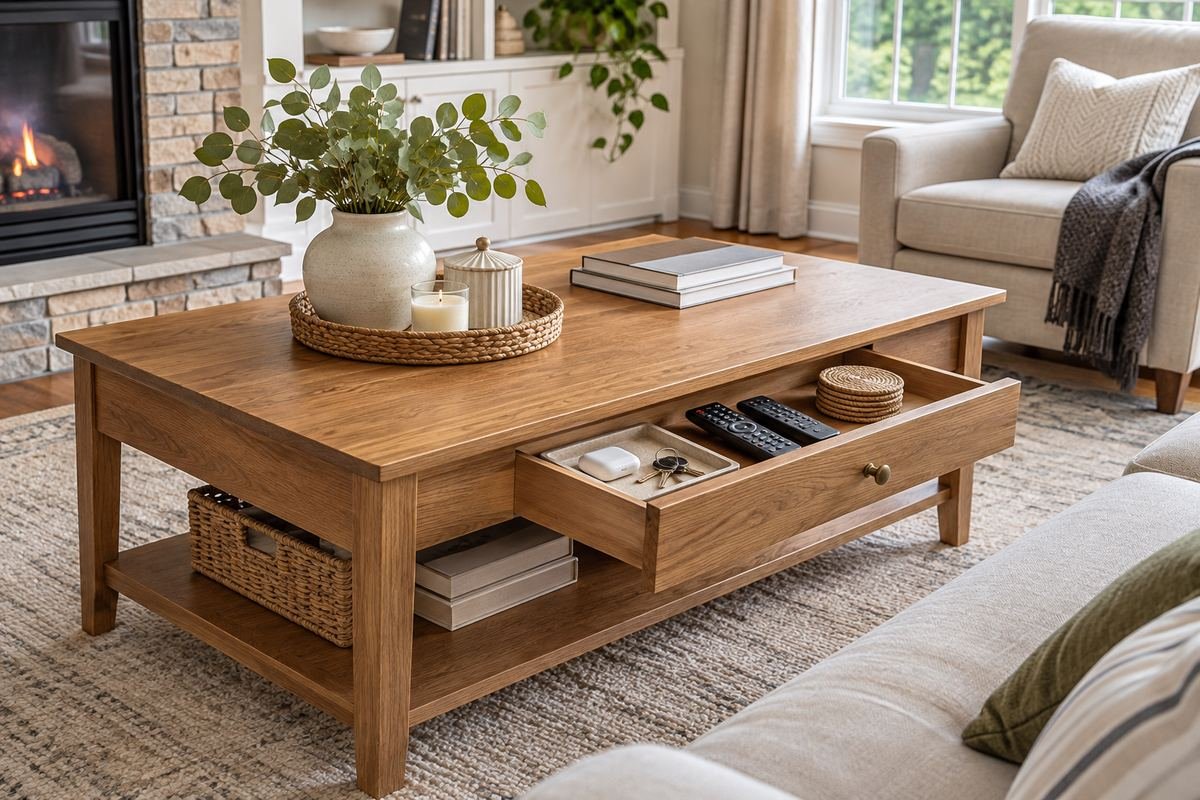
A shallow drawer can give remotes, coasters and a small notebook a definite return position. It keeps the top useful without needing a large storage cabinet in the center of the room.
Open the drawer from the seat that will use it. The handle, drawer travel and your knees all need room. Use a small removable insert only where it helps the items stay visible; deep mixed piles recreate the clutter behind a closed front.
Practical tip: Allocate one drawer group before adding organizers.
9. Choose a lower shelf for a small book collection
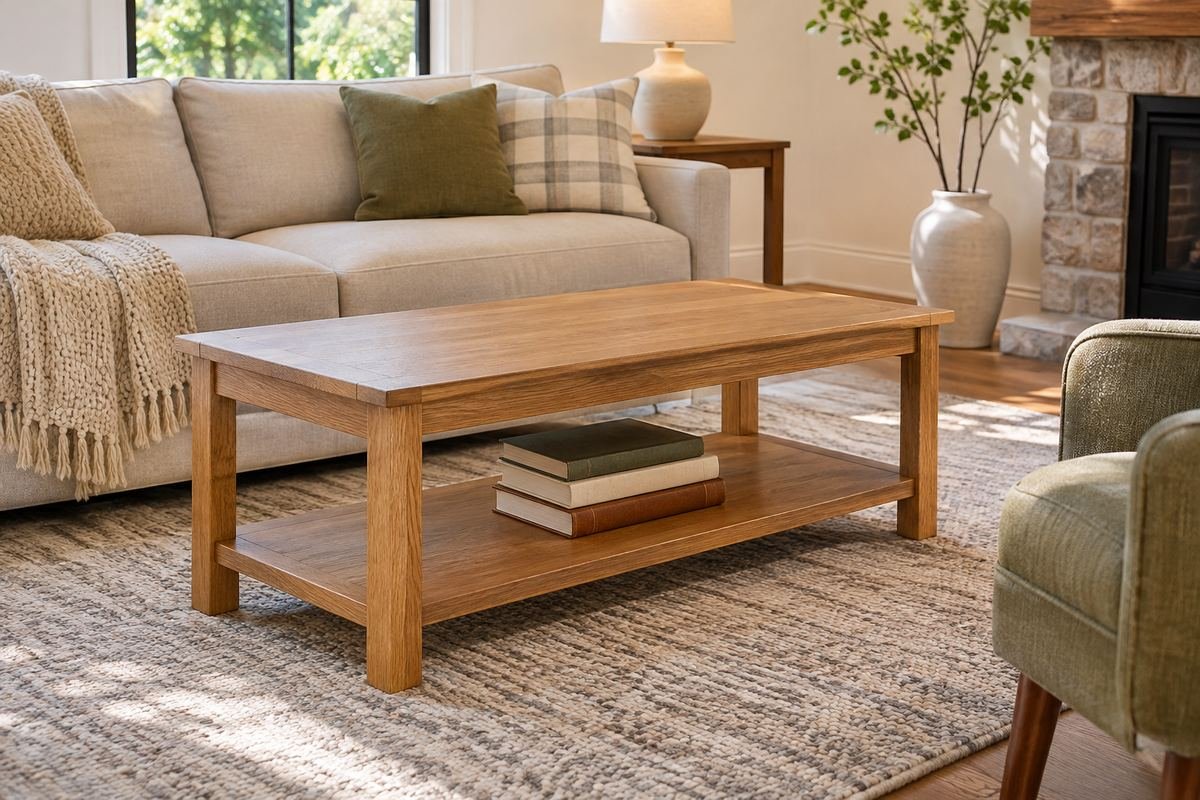
An open lower shelf can hold a few reading choices while the main top stays available. It is most useful when the shelf can be reached without moving a large decorative arrangement.
Leave enough room above the books to grip them. Keep the collection small so the shelf does not become a compressed archive. A table with a lower shelf adds visual weight, so compare it with the sofa base and rug pattern.
Practical tip: Store only the books currently being read in the seating area.
10. Use enclosed storage for an active family room
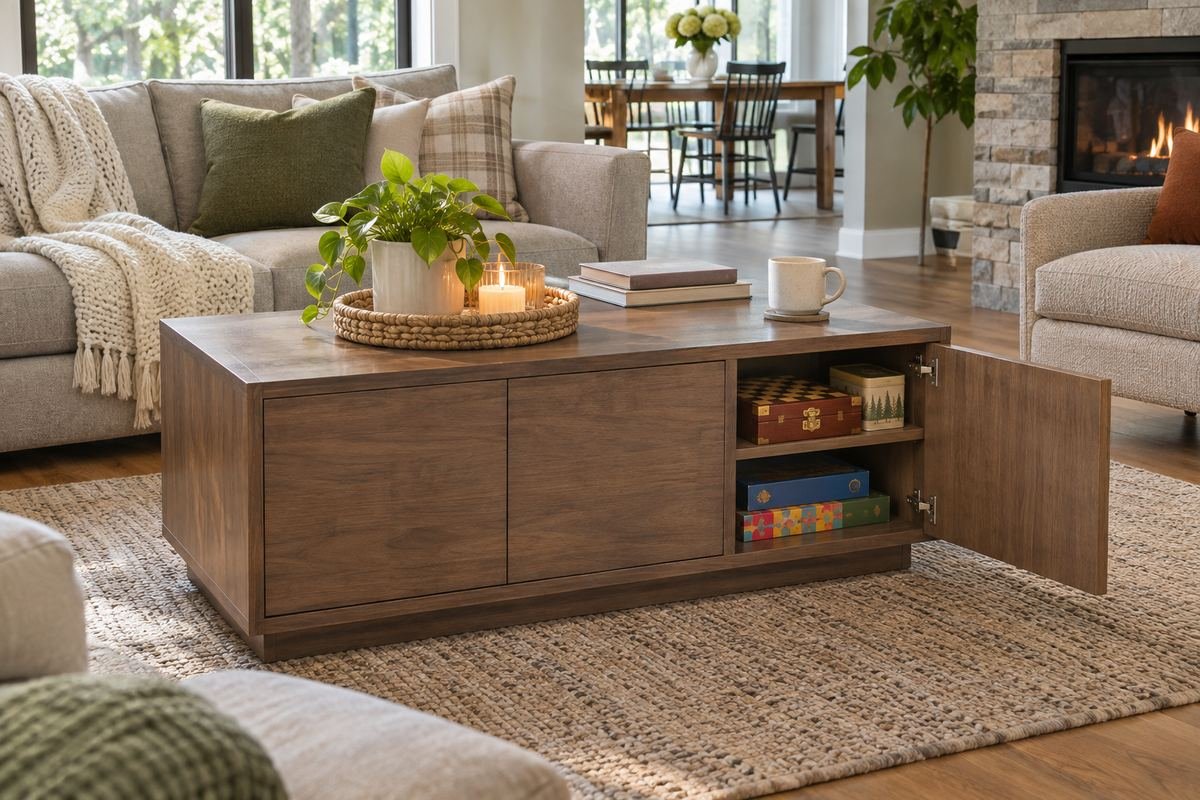
A table with enclosed storage can contain a defined group such as a few board games. It gives an active room a calmer appearance when the doors or drawers are closed.
Measure the largest box and the opening it must pass through. Follow the table’s instructions for hinges, moving tops and load limits. If accessing storage requires clearing the entire top every time, a drawer version may better match frequent use.
Practical tip: Choose the access method from how often the contents come out.
11. Consider a purpose-made lift-top model
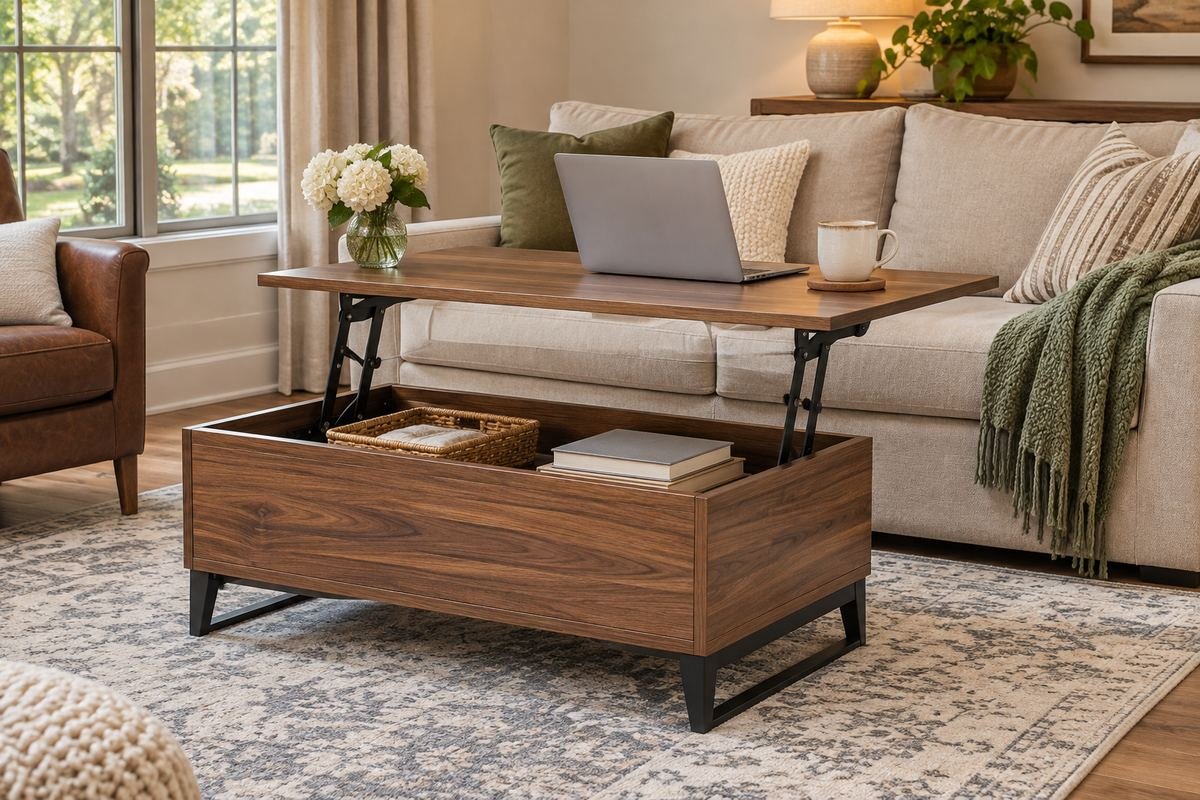
A designed lift-top table can bring a temporary surface closer to the sofa. It may suit a room that occasionally supports a puzzle or laptop session alongside ordinary lounging.
Confirm the manufacturer’s operation, loaded capacity and required travel space. Try the mechanism in its intended setup and keep the operating path clear. It remains occasional furniture; choose a dedicated work setup when the living room must support long workdays.
Practical tip: Measure the fully open footprint and height as well as the closed table.
12. Keep the base visually open
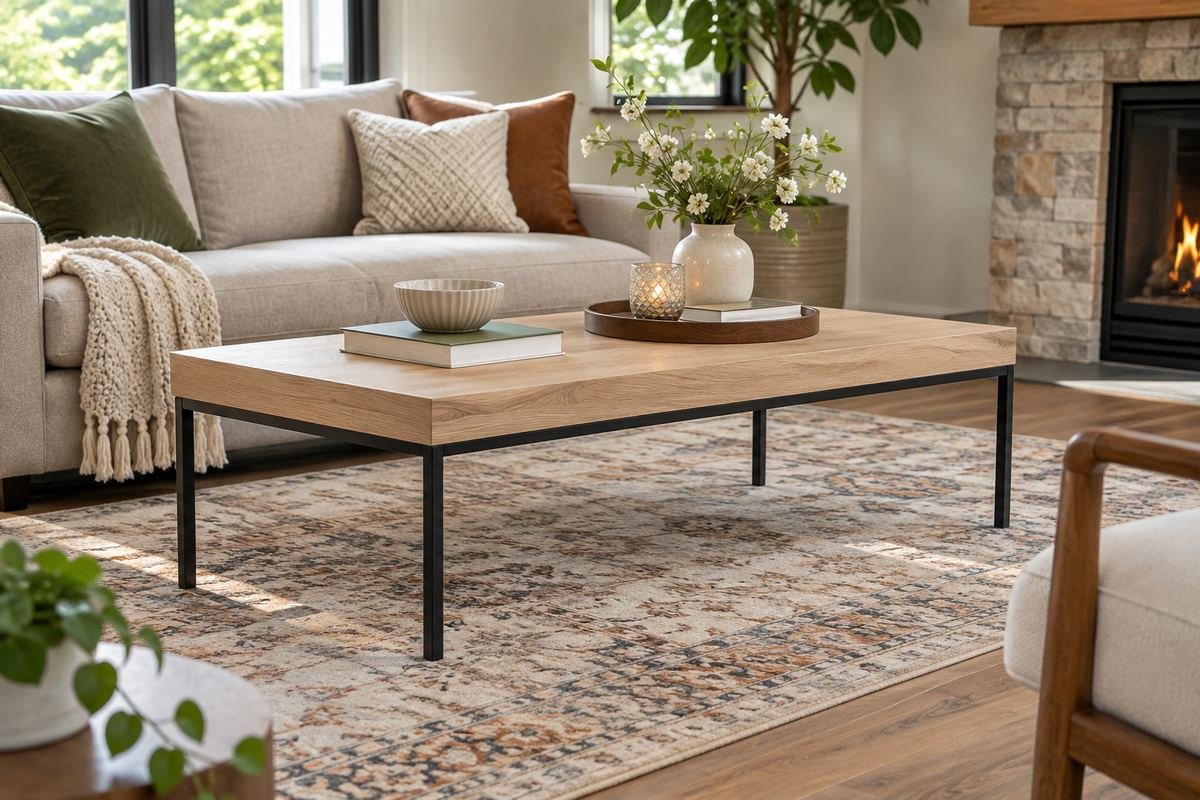
Slim legs and an open base can reveal more of the rug and floor. This can make the center feel lighter in a room with substantial upholstered seating.
Visual openness does not guarantee a small footprint. Include projecting feet and crossbars in the mockup, especially where people step past the table. Choose a construction that feels steady rather than treating the thinnest frame as the automatic winner.
Practical tip: Mark the base outline in a different tape color from the top.
13. Ground a pale room with a dark wood table
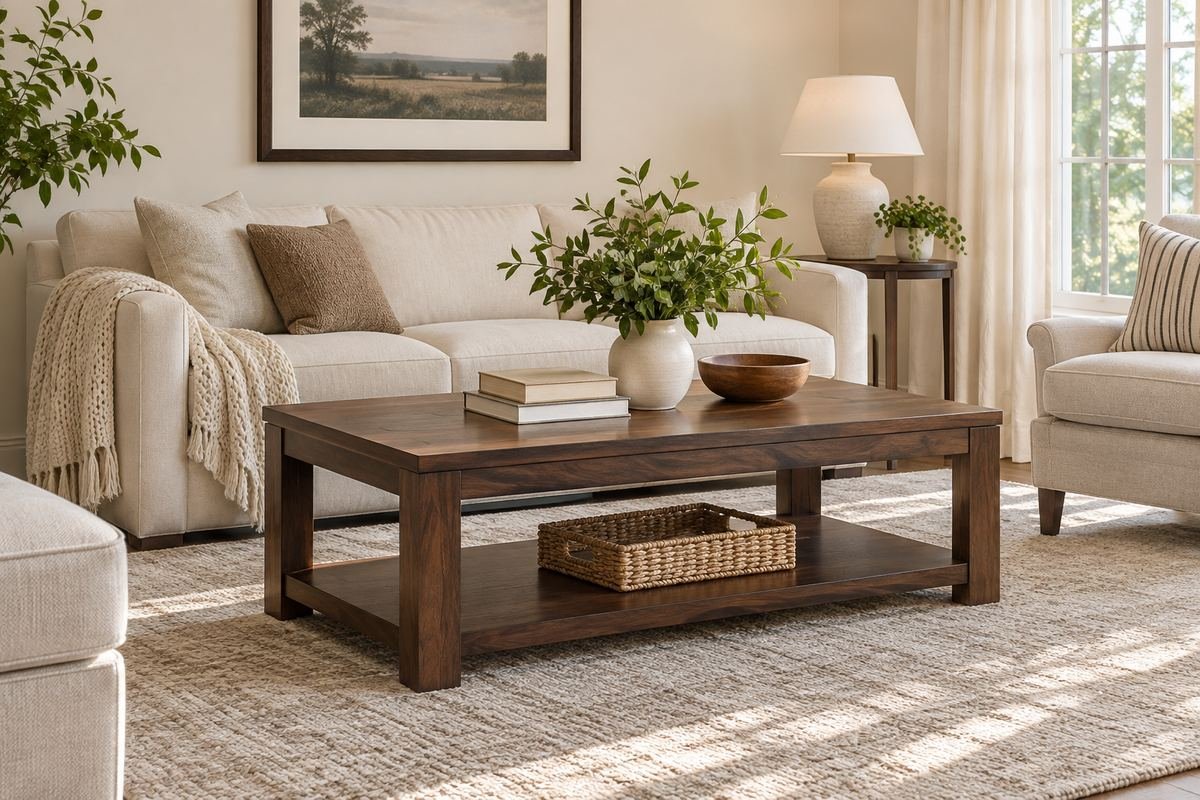
A darker timber can anchor a pale seating group without adding a large new color area. Its effect is strongest when the grain and silhouette remain easy to read.
Repeat the dark tone in one modest detail, such as a picture frame, instead of matching every furniture piece. View a finish sample beside the actual floor and upholstery. A substantial dark table may need a smaller footprint than a light open design.
Practical tip: Compare the finish in daylight and the room’s evening lighting.
14. Bring warmth to a cool palette with oak
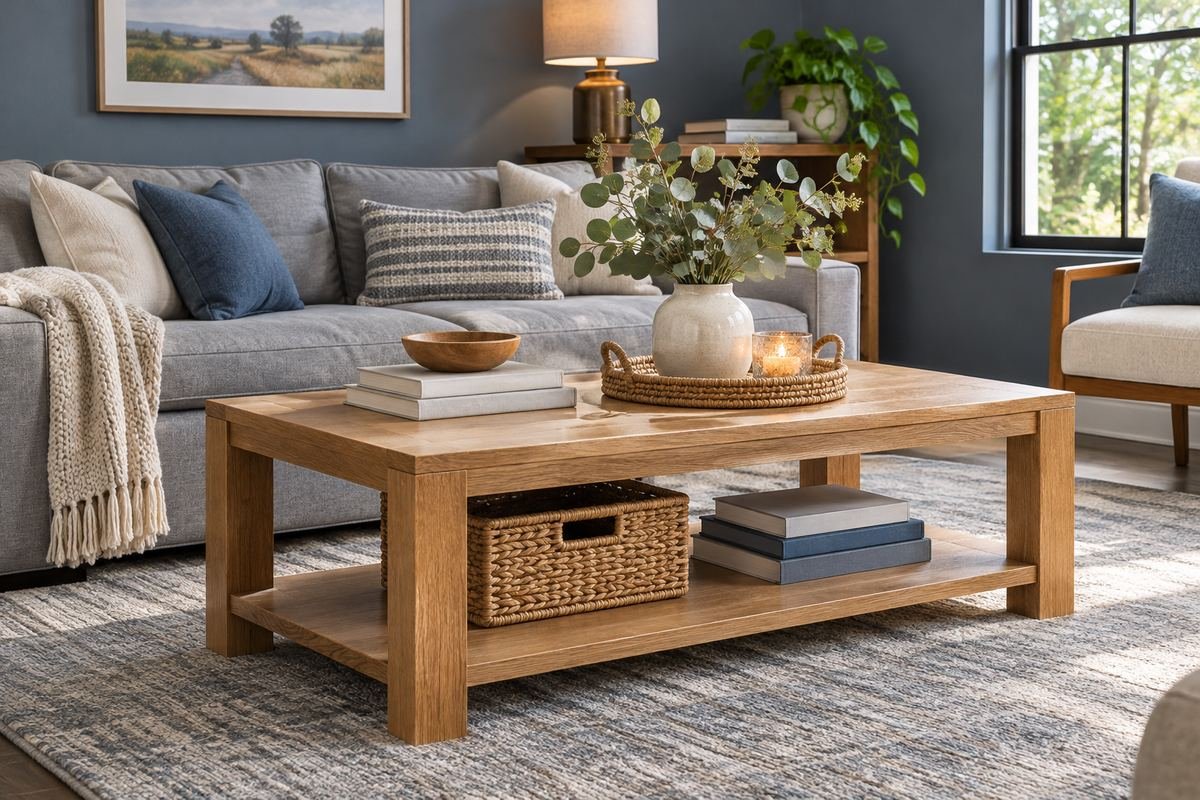
Warm wood can balance gray upholstery and cool painted walls. A simple oak table gives the eye a natural texture without requiring an elaborate decorative collection.
Compare the undertone with existing flooring so the woods feel intentional together. They do not have to match, but a visible sample helps avoid an unexpected orange or pink cast. Let the table’s grain be the main feature on a compact top.
Practical tip: Use one ceramic piece rather than hiding the wood under several trays.
15. Use a painted table as one controlled color accent
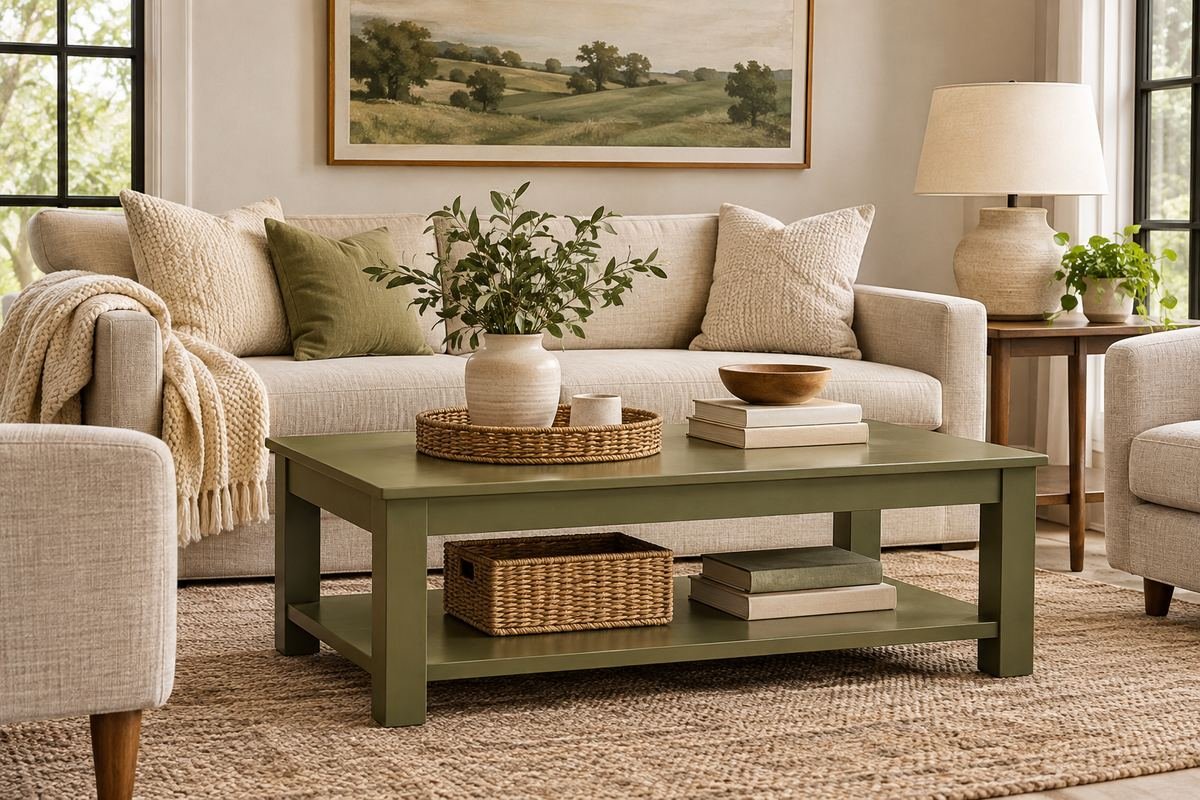
A painted table can introduce a clear color in an otherwise neutral seating area. The relatively compact furniture surface makes it easier to repeat that color selectively.
Relate the tone to a cushion or artwork, then keep nearby pieces quieter. Review the finish care requirements and whether normal cup use needs protection. A decorative painted surface should still suit the way the household uses the table.
Practical tip: Try a color sample at floor level beside the sofa fabric.
16. Choose rounded corners on a rectangular top
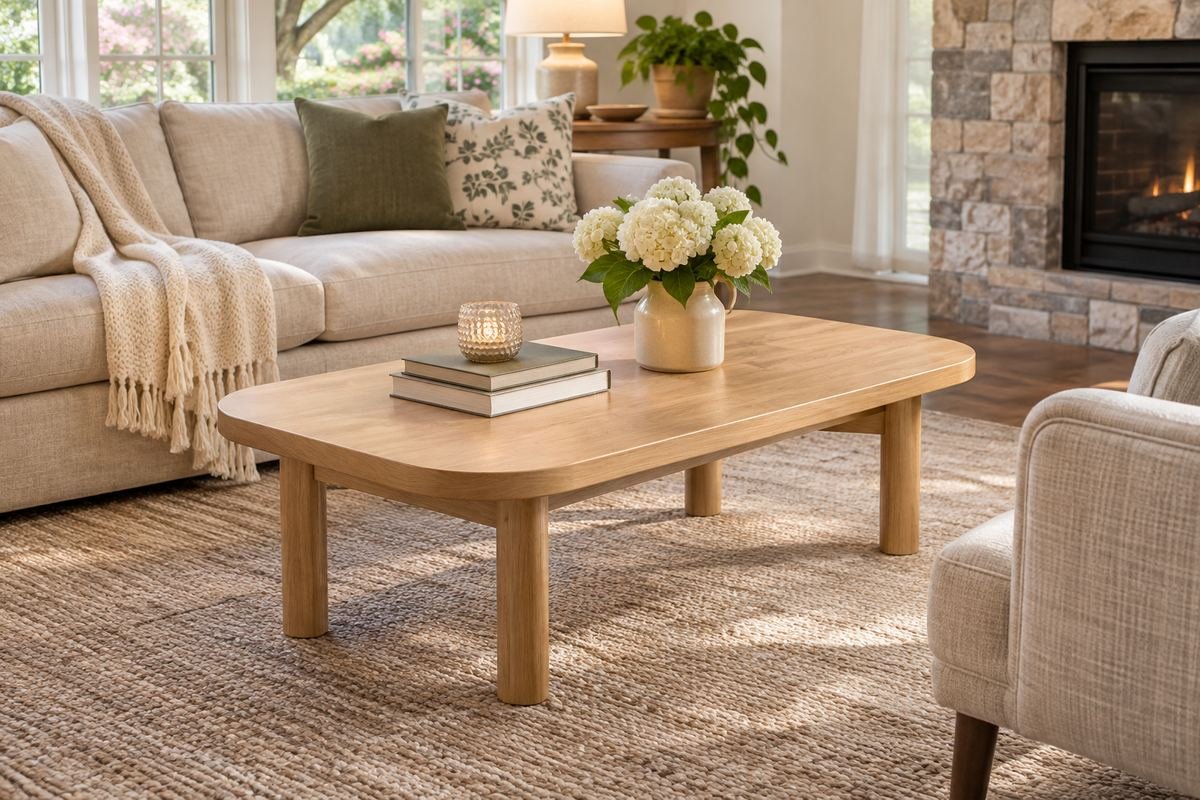
A rounded-corner rectangle preserves a long usable surface while changing the feel of its edges. It can suit a straight sofa when a full oval loses too much corner area for everyday items.
Inspect the complete profile, including the legs below. Rounded corners do not make a crowded route wide enough or establish a product as child-safe. Keep the same full-size placement trial you would use for another shape.
Practical tip: Compare the rounded rectangle and oval using paper outlines.
17. Use a sculptural pedestal as the main furniture detail
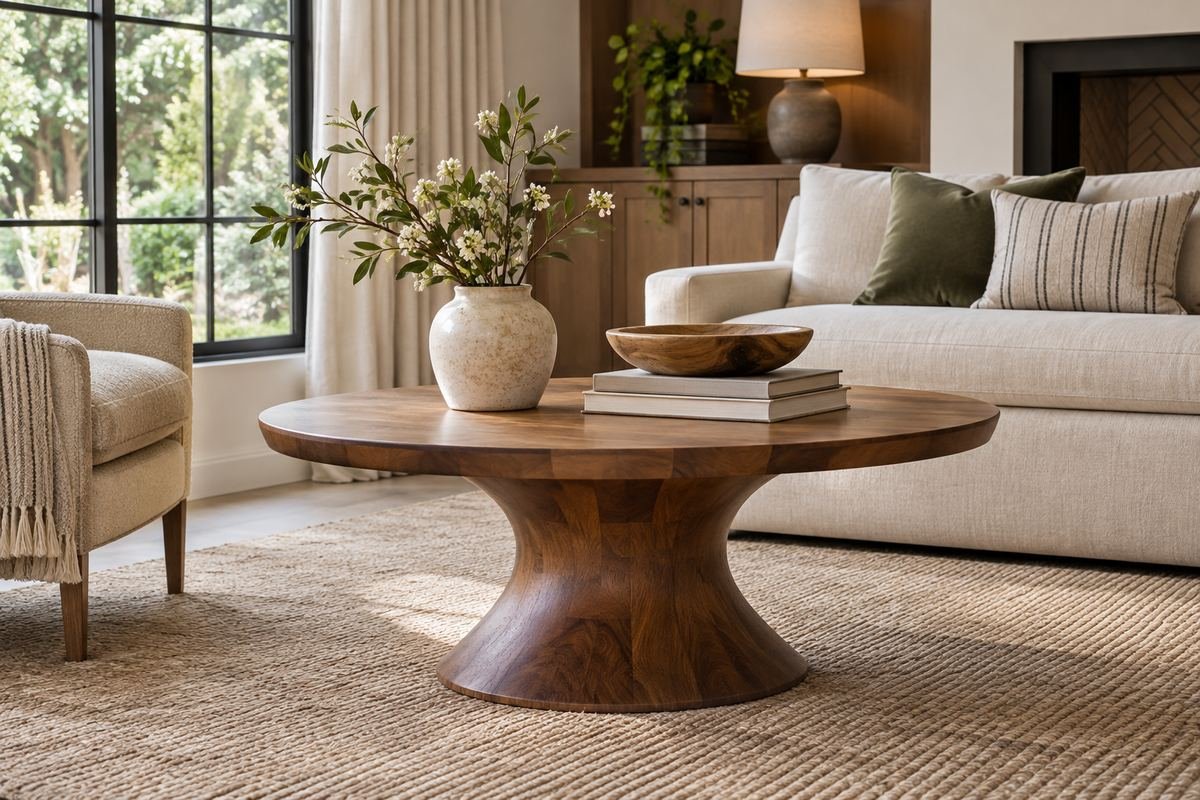
A pedestal table can make the center of the room distinctive without adding several decorative objects. A simple top lets the base shape remain the focus.
The pedestal must still offer suitable foot space and stability. Look at it from the sofa as well as the doorway, because a broad base can feel more dominant from a seated view. Keep surrounding furniture shapes simple enough that the silhouette reads clearly.
Practical tip: Photograph the candidate shape from seat height during planning.
18. Try a textured woven table in a relaxed room
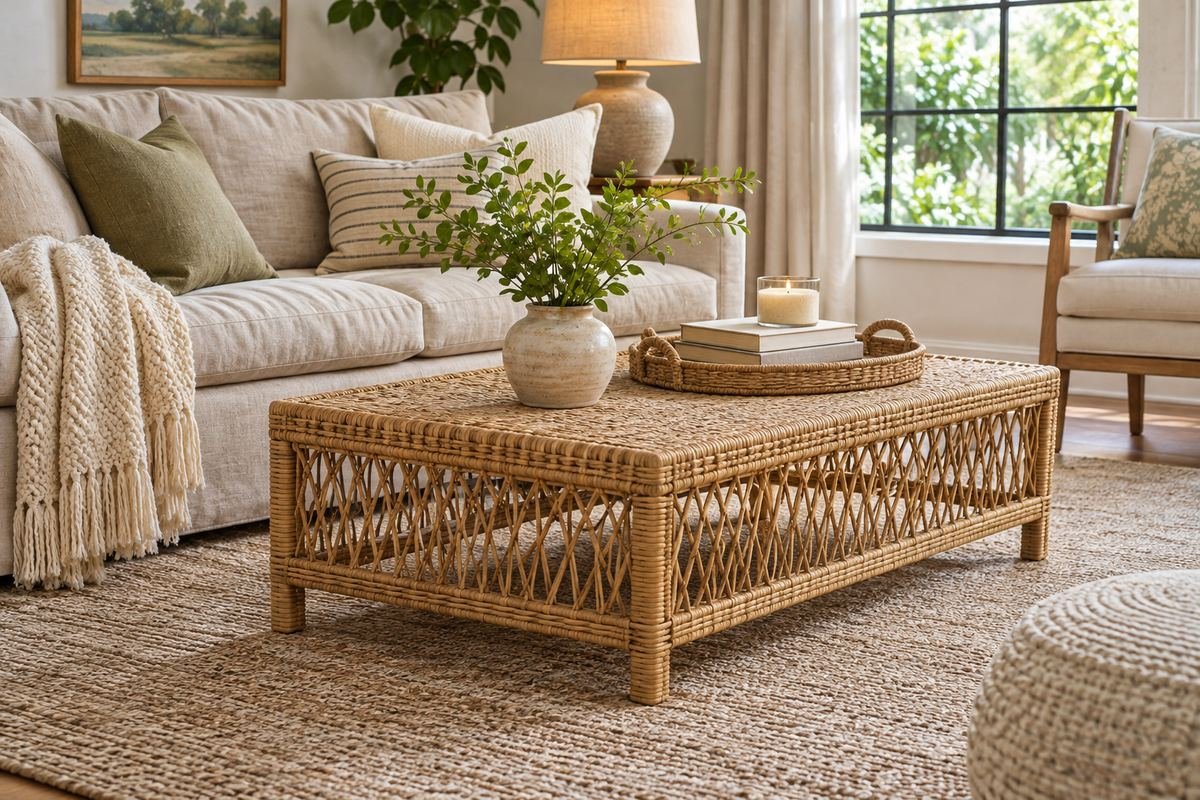
A purpose-made woven coffee table can add a lighter, informal texture beside solid upholstery. A firm top or suitable tray helps the daily surface remain useful.
Confirm the construction and intended indoor use, then follow the maker’s cleaning guidance. Open weave can catch small items, so keep loose accessories in a defined container. Avoid treating an unsupported decorative basket as a load-bearing table.
Practical tip: Choose the table as furniture first and a woven accent second.
19. Choose a glass top to reveal the rug
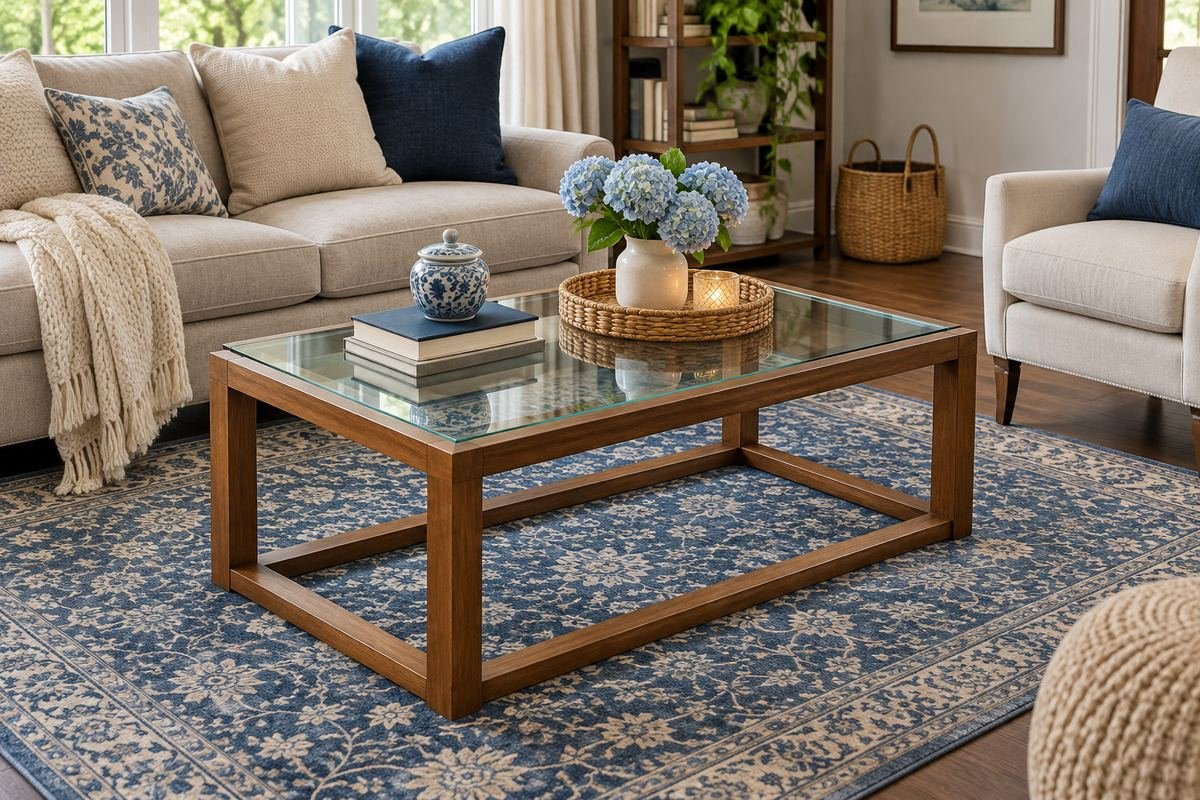
A transparent top can keep an interesting rug visible through the center of the seating group. It may help a compact arrangement feel visually less divided.
Select a complete furniture product appropriate to its intended use and follow its care instructions. Fingerprints, reflections and the base will remain visible, so consider the maintenance and lighting. Transparency changes appearance; it does not reduce the physical walking footprint.
Practical tip: Look at the reflected ceiling light from your usual seat.
20. Use a stone-look surface with a simpler base
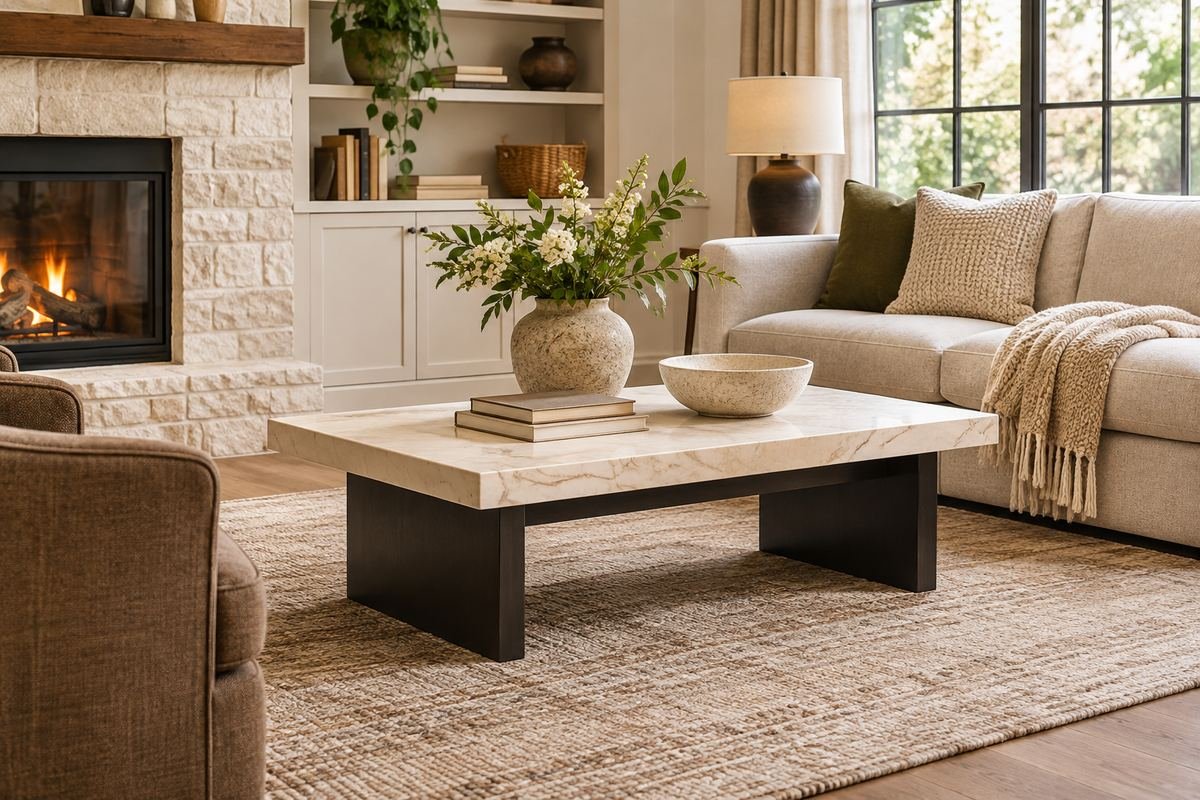
A stone or stone-look top can introduce pattern and a quieter palette. A restrained base helps the surface relate to nearby upholstery without making the center overly busy.
Identify the exact material before assuming stain or heat resistance. Natural stone, engineered products and printed finishes need different care. Compare a sample with the rug and other fixed materials, and include the complete furniture weight in plans for repositioning.
Practical tip: Ask for the exact material and care sheet before choosing the finish.
21. Place an off-center table toward the seats that use it

The geometric center of a rug is not always the useful center of a seating group. A slightly shifted table can put the surface closer to the main sofa while keeping an important route available.
Make the shift look deliberate by relating it to the sofa and other furniture. Test every seat that needs a surface rather than forcing symmetry. Add a side table for a distant chair if extending the coffee table would crowd the whole room.
Practical tip: Base the final position on occupied seats instead of an empty-room photograph.
22. Use separate tables for a deep sectional
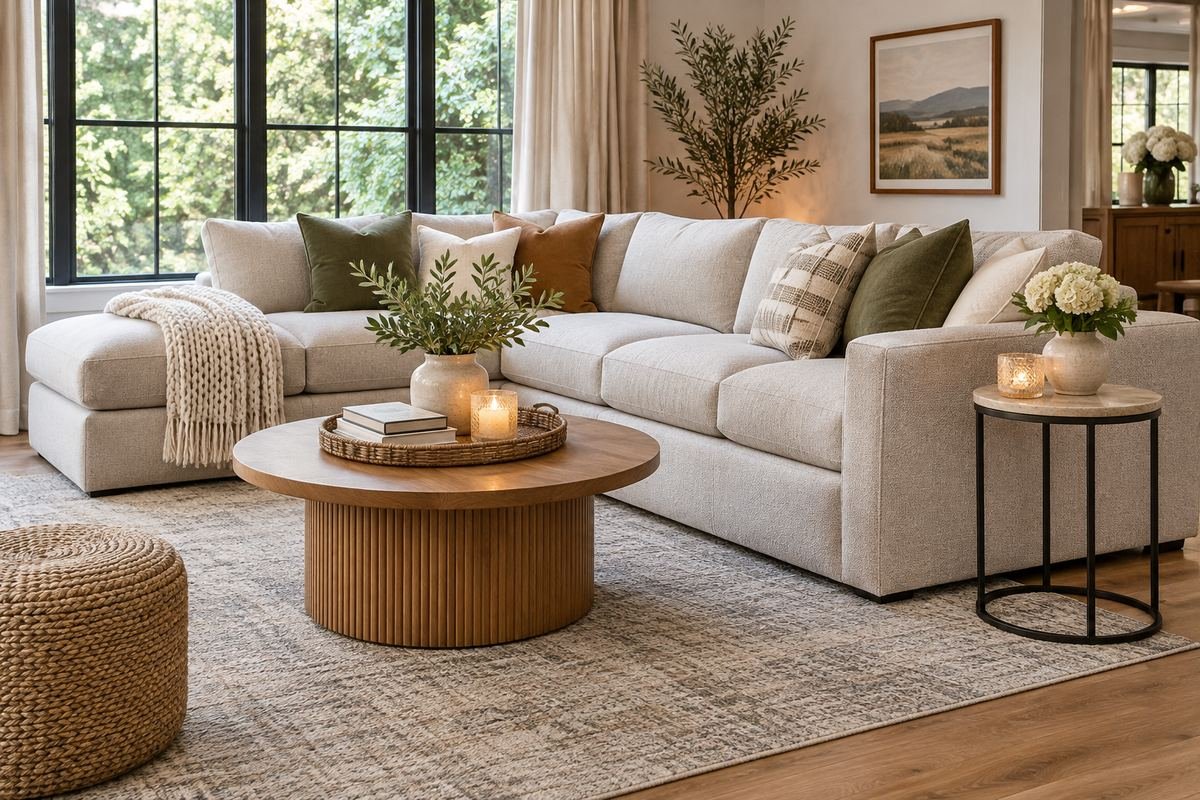
A deep sectional may leave some seats too far from one central top. A smaller center table plus a reachable side table can serve the group without filling the entire floor opening.
Map which seat each surface belongs to. Keep the separate table’s legs clear of the sectional exit, and include reclining or movable parts where present. The aim is a usable surface for the person sitting down rather than a larger central object.
Practical tip: Give the inside corner its own reach test.
23. Choose a low table only when it suits the seating
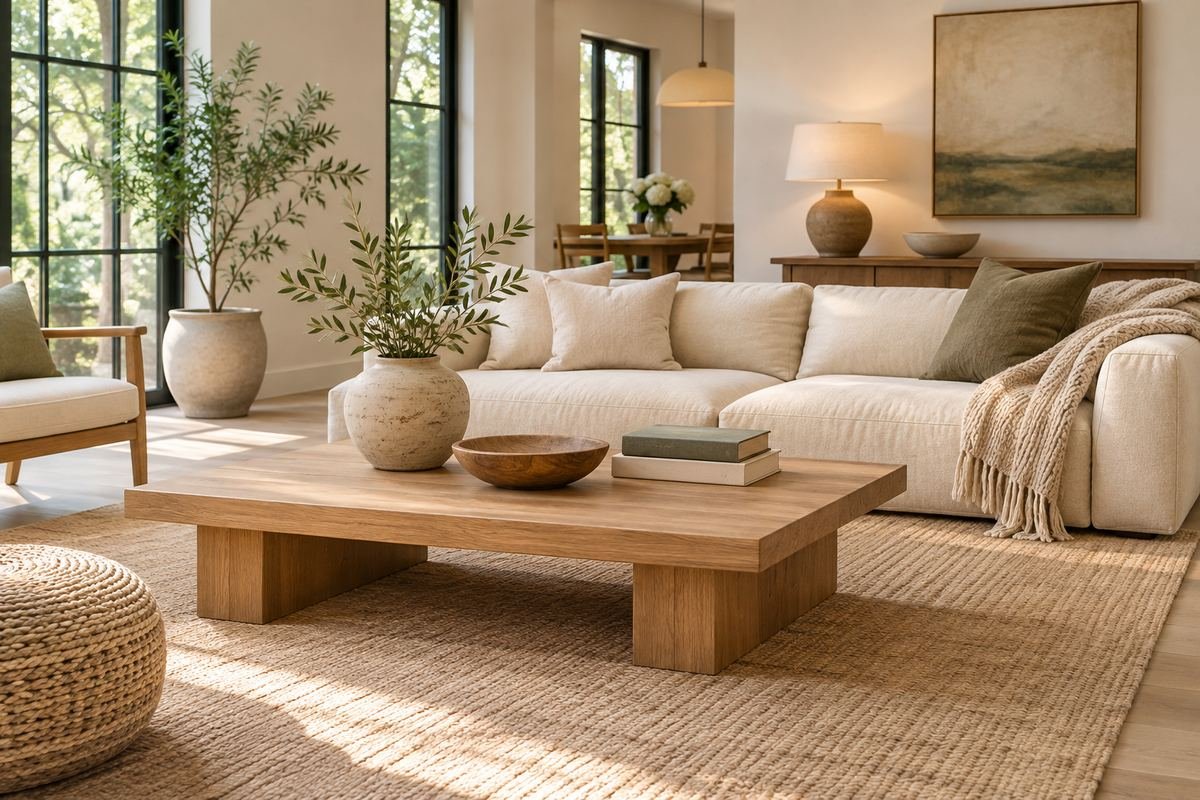
A low table can complement a relaxed low sofa and keep sightlines open. Its height becomes a design choice that should work with the actual cushions and daily uses.
Sit on the sofa before committing to the profile. Reaching far downward may be awkward if drinks and reading materials are used frequently. A second higher side surface can help, but do not add it simply to compensate for a table that never works.
Practical tip: Compare top height with the sofa while someone is seated.
24. Keep a compact table in front of a recliner route
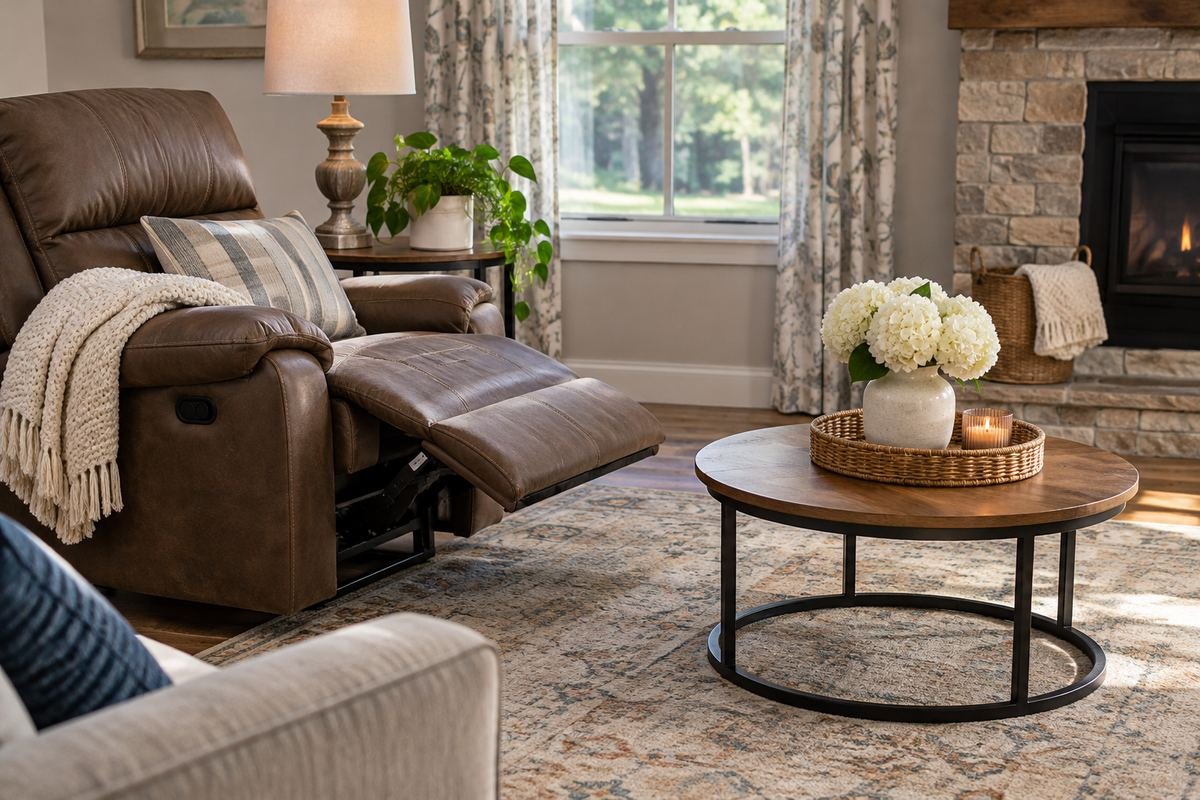
A room with reclining seating needs clear movement in the furniture’s extended position. A compact or easily relocated table may suit better than a large fixed rectangle.
Follow the seating manufacturer’s operating clearance and include the full footrest travel. Move the table to its planned parking place before operating the chair. Do not rely on a staged closed position that hides the actual conflict.
Practical tip: Mock up the table with the recliner fully extended before buying.
25. Use a small tray to protect one daily landing area
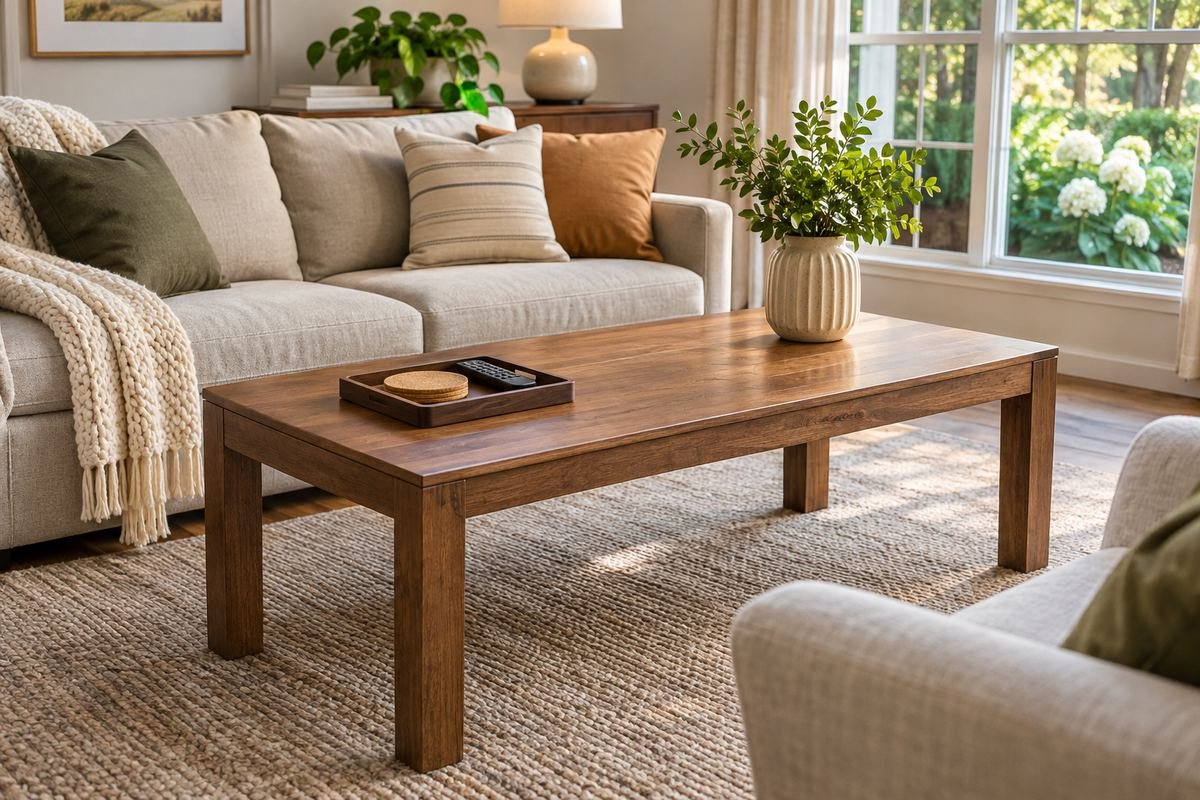
A modest tray can define a mug and remote position without turning the entire table into display. It is especially useful when the furniture has an attractive surface worth leaving visible.
Choose a tray that sits flat and lifts without catching neighboring objects. Leave a separate clear area for a book or another cup. Finish protection still depends on the table and tray materials, so follow the care instructions rather than assuming the tray solves every spill.
Practical tip: Keep the tray small enough that the table still works outside it.
26. Leave the center useful after the room is styled
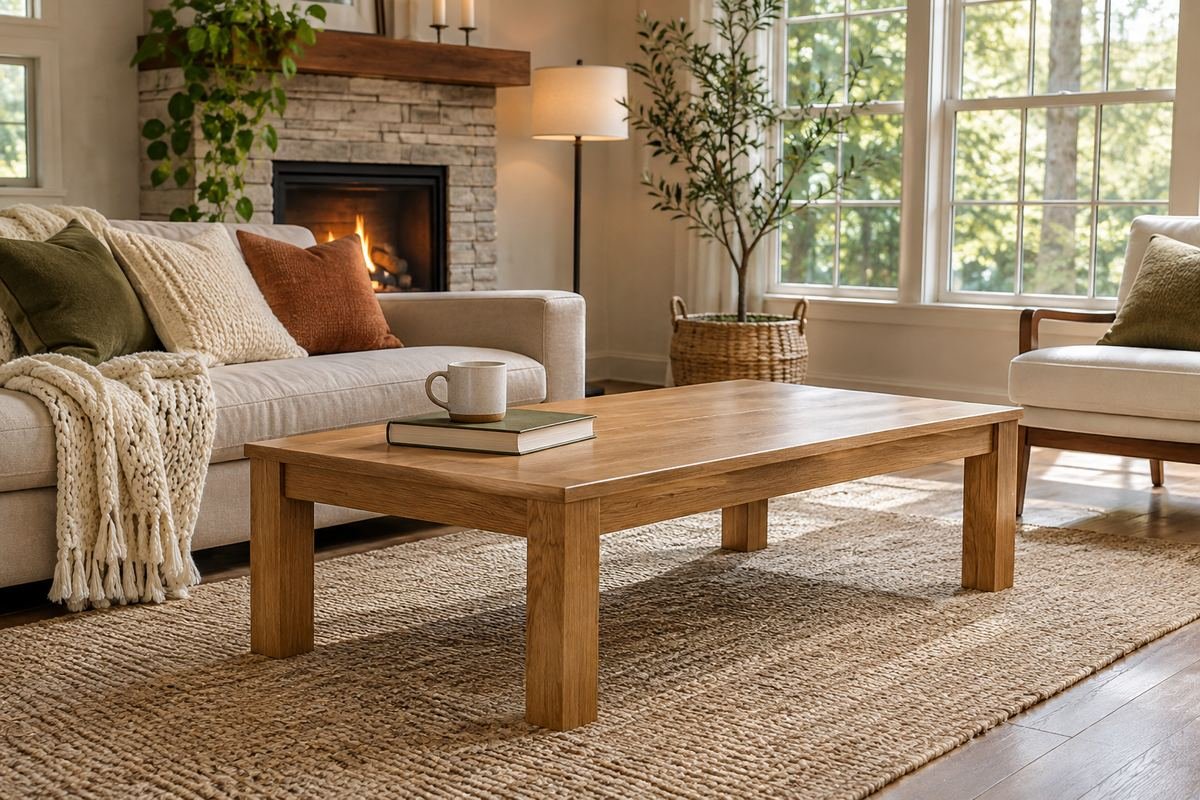
A successful arrangement should survive an ordinary evening. Keep a real place for a cup, a book and the belongings used most often instead of filling every surface with decorative layers.
Review the table after sitting with the room occupied. If objects constantly move to the floor, simplify the display or change the storage. The best living room coffee table is one the household can reach, clear and use without rearranging the entire seating group.
Practical tip: Reset the table around tomorrow’s normal use rather than a permanent display.
Frequently Asked Questions
Should a coffee table match the sofa length?
It does not need to match it exactly. Start with the seating dimensions and a proportionate footprint, then test the actual routes and reach. A common two-thirds starting length is a planning aid, not a requirement for every room.
Is a round table always better in a small living room?
A round outline can ease movement around corners, but diameter and base size still matter. A shallow oval or a small pair may fit a long narrow seating group better. Test a full-size outline rather than choosing from the shape name alone.
Can I use two small tables instead of one large one?
Yes, if each is stable and both have useful positions when the room is occupied. Include the gap between them in the total footprint and keep a clear place to park a movable table.
Choose the Details That Work in Your Home
Choose the living room coffee table from the seats outward. A useful shape, a tested footprint and storage for the things you actually keep will do more for the room than an oversized decorative centerpiece.
For related ideas, explore sectional living room layouts, round coffee table decor, living room rug sizing.
Planning References
Ethan Allen: occasional table buying guide; Ashley: how to choose a coffee table. Follow the instructions for the exact products you choose.
Optional digital guide for this topic
If you prefer a structured workbook, explore this related paid guide.