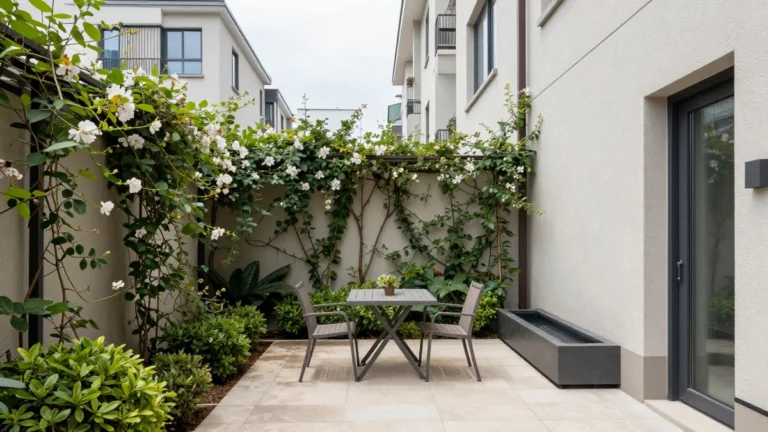
Most people start a garden full of excitement — and abandon it by August. The weeds take over, the plants die in the heat, and the whole thing starts to feel like one more chore rather than the peaceful retreat you imagined. In my experience, the problem is almost never lack of effort. It’s lack of the right system from the beginning. These 20 garden ideas will help you build something that actually works — and actually lasts.
1. Why Most Home Gardens Die in Year One

The honest answer is soil. Most garden failures come down to poor soil — compacted, nutrient-depleted ground that doesn’t drain properly and can’t support healthy root development. Before buying a single plant, invest in your soil. A bag of compost mixed into the existing ground transforms its capacity to support plant life.
We found that gardeners who invest in soil preparation in year one lose significantly fewer plants and spend less on replacements over time than those who skip this step and go straight to planting.
Smart tip: A simple soil test kit costs under $15 and tells you exactly what your soil needs. It’s the most affordable garden investment available and prevents the guesswork that causes most beginner garden failures.
Mistake to avoid: Planting directly into hard, unimproved soil because it looks fine on the surface — compaction stops water and nutrients from reaching roots, regardless of how much you water or feed.
2. The Raised Bed That Changes How You Garden Forever

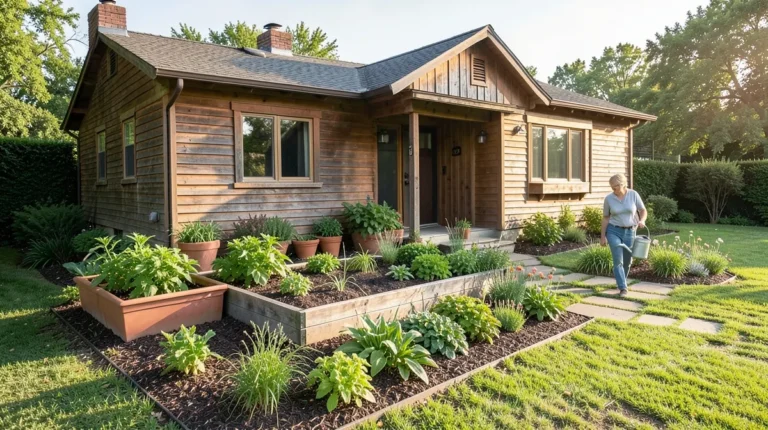
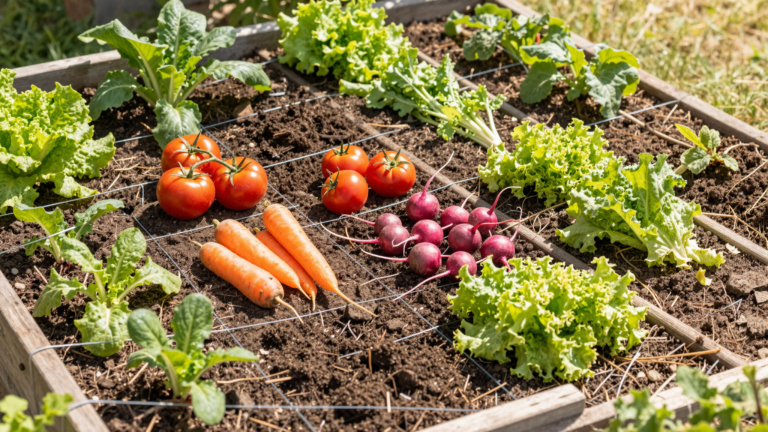
Raised beds solve most of the problems that make in-ground gardening frustrating — poor soil, drainage issues, back strain, and persistent weeds. You fill them with exactly the soil mix you choose, they drain perfectly, they warm up faster in spring, and the defined edges make maintenance feel manageable rather than overwhelming.
A cedar raised bed 120cm x 240cm x 30cm deep costs under $100 in materials, takes one afternoon to build, and will produce better results in its first season than years of struggling with difficult in-ground soil.
Smart tip: Fill raised beds with a mix of 60% topsoil, 30% compost, and 10% perlite or coarse sand — this combination provides the drainage, nutrition, and aeration that most plants need to thrive. No guesswork, no amendments required for at least two years.
Mistake to avoid: Making raised beds too wide to reach the center comfortably from either side — 120cm maximum width allows full access without stepping into the bed and compacting the soil you worked hard to prepare.
3. Color Combinations That Make a Garden Look Designed

Random plant placement creates a garden that looks busy and accidental. Deliberate color combinations — even simple ones — create a garden that looks designed. The easiest approach: choose three colors and repeat them throughout the garden in different plants and proportions.
Purple salvia, white shasta daisies, and yellow rudbeckia planted in drifts rather than individual spots creates a cohesive, professional-looking garden bed that requires no design expertise — just the decision to repeat the same palette consistently.
Smart tip: Plant in odd numbers — groups of three or five of the same plant create natural-looking drifts that read as deliberate design. Single plants of many different species create the random, overwhelming quality that makes most home gardens look unplanned.
Mistake to avoid: Buying plants individually from the impulse display at the garden center without a color plan — the result is always a collection of unrelated plants that never cohere into a garden.
Loving These Ideas? Get the Step-by-Step Guide
Grab the full 5-day eBook and turn these ideas into a finished room.
4. The Garden Path That Costs Less Than You Think

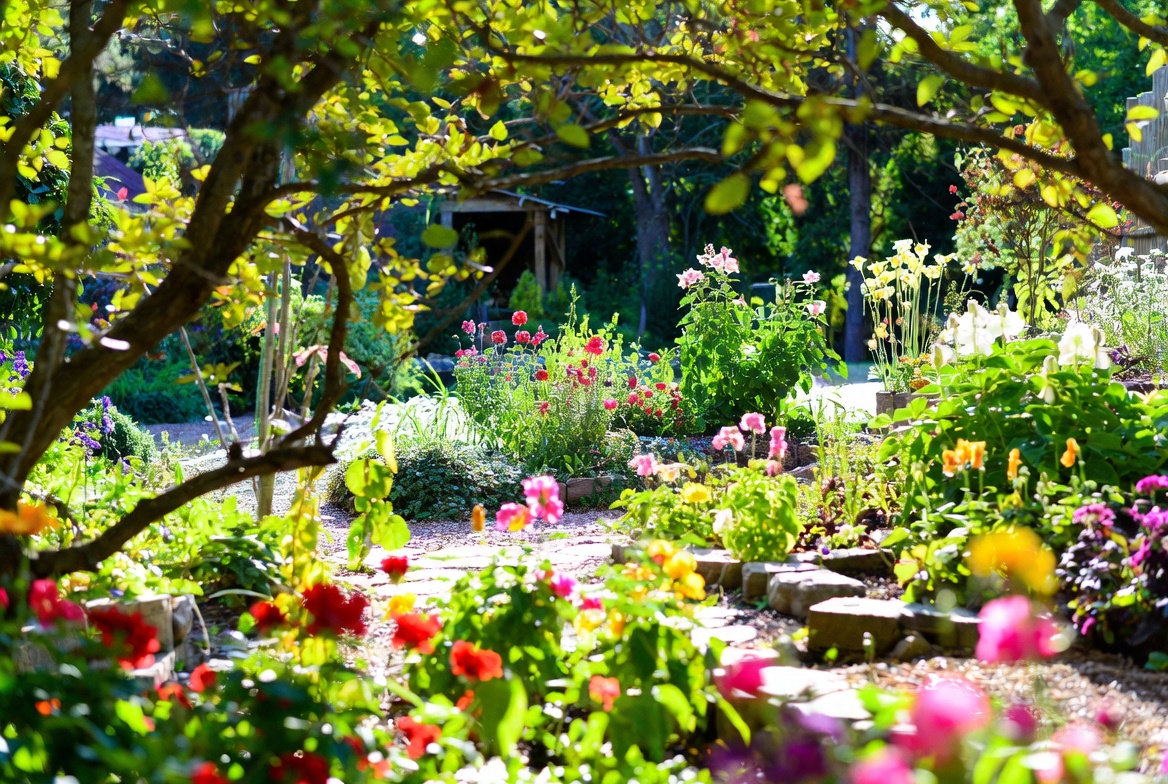
A path through or around a garden bed does three things simultaneously — it gives you access for maintenance without stepping on the plants, it creates a visual line that makes the garden feel organized and deliberate, and it makes the garden inviting to walk through rather than just look at from the outside.
Stepping stones in irregular flagstone or concrete pavers, spaced at a natural walking stride (about 50 to 60cm between centers), cost between $1 and $5 per stone and can be laid in an afternoon directly onto the ground without any base preparation.
Smart tip: Plant creeping thyme or moss between stepping stones — it fills the gaps, releases fragrance when walked on, and looks far more beautiful than bare soil or gravel. Self-seeding once established, so it maintains itself. Affordable weekend project.
Mistake to avoid: Making the path too narrow — a path less than 45cm wide forces sideways movement that feels uncomfortable and makes the garden harder to maintain. Keep the minimum stepping stone path at 50cm of usable width.
5. Perennials That Come Back Every Year Without Replanting

The difference between a garden that feels effortful and one that feels rewarding is often the ratio of perennials to annuals. Perennials — plants that return each year from the same root system — require an initial investment but provide years of bloom without the cost and work of annual replanting.
Lavender, echinacea, salvia, black-eyed Susan, astilbe, hostas, and ornamental grasses are all perennials that perform reliably in a wide range of climates and require minimal care once established.
Smart tip: Plant perennials in the fall rather than spring — they have the entire cool season to establish strong root systems before their first summer, producing significantly more growth and bloom in year one than spring-planted equivalents.
Mistake to avoid: Expecting perennials to look impressive in their first year — most follow the rule “sleep, creep, leap,” taking one to two years to establish before producing their full display. Give them time before concluding they don’t work.
6. How to Layer Plants Like a Professional Designer

Professional garden designers always plant in three layers: tall background plants (shrubs, ornamental grasses, or taller perennials), medium mid-ground plants (most flowering perennials), and low foreground plants (ground covers, low perennials, or trailing plants at the bed’s edge). This layering creates visual depth and ensures something is always visible and interesting at every height.
In my experience, this single principle — tall at the back, medium in the middle, low at the front — transforms amateur-looking beds into professionally designed ones without any change in plant selection.
Smart tip: Leave slightly more space between plants than the label suggests — the first year will look sparse, but by year two or three the plants will fill in naturally and the spacing will look perfect. Crowded planting looks good immediately and poor permanently.
Mistake to avoid: Placing tall plants in the center of a bed rather than at the back — center-tall planting hides everything behind it and creates a dome effect rather than the layered depth that makes garden beds genuinely attractive.
7. The Water Feature That Requires No Plumber

Moving water adds sound, movement, and a meditative quality to any garden that no plant or hardscape element can replicate. A self-contained solar fountain — running entirely on solar power with no plumbing, no electrical connection, and no professional installation — brings this quality to any garden for under $60.
Place it in a large ceramic pot, a stone basin, or a small pre-formed pond liner. Add a few aquatic plants around the edges and a handful of pebbles in the base. The whole project takes one afternoon and runs itself.
Smart tip: Choose a solar fountain with an integrated battery backup — it continues running for several hours after clouds appear, providing consistent sound rather than stopping whenever a cloud passes over. Well worth the small additional cost.
Mistake to avoid: Siting a solar fountain where it receives less than four hours of direct sun daily — insufficient solar charge produces a weak, inconsistent flow that’s less relaxing than no fountain at all.
8. Mulch — The Garden Secret Nobody Talks About Enough

A 5 to 8cm layer of mulch over garden beds is the single highest-return garden maintenance task available. It suppresses weeds by blocking the light that weed seeds need to germinate, retains soil moisture by reducing evaporation, regulates soil temperature, and gradually improves soil quality as it breaks down. It also makes any garden bed look immediately more finished and more professional.
We found that mulched beds require approximately 60% less watering in summer and 80% less weeding than unmulched beds of identical plants. The time saved over a season is significant.
Smart tip: Apply fresh mulch in early spring before weeds germinate and again in late autumn to protect roots from freeze-thaw cycles. Two applications per year maintain the 5cm depth that provides maximum benefit.
Mistake to avoid: Piling mulch against plant stems and tree trunks in a “volcano” shape — this traps moisture against the bark, creating ideal conditions for rot and pest damage. Keep mulch flat and maintain a clear gap around all stems.
9. Cottage Garden Style Anyone Can Achieve

The cottage garden — densely planted, slightly informal, filled with fragrant flowers and self-seeding plants — is one of the most beautiful and most forgiving garden styles available. Its defining quality is abundance: plants allowed to grow naturally, flowers permitted to self-seed into neighboring spaces, and a general atmosphere of relaxed profusion that requires less precise maintenance than formal styles.
Lavender, roses, foxgloves, delphinium, hollyhock, catmint, echinacea, and salvia are the core cottage garden plants — fragrant, bee-friendly, and genuinely beautiful in combination.
Smart tip: Include at least three self-seeding plants in a cottage garden — foxgloves, aquilegia, and verbena bonariensis all seed themselves year after year, filling gaps and creating the spontaneous, naturalistic quality that defines cottage garden style without requiring annual replanting.
Mistake to avoid: Applying cottage garden planting to a very formal architectural setting — the relaxed, informal quality of cottage planting suits period and vernacular buildings but can look incongruous against sharply contemporary architecture.
10. The Focal Point Every Garden Needs

A garden without a focal point feels like a collection of plants rather than a designed space. A focal point — a specimen tree, an ornamental urn, a birdbath, a distinctive shrub, or a garden bench in a key position — gives the eye somewhere to settle and gives the whole garden its sense of organization.
The focal point doesn’t need to be expensive. A large terracotta pot planted with a dramatic specimen (a clipped bay tree, a tall ornamental grass, or a structural shrub) costs under $80 and creates immediate focal impact in any garden.
Smart tip: Position the focal point at the end of a sight line — where the eye naturally travels when entering the garden or looking out from the house. This maximizes its visual impact and creates a sense of destination within the garden.
Mistake to avoid: Using multiple focal points of equal visual weight — competing focal points cancel each other out and create visual restlessness rather than the settled, organized quality that a single strong focal point provides.
11. Edging Tricks That Make a Garden Look Expensive

Clean, defined edging between lawn and garden beds is the single most effective maintenance task for making a garden look professionally managed. A crisp edge — cut with a half-moon edger along a taut string line — transforms the appearance of garden beds instantly, regardless of what’s planted in them.
Steel or aluminum edging strips installed along the bed perimeter maintain the edge permanently, requiring only annual trimming rather than the repeated re-cutting that unedged beds require. The material cost is modest; the visual return is significant.
Smart tip: Edge garden beds in early spring before the season begins — fresh edges at the start of the growing season set a visual standard that the garden maintains more easily than edging performed mid-season when grass has already grown into beds.
Mistake to avoid: Using plastic edging that degrades and buckles after one or two winters — metal edging costs slightly more upfront but lasts decades and maintains a clean, flat profile that plastic cannot sustain.
12. Grow a Cut Flower Garden for Your Home

A dedicated cut flower garden — even a bed of 2 to 3 square meters — provides fresh flowers for the home from early summer through autumn, eliminating the cost of bought flowers and providing a reason to spend time in the garden regularly. Zinnias, sunflowers, dahlias, cosmos, rudbeckia, and sweet peas all produce abundant cut flowers over a long season.
The return on investment is significant — a packet of zinnia seeds costs under $3 and produces dozens of flowers over three to four months that would cost $40 or more as cut flowers from a florist.
Smart tip: Cut flowers in the early morning when stems are fully hydrated — flowers cut in the heat of the afternoon have already lost moisture and last significantly less time in a vase than morning-cut flowers from the same plant.
Mistake to avoid: Allowing cut flower plants to set seed by leaving spent flowers on the plant — deadheading (removing finished flowers before they produce seed) extends the flowering season of most cut flower plants by six to eight weeks.
13. The Shade Garden Solution for Difficult Spots

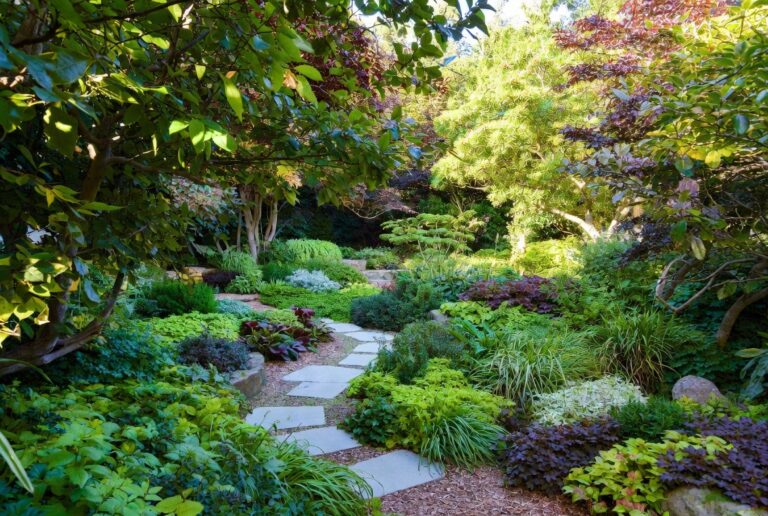
Shaded areas under trees and along north-facing walls are the spots most gardeners struggle with — yet shade gardens, planted with the right species, can be as beautiful as any sun garden. Hostas, astilbes, ferns, hellebores, bleeding heart, and Solomon’s seal all thrive in shade conditions that defeat sun-loving plants.
In my experience, most gardeners make the mistake of repeatedly trying sun-loving plants in shaded spots and concluding the area “can’t grow anything” — when the real solution is simply choosing species that genuinely suit the conditions.
Smart tip: Hostas in particular are one of the most rewarding shade plants available — they’re virtually indestructible, produce increasingly impressive foliage each year as they mature, and are available in hundreds of varieties from miniature to dinner-plate-sized leaves.
Mistake to avoid: Choosing plants based on appearance at the garden center without checking their sun requirements — a plant that looks beautiful in bright shop lighting may be a sun-lover that will struggle immediately in the shaded position you have in mind.
14. Native Plants That Practically Grow Themselves

Native plants — species that evolved in your specific region — are adapted to the local climate, soil, and rainfall patterns. They require significantly less watering, less feeding, and less intervention than non-native alternatives once established, and they provide essential habitat for local birds, bees, and butterflies that non-native ornamentals cannot support.
In most regions of the US and UK, a native plant garden requires approximately 70% less water and 80% less pest intervention than an equivalent garden of non-native species. The time and cost savings are substantial.
Smart tip: Contact your local native plant society or cooperative extension service for a list of high-performing native plants for your specific region — local knowledge produces better results than general native plant guides, which cover species from a wider geographic range than your specific growing conditions.
Mistake to avoid: Assuming native plants look wild or unkempt — many natives are as ornamentally beautiful as any cultivated variety, and a native garden designed with the same layering and color principles as any other garden looks deliberately beautiful rather than accidentally natural.
15. Container Gardening for Any Space or Budget

Container gardening extends the possibility of a garden to any space — a balcony, a paved courtyard, a rooftop, or a rental property where in-ground planting isn’t possible. The principles are the same as for in-ground gardening — soil quality, plant layering, regular watering — but the portability and flexibility of containers add significant design possibilities.
The thriller-filler-spiller formula for container planting: one tall, dramatic plant (the thriller), one medium flowering plant (the filler), and one trailing plant (the spiller) over the container edge — consistently produces the most beautiful and most complete container garden results.
Smart tip: Invest in self-watering containers if you struggle to maintain consistent watering — the reservoir system reduces watering frequency by 60 to 70% and prevents the boom-bust cycle of overwatering followed by drought that kills most container plants.
Mistake to avoid: Using garden soil in containers — it compacts severely in pots, drains poorly, and creates root conditions that stress or kill container plants. Always use a quality container-specific potting mix with added perlite for drainage.
16. Garden Lighting That Works After Sunset

A garden that is invisible after dark misses half its potential — evening is precisely when outdoor spaces are most needed after a working day. Solar path lights, uplights beneath specimen plants, and string lights in sitting areas transform the garden into an entirely different experience after sunset.
Solar uplights placed beneath a statement tree or large shrub — pointing upward through the foliage — create a dramatic silhouette effect that makes even ordinary plants look spectacular at night and costs nothing to run.
Smart tip: Use warm white solar lights (2700K) throughout the garden — cool white lights create a harsh, industrial quality that works against the relaxed, natural atmosphere a garden is meant to provide.
Mistake to avoid: Spacing path lights too closely — lights every 50cm create a runway effect that looks commercial rather than residential. Space path lighting every 1.5 to 2 meters for an elegant, considered result.
17. The Composting System Worth Starting Today

Compost is the single most valuable material in any garden — it improves soil structure, adds nutrients, increases moisture retention, and supports the microbial life that healthy plant roots depend on. And it’s free, made entirely from kitchen and garden waste that would otherwise go to landfill.
A simple compost bin in the corner of the garden — even a basic black plastic dalek composter — starts producing usable compost within three to six months of consistent filling. The material it produces is genuinely superior to any bagged compost available.
Smart tip: The fastest composting systems maintain a ratio of approximately two parts “brown” material (dried leaves, cardboard, straw) to one part “green” material (kitchen scraps, fresh grass clippings). This ratio provides the carbon-nitrogen balance that accelerates decomposition.
Mistake to avoid: Adding cooked food, meat, or dairy to a standard open compost bin — these materials attract rodents and create unpleasant odors. Stick to raw fruit and vegetable scraps, coffee grounds, tea bags, and garden waste.
18. Attract Pollinators and Watch Your Garden Transform

A garden that attracts bees, butterflies, and other pollinators is not only more ecologically valuable — it produces more fruit, more vegetable yield, and more prolific flowering in ornamental plants. Pollinators are essential to garden productivity, and planting to attract them creates a living, dynamic garden that is genuinely more interesting to spend time in.
Lavender, catmint, echinacea, borage, phacelia, and single-flowered roses are among the most reliably pollinator-attractive plants across a wide range of climates. Plant them in generous drifts rather than single specimens for maximum pollinator benefit.
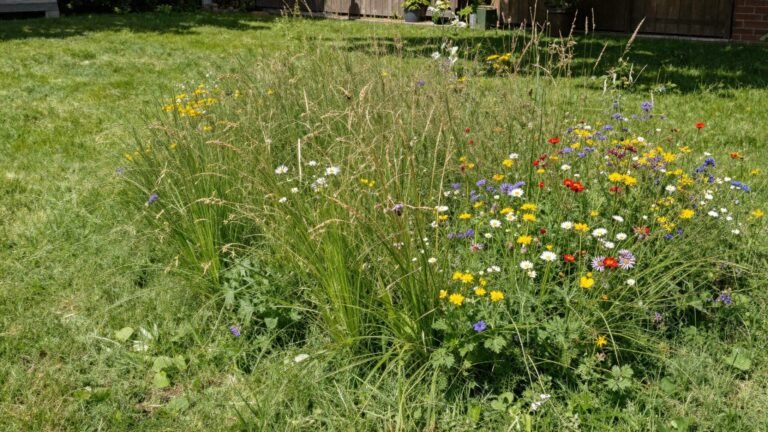
Smart tip: Leave a small section of the garden slightly wild — a patch of long grass, a log pile, or a patch of native wildflowers provides nesting habitat for ground-nesting bees and overwintering insects that formal garden maintenance destroys.
Mistake to avoid: Using pesticides on flowering plants — even systemic pesticides that are applied to soil are taken up by plants and present in pollen and nectar, where they harm the pollinators you’re trying to attract.
19. Low Maintenance Garden Ideas for Busy People

A beautiful garden doesn’t require unlimited time — it requires smart plant choices, good soil preparation, and a few systems that reduce the repetitive maintenance that most gardeners find draining. Native plants, established perennials, ground covers that suppress weeds, drip irrigation, and a thick mulch layer collectively reduce garden maintenance to a genuinely manageable level.
We found that gardens designed specifically for low maintenance from the outset require approximately three hours of maintenance per month in the growing season — compared to eight to twelve hours for a conventionally planted garden of equivalent size.
Smart tip: Replace high-maintenance lawn areas with ground covers, gravel, or low-growing perennials — lawn requires weekly mowing, regular edging, seasonal feeding, and watering that no other garden element demands. Reducing lawn area is the single highest-impact maintenance reduction available.
Mistake to avoid: Choosing “low maintenance” plants without researching their actual requirements — many plants described as low maintenance in general references have specific needs that make them high maintenance in particular conditions. Research specifically for your climate, soil type, and available moisture.
20. How to Design a Garden from Scratch

Start with the view from the house — the garden is seen from indoors more often than it is visited, so design it to look good from the windows and doors that face it. Then identify the spaces you want to create: a seating area, a planting area, a lawn or open space, a kitchen garden if relevant. Sketch the layout on paper before committing to anything permanent.
Choose the hard landscaping first — paths, edging, paving — then the structural plants (evergreen shrubs, specimen trees, hedges), then the seasonal planting. This sequence ensures the garden has good bones that look attractive year-round, not just when the flowers are at their peak.
Smart tip: Visit the garden at different times of day to understand where the sun falls and where the shade is at the times you’ll actually use the space. A seating area positioned in the morning sun but afternoon shade suits those who work during the day; the opposite suits those who use the garden in the morning.
Mistake to avoid: Designing the entire garden at once and implementing it all in one season — the best gardens develop over several years as you learn what works in your specific soil, climate, and light conditions. Start with the structure and one or two key areas, then build outward as your confidence and knowledge grow.
Conclusion
A garden that works is one that’s designed for your actual life — your available time, your soil, your climate, and the way you want to use the space. Start with the soil, choose perennials over annuals where possible, layer your plants for depth and structure, and add the details — path, lighting, water feature, focal point — that turn a collection of plants into a place you genuinely want to spend time in.
Continue Your Home Transformation
Explore the full collection of step-by-step eBooks and get the guide that fits the room you're working on.