A Christmas table setting should look inviting before the meal and remain comfortable once the serving dishes arrive. Start with the plates, glasses and utensils the menu actually needs. Then choose a textile color and one decorative idea that fits the space left over. This order makes it easier to create a special table without turning dinner into a furniture-moving exercise.
The ideas below include full color schemes, layouts for different table shapes and small finishing details. Choose a few compatible options rather than combining every arrangement. The illustrations show design concepts; your own plate sizes, serving dishes and seating positions should decide the final layout.
Contents
- 1. Let a red napkin transform plain white plates
- 2. Run forest green through the center
- 3. Use tartan in a small repeat
- 4. Build around blue-and-white dinnerware
- 5. Pair burgundy linen with a small metallic detail
- 6. Keep a natural wood table visible
- 7. Give a round table one low central group
- 8. Echo an oval table with a short line of objects
- 9. Move the big display off a narrow table
- 10. Make a table for two feel complete
- 11. Mix plate sets through one repeated color
- 12. Let the buffet handle the serving pieces
- 13. Use a flat napkin fold that is easy to open
- 14. Tie a short ribbon around the napkin
- 15. Make place cards easy to see and remove
- 16. Repeat a star motif in one controlled area
- 17. Use a low flower arrangement with a clear footprint
- 18. Contain ornaments in a decorative bowl
- 19. Choose a small ceramic village for a calm center
- 20. Use electric candles as a separate lighting choice
- 21. Let the table work without decorative lights
- 22. Use woven placemats to soften a crisp scheme
- 23. Reserve a real landing spot for serving dishes
- 24. Keep Christmas breakfast simpler than dinner
- 25. Repeat the table color on the sideboard
- 26. Plan the reset as carefully as the setup
Set one complete place before decorating the center
Try the actual chair, plate, utensils and glass at the table, then add the serving pieces you plan to use. Emily Post's basic guidance places the fork on the left, the knife on the right with its blade inward, and the water glass above the knife; additional utensils depend on the menu. Keep decorations out of the diner's working area. Test the view across the table while seated, and move large displays elsewhere if they interrupt conversation or serving.
Choose an arrangement that fits your situation
- Narrow table: Use color at each setting and keep the middle for the meal; place the larger display on a sideboard.
- Round table: Try one compact low group, then check all four settings and the serving-bowl footprint.
- Mixed dinnerware: Repeat a napkin color or placemat while keeping each setting useful for the menu.
- Buffet or breakfast: Set only the pieces the meal needs, with a clear route or shared serving area.
1. Let a red napkin transform plain white plates

A strong napkin color can provide the holiday accent while everyday white dinnerware supplies a calm background. Fold the napkin simply and repeat the red in one small detail across the table. Avoid adding another patterned layer until you have seen the complete place setting. This is a useful starting point when you want the table to feel festive with pieces already in the cupboard.
2. Run forest green through the center

A green runner can link several settings without requiring individual colored plates. Check its width against the actual table: the runner should leave the place settings and serving space comfortable. Keep the centerpiece compact so the cloth remains visible. If the dinnerware has colored rims, compare those colors with the green before introducing a second seasonal accent.
3. Use tartan in a small repeat
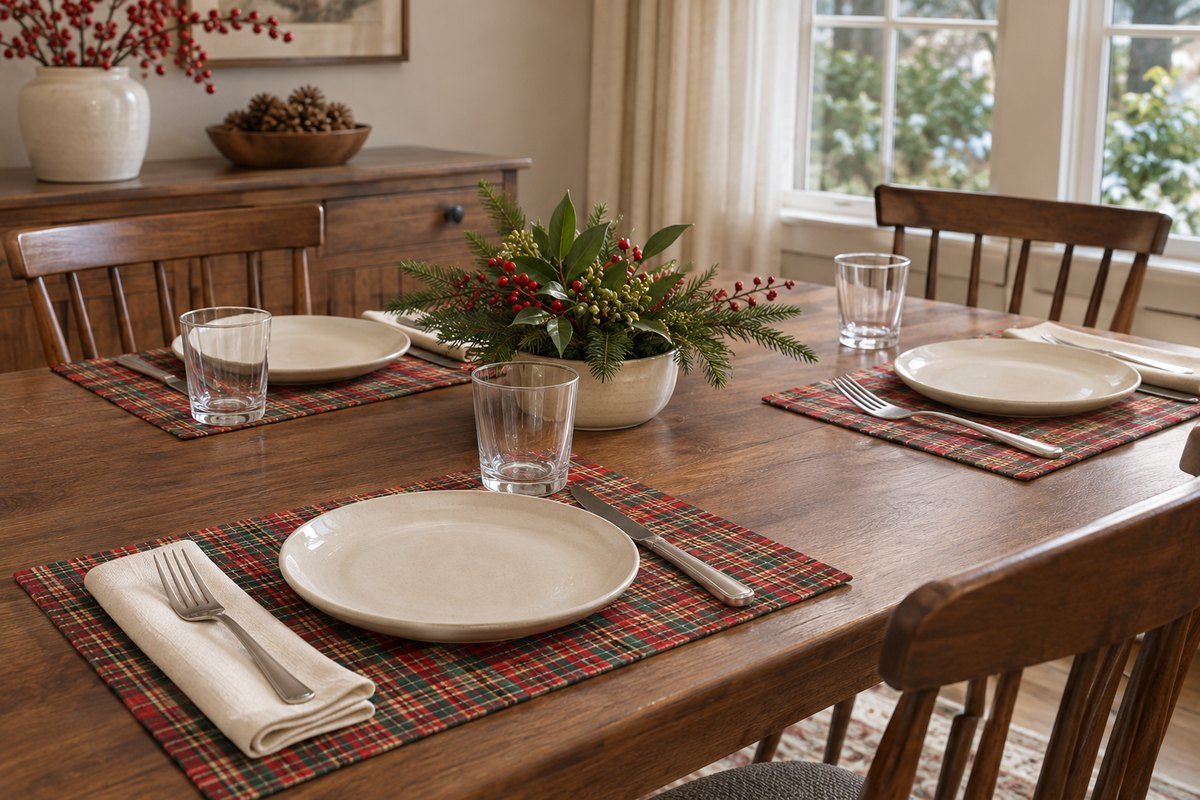
Checked placemats or napkins can carry red, green and cream in one pattern. Choose one patterned textile layer and keep the others plain. Align the checks carefully enough that the table looks intentional without becoming rigid. A smaller repeat often works better than a very large check when only part of the fabric is visible around a plate.
4. Build around blue-and-white dinnerware

Existing patterned china can lead a holiday table without a red-and-green overlay. Pair it with navy napkins or a pale cloth, then use a modest winter detail in the center. Keep the extra decoration quieter than the plate pattern. Mix clear glasses with the arrangement so the table still has visual breathing room between the stronger blue elements.
5. Pair burgundy linen with a small metallic detail

A burgundy tablecloth can make plain cream plates feel more formal. Add a modest gold-toned napkin ring or another single metallic element rather than changing every accessory. Check the cloth's drop with the chairs pushed in and pulled out. If the fabric dominates the room, lighten the top with pale napkins and fewer objects in the center.
6. Keep a natural wood table visible

A warm timber surface may be the best background for cream textiles and simple green details. Use suitable placemats or protection for your table's finish rather than assuming bare wood can handle every dish. Leave gaps between the decorative elements so the grain stays visible. This approach can make an informal meal feel considered without needing a full-length tablecloth.
7. Give a round table one low central group

A round table usually reads clearly with a compact arrangement in the middle. Test its footprint with the actual plates in place, then check whether serving bowls will still fit. Use a shallow decorative bowl or a few short objects rather than filling the whole center. If food will be served family-style, plan a nearby landing surface for the decoration during dinner.
8. Echo an oval table with a short line of objects

Three small low pieces can follow an oval table's length without becoming a continuous barrier. Space them so the table still has usable gaps for serving dishes. View the arrangement from both ends as well as the long sides. Keep the objects similar in color but vary their shape slightly if a perfectly matched set feels too formal for the room.
9. Move the big display off a narrow table
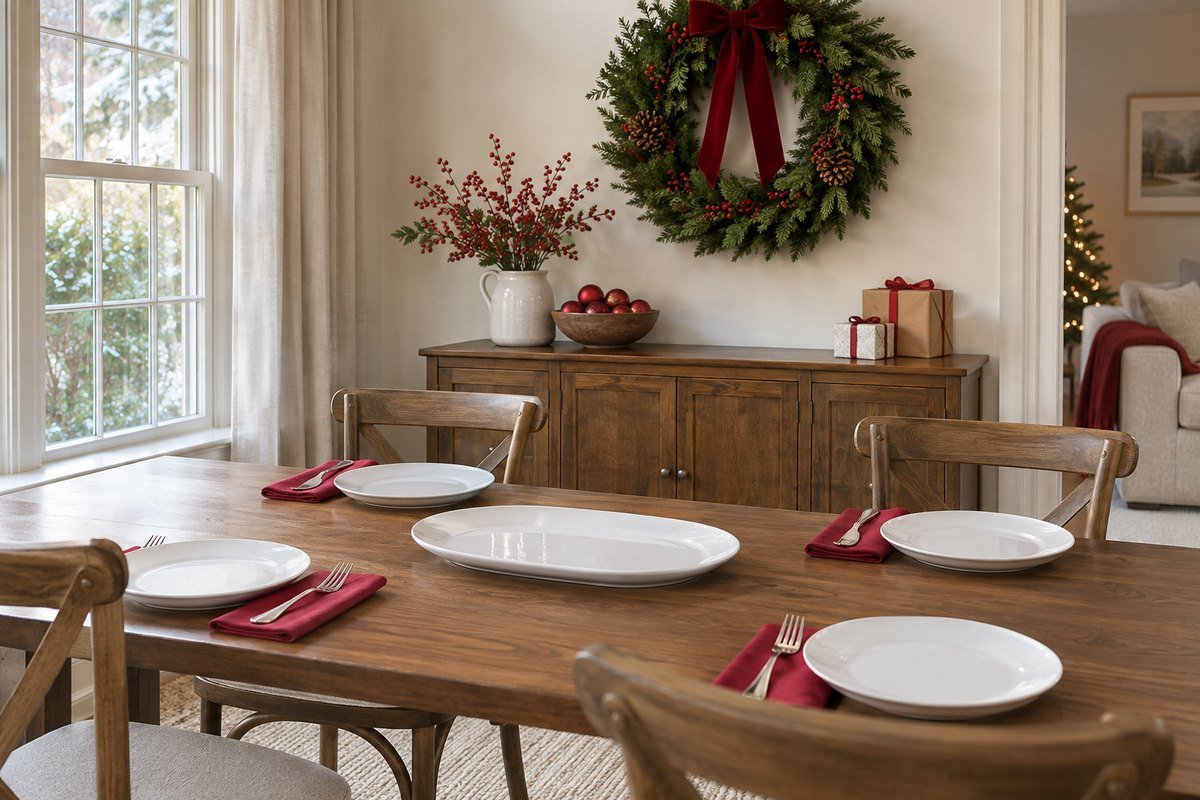
A narrow dining surface may not have room for a centerpiece after the meal is set. Put the larger seasonal display on a sideboard and use napkins or place cards to carry the color at the table. This gives the room a focal point while protecting serving space. Test the arrangement with the widest platter you expect to use before deciding the middle is available.
10. Make a table for two feel complete

A small breakfast or bistro table can look festive with two coordinated napkins and one compact accent. Leave enough room for the actual cups and plates rather than shrinking a large tablescape into the middle. A single ceramic tree can be moved easily when food arrives. Repeat its color in the napkins so the arrangement still feels coherent after the object is removed.
11. Mix plate sets through one repeated color

If you do not have enough matching plates, link the different sets with a common napkin or placemat. Compare the plate sizes and give each diner a practical setting rather than forcing a decorative stack. A shared color can make varied patterns feel intentional. Keep spare pieces available nearby so a last-minute guest does not require rebuilding the entire color scheme.
12. Let the buffet handle the serving pieces

For a buffet meal, keep the dining table simpler and place the appropriate plates and serving utensils at the food station. Check how guests will move between the two areas. The seasonal color can appear in a cloth or napkin basket without surrounding the food with loose decorations. Keep the route clear and give used serving utensils a suitable resting place.
13. Use a flat napkin fold that is easy to open

A simple rectangle or loose fold often looks polished without delaying the start of the meal. Position it on the plate or in a suitable place beside the setting. Avoid folds that depend on pins or hidden supports near food. The texture and color of the cloth can provide enough interest when the rest of the setting is already detailed.
14. Tie a short ribbon around the napkin

A small ribbon tie can echo the tree or room decorations without adding another object to the setting. Keep the tails contained and choose a simple knot that is easy to undo. Remove the ribbon before the napkin is used. Do not tie eating utensils into a complicated bundle if guests will need to dismantle it while balancing plates or glasses.
15. Make place cards easy to see and remove

Use a small plain card in a stable holder that fits outside the plate's working area. Write names clearly and check the seating plan before guests arrive. A consistent card size can connect mixed dinnerware without elaborate decoration. Avoid glitter, loose foliage or objects that must be picked out of the food area once everyone sits down.
16. Repeat a star motif in one controlled area

A star pattern on a napkin or paper place card can provide a recognizable seasonal detail. Choose one location for the motif and keep the rest of the table fairly plain. Loose confetti is harder to clear and can migrate into the meal, so use a contained printed or woven pattern instead. The result remains graphic without needing a scatter of tiny objects.
17. Use a low flower arrangement with a clear footprint

A short arrangement can provide color while keeping faces visible across the table. Choose a vessel that sits steadily and protects the table from water, then test the height while seated. Keep stems and decorations separate from food and drinking vessels. If the arrangement spreads beyond the space available, move it to a sideboard rather than trimming the dining space around it.
18. Contain ornaments in a decorative bowl

A shallow bowl can turn a few ornaments into one movable feature. Use it as a decoration rather than a serving vessel during the same meal, and keep small breakable pieces away from young children. Check the bowl's base against the table finish. A contained group is easier to lift away when a platter needs the space than individual ornaments scattered along the cloth.
19. Choose a small ceramic village for a calm center

A few short ceramic houses can suit a pale table scheme. Keep the group small enough that it does not divide the table into separate sides. Arrange the houses on a suitable base if the finish needs protection, then check how easily the whole display can be moved. Unlit pieces avoid adding another cable or battery compartment to the table setup.
20. Use electric candles as a separate lighting choice

If you want a candle-shaped accent, choose an electric product suitable for the holder and follow its instructions. Keep it stable and outside the reach of diners' sleeves and serving utensils. Check battery-compartment security where children are present. The glow is optional: the table should still work with the room's ordinary lighting and with the decorative pieces switched off.
21. Let the table work without decorative lights

A table can feel seasonal through color and shape alone. Use the dining room's existing lighting and choose a centerpiece that looks appealing in daylight as well as evening. This is helpful when a small table cannot spare space for holders or when serving dishes will need the middle. Test the finished layout at the time of day you plan to eat.
22. Use woven placemats to soften a crisp scheme

A woven texture can sit between plain plates and a smooth table surface. Check the mat's size, care instructions and suitability for its intended use; its appearance alone does not make it a heat protector. Repeat a color in the napkin to connect the natural texture to the holiday palette. Keep plate stacks modest so the place setting remains stable.
23. Reserve a real landing spot for serving dishes

Before adding more decor, put an empty example of the main serving dish where it will land. Use protection appropriate for the dish and your table's finish. Check that a seated person can reach the food without stretching over fragile decorations. If the table cannot hold the menu comfortably, use a sideboard or serve individual portions instead of balancing dishes at the edges.
24. Keep Christmas breakfast simpler than dinner
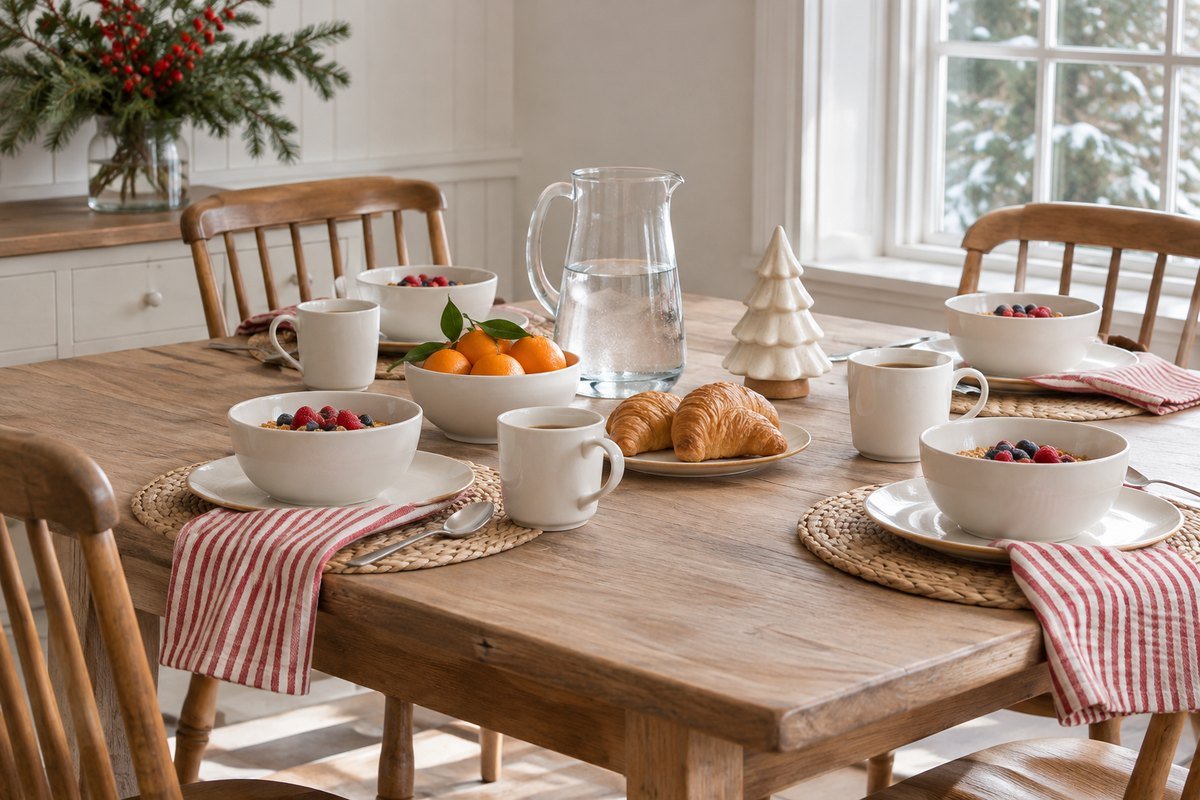
Breakfast may need a mug, small plate and bowl rather than a full dinner setting. Build the seasonal look through the napkin or a striped textile, then leave space for the food you are actually serving. Keep a shared jug or basket within comfortable reach. Fewer pieces can make a relaxed morning feel special without requiring the formal dinner arrangement to stay assembled overnight.
25. Repeat the table color on the sideboard

A small coordinating display on a nearby surface can make a restrained dining table feel part of a complete room. Use one repeated color rather than duplicating the entire centerpiece. Keep the sideboard available for its serving role and leave heat-sensitive objects away from places where hot dishes will be set. The surrounding room can carry decoration that the table itself cannot accommodate.
26. Plan the reset as carefully as the setup

Keep a suitable place for used linens and a separate container for clean decorations when clearing the meal. Follow the care instructions for cloth, tableware and ornaments rather than treating everything as washable together. Save a photograph of the finished place setting with a short list of the pieces used. Next time, you can reproduce the parts that worked without buying a new scheme.
A table-setting rehearsal for your actual menu
Write the guest count and menu, then lay out one complete place using the real dishes. Record the plate and mat sizes, the usable central area and the serving pieces that must fit there. Sit down to check the sightline across the table and move the chair as you would during the meal. Choose one textile treatment and one optional decorative group only after this rehearsal. Keep a note of which items move to the sideboard when serving begins.
A practical next step
Begin with a table that serves the meal comfortably, then add the color and detail that make it feel like Christmas. Repeat a few choices clearly and leave room around them. A well-planned setting should be just as welcoming after the first platter arrives as it was in the photograph before dinner.
For the surrounding room, store tablecloths and napkins between occasions. Choose an everyday dining-table centerpiece.
The images are original AI-generated design concepts, not photographs of tested products or verified installations.
Sources and care references
Optional digital guide for this topic
If you prefer a structured workbook, explore this related paid guide.