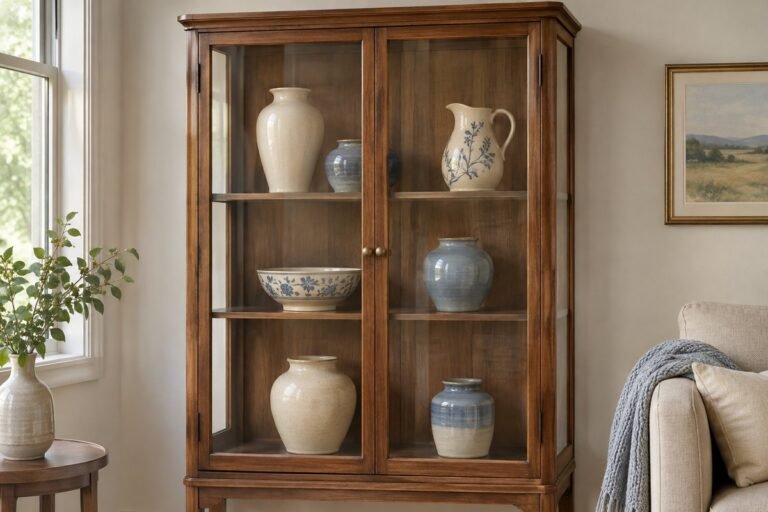
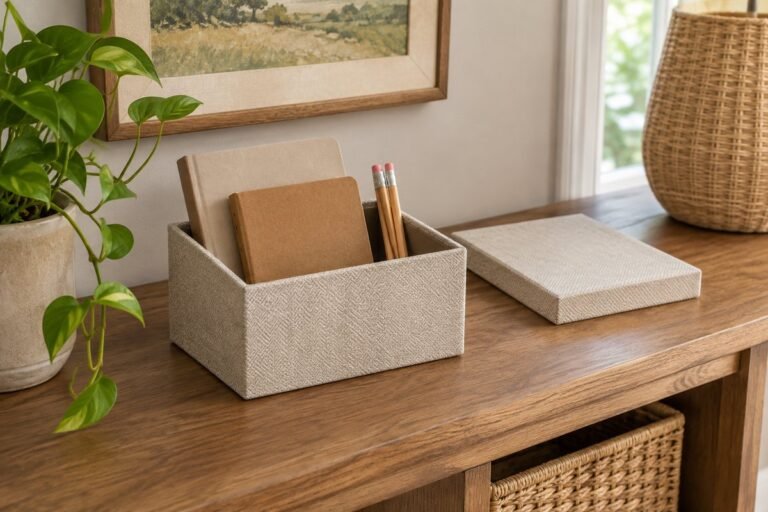
Holiday cards can become a personal part of the room rather than a growing pile beside the mail. The right display makes them easy to see, open and rearrange as more arrive. Start with the number of cards you expect, the surfaces you can spare and whether the originals need to remain in good condition.
A temporary decorative display and long-term preservation call for different choices. Use reproductions for arrangements that involve clips, pins or adhesive, especially when a card is irreplaceable. The examples below use fictional illustrated greetings; no real sender's address, photograph or private message is shown.
Contents
- 1. Stand a short row on a picture ledge
- 2. Give incoming cards a small tray
- 3. Use a grooved wooden card rail
- 4. Group three compact card stands
- 5. Arrange cards on a shallow stepped rack
- 6. Use copied cards on a simple metal grid
- 7. Slide reproductions into a ribbon memo board
- 8. Give a corkboard a seasonal selection
- 9. Keep cards accessible in clear display pockets
- 10. Use a desktop file for a collection you like to read
- 11. Use a cabinet's interior only when it stays functional
- 12. Make one short horizontal ribbon display
- 13. Choose a purpose-made clip rail for changing displays
- 14. Turn a magnetic board into a card gallery
- 15. Use a narrow wall as a vertical sequence
- 16. Make a framed collage from copies
- 17. Let one favorite card have its own frame
- 18. Add a small card group to an existing gallery
- 19. Rotate a coordinated color group
- 20. Use one clear shelf within a bookcase
- 21. Give unusually wide cards a separate position
- 22. Create a simple end-of-season keepsake routine
Separate everyday display from keepsake care
The Library of Congress advises keeping works on paper away from direct or intense light, food, drink and heat, and avoiding adhesive tape, glue and metal fasteners on originals. Use that distinction when choosing a display: a copied card can be clipped to a decorative board while the original stays in a supportive protective enclosure. Keep all displays clear of doors, windows, rails and walking routes. Follow the support instructions for the actual wall, weight and holder.
Choose an arrangement that fits your situation
- A few cards and no new wall fixing: Try a supported shelf row, tabletop rail or compact stands.
- Many cards that you like to read: Use an accessible file or pockets and rotate a small visible selection.
- Clips, pins or adhesive in the design: Use reproductions and preserve valued originals separately.
- Irreplaceable or fragile paper: Prioritize appropriate protective storage and seek conservation advice for condition problems.
1. Stand a short row on a picture ledge

A shallow ledge can hold a few folded cards with their fronts visible. Check the depth and the front lip before placing them, and leave gaps so each design can be read as a separate piece. Keep the row away from direct sunlight and heat. Rotate the selection as new cards arrive rather than stacking one greeting in front of another.
2. Give incoming cards a small tray

A tray near the usual mail-sorting spot can stop greetings from spreading across the room. Use it for cards waiting to be read or displayed, then move a few into the main arrangement. Keep drinks and keys in a separate place so they do not press into the paper. A defined incoming space also makes it easier to notice a card that has not been opened.
3. Use a grooved wooden card rail

A tabletop rail can support upright cards in a contained line. Check whether the slot suits their thickness without forcing the paper or bending the fold. Choose reproductions for delicate originals and keep the base fully supported. A plain wood finish lets several different card styles sit together without needing each one to match the room's palette.
4. Group three compact card stands

Separate stands let you vary the spacing and change one card at a time. Use bases that sit steadily and support the card without sharp pressure points. Keep the group within one part of the surface rather than spreading it around lamps and everyday objects. This works well for a small selection that you want to view from a favorite chair.
5. Arrange cards on a shallow stepped rack

A small stepped display can make the back row visible without a wall installation. Check the shelf depth and support for the cards rather than assuming a kitchen rack will suit every size. Keep the tallest pieces at the back and stop before the fronts overlap heavily. Place the rack where it can be reached comfortably for reading and rotation.
6. Use copied cards on a simple metal grid

A wall grid can hold a changing collection without requiring a new fixing for every card. Clip reproductions rather than keepsake originals, and keep the clips within the grid's footprint. Choose a secure mounting method for the loaded display. A regular gap between cards gives mixed colors and sizes a more orderly appearance without hiding their differences.
7. Slide reproductions into a ribbon memo board

A fabric-covered ribbon board can hold card copies in a soft geometric arrangement. Check that the ribbons support the paper without covering the main artwork. Keep the board's background quieter than the collection so the greetings remain the focus. Do not assume a decorative ribbon board is suitable for archival storage; preserve valued originals separately.
8. Give a corkboard a seasonal selection

An existing noticeboard can become a holiday display for a few weeks. Pin reproductions or use suitable protective holders so the original cards are not punctured. Remove unrelated paperwork before deciding how much will fit. A small border of empty cork makes the arrangement feel contained and helps the display return to ordinary use after the season.
9. Keep cards accessible in clear display pockets

Individual pockets can make the fronts visible while allowing cards to be removed for reading. Check the pocket dimensions and avoid squeezing thick embellishments into a tight sleeve. For valued paper, choose enclosure materials appropriate to the item rather than assuming every clear plastic is preservation-quality. Mount or place the organizer where the whole loaded display is supported.
10. Use a desktop file for a collection you like to read

A shallow upright file can hold more cards than a small display stand while keeping them easy to browse. Arrange them loosely enough to lift one out without catching its neighbors. Put a few favorites at the front and rotate them as the collection grows. Keep the file away from the desk's drink area and from equipment that gives off heat.
11. Use a cabinet's interior only when it stays functional

A suitable interior panel can carry a small display of copies if the door still closes and its hardware remains clear. Check the depth with the cards in place before attaching anything. Avoid obstructing ventilation or covering important labels. If the surface is unsuitable for a secure removable holder, use a freestanding display on a nearby shelf instead.
12. Make one short horizontal ribbon display

A short supported ribbon can hold a few reproduced cards on a broad wall. Keep the line contained rather than extending it across a doorway, window or walking route. Use appropriate supports for the full loaded weight and check for sagging. Simple spacing is usually easier to maintain as cards change than a complicated pattern that depends on exact card dimensions.
13. Choose a purpose-made clip rail for changing displays

A rail with several holders can make daily rotation straightforward. Check the manufacturer's instructions and use copies where the gripping mechanism may mark the paper. Leave room around each holder so cards do not bend against one another. Place the rail at a height that can be reached without climbing onto furniture to add the next greeting.
14. Turn a magnetic board into a card gallery

Magnets can hold reproductions in a flexible layout on a suitable board. Keep small loose magnets away from children and choose a display location appropriate to the household. Avoid claiming that magnetic attachment is harmless to every original paper or printed finish. Leave one open area for later arrivals so the display can grow without covering the earliest greetings.
15. Use a narrow wall as a vertical sequence

A small vertical arrangement can suit a short wall section where a wide board would feel crowded. Use a few separate supported pockets or holders and keep them outside the route. Repeat the spacing so the sequence looks intentional. Check nearby door swings and switches before choosing the position; a slim display still needs to respect the room's daily movement.
16. Make a framed collage from copies

A spare frame can contain several reproductions as one seasonal piece. Test the arrangement on a table before securing the copies to the backing, and keep the original cards unaltered. Use a consistent margin to bring different sizes together. Choose a frame suited to the finished thickness rather than forcing embellished cards under glazing that presses against them.
17. Let one favorite card have its own frame

A single meaningful greeting can be more striking than a crowded group. Display a reproduction if the original needs protection, and choose a frame that leaves the artwork room to breathe. Place it beside a small existing object rather than building a large new arrangement around it. The rest of the collection can remain available in a nearby tray or file.
18. Add a small card group to an existing gallery

Use a suitable empty frame or established display position to bring a few card copies into a gallery wall. Keep their scale related to the neighboring pieces so the seasonal addition feels integrated. Preserve the secure fixing and avoid attaching loose paper to the frames around it. This can be a modest update rather than a reason to rebuild the entire wall.
19. Rotate a coordinated color group

If a large mixed collection feels visually busy, show a few cards sharing one color and change the selection periodically. Keep the remaining cards accessible so their messages are still enjoyed. Let the cards themselves supply the pattern instead of adding matching ribbons and ornaments around every one. The display can evolve as new colors arrive in the mail.
20. Use one clear shelf within a bookcase

A dedicated section of an existing bookcase can hold a seasonal row without taking over the whole unit. Keep the cards fully supported and leave space around the tallest one. Avoid squeezing them between heavy books or placing them against a warm lamp. A few visible fronts and a nearby file for the rest can be easier to enjoy than a densely packed shelf.
21. Give unusually wide cards a separate position
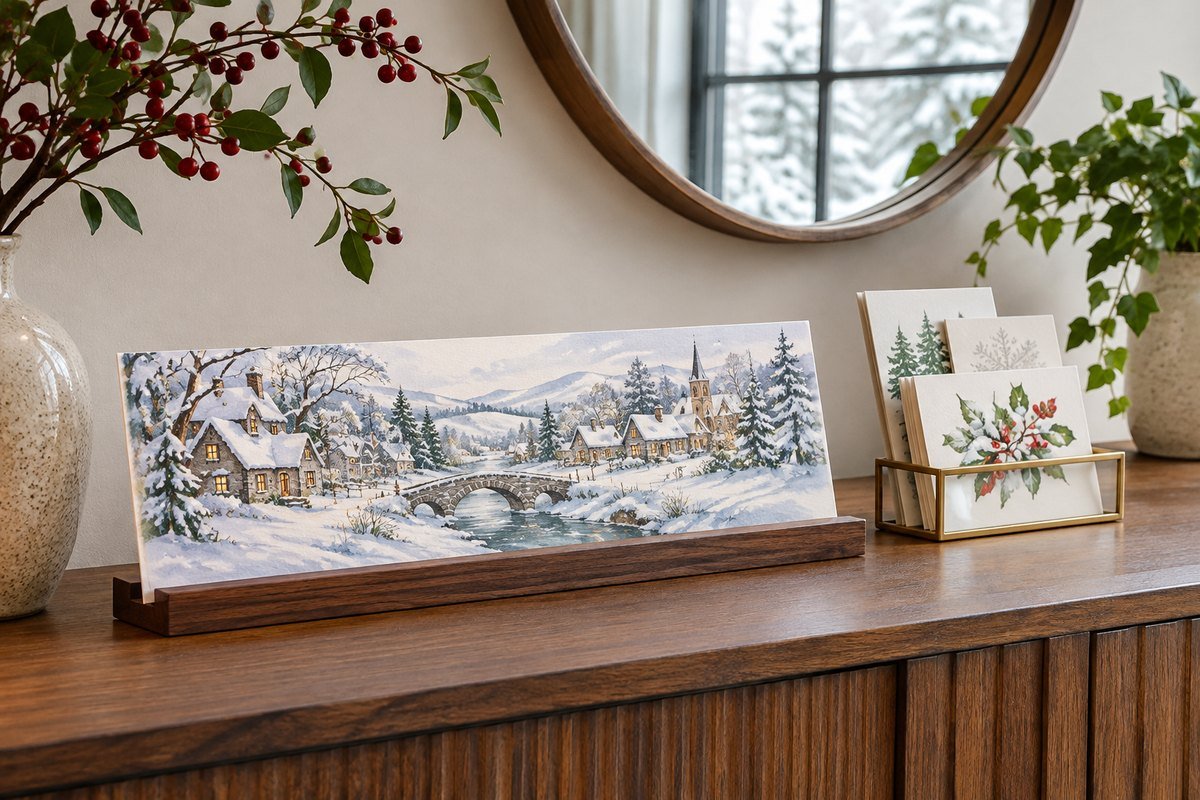
A long landscape greeting or dimensional card may not suit the holder used for the rest. Find a broad supported position that shows its full shape without bending an edge. Keep moving parts and thick embellishments clear of tight pockets. A separate feature spot can make an unusual card look deliberate while the main display retains its simpler rhythm.
22. Create a simple end-of-season keepsake routine

Sort the cards you want to keep before packing the decorations. Record any useful context on a separate note, choose supportive enclosures appropriate to the paper and store them in a stable dry place away from strong light and heat. Avoid punching, taping or gluing irreplaceable originals just to make a decorative bundle. Copies can remain in the display kit for another year.
A display-and-keep plan for your card collection
Make three groups: cards to display now, cards to rotate later and originals that need careful protection. Measure the widest and tallest pieces before choosing holders. Record whether a proposed method clips, punctures, bends or adheres to paper, and use copies when needed. Choose one display area away from heat, strong light and daily obstructions. At the end of the season, keep the storage decision separate from the temporary decorating method.
A practical next step
Choose a display that makes the cards easy to enjoy and easy to change. Keep the original paper's needs in mind, use copies where the arrangement would mark it, and leave the room's normal functions intact. A modest collection shown clearly can feel more personal than a large display that is difficult to read or maintain.
For the surrounding room, use a picture ledge for displays that change. Keep the surrounding entryway table useful.
The images are original AI-generated design concepts, not photographs of tested products or verified installations.
Sources and care references
- Library of Congress: Care, Handling and Storage of Works on Paper
- Hallmark: Christmas card display inspiration
Optional digital guide for this topic
If you prefer a structured workbook, explore this related paid guide.