Small Christmas tree ideas can make a living room festive while keeping its everyday routes useful. Compare a narrow floor tree, tabletop display or wall arrangement with the space you actually have.
Here are 20 original styling ideas, each with its own image and a short practical guide. Choose the one that suits your room, then check the full base, branch spread, and everyday walking route before decorating.
The images are original AI-generated design concepts, rather than measured rooms or tested product installations.
Test Small Christmas Tree Ideas With the Room Occupied
Mark the full base and branch spread, then use the sofa, nearby storage and window as usual. Next, include the planned cable and gift positions in the trial. For example, a pencil tree may have a narrow silhouette while its stand still occupies the path beside a chair. A tabletop arrangement can be the better fit when an existing cabinet has genuine spare surface and appropriate support.
1. Try Small Christmas Tree Ideas in a Narrow Corner

A pencil tree brings the eye upward while keeping the branch spread modest. Choose a corner beside the sofa or window where the full stand fits, then use small ornaments that do not make the silhouette feel heavier. Warm lights and a restrained cream-and-gold palette keep the display calm.
Keep the base as narrow as the tree allows, rather than surrounding it with a wide skirt or a pile of gifts. Test the route beside the sofa before decorating. The finished arrangement should let you use the room just as easily as you did before the tree arrived.
2. Place a Pre-Lit Half Tree Against a Clear Wall
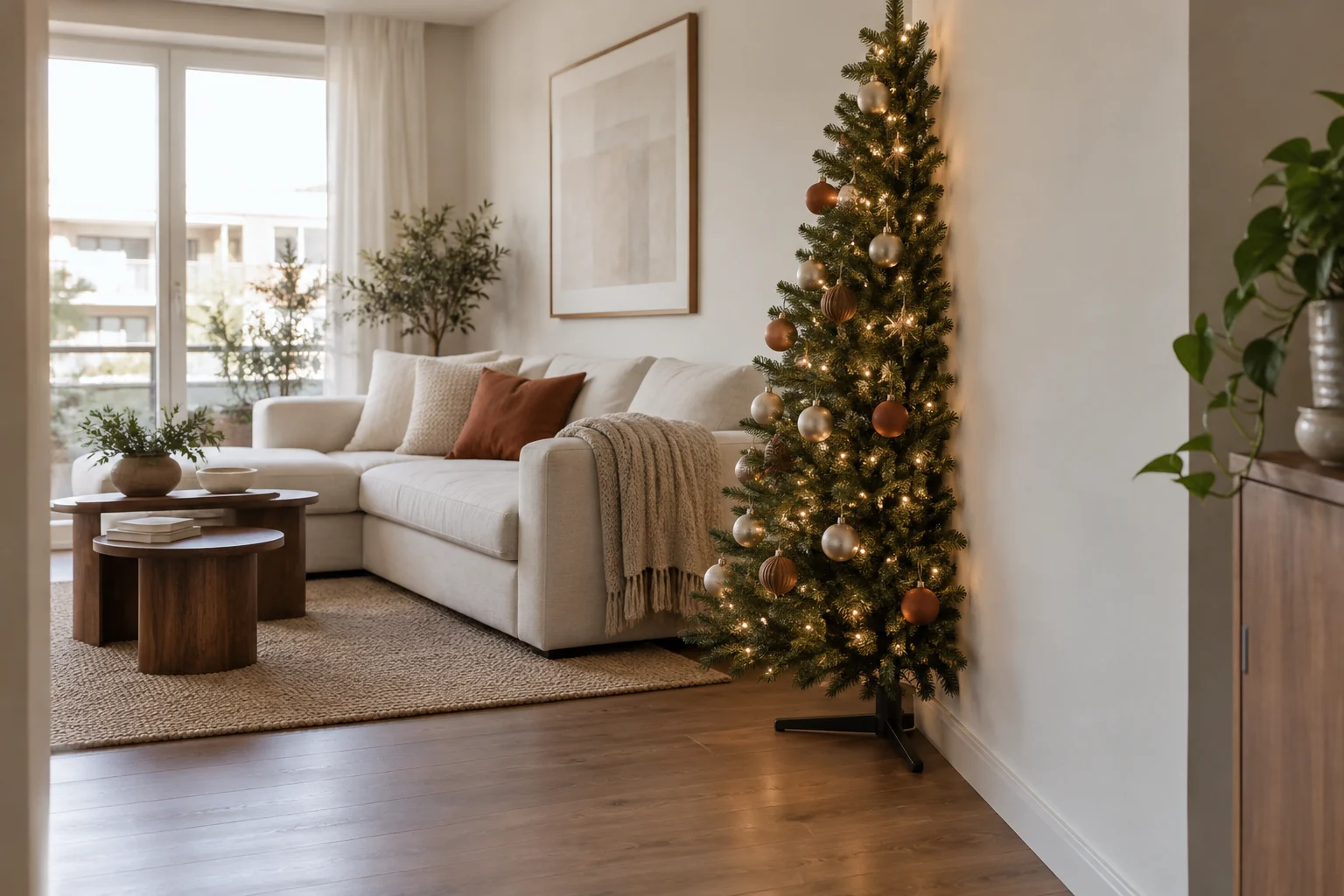
A purpose-made half tree has a flatter back, making it useful where a full round tree projects too far into the room. Place the designed flat side toward the wall and let the decorated front supply the festive shape. A few warm metallic ornaments can make the shallow arrangement feel complete.
Check the whole product footprint, including its stand and cable, before choosing the spot. Leave access to outlets and follow the tree’s instructions for lighting and placement. Use a tree designed for this shape rather than trimming a full tree into a makeshift flat-backed version.
3. Build a Christmas Tree Shape With Greenery on the Wall
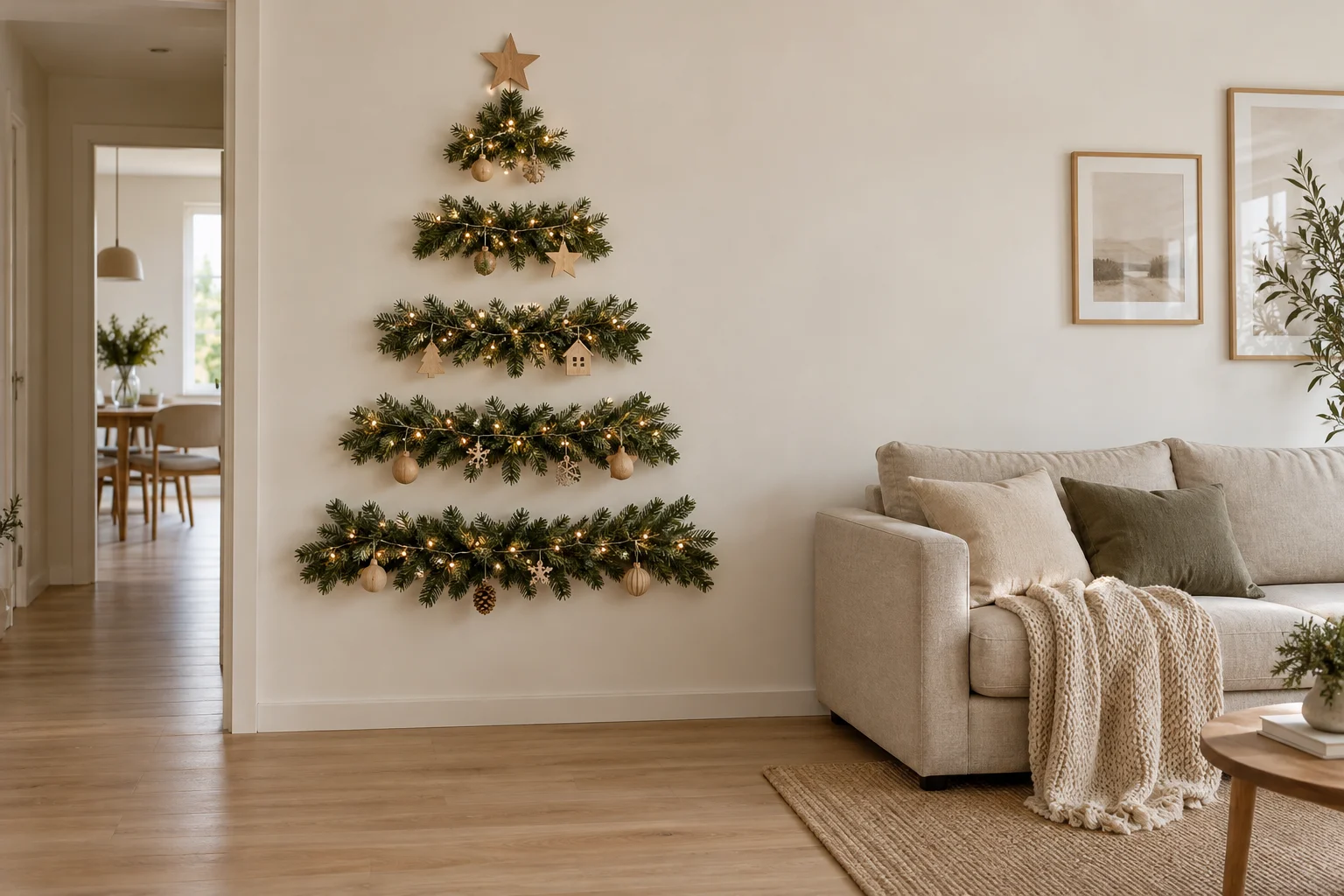
Horizontal tiers of greenery create a recognizable tree outline while leaving the floor available. Make the top tier short and widen the lower tiers gradually. Small warm lights and lightweight ornaments add depth without turning the arrangement into a bulky wall display.
Choose a mounting method suited to the surface and the finished weight, following its instructions. Keep the cord route tidy and away from walking paths. In a rental, check which attachments are permitted before treating the wall as extra holiday storage.
4. Turn an Existing Sideboard Into a Tabletop Tree Display
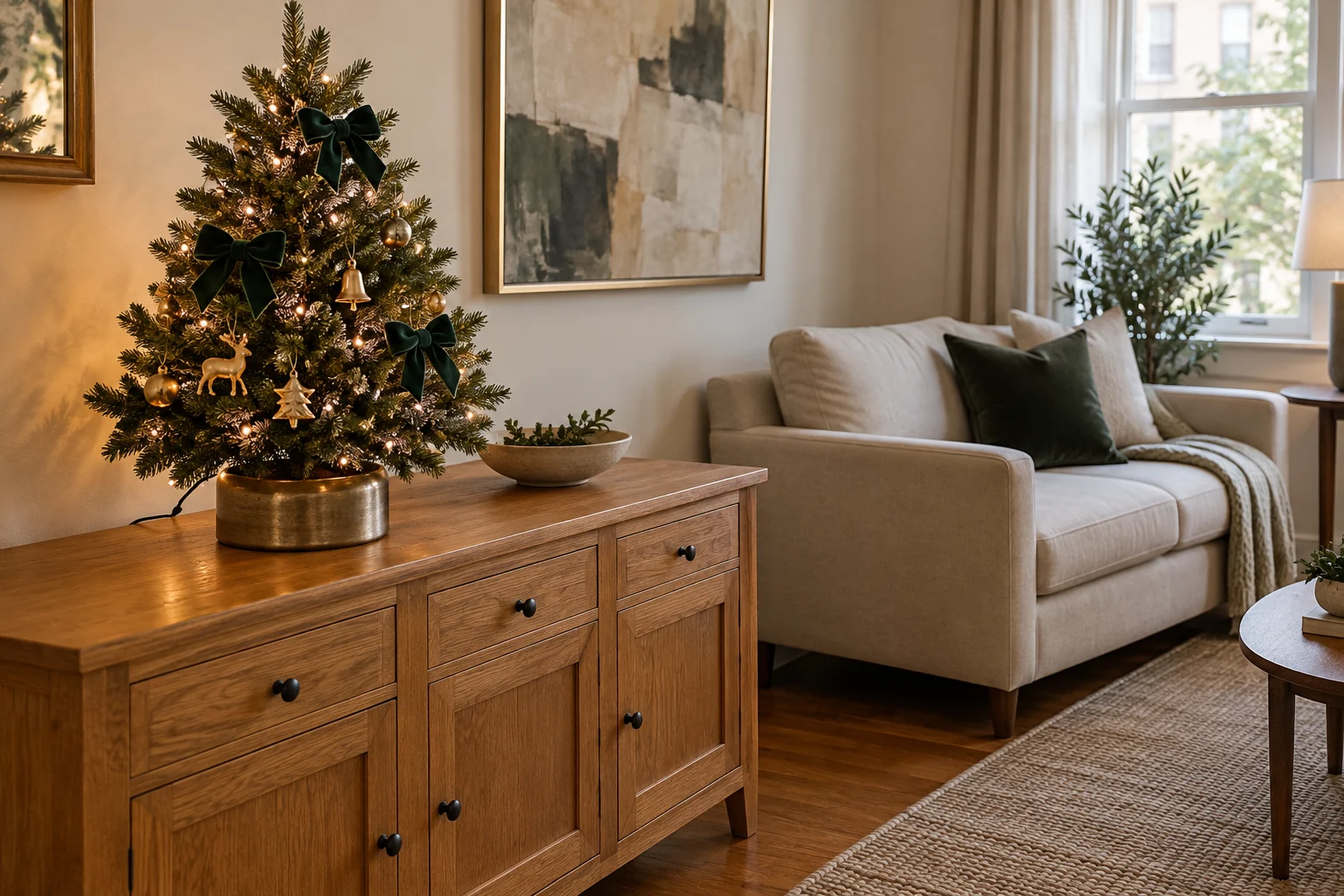
A miniature tree can make an existing sideboard the room’s seasonal focal point. Set it to one side, add a few small ornaments, and let the remaining surface stay useful. Deep green bows and warm lights work particularly well against a wood cabinet.
Keep the base stable and leave room to open drawers and doors. A tree that overhangs the cabinet or forces everyday items into another room is too large for the spot. Choose the tree after measuring the surface, including the headroom above it.
5. Try a 3ft Tree in a Reading Corner
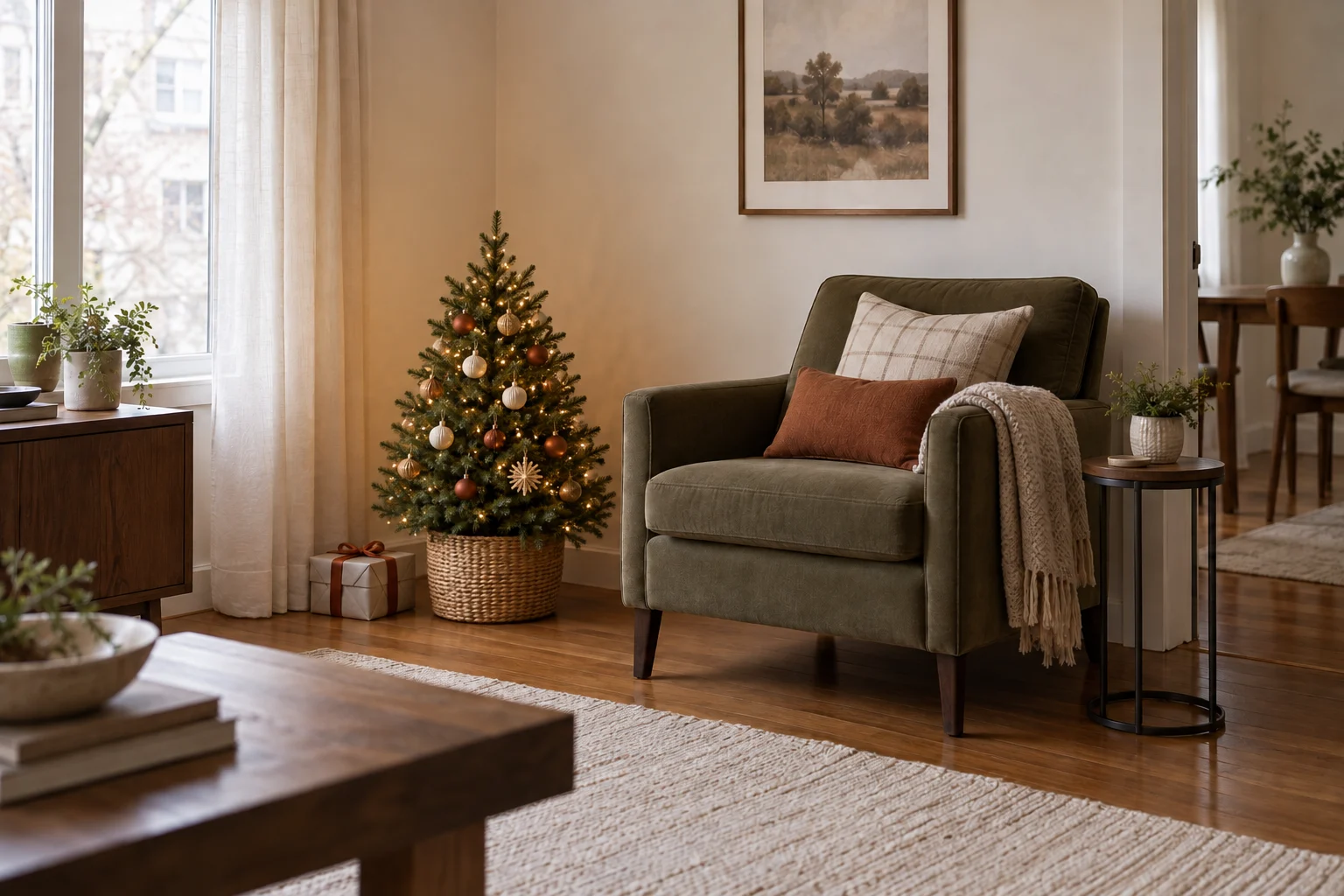
A small tree around 3ft high beside a reading chair creates a small holiday zone without dominating the whole living room. A basket around the correct stand softens the base, while a limited mix of ornaments keeps the smaller branches visible. Let the chair and tree feel like one settled composition.
Measure width as carefully as height; a short tree can still have a broad spread. Keep gifts outside the route to the chair, and check that the basket does not interfere with the required stand. The image shows a design concept, so verify dimensions before buying.
6. Style a Slim Tree With Navy and Soft Gold

Navy ornaments give a slim tree depth without needing a large quantity of decorations. Mix a few matte navy pieces with small brushed-gold ornaments and warm lights. A pale room provides enough contrast for the dark accents to show clearly, even on a narrow tree.
Spread the darker ornaments through the height of the tree instead of clustering them at the bottom. Keep ribbons narrow and gift wrapping simple so the base remains compact. This is a useful direction when you want a richer holiday palette without adding more objects around the room.
7. Use Paper Stars in Small Christmas Tree Ideas

White paper stars make a sparse slim tree feel festive while keeping its branches easy to see. Vary the star sizes gently and add warm lights, then stop before every gap is filled. Pale wood and cream textiles reinforce the quiet Scandinavian mood without a complete room makeover.
Choose lightweight ornaments appropriate for the branches and keep paper decorations away from heat sources. A simple small base works better than a wide decorative surround here. The airy finish comes from leaving room between ornaments, so a modest collection is enough.
8. Bring Natural Texture to a Tree With Orange and Wood Accents
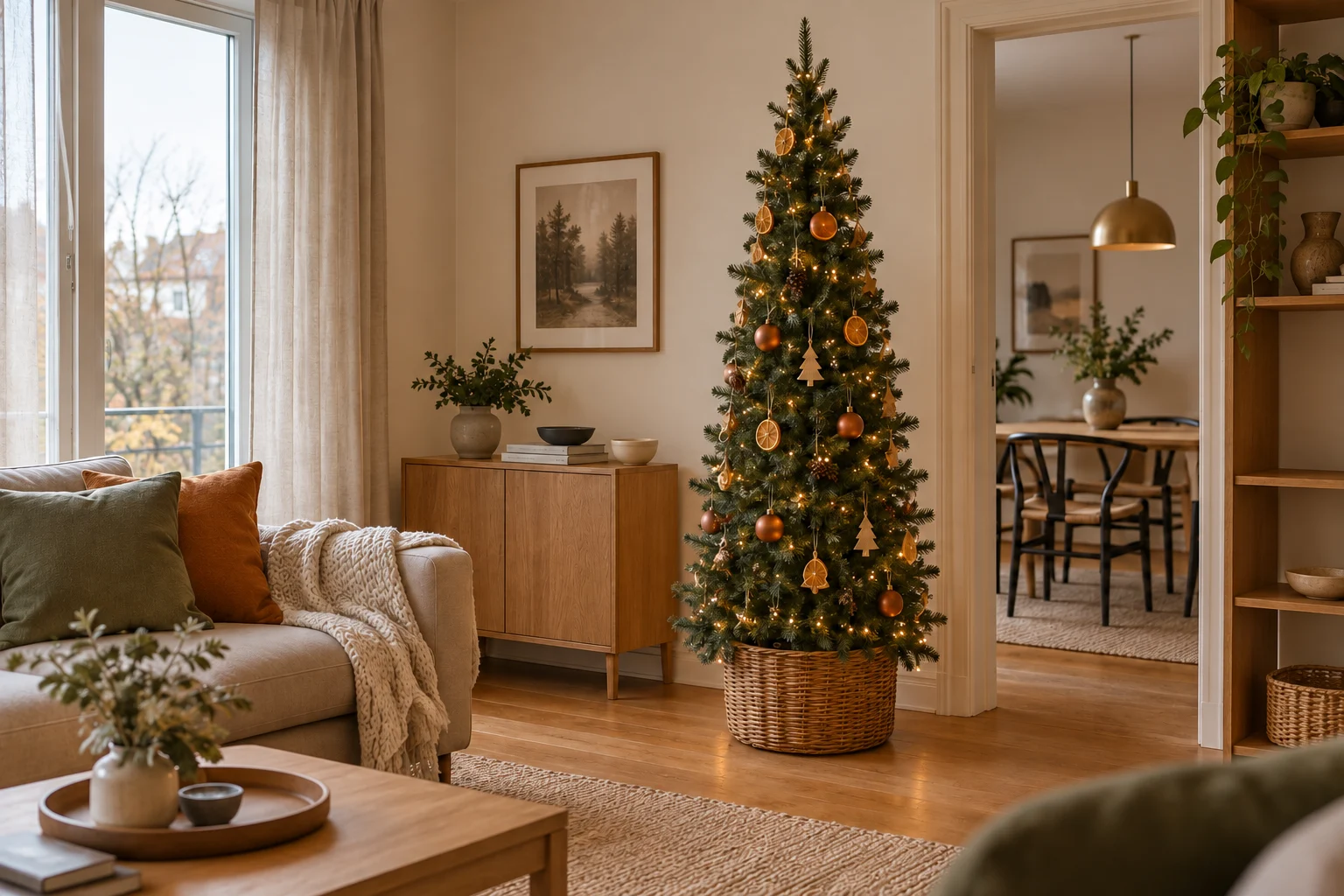
Wooden ornaments and orange-toned accents give a small tree warmth that works with woven rugs and oak furniture. Use a few pieces in each material, rather than several competing themes. Warm lights connect the natural textures and make a narrow tree feel inviting in the evening.
Keep decorative pieces light and secure, and choose the materials to suit the tree and lighting instructions. A plain base lets the ornaments supply the character. Repeat one warm accent elsewhere, such as a cushion or throw, instead of expanding the tree display across the floor.
9. Use a Window Alcove Without Blocking the Window
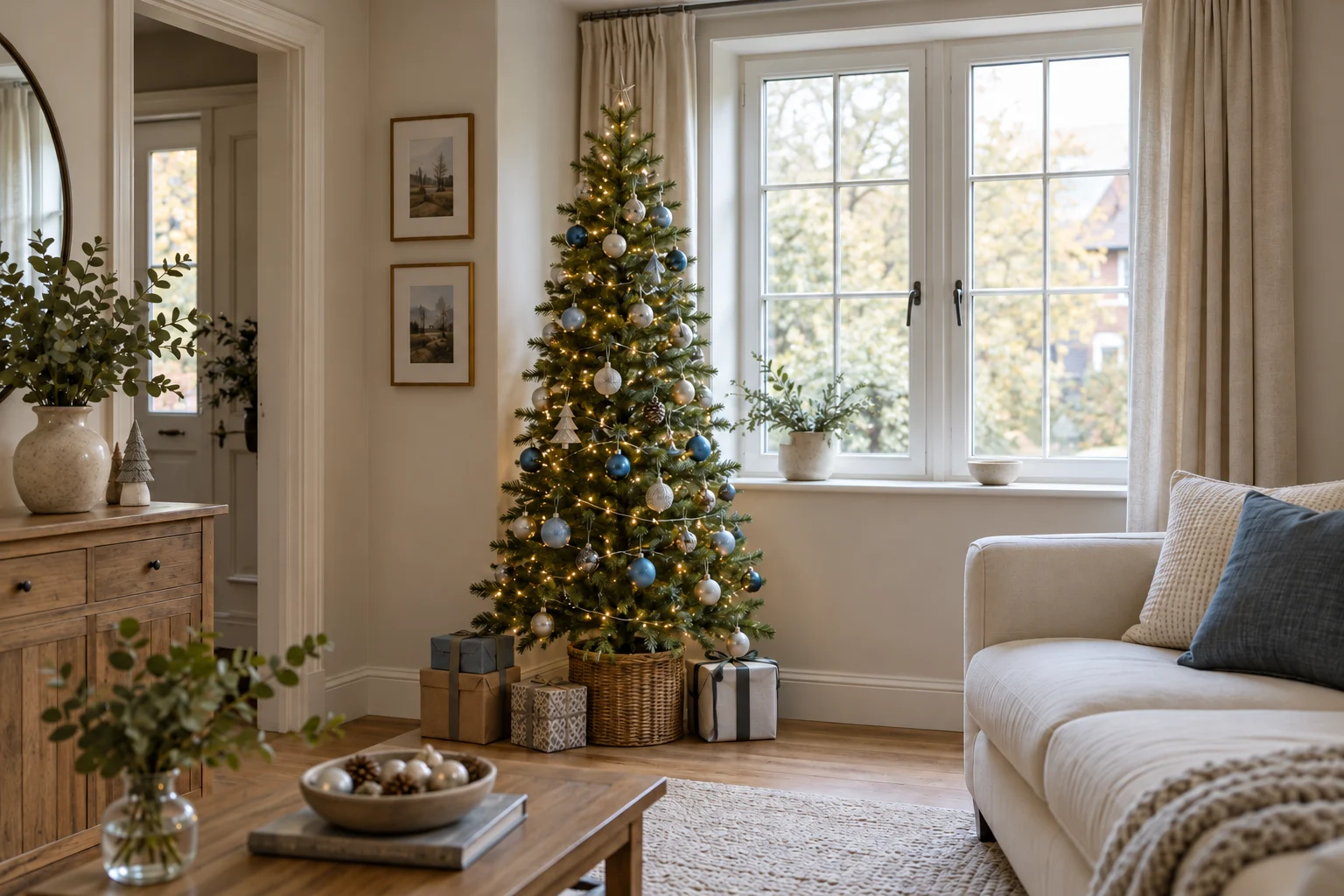
An alcove can visually frame a slim tree and help the display feel part of the room. A restrained tree with soft silver and blue ornaments suits a light-filled corner. Keep the branches within the available nook so the shape reads clearly against the window.
Leave the window, curtains, vents, and any required opening accessible. Check the tree from the side as well as the front, because a tidy photograph can hide a blocked handle or curtain. Use another spot if the alcove only works by making the window difficult to use.
10. Pair a Small Tree With a Bookcase Corner
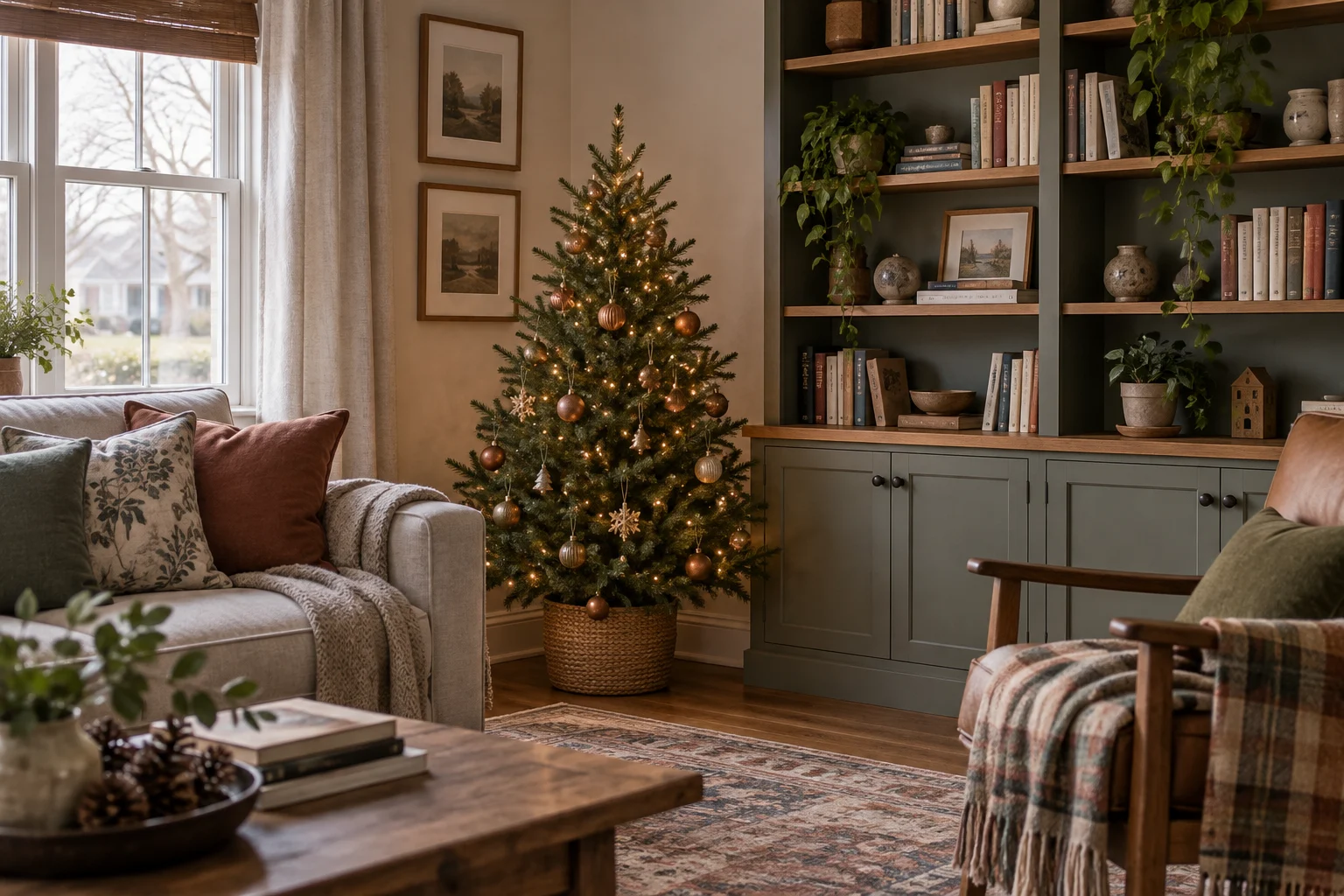
A small tree beside a bookcase can create a complete seasonal vignette using furniture already in the room. Let the tree stand beside the shelves rather than in front of them. Amber lights and a few bronze ornaments echo the warmth of books and wood without filling every surface.
Keep the shelf contents and lower doors reachable, and check the route between the bookcase and nearby seating. Avoid draping a long cord across that route. A compact display is successful when both the tree and the storage continue to do their jobs.
11. Choose a Wood-Dowel Wall Tree for a Clean Outline
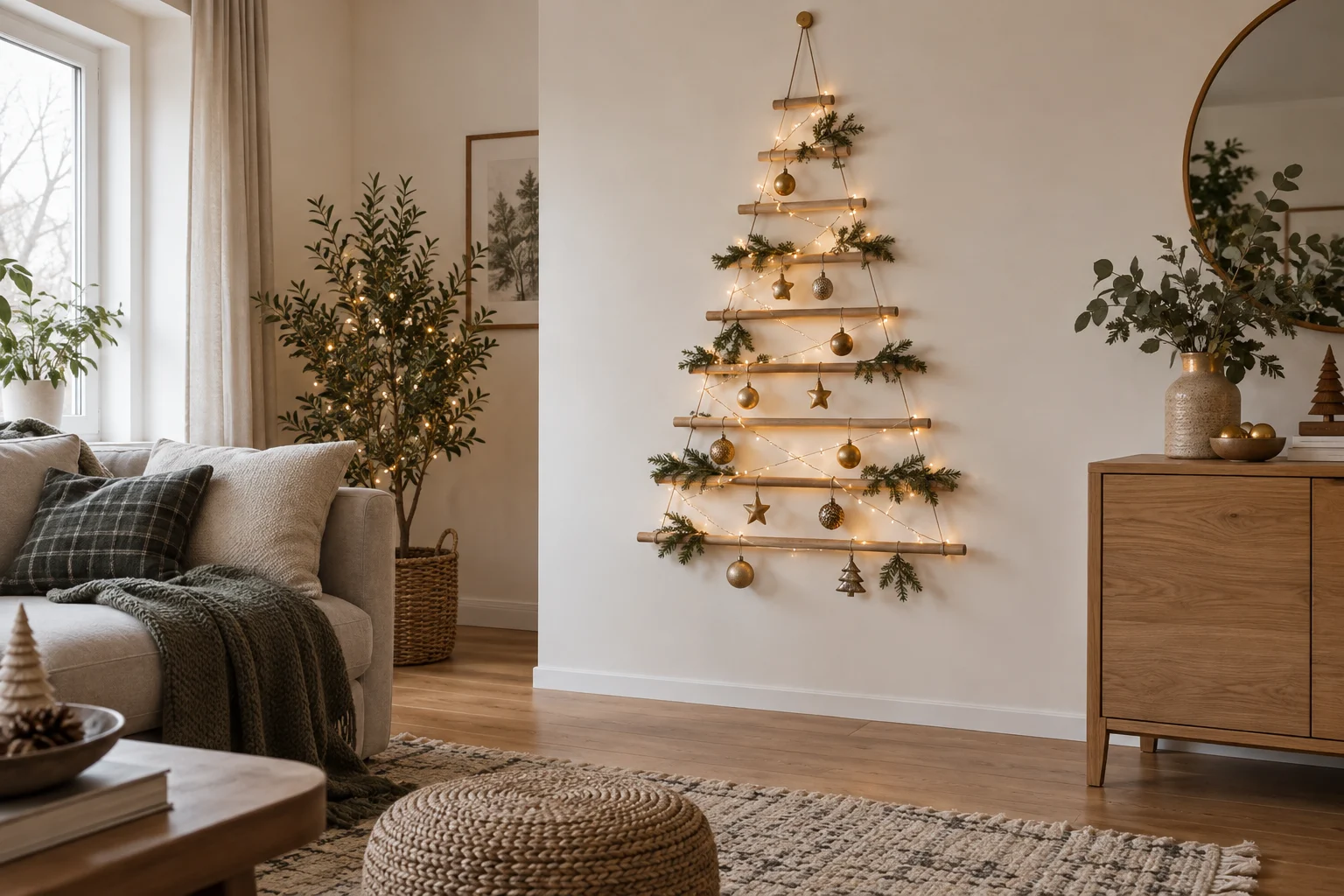
A wall tree made from graduated wood dowels gives the holiday display a crisp, graphic shape. Hang a small number of ornaments below the dowels and use subtle lights if the design permits them. The open spaces let the wall color become part of the composition.
Use a purpose-made design or suitable mounting guidance for the complete weight. The wall attachment is still important even when the dowels look light. Leave the lower wall and floor clear so this alternative actually preserves usable space rather than collecting extra decorations underneath.
12. Draw the Tree Shape With Warm String Lights
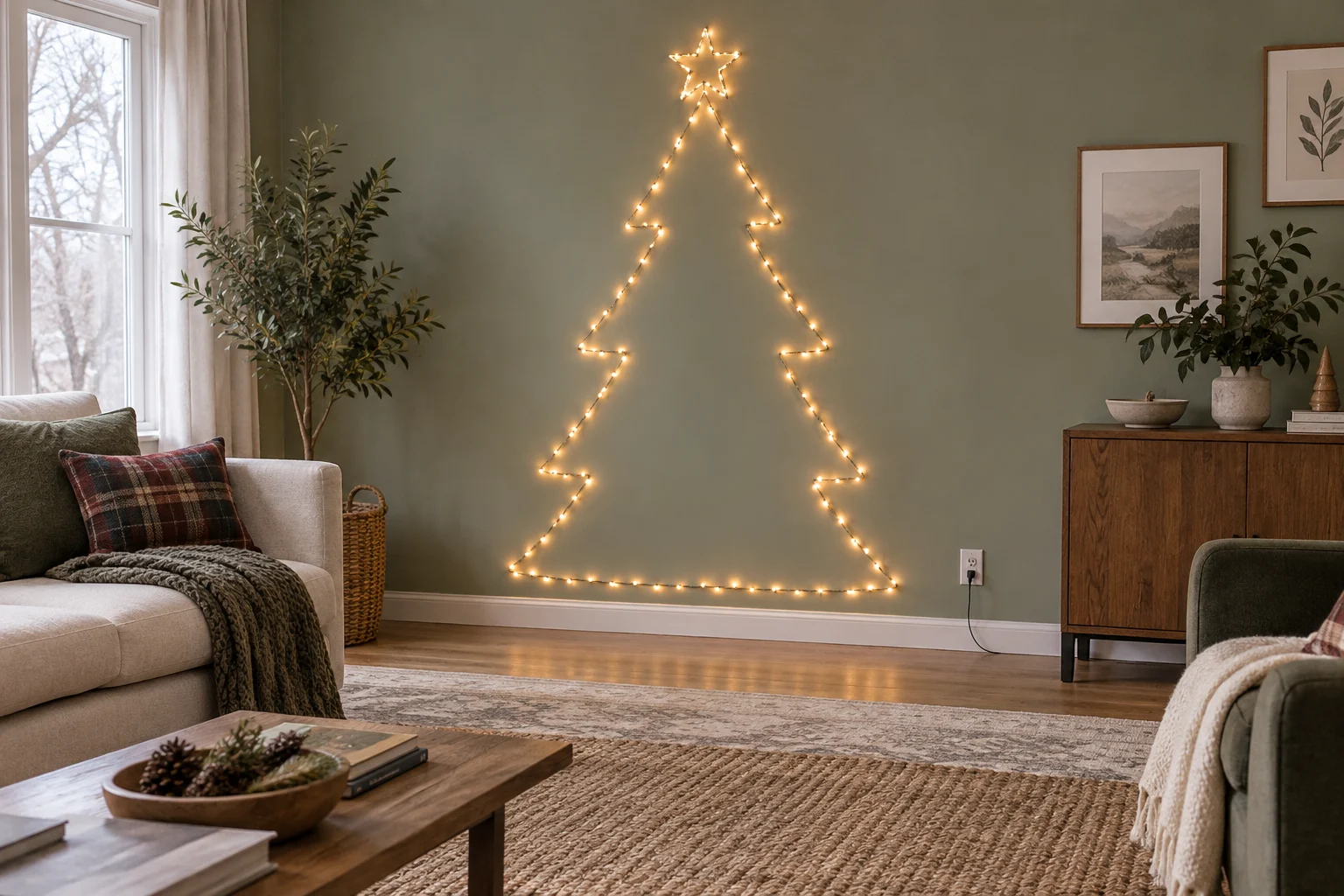
A light-only tree outline suits a living room with very little spare floor space. Keep the triangular shape simple, with a small star at the top if the mounting system supports it. On a plain wall, the warm light becomes the decoration rather than a backdrop for many ornaments.
Use lights intended for the setting and follow their mounting and operating instructions. Plan the connection to the outlet before making the outline, keeping the cable away from the route through the room. A calm, evenly spaced shape often looks stronger than a dense zigzag.
13. Compare Branch-Based Small Christmas Tree Ideas
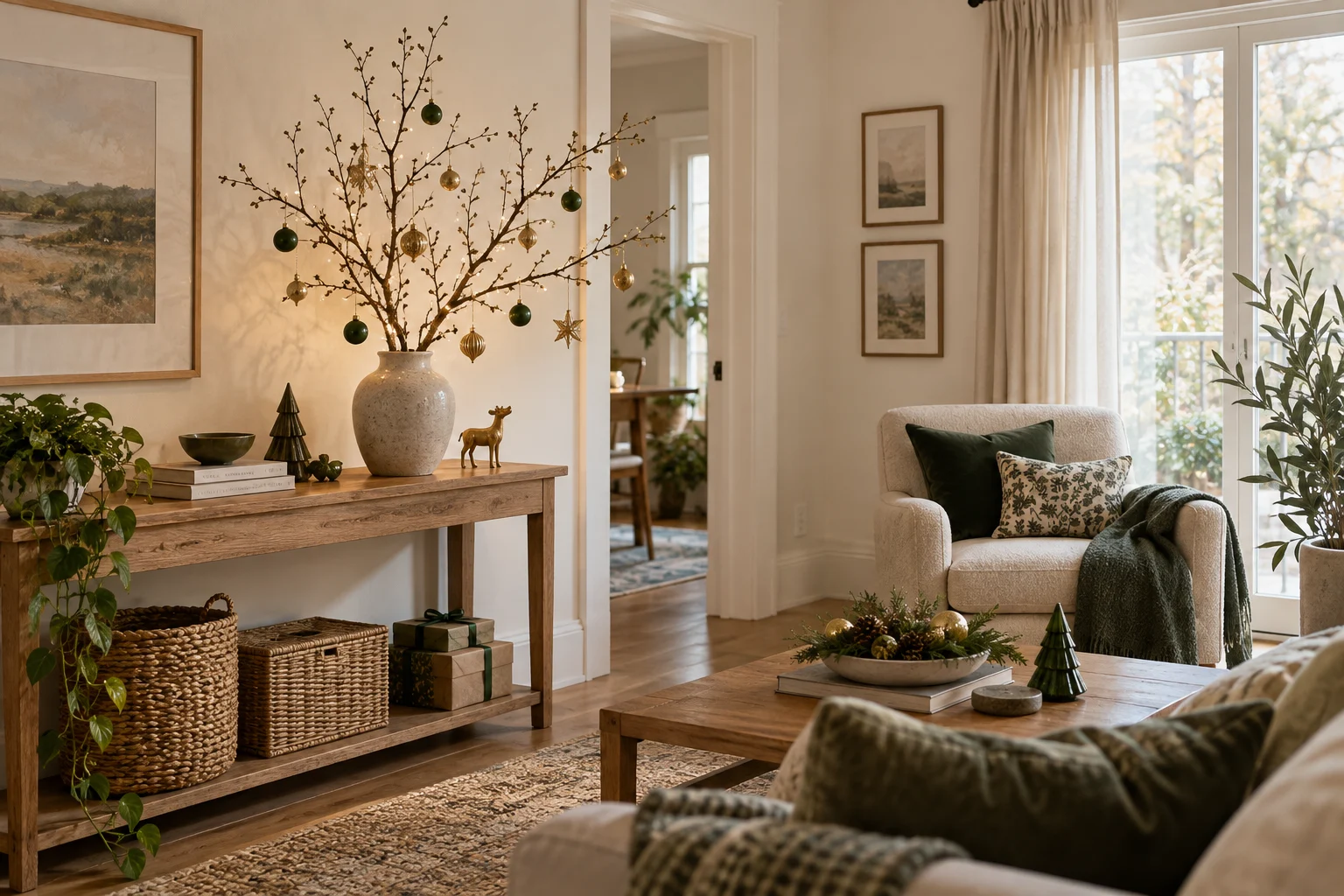
A few decorative branches in a stable vase create a delicate tabletop alternative to a full evergreen tree. Hang small ornaments from selected branches and leave the rest bare. The open shape works well on a console where a dense miniature tree would conceal artwork or other useful objects.
Choose a vase that stays stable with the finished arrangement and keep the ornaments light. Check the height against anything above the console, including shelves and framed art. This approach is especially useful when you want a seasonal gesture that can be packed away in a small box.
14. Give a Ceramic Tabletop Tree a Simple Setting
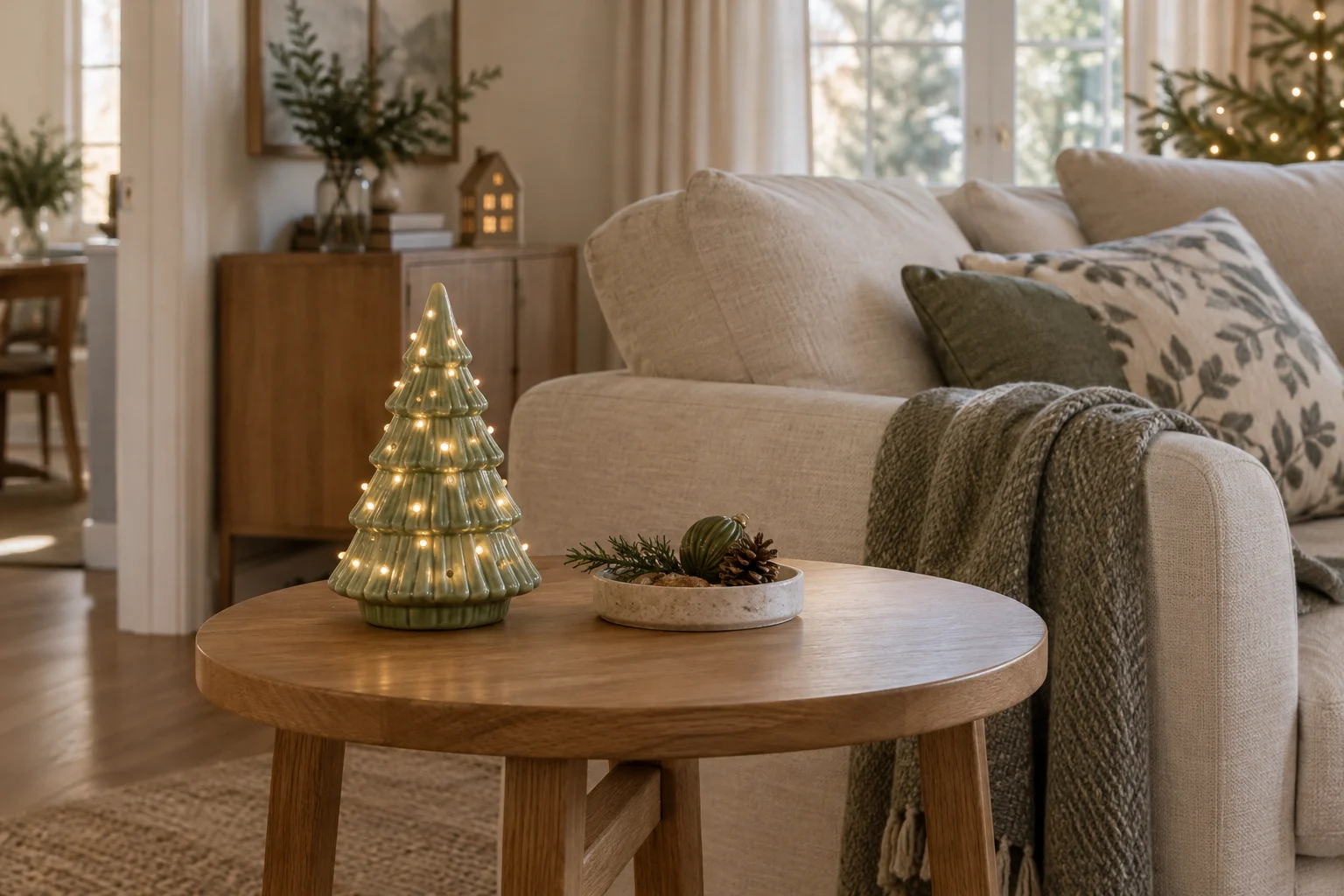
A ceramic Christmas tree can serve as the main seasonal object on a small side table or console. Let its shape stand out with only a low tray or one small companion object. A cream or muted green version blends naturally with a soft, neutral living room.
Check the base size and any lighting requirements before choosing the surface. Keep the table practical for everyday use instead of adding a full collection of figurines around it. The appeal is one clear decorative focal point with very little supporting clutter.
15. Group Two Mini Trees on a Wide Enough Console

Two miniature trees at slightly different heights can create a balanced holiday arrangement without adding a full floor tree. Set them close enough to read as a group and leave the other end of the console open. A shared ornament palette keeps the pair cohesive.
Measure the combined footprint, not just each tree separately. Both bases must sit securely on the surface, with enough room to reach any drawers or handles. Choose this approach only when an existing console genuinely has spare space; two trees should not force a larger furniture purchase.
16. Use Classic Red on a Small Tabletop Evergreen
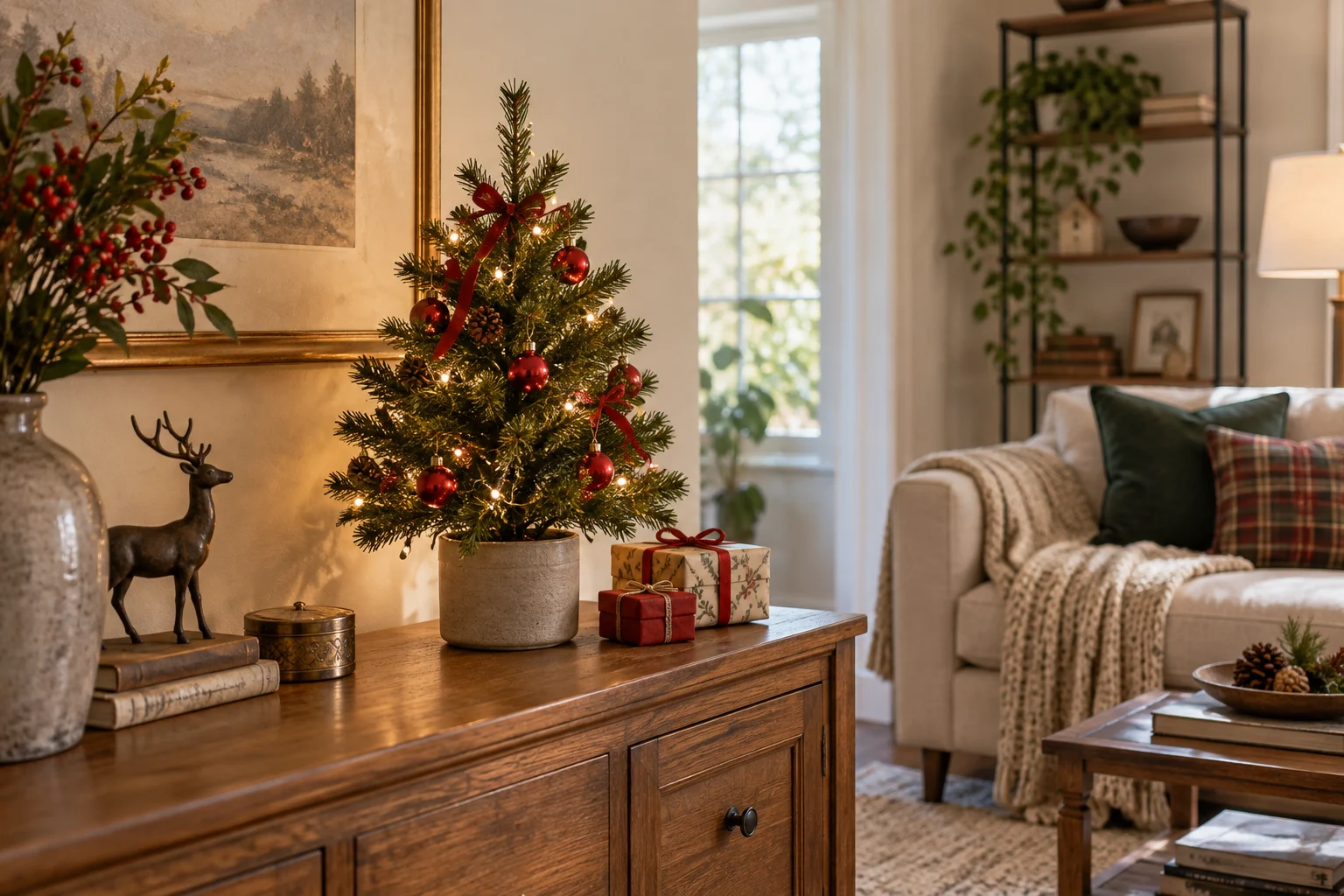
A few red ornaments can give a miniature evergreen the familiar Christmas look without a large display. Mix them with warm lights and a narrow ribbon, keeping the tree’s outline visible. A wood sideboard or cream console makes the red accents stand out clearly.
Use miniature decorations so the branches are not weighed down or visually lost. Keep wrapped gifts small and on the same stable surface, away from its edges. The classic color scheme does most of the visual work, so you can leave the rest of the room unchanged.
17. Try a Soft Silver Palette on a Tabletop Tree
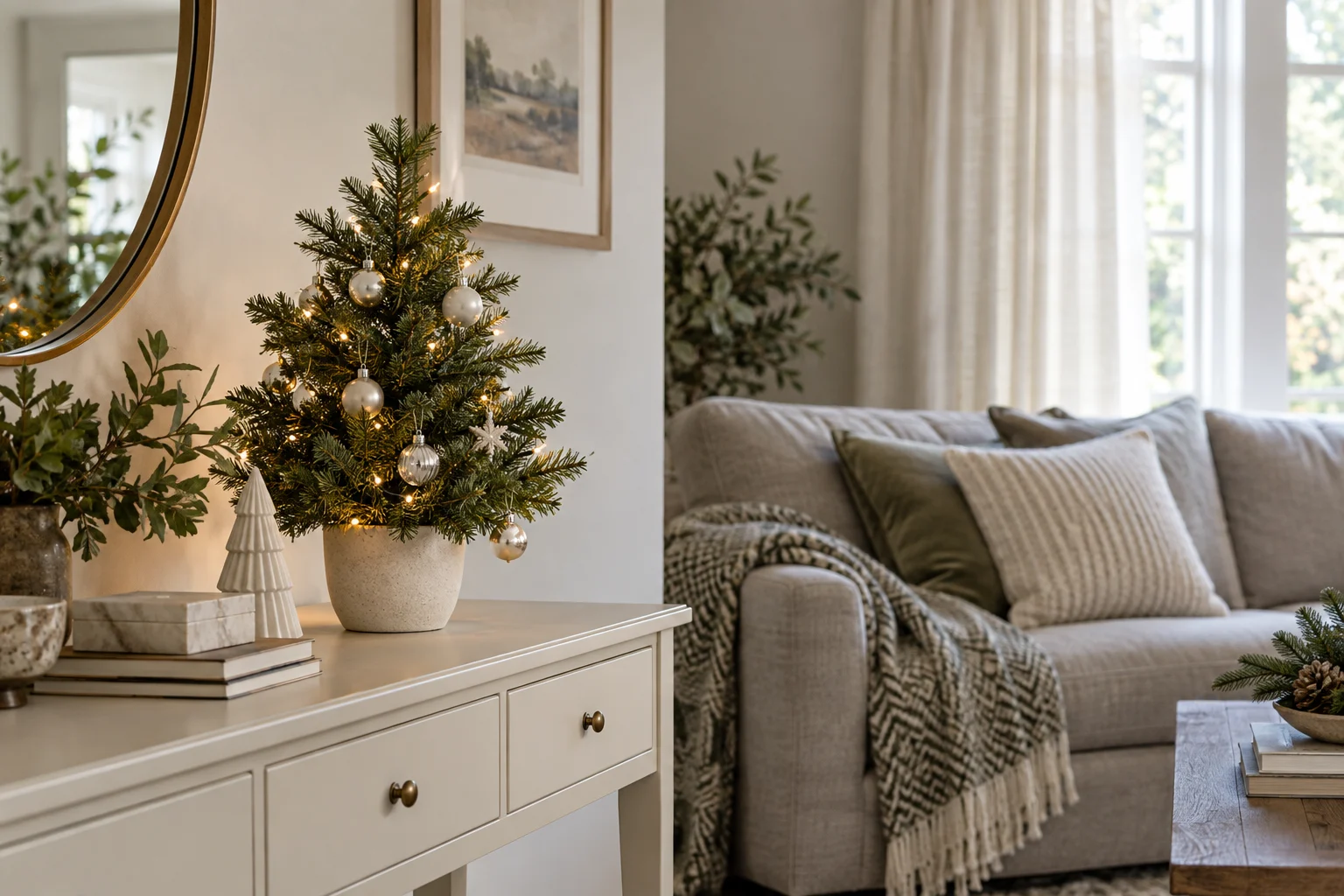
Silver and white ornaments give a tabletop tree a light finish that suits cool neutral rooms. Mix matte and reflective pieces sparingly so the tree has texture rather than glare. A simple pale pot or understated base keeps the whole display from feeling busy.
Leave visible greenery between ornaments and check the arrangement in daylight as well as with the lights on. Keep reflective decorations away from the edges of a frequently used surface. This is an easy way to connect a small tree with an existing gray sofa or pale curtains.
18. Keep a Half Tree Calm With Green Ribbon and Bronze Details

A half tree can look rich without a wide skirt or a dense ornament collection. Use narrow green ribbon and small bronze accents on the decorated front, allowing some branches to remain visible. The tone-on-tone greenery keeps the shallow shape understated against an earthy wall.
Follow the tree’s designed orientation and keep its stand fully supported. Check the space beside the tree, where seating, storage, or a door may still need access. The reduced depth is useful only when the rest of the arrangement also stays compact.
19. Soften a Compact Tree With Blush Ornaments
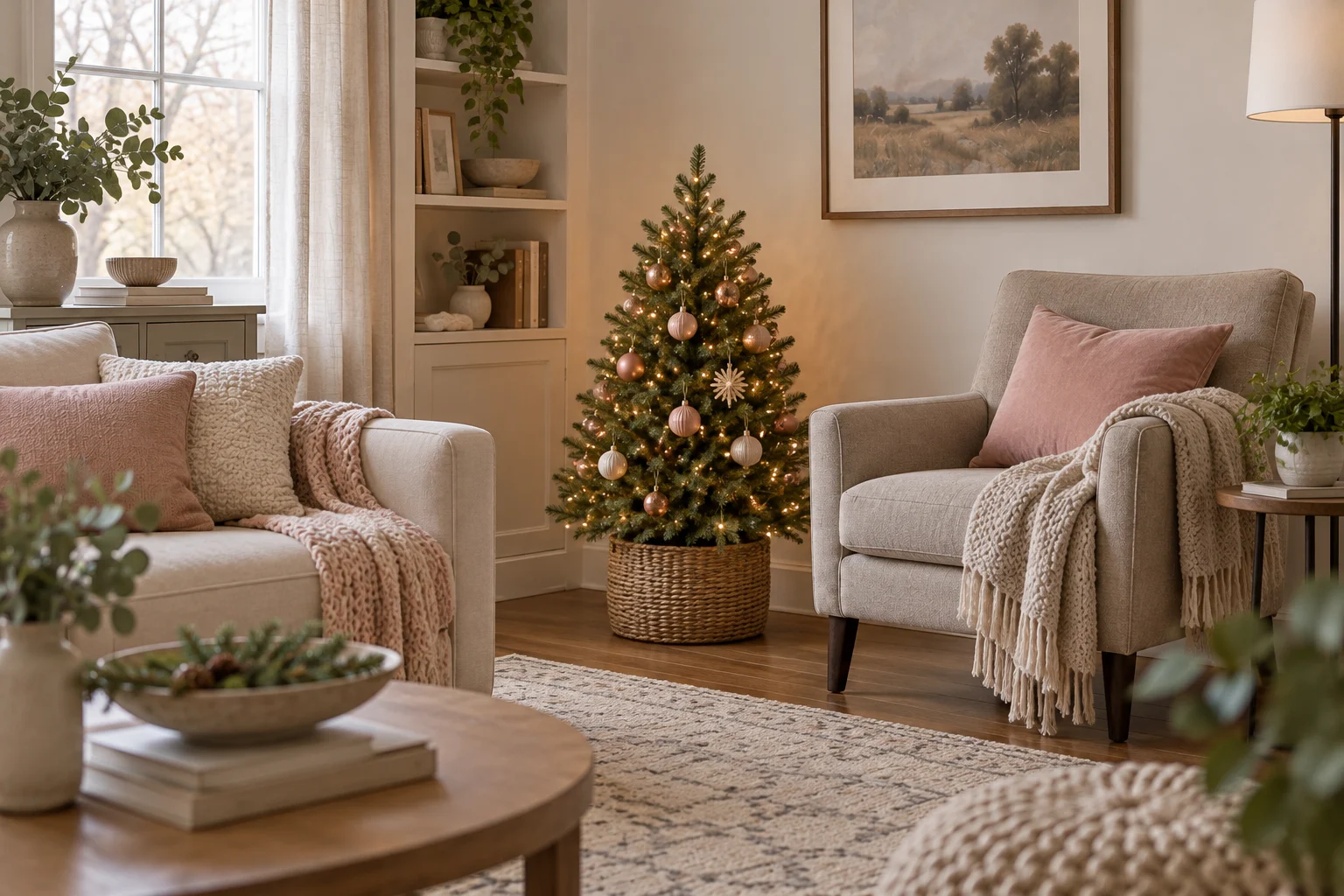
Blush ornaments can add a gentle seasonal accent to a small floor tree in a cream or warm-gray living room. Use a handful of soft pink pieces with warm lights and a simple neutral base. Repeat the color in one cushion so the tree feels connected to the seating area.
Keep the palette limited and leave the tree’s small branches visible. Test the base footprint before adding a decorative basket or skirt, and keep loose ornaments or gift piles out of the walking route. The smaller display works best when its surrounding space stays calm.
20. Keep Small Christmas Tree Ideas Within an Existing Cart
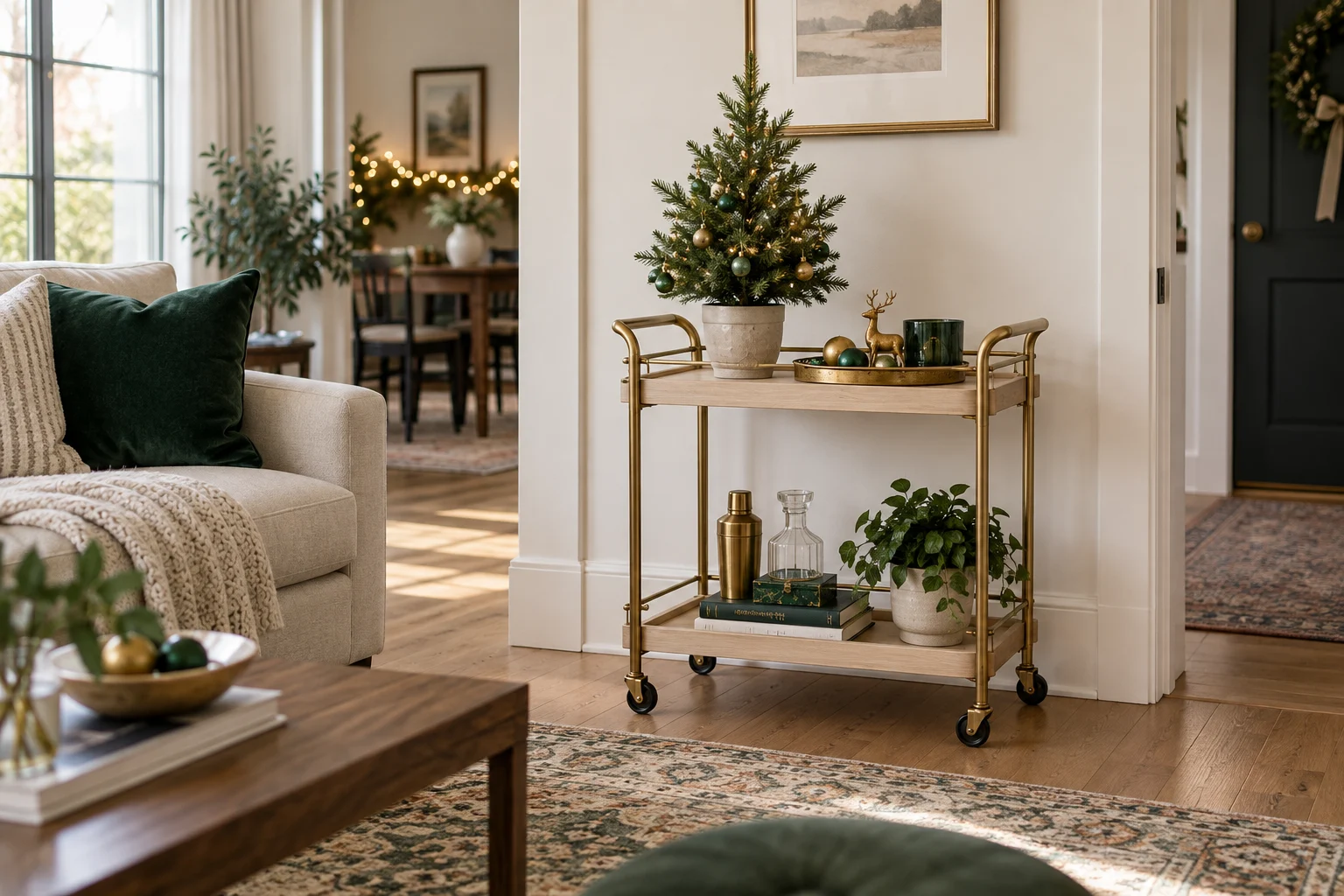
An existing cart can hold a miniature tree and a small holiday tray without requiring another furniture footprint. Clear part of the top tier and choose a stable tree with room around its base. A few deep-green or gold accents can connect the display with the rest of the living room.
Check the cart’s permitted load and stability, keep its wheels secured as designed, and preserve the route around it. If the tree has a power cable, treat the cart as a stationary display while connected. Use the furniture you already have rather than adding a cart just for the tree.
Compare the Five Main Tree Formats
| Format | Useful when | Check first |
|---|---|---|
| Pencil tree | A narrow floor corner is available | The full stand and branch width |
| Half tree | A shallow wall position suits the room | The designed flat back, stand, and cable |
| Wall tree | You want to preserve floor space | Mounting surface, permitted load, and cord route |
| Tabletop tree | Existing furniture has a stable spare surface | Base size, headroom, and furniture access |
| Compact floor tree | A low, small seasonal corner fits | Width as well as height and the route around it |
A Few Checks Before Decorating
Measure the full footprint before buying, including any decorative base. Keep doors, window access, and walking routes usable. For a wall display, follow the mounting and lighting instructions rather than assuming a removable attachment suits every surface.
Follow NFPA’s Christmas tree guidance and USFA’s holiday fire-prevention advice: keep trees away from heat, check lighting for damage, and turn tree lights off when leaving or going to bed. A real tree also needs regular water and timely removal when dry.
For the surrounding room, explore small living room ideas, living room bookshelf styling guide, front porch Christmas decor ideas. Start with one tree idea that fits comfortably, then repeat a small part of its palette elsewhere.
Optional digital guide for this topic
If you prefer a structured workbook, explore this related paid guide.