Christmas window decor works best when the room still gets the daylight, privacy and access it needs. Choose one part of the view to emphasize: a few corners of the glass, a low sill arrangement or the wall beside the frame. Leaving clear space often makes the seasonal detail easier to see from both inside and outside.
Start with the window's actual use before choosing an arrangement. Keep required escape openings, handles, locks and ventilation clear. If a decoration would obstruct any of them, move the display to an adjacent wall or suitable shelf. These ideas are visual starting points; the photographs do not certify a particular window, attachment or electrical product.
Contents
- 1. Put snowflake clings in a few glass corners
- 2. Use a simple star pattern on a suitable fixed upper pane
- 3. Keep a ceramic village below the main view
- 4. Choose an electric window candle with a stable base
- 5. Group small trees on one removable tray
- 6. Add short bows to existing curtain tiebacks
- 7. Let checked cafe curtains supply the seasonal pattern
- 8. Hang the wreath on the wall beside the window
- 9. Place a restrained garland above the frame
- 10. Use one folded paper star on an adjacent display ledge
- 11. Frame a winter print on the adjoining wall
- 12. Give a bay window one central movable group
- 13. Use a short winter-stem arrangement in the kitchen
- 14. Refresh an existing window seat with a seasonal cover
- 15. Choose one ornament stand for a narrow sill
- 16. Keep an arched window's outline visible
- 17. Keep a picture-window display low and off-center
- 18. Move the main display to a neighboring sideboard
- 19. Repeat a color already visible from the street
- 20. Turn both sides of the arrangement toward a useful view
- 21. Put cut-paper shapes in a frame beside the glass
- 22. Try a blue-and-white scheme for a quieter change
- 23. Keep a removal kit with the stored decorations
Check opening, surface and fixing before decorating
Open and close the window and its coverings before adding anything, then identify areas that must stay clear. Do not run power cords through an opening where they can be pinched. Read the exact product instructions for glass clings, hooks and lights rather than treating all removable products alike. For example, the referenced 3M clear large crystal hook instructions specifically exclude use on windows. That is a useful reminder to check the individual model, surface, load, temperature and removal method, not permission to substitute a different hook without checking it.
Choose an arrangement that fits your situation
- Frequently opened window: Keep moving parts and the full opening clear; an adjacent wall display may be the easiest choice.
- Shallow sill: Use an appropriate flat accent or nearby surface instead of an overhanging object.
- Deep usable sill: Choose a low stable group that does not interfere with operation or required access.
- Homes with young children: Choose cordless coverings and keep cords, small parts, batteries and breakable pieces inaccessible.
1. Put snowflake clings in a few glass corners
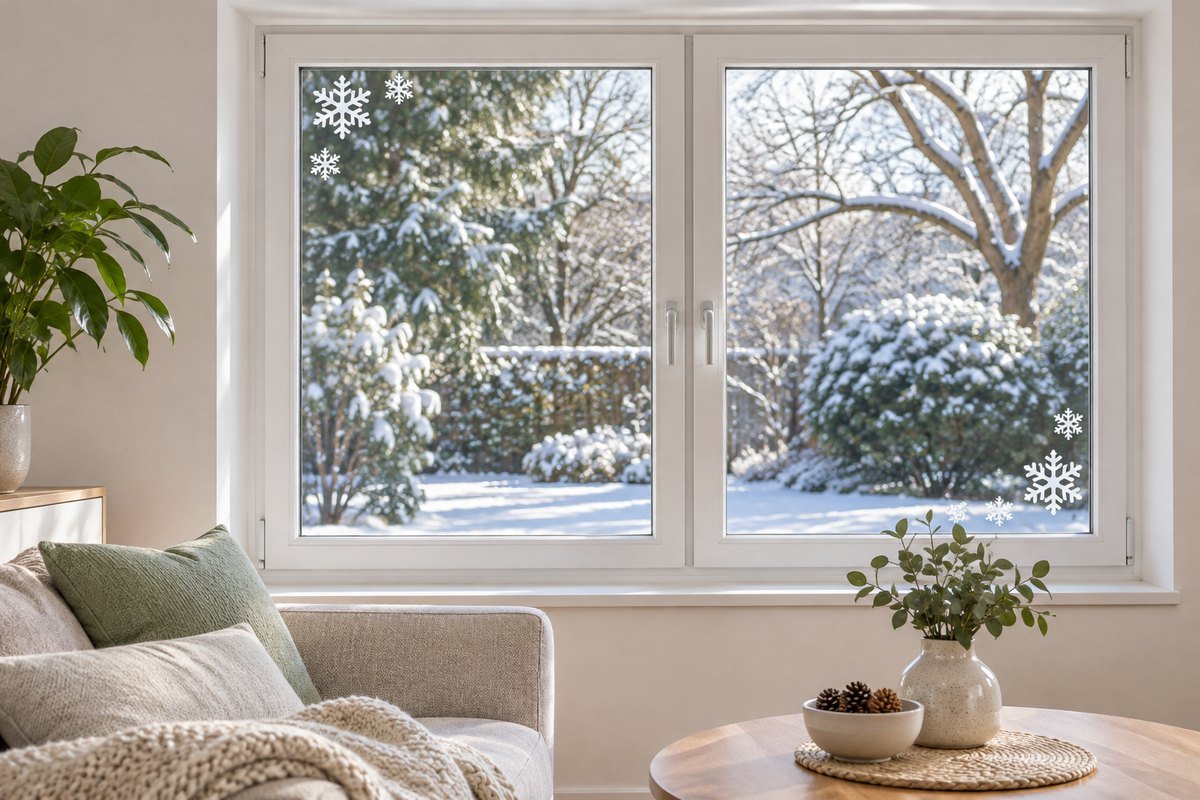
A sparse corner pattern can suggest winter while leaving most of the view open. Use a product suitable for the particular glass and follow its application and removal instructions. Test compatibility where the manufacturer recommends it, especially on coated or treated glazing. Keep the design clear of moving seals, handles and any opening needed for emergency escape.
2. Use a simple star pattern on a suitable fixed upper pane

An upper fixed pane can hold a quiet repeated motif without turning the whole window into a collage. Check that the pane is actually appropriate for decoration and does not serve an access or ventilation function. Choose a modest number of flat stars and repeat their spacing. The empty glass between them becomes part of the pattern.
3. Keep a ceramic village below the main view

A short group of houses works when the sill is deep enough to support every base without overhang. Leave space to reach the window and move the group before opening it where necessary. Choose fewer houses than the sill could technically hold. The rooflines need separation to read clearly against the garden or street beyond.
4. Choose an electric window candle with a stable base

A single flameless window candle can provide a traditional evening accent without an exposed flame. Follow the product's placement, power and battery directions, and keep small batteries inaccessible to children. Check that the base fits the sill and cannot be caught by a moving curtain. A decorative light still needs a convenient way to switch it off.
5. Group small trees on one removable tray

A tray can give several little trees a defined footprint and make the arrangement easier to lift away. Include the tray's handles when measuring the usable sill depth. Keep the trees low enough to preserve the main view, and use stable pieces rather than tall objects balanced at the edge. Do not treat quick removability as a reason to block an escape opening.
6. Add short bows to existing curtain tiebacks

A ribbon accent can dress the sides of the window while leaving the glass untouched. Keep the bow compact and avoid long loose loops or tails. Do not alter a covering's operating or safety components to hold seasonal decorations. Where young children are present, follow CPSC guidance on cordless window coverings and keep accessible cords and similar entanglement hazards out of the arrangement.
7. Let checked cafe curtains supply the seasonal pattern

If the kitchen already uses cafe curtains, a suitable red, green or muted plaid fabric can make the seasonal change feel integrated. Preserve the privacy and daylight balance that works for the room. Keep fabric well away from cooking equipment and other heat sources. Check how the curtain opens before adding a second decorative layer to the glass.
8. Hang the wreath on the wall beside the window

A nearby wall can carry a wreath while the window remains fully usable. Relate the wreath's size to the frame and nearby furniture rather than choosing the largest available option. Use a fixing appropriate to the wall and the wreath's actual weight. A short ribbon can repeat the curtain or cushion color without crossing the window itself.
9. Place a restrained garland above the frame

A narrow garland can outline the window from the surrounding wall when it has appropriate independent support. Keep it away from moving sashes, curtain mechanisms and heat. Do not assume a curtain rod or adhesive hook can carry the extra weight. Check the display from the side as well as the front so projecting pieces do not catch the curtains.
10. Use one folded paper star on an adjacent display ledge

A large paper shape can offer more definition than many little decorations. Put it on a suitable ledge beside the window, with a stable base or the maker's intended support. Keep paper away from heat and electrical connections. The window supplies the light and background; the decoration does not have to hang in the opening to feel connected to it.
11. Frame a winter print on the adjoining wall

Seasonal art can bring the window area into the holiday scheme without adding anything to the glass. Choose a print whose colors relate to the outdoor view or the room's textiles. Hang the frame securely and leave room around the window trim. An existing landscape may need only a different nearby cushion or vase to feel appropriate for winter.
12. Give a bay window one central movable group
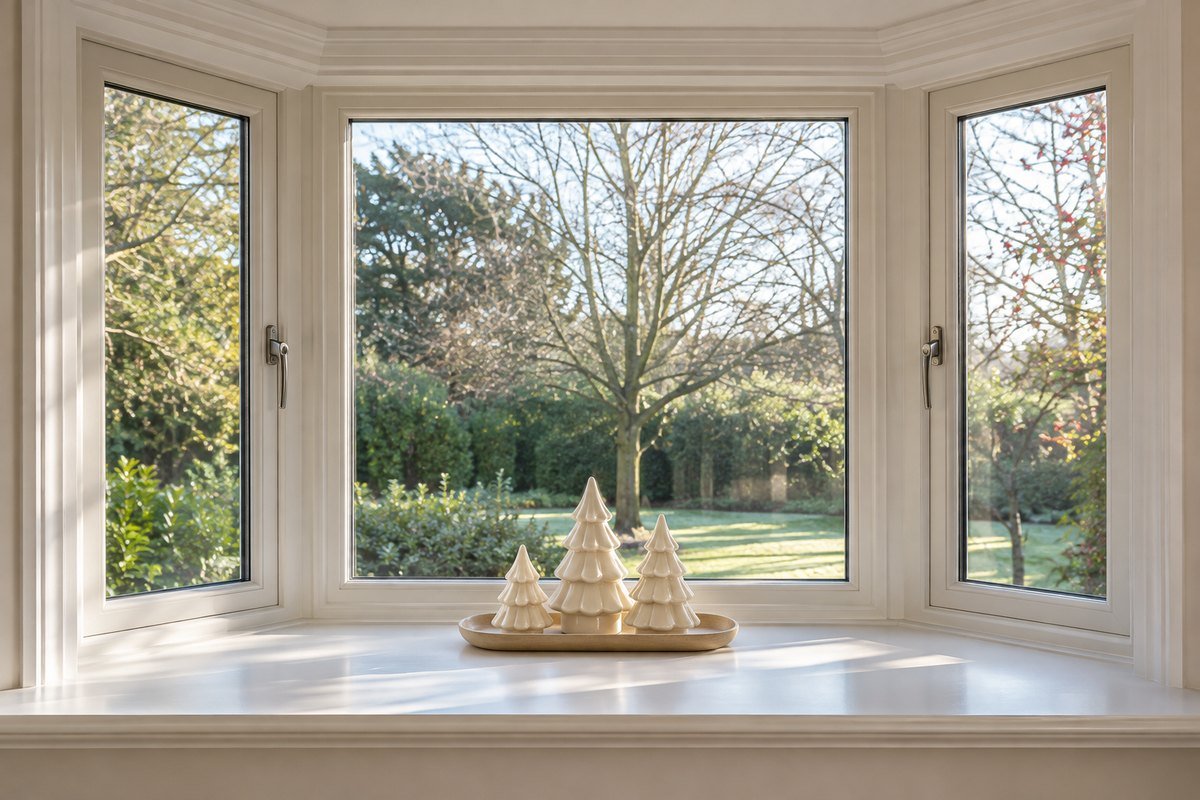
A bay can become crowded when every section receives a separate arrangement. Try one low central group and let the side panes remain quiet. Check every sash and handle individually; the bay's shape does not mean all parts operate in the same way. Use a fully supported tray only where it does not interfere with the window's required functions.
13. Use a short winter-stem arrangement in the kitchen

A small vase can be enough for a kitchen window that already has a busy view. Choose a stable vessel and keep stems short enough to avoid the handle and nearby coverings. Consider the suitability of any plant material for children and pets in the home. Keep the display away from food preparation, splashes and heat rather than forcing it onto an unsuitable sill.
14. Refresh an existing window seat with a seasonal cover

Where a suitable built-in seat already exists, a washable cushion cover can connect the window to the room's holiday colors. Preserve the seat's usable depth and avoid piling cushions against the glass. Check for moisture and follow fabric-care instructions. This is a styling idea for an existing appropriate arrangement, not a reason to put climbable furniture near windows or accessible cords in a child's space.
15. Choose one ornament stand for a narrow sill

A narrow window area benefits from a single clear silhouette. Measure the stand's whole base and check that the ornament cannot strike the glass when the window or curtain moves. Use only a location where the display is stable and does not obstruct access. If the base does not fit comfortably, move it to a nearby cabinet rather than allowing an overhang.
16. Keep an arched window's outline visible

The shape of an arched window may already provide the strongest decorative feature. Put a few suitable flat accents in lower corners or place a low display nearby instead of tracing the entire arch with objects. Leave the curve and central view open. Check the construction and operation of the actual window; an arched appearance does not determine which parts need to remain accessible.
17. Keep a picture-window display low and off-center

A broad pane can make a small grouping look intentional if it has enough clear space around it. Try one side of the sill instead of stretching decorations across the full width. View the arrangement from the room's entrance and principal seat. If it competes with an attractive landscape outside, reduce the height or move the display beside the window.
18. Move the main display to a neighboring sideboard

A cabinet beside the window can offer more usable depth than the sill. Keep the furniture and decorations clear of the opening and any access route. The window can remain part of the composition through matching colors and reflected light. This is often the better solution when the sill is too shallow, damp or frequently used to support a reliable display.
19. Repeat a color already visible from the street

Connect the inside display to a front-door wreath, planter or other exterior accent through color rather than adding more objects. Check the relationship from outside in daylight and after dark. Reflections and interior lighting can change what is visible through the glass. Keep the indoor arrangement useful for the room even if a small detail cannot be seen clearly from the pavement.
20. Turn both sides of the arrangement toward a useful view

A window display is often seen from two directions. Check the backs of ceramic houses, stands and trays before choosing their position. A simple object with a finished back may work better than a detailed front hiding an untidy cable or support. Avoid rotating everything toward the street if the room then becomes the awkward side of the arrangement.
21. Put cut-paper shapes in a frame beside the glass

A framed paper composition can provide a village or star motif without attaching individual pieces to the pane. Use a secure frame on an appropriate wall or display surface and keep fragile glass out of vulnerable positions. The contained arrangement is also easier to store flat. Choose a limited palette so the cut shapes remain readable against the backing.
22. Try a blue-and-white scheme for a quieter change

Blue and white decorations can work with existing ceramics and cooler winter light. Use one blue object with a few pale shapes rather than covering the whole sill with matching pieces. Compare the colors in morning and evening light. Keep the arrangement's footprint defined so the palette changes the mood without reducing the window's practical use.
23. Keep a removal kit with the stored decorations

Save the fixing and care instructions with the pieces so removal does not become an improvised scraping job. Follow the product-specific method and stop if it is unsuitable for the glazing or finish. Store clings, paper shapes and delicate ornaments in ways that preserve their form. A short private note about which window each piece fits can make next year's setup easier.
A window-use checklist for your chosen display
Record which panes open, where each handle moves, the sill's usable depth and any required escape function. Add the decoration's dimensions, the exact fixing model and the instructions for its surface and removal. Check the completed arrangement from inside and outside, then test the window and covering again without forcing anything. If access, ventilation or the fixing remains uncertain, keep the decoration on a suitable neighboring surface instead.
A practical next step
Pick one seasonal feature, check that the window still works as intended, and view the arrangement in both daylight and evening light. A small, well-placed accent can feel more festive than a crowded pane. Choose the version that is easy to maintain and remove as well as attractive from the sofa or the street.
For the surrounding room, coordinate the room's regular curtains. Connect the window colors to a Christmas porch.
The images are original AI-generated design concepts, not photographs of tested products or verified installations.
Sources and care references
- Texas Department of Insurance: Fire safety for holiday decorations
- CPSC: Cordless window coverings where young children are present
- 3M: Model-specific clear large crystal hook instructions and window-use exclusion
Optional digital guide for this topic
If you prefer a structured workbook, explore this related paid guide.