Useful curio cabinet ideas start with the collection you want to see, rather than the largest cabinet that fits against a wall. Choose a manageable group, compare the tallest and widest pieces with the usable shelf openings and leave space to remove each object. A display feels more personal when its contents can be appreciated separately.
These 25 ideas focus on collection display rather than everyday kitchen storage. They include cabinet shapes, material relationships and ways to keep access and care practical. Follow the complete furniture's assembly, anchoring, shelf-loading and glass-care instructions. A decorative cabinet is not automatically secure, dustproof or a conservation case for valuable objects.
Contents
- 1. Begin with one small collection theme
- 2. Use a narrow upright cabinet for a limited group
- 3. Choose a lower broad cabinet for an easier view across the room
- 4. Compare a purpose-made corner cabinet from the side
- 5. Let a dark frame outline a pale collection
- 6. Use timber to connect the display with nearby furniture
- 7. Choose a wall-related finish for a quieter cabinet outline
- 8. Use an intended contrasting backing to reveal the objects
- 9. Give each shelf a recognizable small group
- 10. Vary height without building unstable platforms
- 11. Check the full removal route for the tallest piece
- 12. Leave clear glassware separated at the rims
- 13. Inspect ceramic bases before placing them on glass shelves
- 14. Use a suitable display stand for an upright plate
- 15. Let a small sculpture have an uncluttered shelf
- 16. Use an appropriate low riser for very small pieces
- 17. Display a copy when the original needs different storage
- 18. Check a mirrored back for repeated clutter and glare
- 19. Choose compatible integrated lighting before filling the cabinet
- 20. Keep one unlit cabinet when room lighting already works
- 21. Keep the opening side free of neighboring furniture
- 22. Make a separate weight record for each shelf
- 23. Keep a sparse display easy to inspect and dust
- 24. Rotate a few pieces from suitable reserve storage
- 25. Plan glass care around the exact cabinet
Inventory the display before selecting the cabinet
Arrange the proposed objects on a table and record their dimensions, weight, condition and support needs. Compare that group with the inside shelf dimensions, door opening and furniture footprint. Include the handles and space for a person removing an object. Keep the specified furniture restraint and supporting wall conditions part of the plan, not an afterthought once the cabinet is filled.
Choose an arrangement that fits your situation
- The collection is small but the cabinet looks empty: Keep clear groups or choose a smaller display instead of adding fillers
- A tall object stands inside but cannot come out easily: Check the complete opening and approved shelf positions
- A mirrored back doubles visual clutter: Reduce the real objects and compare reflections from normal seats
- The shelf load is unknown: Establish the exact rating, object weights and supports before loading
- An important original needs conservation conditions: Use appropriate storage and consider a suitable display copy
1. Begin with one small collection theme

A clear starting theme helps the cabinet feel deliberate. It might be a few ceramics in related colors or several ordinary objects from one hobby. Choose pieces you enjoy looking at and remove unrelated overflow before assigning shelves. The theme can be personal without requiring a complete matching set or a new purchase for every empty position.
2. Use a narrow upright cabinet for a limited group

A slim cabinet can suit a short wall when the collection is genuinely small. Check the usable interior width and the door approach rather than relying on the outside silhouette. Keep broad objects elsewhere if they fit only diagonally or prevent the door closing. A narrow piece works best when its contents remain easy to identify from the normal viewing position.
3. Choose a lower broad cabinet for an easier view across the room
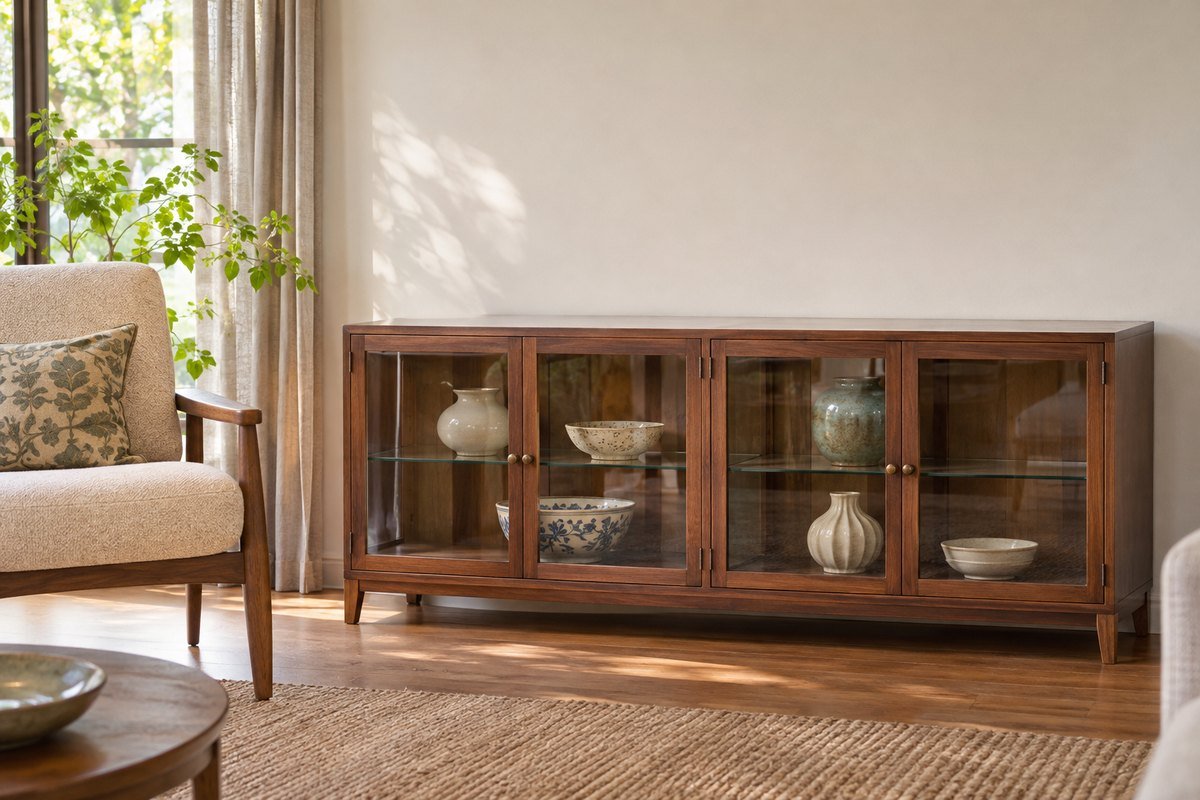
A lower display can keep its contents within a comfortable band of view beside ordinary seating. Compare the full width with nearby furniture and the actual shelf openings with the collection. Keep the top restrained so the low outline remains useful. Lower height alone does not replace the furniture's specified anchoring or establish a safe load for an object placed above it.
4. Compare a purpose-made corner cabinet from the side

A complete corner-shaped cabinet can make a useful display position where two walls meet. Check the diagonal front, deepest interior area and open-door movement before deciding it saves space. Keep the collection visible without reaching behind fragile front pieces. Do not construct the shape by balancing separate straight cabinets across an improvised corner base.
5. Let a dark frame outline a pale collection

A simple dark frame can help pale ceramics and clear glass register against the room. Keep the number of objects restrained so the cabinet divisions remain visible. Compare the collection in evening light, when reflections and dark background areas may change the view. The frame can supply contrast without requiring every accessory nearby to repeat the same dark finish.
6. Use timber to connect the display with nearby furniture

A wooden cabinet can relate to a table or chair through warmth and grain rather than an exact match. Compare the complete furniture outlines together. Keep the display quieter if the timber is strongly figured. A distinct collection inside can provide enough variety without covering the cabinet top with additional objects that compete with the wood.
7. Choose a wall-related finish for a quieter cabinet outline
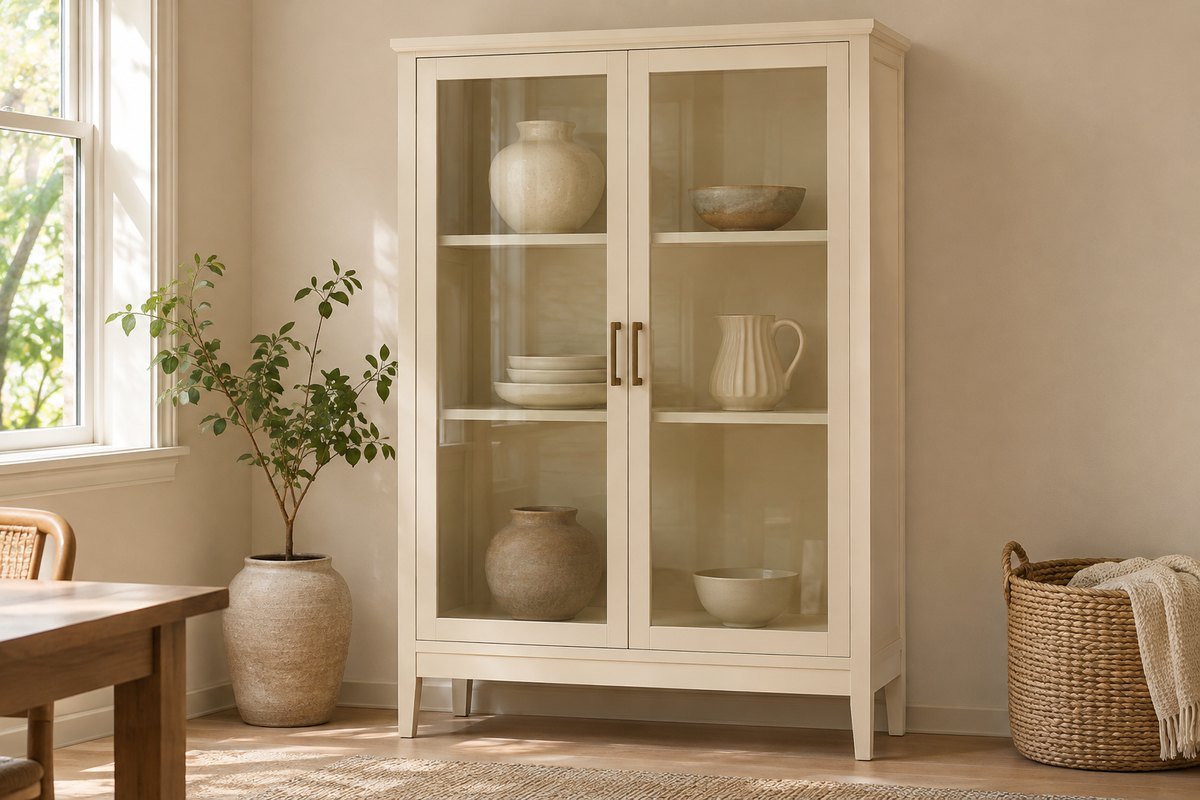
A finish close to the wall color can let the displayed objects lead. Check the relationship under actual room lighting and keep handles easy to identify. A muted exterior does not require a pale interior: compare the contents against the actual backing before choosing. Use finishes suitable for the furniture if refinishing is appropriate, rather than treating wall paint as a universal cabinet coating.
8. Use an intended contrasting backing to reveal the objects

A quiet contrasting interior can help a pale collection show its shape. Compare a sample behind the objects before making a permanent change. Check the cabinet's construction and care instructions before applying a liner or coating. Keep any change compatible with the collection and furniture; a decorative backing is not automatically a preservation material for delicate objects.
9. Give each shelf a recognizable small group

Separate a varied collection into groups that make sense to you, such as bowls on one level and small sculptural objects on another. Leave clear gaps so the categories do not merge into a wall of silhouettes. The shelf need not contain equal numbers. Adjust the grouping around the actual size and handling needs of the objects rather than a styling formula.
10. Vary height without building unstable platforms
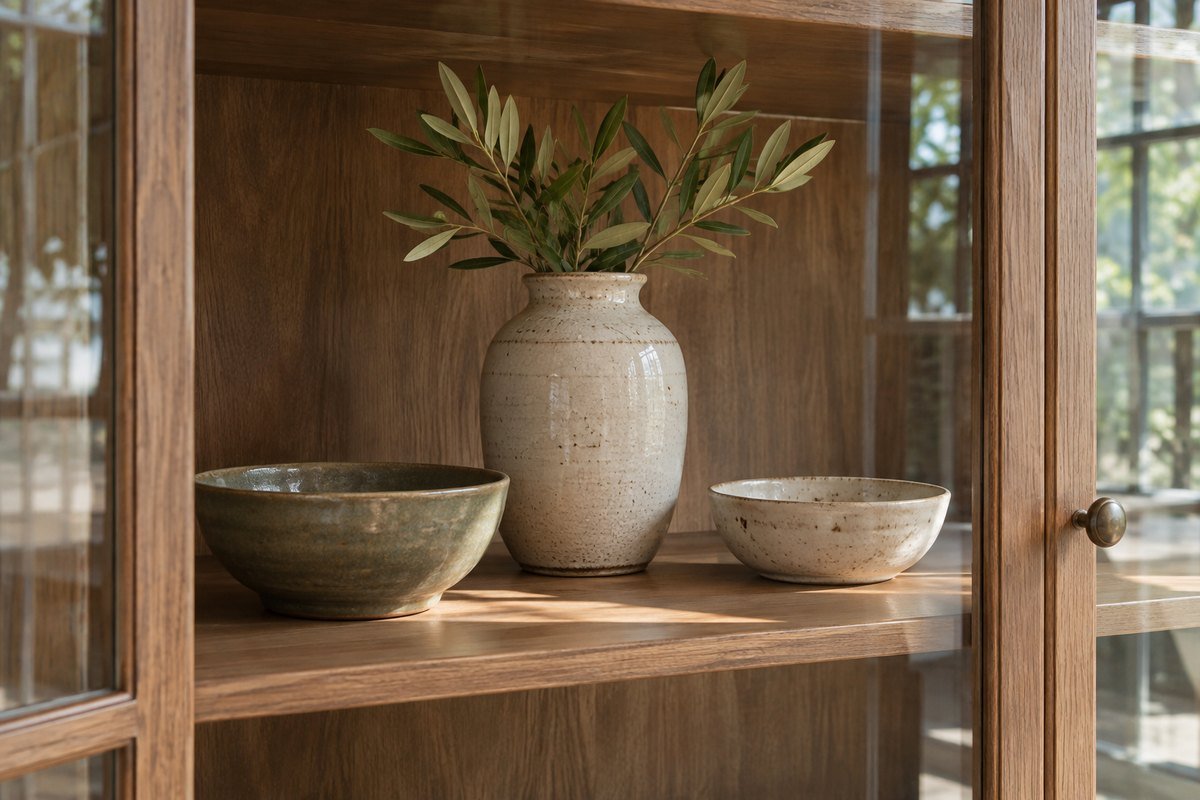
A taller and a lower object can create an interesting shelf outline on the same level. Choose pieces whose own bases remain stable and keep enough clear space above them. Avoid adding piles of books or unrelated objects merely to make a small keepsake taller. A modest variation is enough when the collection already has distinct shapes.
11. Check the full removal route for the tallest piece
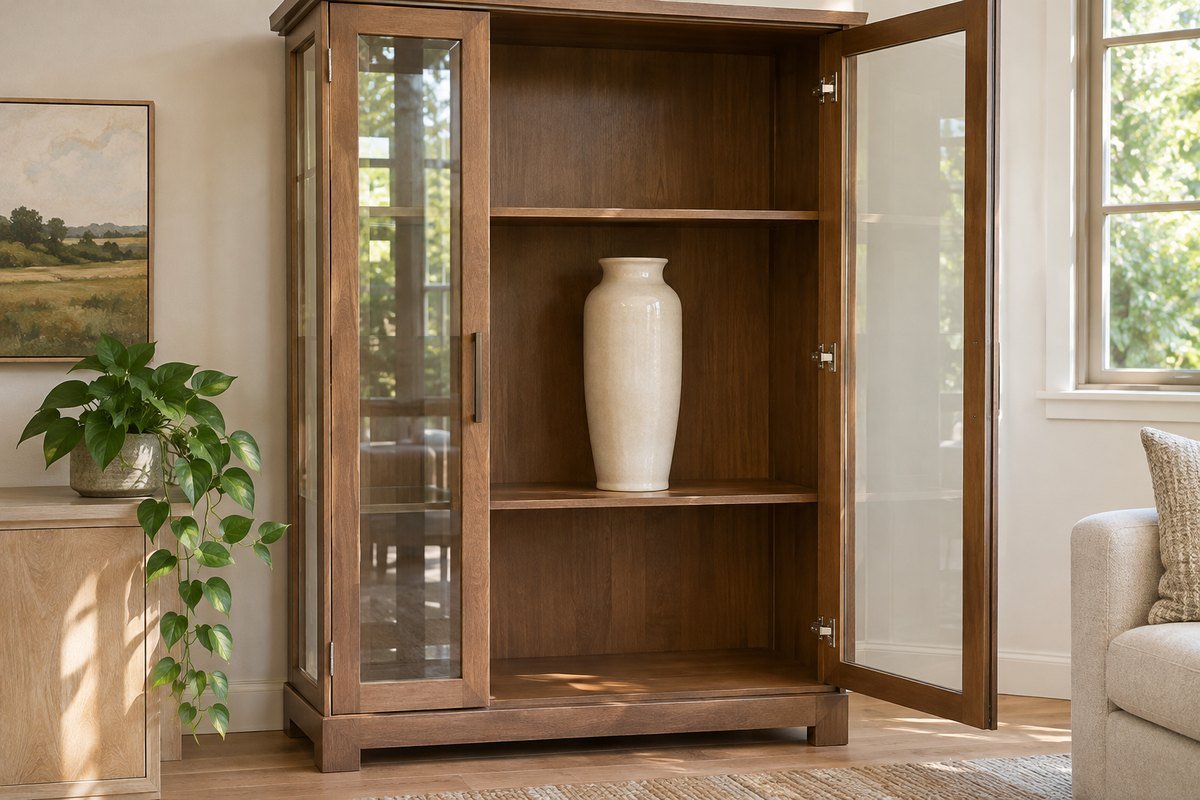
An object can stand between shelves yet remain difficult to take out through the door. Compare its handles, rim and the hand space needed to lift it. Adjust only shelves designed to move, using approved supports and positions. Choose a different display location if the piece has to be tipped precariously past another object every time it is cleaned.
12. Leave clear glassware separated at the rims
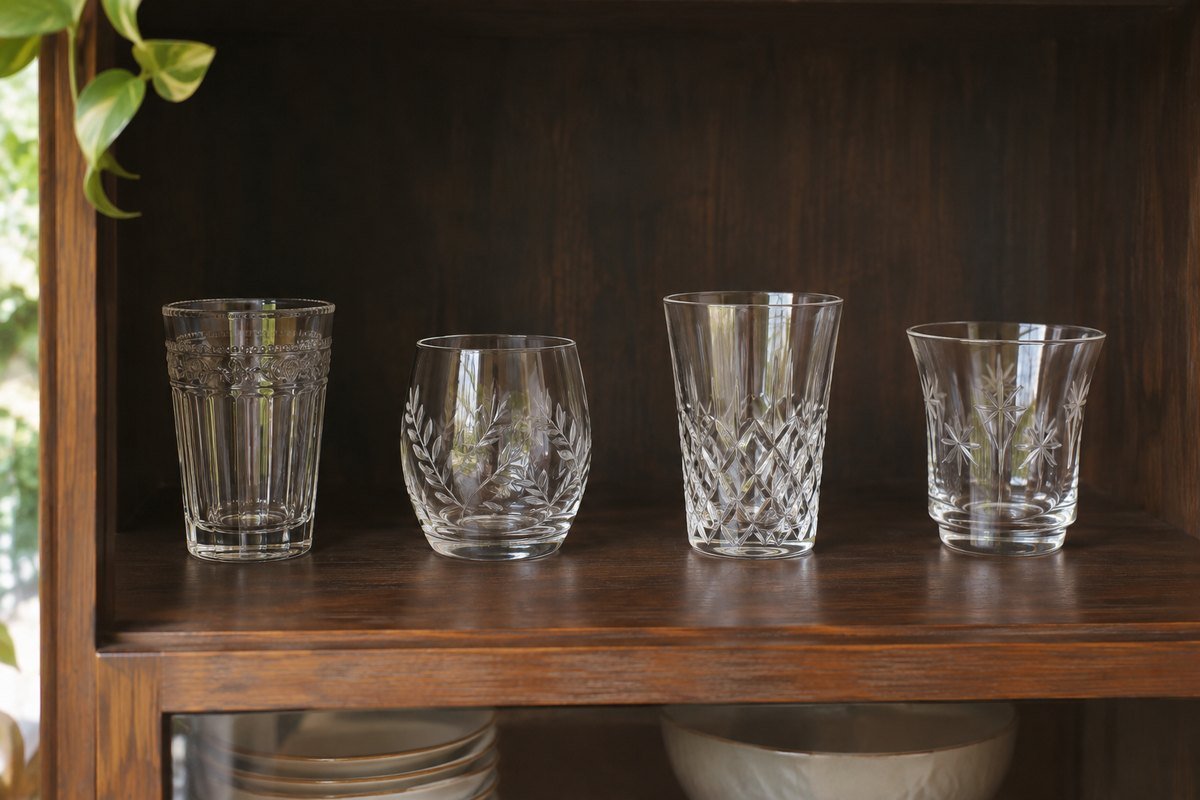
Transparent pieces are easier to appreciate when their outlines remain distinct. Try a smaller number with visible gaps rather than a tightly packed complete collection. View them against the backing and the reflections from the room. Keep the arrangement practical for removal, with no fragile rim hidden behind a projecting handle or the edge of another glass.
13. Inspect ceramic bases before placing them on glass shelves
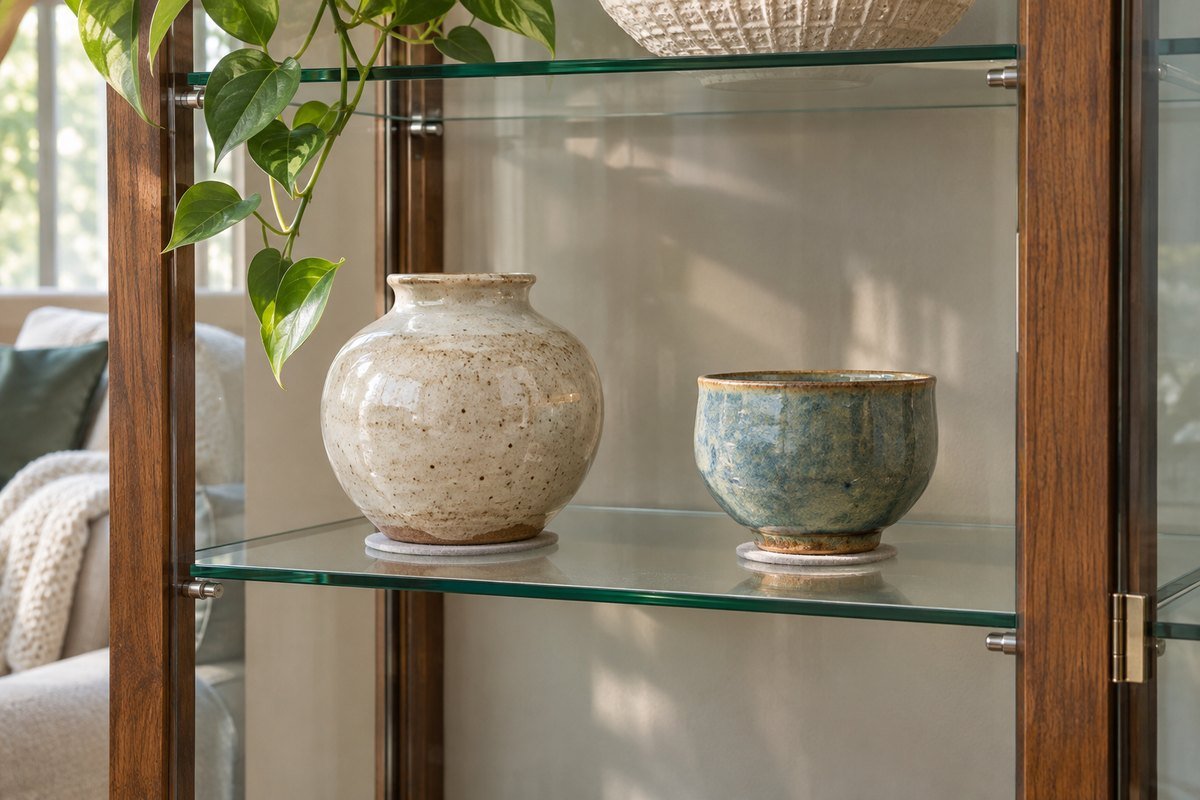
The underside of a decorative bowl can be rougher than its visible finish. Follow the shelf and object's guidance for compatible protection and lift pieces rather than dragging them. Keep weight within the actual shelf rating. An attractive arrangement does not establish that a glass shelf can support a heavy stone collection or tolerate a sharp unfinished foot.
14. Use a suitable display stand for an upright plate
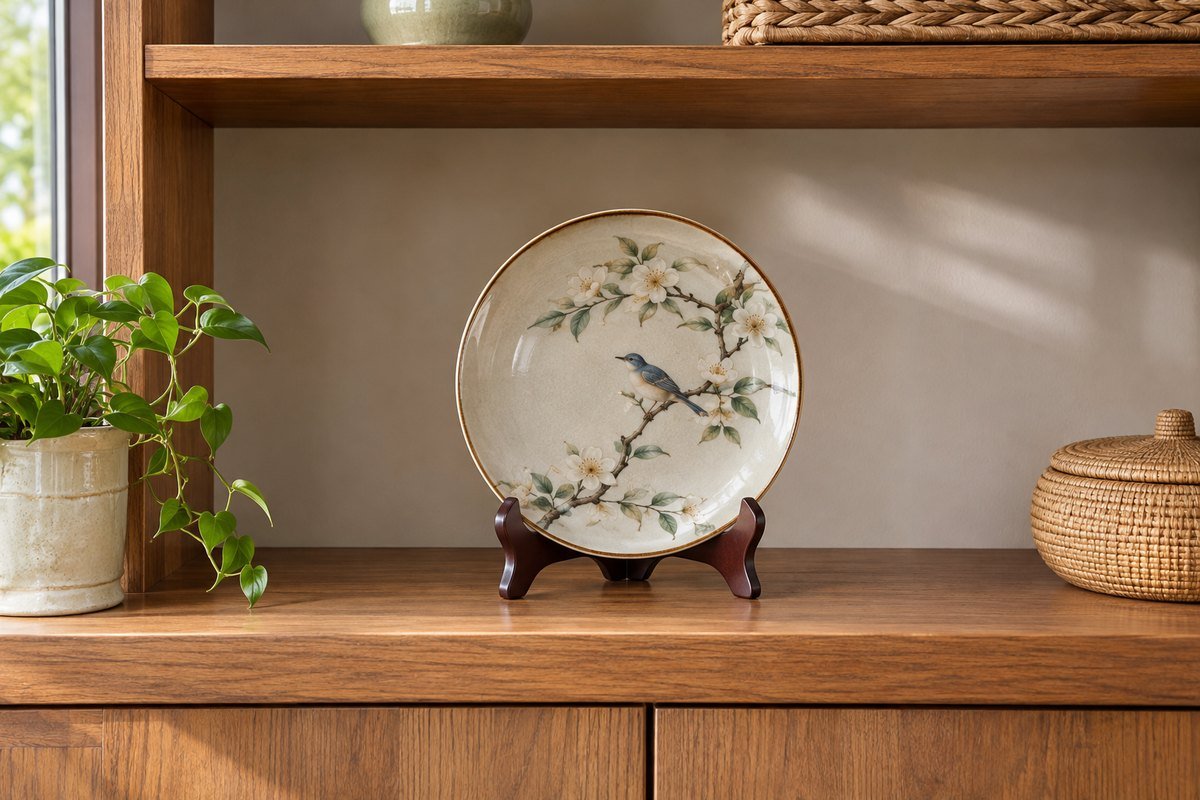
An upright plate can reveal a pattern that is hidden when it lies flat. Choose a purpose-made stand suited to that plate's diameter, weight and condition, and include the stand in the shelf-space check. Keep the whole base supported. Leaning a plate against the rear glass is not the same as giving it an appropriate stable display support.
15. Let a small sculpture have an uncluttered shelf
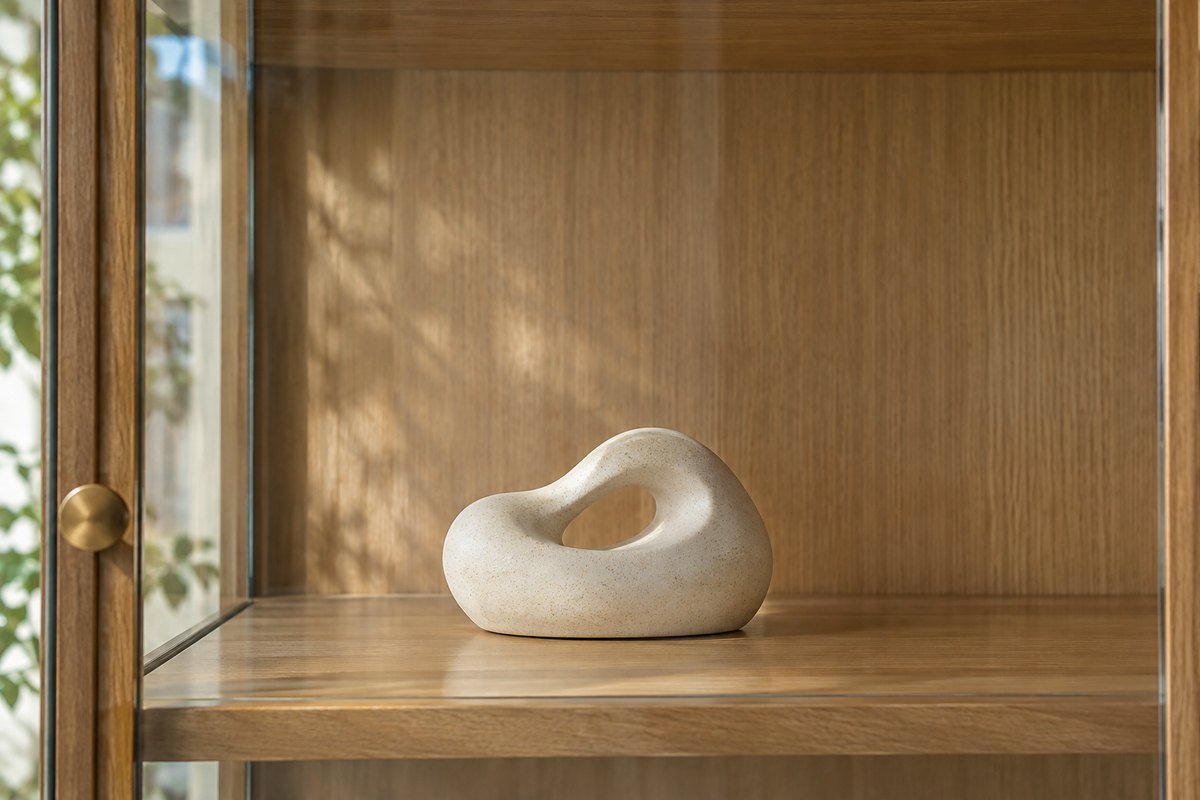
A distinctive form may need only a clear background and a suitable stable position. Give it enough space that projecting details do not catch the door or neighboring objects. Compare it from both standing and seated views. Leaving the surrounding area empty can make a meaningful object easier to appreciate than surrounding it with several unrelated smaller ornaments.
16. Use an appropriate low riser for very small pieces

A purpose-made riser can help a few small collectibles become visible where its footprint and load fit the shelf. Check that each object remains stable and that the riser does not hide the front row. Keep the number modest. An extra tier is useful when it improves the view, not when it simply creates room to keep filling the cabinet.
17. Display a copy when the original needs different storage

A personal photograph can connect the cabinet with the household, but the original may need more controlled storage. Consider a suitable display copy while keeping important originals in appropriate photo-safe housing. The Library of Congress emphasizes both suitable enclosures and environmental conditions. A glass door alone does not establish protection from light, humidity or harmful backing materials.
18. Check a mirrored back for repeated clutter and glare
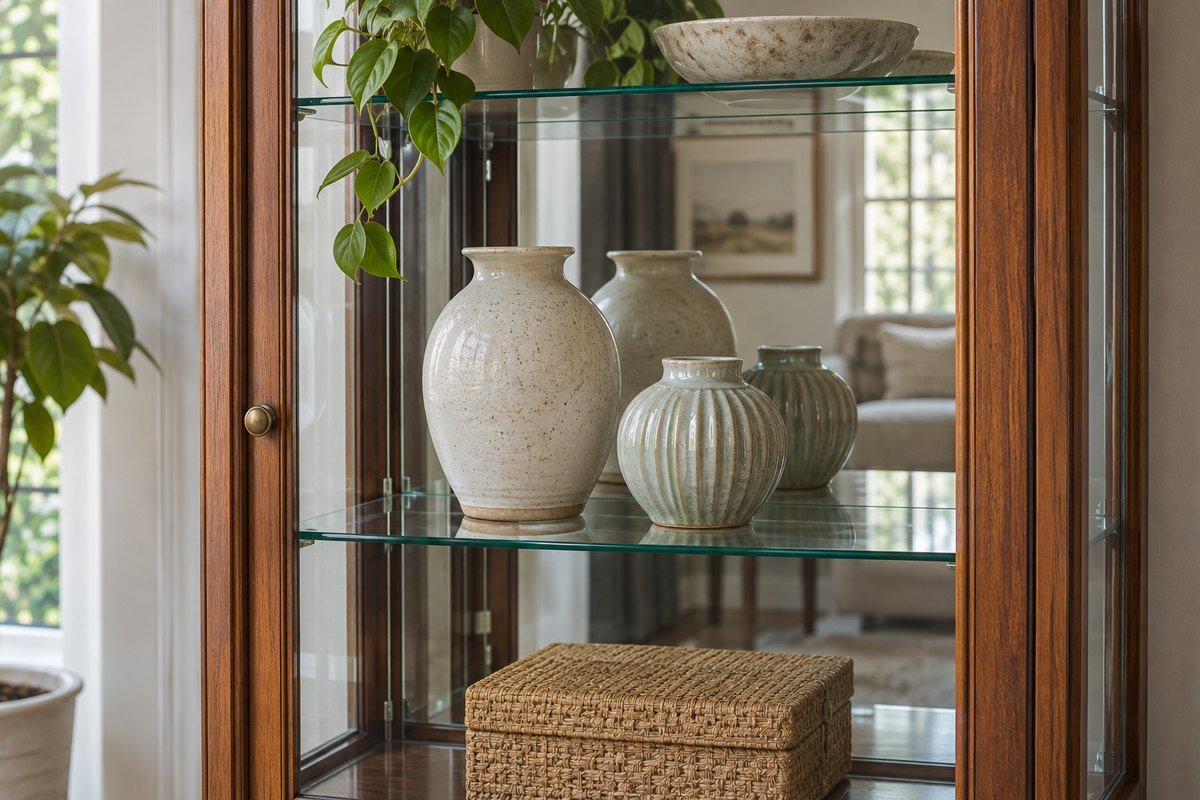
A mirror can make a sparse display feel deeper, while doubling the appearance of an already crowded shelf. Compare the reflected view from the entrance and usual seat. Reduce the front group if the reflection makes it confusing. Keep objects and lights positioned appropriately rather than using a strong reflection to compensate for an awkward cabinet location.
19. Choose compatible integrated lighting before filling the cabinet
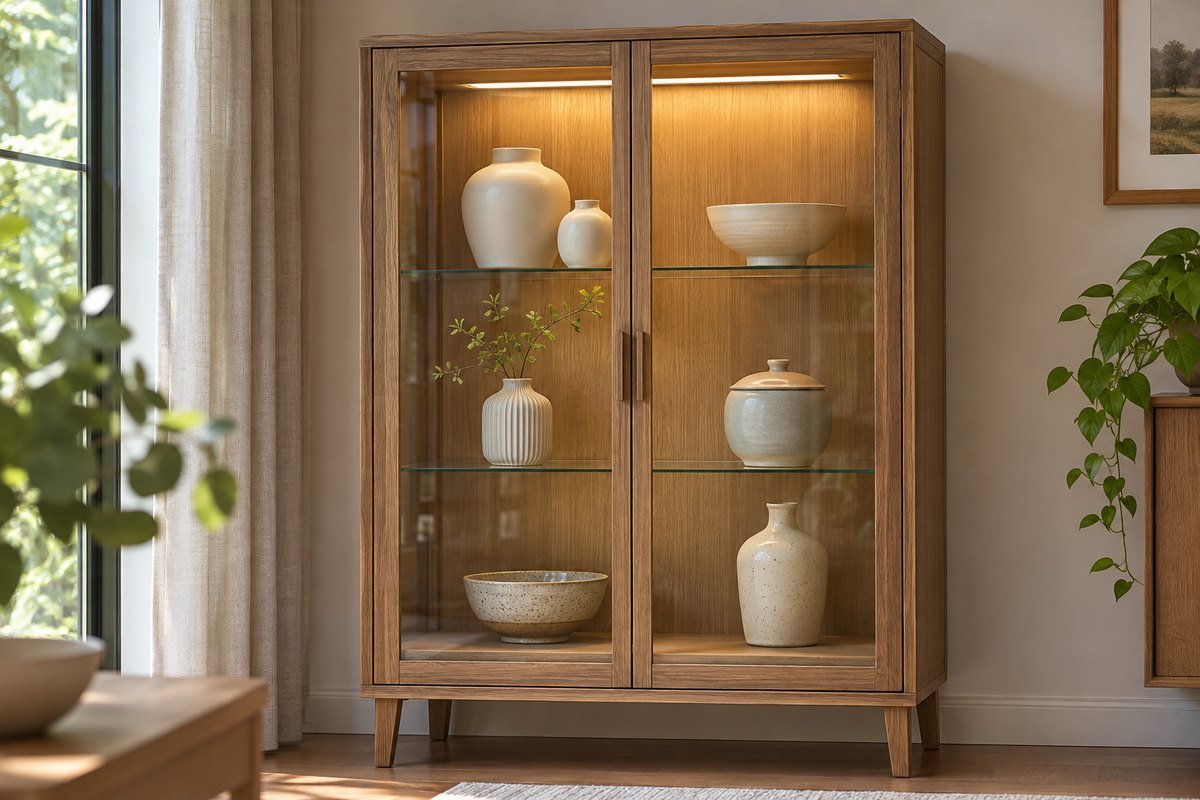
A suitable lighting system can make the collection visible after dark. Choose equipment intended for the cabinet and follow its installation, heat and cable-routing instructions. Check the light from normal viewing positions, including the reflection in the door glass. Leave the supply and controls accessible instead of concealing improvised wiring beneath a decorative collection.
20. Keep one unlit cabinet when room lighting already works

Internal lighting is optional when the ordinary room light reveals the objects comfortably. Compare the cabinet in daylight and during the hours you use the room. Keep the arrangement legible through shape and spacing instead of adding a powered accessory solely because the cabinet seems to need another feature. Choose another position if reflections obscure the collection.
21. Keep the opening side free of neighboring furniture
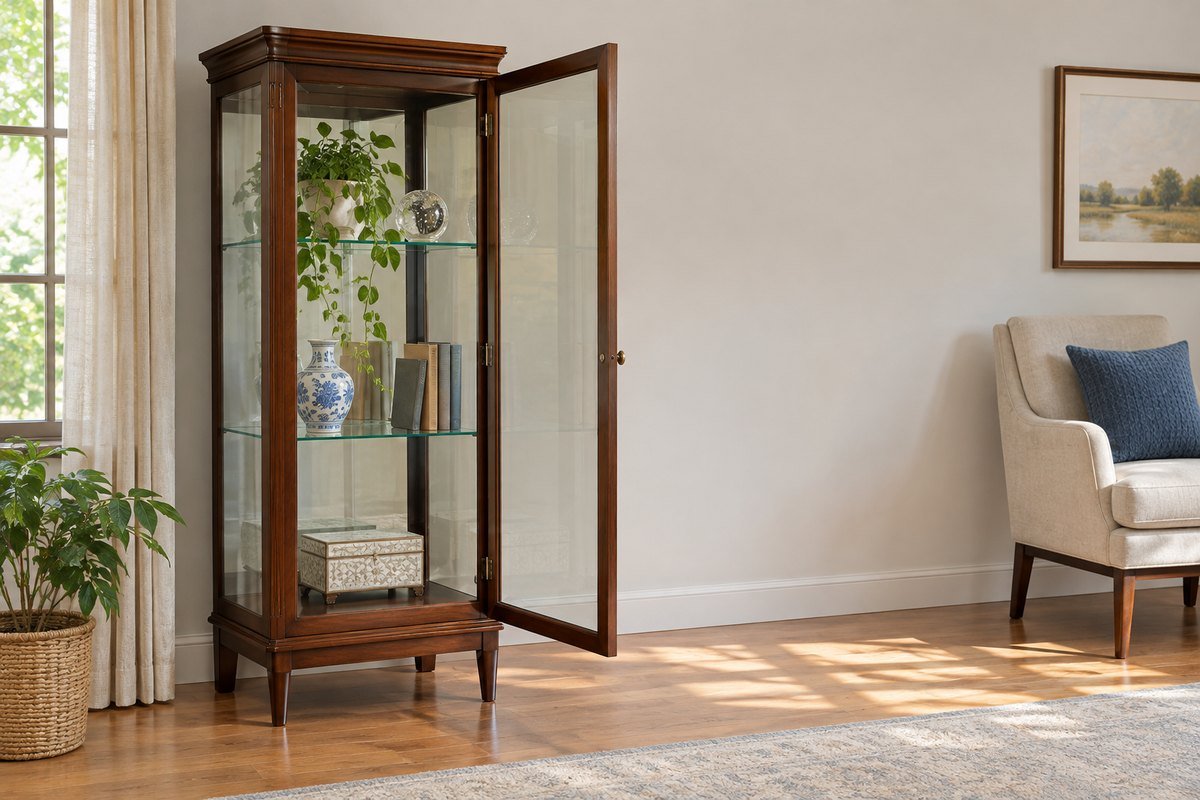
Check the door with a chair or side table in its normal position. Include the handle and the full intended swing, then test the stance needed to remove an object. A cabinet that opens only after rearranging the room may be poorly placed. Choose the location around use rather than leaving the door permanently ajar to make the display accessible.
22. Make a separate weight record for each shelf

Group objects by actual weight as well as visual balance. Include any stands and risers in the calculation, then compare with the rated limit for the exact shelf and cabinet. A light-looking glass object can still be heavy. Leave items out when the rating or condition cannot be established rather than judging capacity from how little a shelf appears to bend.
23. Keep a sparse display easy to inspect and dust

Glass doors can reduce some everyday exposure without making a cabinet hermetically sealed. Leave enough space to see dust and inspect the objects and supports. Follow the care needs of the collection rather than spraying the complete display. Fewer pieces can make the occasional reset more manageable and give each object a clearer position.
24. Rotate a few pieces from suitable reserve storage

A display can change without expanding until every shelf is full. Keep a limited group visible and store the rest according to their materials and condition. Record which pieces belong in the current arrangement if that helps restore it after cleaning. Rotation is optional; a collection that remains useful and pleasing does not need a new theme every season.
25. Plan glass care around the exact cabinet

Use the manufacturer's directions for each surface rather than treating the frame, glass and collection as one washable object. The cited RUDSTA page specifies different glass and frame care and cautions against damage to glass edges. Keep doors and shelves in good condition, following appropriate guidance when damage occurs. A decor refresh should not hide a chipped edge or loose support.
Create a shelf map with weight and removal space
Sketch each usable shelf and number the retained objects. Record the tallest dimension, full base, weight, display support and lifting route. A hypothetical 18-inch-wide shelf holding two 7-inch-wide objects has 4 inches left across the width before side and middle gaps. That does not establish enough finger space or a suitable depth; test the actual objects and opening.
Keep capacity and restraint separate from the styling map. IKEA's cited RUDSTA504.501.37 lists20pounds per shelf and requires secure anchoring. A hypothetical24-pound display exceeds that shelf limit, even if it fits visually. These figures belong to that exact model, not all RUDSTA sizes or curio cabinets. Follow the chosen furniture's current instructions and suitable wall-fixing assessment; distributing objects lower does not replace the specified restraint.
A practical next step
Let the collection decide the cabinet, then use spacing, material and appropriate lighting to make the objects visible. Keep weight, restraint and access established independently of appearance. The most convincing display remains personal and clear when its pieces need to be removed, cleaned and returned.
For the surrounding room, compare a kitchen hutch for everyday dish storage. combine display and useful living room bookshelves.
The images are original AI-generated design concepts, not photographs of tested products or verified installations.
Sources and care references
- IKEA: RUDSTA exact-model shelf load, anchoring, lighting and care information
- CPSC: Anchor It furniture-restraint guidance
- Library of Congress: photograph housing and storage environment
Optional digital guide for this topic
If you prefer a structured workbook, explore this related paid guide.