The most useful decorative storage box ideas connect the outside appearance with a specific group of belongings. A good-looking box should still open comfortably, fit its shelf and make its contents easy to find. Start with what needs a home instead of buying matching containers and inventing categories afterward.
These 22 arrangements cover different materials, opening styles and ordinary household uses. Choose only what fits your routine. Check the actual box's care, load and intended-use instructions; a decorative finish does not establish food suitability, moisture protection, security or preservation quality.
Contents
- 1. Give one everyday category a modest closed home
- 2. Use a shallow lift-off lid for frequently reached items
- 3. Allow room behind a hinged lid
- 4. Use fabric-sided boxes to soften a cube shelf
- 5. Let a paper-covered box sit among books
- 6. Use a wooden box as one material accent
- 7. Choose a woven box where the texture stays visible
- 8. Treat a glass-sided box as display storage
- 9. Use a related pair only when two categories need homes
- 10. Stack only boxes designed for the loaded arrangement
- 11. Choose one accent box for an otherwise quiet shelf
- 12. Use a wall-related tone when storage should recede
- 13. Limit pattern to a box with a quiet background
- 14. Collect spare cables while they are unplugged
- 15. Give current correspondence a flat temporary box
- 16. Make a small hobby kit easy to carry as one group
- 17. Keep ordinary greeting cards separate from valuable originals
- 18. Use a smooth interior for a small dry textile group
- 19. Choose photograph storage for preservation rather than decoration
- 20. Keep the label discreet but genuinely useful
- 21. Use removable dividers when small contents need separation
- 22. Keep the care routine and the category small enough to maintain
Measure the inside, the outside and the opening movement
Measure the largest retained item and the box's usable interior. Compare the outside width, depth, handles and lid with the shelf opening. Try lifting the loaded box and removing its contents without moving several neighboring objects. Keep the complete shelf load and furniture-restraint requirements separate from the box's appearance.
Choose an arrangement that fits your situation
- Small items disappear inside a deep container: Choose a shallower box or compatible removable divisions
- The lid cannot open on its shelf: Change the opening style or provide a supported removal position
- Several identical boxes hide different categories: Use useful discreet labels and independent access
- The box will hold photographs: Select verified photo-safe housing rather than judge by the outer finish
- Textile sides suggest easy washing: Read the full construction and actual care instructions first
1. Give one everyday category a modest closed home

Start with a small group that naturally belongs together, such as spare stationery used at the same table. Choose a box with enough room to see and remove the pieces without burying them. Leave unrelated overflow elsewhere. A clear category makes a decorative box useful; hiding a mixed pile behind a pleasant finish only postpones the sorting.
2. Use a shallow lift-off lid for frequently reached items

A shallow box keeps small contents visible when the lid comes off. Give the lid its own temporary resting place so it does not have to balance against a lamp. Test the routine with one ordinary item before settling the position. If the lid is always left elsewhere, an open tray may fit that category better than a closed display box.
3. Allow room behind a hinged lid
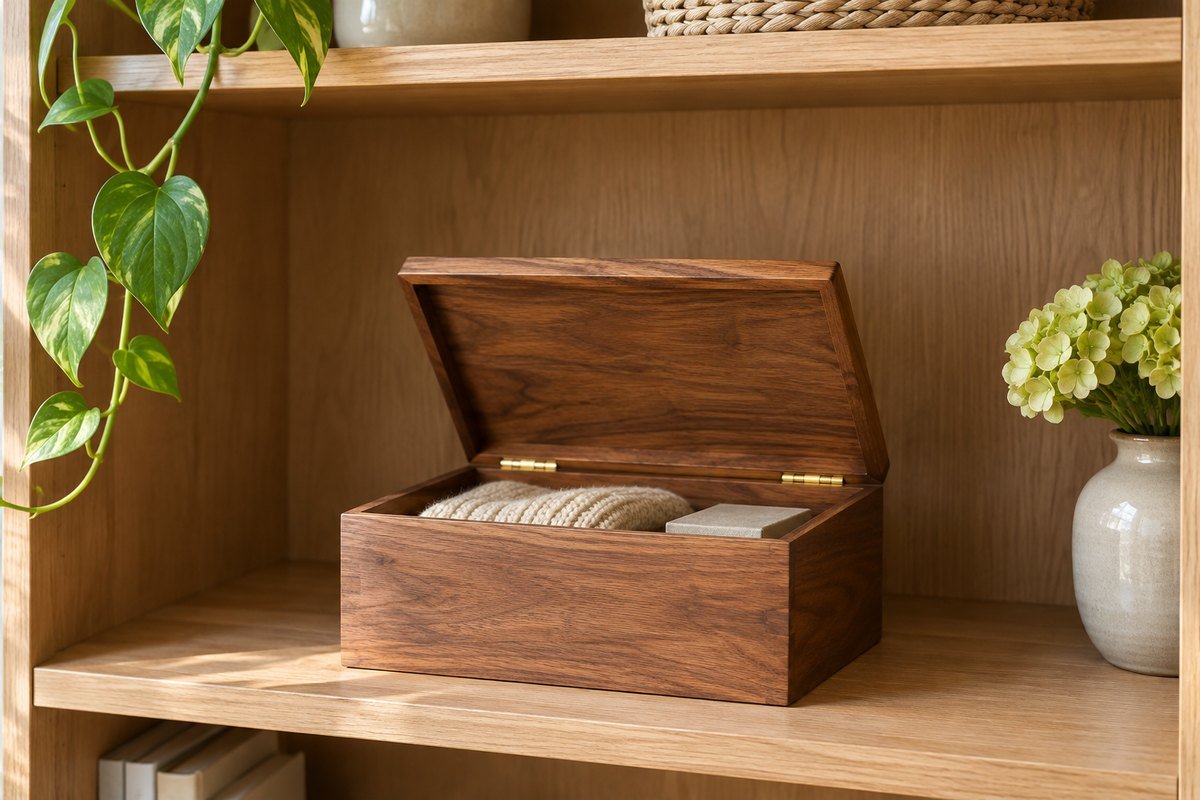
A hinged lid can stay connected to the box, but it still needs its intended travel. Check the back clearance, shelf height and any support mechanism. Avoid pulling the box partly over the shelf edge just to open it. If it cannot function in the proposed bay, choose a different opening style or a more accessible home.
4. Use fabric-sided boxes to soften a cube shelf

A fabric-sided box can reduce the visual weight of a shelf full of hard objects. Compare its actual dimensions with the compartment and leave a usable grip. Check the construction and care rather than treating all textile containers as washable. IKEA's cited DRONA model includes a paperboard insert and specifies no washing, illustrating why appearance alone cannot decide cleaning.
5. Let a paper-covered box sit among books

A paper-covered box can relate quietly to book spines while concealing a light dry category. Keep the surface clear enough to lift the lid without removing a tower of ornaments. Read the care and avoid assuming a decorative paper covering is an archival interior. The box can coordinate with a library without being suitable for storing valuable photographs.
6. Use a wooden box as one material accent
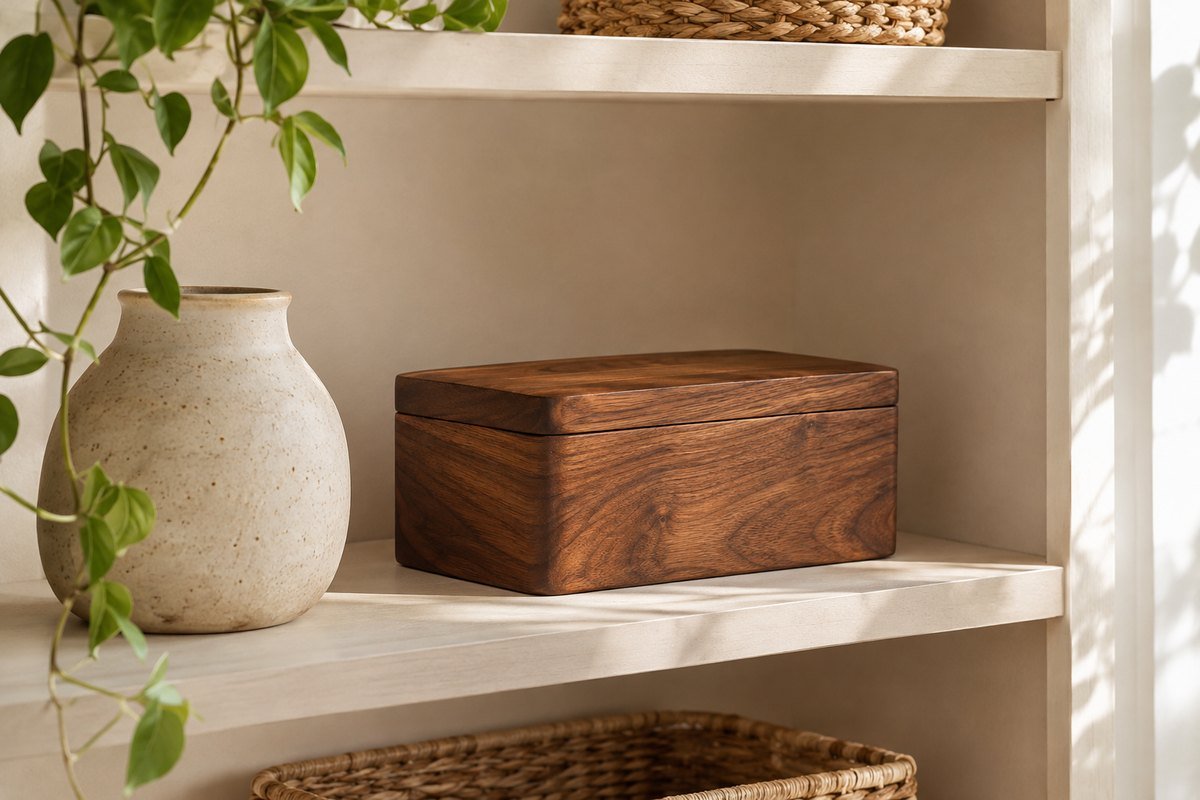
A modest timber box can repeat a nearby furniture tone without making the whole shelf match. Inspect its interior, edges and closure against the actual contents. Keep the loaded box manageable and follow its finish-care instructions. Choose it for a useful category rather than using a heavy chest where a small light container would be easier to retrieve.
7. Choose a woven box where the texture stays visible

A woven lidded box can introduce texture beside smooth cabinetry. Check how tightly it closes and whether small contents can catch or escape through the weave. Use an appropriate inner container if the intended items need it, following their storage requirements. Keep the box within the furniture footprint so handles and loose fibers do not snag a passing sleeve.
8. Treat a glass-sided box as display storage

A transparent box may suit a few objects you want to see, such as a small collection of ordinary decorative pieces. Keep the interior arrangement restrained and choose appropriate protection for the contents and furniture. A glass lid does not make the box secure or protective against sunlight. Move unsuitable valuables to storage selected for their actual needs.
9. Use a related pair only when two categories need homes

Two coordinated boxes can give an open shelf a calmer outline while keeping distinct groups separate. Choose sizes from the contents rather than forcing both groups into identical volumes. Give each box an independent grip and opening route. A matching pair is helpful when it reflects the routine; an empty second box need not remain on display to preserve symmetry.
10. Stack only boxes designed for the loaded arrangement

A fitted lid does not automatically make every decorative box a stacking system. Check the maker's guidance and keep daily contents accessible without dismantling several layers. IKEA's cited KUGGIS series gives model-specific stacking guidance and advises keeping heavier items below. Apply the directions for your exact products rather than transferring that allowance to a woven or glass box.
11. Choose one accent box for an otherwise quiet shelf
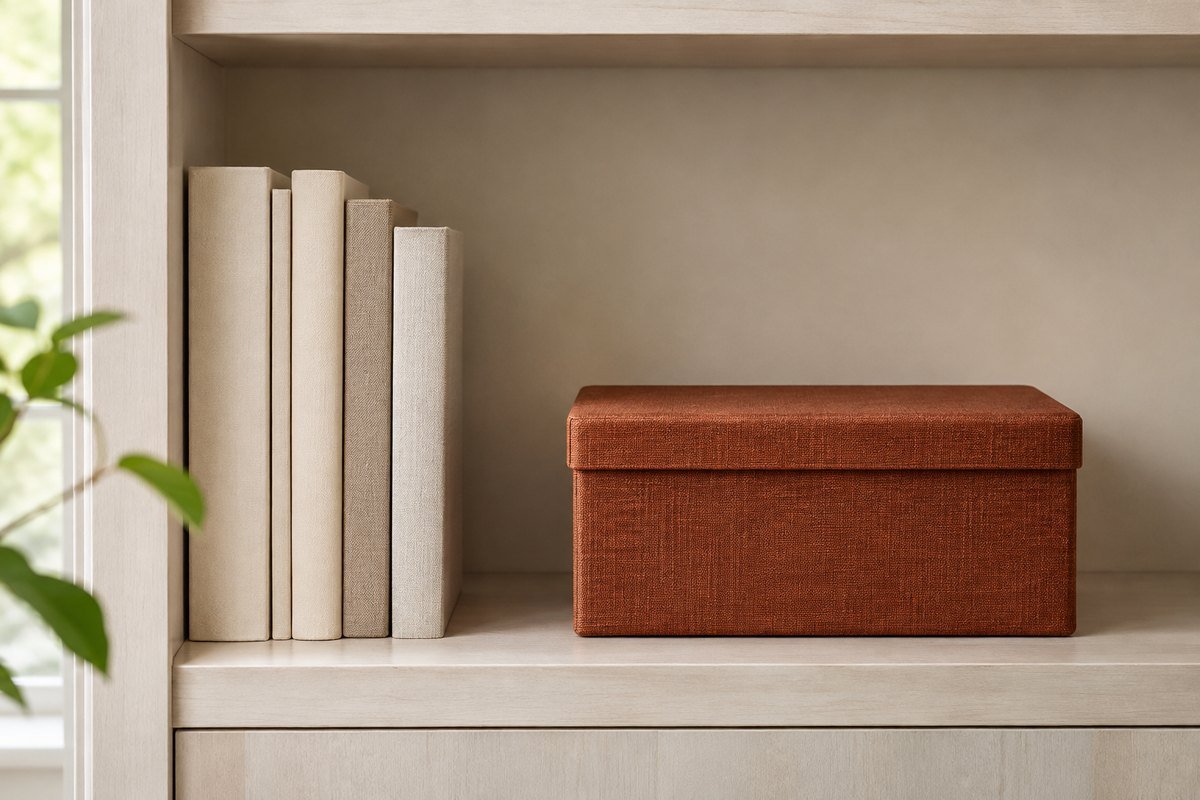
A single muted color can make a storage category easy to spot without turning every container into a statement. Repeat a color already in the room if that helps the connection. Check the arrangement from the main seat and keep the lid clear. The accent should make retrieval more obvious rather than encourage additional boxes with no useful contents.
12. Use a wall-related tone when storage should recede
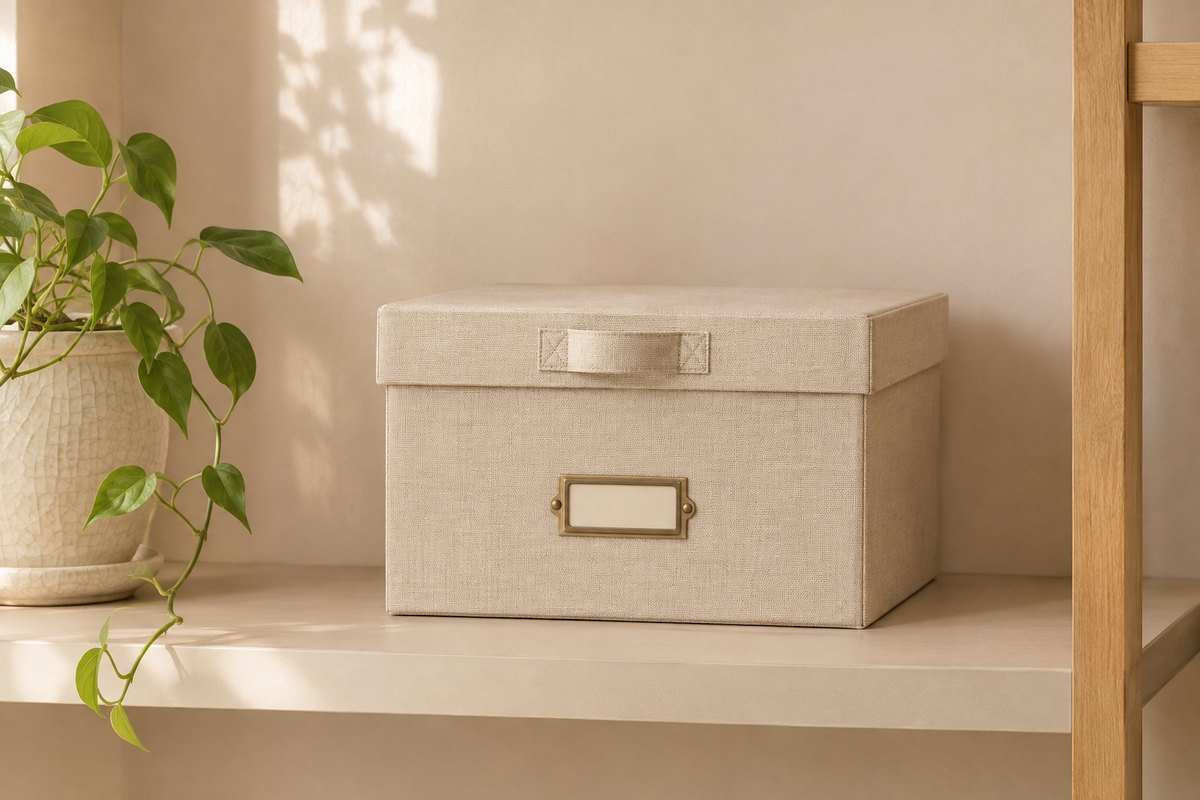
A box near the wall or shelf color can create a more continuous background. Preserve an identifiable handle or discreet category label so it does not become difficult to find. Compare actual samples in the room's lighting. Two finishes called beige can have noticeably different undertones, so choose the relationship by sight rather than by product names alone.
13. Limit pattern to a box with a quiet background
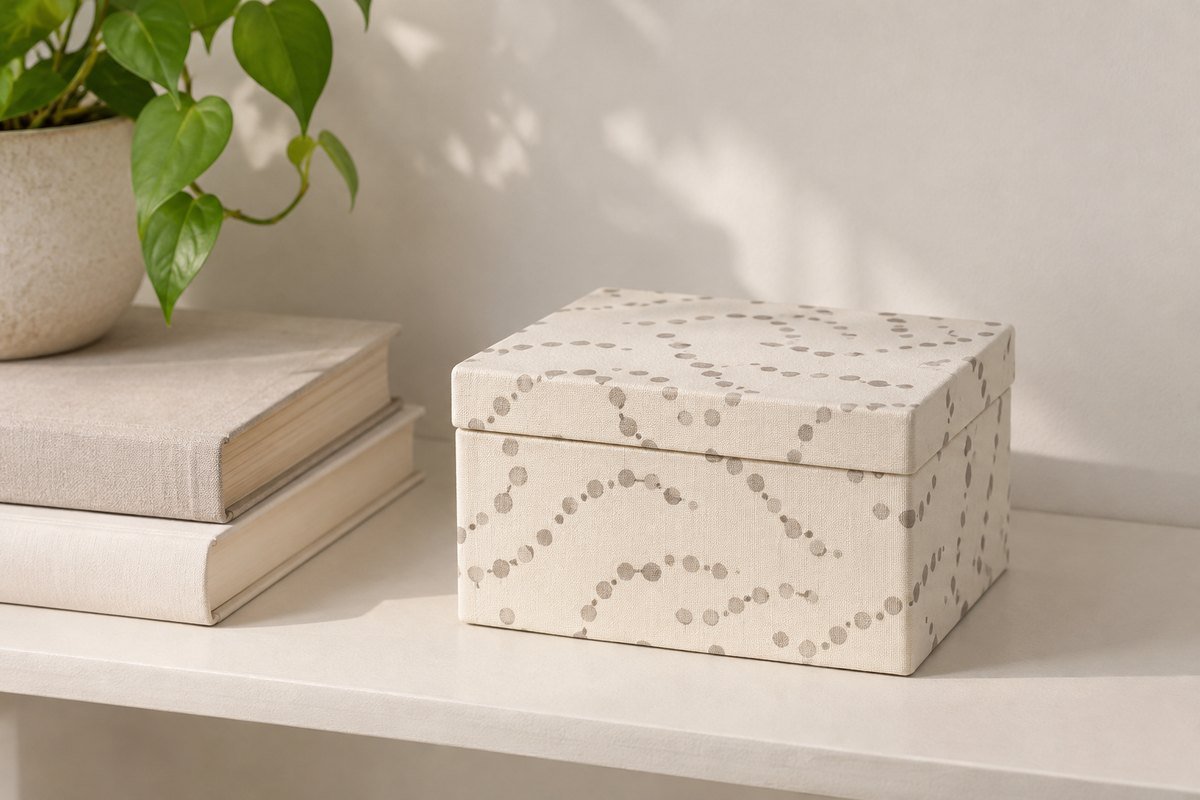
A patterned box can provide a small area of visual interest when neighboring books and objects are plain. Choose a pattern scale that remains readable from the room rather than one selected only close up. Avoid placing it against an equally busy backing unless you enjoy that combined effect. Keep the category practical enough that the box earns its position.
14. Collect spare cables while they are unplugged
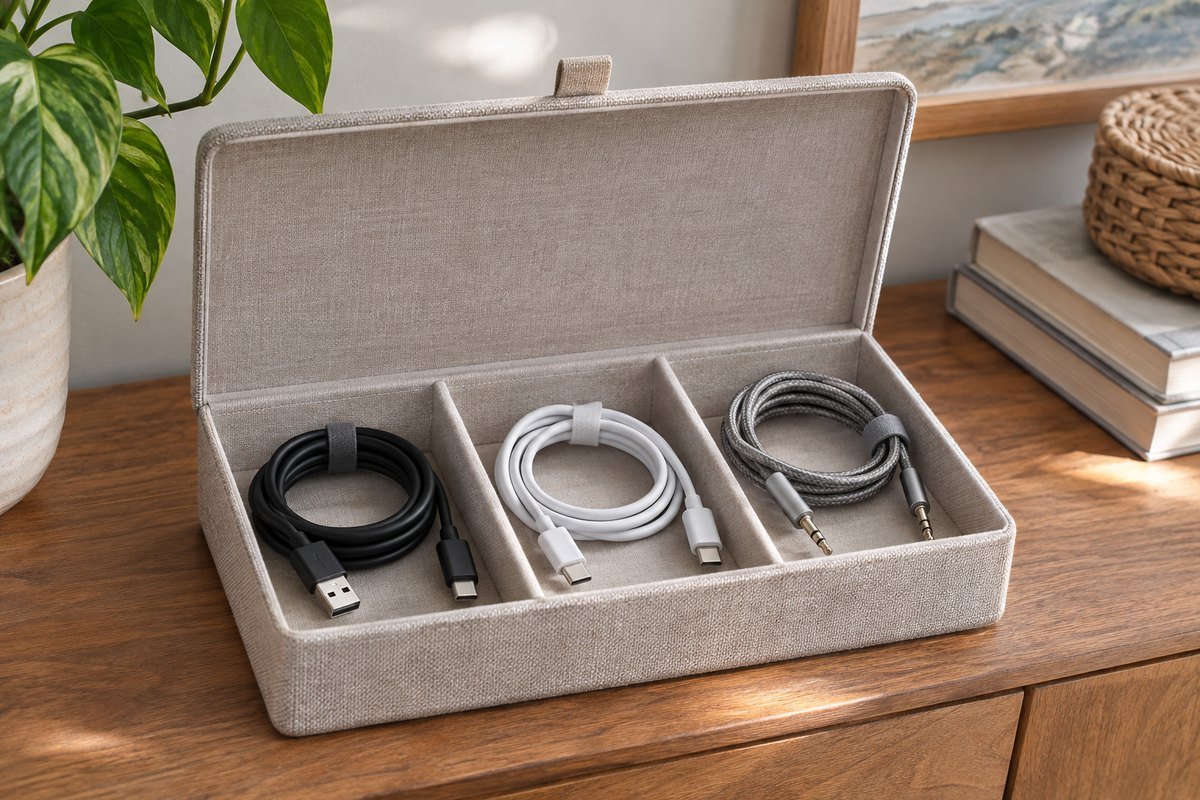
A divided box can group a few identified spare cables without spreading them across a shelf. Check the connectors and keep only items that still have a defined purpose. This is storage for disconnected accessories, not a concealed charging station. Use powered equipment according to its ventilation and operating instructions instead of closing it inside an ordinary decorative container.
15. Give current correspondence a flat temporary box
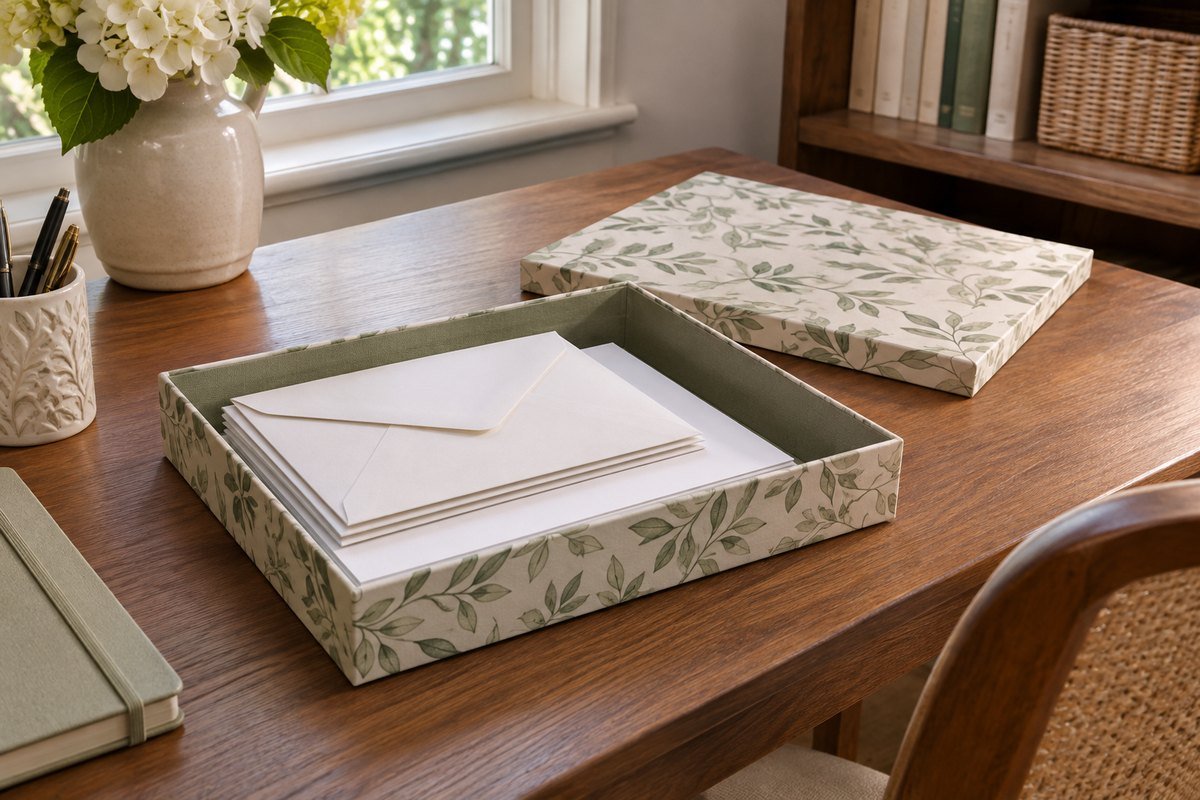
A shallow container can keep a limited group of papers together between planned sorting sessions. Choose an interior large enough for the actual sheets without curling corners. Keep private documents in storage suited to their sensitivity and move long-term records elsewhere. A decorative box is a convenient boundary for a small task, not an automatically secure filing system.
16. Make a small hobby kit easy to carry as one group

A light box can hold the materials for one modest project, such as yarn and blunt accessories. Check the loaded weight and the intended grip before assigning a carrying role. Keep sharp tools protected in suitable storage rather than loose beneath soft supplies. A project box works best when it contains the current task instead of every spare material in the household.
17. Keep ordinary greeting cards separate from valuable originals
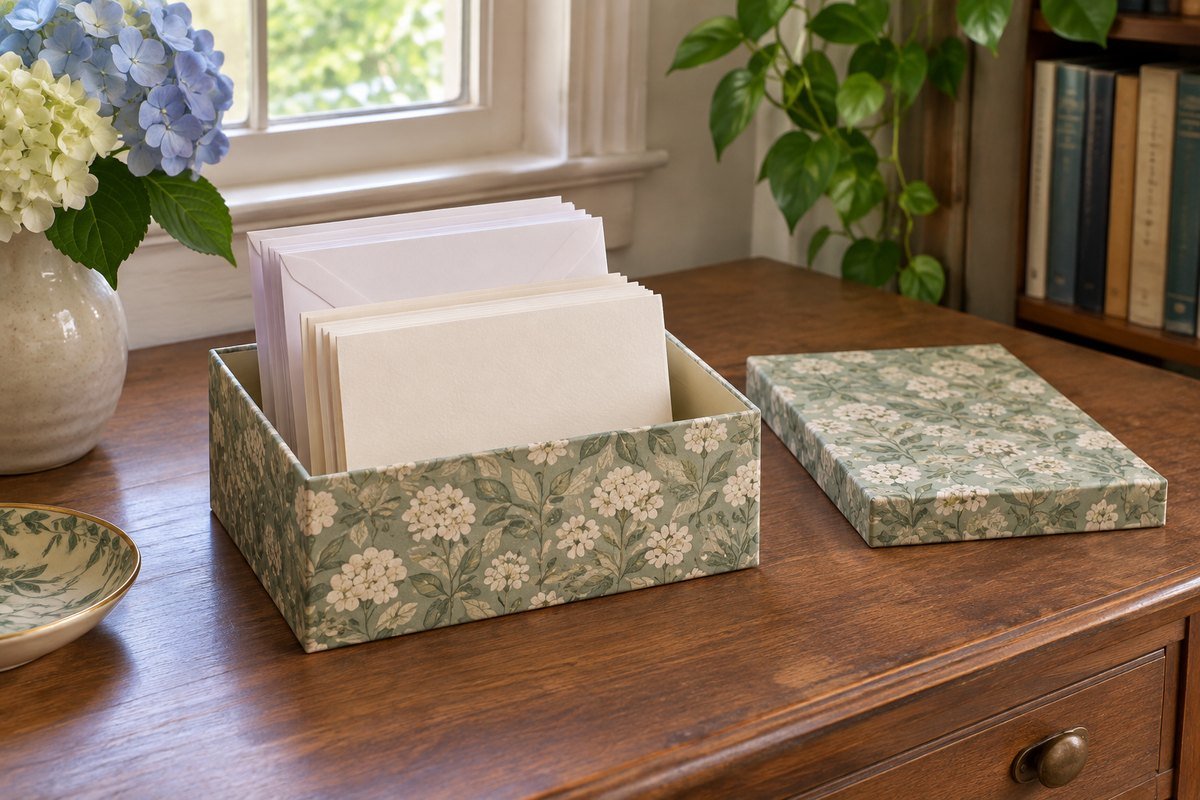
A suitably sized box can group unused cards and envelopes so they are easy to find before an occasion. Separate everyday stationery from heirloom letters, sensitive documents or photographs needing specific preservation. Keep the contents dry and avoid overfilling until corners bend. Choose a practical category name rather than treating every attractive box as a universal memory archive.
18. Use a smooth interior for a small dry textile group

A few clean dry napkins or soft accessories can live in an appropriately sized box. Inspect the interior for rough edges and choose a placement that makes the category easy to retrieve. Follow the textiles' own storage and care needs. A closed decorative box should not become the place where damp items are hidden before they have dried appropriately.
19. Choose photograph storage for preservation rather than decoration

If the contents are photographs, select the primary enclosures and box for their actual conservation needs. The Library of Congress describes photo-safe materials meeting specified requirements, including the Photographic Activity Test. An attractive cover or a general acid-free claim is not the whole assessment. A dedicated appropriate photo box can look orderly on a shelf without relying on an unverified decorative interior.
20. Keep the label discreet but genuinely useful
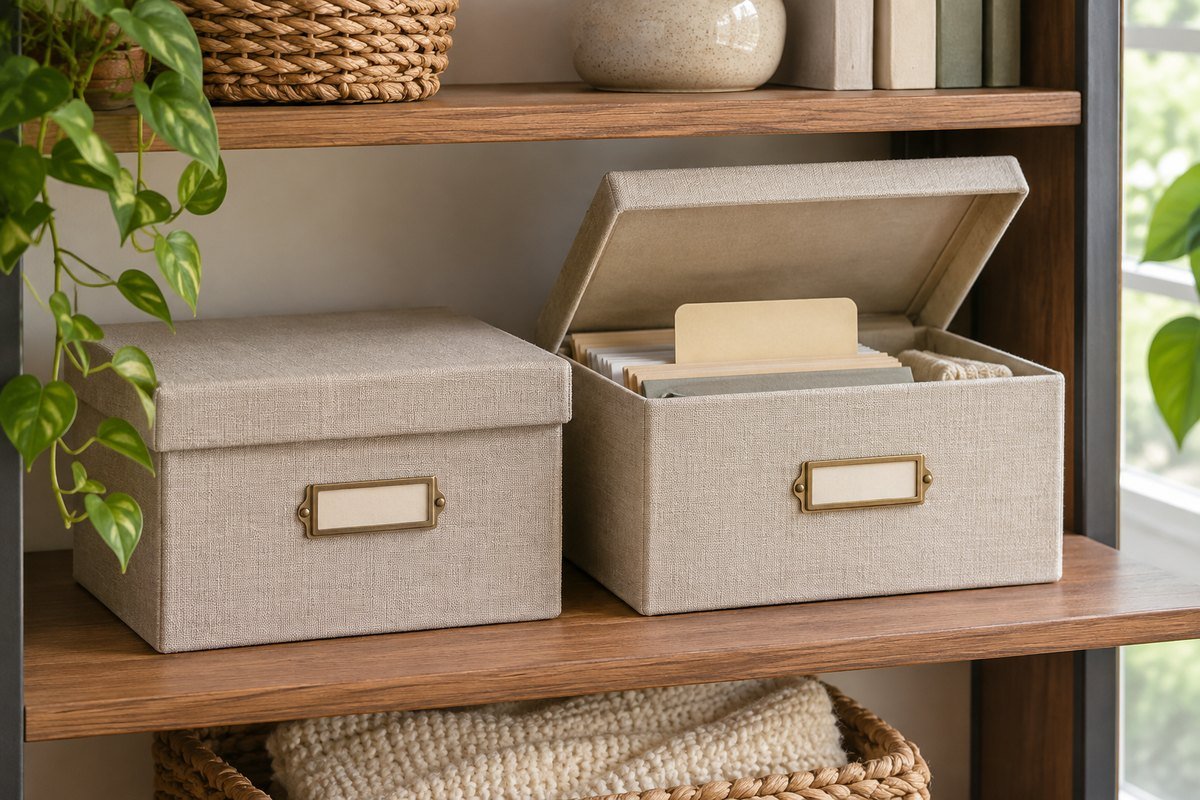
A small label holder, underside note or inside-lid card can identify the category without dominating the display. Choose its position around how the box is stored and opened. If several identical boxes require lifting every lid to find one item, make the labels more visible. The useful amount of information depends on the household, not a requirement to hide every practical detail.
21. Use removable dividers when small contents need separation
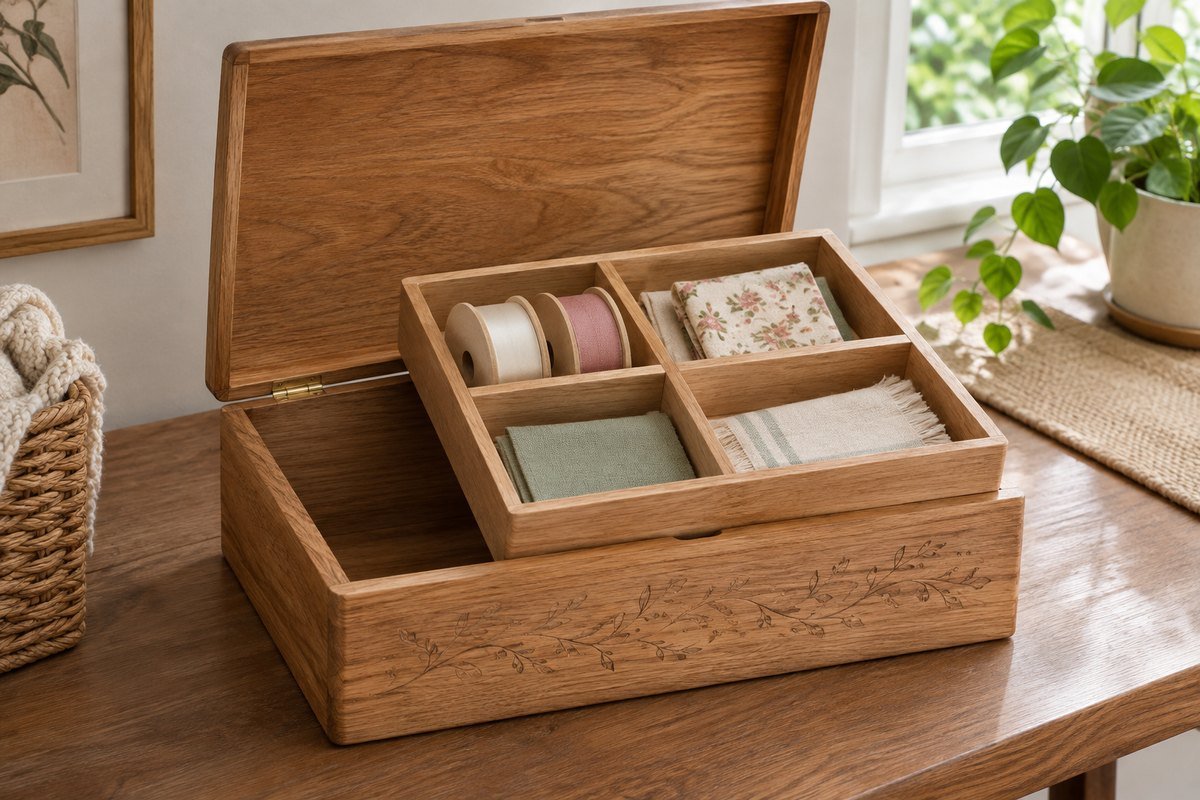
A compatible insert can keep several related small accessories visible inside a larger box. Measure the interior corners and lid clearance before choosing it. Keep each compartment large enough for fingers as well as the object. Removable divisions make a category easier to revise; they should not become an excuse to save many tiny items that no longer serve a purpose.
22. Keep the care routine and the category small enough to maintain

Empty and inspect the box occasionally, following the directions for its actual construction. Remove lint or dust appropriately and check the lid, seams and handles before returning the contents. Do not add a decorative coating or wet-clean a paperboard insert based only on how the outside looks. A manageable category and a clear reset keep useful storage from slowly becoming a sealed collection of miscellaneous things.
Make a fit, opening and care record for each box
Record the category, largest item, usable inside dimensions, complete outside dimensions, opening movement and loaded handling route. A hypothetical 14-inch-deep box on a 16-inch shelf leaves 2 inches before allowing for handles, the back wall and finger space. That calculation is a starting comparison, not proof that the box will be convenient to remove.
Keep product-specific limitations beside that record. The cited KUGGIS combination595.611.88 measures10¼ by13¾ by6inches, is not approved for food contact and includes a maximum35-inch stacking recommendation with heavier items below. The cited DRONA005.084.52 has a fabric exterior and paperboard insert with no-wash care. Neither example establishes archival suitability. Use photo-safe housing for photographs and follow the instructions for the exact container and contents.
A practical next step
Choose the category first, then find a box that fits its contents, shelf and opening routine. Use color and texture to connect the container with the room while keeping the lid and handle useful. The arrangement is successful when finding and returning an ordinary item remains straightforward after the display has been lived with.
For the surrounding room, balance storage boxes with a useful living room bookshelf. plan the wider household storage routine.
The images are original AI-generated design concepts, not photographs of tested products or verified installations.
Sources and care references
- IKEA: KUGGIS exact-model size, intended use and stacking guidance
- IKEA: DRONA construction and no-wash care instructions
- Library of Congress: photo-safe housing and photograph storage
Optional digital guide for this topic
If you prefer a structured workbook, explore this related paid guide.