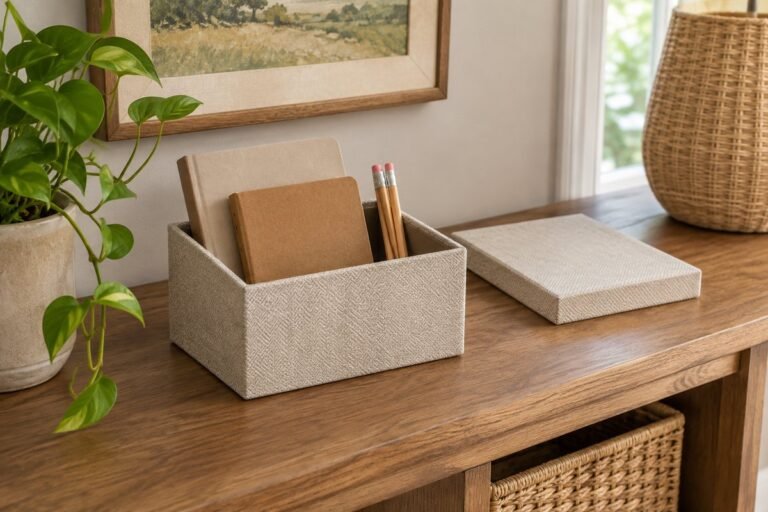
The most useful room divider curtain ideas change a specific view without making the room difficult to use. A curtain might screen a desk after work, soften the edge of a studio sleeping area or give a multipurpose corner a clearer purpose. Begin with that task before choosing fabric.
A curtain offers adaptable visual separation. It does not turn part of a room into a soundproof or legally separate bedroom. Plan the actual hanging system with a suitable installer, preserve required access and ventilation, and check the room with the fabric both open and closed. These 24 concepts are layout inspiration rather than fixing instructions.
Contents
- 1. Draw the smallest useful separation line
- 2. Screen one visible edge of a studio sleeping area
- 3. Give a home desk a workday boundary
- 4. Close the view of a hobby corner after use
- 5. Make a dressing corner easy to open completely
- 6. Plan guest mode around the unfolded sofa bed
- 7. Separate dining and sitting with a restrained fabric line
- 8. Interrupt the entrance view without covering the door
- 9. Park one panel against a quiet wall section
- 10. Use paired panels when a central opening suits the route
- 11. Place an offset opening beside the furniture arrangement
- 12. Choose a sheer panel for gentle zoning
- 13. Choose greater opacity for a direct sightline
- 14. Let a tonal curtain sit quietly with the wall
- 15. Use one deeper color to define a deliberate zone
- 16. Try a restrained stripe when the room needs pattern
- 17. Use woven texture in place of a strong print
- 18. Plan layers as a compatible complete system
- 19. Use a corner only with compatible track components
- 20. Make an alcove curtain a clear boundary rather than a hidden obstacle
- 21. Choose height from the actual screening task
- 22. Keep the hem clear of the ordinary route
- 23. Review daylight and room use with the curtain closed
- 24. Make opening and care part of the routine
Plan the closed line and the open stack together
IKEA's shared-room guidance describes curtains as one way to define flexible zones. Its VIDGA guide also distinguishes wall and ceiling arrangements, compatible components and room features that can interfere with movement. Use the exact current system's instructions for your location, fabric weight and substrate; a decorative image cannot specify fixings. Mark where the fabric travels and where it gathers when open. Keep door swings, required exits, windows, ventilation and heating equipment usable. Compare privacy from both sides under ordinary daytime and evening lighting. Fabric color or thickness alone cannot establish acoustic isolation, fire performance or complete visual privacy.
Choose an arrangement that fits your situation
- Gentle activity zoning: Compare a translucent fabric with the visibility you want to retain
- Concealing a direct view: Test the intended opaque fabric under lighting on both sides
- Frequent room changes: Plan the complete open stack and normal operating route
- Layered fabric: Specify a compatible complete track and support arrangement
- Private speech: Assess an appropriate acoustic solution; a curtain does not establish isolation
1. Draw the smallest useful separation line

Identify the view that needs changing before dividing the room from wall to wall. A shorter curtain line may hide a work surface while preserving more light and movement. Compare the proposed boundary from both activity areas. Keep a sketch of its closed position and parked fabric so the flexible element does not become an inconvenient obstacle when opened.
2. Screen one visible edge of a studio sleeping area

A partial curtain can reduce the direct view of a bed from the entrance without surrounding it on every side. Keep access for making the bed and using nearby furniture. Check the window and the normal night-time route. Choose a more suitable layout if the proposed fabric interferes with required ventilation, access or an essential room function.
3. Give a home desk a workday boundary
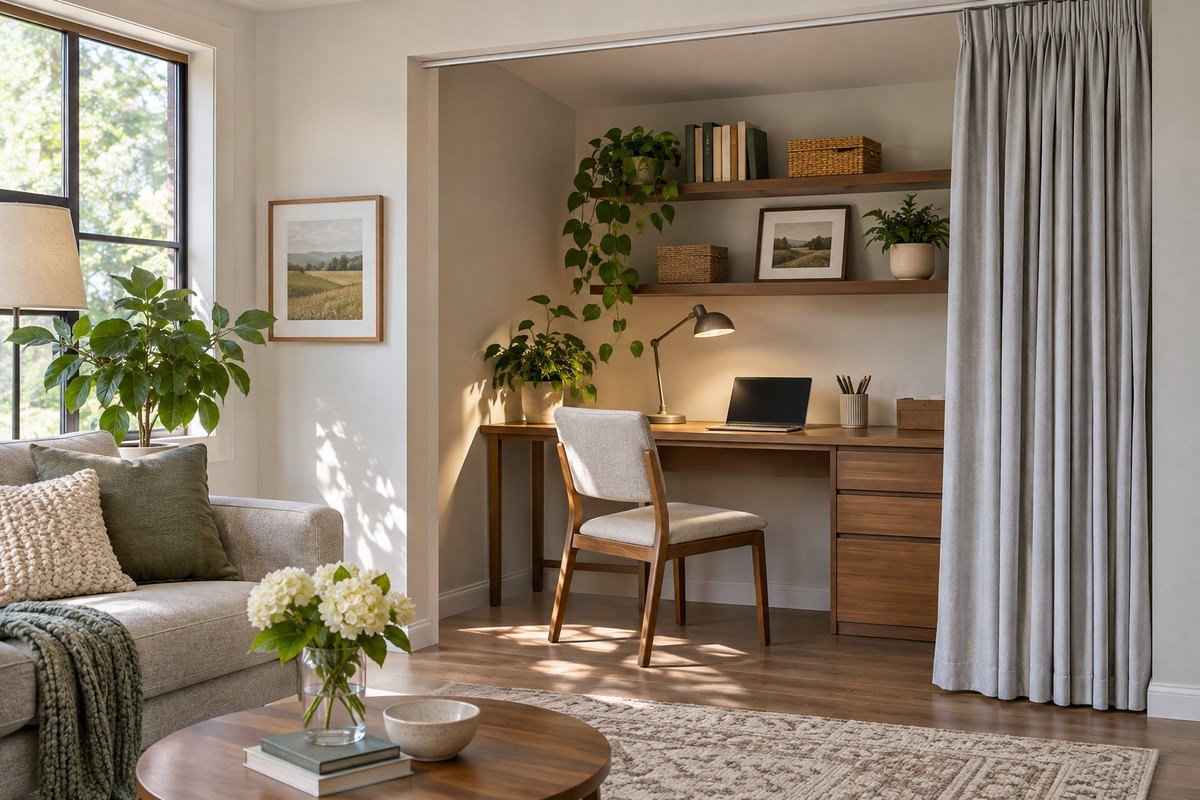
A curtain beside a desk can distinguish the work area from the sitting room. Place the line around the chair's actual movement rather than close to the desktop edge. Check access to equipment and the camera view if relevant. Opening the curtain should restore the shared room without requiring the chair or storage to move to another location.
4. Close the view of a hobby corner after use

A curtain can conceal an orderly hobby area when the room changes activities. It still needs room to move without catching materials, tools or furniture. Put the contents away before closing the fabric rather than using it to hide an unfinished obstruction. Keep any equipment's required clearance and access independent of the curtain's decorative outline.
5. Make a dressing corner easy to open completely

A curtain can provide a temporary visual boundary around an adult dressing area. Locate the opening where there is useful standing space, and check the view from doors and windows. Keep the fabric clear of storage doors. Choose a configuration that can park away from the normal route instead of leaving a loose panel across the approach.
6. Plan guest mode around the unfolded sofa bed

A guest arrangement needs checking with the bed fully opened and the normal belongings in place. A curtain can change the sightline, but it should not hide an obstructed exit or make the route to the door confusing. Decide where it parks each morning. Keep the guest configuration practical without implying that a temporary screen creates a separate room.
7. Separate dining and sitting with a restrained fabric line

A curtain can suggest a boundary between two activities while leaving the room adaptable. Check it with dining chairs pulled out and people seated on the sofa. The fabric should not occupy the space needed for everyday movement. Consider whether a shorter line provides enough definition before committing to a curtain across the complete width of the room.
8. Interrupt the entrance view without covering the door

Stand in the doorway and identify the exact sightline that feels too exposed. A curtain farther inside the room may solve that problem without competing with the door swing. Check both open and closed positions. Keep the entrance easy to recognize, and choose another boundary if the curtain makes the normal approach feel like passing through hanging fabric.
9. Park one panel against a quiet wall section

A single panel can give the room an uncomplicated opening direction. Its gathered fabric still occupies space and needs a deliberate destination. Compare the actual stack with nearby switches, furniture and doorways. Keep the parking area useful without hiding controls or forcing the curtain behind a chair that must be moved every time the room opens up.
10. Use paired panels when a central opening suits the route

Two panels can make a long curtain line easier to approach from the middle. Locate that opening according to how the household moves, not merely the room's visual symmetry. Allow a parking area for each side. Check whether the closed edges meet as intended and whether furniture remains usable when the two stacks are fully gathered.
11. Place an offset opening beside the furniture arrangement

An opening away from the center can suit a room whose furniture leaves a clearer route at one side. Draw the complete curtain line and the ordinary approach before ordering. Avoid an awkward detour around a desk or sofa end. The best position is the one that supports daily use while providing the amount of visual screening actually needed.
12. Choose a sheer panel for gentle zoning

A sheer curtain can mark an activity area while keeping a visual connection through the room. Use it when a softened boundary is enough. Check the view at normal distance rather than relying on a close fabric sample. If the purpose is privacy, assess a more suitable material instead of assuming that extra folds will make a transparent curtain opaque.
13. Choose greater opacity for a direct sightline
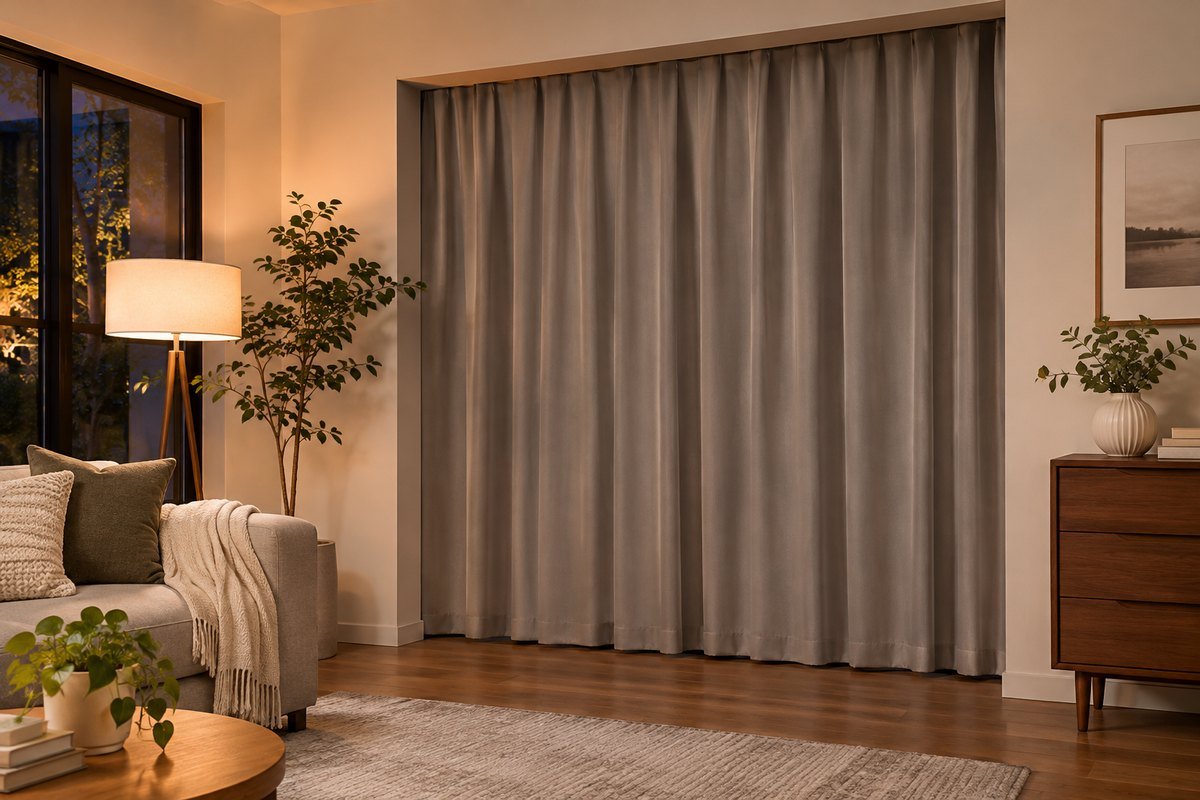
A more opaque fabric can be appropriate when you want to conceal the contents of a corner. Test a sample with the light sources used on each side, including after dark. A dark color does not guarantee that silhouettes disappear. Specify the actual desired privacy and compare the fabric's documented properties rather than treating thickness as the only selection criterion.
14. Let a tonal curtain sit quietly with the wall

A related wall and fabric color can make the divider feel less visually abrupt. Compare the sample vertically against the wall in the room's actual lighting. Texture and folds can provide enough detail without a strong contrast. Keep the choice connected to the furniture so the curtain works as part of the room rather than an isolated strip of color.
15. Use one deeper color to define a deliberate zone
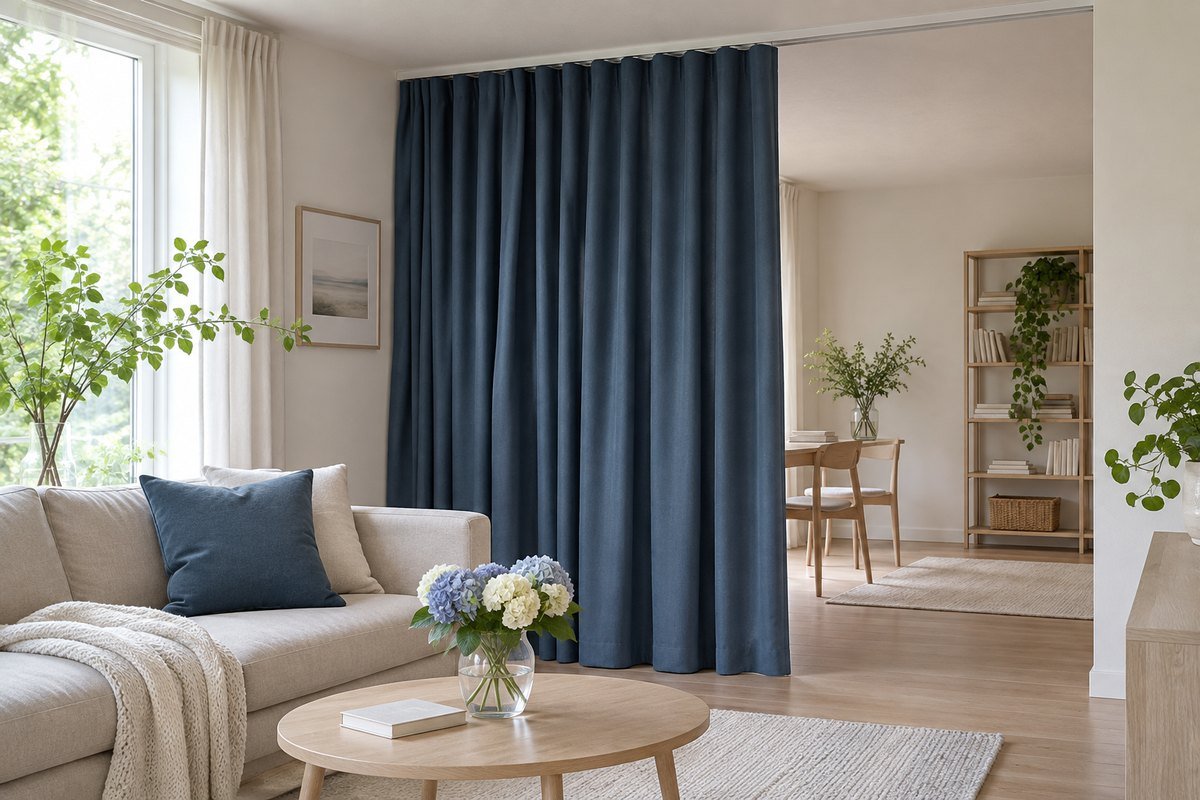
A darker curtain can give a corner a clear visual edge when the rest of the room is restrained. Connect the shade to one existing artwork or textile. Compare its large closed surface before committing; a small swatch can understate the effect. Keep the open stack equally considered so the room still feels coherent when the boundary is removed.
16. Try a restrained stripe when the room needs pattern

A simple stripe can supply pattern without several new accessories. Look at the complete repeat, including how it changes across folds and between panels. Compare the fabric with nearby upholstery rather than adding another competing pattern automatically. Keep practical opacity and care needs in the decision; a visually appealing repeat does not solve those requirements by itself.
17. Use woven texture in place of a strong print

A textured neutral curtain can add depth while keeping the boundary calm. Examine a sample at room scale as well as close up. Confirm the actual fiber, care method and opacity from the product rather than identifying them by appearance. Some heavily textured fabrics can gather differently, so include their real open stack in the layout plan.
18. Plan layers as a compatible complete system

A translucent layer and a more opaque one can offer different visual conditions if the hanging system is intended for both. Check the complete weight, spacing and movement with the manufacturer or installer. Each layer needs somewhere to park. Avoid assuming that adding another track automatically produces acoustic isolation or that every ceiling can support the proposed combination.
19. Use a corner only with compatible track components

A curtain that turns a corner can screen a specific alcove without extending across the room. Check the actual system's corner pieces and support requirements before choosing the shape. Keep the fabric's movement clear of furniture at the turn. A continuous-looking line in a photograph cannot demonstrate that unrelated track parts will connect or glide properly together.
20. Make an alcove curtain a clear boundary rather than a hidden obstacle

An alcove can suit a contained curtain line when its contents and access stay organized. Compare the fabric with any cupboard or desk inside the recess. Leave the operating space the furniture requires. If the curtain repeatedly catches or prevents a door from opening, revise the line or contents before treating the alcove as finished.
21. Choose height from the actual screening task
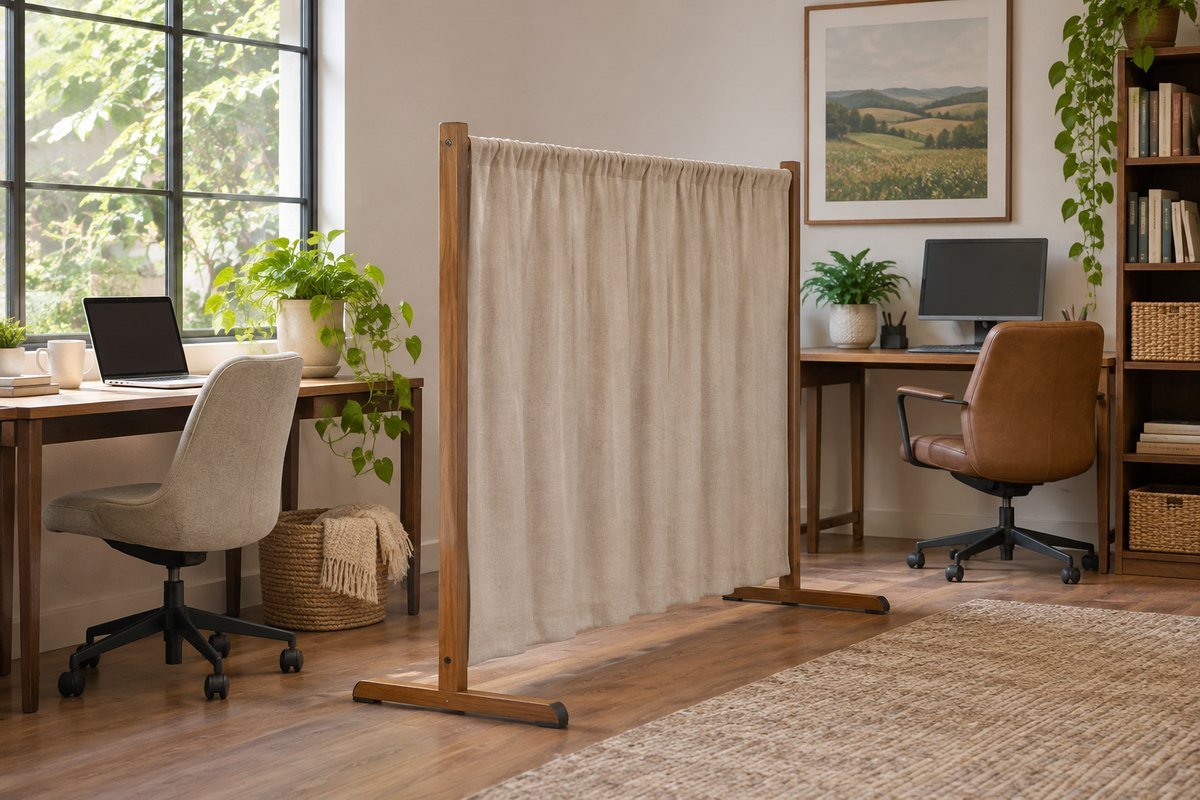
A partial-height textile boundary may be enough for a seated view, but it will not conceal the same area from someone standing. Compare both positions before choosing it. Use a system intended for the proposed arrangement, and keep the opening recognizable. Choose full-height visual screening only when it suits the task and the room's required functions remain usable.
22. Keep the hem clear of the ordinary route

Decorative pooling may be inconvenient where a divider opens and closes frequently. Choose the finished length from the actual mounting point, floor and manufacturer's guidance. Check the full travel, including uneven areas and nearby furniture. Keep cleaning and daily movement in mind rather than copying the fabric length of a styled room with different conditions.
23. Review daylight and room use with the curtain closed

A divider can look useful when parked yet make one activity area difficult to use when closed. Check the actual light, controls, doors and occupied furniture on each side. Keep essential room functions available without moving the curtain every few minutes. If the line creates a dark or awkward pocket, shorten it or reconsider the layout before adding more layers.
24. Make opening and care part of the routine

Choose a configuration that can be operated and maintained as the exact product permits. Keep fabric care instructions, component details and installer information together. Review the layout after changing furniture or floor coverings. The strongest room divider curtain ideas remain easy to open, park and live beside; reduce the arrangement if ordinary use continually disrupts it.
A closed-line and open-stack worksheet
Sketch the room, the activities on both sides and the proposed curtain travel. Record the real fabric stack at each end, the opening position, furniture movement and required access. For a hypothetical 120-inch span, two 20-inch parked stacks would leave an 80-inch interval between them if nothing else occupies that span. This arithmetic is not a required passage width, a fabric allowance or a system specification. Confirm actual stack dimensions, hardware and room requirements before ordering. Add a day-and-evening sample check, care method and a place to keep the exact component instructions.
A practical next step
Choose room divider curtain ideas from the view you need to change, the space available for fabric and the way the room works every day. Keep the boundary as small as useful, verify the complete system and test both open and closed conditions. Flexible separation succeeds when the room remains convenient on either side.
For the surrounding room, compare curtains with other room-divider options. coordinate the fabric with living room curtains.
The images are original AI-generated design concepts, not photographs of tested products or verified installations.
Sources and care references
- IKEA: curtains and other flexible boundaries in shared rooms
- IKEA VIDGA guide: system components, mounting choices and planning obstructions
Optional digital guide for this topic
If you prefer a structured workbook, explore this related paid guide.