Winter container garden ideas need a clear first decision: are you growing living plants through local winter, or arranging cut material for seasonal decoration? The two can look similar in a photograph but require different planning. Choose the plant or material, vessel and location together before adding color and texture.
These 26 concepts offer small patio, courtyard and entrance displays with practical care considerations. Living-plant examples assume locally suitable selections and an appropriate protection plan. Cut-greenery examples are identified separately. None of the images establishes a plant’s identity, frost tolerance or performance in your climate.
Contents
- 1. Let one compact evergreen provide the main shape
- 2. Group separate pots when care needs differ
- 3. Use low contrasting foliage in a broad trough
- 4. Use pansies or violas only where winter conditions suit them
- 5. Give a shady position its own foliage palette
- 6. Contrast fine foliage with a quieter broad leaf
- 7. Keep evergreen herbs in a climate-appropriate display
- 8. Use a low ornamental rosette as a foliage accent
- 9. Plan a later bulb display without promising winter flowers
- 10. Use one well-proportioned vessel as the visual anchor
- 11. Use a matched pair only when the entrance has room
- 12. Arrange a small asymmetrical group on a patio
- 13. Give a narrow porch one restrained side planter
- 14. Turn the best side toward the main window view
- 15. Bring the winter focus into a courtyard corner
- 16. Choose cut greenery when a living display is impractical
- 17. Use a few restrained branches for vertical contrast
- 18. Add dried flower heads as one controlled texture
- 19. Keep pinecones as a decorative surface detail
- 20. Use green and pale stems for a quiet winter palette
- 21. Use red twig color without adding a berry claim
- 22. Contrast broad cut leaves with fine evergreen texture
- 23. Keep a seasonal display free of holiday hardware
- 24. Use a removable inner pot for a decorative outer vessel
- 25. Keep the drainage route accessible
- 26. Plan the next destination before buying the plants
Choose winter container garden ideas from the actual climate
Roots in aboveground containers can face greater cold exposure than roots in the ground. Iowa State Extension discusses protection for container-grown woody plants and perennials in its cold-winter context; do not assume a hardy garden plant can remain in any exposed pot. Where a living display cannot be cared for appropriately, a clearly identified cut-material arrangement may be a more realistic seasonal choice.
Choose a display type before choosing a color
- A suitable mild-winter position: Consider identified living plants with a local care plan.
- Severe cold and no suitable protected destination: Compare cut-material decor instead of assuming plant survival.
- Different light or moisture needs: Keep living plants in separate containers.
- A busy entrance: Choose one restrained side display with a clear route.
- A short seasonal display: Record its care, removal and next destination.
1. Let one compact evergreen provide the main shape
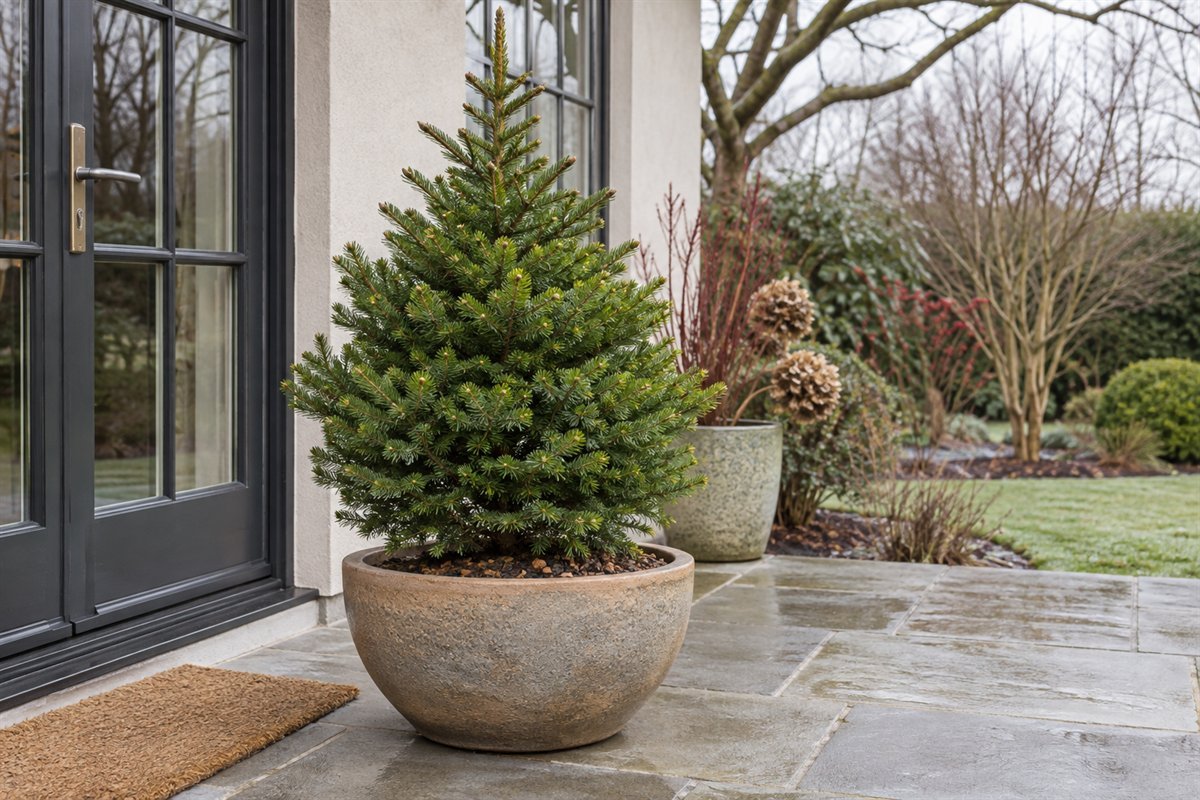
One compact evergreen can provide a calm outline where the identified plant and container suit local winter conditions. Compare the mature shape with the vessel and surrounding space. Keep the arrangement simple enough to inspect and care for. A green plant in a winter photograph does not prove that its roots will survive an exposed container in your region.
Try this: Confirm the plant’s container-specific winter plan before choosing the display position.
2. Group separate pots when care needs differ
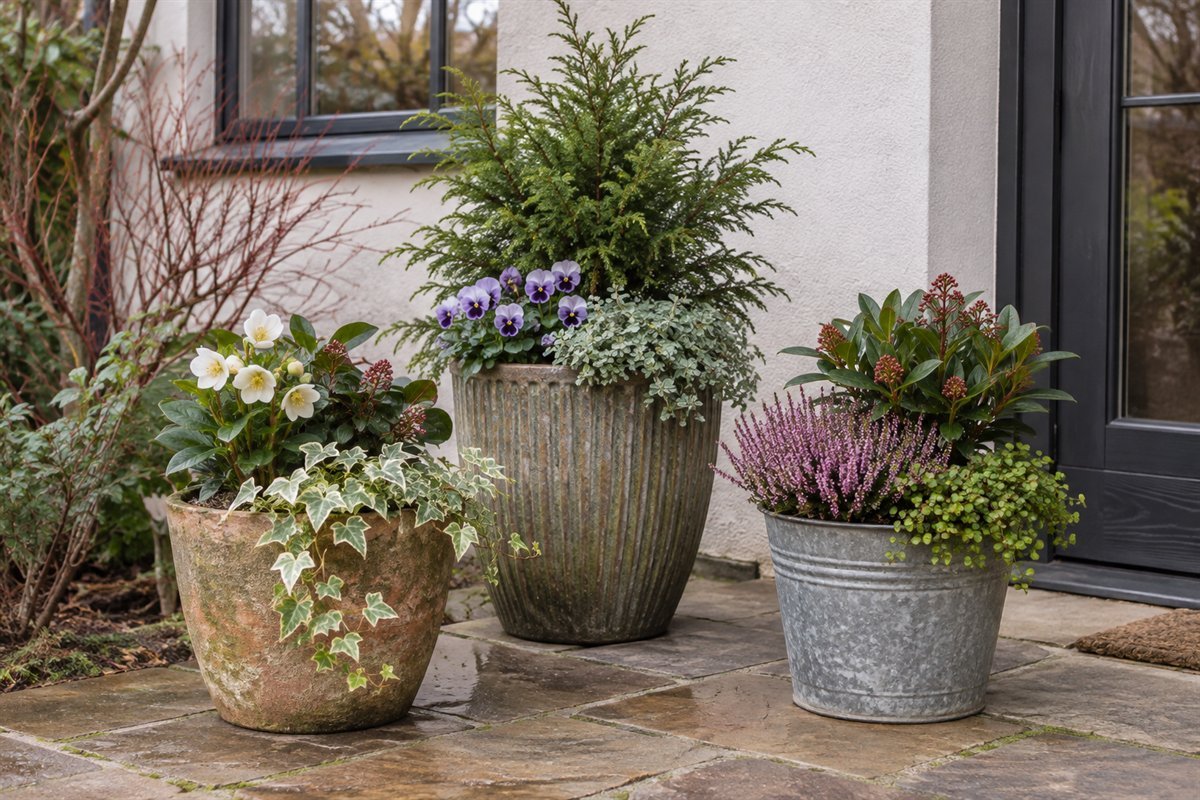
Separate containers let different plants keep their own growing medium, watering and relocation routines. Connect the group through vessel color or shape instead of placing incompatible plants in one root zone. Leave enough space to lift and inspect each pot. A visual collection can still be treated as several individual plants rather than one assumed care schedule.
Try this: Keep the care information with each pot before arranging the group.
3. Use low contrasting foliage in a broad trough
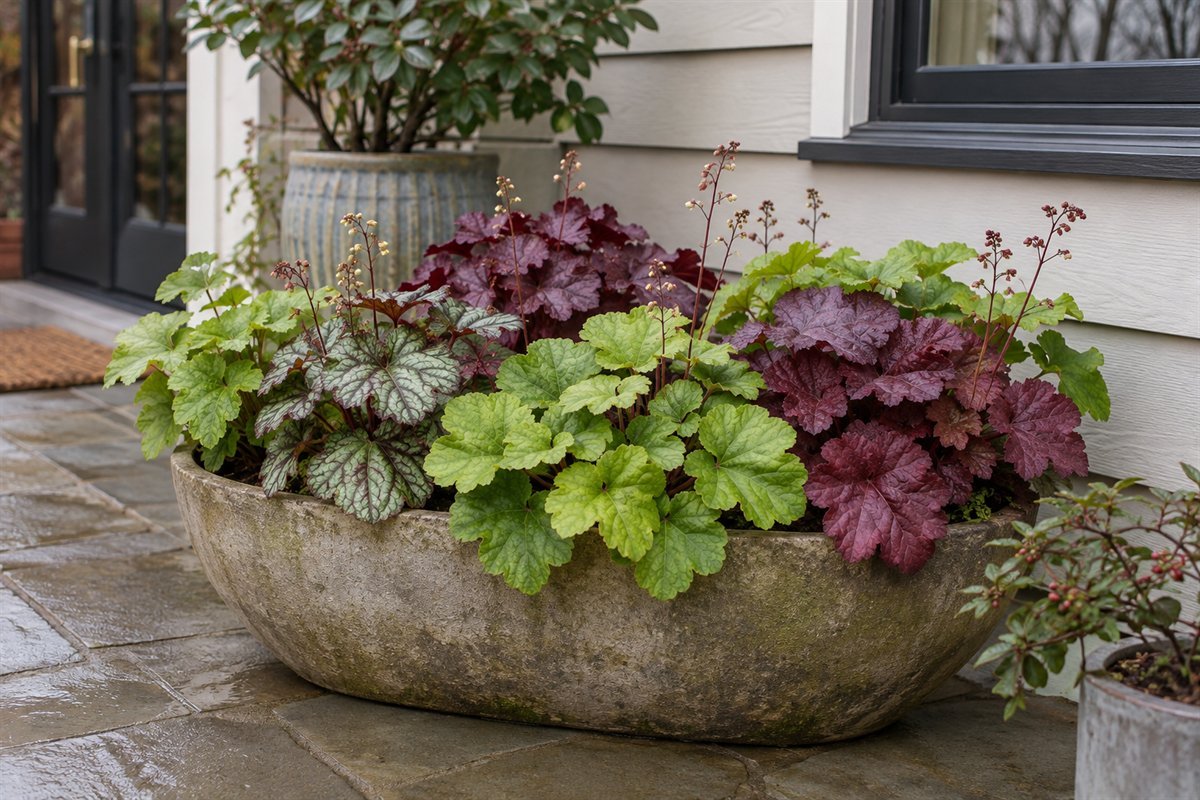
A low trough makes foliage visible from above and can fit a modest patio display. Compare the actual plant identities, mature spread and growing requirements before sharing a container. Green and burgundy tones can create contrast without relying on constant flowers. Keep the planting reachable so fallen leaves and changes in the growing medium can be noticed.
Try this: View the trough from the window or seat where it will usually be seen.
4. Use pansies or violas only where winter conditions suit them
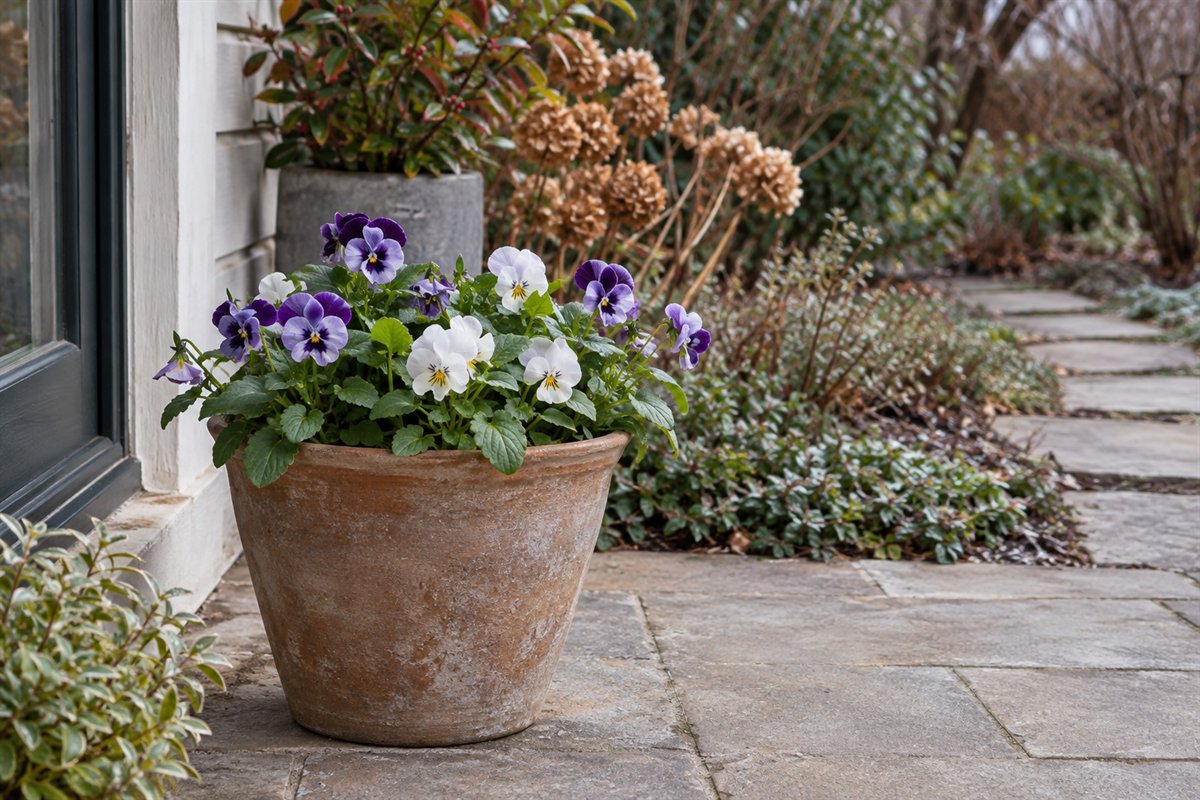
In suitable mild conditions, seasonal bedding can provide a small flower accent. RHS includes pansies and violas in its UK winter-container guidance, but that is not a guarantee for every US winter. Confirm the identified selection and local advice. Plan for the display to change rather than expecting the same amount of bloom through every cold spell.
Try this: Ask what flowering and protection are realistic in your location.
5. Give a shady position its own foliage palette
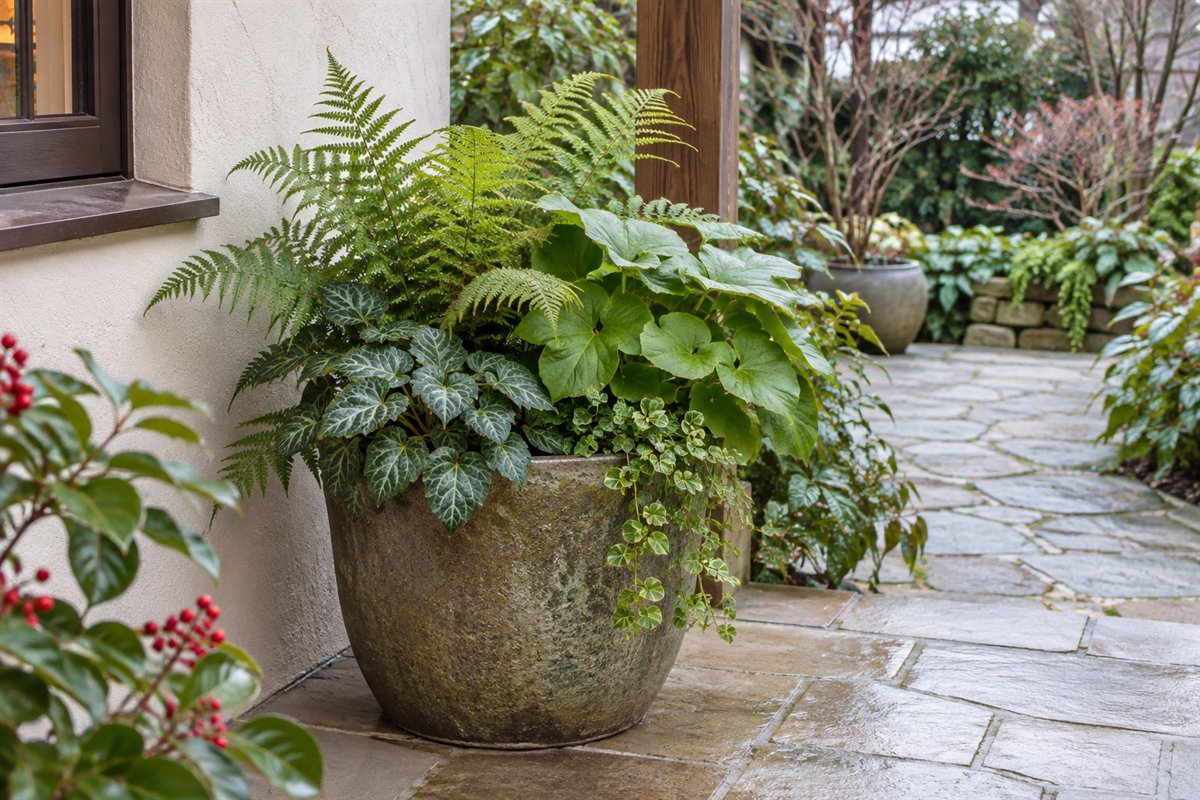
A shaded corner needs plants selected for its actual light and winter conditions. A restrained combination of compatible foliage forms can be more useful than copying a sun-loving display. Check the named fern or companion selection rather than treating all similar leaves as equally hardy. Keep access around the pot for ordinary inspection and care.
Try this: Record the winter light at the proposed position before buying the plants.
6. Contrast fine foliage with a quieter broad leaf
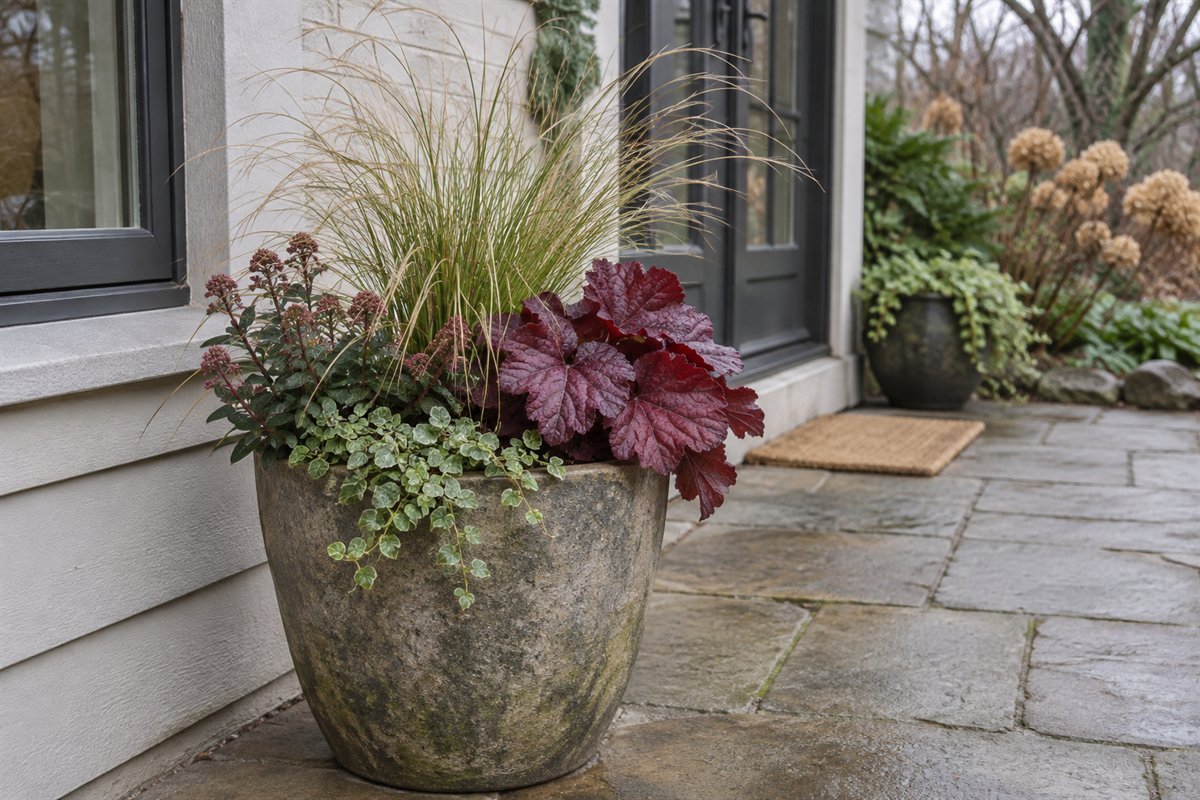
A fine-leaved clump can add movement beside broader foliage without making the arrangement crowded. Verify that the actual selections suit the same conditions if they share a vessel. Allow for their mature outlines and keep arching leaves outside the walking route. The contrast should remain readable when viewed from the normal arrival or window position.
Try this: Limit the arrangement to two or three clear foliage forms.
7. Keep evergreen herbs in a climate-appropriate display
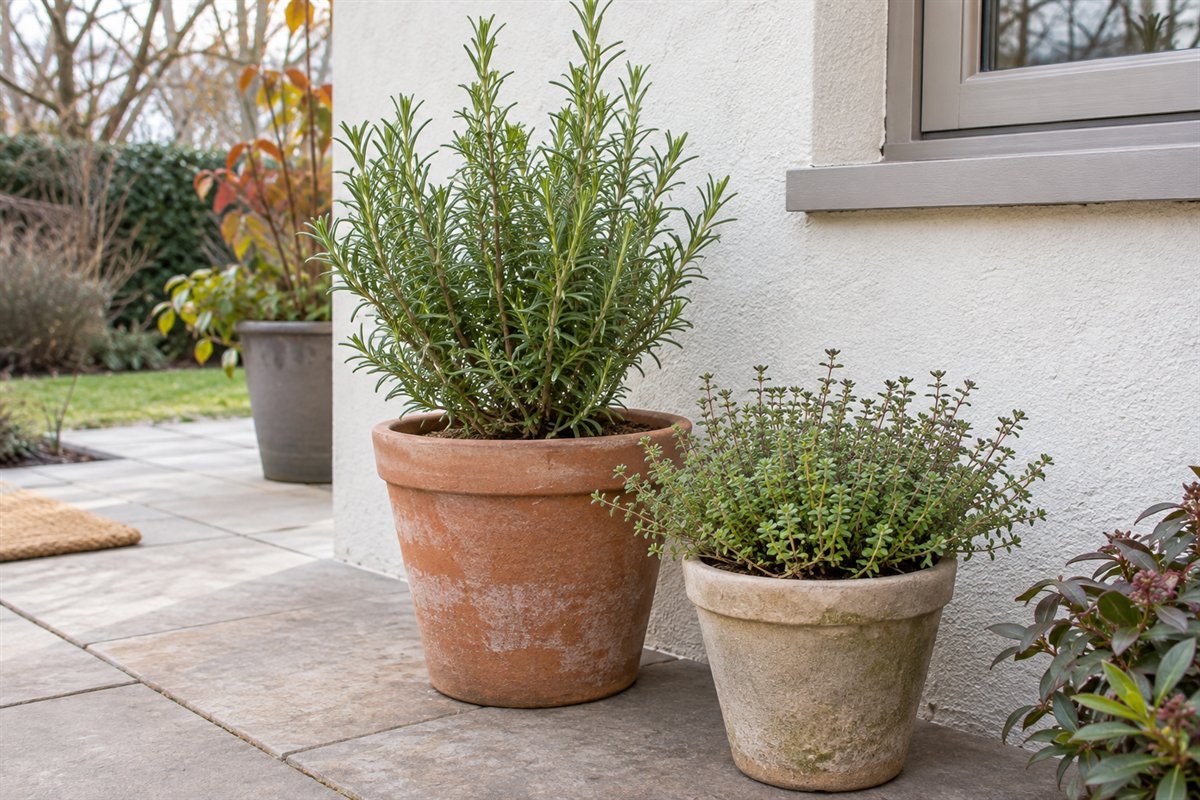
An evergreen herb display can remain useful visually in climates and exposures suited to the named plants. Keep their winter requirements separate from a general summer-herb routine. This composition guide does not identify plants for eating or establish that every rosemary selection can stay outside. If the chosen plants need another winter destination, plan that space before enlarging the group.
Try this: Keep the exact name and local protection advice with each container.
8. Use a low ornamental rosette as a foliage accent
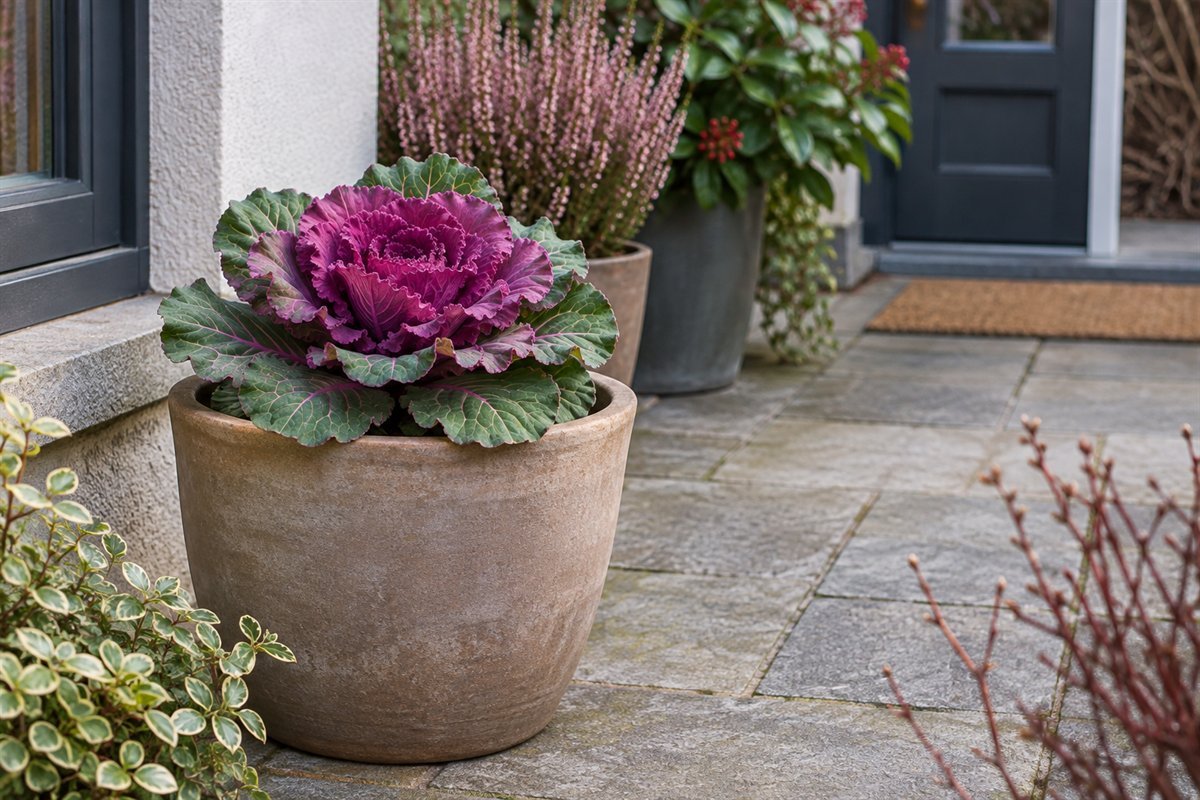
A low rosette can create a strong center without tall branches. Check the actual ornamental selection, expected size and local seasonal use before purchasing it. Keep the surrounding composition simple so the leaf pattern remains visible. Do not assume that an ornamental display is edible or that its appearance will stay unchanged throughout the winter.
Try this: Leave enough open space to see the complete rosette from above.
9. Plan a later bulb display without promising winter flowers
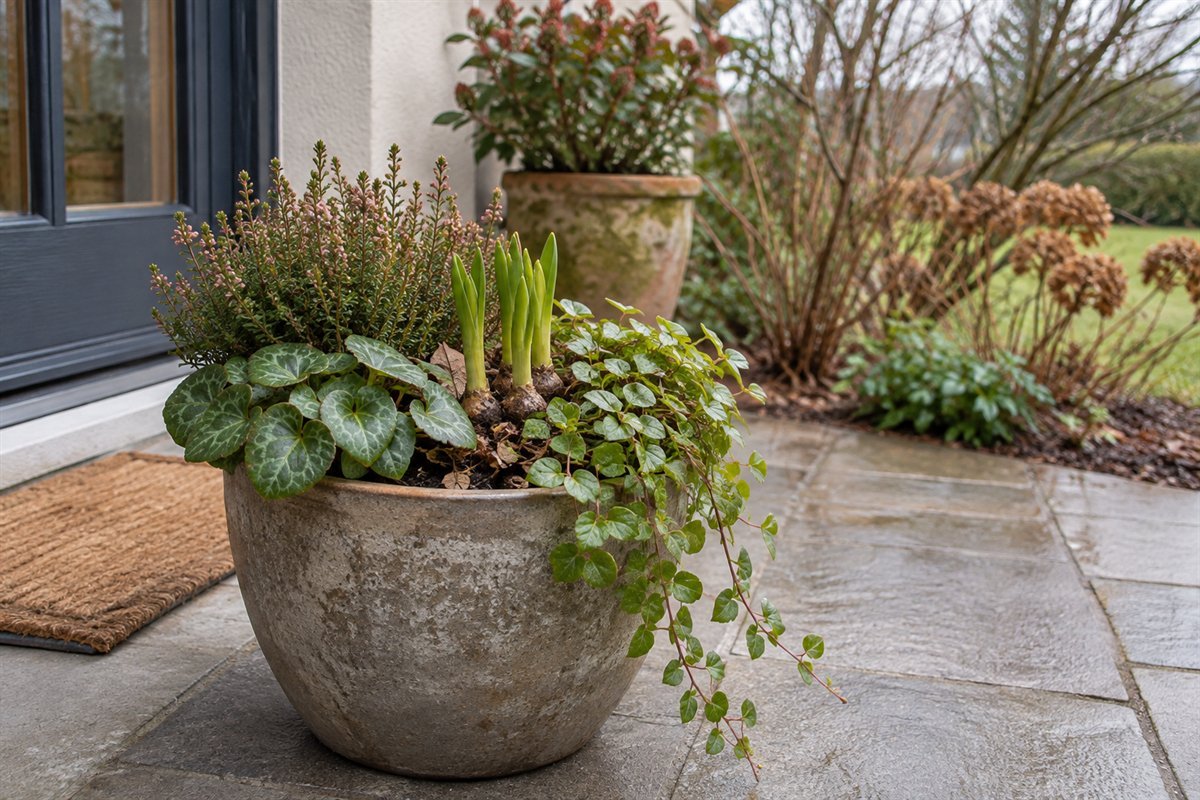
Bulbs can extend the interest into a later season where their planting and winter requirements are met. Record the actual type, local timing and expected flowering period. Avoid presenting every bulb as a midwinter flower. Keep the eventual leaves and future planting destination in the plan so the container remains manageable after the brief display.
Try this: Add the expected flowering window and aftercare to the container card.
10. Use one well-proportioned vessel as the visual anchor

A quiet vessel can give a small collection a deliberate center. Compare its full shape with the plant and the place where it will stand. Read the exact container guidance for exposure and winter use; a stone-like finish does not establish frost resistance. Keep the filled weight, drainage and handling route part of the choice.
Try this: Select the vessel for the actual plant and conditions before choosing its color.
11. Use a matched pair only when the entrance has room
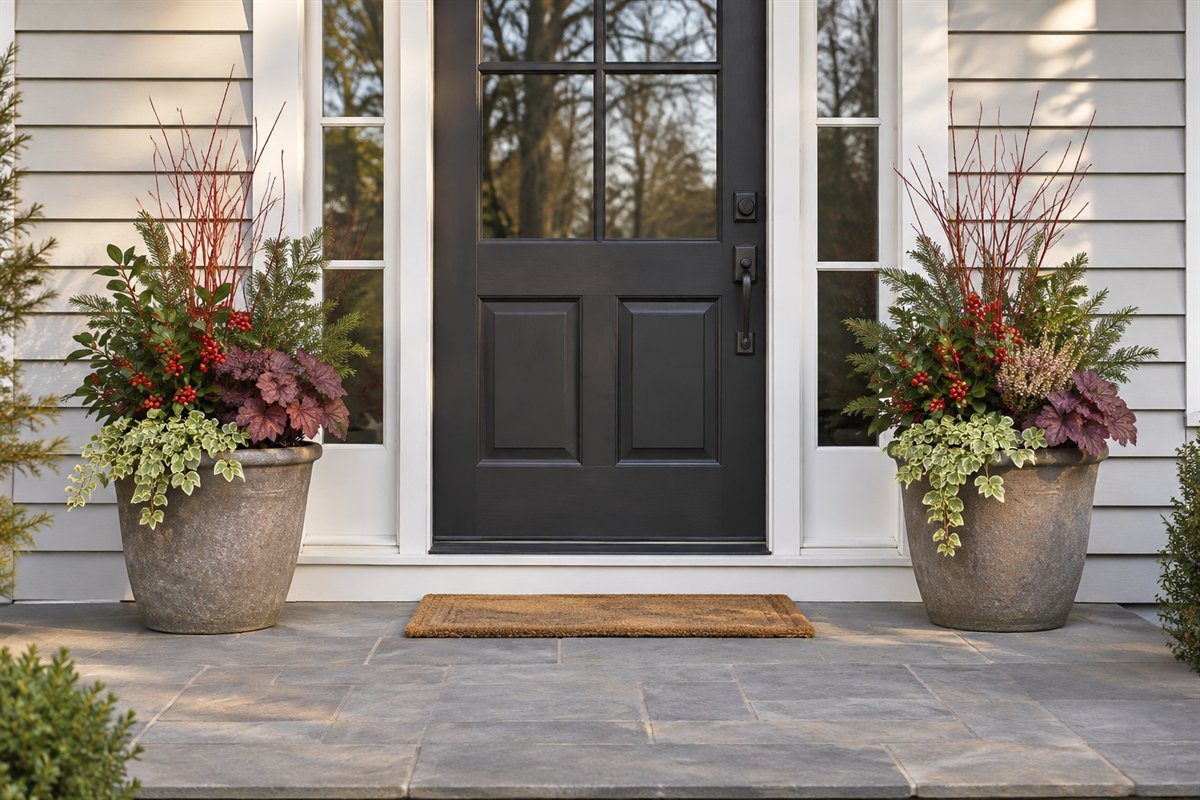
A pair can frame an entrance when both pots fit outside the door movement and normal arrival space. Compare the complete mature outline rather than the empty vessel alone. Each plant still needs suitable light and care at its own position. If a pair crowds the entrance, one considered side display may serve the space better.
Try this: Walk the entrance with the door fully open before keeping both pots.
12. Arrange a small asymmetrical group on a patio

A small asymmetrical group can make an unused patio corner feel intentional. Use a limited vessel family and keep the plants separately reachable. Avoid stacking pots or placing them on narrow improvised supports to create height. Let differences in natural plant form provide the variation while the complete group remains stable and easy to inspect.
Try this: Check that the rear pot can be removed without dismantling the display.
13. Give a narrow porch one restrained side planter

A single side planter can provide enough seasonal detail in a constrained entrance. Measure the position with the plant’s full spread and the person carrying ordinary items. Keep the door, handles and required access useful. Choose another location if the display only fits when nobody is using the porch.
Try this: Test the footprint with an empty vessel before buying the plant group.
14. Turn the best side toward the main window view

A container can be enjoyed most often from inside during cold weather. Orient the composition toward the actual window view while preserving the conditions the living plants need. Do not place a plant in unsuitable shade merely to improve the picture. Keep the care route accessible even when the display is intended mainly for an indoor viewer.
Try this: Assess the arrangement from the room before adding another pot.
15. Bring the winter focus into a courtyard corner

A courtyard corner can create a useful focal point when the containers fit the actual light, wind and rainfall pattern. Observe roof runoff and reflected exposure before placing them. An enclosed-looking space is not automatically frost-free. Keep the group modest enough to move or adjust where the real winter care requires it.
Try this: Watch where water falls during rain before fixing the display location.
16. Choose cut greenery when a living display is impractical

Cut greenery is a seasonal arrangement rather than a growing container garden. It can provide a winter outline where keeping a living plant in that position is unrealistic. Use appropriately sourced material and a suitable container and support arrangement. Minnesota Extension describes cut greens for porch displays; their care and longevity depend on material and weather rather than a universal all-winter promise.
Try this: Label the plan as a cut-material display so its care is not confused with a rooted plant.
17. Use a few restrained branches for vertical contrast
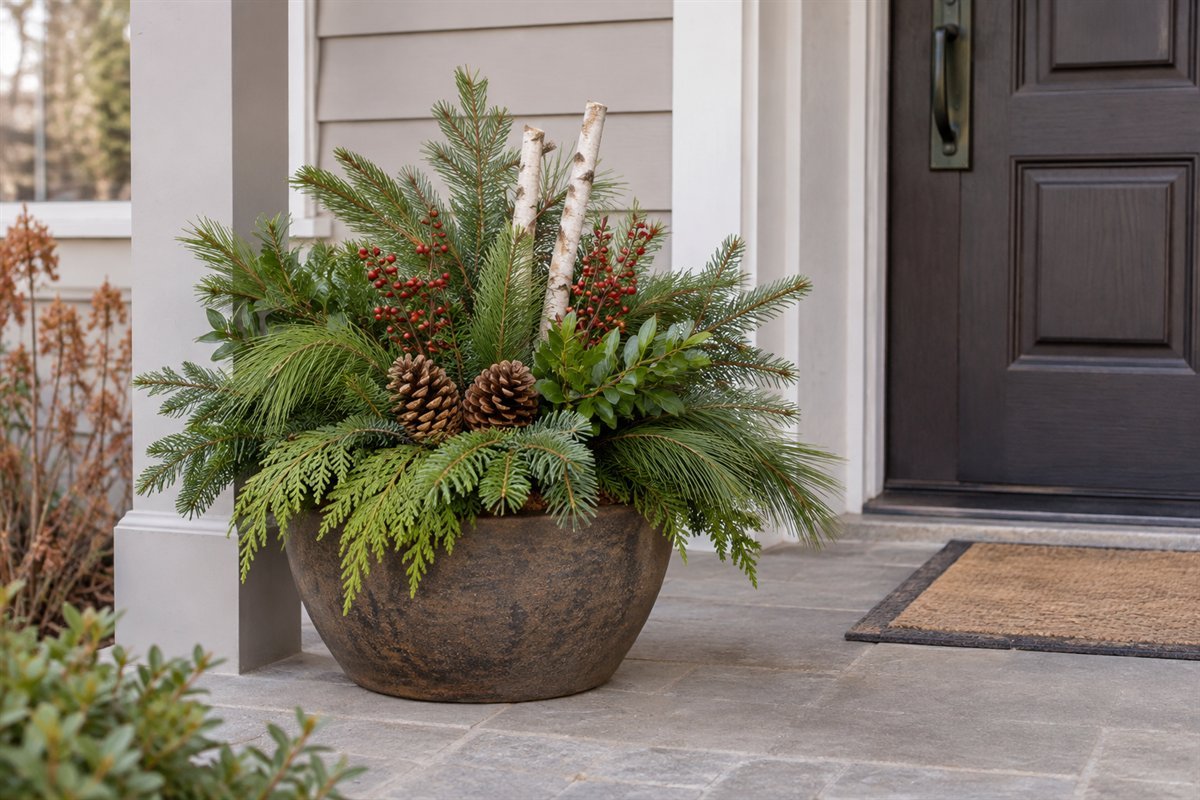
A few branches can provide height above a cut-greenery arrangement. Keep the actual support and exposure appropriate to the complete display. Do not assume that damp medium alone establishes stability. Keep projecting ends out of faces, doors and movement space, and simplify the height if the vessel or location cannot support the intended form.
Try this: Check the complete outline from the normal approach before adding more stems.
18. Add dried flower heads as one controlled texture

Dried flower heads can soften the outline of a cut-greenery display. Keep the texture to a few readable accents rather than covering the entire arrangement. Select material that is appropriate for the household and exposure, and inspect it as weather changes. A dried seasonal accent has different needs from a living flowering plant.
Try this: Remove excess texture until the main greenery shape remains clear.
19. Keep pinecones as a decorative surface detail
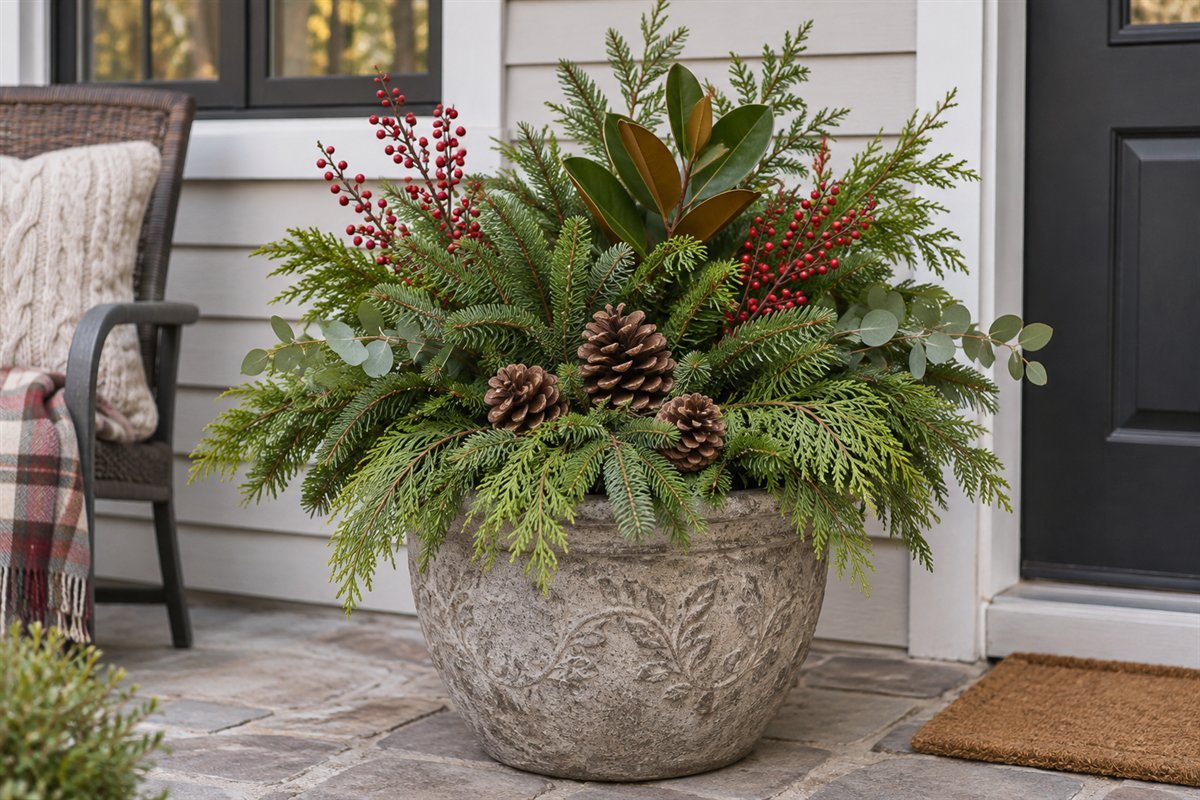
A few cones can provide a quiet brown texture beside green material. Treat them as a decorative detail, not a drainage recipe or a substitute for suitable growing medium. Keep loose pieces appropriate to the household and secure within the intended arrangement. Avoid adding so many small objects that ordinary inspection becomes difficult.
Try this: Begin with a small visible group and check whether it adds anything to the composition.
20. Use green and pale stems for a quiet winter palette

A green-and-pale palette can remain useful beyond a specific holiday. Let differences in foliage and stem texture provide the interest. Match the material and support to the real exposure, and keep the main form easy to inspect. A quiet palette often works best when there are fewer separate decorative pieces to secure and later remove.
Try this: Compare the arrangement against the wall or door that will form its background.
21. Use red twig color without adding a berry claim

Red twig color can create contrast without depending on berries or a large ornament collection. Use appropriately sourced identified material and a practical support arrangement. Keep the height restrained and the ends within the display area. Do not assume that natural material is suitable for every household simply because it is used decoratively.
Try this: Repeat the accent in only one nearby detail if the space needs a connection.
22. Contrast broad cut leaves with fine evergreen texture
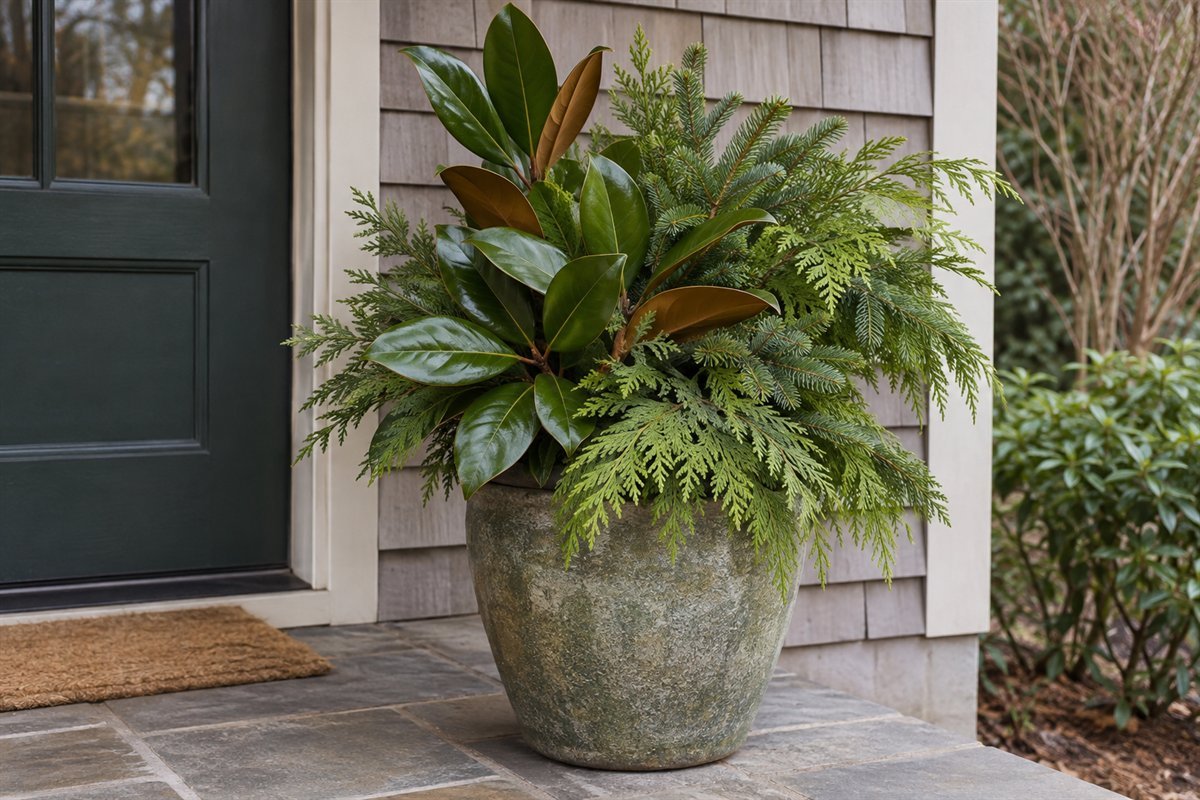
Broad and fine foliage can create a readable contrast in a cut-material arrangement. Confirm the material’s suitability for the intended exposure and source it responsibly. Keep the different textures distinct instead of blending everything into a dense ball. Check the arrangement as individual materials change rather than expecting them all to retain the same appearance.
Try this: Choose two clear textures before adding a third.
23. Keep a seasonal display free of holiday hardware

A winter display does not need to be dismantled entirely when a holiday passes. Begin with a simple natural outline and add only appropriate removable accents if wanted. This reduces the number of attachments and keeps later maintenance straightforward. The greenery still needs inspection and replacement when its condition calls for it.
Try this: Decide what remains after the seasonal accessories are removed.
24. Use a removable inner pot for a decorative outer vessel

A removable inner pot can separate plant care from the appearance of an outer vessel. Choose a drained inner container and prevent trapped water around it. Check both pieces for the actual winter use, including fit and handling. A decorative outer shell does not establish insulation or protect an unsuitable plant from freezing temperatures.
Try this: Test removal while both vessels are empty.
25. Keep the drainage route accessible

A winter container needs an appropriate route for excess water. Keep drainage openings and the area beneath the pot inspectable, following the exact container and support guidance. A suitable low support may help maintain that gap, but it must fit the filled vessel and location. Do not use decorative bottom fillers as a replacement for real drainage.
Try this: Check where water leaves the container before arranging the display.
26. Plan the next destination before buying the plants

A temporary display should have a realistic next stage. Some plants may remain in suitable containers, some may need an appropriate protected destination, and others may be replanted only when conditions and guidance support it. Record that plan before buying. The most useful winter container garden ideas consider the less visible care after the attractive display has finished.
Try this: Give each living plant an identified next destination and review date.
A winter container care card that separates plants from decoration
At the top of the card, mark living plant or cut-material arrangement. For a living plant, record the exact identity, cultivar where known and the source of local container-growing advice. For cut material, record its identity, source, placement and inspection plan. An evergreen appearance alone does not tell you whether the material is rooted.
Write the real winter conditions at the position: cold exposure, wind, light, roof runoff and any snow or de-icing activity nearby. Use the expected local conditions rather than a generic national winter label. The RHS winter-container plant list is UK guidance; check its suggestions against your own climate before copying a combination. This guide does not supply one watering interval, universal hardiness offset or guaranteed protection method.
For living pots, record the container’s specified winter use, drainage, growing medium and filled handling needs. Check moisture as appropriate to the plant and conditions rather than assuming winter removes the need for care. Keep excess water from remaining trapped around an inner pot. The RHS container guide distinguishes adequate drainage from an appearance that merely looks dry on top.
Keep the cold-protection decision separate from the decorative finish. A fabric wrap, nearby wall or covered porch does not by itself establish adequate protection. Iowa State’s overwintering methods and temperature guidance are tied to its described plants and conditions; obtain suitable local advice rather than importing a regional calendar or temperature range as a universal rule.
For cut displays, choose material and supports appropriate to the actual arrangement and exposure. Minnesota Extension describes evergreen boughs and other cut plant materials for seasonal containers. Avoid treating a decorative cone, branch or preserved surface as a drainage or plant-health solution. Inspect the changing material, keep it appropriate to the household and remove it when its condition calls for it.
Finally, record what happens next. Give living plants a realistic ongoing or protected destination, and plan appropriate handling of cut material and storage of the vessel. Keep the entrance and inspection route useful throughout the display. Begin with one manageable container and expand only when its care remains practical.
Can every garden-hardy plant survive winter in a pot?
No. A plant’s roots can be more exposed to cold in an aboveground container. Confirm the exact plant, pot, location and appropriate local protection plan.
Are cut evergreen porch pots living container gardens?
No. Cut-material arrangements are seasonal decoration. Identify them separately so their care is not confused with that of rooted plants.
Will a covered porch or decorative wrap make a container frost-proof?
Do not assume so. Assess the actual exposure and the plant and container requirements. Appearance and shelter alone do not establish winter survival.
A practical next step
Choose winter container garden ideas that match the actual climate and the care available. Keep living pots and cut-material displays clearly distinguished, preserve drainage and access, and decide the next destination before expanding the collection.
Front porch Christmas decor ideas for the wider entrance. Succulent garden ideas with plant-specific winter planning.
Images are original AI-generated concepts. Mild-weather living-plant scenes and cut-material arrangements do not prove species identity, cold tolerance, container rating, drainage or tested performance.
Sources and care references
- Iowa State Extension: cold exposure and protecting container-grown plants
- RHS: winter container selection in a UK gardening context
- RHS: containers, drainage and winter considerations
- University of Minnesota Extension: cut greenery for seasonal displays
Optional digital guide for this topic
If you prefer a structured workbook, explore this related paid guide.