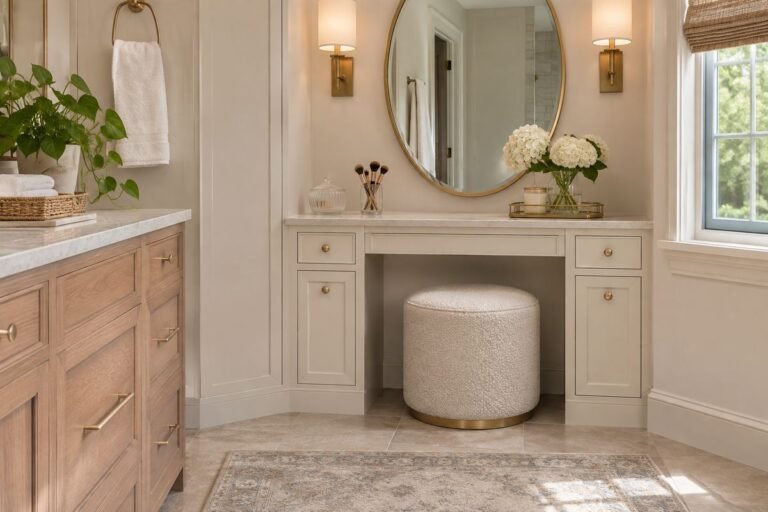
Toilet paper storage works best when there is one obvious place for the next roll and a separate plan for the larger reserve. Filling every available bathroom gap can make cleaning and movement harder without making refills any easier. Start with the quantity you need nearby and the rolls you actually buy.
The ideas below cover open and closed arrangements, small bathrooms and storage just outside the room. Keep paper in a suitable dry place, leave fixtures accessible and follow the complete instructions for any furniture or wall-mounted accessory. These are design concepts rather than installation diagrams or claims of hygienic protection.
Contents
- 1. Begin with one obvious spare-roll position
- 2. Use a slim closed cabinet when its full footprint fits
- 3. Give a vanity drawer a fitted roll section
- 4. Keep paper separate from under-sink pipework
- 5. Choose a removable box for an existing cabinet shelf
- 6. Use a lidded basket on a suitable dry shelf
- 7. Compare an open basket for a frequently checked supply
- 8. Try a purpose-made vertical spare-roll stand
- 9. Combine a working holder with a modest reserve
- 10. Use a horizontal cubby for a small readable row
- 11. Give a vertical cubby defined sections
- 12. Use an existing dry recess without forcing a new one
- 13. Consider a small closed wall cabinet on a suitable wall
- 14. Keep any over-toilet reserve shallow and restrained
- 15. Give a narrow cart a deliberate parked position
- 16. Use storage seating only when the room genuinely needs it
- 17. Move the bulk reserve to a nearby cupboard
- 18. Choose the reserve quantity before buying containers
- 19. Make the guest-bathroom spare easy to recognize
- 20. Keep paper separate from damp towel storage
- 21. Check a door-mounted organizer with the door closed
- 22. Compare jumbo rolls with the real opening
- 23. Connect the storage finish to one existing detail
- 24. End with an easy refill and cleaning routine
Check the roll before the organizer
Measure the actual roll width and outer diameter, then compare the container opening, usable depth and removal movement. Roll formats vary: Charmin's FAQ distinguishes its Mega Roll fit arrangements from a Forever Roll kit with a dedicated holder. That is a reason to check your own product, not a universal fit guarantee. IKEA's bathroom guidance also separates visible everyday storage from closed backup storage. Use that distinction to plan a modest working reserve before choosing a cabinet or basket.
Choose an arrangement that fits your situation
- Very small bathroom: Keep one obvious spare nearby and compare a suitable reserve location outside the room.
- Existing vanity storage: Test a fitted dry drawer section or removable shelf box with the real rolls loaded.
- Guest bathroom: Make the next roll easy to identify without opening private storage.
- New roll format: Recheck width, outer diameter, holder and container opening before buying more organizers.
1. Begin with one obvious spare-roll position

Give the next roll a predictable place that the people using the bathroom can identify without searching. Compare the position from normal use and from the refill route. Keep the spare separate from decorative objects that have to be moved first. Once that simple arrangement works, decide whether the room needs any additional reserve rather than filling a larger organizer automatically.
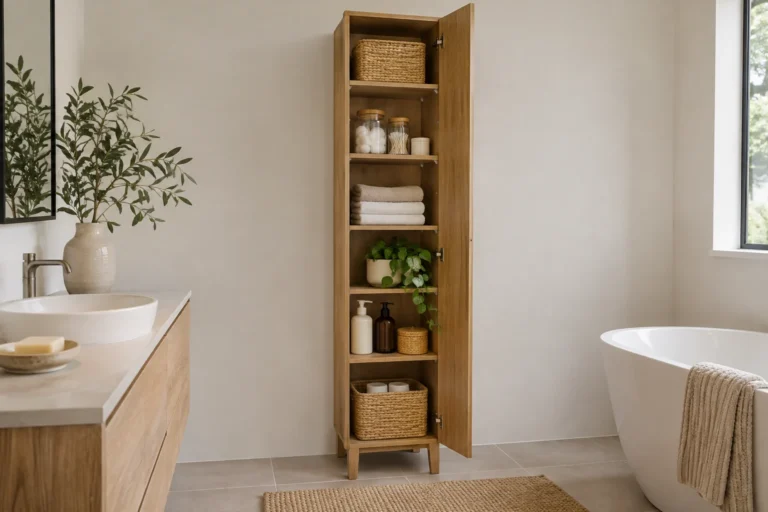
2. Use a slim closed cabinet when its full footprint fits

A narrow cabinet can keep a modest reserve out of sight while leaving the room visually calm. Check the complete assembled footprint, including feet, handles and the door opening. Compare it with the toilet, vanity and normal movement. A small width on a product listing does not show whether the door will open usefully in the actual space or whether the required anchoring can be provided.
3. Give a vanity drawer a fitted roll section

A suitable vanity drawer can hold spare rolls in a defined compartment beside other dry supplies. Measure the interior height and the space lost to drawer hardware before choosing the arrangement. Test closing it with the actual rolls in place. Keep the group easy to remove and avoid wedging paper so tightly that a refill leaves torn edges or requires rearranging every neighboring item.
4. Keep paper separate from under-sink pipework

If a suitable vanity cabinet is the available location, use a defined dry area that preserves access to plumbing. Check the actual conditions before adding paper and address leaks rather than hiding them behind a container. Keep the reserve separate from cleaning products stored according to their own requirements. A decorative basket does not make a damp or inaccessible cabinet an appropriate paper-storage space.
5. Choose a removable box for an existing cabinet shelf

A box can turn one shelf section into an understandable reserve without changing the whole cabinet. Choose the container from the roll size and the space needed to grasp it. Test removing it with adjacent contents in place. Keep its purpose limited to paper so the next refill does not require sorting through toiletries, spare packaging and unrelated items that gradually accumulated in the same box.
6. Use a lidded basket on a suitable dry shelf

A lidded basket can quiet the appearance of a small reserve when it fits the shelf and the room's conditions. Check the interior shape, including any taper, before counting how many rolls fit. Leave room to lift the lid without shifting another shelf. The lid is a visual and containment choice; it should not be described as making the paper waterproof, sterile or suitable for persistent dampness.
7. Compare an open basket for a frequently checked supply

An open basket makes the remaining quantity easy to see. Use it where the paper stays suitably dry and can be lifted out for ordinary cleaning. Keep the collection modest rather than building a high pile above the rim. If the location receives splashes or the basket makes floor cleaning awkward, choose another suitable position instead of relying on the attractive open display.
8. Try a purpose-made vertical spare-roll stand

A vertical stand can gather several rolls in a small visible footprint. Compare the base, total height and the actual removal movement with the room. Check the product's intended use and stability rather than judging only its thin center pole. Place it outside the route where a foot, door or cleaning tool would repeatedly catch the base.
9. Combine a working holder with a modest reserve

A holder designed to include spare rolls can reduce the number of separate accessories around the toilet. Check how the active roll and reserve are accessed, and confirm the exact roll dimensions supported by the product. Follow its complete mounting or assembly guidance. A combined form is useful when both functions remain straightforward, rather than when the spare stock blocks the roll currently being used.
10. Use a horizontal cubby for a small readable row

A broad shallow compartment can keep a short row of rolls visible without stacking them into a tower. Check the usable depth so the rolls do not project awkwardly beyond the front. Keep the opening easy to clean and the quantity related to the refill routine. The compartment does not need to be completely full to look intentional when its purpose is clear.
11. Give a vertical cubby defined sections

A vertical arrangement can suit a narrow cabinet side when individual openings fit the real rolls. Compare retrieval from the lower and upper sections before deciding the full height. Avoid creating a decorative grid that holds paper tightly but makes it difficult to remove. Keep any fitted furniture design consistent with the existing room, support requirements and access needed for nearby fixtures.
12. Use an existing dry recess without forcing a new one

An existing suitable recess can provide a defined paper-storage position away from wet areas. Check its depth, finish and ordinary exposure to splashes before assigning it that role. Keep the reserve small enough to retrieve directly. Creating a new wall recess involves a separate project assessment; do not cut into a wall or conceal services simply because a concept image shows an attractive niche.
13. Consider a small closed wall cabinet on a suitable wall
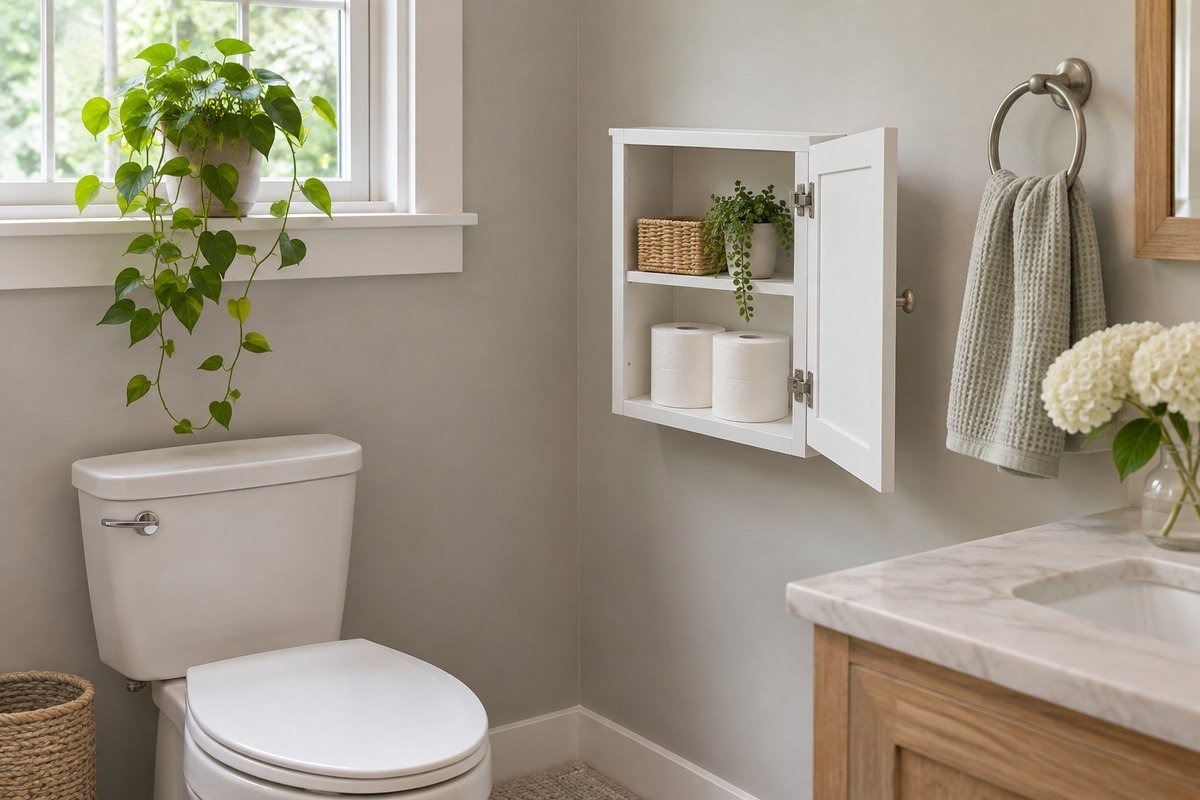
A wall cabinet can leave the floor clearer while keeping the reserve behind a simple front. Compare the projection and door movement with normal use of the room. Follow the exact cabinet's fixing and load instructions for the actual wall. Choose another location if the door crosses a mirror, crowds the toilet or makes the contents difficult to reach.
14. Keep any over-toilet reserve shallow and restrained

A suitable shelf above the toilet can hold a small paper group where access and normal movement allow it. Check tank-lid removal, controls and the full shelf projection before choosing the arrangement. Keep heavy or fragile display objects elsewhere. If this position feels awkward during use or maintenance, a side cabinet or reserve outside the bathroom may be a more practical answer.
15. Give a narrow cart a deliberate parked position

A bathroom cart can gather a modest reserve when it fits the real room and its intended use. Include handles, wheels and the movement needed to take out a roll. Keep its parked position outside the door and chair or toilet movement. A slim cart is less useful if it must be rolled into the hallway whenever someone wants to clean or use a fixture.
16. Use storage seating only when the room genuinely needs it

A suitable storage bench can serve a larger bathroom when both the seating and the compartment have a real role. Check the furniture's bathroom suitability, loading and opening instructions. Keep paper in a dry contained section and test the lid movement with the room furnished. Do not introduce a bench into a small passage merely to gain a little more reserve capacity.
17. Move the bulk reserve to a nearby cupboard
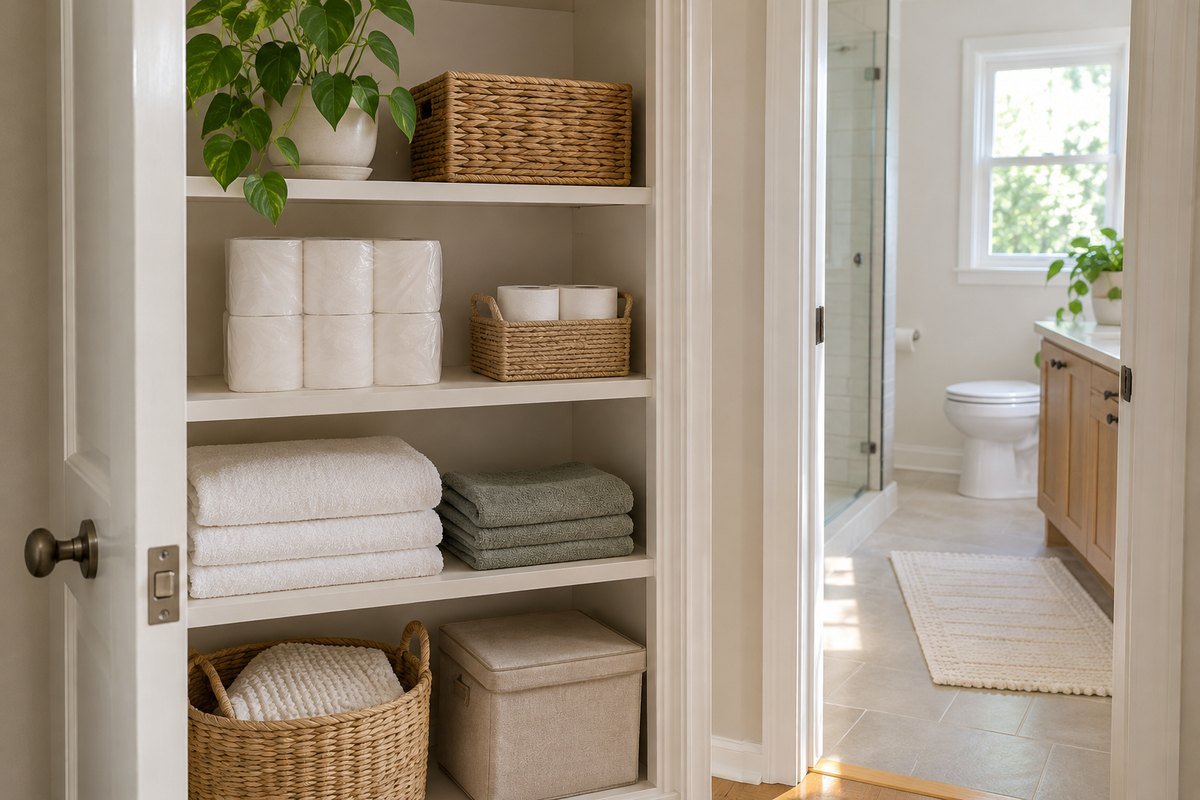
The bathroom does not need to hold every roll in the household. A suitable dry cupboard nearby can keep the larger reserve while the room carries only the next few refills. Make the route simple enough that replenishing the bathroom becomes an ordinary habit. This can free useful space without buying another organizer or filling an awkward gap beside the toilet.
18. Choose the reserve quantity before buying containers

Review how often the household refills the bathroom and how much nearby stock is actually useful. Choose a container for that working quantity rather than the largest available basket. Keep additional suitable stock elsewhere. This makes the reserve easier to inspect and reduces the chance that a deep container hides rolls beneath a layer of unrelated bathroom supplies.
19. Make the guest-bathroom spare easy to recognize

A visitor should be able to find a spare without opening several private cupboards. Choose a modest obvious position suited to the room's dry conditions and normal use. Keep it visually distinct from decorative containers that might reasonably be left untouched. A clear spare-roll place can be more useful than a decorative sign or an elaborate display around the toilet.
20. Keep paper separate from damp towel storage
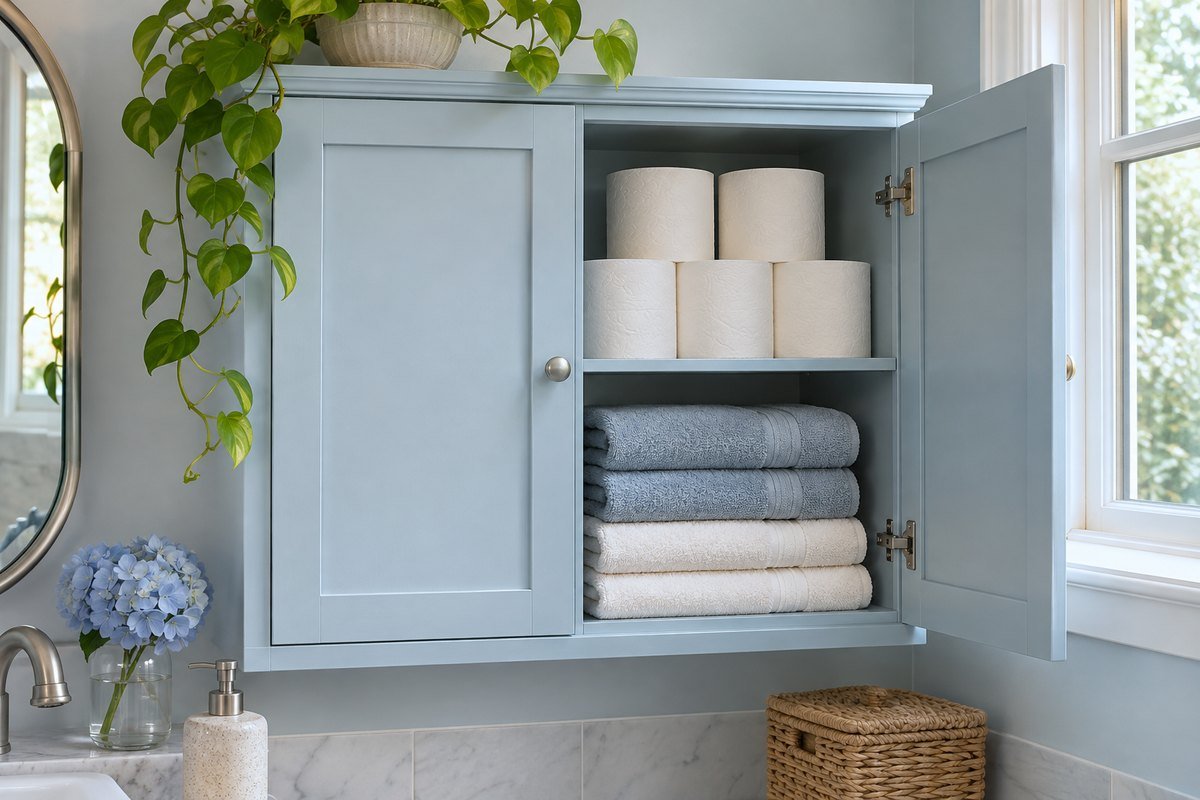
A shared shelf can still have distinct dry-supply and towel roles. Keep paper away from the place where a damp towel is returned or draped. Compare the shelf through the normal daily routine, not only when every textile is freshly folded. If the two uses repeatedly overlap, move the paper rather than expecting a divider alone to correct the room's moisture and storage habits.
21. Check a door-mounted organizer with the door closed

A purpose-suitable organizer inside a cabinet door can use otherwise overlooked space. Follow its compatibility, fixing and loading instructions, then test the complete door movement with rolls loaded. The organizer should not strike a shelf, pipe or neighboring container. A shallow accessory may still project far enough to prevent a useful closure once a larger roll is placed inside.
22. Compare jumbo rolls with the real opening

A container that fitted a previous paper format may be awkward after the household changes rolls. Test the current outer diameter and width against the opening, lid and any center post. Leave enough practical room to remove the roll without compressing it. Do not rely on the word universal in a decorative description when the actual product dimensions and instructions are available to compare.
23. Connect the storage finish to one existing detail

A simple wood, white or dark-metal finish can relate the reserve storage to the vanity, mirror or working roll holder. Choose the suitable container first and refine the finish afterward. One controlled repeat can make the arrangement feel intentional without adding several matching accessories. Keep decorative objects from occupying the space that makes the paper easy to retrieve.
24. End with an easy refill and cleaning routine

Review the arrangement after a normal week. Notice whether people can find the spare, return the container and clean around the storage without moving several other objects. Refill the modest working supply before it becomes an empty decorative basket. If rolls keep appearing on the floor or tank, improve the location and access rather than simply increasing the size of the reserve.
A roll-fit and refill worksheet
Record the roll width and diameter, working reserve quantity, container interior dimensions and usable cabinet opening. Add the space needed to lift a lid or remove a basket. Test cabinet-door movement, normal toilet use, tank access and the cleaning route with the storage occupied. Choose where the larger reserve belongs and when the bathroom supply is refilled. Recheck the arrangement if the household changes paper format or the room develops persistent dampness.
A practical next step
Choose toilet paper storage ideas around a modest nearby reserve and a refill routine the household can maintain. Check the real roll size, keep paper in suitable dry conditions and preserve comfortable use and maintenance. A small clear arrangement can serve the bathroom better than a larger display fitted into every available gap.
For the surrounding room, compare over-toilet storage and access. Plan practical bathroom under-sink storage.
The images are original AI-generated design concepts, not photographs of tested products or verified installations.
Sources and care references
- Charmin: product formats and roll-holder fit questions
- IKEA: open everyday and closed backup bathroom storage
Optional digital guide for this topic
If you prefer a structured workbook, explore this related paid guide.