You look at your yard and something feels off. The plants are there, the lawn is mowed, and yet the whole thing still looks like it happened by accident. I spent two full seasons trying to fix mine before I realized the problem wasn’t the plants — it was the decisions underneath them.
Great landscaping isn’t about spending more. It’s about understanding a handful of principles that make everything look intentional. These 18 ideas transformed my yard from forgettable to genuinely beautiful.
1. Why Your Yard Looks Unfinished No Matter What You Plant
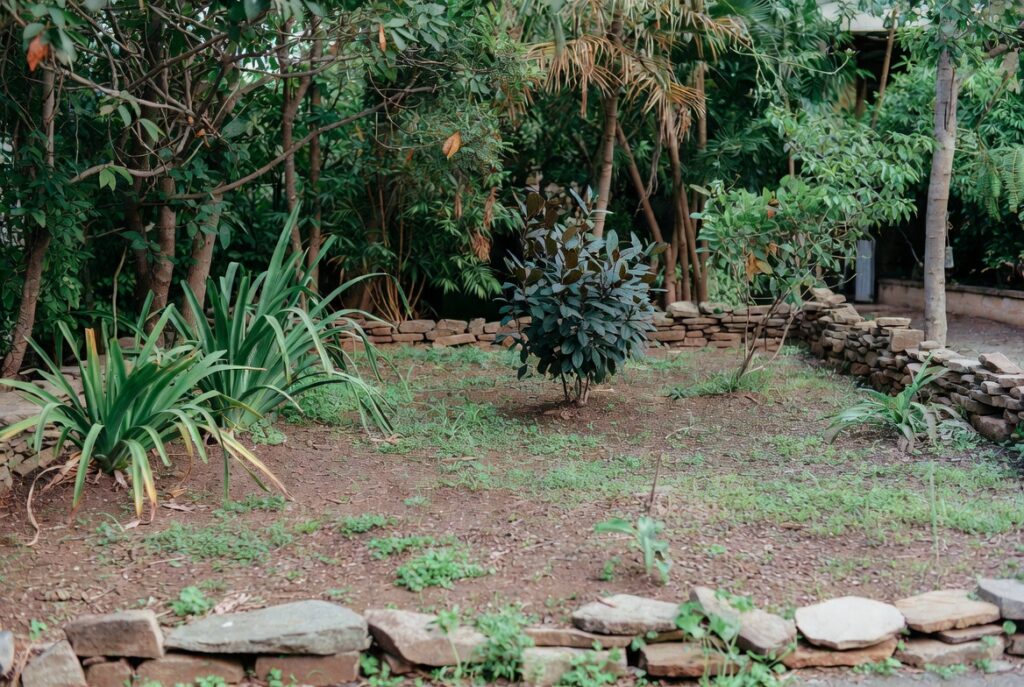
The most common landscaping mistake I see is planting without a plan — a shrub here, a flower there, no visual thread connecting them. A yard reads as finished when it has defined zones, clear edges, and deliberate repetition. Without those bones, more plants just add more chaos.
Smart tip: Before buying anything, draw a rough zone map of your yard — dining, planting, lawn, path. One afternoon of planning saves seasons of regret.
Mistake to avoid: Don’t add plants to fill empty space. Empty space is often what a yard needs most to feel calm and designed.
2. The Hardscape Ratio That Makes Every Yard Look Designed
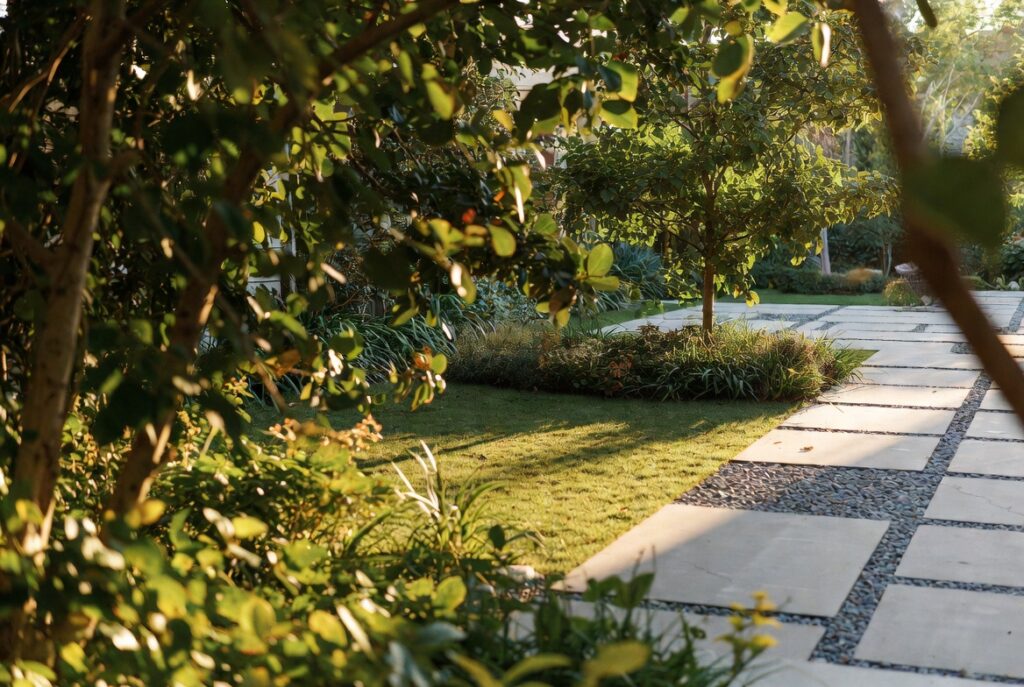
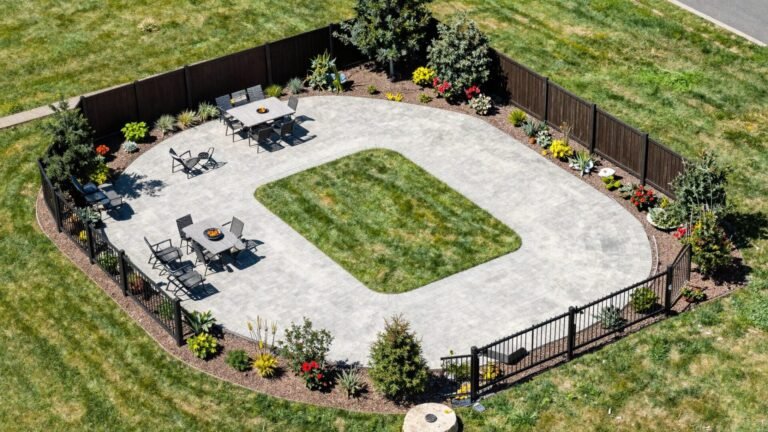
In my experience, the yards that look most polished always have a clear balance between hard surfaces — stone, gravel, wood — and soft planting. Too much lawn reads as empty; too much hardscape reads as cold. The sweet spot most landscape designers use is roughly 60% soft to 40% hard.
Smart tip: Add one small stone or gravel zone to an all-lawn yard — a beginner-friendly landscape fix that instantly adds structure.
Mistake to avoid: Don’t pave everything in the name of “low maintenance.” A yard with no plants loses its soul entirely.
3. How Gravel Landscaping Replaced the High-Maintenance Lawn
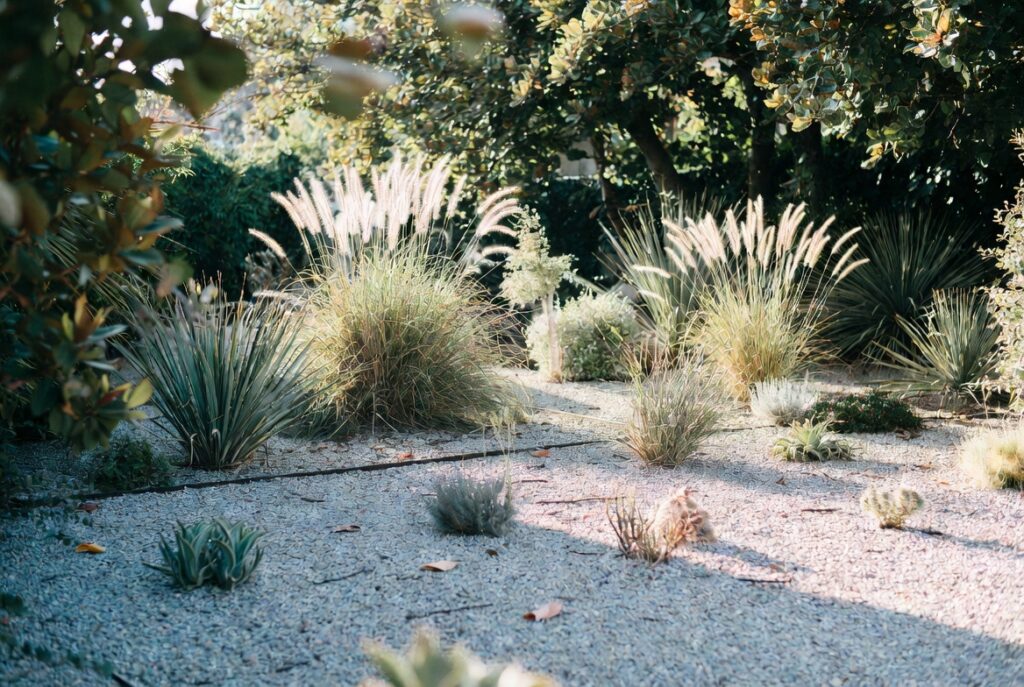
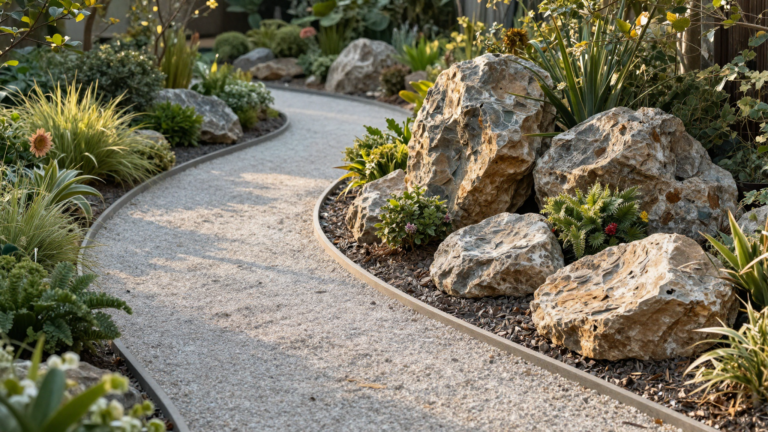
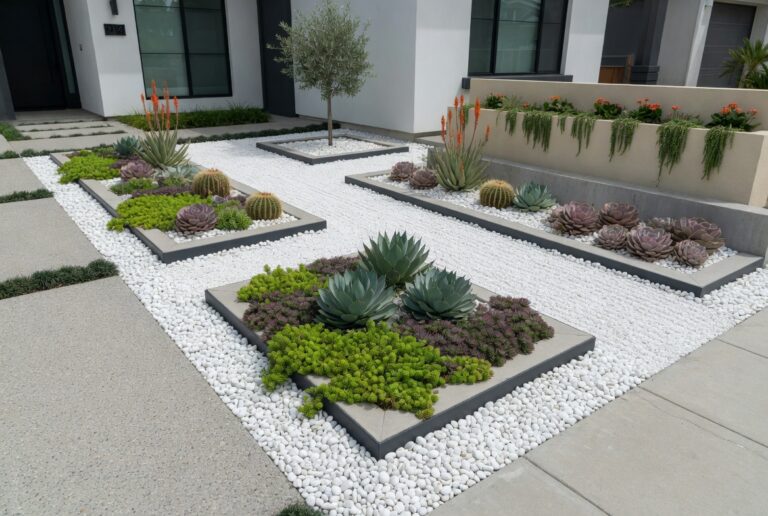
Gravel is the fastest-rising landscaping material of 2026 — and for good reason. It’s drought-tolerant, weed-suppressing, visually clean, and works in every climate. We found that combining decomposed granite or pea gravel with drought-resistant plants creates a modern yard that looks intentional and requires almost no upkeep.
Smart tip: Replace one high-maintenance lawn patch with gravel and three ornamental grasses — minimal investment, lasting beauty from year one.
Mistake to avoid: Don’t skip the landscape fabric underneath. Without it, weeds push through gravel within one season.
For a deep dive into water-wise landscaping that still looks stunning, our guide to xeriscape ideas for a water-wise landscape covers the full approach beautifully.
Loving These Ideas? Get the Step-by-Step Guide
Grab the full 5-day eBook and turn these ideas into a finished room.

4. The Anchor Plant That Makes Everything Else Fall Into Place
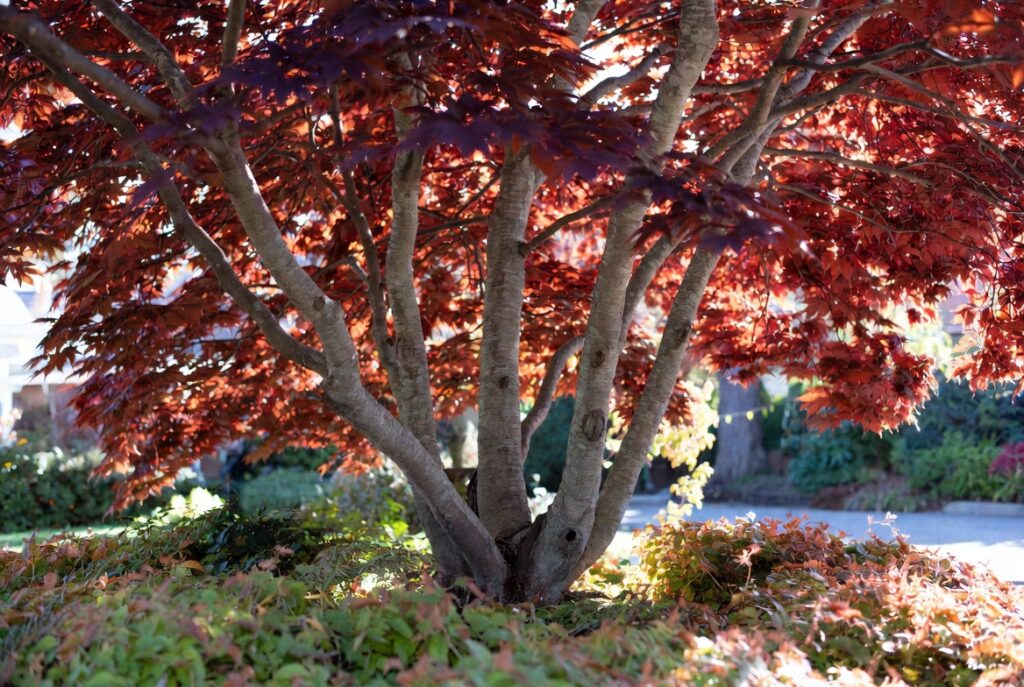
Every great landscape has at least one anchor — a specimen tree, a large ornamental grass, a dramatic shrub — that the rest of the planting orbits around. Without an anchor, a yard feels like a collection. With one, it feels like a composition. The first anchor plant I added made my whole yard make sense.
Smart tip: One large specimen plant — a Japanese maple, olive tree, or Karl Foerster grass — anchors everything around it immediately.
Mistake to avoid: Don’t place the anchor dead center. An off-center position reads more natural and creates better visual flow.
5. Why Landscape Lighting Is Worth Every Penny
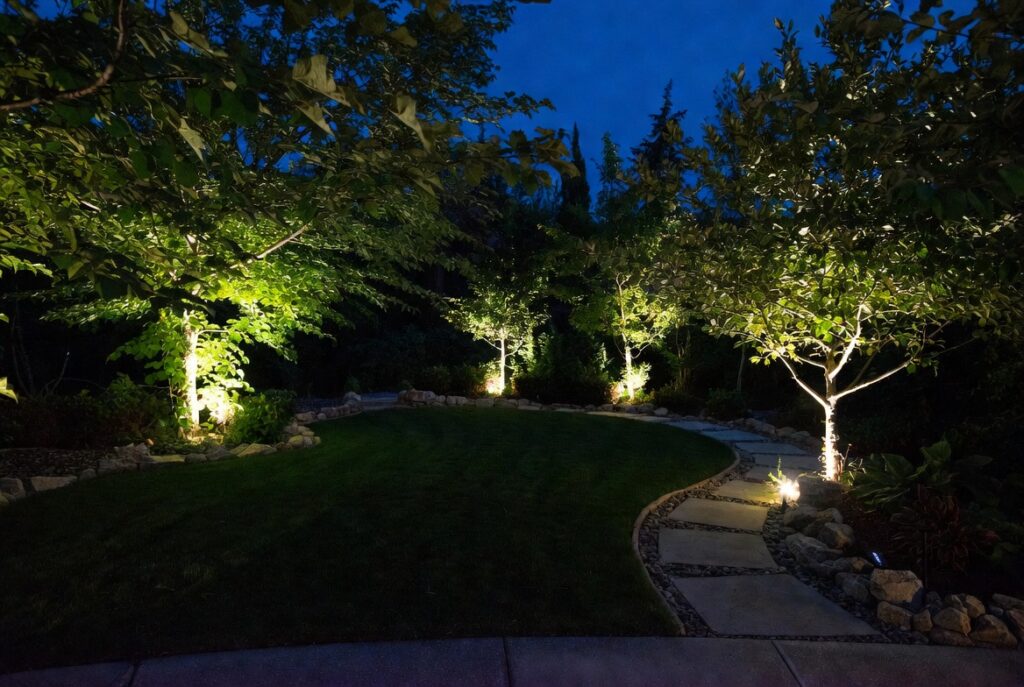
A beautifully landscaped yard that goes dark at sunset is a yard you stop using half the day. Low-voltage path lights, uplighting on specimen trees, and warm accent lighting transform the same plants into something completely different after dark. The first night I lit my yard properly, it felt like a different property.
Smart tip: Solar uplights on two or three key plants cost almost nothing and work immediately — no wiring, no electrician.
Mistake to avoid: Don’t use cool white bulbs outdoors. Warm amber light is what makes a lit landscape feel inviting rather than institutional.
6. The Retaining Wall That Solves a Sloped Yard Forever
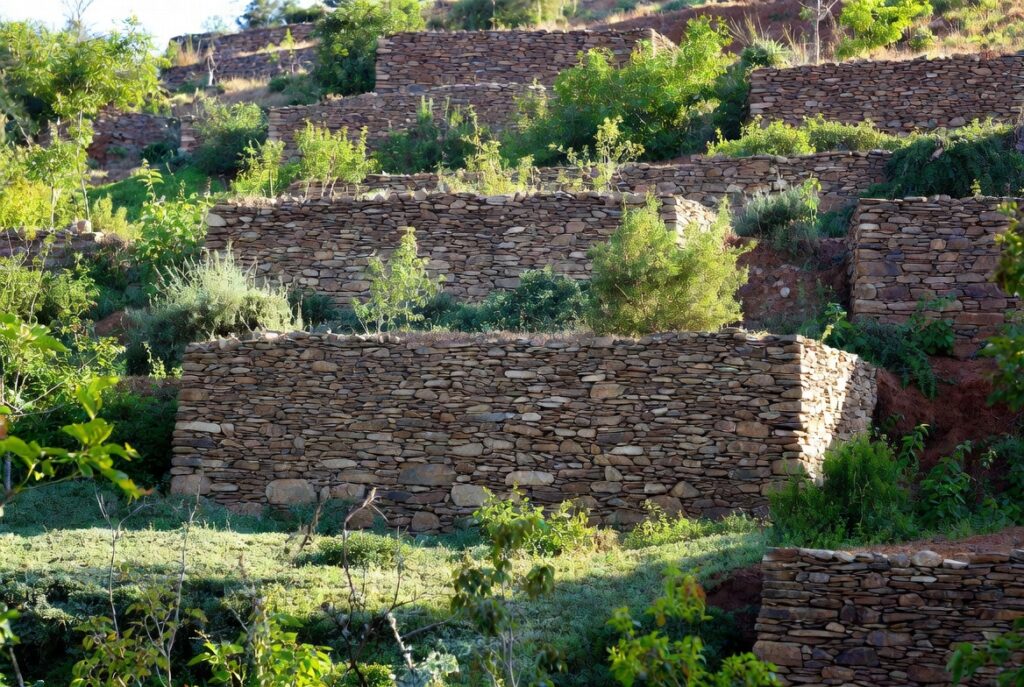
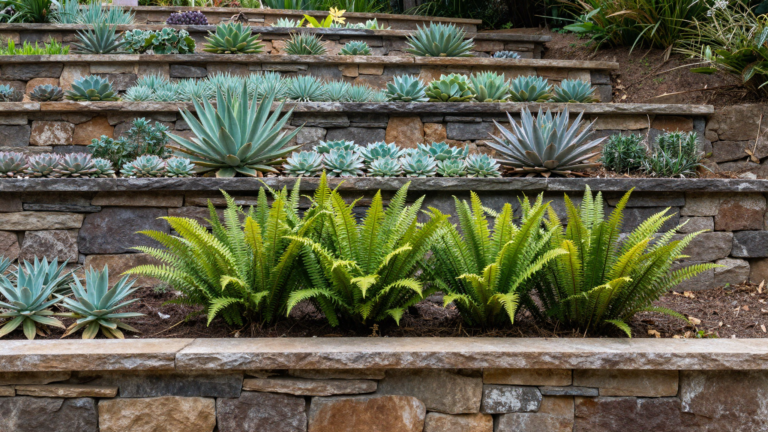
A sloped yard is one of the most challenging landscaping problems — and a retaining wall is the most elegant solution. It controls erosion, creates flat usable terraces, and adds an architectural quality that makes a yard look genuinely designed. The transformation from a sliding slope to a terraced landscape is dramatic and permanent, and the full range of materials and styles is covered in our guide to wood retaining wall ideas for a stunning landscape.
Smart tip: Stacked stone or timber retaining walls are weekend-buildable for gentle slopes — no heavy equipment required for runs under three feet.
Mistake to avoid: Don’t build a retaining wall without drainage behind it. Water pressure without drainage will push any wall forward within two seasons.
7. How Native Plants Cut Your Maintenance in Half
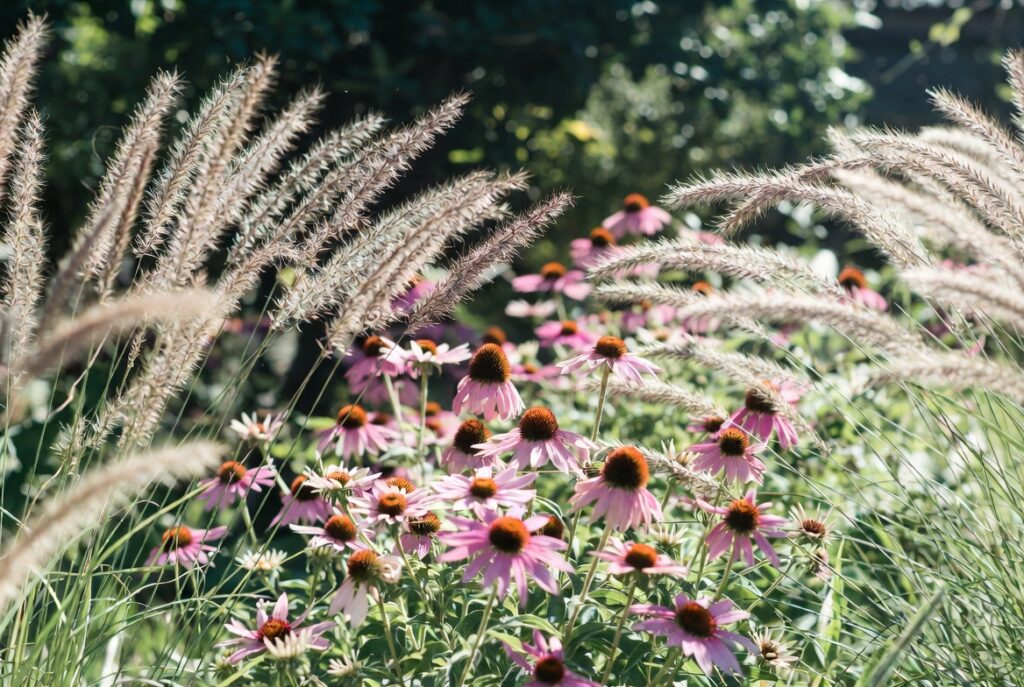
Native plants evolved to thrive in your exact climate, soil, and rainfall — meaning once established, they largely look after themselves. Switching even half my planting to natives cut my watering time dramatically and my plant losses to almost zero. Beauty that takes care of itself is the most underrated upgrade in landscaping.
Smart tip: Swap three high-maintenance shrubs for native equivalents — effort-free once established and far better for local pollinators.
Mistake to avoid: Don’t confuse native with wild. Many natives are strikingly beautiful and perform more reliably than exotic species ever do.
8. The Edging Trick That Makes Beds Look Professional
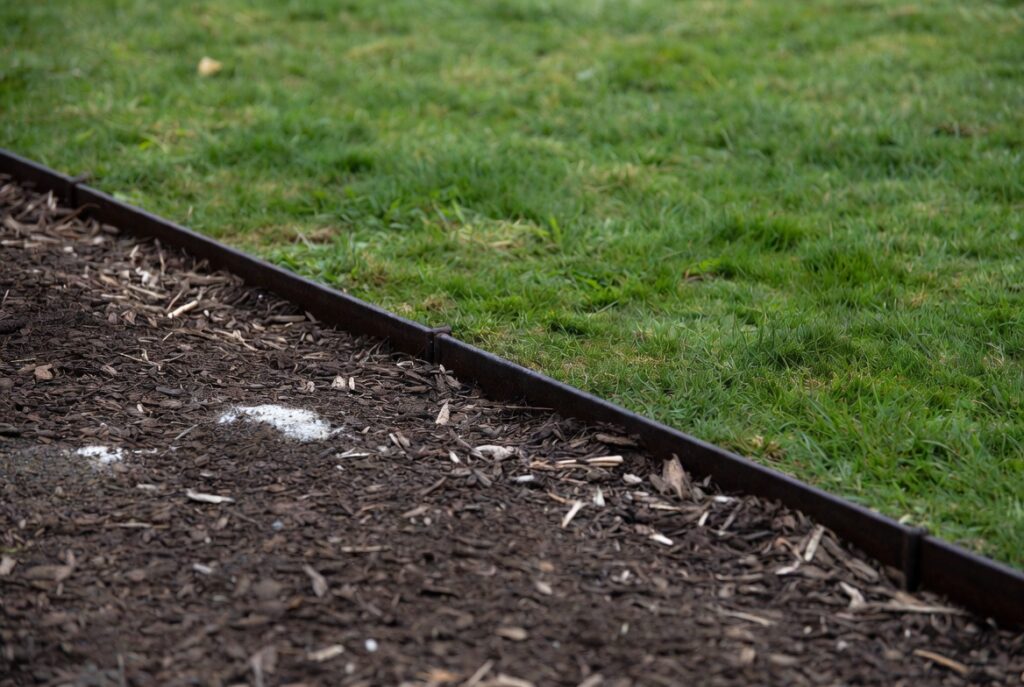
Clean, defined edges between lawn and planting beds are the single fastest way to make a yard look maintained and intentional. I’ve tested this: I edged every bed in my yard without changing a single plant, and neighbors assumed I’d hired a landscaper. The edge is the frame — and frames make everything inside look deliberate.
Smart tip: Steel or aluminum landscape edging installs in one morning and holds clean lines through every season — a smart one-time fix with lasting results.
Mistake to avoid: Don’t use plastic edging in high-traffic areas. It buckles and lifts within one winter and undoes all the work.
9. The Drought-Tolerant Yard That Looks Lush Without Water
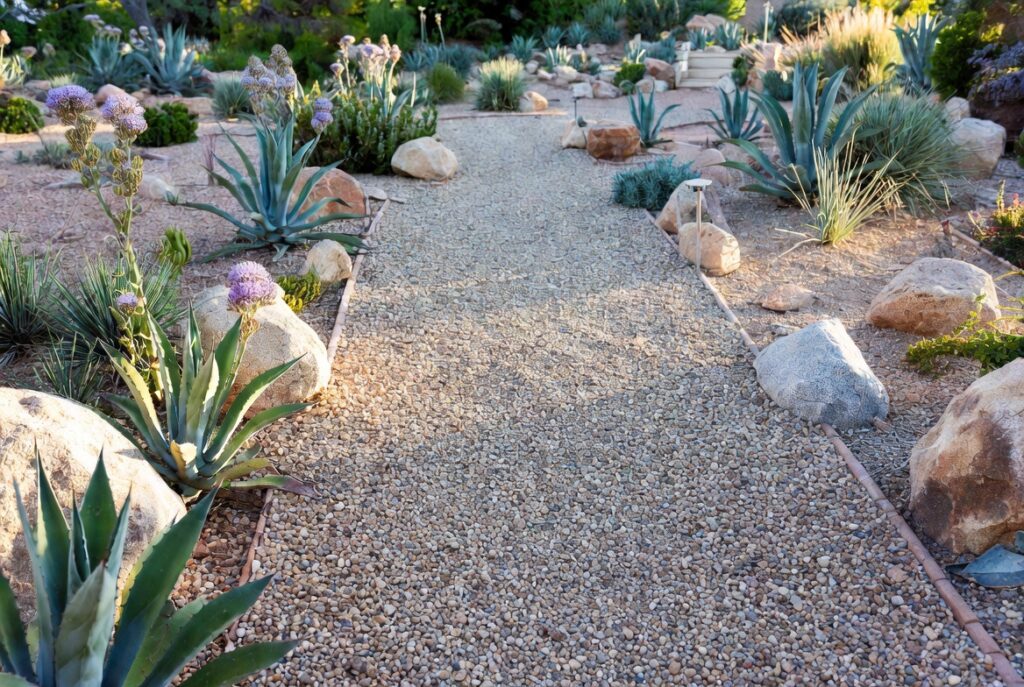
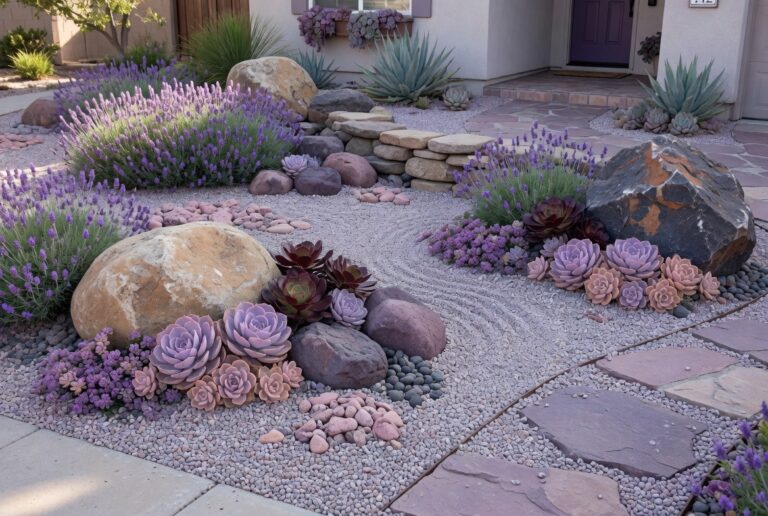
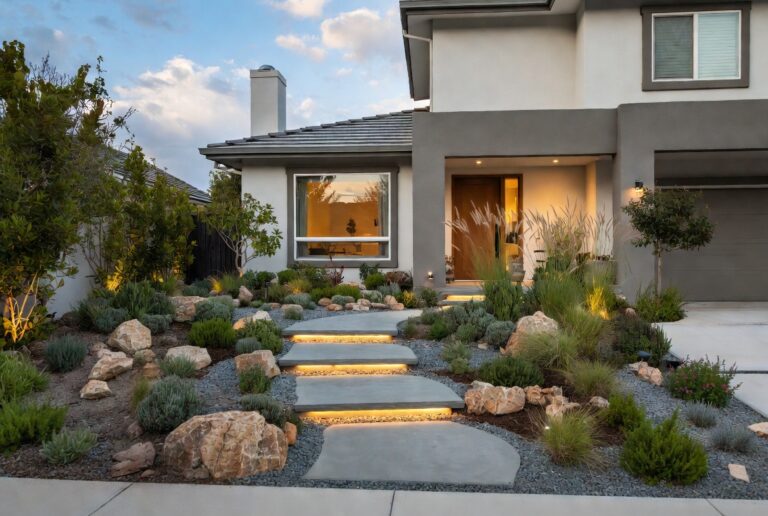
The most beautiful low-water landscapes I’ve seen don’t look thirsty — they look deliberate. Layering succulents, ornamental grasses, lavender, and drought-hardy shrubs with decorative gravel and natural boulders creates a yard that looks designed for a magazine, not just for a dry summer.
Smart tip: Lavender, agave, and ornamental grasses together create a lush, textural planting that thrives on minimal watering once established.
Mistake to avoid: Don’t mix drought-tolerant and water-hungry plants in the same bed. Their needs conflict and one group always suffers.
10. Why Boulders Do More Design Work Than Flowers
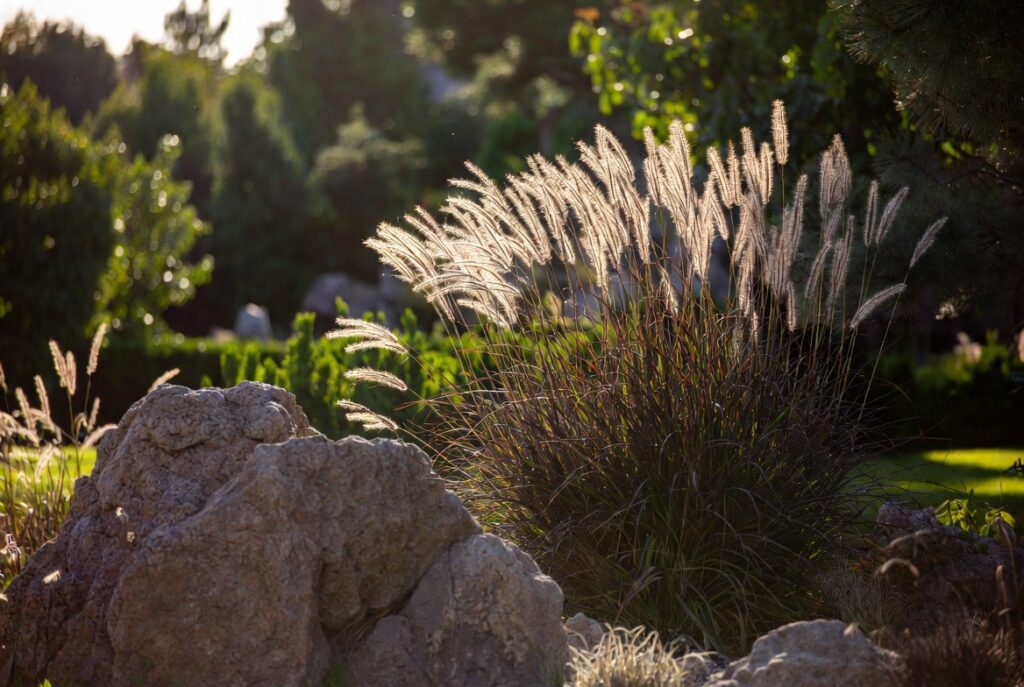
A single well-placed boulder does something that no plant can: it gives a landscape permanent structure that looks beautiful in every season, including the depths of winter. Large natural stones add weight, grounding, and a sense of permanence that makes a yard feel considered. The first boulder I placed became the most commented-on feature in my whole garden.
Smart tip: One or two large boulders placed at slightly different angles look natural and become instant focal points — one purchase that transforms the whole composition.
Mistake to avoid: Don’t use small decorative rocks scattered everywhere. They look like the rocks escaped, not like a design decision.
11. The Walkway Material That Elevates Your Entire Property
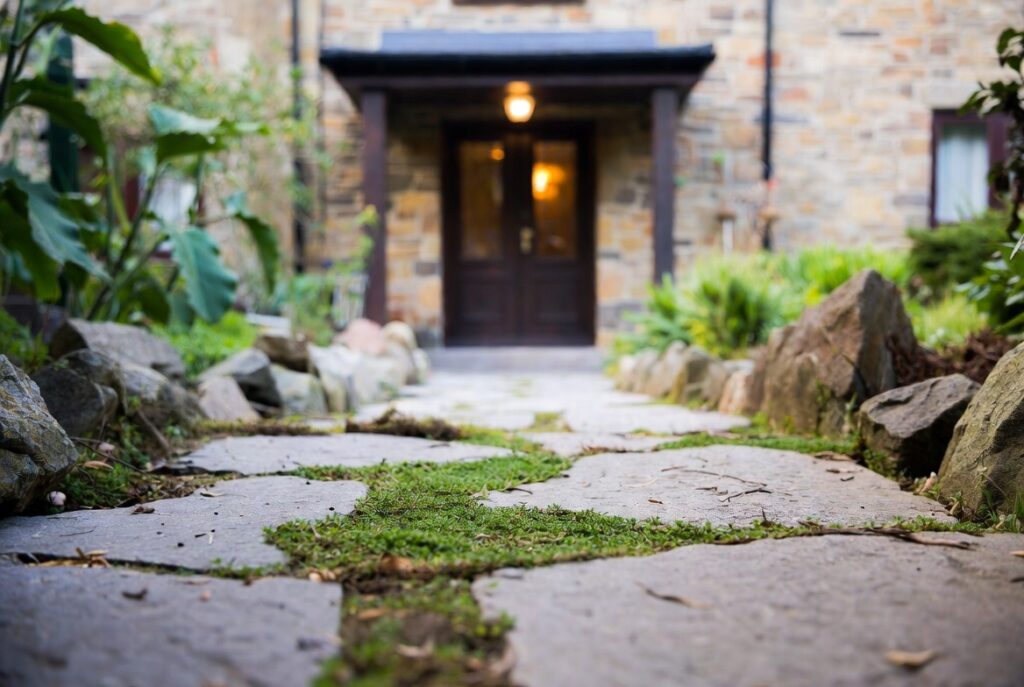
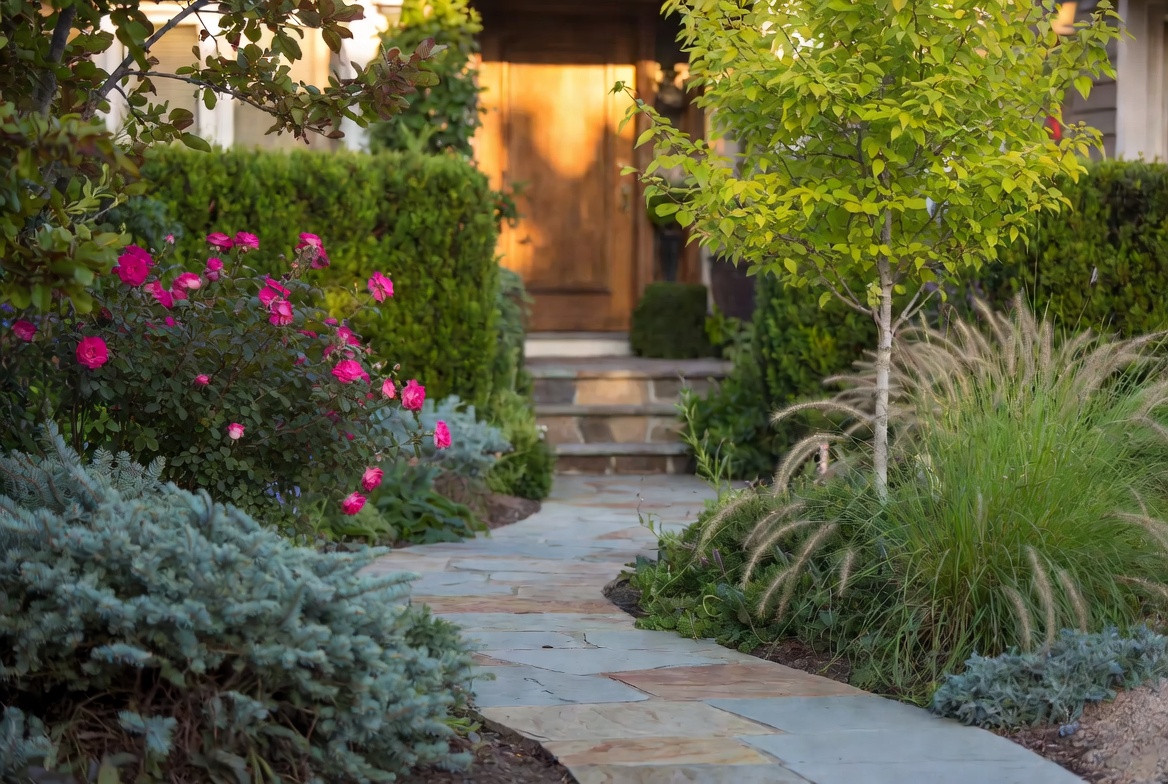
A walkway is one of the highest-impact investments in landscaping because every visitor travels it. Upgrading from plain concrete to natural stone, flagstone, or a charming wooden path changes how the entire property feels from the moment someone arrives. The material choice tells a story about the home before anyone opens the front door, and our full guide to wooden walkway ideas for charming garden pathways covers every style and approach.
Smart tip: Irregular flagstone with creeping thyme in the gaps creates a timeless walkway that improves with age — simple tools, beautiful results.
Mistake to avoid: Don’t install a walkway too narrow. Less than 36 inches makes people walk single file; 48 inches lets two people walk comfortably together.
12. How Layered Mulch Transforms a Neglected Yard Overnight
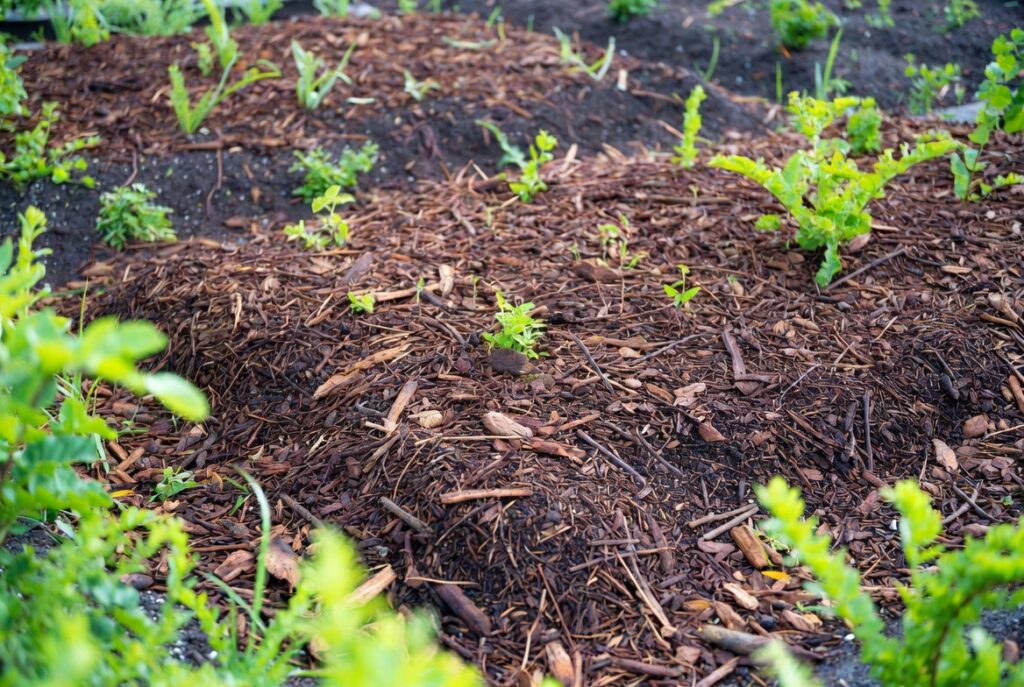
Freshly mulched beds are one of the fastest visual resets in landscaping. Dark bark mulch suppresses weeds, retains moisture, and makes every plant inside the bed look like it was intentionally placed. I’ve refreshed mulch on a neglected yard and had it look completely different by afternoon — for almost nothing.
Smart tip: Two to three inches of dark hardwood mulch across all beds takes one morning and delivers an immediate curb appeal boost.
Mistake to avoid: Don’t pile mulch against plant trunks. Volcano mulching causes rot, disease, and is one of the most common landscaping errors around.
13. The Vertical Garden That Solves Small Yards
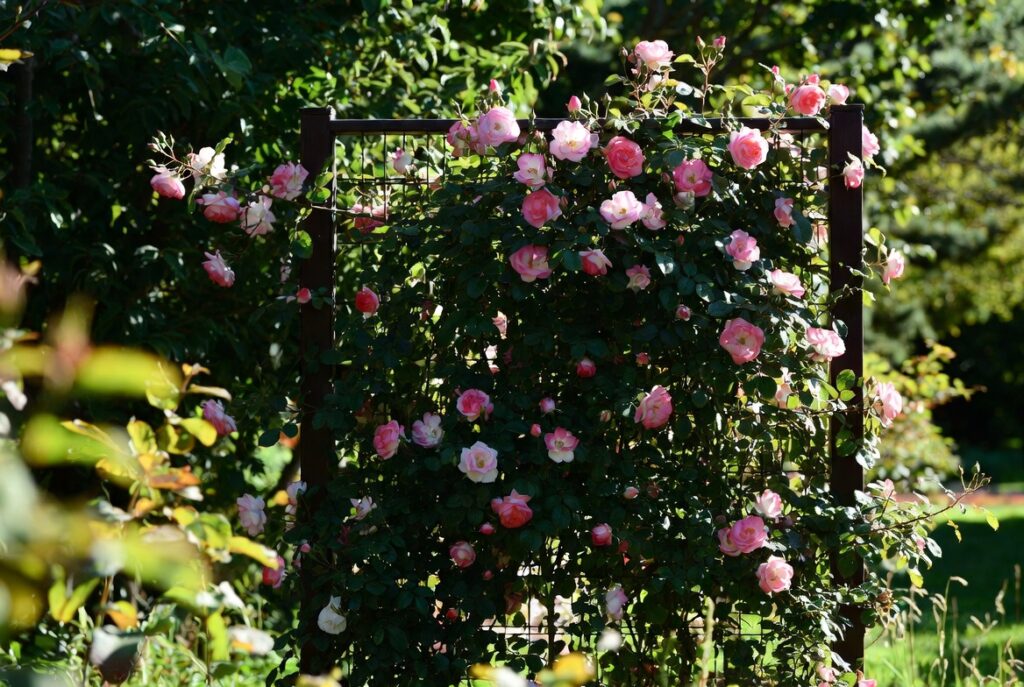
When ground space is limited, the answer is always to go up. Trellises with climbing plants, wall-mounted planters, and tall columnar trees add greenery and privacy without consuming a single square foot of floor space. In my experience, one well-planned vertical element makes a small yard feel dramatically larger and more layered.
Smart tip: A simple trellis with a fast-growing climber like clematis or climbing roses adds height and color — a budget-friendly landscape move with beautiful seasonal returns.
Mistake to avoid: Don’t plant aggressive climbers like wisteria without containment. They can engulf a structure within two seasons if left unchecked.
14. Why Ground Cover Beats Grass in Almost Every Situation
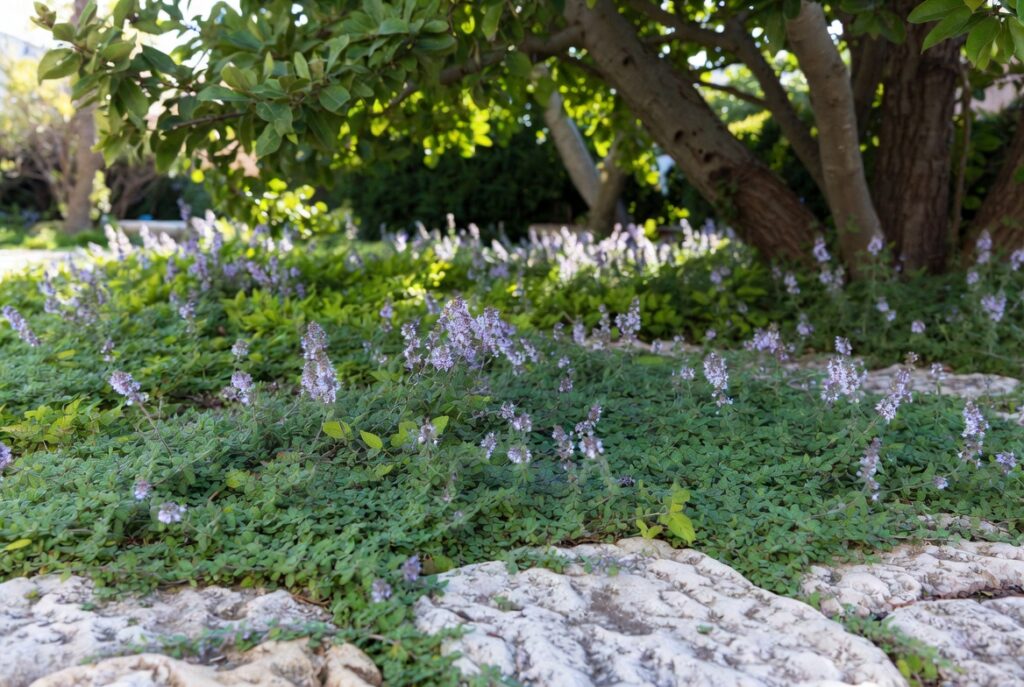
Lawn grass is expensive to maintain, water-hungry, and refuses to grow under trees or in shaded corners. Ground covers — creeping thyme, pachysandra, ajuga, clover — fill those areas beautifully, require almost no care, and often add fragrance and flower color that lawn never could.
Smart tip: Replace bare, struggling lawn patches under trees with pachysandra or creeping thyme — highly rewarding once-a-year task that solves a permanent problem.
Mistake to avoid: Don’t plant invasive ground covers near beds. Some spread aggressively and become harder to remove than the bare patch you started with.
15. The Privacy Hedge That Works Better Than Any Fence
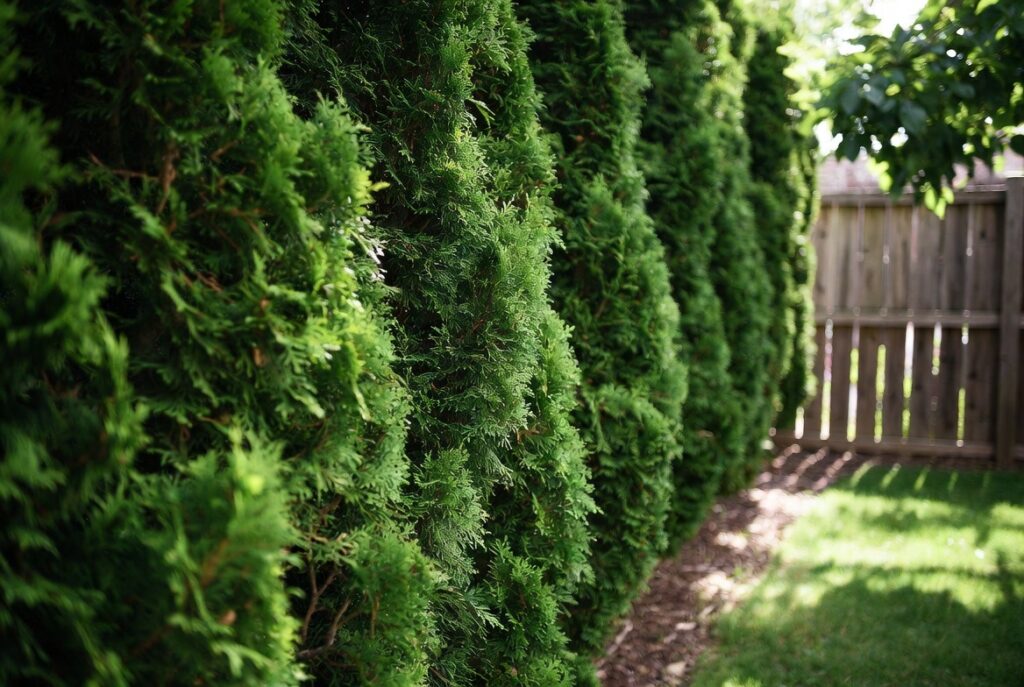
A living privacy hedge does everything a fence does — and then keeps growing, blooms, attracts birds, and becomes more beautiful every year. Boxwood, arborvitae, holly, and photinia all create dense, year-round screening that a wooden fence starts losing from its first winter. The full range of privacy solutions using wood is also worth exploring in these wood fence ideas to enhance privacy and curb appeal.
Smart tip: A row of emerald arborvitae planted three feet apart creates a solid privacy screen within two seasons — no maintenance beyond annual shaping.
Mistake to avoid: Don’t plant hedges too close to property lines without checking local bylaws. Some municipalities have minimum setback requirements.
16. How Raised Beds Add Structure to Any Flat Landscape
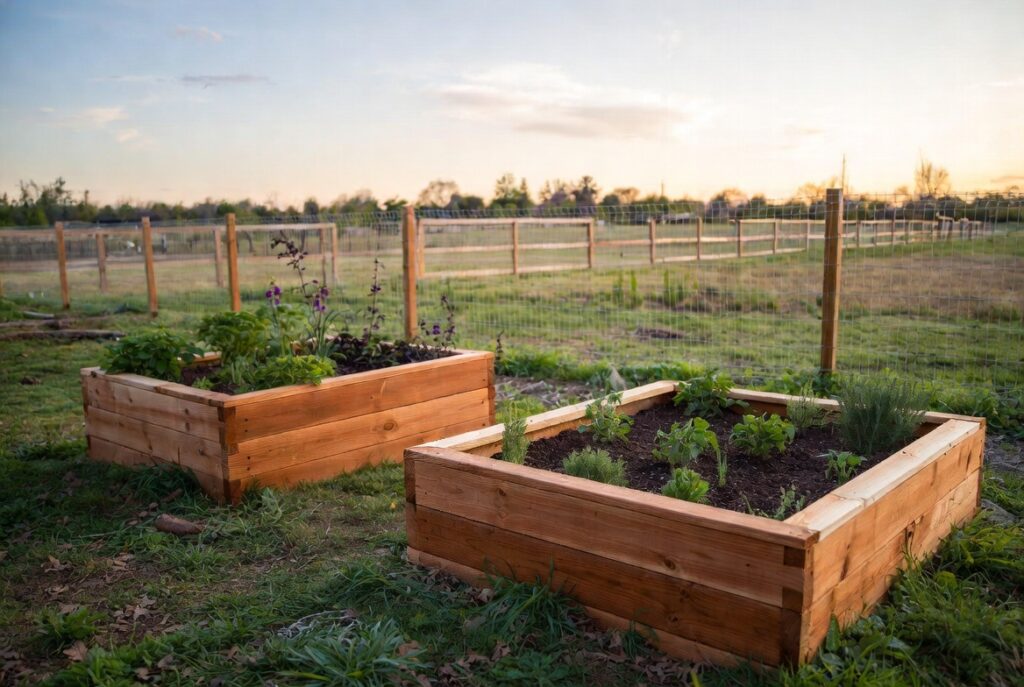
A flat yard without elevation changes reads as one-dimensional. Raised planting beds introduce height, define zones, and give the landscape a designed quality that ground-level planting alone never achieves. Even a single raised bed in a corner transforms how the whole yard is perceived.
Smart tip: Cedar raised beds in two heights — tall and low — create visual rhythm across a flat yard with zero heavy lifting required.
Mistake to avoid: Don’t make raised beds too tall without considering access. Over 30 inches becomes difficult to plant and maintain comfortably.
17. The Seasonal Color Trick That Keeps Your Yard Alive All Year
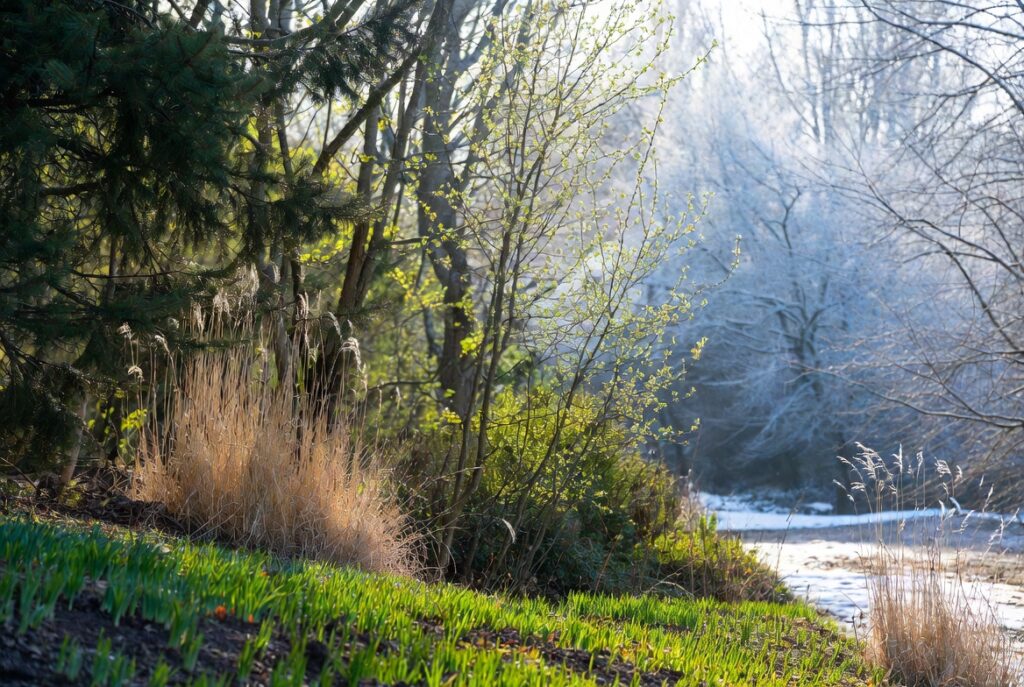
A yard that only looks good in summer is a yard you’re embarrassed by for eight months. Planting for four-season interest — spring bulbs, summer perennials, autumn grasses, evergreen winter structure — keeps the landscape performing every single month. We found that adding just five to ten spring bulbs beneath each perennial delivers a full extra season of color for almost no additional cost.
Smart tip: Plant spring bulbs in autumn beneath existing perennials — a smart seasonal update that delivers color before anything else wakes up.
Mistake to avoid: Don’t cut back ornamental grasses in autumn. Their winter silhouettes are part of the four-season design and protect the crown from frost.
18. The One Landscaping Decision That Affects Everything Else
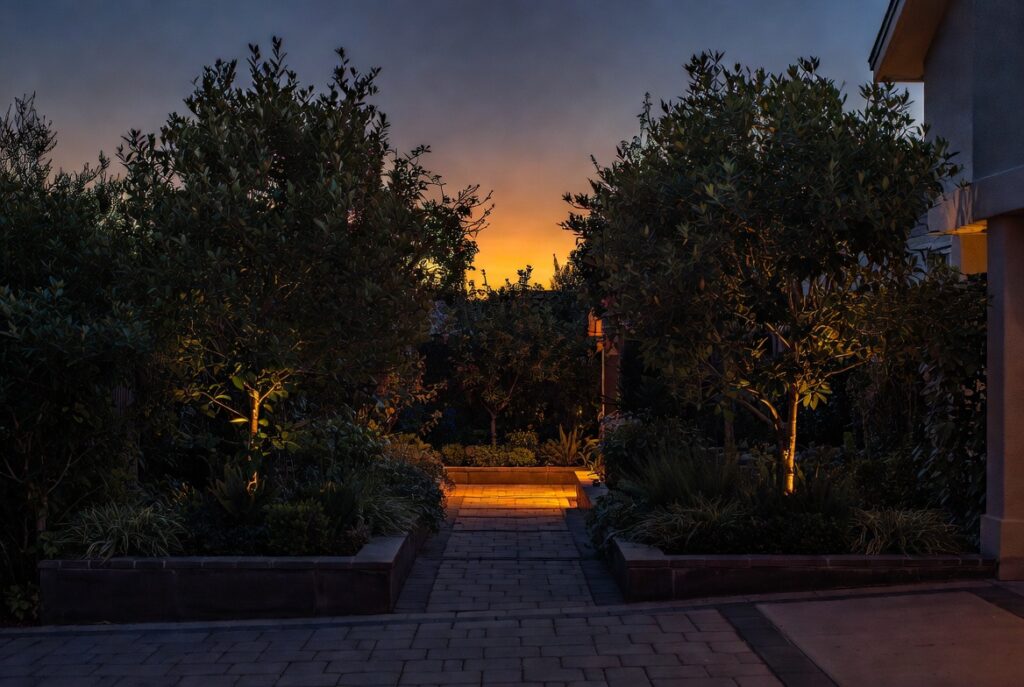
Every great landscape I’ve admired started with the same decision: choosing a style and committing to it. Modern, cottage, Mediterranean, naturalistic — each style has its own plant palette, materials, and proportions. Mixing styles without intention is the root cause of most yards that never look finished. Pick one direction and let every other decision serve it. For the front yard specifically, that commitment pays off most visibly, as shown in our guide to front yard landscaping ideas to boost your curb appeal.
Smart tip: Find three yards you genuinely admire and identify what they have in common. That shared thread is your style — follow it.
Mistake to avoid: Don’t try to include every trend. A landscape with too many influences has no voice, no matter how many good plants are in it.
A beautiful yard doesn’t happen in one season — but it always starts with one honest decision. Choose the idea that resonated most today, give it the time it deserves, and let the landscape become what it’s trying to be.
Continue Your Home Transformation
Explore the full collection of step-by-step eBooks and get the guide that fits the room you're working on.