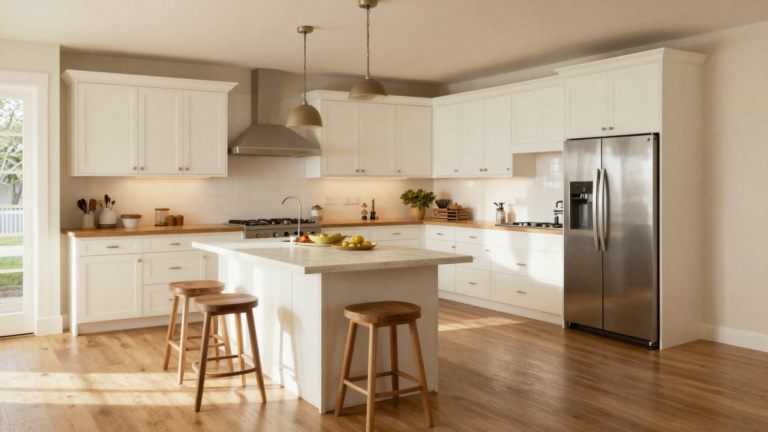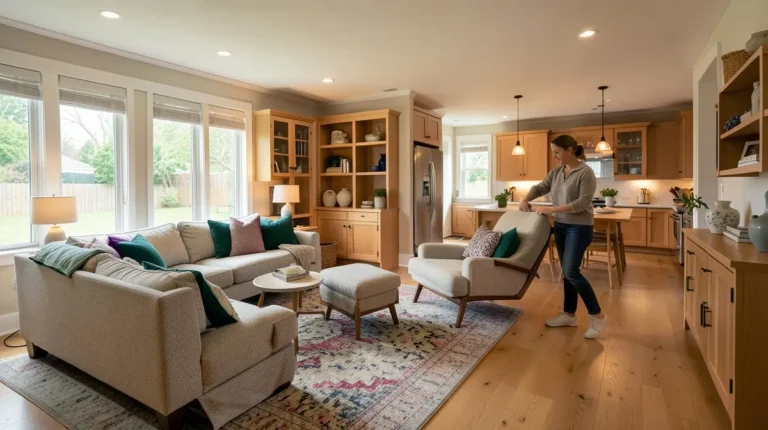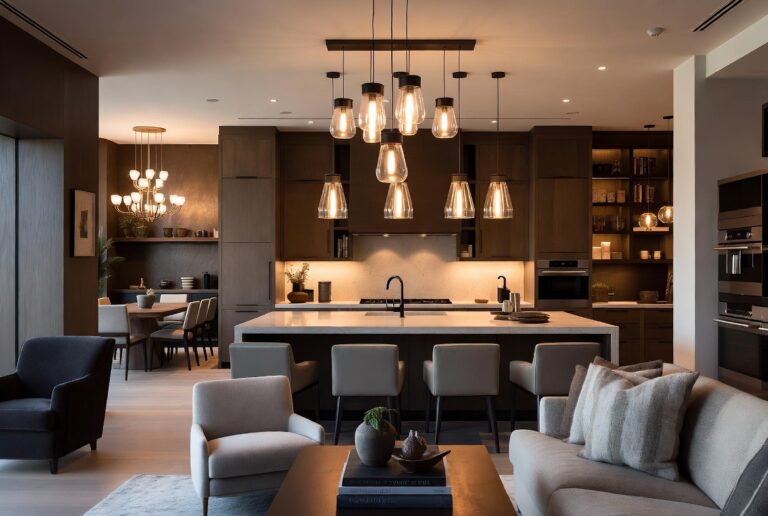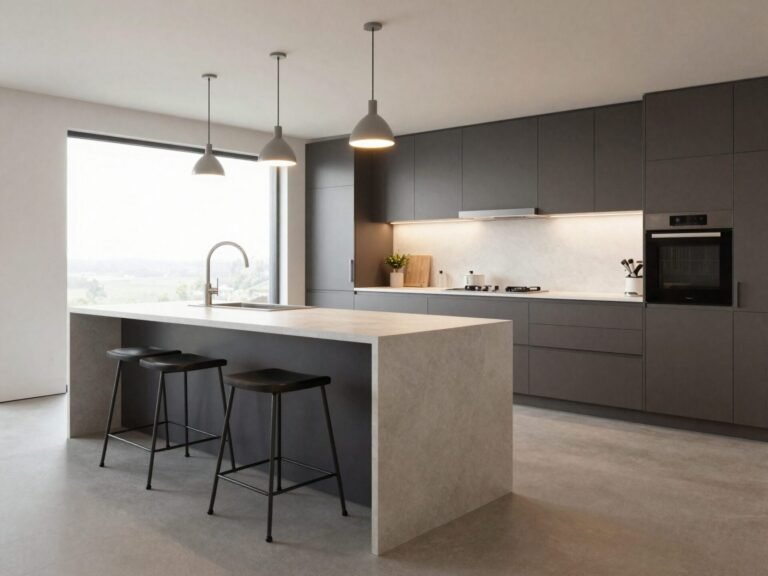
Your kitchen and dining area probably work hard — but do they feel warm? So many kitchens today are technically beautiful yet strangely cold: all sleek surfaces, matching finishes, and nothing that feels lived-in or personal. And the dining room next to it? Often abandoned altogether, reduced to a table nobody actually sits at.
By the end of this article, you’ll have 18 real ways to bring warmth, texture, and personality back into your kitchen and dining space, based on the design trends defining 2026 — from statement islands to the return of the formal dining room.
Table of Contents
- 1. Bring In a Statement Farm-Table Island
- 2. Embrace the “Planned Patina” Look
- 3. Hang an Oversized Sculptural Pendant
- 4. Mix Warm and Cool Metals
- 5. Find the Perfect Digital Product for You
- 6. Reclaim the Formal Dining Room
- 7. Add Wallpaper to an Unexpected Wall
- 8. Go Two-Tone on Your Cabinets
- 9. Build a Cozy Coffee or Beverage Bar
- 10. Style a Layered Table Centerpiece
- 11. Choose a Statement Dining Chandelier
- 12. Pick Tactile, Textured Dining Chairs
- 13. Add Open Shelving with a Lived-In Feel
- 14. Roll Out a Vintage-Style Rug
- 15. Bring In a Vintage Hutch for Storage
- 16. Go Deeper with Rich, Moody Color
- 17. Add a Textured Backsplash
- 18. Create a Cozy Banquette Nook
- Effort & Cost Snapshot
1. Bring In a Statement Farm-Table Island
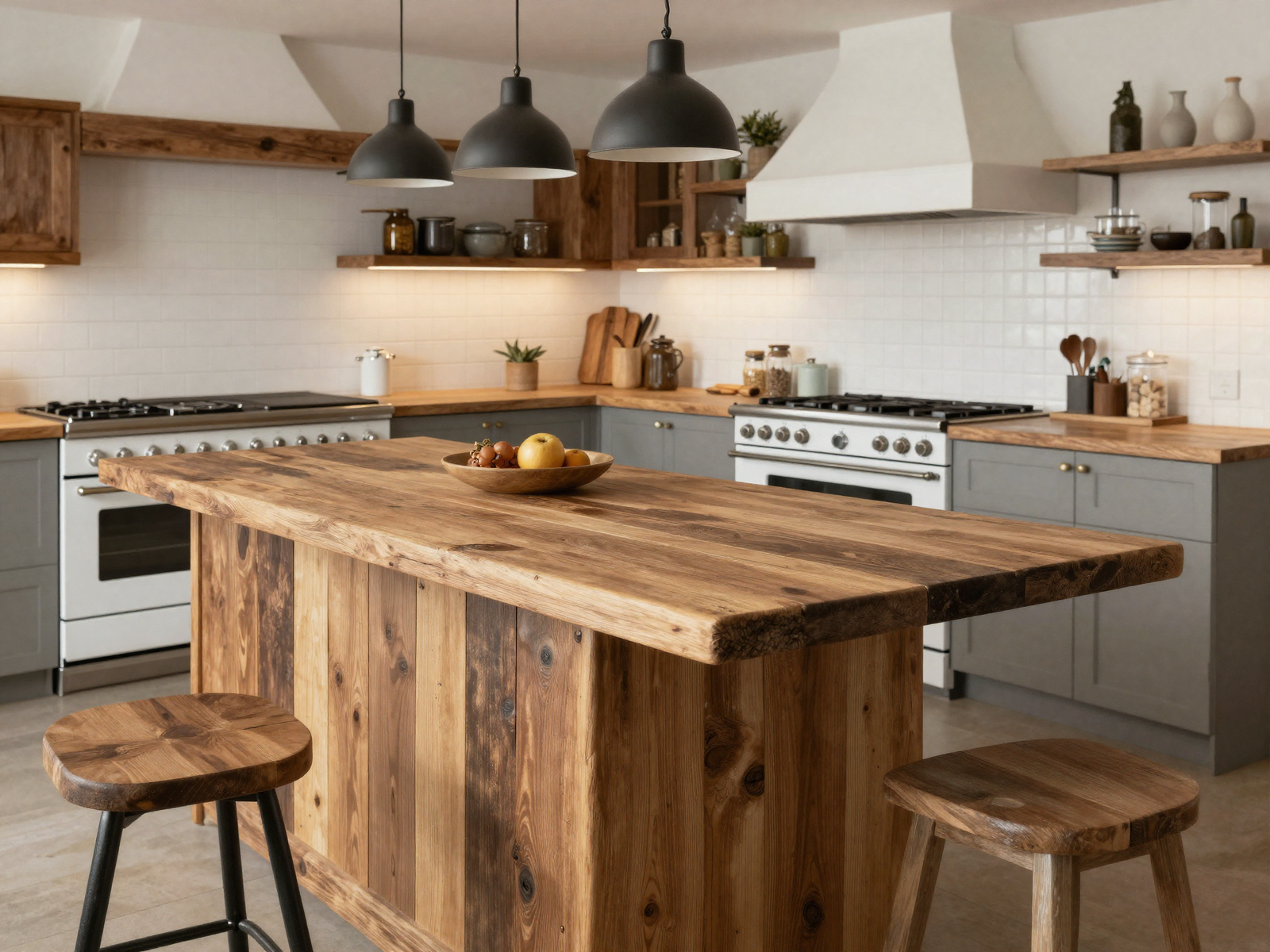
Worktable islands are replacing the standard built-in block in 2026 kitchens. A reclaimed wood farm table reimagined as an island blends rustic charm with real function — prep space, breakfast spot, and gathering point in one.
💡 Smart tip: Choose a table-style island with visible legs rather than a solid base — it keeps a large kitchen from feeling boxy.
⚠️ Mistake to avoid: Don’t skip the height check — a worktable island should still sit at standard counter height (36 inches) to stay functional.
2. Embrace the “Planned Patina” Look
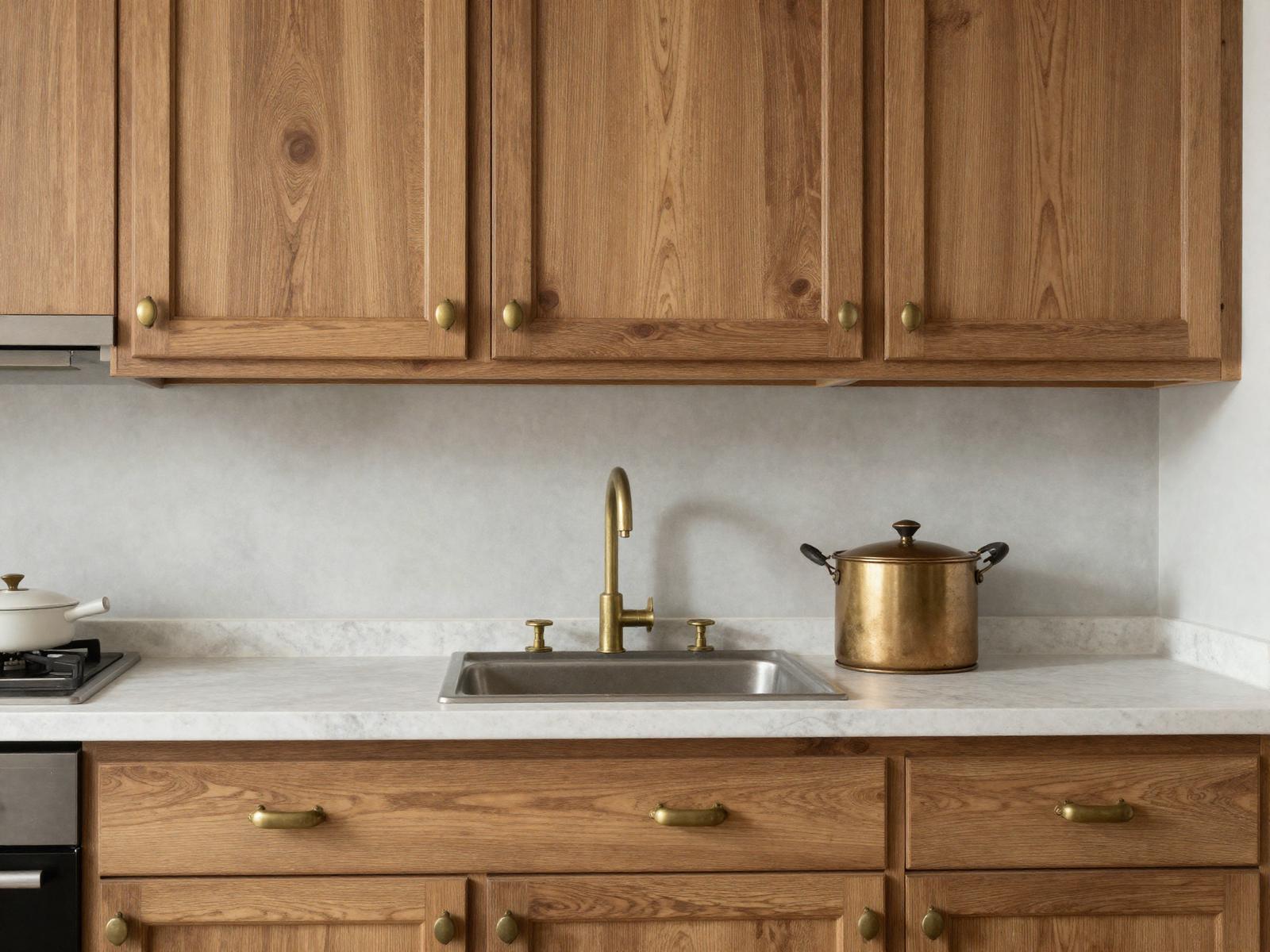
Instead of chasing a flawless, showroom finish, 2026 kitchens are celebrating the imperfect — wood that shows its grain, hardware that ages naturally, hand-finished surfaces. It’s a warmer, more honest look than anything perfectly matte.
💡 Smart tip: Start with unlacquered brass hardware — it develops a natural patina over time instead of looking scuffed.
⚠️ Mistake to avoid: There’s a difference between planned patina and neglect — keep surfaces clean even as finishes age gracefully.
3. Hang an Oversized Sculptural Pendant
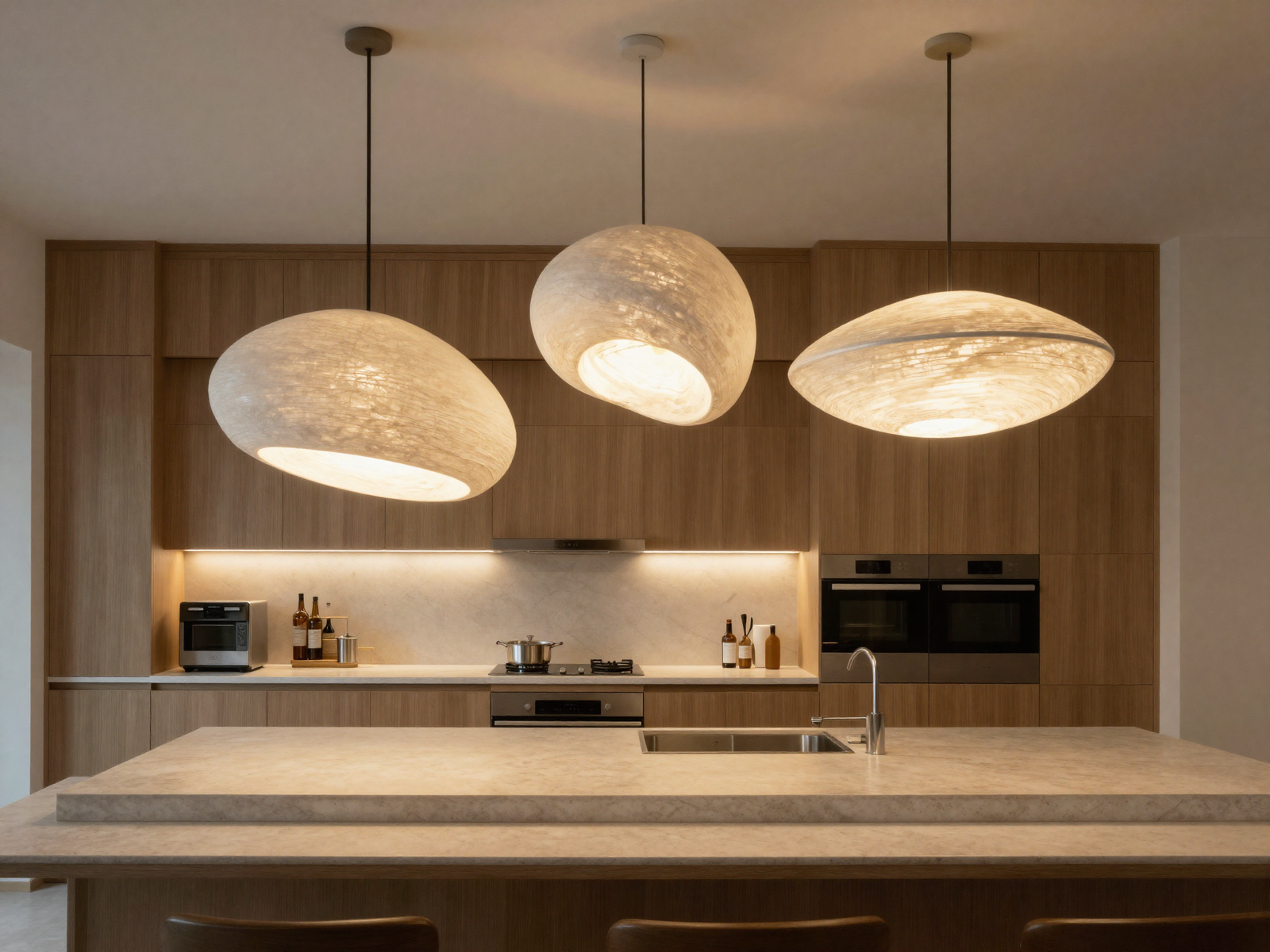
Pendant lights over the island are nothing new, but in 2026 they’re treated as three-dimensional sculptures rather than simple fixtures — often hung at asymmetrical heights for a more dynamic look.
💡 Smart tip: For a run of pendants, vary the hanging height by 2-4 inches between each fixture for visual movement.
⚠️ Mistake to avoid: Hanging a pendant too low over the island is a common mistake — keep at least 30-36 inches between the counter and the fixture’s base.
Loving These Ideas? Get the Step-by-Step Guide
Grab the full 5-day eBook and turn these ideas into a finished room.




4. Mix Warm and Cool Metals
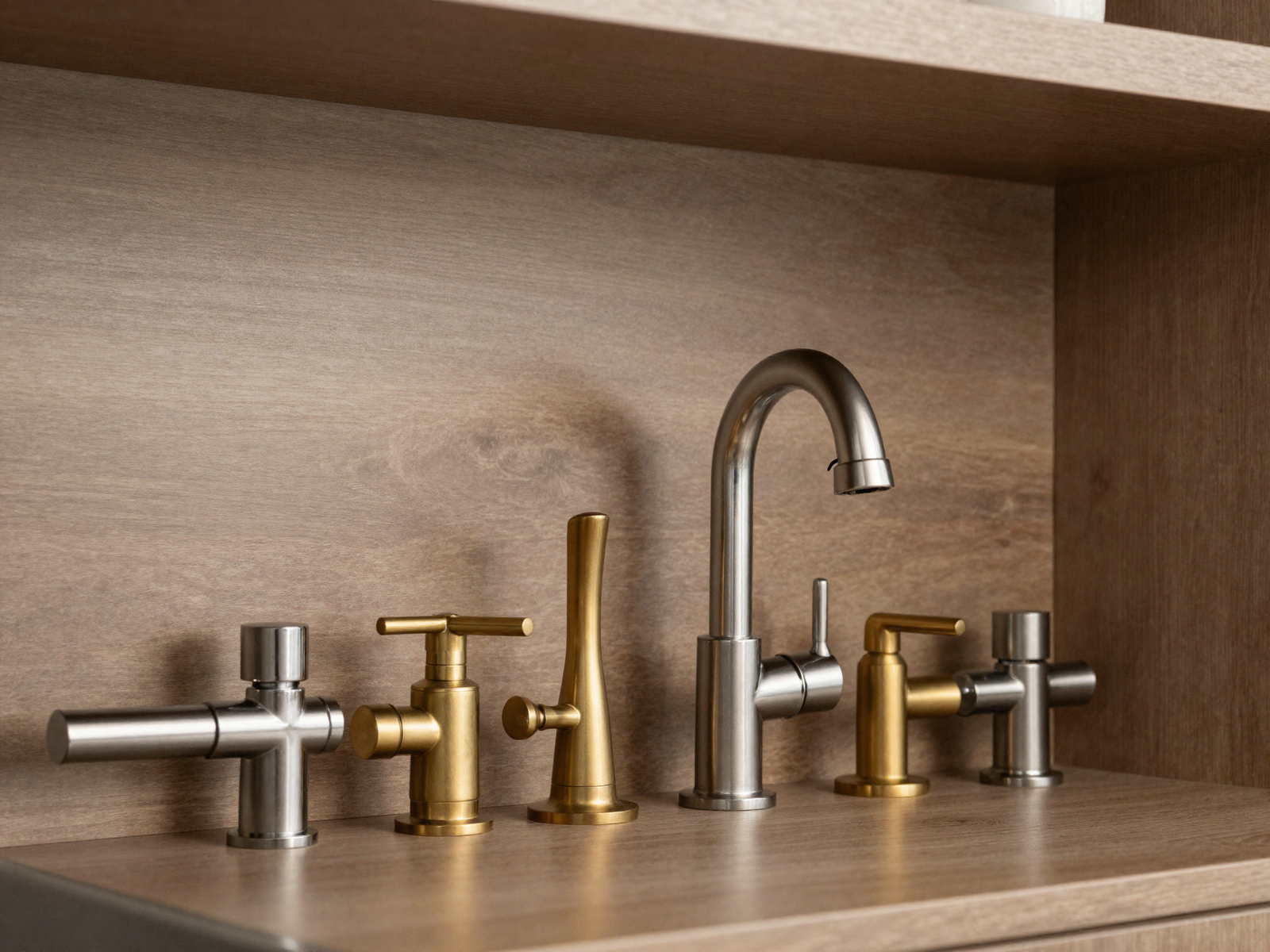
Matching every metal finish in the kitchen is no longer the rule. Pairing a polished nickel faucet with brass pulls and black sconces adds warmth and depth that an all-matching kitchen can’t achieve.
💡 Smart tip: Pick one metal as the “dominant” finish (used most) and one or two as accents for a mix that feels intentional, not random.
⚠️ Mistake to avoid: Don’t mix more than three metal finishes in one kitchen — beyond that it starts to look unplanned.
Find the Perfect Digital Product for You
Bringing all these ideas together — from choosing the right patina finishes to styling a dining room that actually gets used — can feel like a lot to plan on your own. That’s exactly the gap this guide is designed to close.
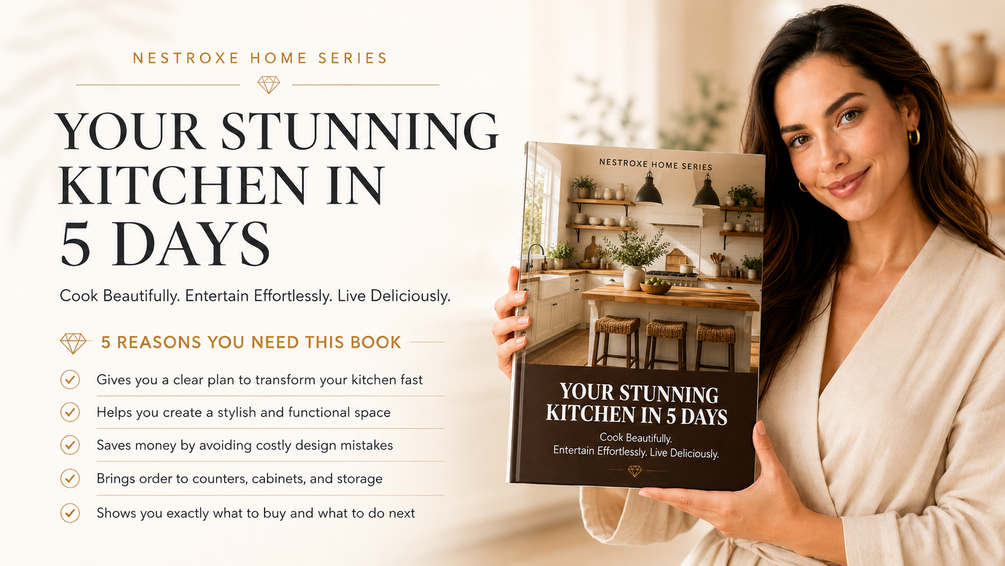
👉 Click here to get your copy of the Kitchen and Dining Guide and start planning your dream space.
6. Reclaim the Formal Dining Room
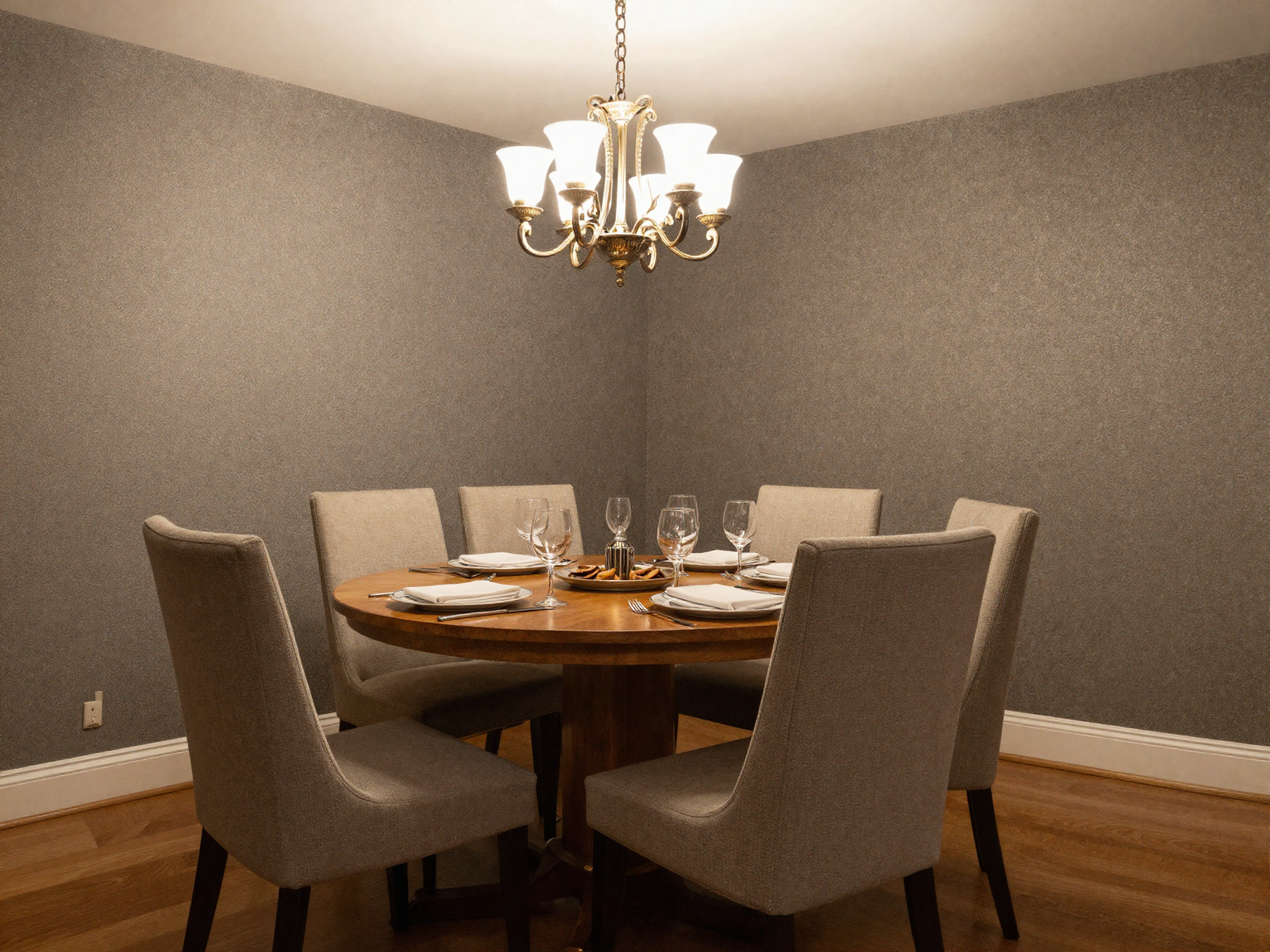
After years of being sidelined by open floor plans, the dedicated dining room is back. Homeowners in 2026 are treating it as a real destination room again — worth its own wallpaper, lighting, and furniture investment.
💡 Smart tip: Even in an open-concept home, define the dining zone with a rug, a pendant, or a different wall color to give it its own identity.
⚠️ Mistake to avoid: Don’t let the dining table become a catch-all surface for mail and clutter — it undoes the whole “destination room” feeling instantly.
7. Add Wallpaper to an Unexpected Wall
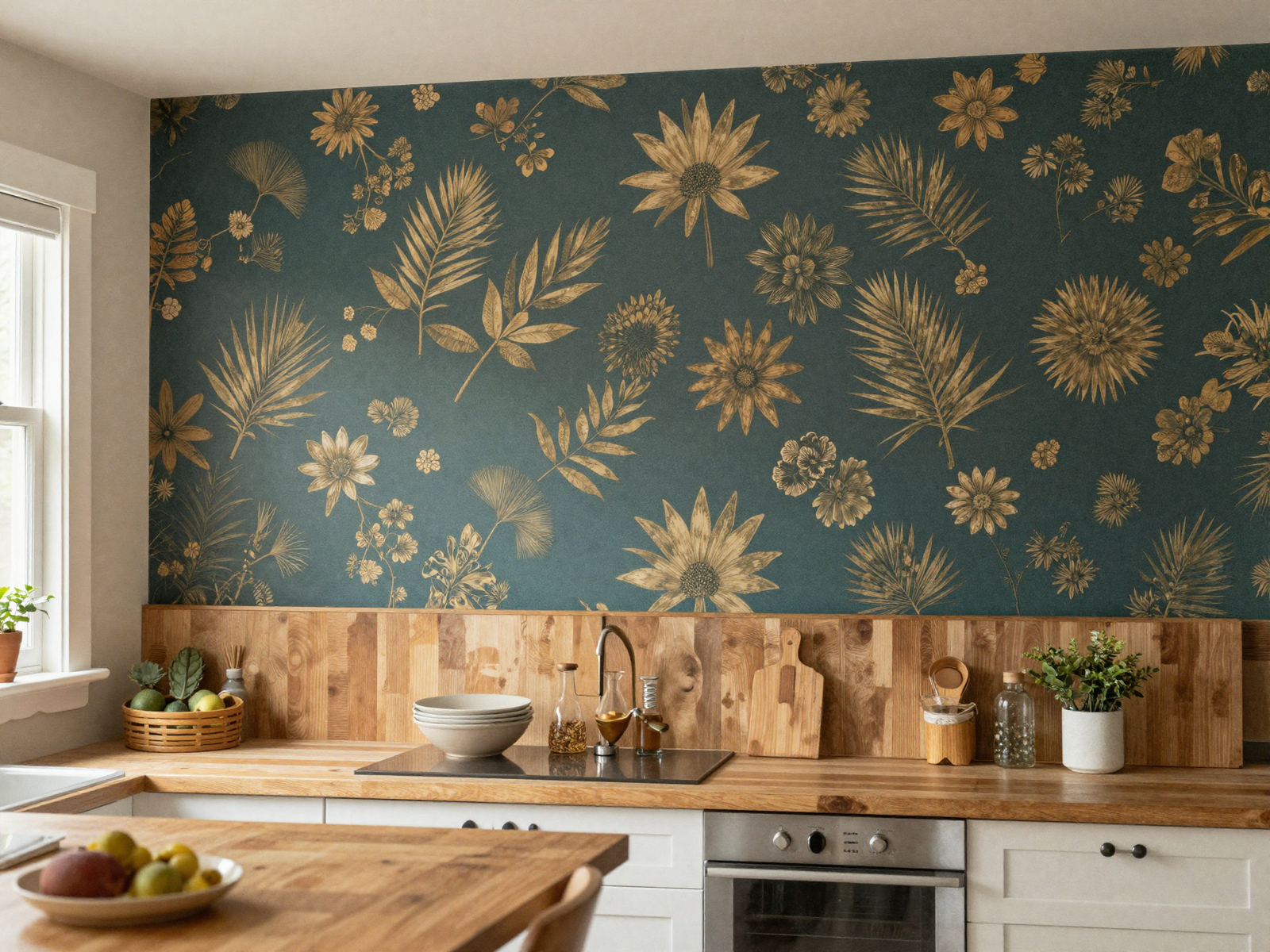
Wallpaper is officially back in kitchens and dining rooms — places once considered off-limits for pattern. A single accent wall behind a breakfast nook or hutch adds color without overwhelming the room.
💡 Smart tip: Choose a scrubbable, moisture-resistant wallpaper for any wall near the sink or stove.
⚠️ Mistake to avoid: Avoid wallpapering directly behind the range — grease buildup will damage most patterns over time.
8. Go Two-Tone on Your Cabinets
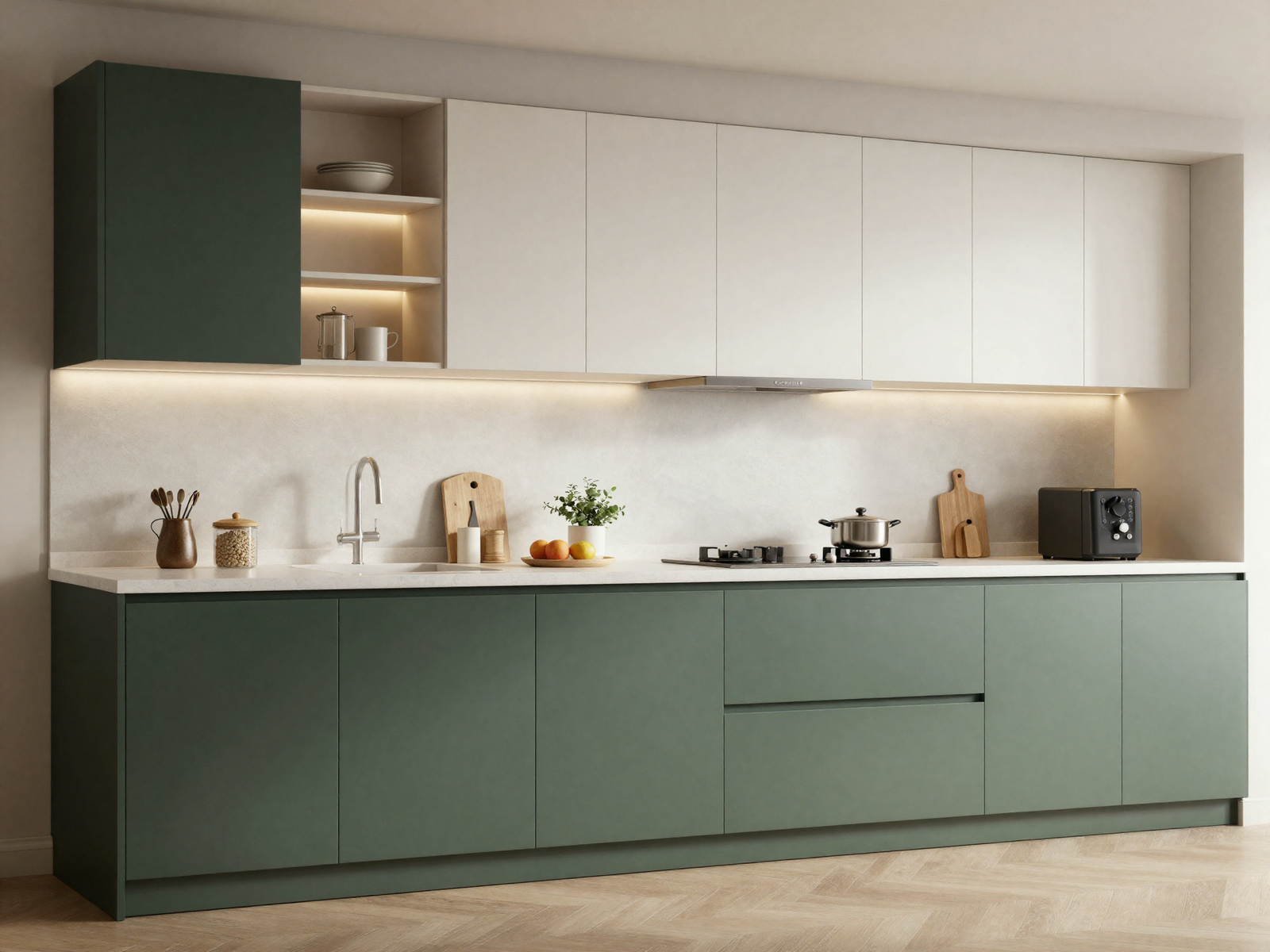
Two-tone cabinetry — a deeper color on the lower cabinets, a lighter shade up top — remains one of the easiest ways to add depth and richness without repainting the whole kitchen.
💡 Smart tip: Pair pale countertops with darker lower cabinets so the contrast doesn’t feel too heavy at eye level.
⚠️ Mistake to avoid: Don’t choose two colors with the same undertone (both cool or both warm) — the contrast will look muddy instead of intentional.
9. Build a Cozy Coffee or Beverage Bar
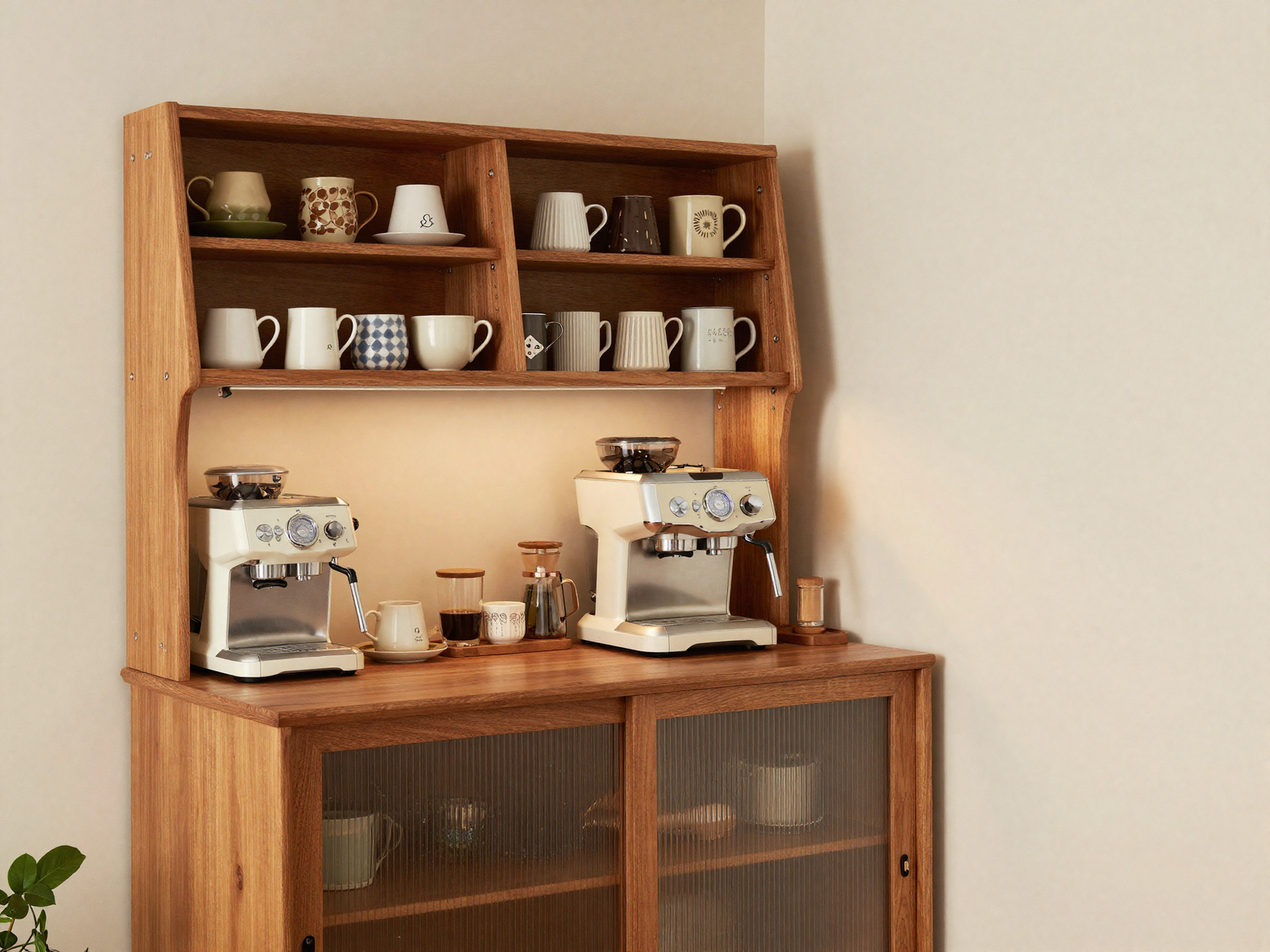
A dedicated coffee or drinks corner remains one of the most requested kitchen features, and 2026 styling leans toward warm wood counters and open shelving rather than a cold, built-in cabinet.
💡 Smart tip: Even a narrow 24-inch counter run is enough — group your machine, mugs, and syrups in one tray to keep it tidy.
⚠️ Mistake to avoid: Don’t place the coffee bar right next to the main prep zone — it creates traffic jams during meal prep.
10. Style a Layered Table Centerpiece
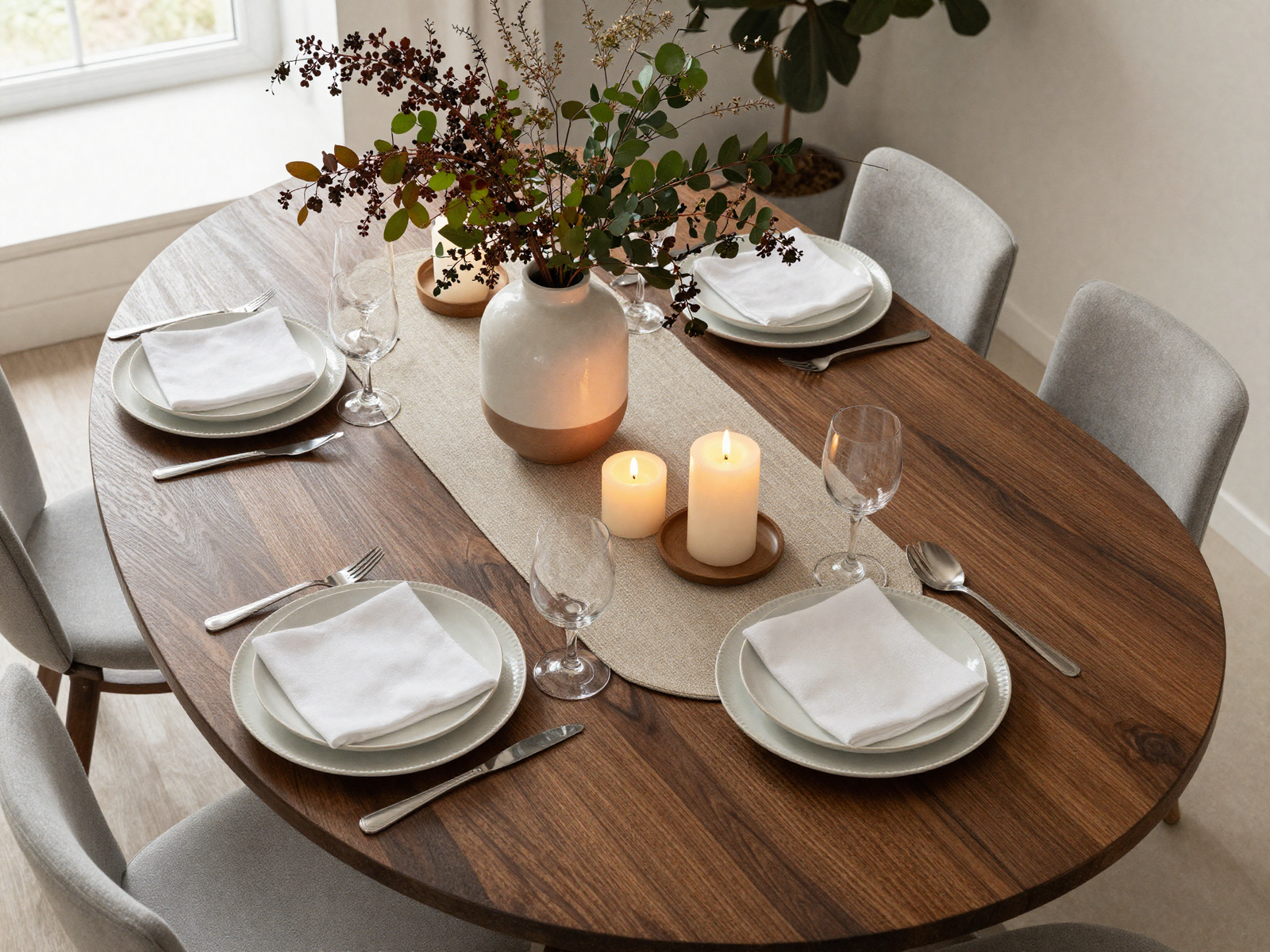
An empty dining table reads as unused. A low, layered centerpiece — a ceramic vase, a few candles, some seasonal foliage — keeps the table looking styled even between meals.
💡 Smart tip: Keep the centerpiece under 14 inches tall so guests can still see each other across the table.
⚠️ Mistake to avoid: Avoid scented candles as a centerpiece for everyday dining — the fragrance competes with food.
11. Choose a Statement Dining Chandelier
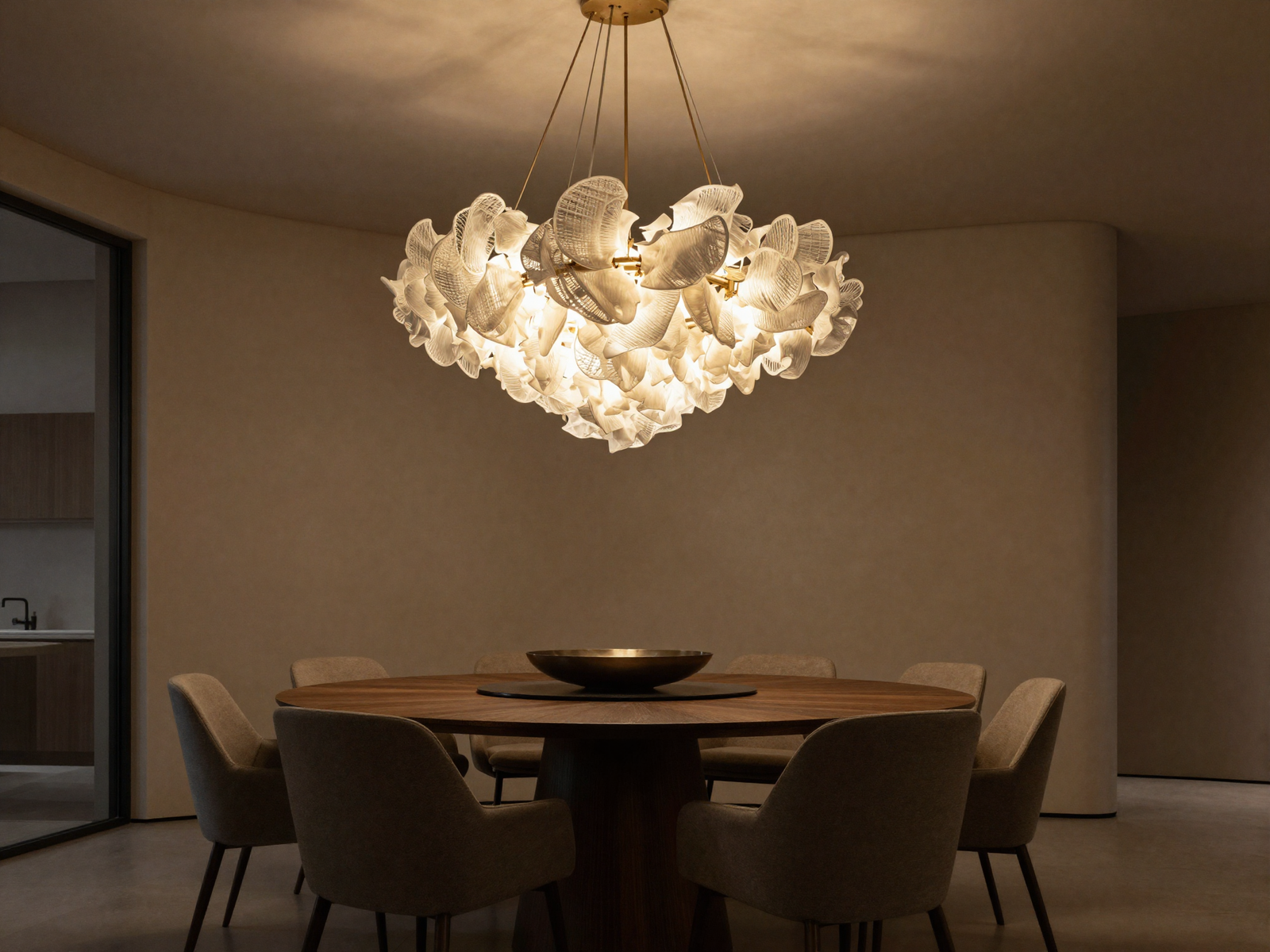
2026’s dining room lighting draws every eye toward the table, treating the chandelier as the room’s real centerpiece rather than an afterthought overhead fixture.
💡 Smart tip: Size your chandelier to roughly half the width of your table, and hang it 30-34 inches above the tabletop.
⚠️ Mistake to avoid: Don’t choose a fixture that’s too small for the room — an undersized chandelier disappears instead of anchoring the space.
12. Pick Tactile, Textured Dining Chairs
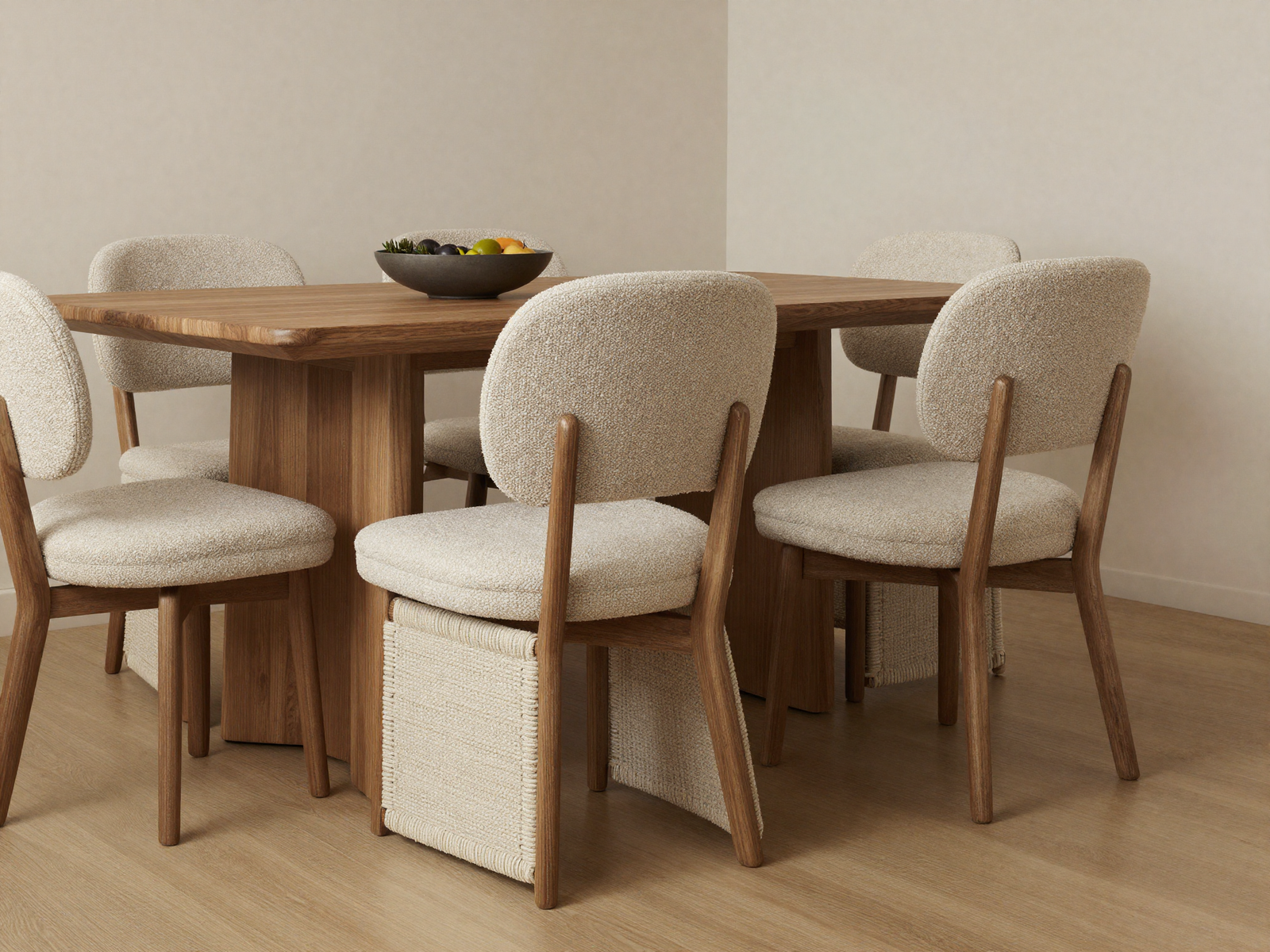
Woven, boucle, and cane dining chairs add warmth in a way that smooth wood or metal chairs can’t. They also make guests want to stay at the table longer, which is exactly the point in 2026 dining design.
💡 Smart tip: Mix two chair styles at either end of the table (like captain’s chairs) for an eclectic, collected-over-time feel.
⚠️ Mistake to avoid: Skip fully upholstered fabric chairs if you have young kids or frequent spills — texture is great, but stain resistance matters too.
13. Add Open Shelving with a Lived-In Feel
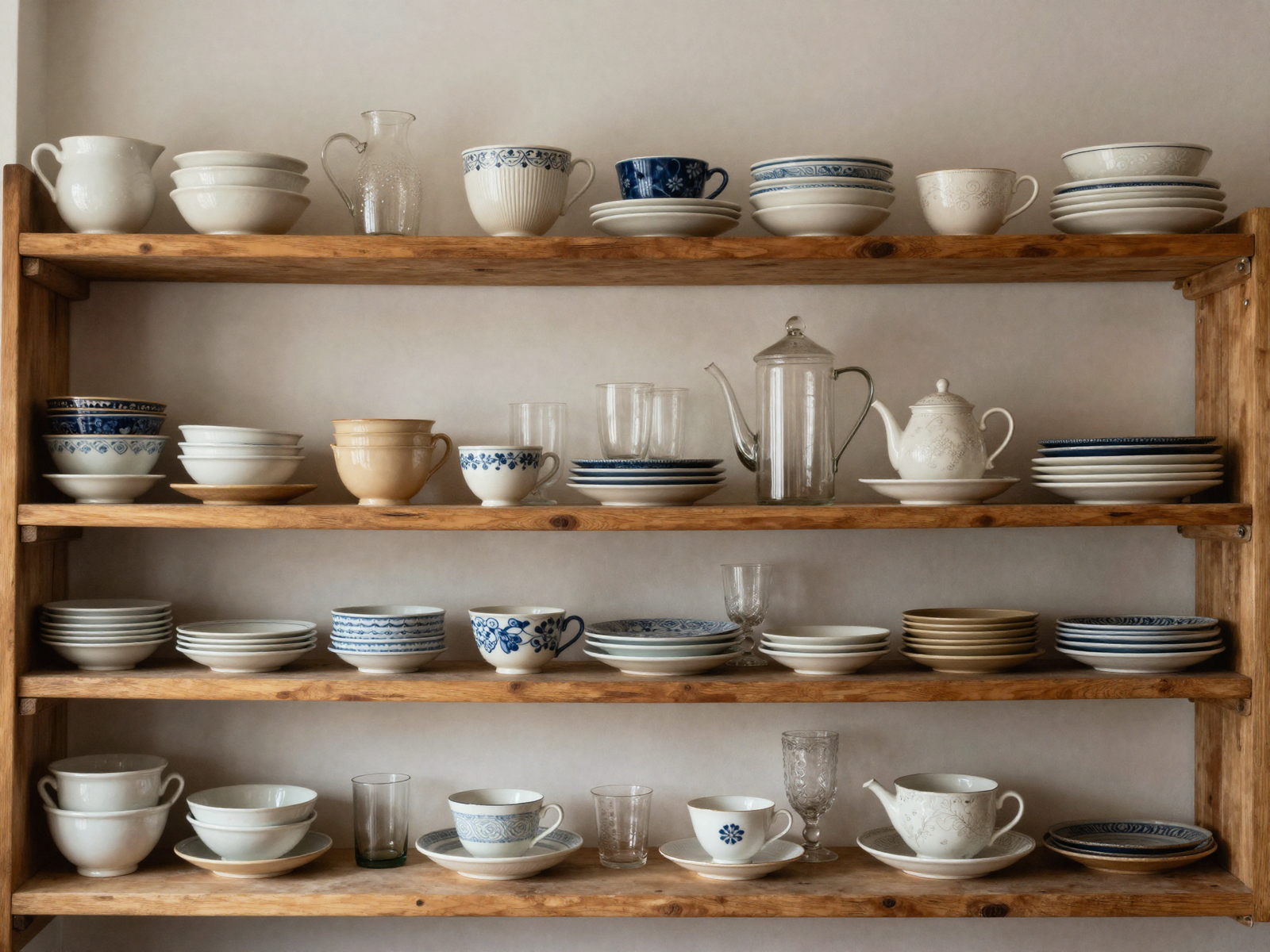
Open shelves styled with mismatched, collected ceramics feel far more personal than a uniform matching dish set behind closed doors — and they fit right into the “planned patina” mood.
💡 Smart tip: Group items in odd numbers (threes and fives) and vary the heights for a shelf that looks curated, not cluttered.
⚠️ Mistake to avoid: Don’t put your everyday-use dishes on open shelving directly above the stove — grease buildup means more frequent washing.
14. Roll Out a Vintage-Style Rug
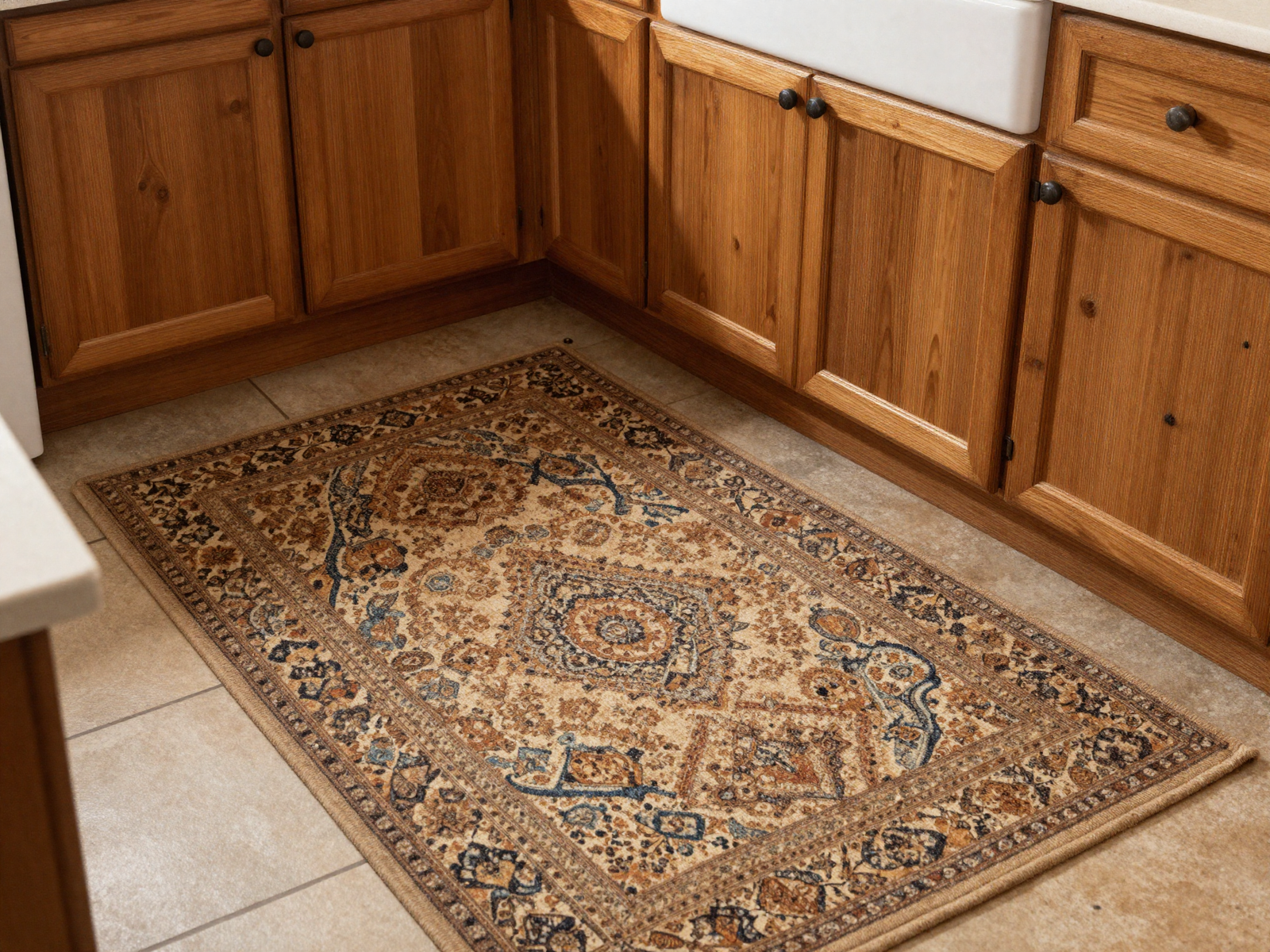
A worn-in, vintage-style rug near the sink or in front of the island softens hard flooring and adds instant character — a detail that separates a styled kitchen from a purely functional one.
💡 Smart tip: Choose a low-pile, flat-weave rug for kitchen use — it’s easier to clean than a plush pile in a high-traffic, spill-prone area.
⚠️ Mistake to avoid: Skip rugs with rubber backing directly on hardwood — they can trap moisture and damage the finish over time.
15. Bring In a Vintage Hutch for Storage
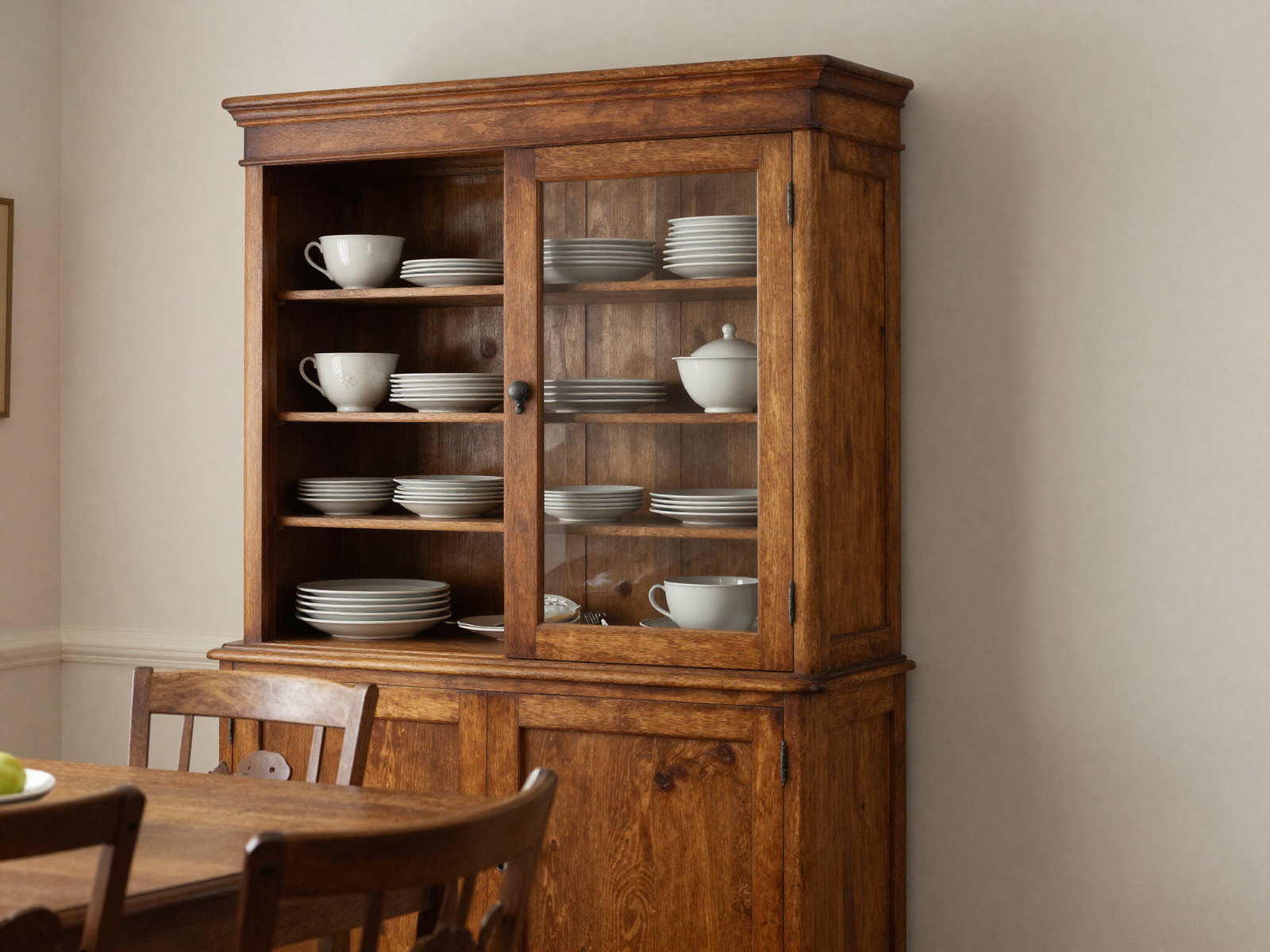
A freestanding wood hutch does double duty — extra storage for dishware and a warm, furniture-like presence that a built-in cabinet can’t replicate in a formal dining room.
💡 Smart tip: An unpainted or lightly refinished vintage hutch fits the planned-patina trend better than a fully restored, glossy piece.
⚠️ Mistake to avoid: Don’t overfill the hutch shelves — leave breathing room so displayed pieces read as curated rather than crowded.
16. Go Deeper with Rich, Moody Color
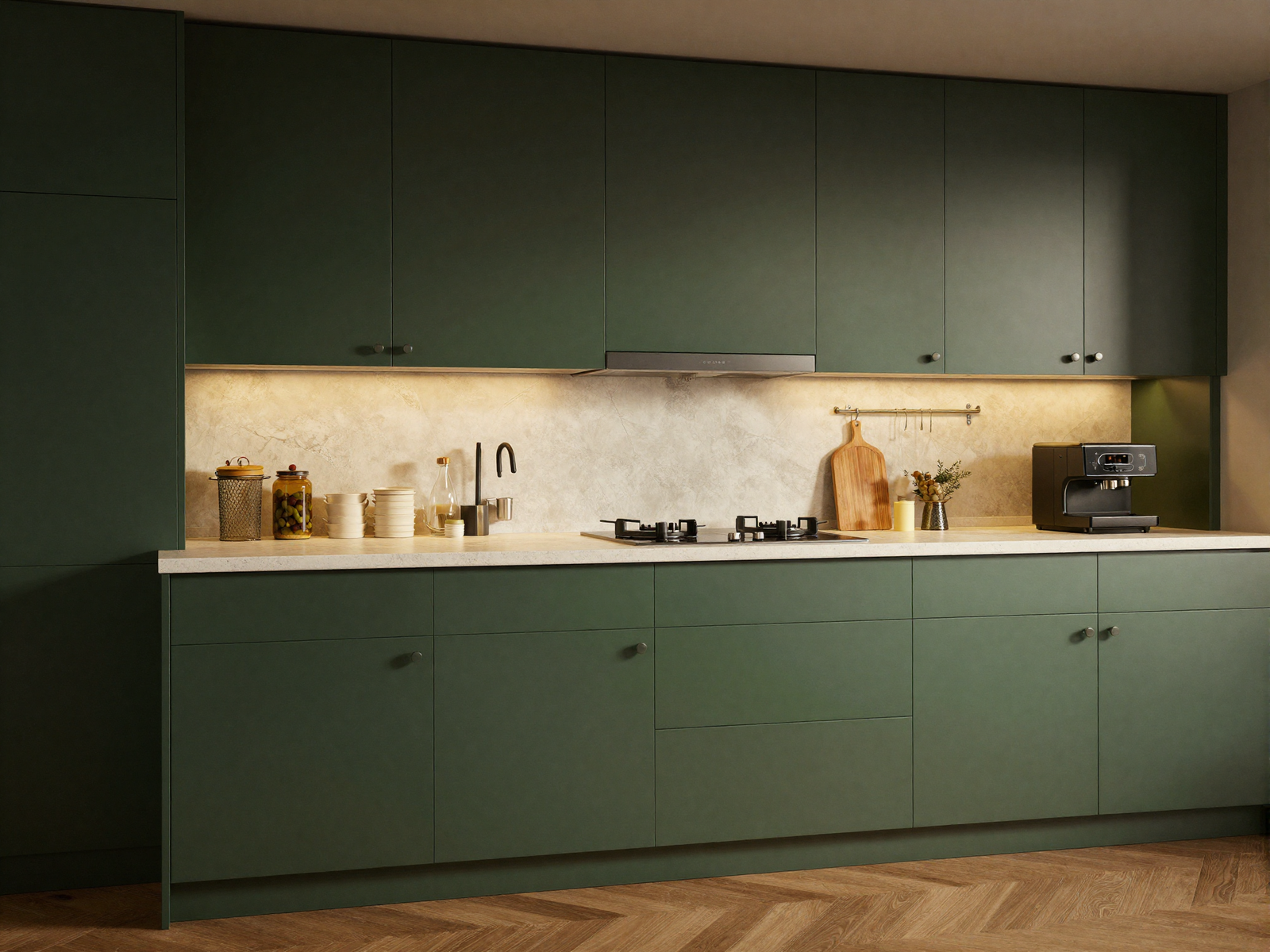
All-white kitchens are giving way to deeper, richer tones — plum browns, forest greens, warm charcoals — especially on lower cabinetry, where they add gravity without feeling heavy.
💡 Smart tip: Pair a deep, moody cabinet color with pale countertops and plenty of natural light to keep the space from feeling closed in.
⚠️ Mistake to avoid: Don’t use a dark, saturated color on every surface — reserve it for lower cabinets or one accent wall so the room still feels balanced.
17. Add a Textured Backsplash
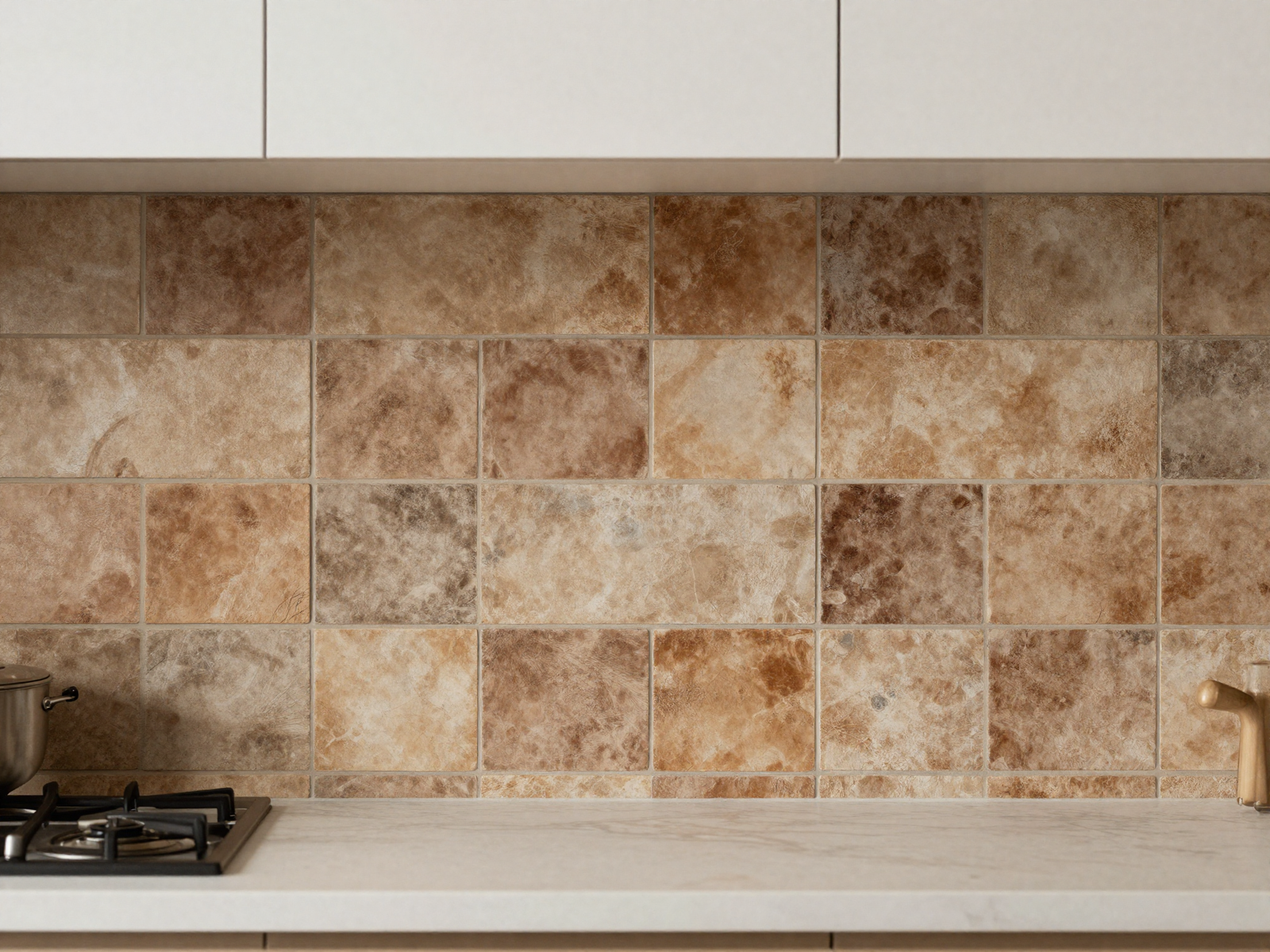
Flat subway tile is giving way to handmade, textured tile with visible variation in glaze and shape — a small detail that adds real warmth to an otherwise smooth kitchen.
💡 Smart tip: A textured backsplash pairs especially well with matte or honed countertops rather than high-gloss surfaces.
⚠️ Mistake to avoid: Handmade tile often has size variation — always order 10-15% extra to account for cuts and irregularities.
18. Create a Cozy Banquette Nook
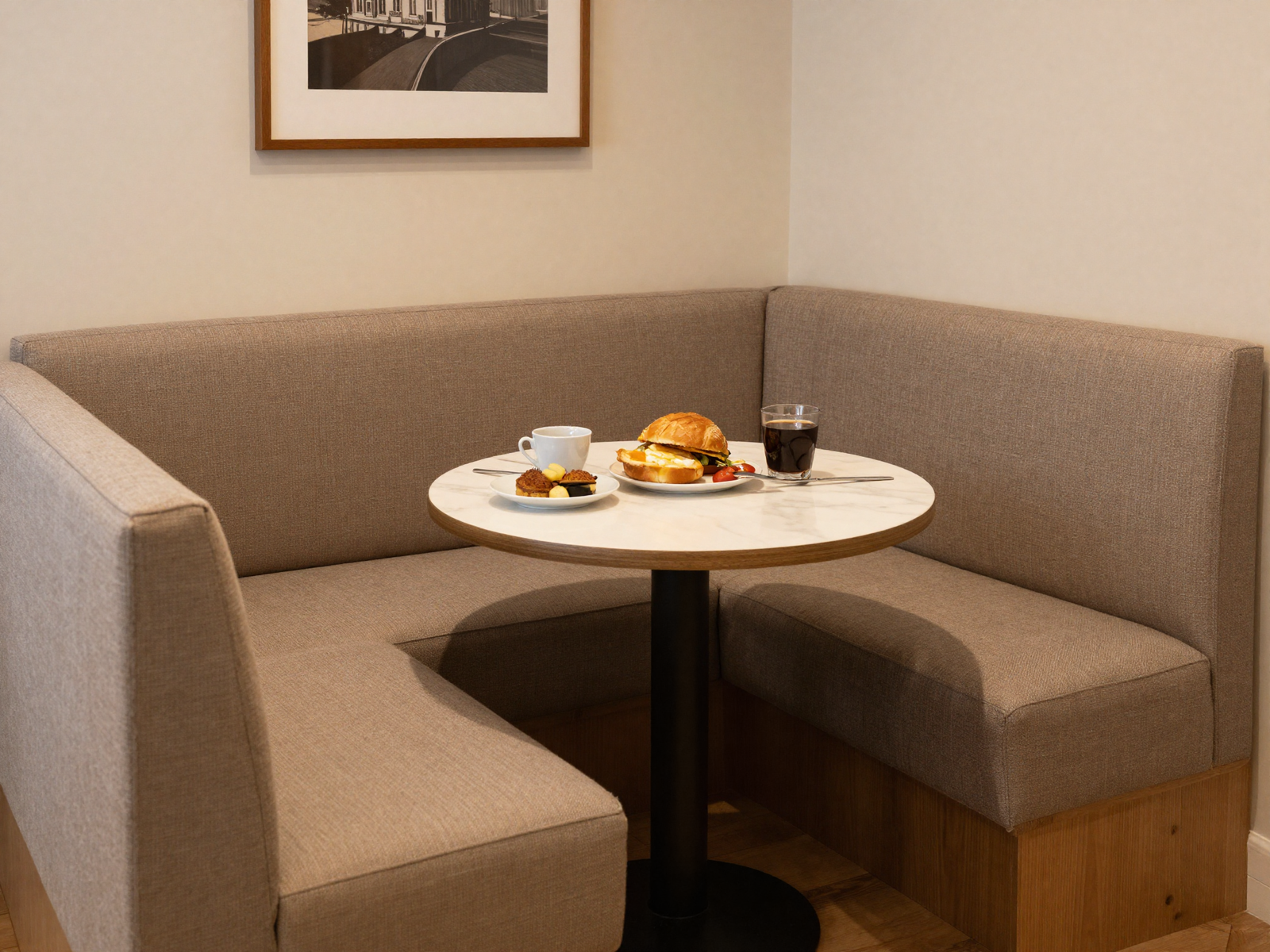
An upholstered bench built into a corner turns an awkward kitchen nook into the most popular seat in the house — and it seats more people per square foot than standalone chairs.
💡 Smart tip: Add a low-maintenance performance fabric on the bench cushion — banquettes see more daily wear than a formal dining chair.
⚠️ Mistake to avoid: Don’t skimp on cushion depth — anything under 18 inches will feel cramped for adults during a full meal.
Effort & Cost Snapshot
| Idea | Effort | Approx. Cost |
|---|---|---|
| 1. Statement Farm-Table Island | High | $400–$1,500 |
| 2. Planned Patina Look | Medium | $50–$200 |
| 3. Oversized Sculptural Pendant | Low | $120–$400 |
| 4. Mix Warm and Cool Metals | Low | $60–$250 |
| 6. Reclaim the Formal Dining Room | Medium | $200–$800 |
| 7. Wallpaper an Unexpected Wall | Medium | $80–$300 |
| 8. Two-Tone Cabinets | High | $300–$1,200 |
| 9. Coffee or Beverage Bar | Medium | $100–$400 |
| 10. Layered Table Centerpiece | Low | $20–$60 |
| 11. Statement Dining Chandelier | Low–Medium | $150–$600 |
| 12. Tactile, Textured Dining Chairs | Medium | $200–$700 (set) |
| 13. Open Shelving, Lived-In Feel | Low | $50–$150 |
| 14. Vintage-Style Rug | Low | $60–$200 |
| 15. Vintage Hutch for Storage | Medium | $0–$400 (thrifted) |
| 16. Rich, Moody Color | Medium | $60–$150 (paint) |
| 17. Textured Backsplash | High | $400–$1,000 |
| 18. Cozy Banquette Nook | High | $500–$1,800 |
You don’t need a full remodel to bring warmth back into your kitchen and dining space. Start with the lowest-effort ideas — a textured rug, a layered centerpiece, a mix of metals — and build from there as your budget allows.
Save this article to your Pinterest board so you can revisit it whenever you’re ready for the next update. 📌
Continue Your Home Transformation
Explore the full collection of step-by-step eBooks and get the guide that fits the room you're working on.