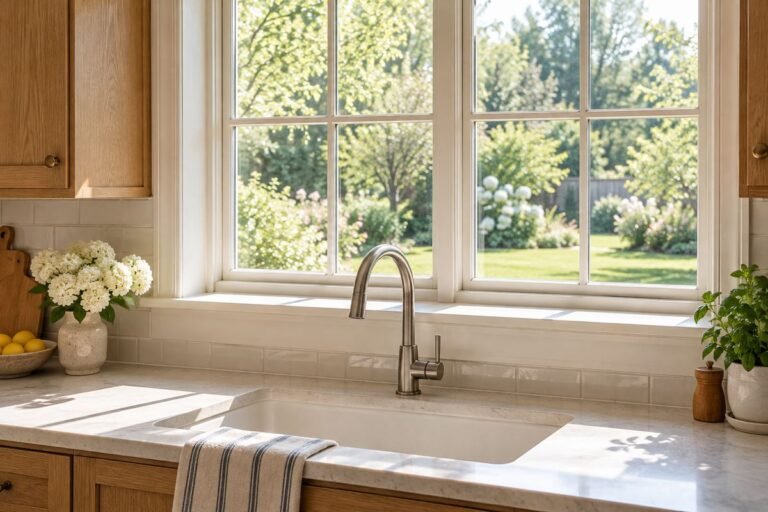
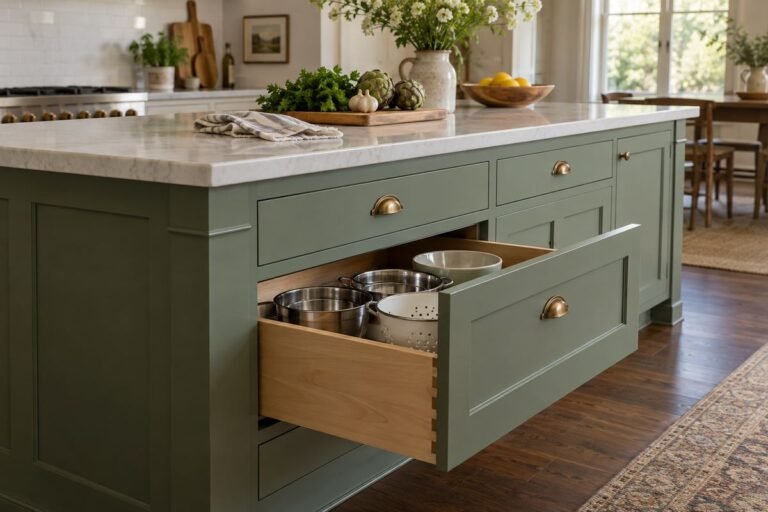
Dining chair ideas work best when the chairs feel as considered in use as they look around the table. A beautiful curved back does little for the room if its arms strike the table apron or its seat feels wrong during an ordinary meal. Start with the actual chair and table together.
Choose a useful daily set before planning extra seats. Compare the people who use the table, the length of a normal meal, the floor and the care routine. A coordinated room can include different chair shapes or materials when each place works and one or two details connect the group.
These 23 original concepts focus on chair selection and composition rather than changing the whole dining-room layout. The illustrations are design concepts, not evidence that a named product has been tested. Use the exact chair’s intended use, care and assembly instructions, and try the real seating where possible.
The images are original AI-generated decor concepts, not installation diagrams or photographs of completed client projects.
Browse These 23 Dining Chair Ideas
Jump to an idea
- Start dining chair ideas with one useful everyday set
- Use warm wood frames to connect separate finishes
- Let a painted chair become a controlled color accent
- Compare a curved back with the way you sit
- Use an upholstered seat with a simple visible frame
- Dining chair ideas with a fully upholstered shape
- Choose removable covers from the exact care label
- Use a solid seat where its feel and care suit the room
- Compare an open spindle back in a compact setting
- Try a woven seat as one deliberate texture
- Use a slender metal frame with a warmer table
- Keep armless dining chair ideas comfortable at the table
- Let armchairs earn the two end positions
- Coordinate a mixed set through one shared detail
- Mix two wood finishes with a repeated seat color
- Dining chair ideas with a calmer matching back height
- Use one contrasting pair instead of a different chair everywhere
- Keep occasional folding seats in a real storage place
- Compare stacking chairs with the stack you will keep
- Choose chair feet for the actual floor
- Test the chair on the actual dining rug
- Let the chair back face the adjoining room deliberately
- Finish dining chair ideas with a normal-use reset
Test dining chair ideas with the table you will use
Record the chair’s overall width, depth, arm height and seat height together with the space beneath the table, including its apron and legs. Then compare sitting, reaching the place setting, moving back and standing up. Keep any normal route behind the occupied chair usable. A nominal matching height does not prove that the complete chair, table and person work together.
| What matters in your room | Detail to compare | What to test |
|---|---|---|
| A table with a deep apron | Armless chairs or arms that genuinely fit | The complete sitting and tuck-under position |
| Long relaxed meals | A back and seat you find comfortable | An ordinary seated trial rather than a photograph |
| Frequent spills | An appropriate easy-care surface or removable cover | The exact care label and practical cleaning routine |
| A visually busy room | One repeated frame or color | The whole group viewed from the entrance |
| Extra occasional guests | Suitable folding or stacking seats | Comfort at the table and their actual storage place |
| An open-plan dining area | A considered chair-back shape | The view from the living area and circulation |
| Different seating preferences | A coordinated mixed set | Every place tested independently |
Separate the room clearance guide from the chair test
IKEA’s dining-table guide asks readers to account for chairs and movement around the table. Its suggested distances are planning guidance, not a substitute for checking the actual occupied arrangement. For this chair-focused decision, include the table legs, apron, chair arms and the route used during a meal; those details can change how a nominally suitable set feels.
Make a dining-chair comparison card
For each shortlisted chair, record the exact model, overall dimensions, seat and arm heights, material, care requirements and whether its cover is genuinely removable. During a trial, note getting in, sitting through a familiar task, reaching the place setting and standing again. Write one specific reason to keep or reject it. Compare the daily set first, then repeat the test for every occasional seat.
1. Start dining chair ideas with one useful everyday set
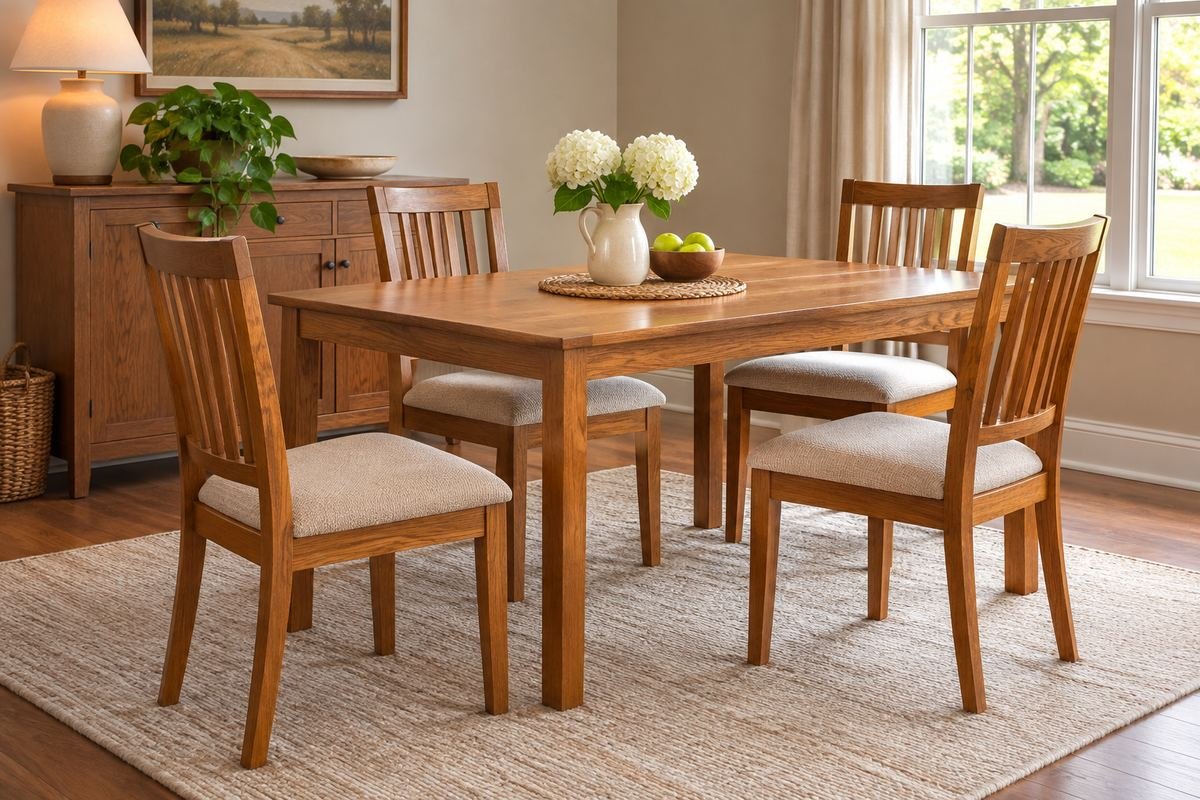
Begin with the places used during an ordinary meal rather than the maximum number of chairs that can surround the tabletop. A consistent daily set makes it easier to judge comfort, spacing and the visual rhythm of the room. Choose chairs that work with the actual table before adding occasional seats.
Try the arrangement with familiar dishes and the chair in its occupied position. Notice whether a table leg blocks one place or a back projects into the normal route. Fewer useful daily seats can make a calmer finished arrangement than a crowded ring of chairs.
Practical tip: Plan the ordinary meal before the largest gathering.
2. Use warm wood frames to connect separate finishes

A wood chair frame can link the dining table to flooring or nearby cabinetry without matching every surface exactly. Compare the undertone and the amount of visible grain in the actual room. A simple frame lets the difference between woods feel intentional rather than accidental.
Bring a material sample beside the table in daylight and evening light where possible. If the finishes compete, repeat the chair wood in one small room detail or choose a quieter seat fabric. Avoid adding several more wood tones merely to make the mismatch seem planned.
Practical tip: Compare undertones beside the table rather than on separate screens.
3. Let a painted chair become a controlled color accent
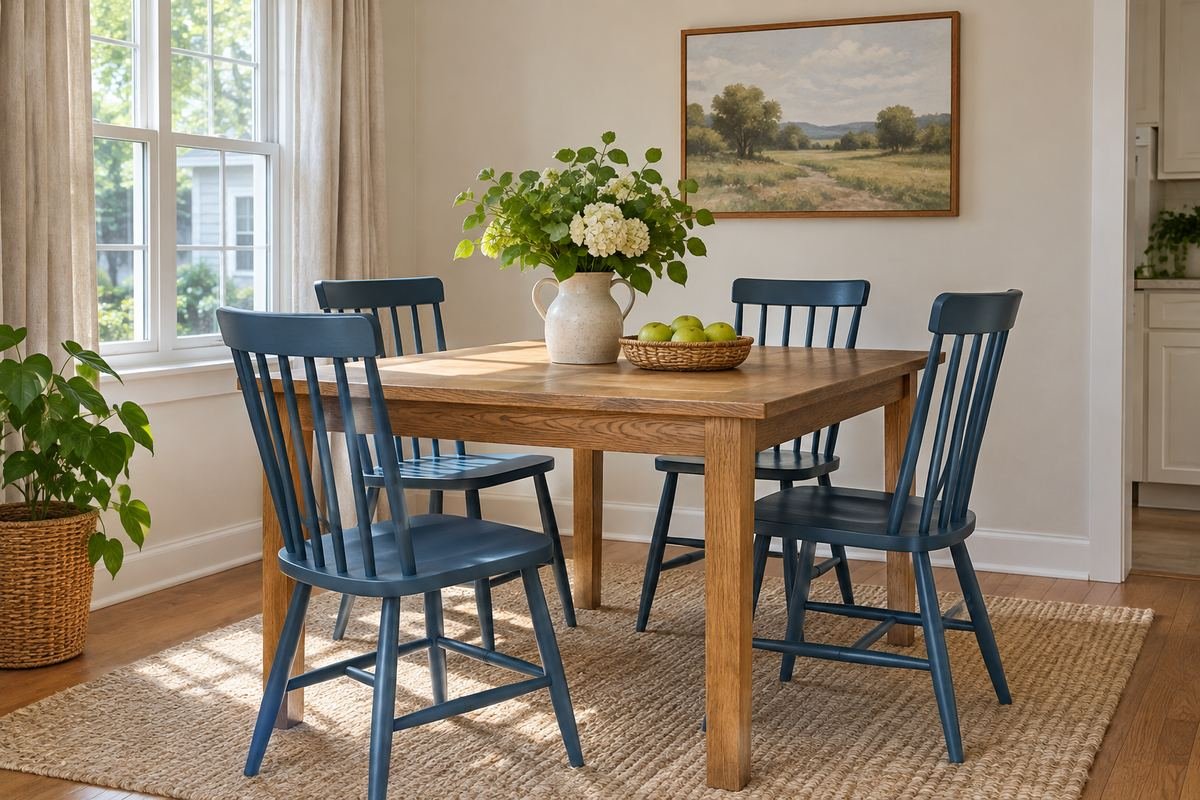
A painted frame can add color while the rest of the dining setting stays simple. Choose one shade that relates to a detail already in the room, such as artwork or a textile. Repeating the same frame color around the table gives the accent a clear boundary.
Judge the chair backs from the entrance because they often occupy more of the view than the seats. Keep the table setting quiet while comparing the painted group. The color should remain useful when the tabletop is cleared rather than relying on a styled centerpiece.
Practical tip: Repeat one chosen color before adding another.
4. Compare a curved back with the way you sit
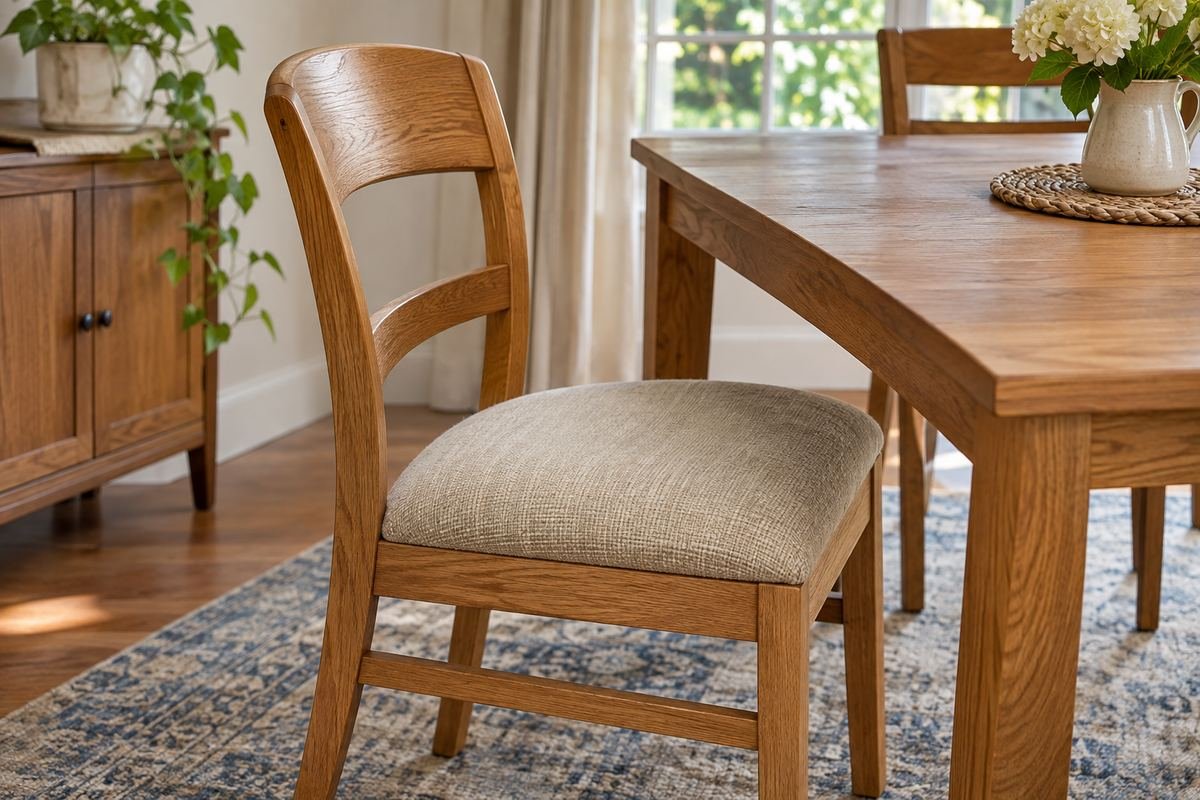
A curved chair back can soften a rectangular table and give the group a more rounded silhouette. Treat that shape as a candidate for a real comfort trial rather than proof of support. Compare where the back meets the person and how the chair feels through an ordinary seated task.
Check the overall width as well as the curved inner shape. A broad wraparound back may need more room between neighboring places than its seat suggests. Choose the shape that works at the table and still leaves a useful route behind it.
Practical tip: Try the exact back shape before buying the group.
5. Use an upholstered seat with a simple visible frame

A padded seat can introduce a softer surface while the open frame keeps the dining group visually light. Compare the actual seat shape, fabric and care instructions. Padding thickness and appearance alone do not establish whether the chair will be comfortable for the people using it.
Test the chair at the table with the seat under normal use, rather than comparing only the unloaded measurements. Keep the fabric color connected to the room and check how crumbs or ordinary spills would be handled according to the product’s guidance.
Practical tip: Choose a care routine you will realistically follow.
6. Dining chair ideas with a fully upholstered shape
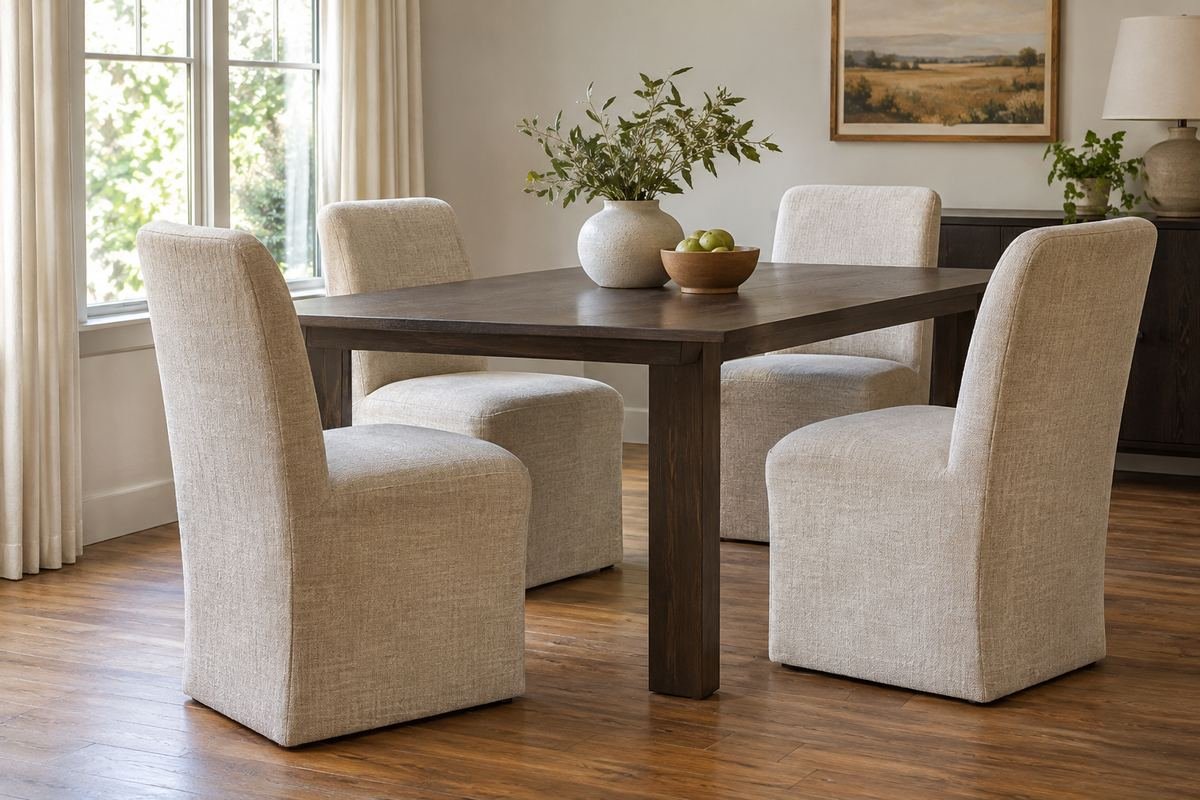
A fully upholstered chair can make a dining setting feel more enclosed and relaxed. Compare its complete width and depth with the available place, since a generous shell can occupy more room than a simple wood frame. Use the actual chair for the comfort decision.
Keep the surrounding room simple enough that the upholstered shapes read clearly. Check seams, fixed versus removable coverings and the allowed cleaning method before choosing a light fabric. Soft appearance should come with a practical plan for maintaining the surface.
Practical tip: Measure the whole upholstered shell rather than only the seat.
7. Choose removable covers from the exact care label
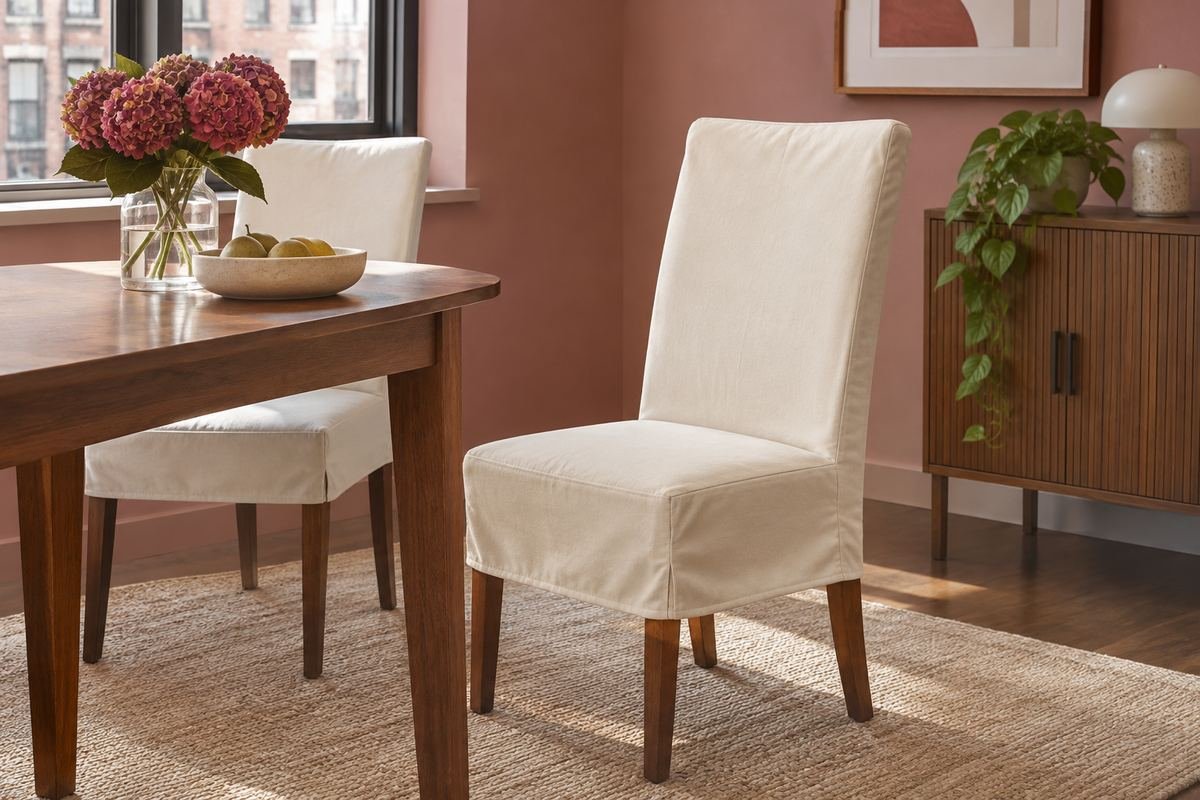
A chair with a genuinely removable cover may suit a household that values a defined cleaning routine. Confirm which parts come off and how the manufacturer says they should be cleaned and refitted. A loose-looking fabric does not prove that the cover is removable or machine washable.
Compare the chair’s appearance after the cover is fitted normally, including how the fabric sits around the seat and legs. Keep spare-cover availability separate from an assumption that every future fabric will fit. Record the exact model on the comparison card.
Practical tip: Check removal and refitting as well as washing instructions.
8. Use a solid seat where its feel and care suit the room
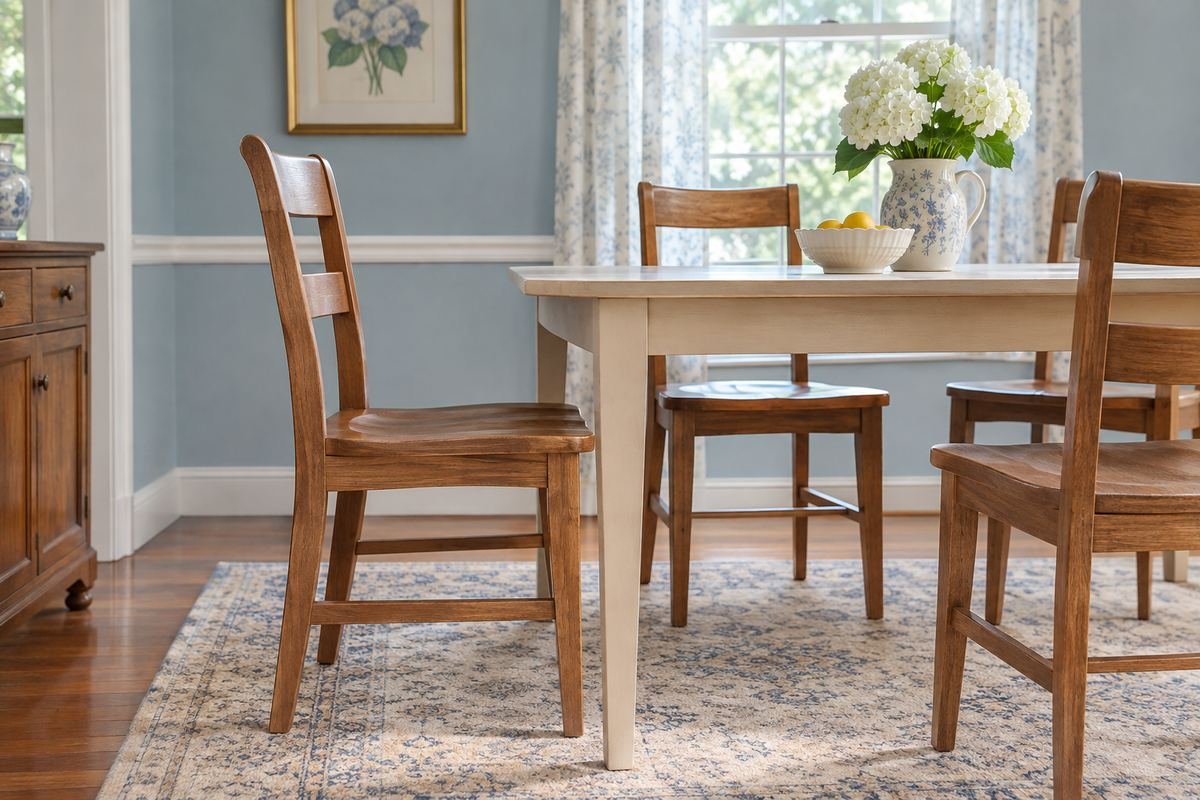
A solid wood or other appropriate non-upholstered seat can give the dining group a clean simple outline. Compare the actual contour and the time spent seated; a visually minimal seat still needs a useful comfort trial. Check the finish’s care instructions rather than assuming every hard surface tolerates the same cleaner.
If a cushion is considered, use one suitable for that chair and check its effect on seating height, stability and the table relationship. Avoid solving an uncomfortable chair with a loose improvised layer that creates a different problem.
Practical tip: Test the finished seat arrangement you will actually use.
9. Compare an open spindle back in a compact setting

A spindle-back chair leaves small views through the frame and can make a compact dining set feel less visually solid. Compare the spacing, finish and top rail with the table’s style. The open appearance is a design choice; comfort still depends on the exact chair and person.
View the whole group from the adjoining room and notice whether several backs create a pleasant rhythm or a busy pattern. Keep other repeated details restrained if the spindles become the main texture. Check that the seat and frame remain suitable for ordinary dining use.
Practical tip: Judge the repeated backs as one group.
10. Try a woven seat as one deliberate texture
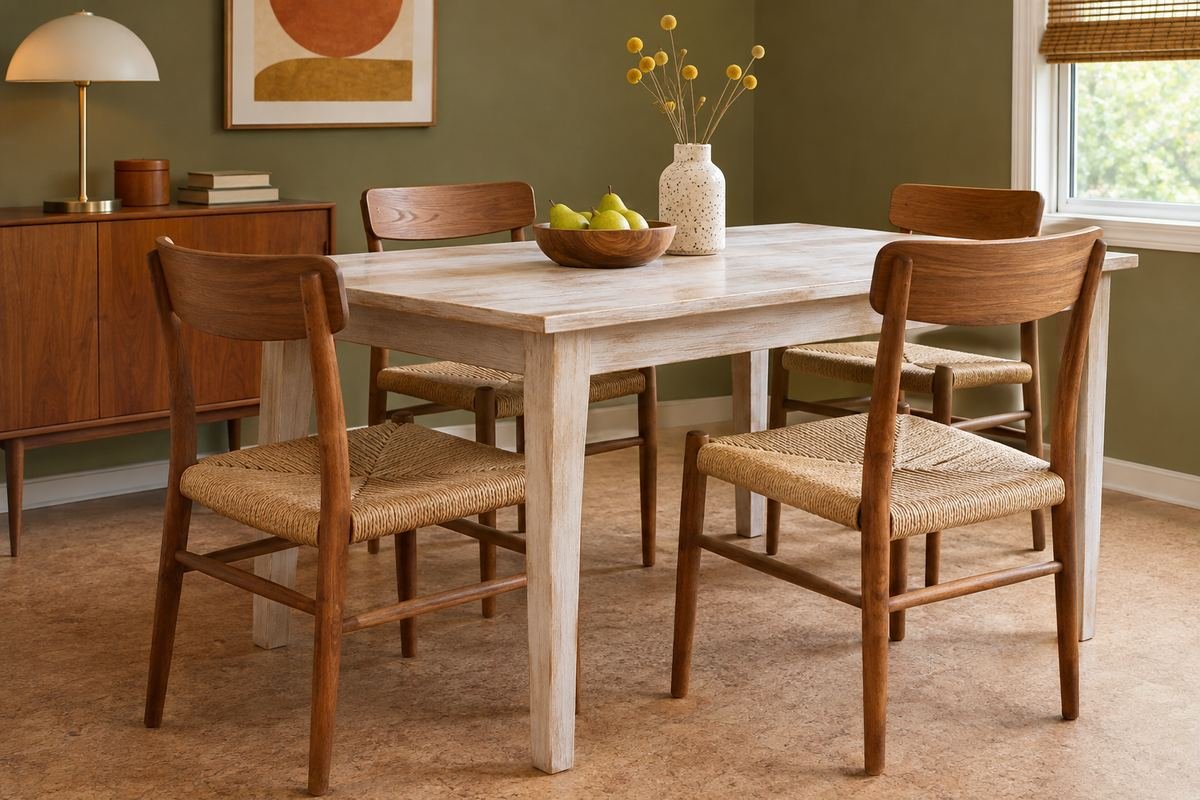
A woven seat can add texture without introducing another strong color. Compare the actual material and construction with the household’s use and the manufacturer’s care guidance. Similar-looking rush, cord and synthetic weaves can need different handling.
Keep the surrounding fabrics quieter so the chair texture has a clear role. Inspect a real sample where possible and ask how the seat is maintained or repaired through the product’s proper support route. Do not assume every woven seat is suitable for outdoor use.
Practical tip: Identify the actual weave material before choosing.
11. Use a slender metal frame with a warmer table

A slim metal chair frame can give a substantial wood table a lighter outline. Repeat the metal finish in one restrained detail if the room needs a connection. The goal is a readable mix of materials rather than a collection of unrelated finishes.
Compare the chair’s weight, floor contact and the exact seat feel during ordinary movement. Check any manufacturer-approved floor protection against the flooring guidance. A visually light frame is not necessarily easier to handle, so test the actual chair.
Practical tip: Compare moving the chair as well as looking at it.
12. Keep armless dining chair ideas comfortable at the table

An armless chair can make it easier to approach the table from the side and may fit a constrained place more readily. Check its overall width, back shape and legs rather than assuming that removing arms solves every fit issue. The actual table apron still matters.
Test getting into the seat with the neighboring chair in its usual position. If the armless model feels uncomfortable, compare another appropriate shape rather than choosing it only because it looks smaller. A useful fit includes the person’s experience of the chair.
Practical tip: Test the whole approach to the seat.
13. Let armchairs earn the two end positions
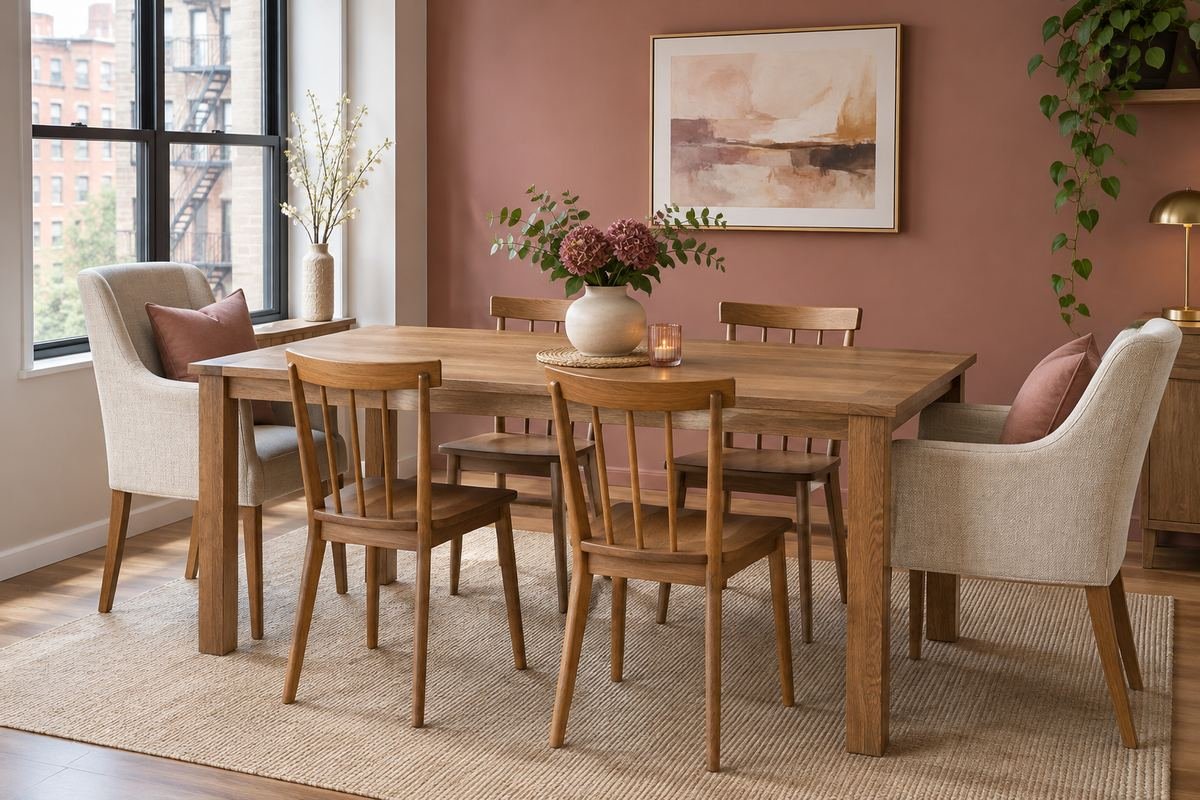
A pair of dining armchairs can frame a rectangular table when the ends have the room and table-base clearance to accept them. Connect the pair to the side chairs through a material or fabric rather than trying to match every detail. Compare the complete chair width before committing.
Check the arm height beneath the tabletop and apron, as well as the route used to sit and stand. An end position does not make a bulky chair automatically suitable. Keep the larger shape only when it improves the way that place is used.
Practical tip: Check both the arms and the end table legs.
14. Coordinate a mixed set through one shared detail

Different chair shapes can feel intentional when one clear detail connects them. Choose a shared frame color, seat fabric or general back height as the starting point. A controlled connection lets the differences read as a considered group.
Compare each chair independently at the table before relying on the visual match. Two seats can look related while placing people very differently relative to the tabletop. Keep the room’s other repeated patterns simple while the mixed set finds its balance.
Practical tip: Choose one connection strong enough to repeat.
15. Mix two wood finishes with a repeated seat color

A shared seat color can connect chair frames in two wood finishes. Keep the wood tones deliberate and compare their undertones beside the table. Repeating one fabric or suitable seat surface gives the group a consistent line at sitting height.
Use the second wood finish in a balanced part of the arrangement rather than introducing a new finish at every place. Check that each complete chair remains comfortable at its position. A mixed set should be easy to use as well as easy to explain visually.
Practical tip: Repeat the seat detail before adding a third finish.
16. Dining chair ideas with a calmer matching back height

A mixed group can look quieter when the chair backs form a related line around the table. Compare the whole backs from the room entrance, especially in an open-plan space. Similar height can connect otherwise different materials without making the chairs identical.
Do not choose back height at the expense of comfort or the table relationship. Start with chairs that serve their users, then compare how the group reads. A slight variation can be part of the room when the other details remain restrained.
Practical tip: View the backs from the place you enter the room.
17. Use one contrasting pair instead of a different chair everywhere

A contrasting pair can introduce variety while most of the seating remains consistent. Place the pair where its dimensions and use make sense, then connect it to the larger group through a repeated color or material. This gives the difference a clear role in the room.
Compare the composition with the table cleared and the chairs returned after use. If the contrast depends on several accessories to feel connected, simplify the pairing. Every chair should remain useful at its place without continual rearranging for appearance.
Practical tip: Start with one deliberate difference.
18. Keep occasional folding seats in a real storage place
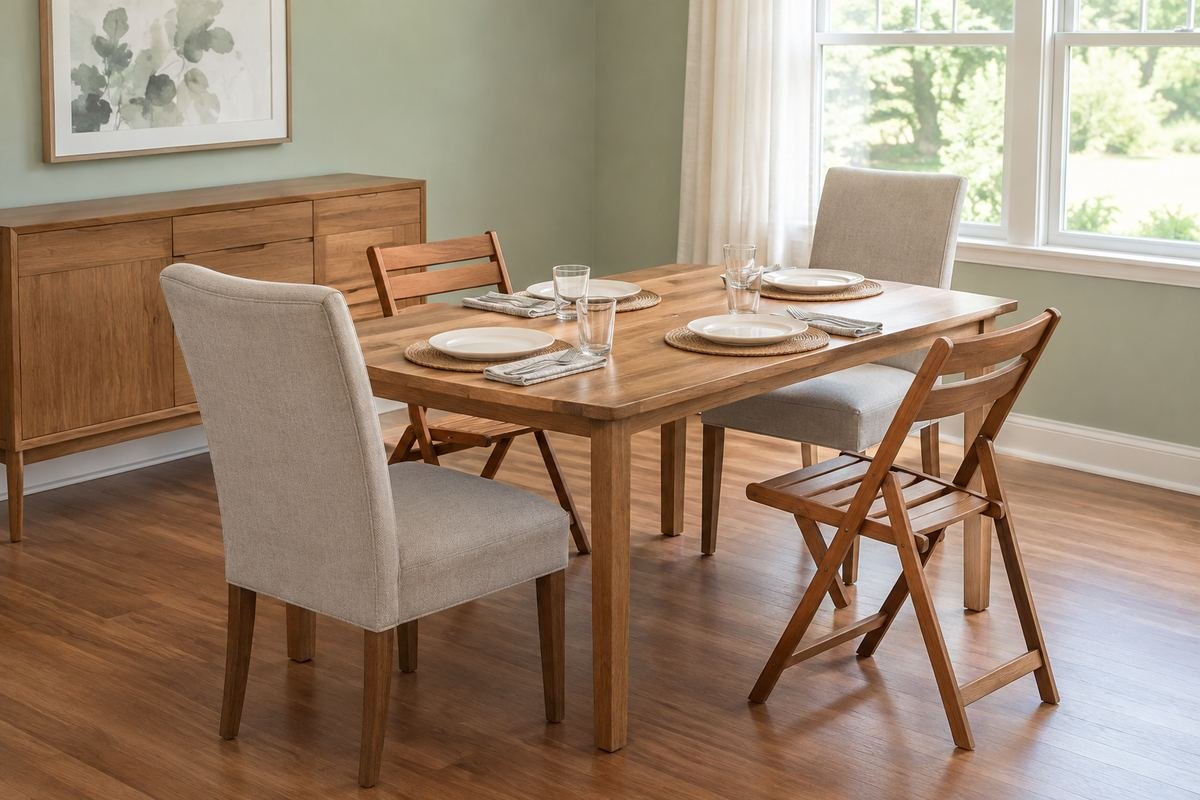
A suitable folding chair can support extra diners when it is comfortable at the table and has a practical place between gatherings. Check the chair’s intended use, setup and storage instructions. A spare seat is less useful when it permanently blocks a room route.
Test the guest arrangement with the actual table extension or place setting that will be used. Then check the closed chair’s storage dimensions and how it is retrieved. Occasional use does not remove the need for a comfortable seat and a clear normal movement.
Practical tip: Test both the dinner position and the stored position.
19. Compare stacking chairs with the stack you will keep
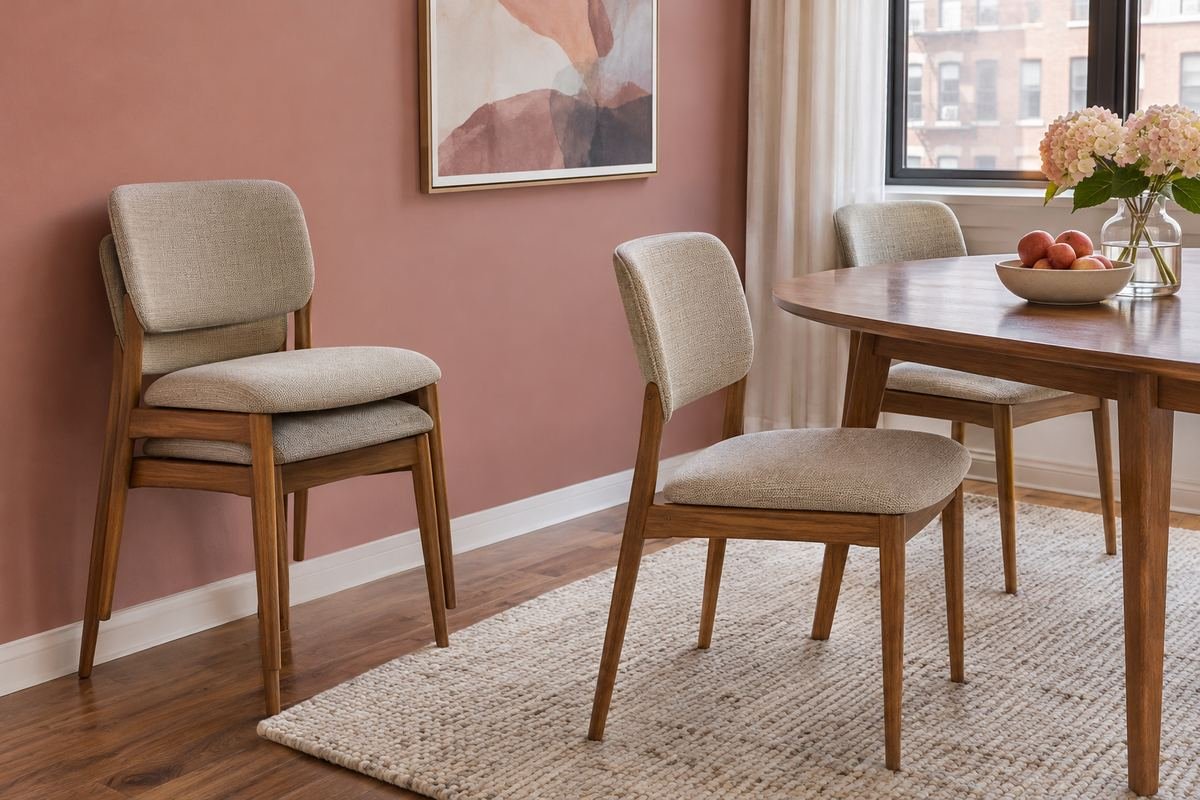
A stacking model may suit a household that regularly needs additional seats. Verify that the exact chairs are designed to stack, together with the permitted arrangement and handling instructions. Do not infer stackability from a slim frame or a similar-looking chair.
Give the retained stack a stable appropriate storage position outside the daily route. Compare taking one chair from it and returning it after use. Keep only the number needed rather than building a tall stack simply because more chairs can be purchased.
Practical tip: Confirm the exact model’s stacking instructions.
20. Choose chair feet for the actual floor
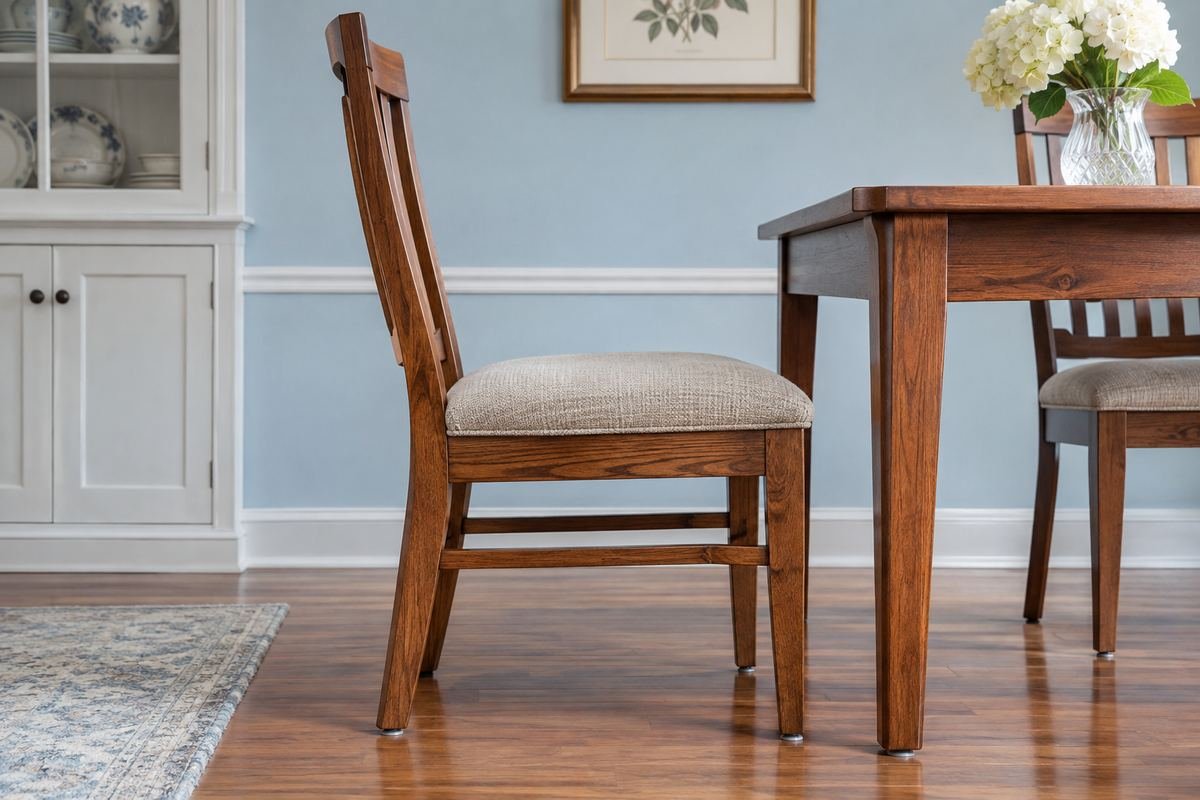
The contact between chair and floor affects the everyday reset. Check the chair maker’s guidance together with the floor manufacturer’s instructions for suitable protection and maintenance. Different floor finishes and chair-foot shapes may need different products.
Test ordinary movement without dragging a chair in a way the instructions discourage. Keep any protection in sound condition and review it as part of normal cleaning. Do not assume one adhesive pad or accessory works for every frame and floor.
Practical tip: Check both manufacturers before adding floor protection.
21. Test the chair on the actual dining rug
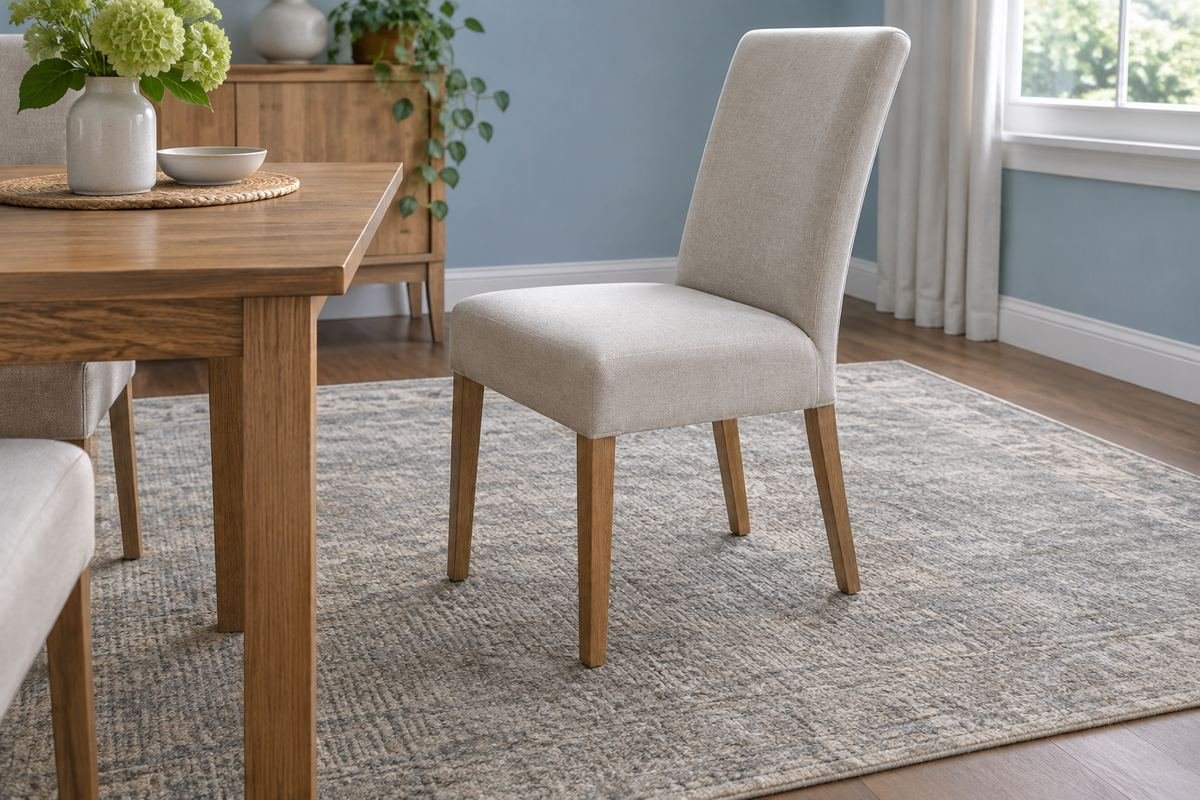
A chair that feels useful on a showroom floor can behave differently on the rug at home. Compare its ordinary movement with the rug’s size, edge and surface, following the guidance for the actual products. Check the route from sitting to standing with the chair in its occupied position.
Avoid judging the arrangement from a tucked-in photograph alone. If the chair repeatedly catches an edge or becomes awkward to move, review the rug or chair choice together. A bare floor can also be a considered option where the rug complicates the task.
Practical tip: Try a normal meal movement with the rug in place.
22. Let the chair back face the adjoining room deliberately
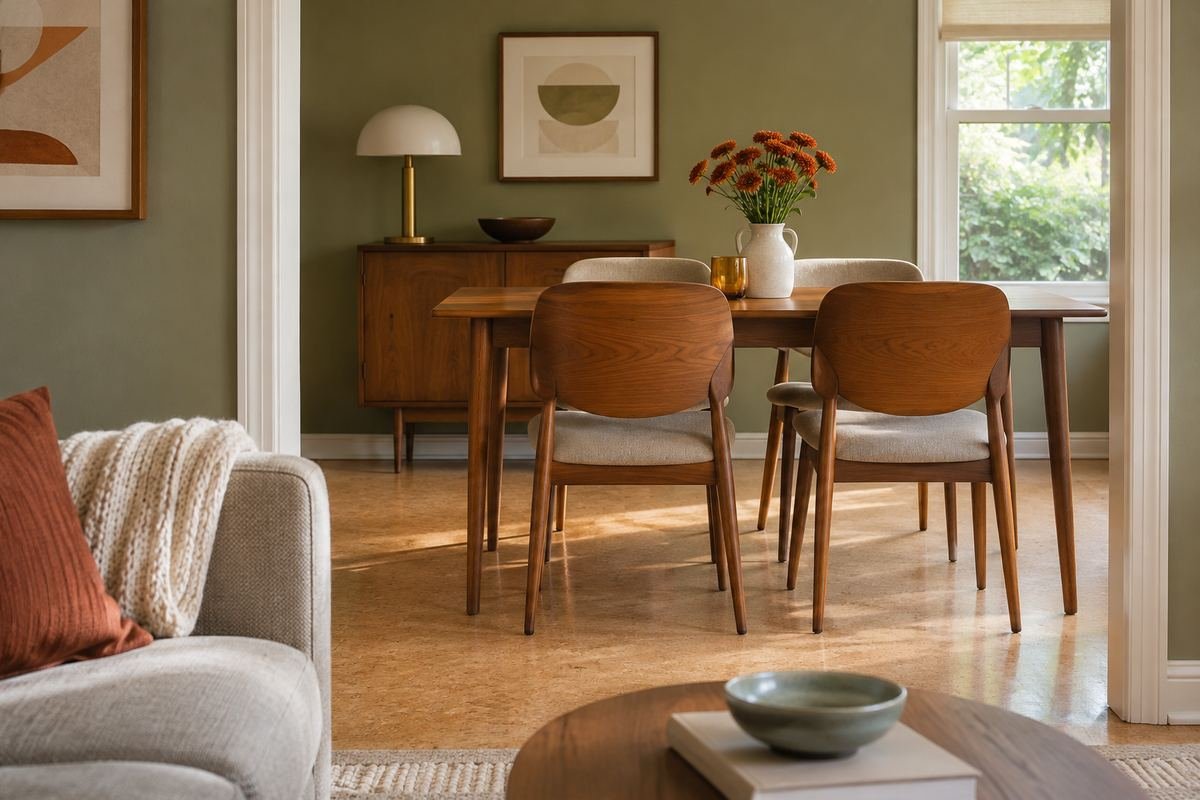
In an open-plan home, the outside of the chair back may be the dining set’s most visible detail. Compare its shape, seams and frame from the living area. A quiet finished back can connect the dining group to the room without extra decoration.
Keep the sightline practical as well as attractive. Test the chair’s normal pulled-back position and the route behind it before choosing a broad silhouette. The view should remain considered after a meal, when the chairs have been returned normally rather than arranged for a photograph.
Practical tip: Assess the view from the adjoining seating area.
23. Finish dining chair ideas with a normal-use reset
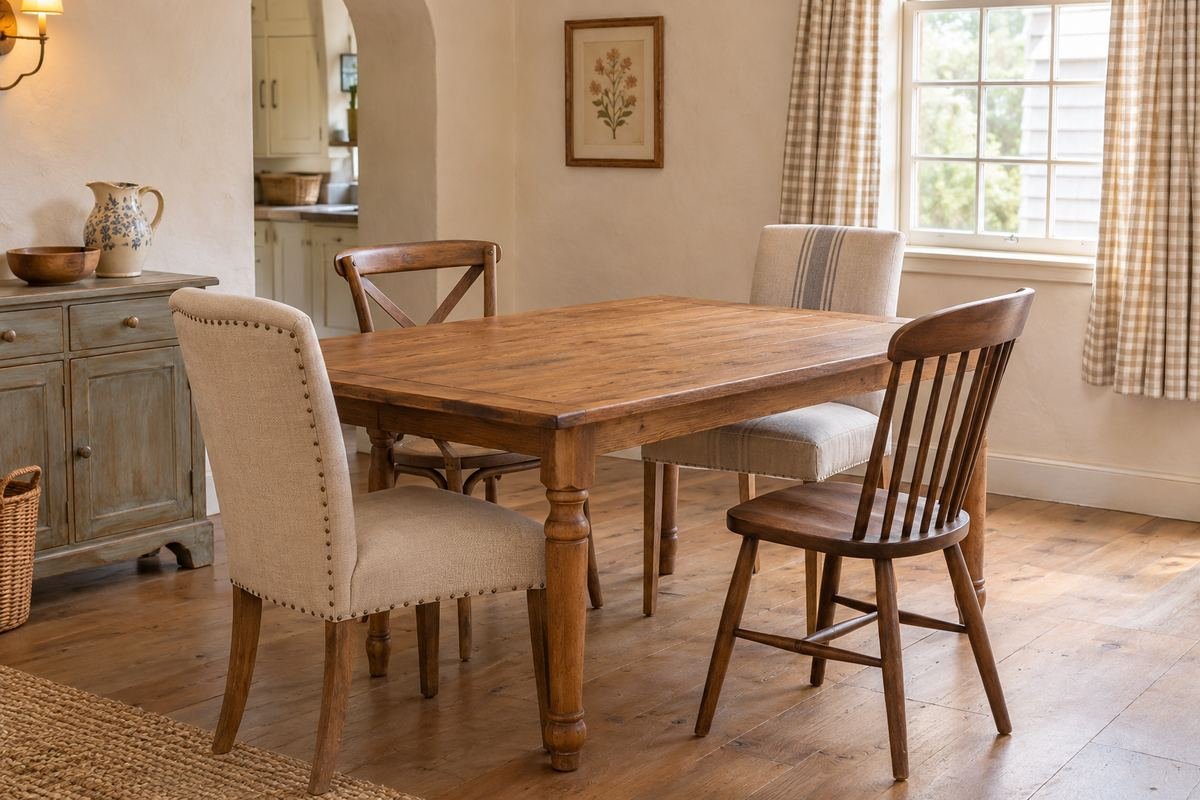
Return the chairs after an ordinary meal and review how the group settles. Notice whether one chair remains pulled out because its arms do not fit, whether a foot catches the rug, or whether extra seating has no useful destination. Correct the repeated issue before adding another decorative layer.
Use the comparison card to keep the reason behind the final selection. A successful set does not require every chair to look identical, but each should work at its place and return without an awkward maneuver. Let the settled everyday arrangement become the finished design.
Practical tip: Improve the chair that repeatedly interrupts the routine.
Frequently Asked Questions
Do dining chairs have to match the table?
No. Coordinate the group through a shared finish, color, shape or fabric while checking every chair’s actual fit and comfort. Different chairs should still work with the table apron, legs and place setting. A matching brand or set name does not replace that test.
How do I know whether a dining chair fits under my table?
Compare its complete dimensions, including arms and projecting back, with the table’s underside, apron and legs. Test moving into the sitting position and returning the chair normally. An armless chair can still be too wide or awkward for the available place.
Are upholstered dining chairs difficult to maintain?
That depends on the exact fabric, construction and care instructions. Check whether covers are removable and what cleaning method is allowed. A similar-looking chair can have a different care routine, so choose from the actual product rather than the upholstery’s appearance.
Can I mix chairs at the ends of a table?
Yes, when their dimensions and movement work in those places. Connect them to the side chairs through a repeated detail, and test the ends against the table base and nearby circulation. A larger end chair should earn its place through comfortable use.
Are folding chairs suitable for extra dinner guests?
A chair intended for the use can be useful if it is comfortable at the actual table and can be set up and stored according to its instructions. Check the complete seated arrangement rather than assuming every folding chair has a suitable seat height or back.
Should I buy all the chairs before trying one?
Where possible, try the exact chair with the intended table before committing to a full group. Use the comparison card to record a real trial and check the retailer’s current terms yourself. These concepts illustrate choices; they do not establish that a chair will suit every person.
Choose the Details That Work in Your Home
Choose dining chair ideas from the way the table is used, then use color, shape and material to bring the group together. Test each complete chair, understand its care and give extra seats a real storage plan. The most convincing dining set is one that remains comfortable and easy to return after the meal.
For related ideas, explore dining room rug ideas, dining room paint colors, dining table sizing checks, dining room lighting ideas.
Planning References
IKEA: choosing dining chairs for comfort, materials and use; IKEA Canada: mixing dining seats and occasional seating; IKEA US: account for chairs and movement around a dining table. Follow the instructions for the exact products you choose.
Optional digital guide for this topic
If you prefer a structured workbook, explore this related paid guide.