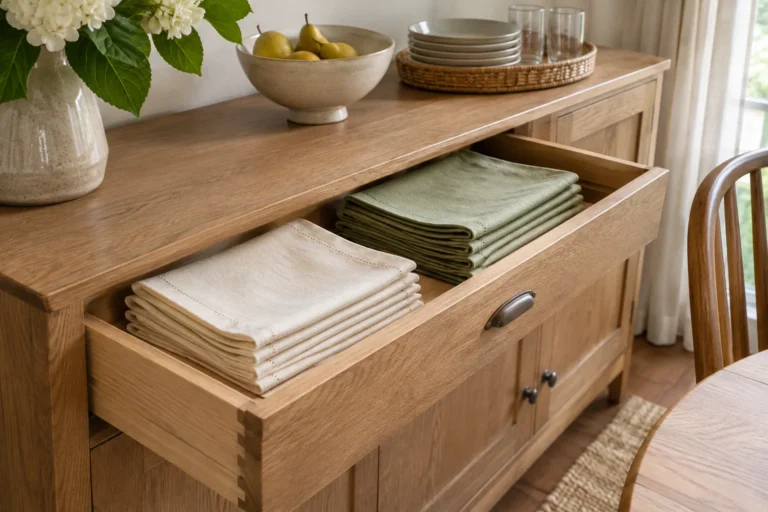
Useful paper file storage ideas give a sheet a clear destination after it enters the home. Incoming mail, a current project and an important original do not need the same container. Begin by deciding what the paper is for and when it will be needed again, then choose a tray, folder or cabinet that supports that task.
These 25 options focus on household paper organization. They do not set document-retention periods or replace requirements from an issuing organization or relevant professional. Keep valuable or fragile originals separate from ordinary working papers, and choose their housing through appropriate preservation guidance rather than a matching-office aesthetic.
Contents
- 1. Give incoming paper one shallow landing tray
- 2. Separate the small group that needs an action
- 3. Use an upright sorter for a few current folders
- 4. Keep one project packet in a flat document wallet
- 5. Choose a portable file box through its filled weight
- 6. Match hanging folders to the actual frame and paper size
- 7. Keep letter and larger formats in their intended compartments
- 8. Use magazine files for everyday reference packets
- 9. Place manuals with an index of the equipment they belong to
- 10. Use a binder only for papers that suit its format
- 11. Keep small loose slips in a bounded secondary folder
- 12. Give private paper an appropriately controlled location
- 13. Set a complete opening path for a file drawer
- 14. Keep current files in a removable cabinet module
- 15. Separate household members without duplicating the whole system
- 16. Use one packet for an occasional household project
- 17. Give oversized sheets a suitable flat home
- 18. Distinguish long-term paper housing from everyday desk files
- 19. Read material specifications beyond the word archival
- 20. Choose a stable indoor location before choosing a prettier box
- 21. Keep food and drink outside the paper-handling space
- 22. Keep a short locator list for occasional files
- 23. Give papers awaiting a decision a small temporary boundary
- 24. Choose empty organizers whose care fits their materials
- 25. End with a return path that works during an ordinary week
Sort by next use before choosing a file
List the retained groups, largest sheet size and how often each group is consulted. Separate papers needing action from current reference, longer-term records and material awaiting a careful decision. Measure the full folder, tab and container, including the opening required to remove it. Keep private information out of unnecessarily visible positions and give the system a manageable review step. A larger box will not decide which papers belong in it.
Choose an arrangement that fits your situation
- New paper awaiting a first look: One shallow incoming tray with a defined onward step
- A few current projects: Individually removable folders in a modest supported sorter
- Papers used in another room: A manageable portable file with a clear landing and return place
- Oversized or fragile originals: Appropriate full-sheet supportive housing and specific material guidance
- Private papers in a shared household area: A suitable access-controlled location rather than exposed labels
- A deep box repeatedly fills with mixed paper: Simplify the category and review path before adding capacity
1. Give incoming paper one shallow landing tray
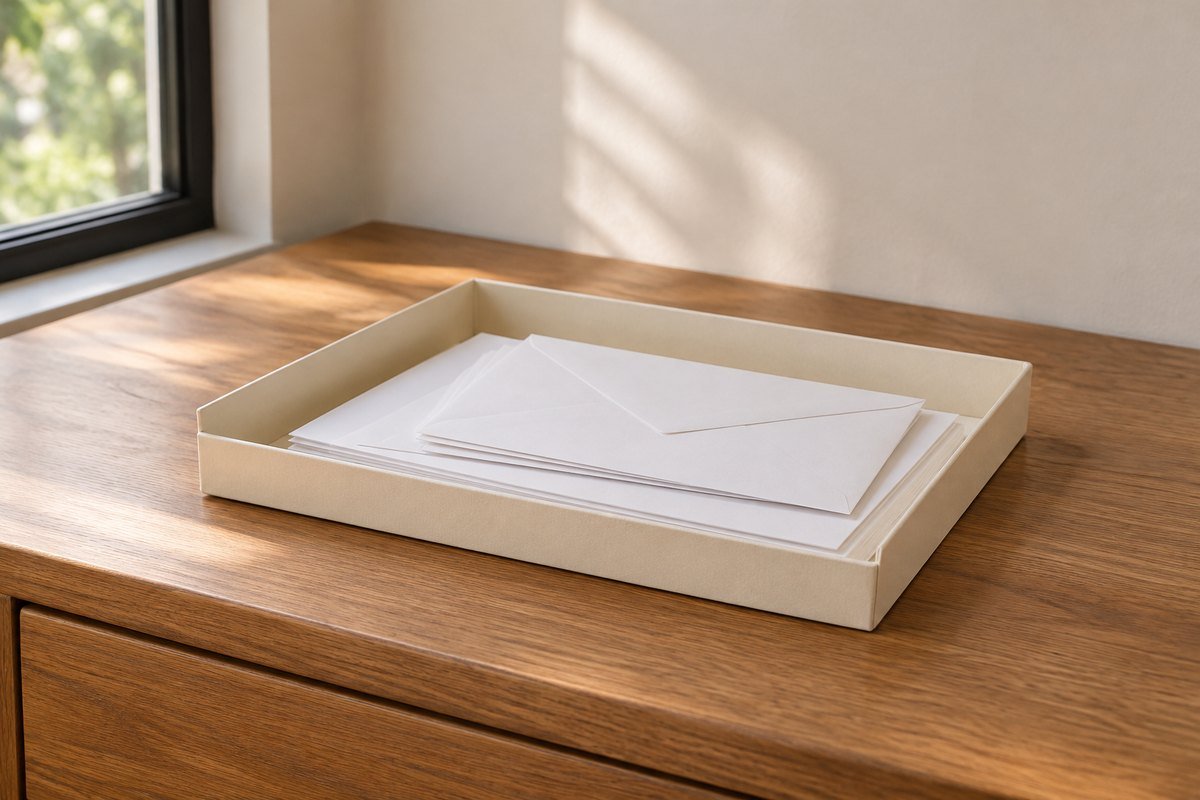
A single low tray can collect the papers that have just arrived without assigning them permanent storage immediately. Place it where the household can actually review it. Keep its role distinct from completed records, and decide when its contents move onward. A modest tray makes the incoming group easier to see than a deep basket with several unrelated layers.
2. Separate the small group that needs an action
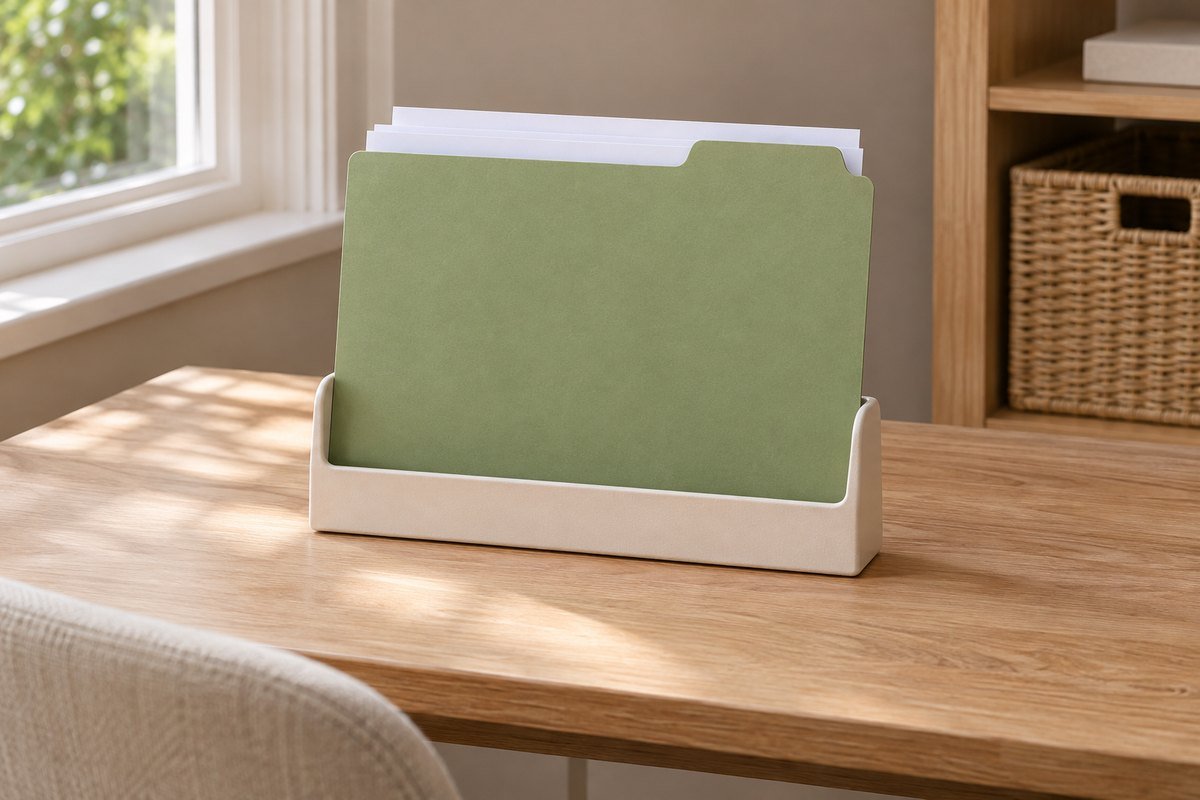
An action folder can hold papers that require a specific next step. Use category words that make sense to the actual household instead of creating many similar-sounding stages. Keep the folder convenient to open and review. When the action is finished, give the paper its next suitable destination so the active file does not become an archive by accident.
3. Use an upright sorter for a few current folders

A small sorter can keep independently useful project folders visible. Compare slot width with the filled folders and leave enough room to remove one without lifting the rest. Keep the group limited to work in progress. If every old project remains in the front row, review the contents before buying a wider sorter that occupies more of the working surface.
4. Keep one project packet in a flat document wallet
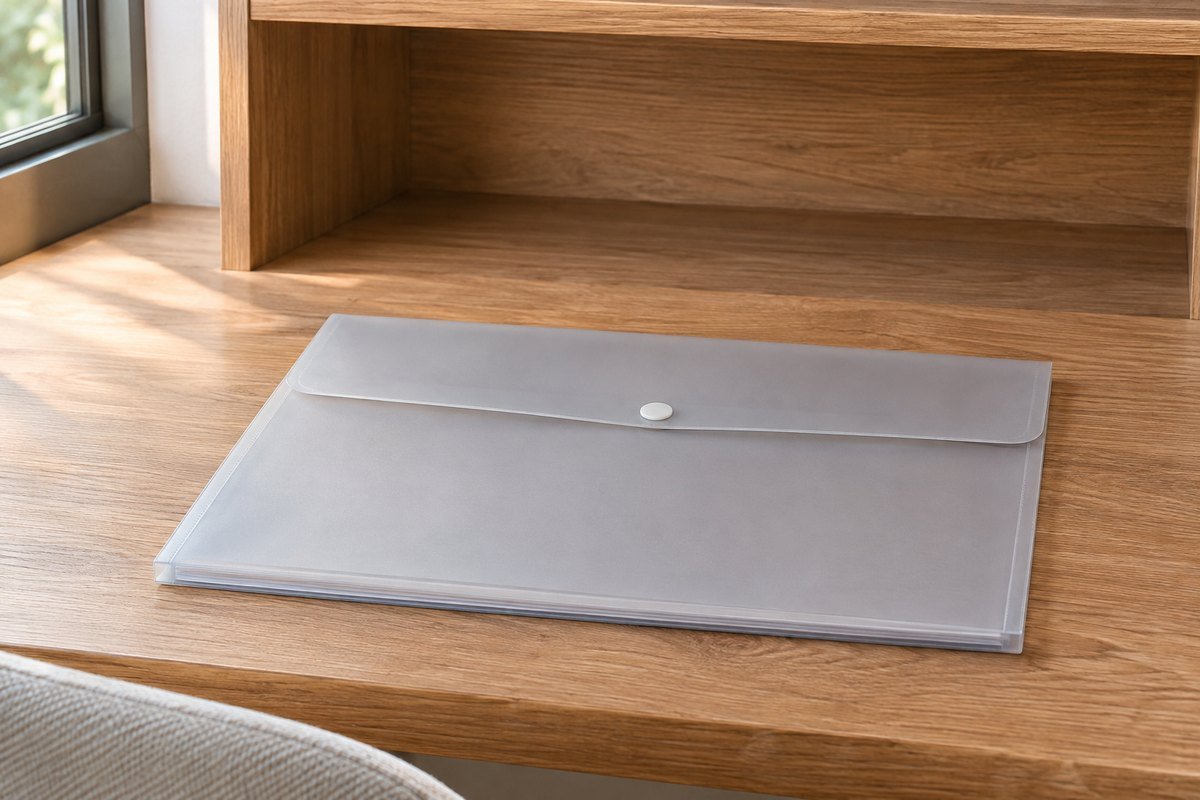
A suitable wallet can keep a small related packet together when it moves between storage and a working surface. Include its closure, spine and full paper size when measuring the shelf. Choose a packet that opens without forcing the corners. Avoid treating a wallet as a place for an unlimited mixed collection simply because its closure still fastens.
5. Choose a portable file box through its filled weight

A handled file box can suit a modest paper collection used in more than one room. Compare the fully loaded box with the handle and manufacturer's instructions, then plan where it rests during use. Keep the retrieval and return route clear. A box that is easy to carry empty may be inconvenient once all folders are included.
6. Match hanging folders to the actual frame and paper size
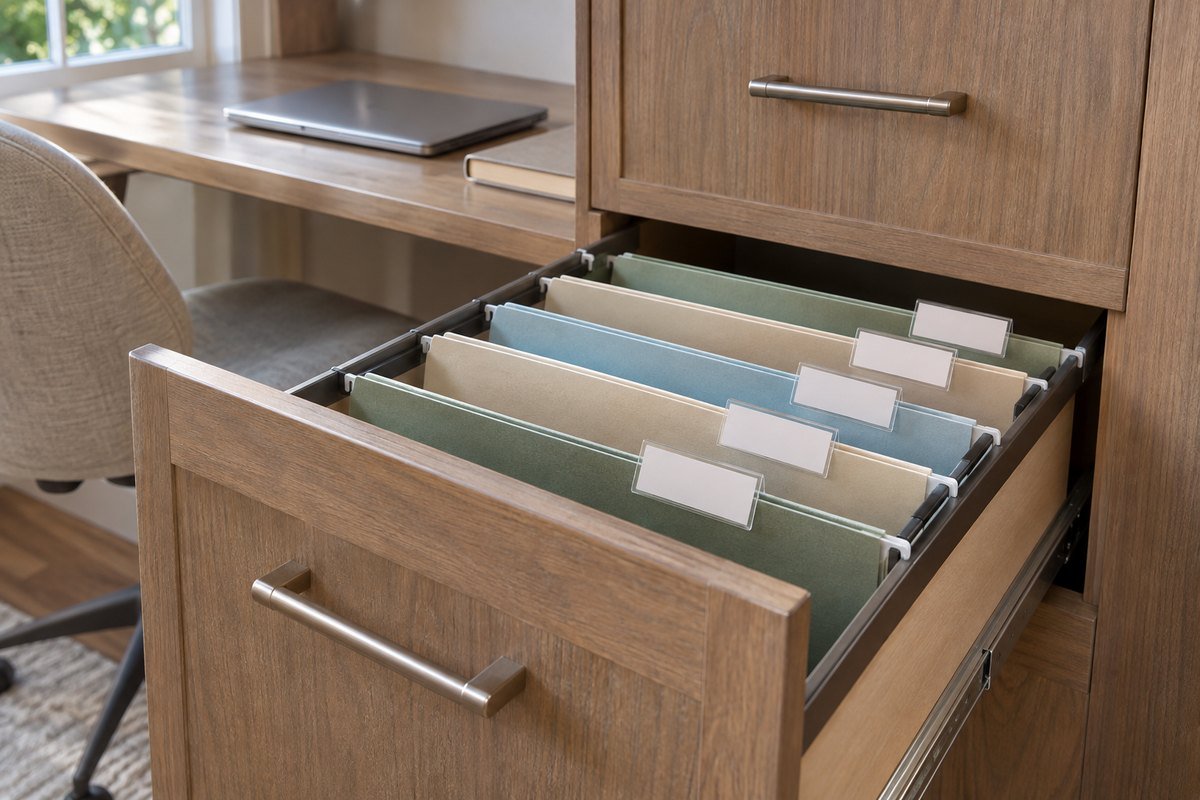
A hanging-file drawer needs compatible folders and a correctly supported frame. Compare the rail arrangement, folder format and largest retained sheet before loading it. Include the tab height in the closed-clearance check. Ordinary working folders can hang appropriately in a compatible system; this arrangement is separate from the flat supportive housing a fragile paper original may need.
7. Keep letter and larger formats in their intended compartments
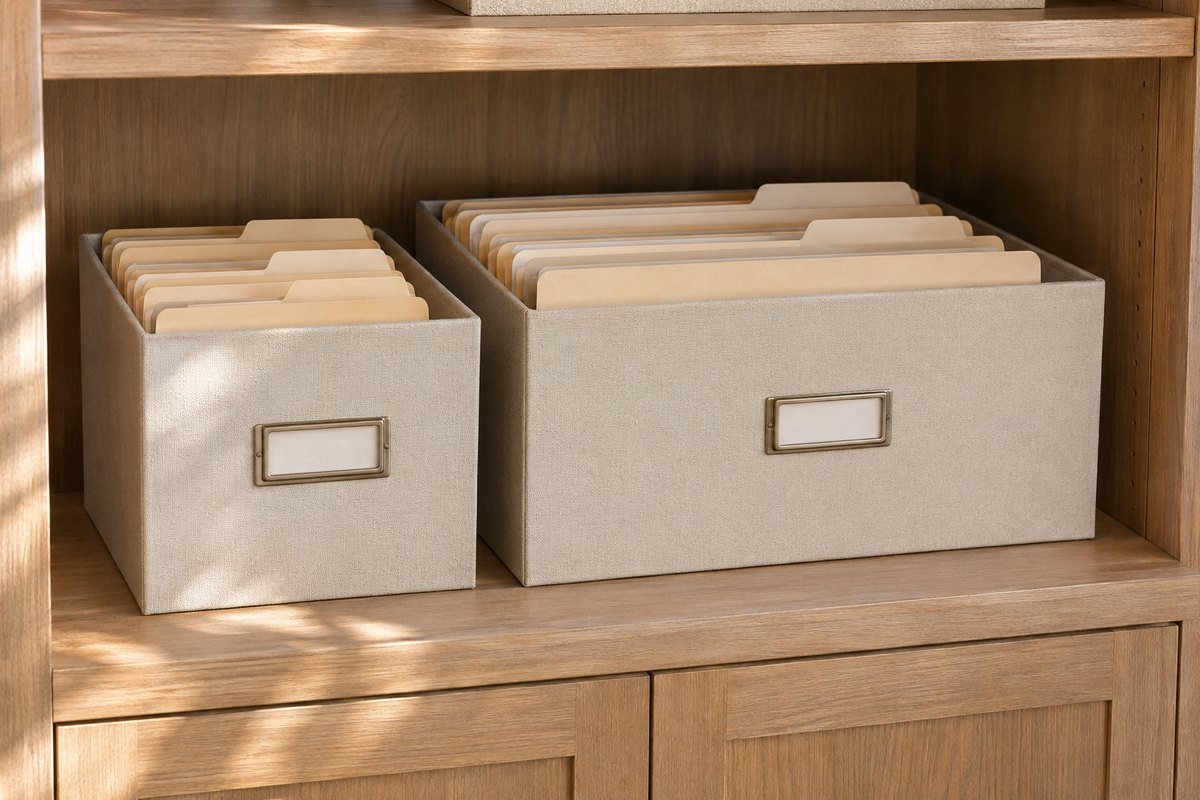
Mixed formats can make a supposedly generous drawer awkward to use. Compare each actual sheet and folder with the compatible storage system rather than folding a larger document to fit a smaller file. Give the larger format its own appropriate compartment when necessary. Retain useful separation so a short ordinary paper does not disappear beneath oversized sheets.
8. Use magazine files for everyday reference packets
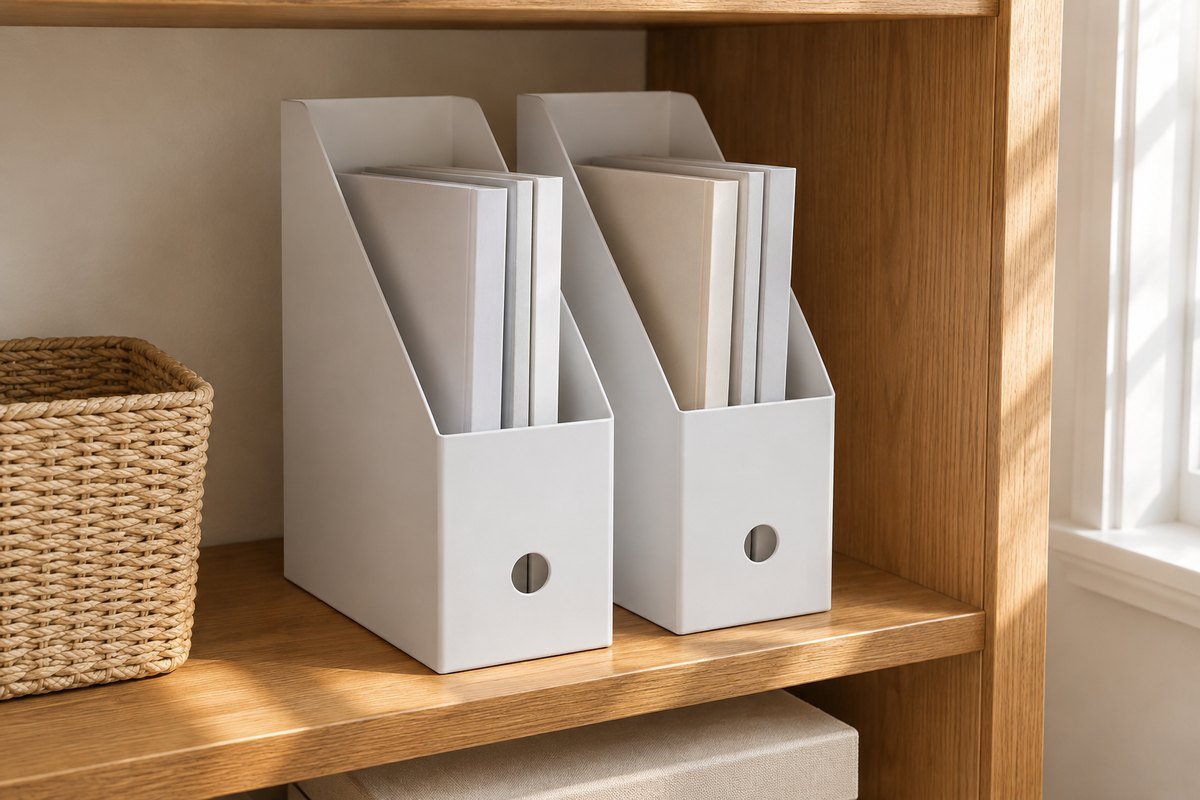
An upright magazine file can hold suitable manuals or current reference packets on a shelf. Compare its usable opening and support with the actual contents. IKEA's cited TJABBA model measures 4 inches wide, 9¾ inches deep and 11¾ inches high. Those are one model's dimensions, not a promise that a particular folder or long-term paper collection will be appropriately housed.
9. Place manuals with an index of the equipment they belong to

A bounded manual file can be easier to use when its contents match equipment still in the home. Keep a short personal list that points to the correct packet or appropriate official digital manual. Review it after equipment changes. This avoids filling every shelf file with documents whose device has gone while a current instruction sheet remains difficult to locate.
10. Use a binder only for papers that suit its format

A binder can organize frequently consulted ordinary sheets when its chosen sleeves or filing method are appropriate. Check page size, filled thickness and the shelf needed to remove it. Keep original documents that should not be punched in suitable separate housing. A ring mechanism is one working format, not a preservation method for every paper.
11. Keep small loose slips in a bounded secondary folder

Small receipts or notes can vanish in a full-sized file. A suitable envelope or smaller folder can hold a related short-term group within the wider system. Keep its purpose and review step understandable. Important originals, unfamiliar printing and special materials may need separate handling; do not apply a universal storage life or copy-and-discard rule to every slip.
12. Give private paper an appropriately controlled location

A closed cabinet can keep papers out of casual view, but choose access arrangements through the sensitivity of the actual contents and who needs them. A decorative door or ordinary lock is not a claim of fire, water or burglary protection. Keep the location practical enough that relevant papers are returned rather than left exposed on the desk after use.
13. Set a complete opening path for a file drawer

Measure the working space in front of a filing unit, including the chair and nearby doors. Test access using the actual furniture instructions and intended load. Follow stability and anchoring guidance where specified. The drawer's advertised capacity is not enough if opening it blocks the only route or requires moving another piece of furniture every time.
14. Keep current files in a removable cabinet module

A removable file module can make a deeper cupboard useful without reaching individual folders at the rear. Compare its filled weight, handle clearance and the shelf's instructions. Leave a suitable landing surface nearby. Keep the module modest; a large container is less helpful if using it requires setting a heavy mixed paper collection on the floor.
15. Separate household members without duplicating the whole system

A shared paper area can use a few distinct folders or modules for papers that belong to different users. Agree a small common group where that is useful, and keep private material appropriately separate. Choose distinctions that the household can maintain. Identical quantities or matching folder colors are optional when the actual paper responsibilities differ.
16. Use one packet for an occasional household project

A decorating project or appliance comparison can have one temporary home while decisions are active. Keep samples and bulky objects separate if they distort or dirty the paper. Review the packet when the project ends, moving retained reference and important originals to suitable locations. A temporary project category is useful when it has a clear closing step.
17. Give oversized sheets a suitable flat home

A larger plan or drawing may need a flat folder or box that supports its full sheet. Compare the opening, removal path and furniture footprint before choosing the container. Avoid creating a new fold simply to fit the existing office file. Delicate or valuable material may need advice from an appropriate conservator rather than a general household organizer.
18. Distinguish long-term paper housing from everyday desk files

Valued paper originals need a separate material decision. The Library of Congress describes supportive acid- and lignin-free folders and document boxes, and recommends flat storage in appropriate conditions. Compare the exact paper and media before choosing an enclosure. A coordinated cardboard magazine file is not automatically suitable for preservation simply because the object fits inside it.
19. Read material specifications beyond the word archival

The Library of Congress cautions that an archival label alone does not establish suitability. Check actual material information and the requirements of the paper being stored. Do not infer acidity, buffering or compatibility from the color of a folder or an AI illustration. Keep the supplier's relevant specifications with the plan so a later replacement can be compared meaningfully.
20. Choose a stable indoor location before choosing a prettier box

A container cannot correct an unsuitable room. Library of Congress guidance favors clean, stable, relatively dry conditions with limited light and distance from heat sources; it warns against leak-prone locations and environmental extremes. Compare the intended shelf with the actual room. Keep valuable paper away from a risky attic or basement rather than relying on a decorative lid.
21. Keep food and drink outside the paper-handling space

A useful paper station includes an ordinary clear surface for opening and returning a file. Keep refreshments elsewhere while the papers are handled, following the Library's general care guidance. Make the separation convenient rather than balancing a drink on the edge of the same small table. Return the packet to its intended housing when the task finishes.
22. Keep a short locator list for occasional files
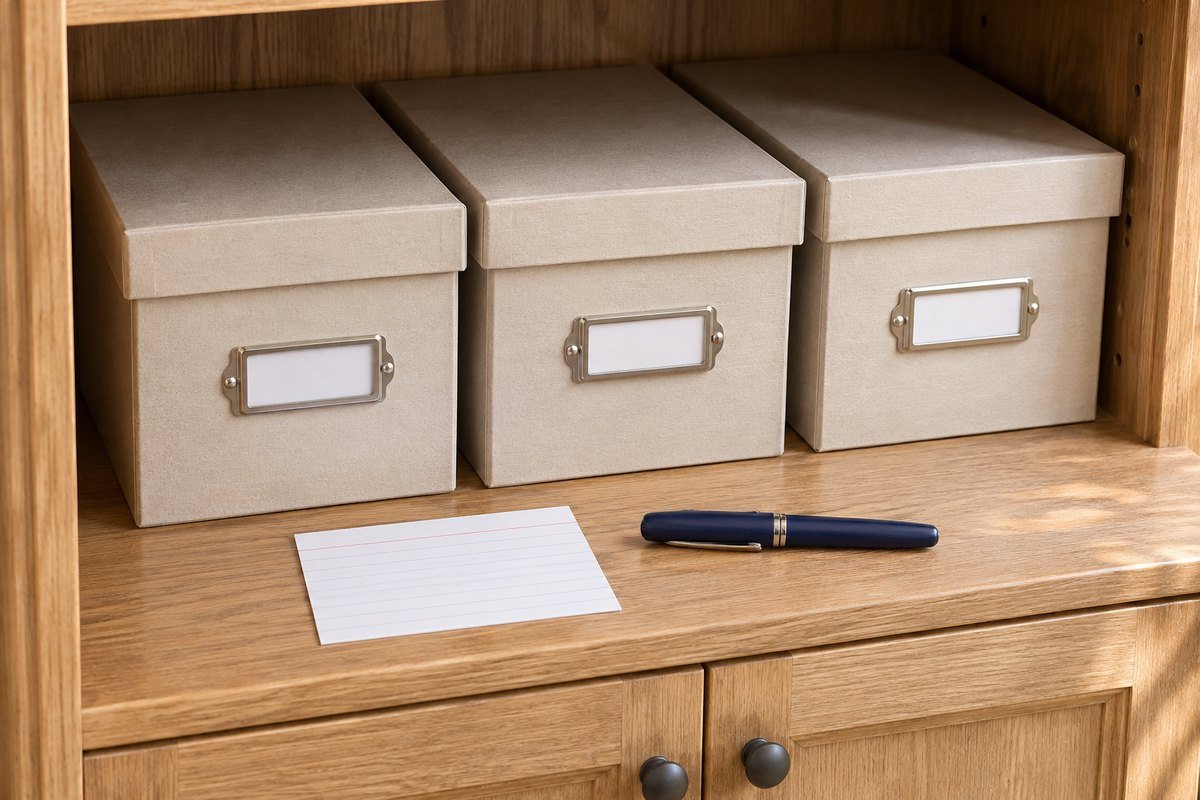
A simple personal index can record the category, room and container used for papers consulted infrequently. Use wording that still makes sense after the immediate project ends. Keep sensitive details out of a public-facing label or shared list. Update the location when a file moves so the index remains a useful pointer rather than a second outdated archive.
23. Give papers awaiting a decision a small temporary boundary

Some papers need a considered decision before filing or disposal. A modest separate folder can keep that uncertainty from spreading through every tray. Define a review step and consult the appropriate requirements for the actual records. Do not turn a decluttering idea into a blanket instruction to discard documents or presume that a scanned copy replaces an original.
24. Choose empty organizers whose care fits their materials

Remove papers before caring for the organizer, and follow the exact product's directions. IKEA specifies a dry cloth for the cited TJABBA cardboard magazine file; that is different from a washable plastic tray. Allow the appropriate conditions before returning the contents. Do not use a cleaning method intended for a cabinet finish directly on paper or a different container material.
25. End with a return path that works during an ordinary week
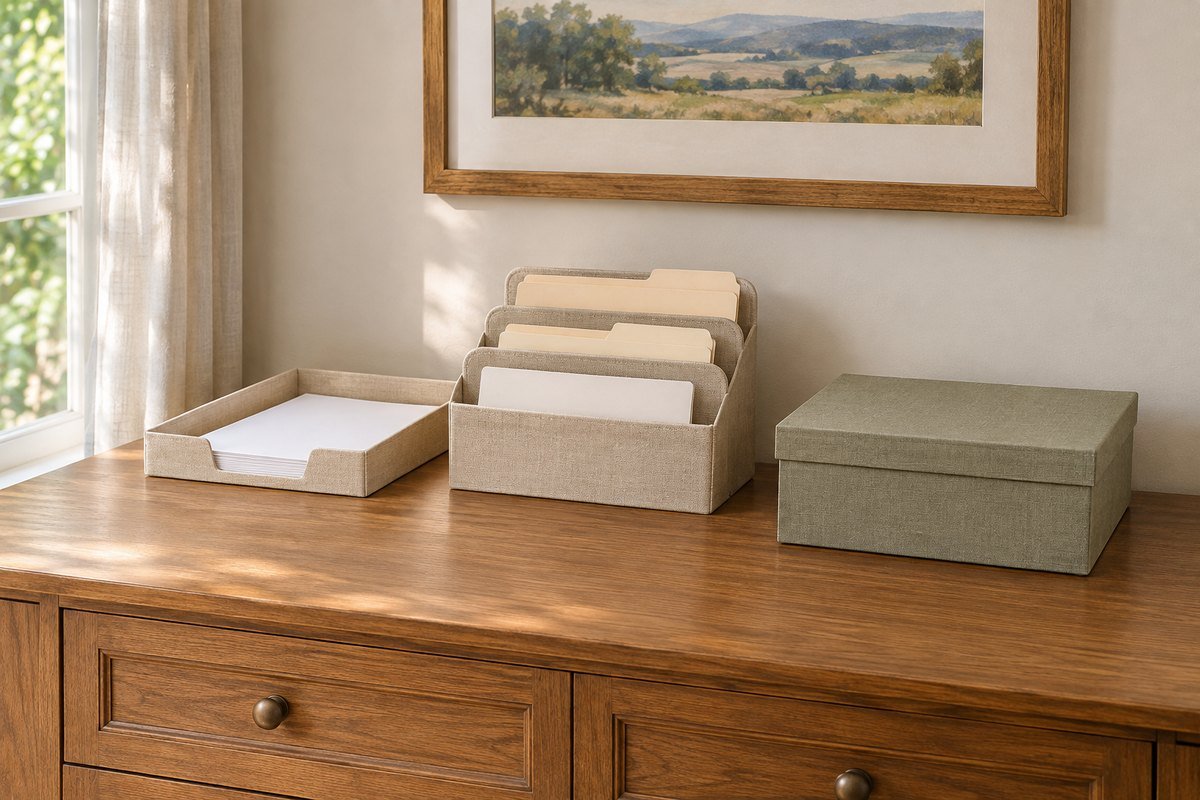
Try the sequence from incoming paper to current use and its next destination with a few representative blank sheets. Notice where a lid, label or crowded shelf interrupts the routine. Simplify that step before adding more storage. A practical system makes the next retrieval easier while leaving enough room to return the file without rebuilding the arrangement.
Build a paper route and housing record
For each retained category, write its next use, largest sheet size, frequency of access, privacy needs, exact container and return location. Add a separate entry for valuable or fragile originals rather than mixing them into the ordinary action tray. Keep retention and original-document requirements as questions to verify with the relevant organization or professional; this storage plan does not supply a universal schedule.
Mock up the largest folder and full container footprint before choosing a shelf. Include the tab, handle, drawer-opening path and a place to set the packet down. For preservation housing, consult current material specifications: the Library of Congress notes that some media are sensitive to alkaline materials and that electrostatic polyester sleeves can affect powdery media. A clear sleeve is therefore not a default for every drawing. Keep photographs and unfamiliar mixed materials in their own appropriate plan, and seek qualified conservation advice for condition problems. The room, enclosure and handling routine need to work together.
A practical next step
Choose paper storage through the next use, actual format and needs of the contents. Keep current work convenient, occasional files findable and valued originals appropriately housed. Then test the return step: a small system that is easy to maintain can be more useful than a larger arrangement of indistinguishable boxes.
For the surrounding room, home office organization ideas for the wider workspace. Home organization ideas for a useful return routine.
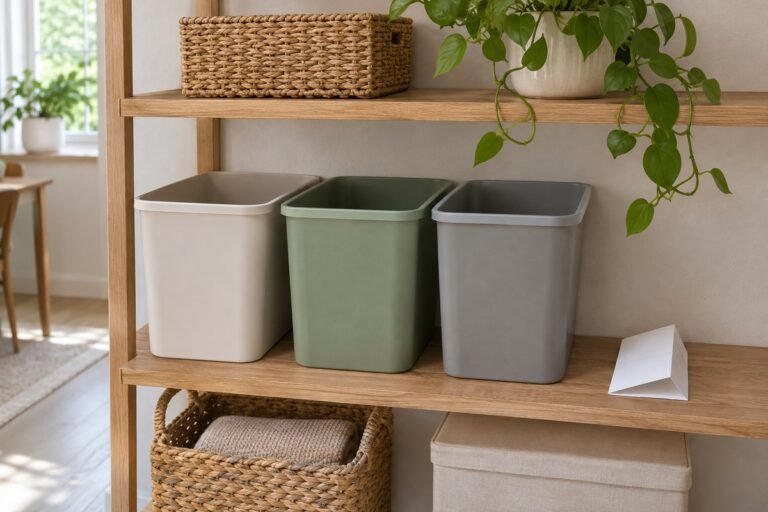
The images are original AI-generated design concepts, not photographs of tested products or verified installations.
Sources and care references
- Library of Congress: preserving letters and paper documents
- Library of Congress: care, handling and storage of works on paper
- Library of Congress: selecting preservation supplies beyond the archival label
- IKEA: TJABBA 104.924.55 dimensions, cardboard material and dry-cloth care
Optional digital guide for this topic
If you prefer a structured workbook, explore this related paid guide.