The best coat rack ideas give the outerwear used today a clear return place. An impressive rack can still be inconvenient if its feet interrupt the route, a coat hides the seat or a bag hangs across the doorway. Start with the ordinary arrival routine and the actual garments.
These 25 concepts compare wall racks, freestanding forms and simple arrangements around them. Choose the exact product and installation for the room rather than treating the illustrations as construction plans. Keep the number of hanging items modest and send occasional outerwear to appropriate longer-term storage.
Contents
- 1. Start with a short wall rack for daily outerwear
- 2. Choose a freestanding form from its complete base
- 3. Use a shallow wall form in a constrained entrance
- 4. Keep long coats beside a separate seat
- 5. Pair a compact rack with a proper entry bench
- 6. Use a single standing silhouette in a quiet corner
- 7. Let pale wood warm a plain wall
- 8. Use a dark rack for a clear outline
- 9. Choose white when the wall arrangement should stay quiet
- 10. Add one controlled color through the rack itself
- 11. Let rounded pegs create a restrained rhythm
- 12. Compare a hanging rail when garments need hangers
- 13. Give different users genuinely reachable positions
- 14. Reserve one useful position for visitors
- 15. Separate bags when they crowd the coat area
- 16. Keep hats from covering the daily coat hooks
- 17. Place footwear storage outside the hanging outline
- 18. Keep the mirror useful beside the rack
- 19. Leave switches and door hardware accessible
- 20. Review a corner stand from the approach
- 21. Use an existing recess only when access remains practical
- 22. Keep indoor-only racks in their intended conditions
- 23. Plan occasional outerwear somewhere else
- 24. Choose the finish with ordinary care in mind
- 25. Edit the rack after a normal week of arrivals
Check the occupied rack, not just its empty outline
Measure the complete standing footprint or installed projection, then add the way coats and straps actually hang. Keep the door, switches and normal route usable. Read the product's intended location, assembly and load guidance. IKEA's cited EKRAR stand, for example, has a stated total load and is intended for indoor use; that specification is not a per-hook allowance or a rule for other racks. For wall products, the KUBBIS instructions explain that fixing selection depends on the wall material. Have the actual wall and fixing arrangement assessed appropriately. A rack's appearance, hook count or decorative photograph cannot establish support capacity.
Choose an arrangement that fits your situation
- Limited daily outerwear: Compare a short properly installed wall rack
- Available floor corner: Measure the complete standing base and occupied shape
- Long coats and seating: Separate the hanging position from the usable seat
- Garments needing hangers: Compare a purpose-made compatible rail and complete garment depth
- Seasonal overflow: Move occasional contents to appropriate separate storage
1. Start with a short wall rack for daily outerwear

A short rack can be enough when the entrance serves a limited number of everyday coats. Give it a clear place near the arrival point without covering the door's operating area. Compare the occupied projection with the route. A modest rack with a specific job may work better than a long row of hooks that invites every spare item to remain beside the entrance.
2. Choose a freestanding form from its complete base

A slender-looking stand may have feet that occupy a substantial floor area. Compare the deployed base and hanging garments with the space available, following the actual assembly and loading instructions. Keep it out of a narrow corner people brush against during arrivals. If the required footprint does not fit, compare a properly installed wall rack rather than choosing a less stable stance.
3. Use a shallow wall form in a constrained entrance
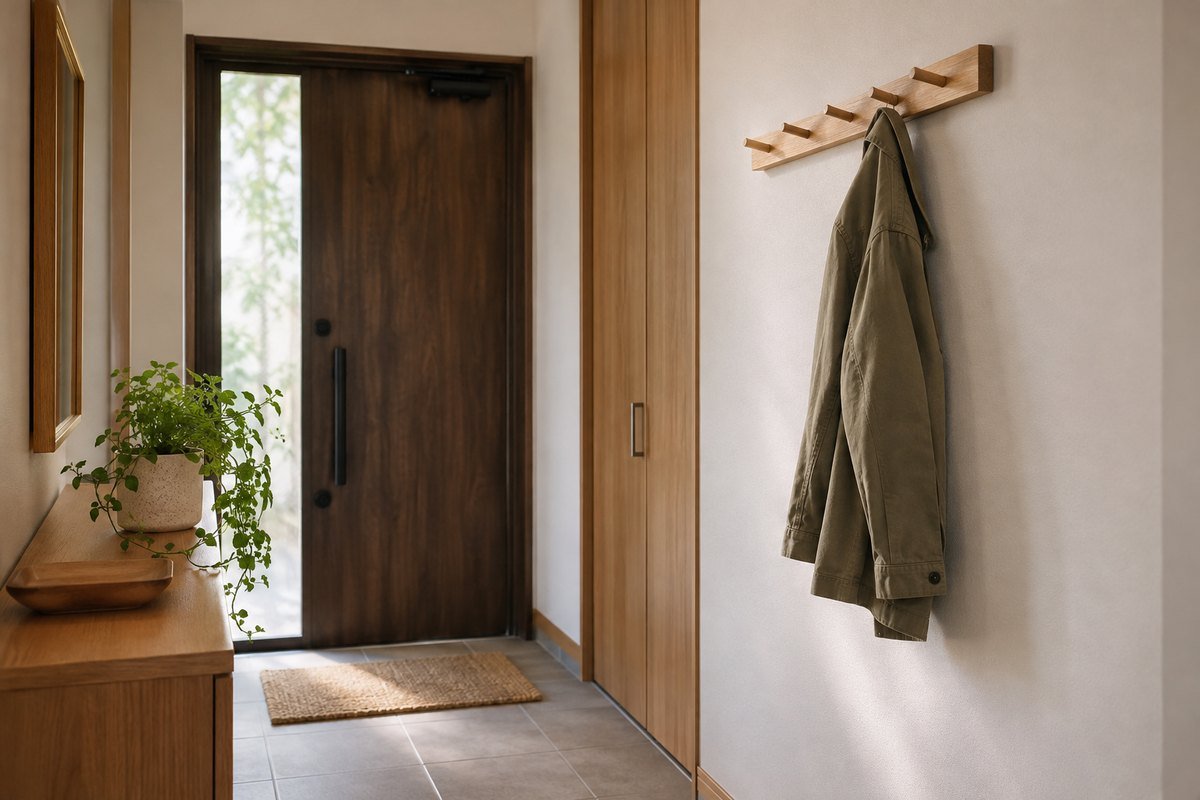
A restrained wall rack can preserve more floor space than a standing base, but the coats still project into the room. Review the largest everyday garment in its usual hanging position. Keep sleeves and straps clear of the route. Choose the rack for its permitted mounting and useful shape rather than assuming that a shallow empty rail guarantees a shallow occupied arrangement.
4. Keep long coats beside a separate seat

Long outerwear may be better beside a bench than directly above it. Compare the coat hem with the usable seat and the person sitting there. A separate hanging area can keep both tasks convenient. Avoid shortening the useful coat space simply to achieve a continuous decorative line between the rack, bench and neighboring storage.
5. Pair a compact rack with a proper entry bench

A rack and bench can work together when hanging clothes do not occupy the seating area. Test the arrangement with the actual outerwear and footwear. Keep the seat available for its intended purpose. Follow the bench's own suitability and installation requirements; a storage shelf below hooks should not be treated as seating merely because it resembles a small bench in a photograph.
6. Use a single standing silhouette in a quiet corner

A sculptural stand can provide decoration when it is not covered by too many garments. Choose a location where the complete base fits and the contents remain easy to reach. Keep the arrangement focused on the coats used at that entrance. The shape can supply the visual detail without adding baskets, dangling ornaments or extra objects to its hooks.
7. Let pale wood warm a plain wall

A light wood rack can add texture against painted plaster without making the storage visually heavy. Compare it with the floor and nearby furniture under ordinary lighting. Keep the hardware and garment colors restrained if the timber is the main detail. Confirm the actual material and care method from the maker rather than identifying a wood species from appearance alone.
8. Use a dark rack for a clear outline
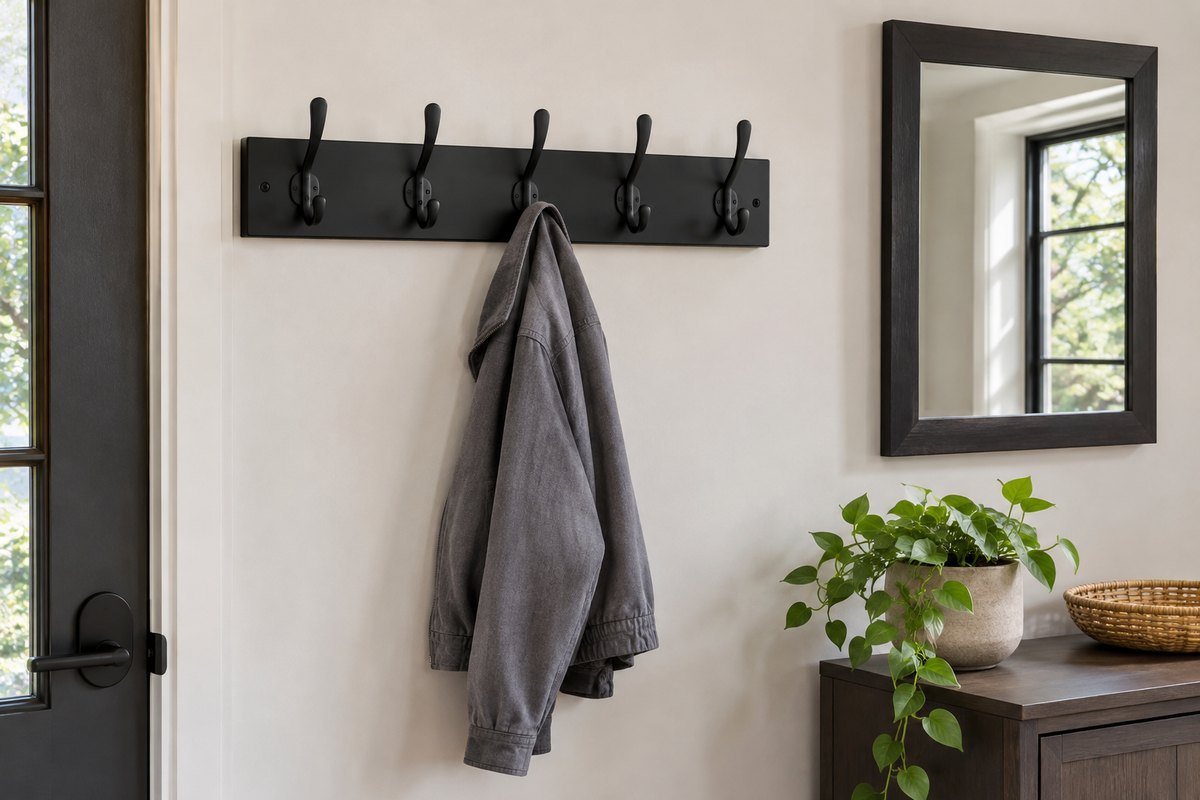
A dark finish can make a simple rack readable against a pale wall. One deliberate contrast may be enough to connect to a mirror frame or door handle. Compare the occupied rack from the adjoining room. Keep the coats limited so the accessory remains a useful organized point rather than a dense dark mass beside the doorway.
9. Choose white when the wall arrangement should stay quiet

A white rack can sit calmly with a light wall while coats provide the changing color. Compare the finish with the wall in the actual room; several almost-matching whites can still look different. Keep the hook shape easy to recognize. A quiet decorative effect should not make the rack difficult for the household to find and use during a normal arrival.
10. Add one controlled color through the rack itself

A colored stand can bring a small accent to a plain entrance. Relate it to one existing detail rather than adding several matching accessories. Compare its full size with the surrounding room before choosing a bright finish. Keep assembly, intended use and the occupied footprint in the decision so the accent remains practical after the first styled view.
11. Let rounded pegs create a restrained rhythm

A row of simple pegs can give a wall a clear pattern without decorative signs or an elaborate backboard. Compare the hook form with the garments and their appropriate hanging method. Keep the spacing useful for the real items. More closely packed hooks do not necessarily provide more practical storage when coats overlap and become difficult to remove.
12. Compare a hanging rail when garments need hangers

Some outerwear may suit an appropriate hanger better than a small hook. A purpose-made rail can offer that option when its projection and permitted load fit the entrance. Compare the complete hanger and garment depth, including removal space. Follow garment care and the rack's instructions instead of treating every coat loop or collar as suitable for the same hook.
13. Give different users genuinely reachable positions

A shared rack can offer more than one reachable position without applying a universal hook-height formula. Compare the actual users and the length of their garments. Keep upper contents from covering the lower hooks. Plan the installation so using the rack does not require climbing on a bench or shelf, and keep its load guidance applicable to the complete arrangement.
14. Reserve one useful position for visitors

A modest guest hook can make arrivals easier when the household keeps it available. Place it where its purpose is obvious without signage. Compare the likely coat length and nearby route. The reserved place works best as a small part of the daily arrangement rather than an excuse to create a second rack that gradually fills with unrelated storage.
15. Separate bags when they crowd the coat area
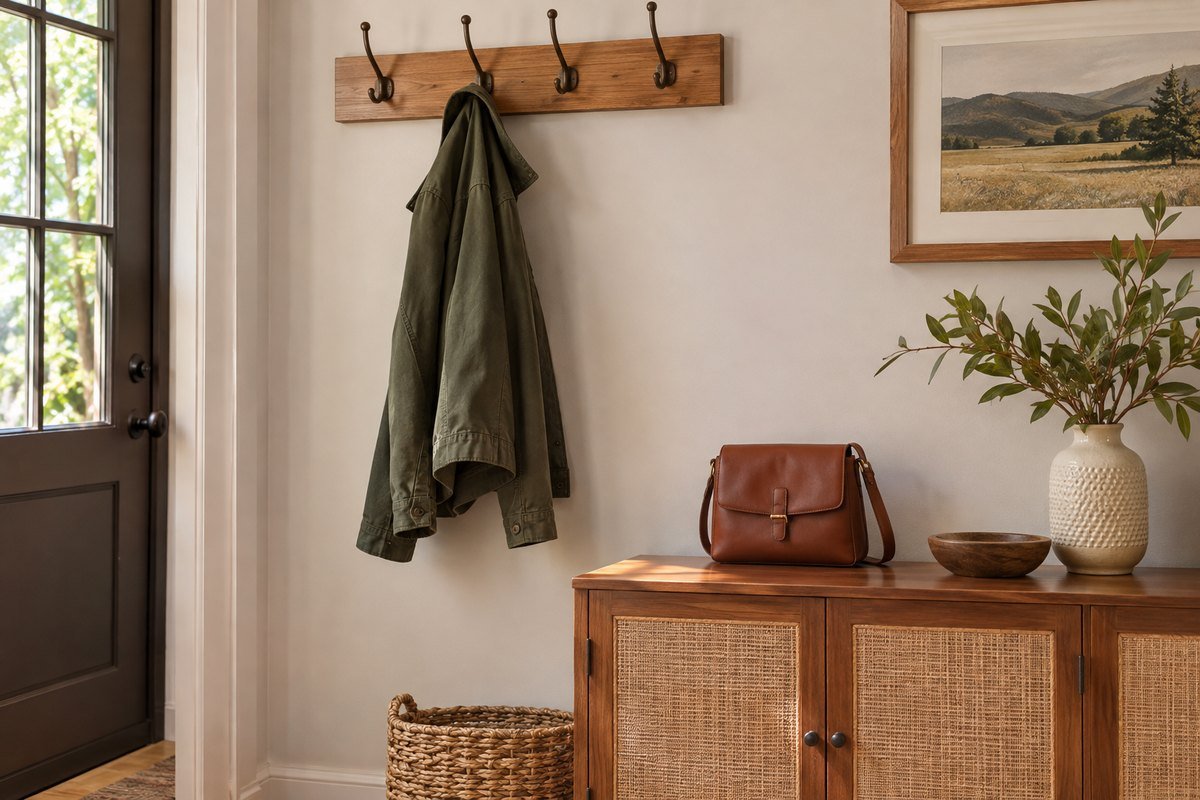
A packed bag can project farther than a coat and may be unsuitable for a hook or garment stand. Compare its actual storage needs and the rack's limits. A suitable shelf or separate designated location can keep the outerwear accessible. Do not infer that an empty lower hook is approved for a heavy work bag simply because it is available.
16. Keep hats from covering the daily coat hooks

A hat needs an appropriate resting or hanging method of its own. If it blocks the hooks used every day, compare a separate suitable shelf or organizer. Keep the arrangement modest and follow the hat's care needs. A decorative stack of hats is not necessarily a convenient return place for the outerwear used most often at that entrance.
17. Place footwear storage outside the hanging outline

Coats and shoes can share an entrance without occupying the same vertical space. Compare the longest garment with the actual shoe storage and removal movement. Keep the floor route clear when both are in use. A separate compact shoe cabinet may work better than squeezing every task beneath one rack, particularly if the hanging coat would conceal its opening.
18. Keep the mirror useful beside the rack

A mirror can support the arrival routine when coats do not repeatedly cover it. Compare the view with the rack occupied, including sleeves and bag straps. Keep its installation separate and appropriate for the actual wall. Choose the relationship from the room's use rather than forcing a symmetrical picture that leaves the mirror half hidden behind daily outerwear.
19. Leave switches and door hardware accessible

An empty rack can look well placed while the first coat covers a switch or catches a handle. Check those movements with the actual garment in place. Revise the rack's location before installation if the normal operation becomes awkward. Keep the entrance understandable and easy to use without needing to move several hanging items to reach an ordinary control.
20. Review a corner stand from the approach

A corner can suit a coat stand only when its full base and hanging contents stay out of the approach. Walk through the room with the normal bags and outerwear. Keep the stand in the configuration required by its instructions rather than drawing its legs together. If the occupied shape extends into the route, use a different location or storage type.
21. Use an existing recess only when access remains practical
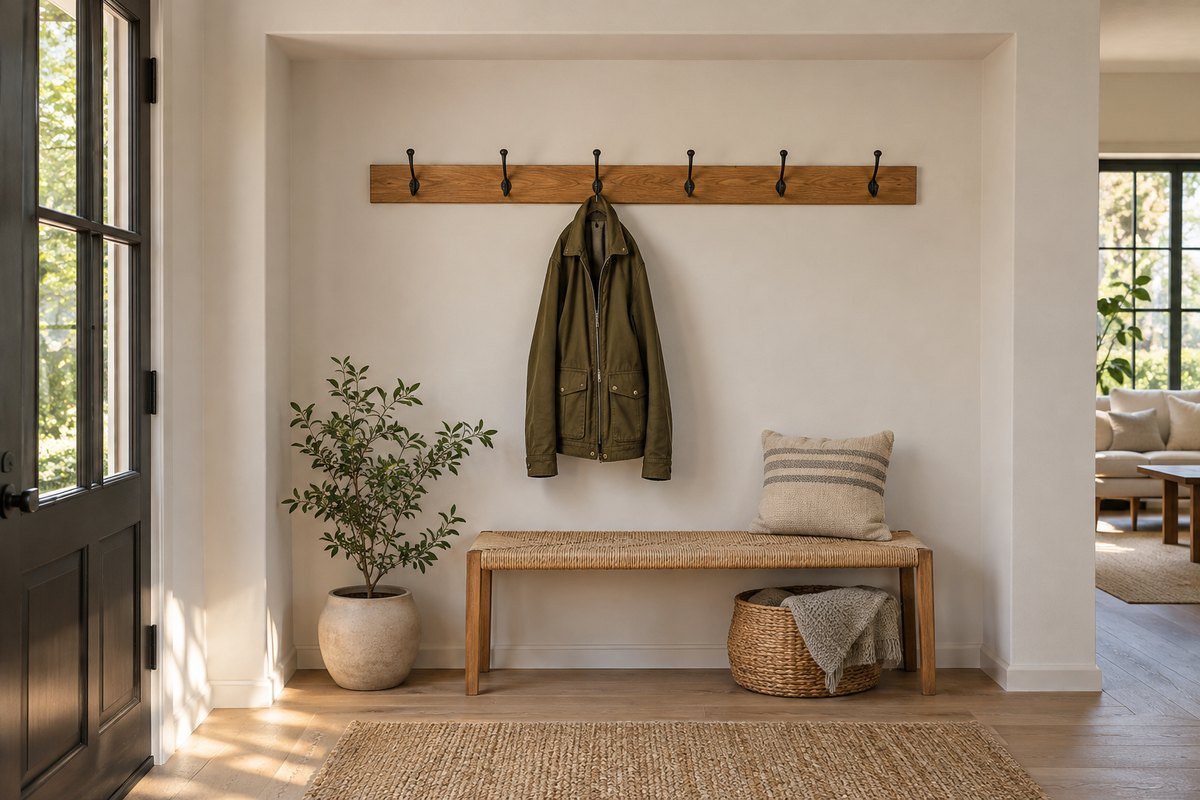
A recess can contain the rack's visual outline, but it still needs space for coats to hang and be removed. Compare the actual usable depth and the hook projection. Keep the opening clear rather than choosing the longest rack that fits the back wall. Have mounting assessed for the real surface and use another location if the contents remain difficult to reach.
22. Keep indoor-only racks in their intended conditions

A stand that looks attractive near a porch is not automatically suitable for exposure. Read the intended location and material care guidance for the actual model. Keep an indoor-only product indoors, and choose a specifically suitable solution for an exposed entrance. A metal finish or wood appearance does not establish weather resistance or permission to leave wet outerwear on it.
23. Plan occasional outerwear somewhere else

The arrival rack does not need to hold every season's coats. Give it the garments used regularly and choose appropriate separate storage for the rest. Recheck the contents when routines change. Reducing the daily load can make the rack easier to use, but it does not replace following its exact total load, per-part limits or placement instructions.
24. Choose the finish with ordinary care in mind

Read the care instructions for the exact rack, especially where hooks contact fabric and hands. Keep the product in good condition and address looseness or damage according to its instructions. Do not copy an improvised repair or add stronger-looking hardware without appropriate assessment. A decorative object that is inconvenient to maintain may be the wrong answer for a busy daily entrance.
25. Edit the rack after a normal week of arrivals
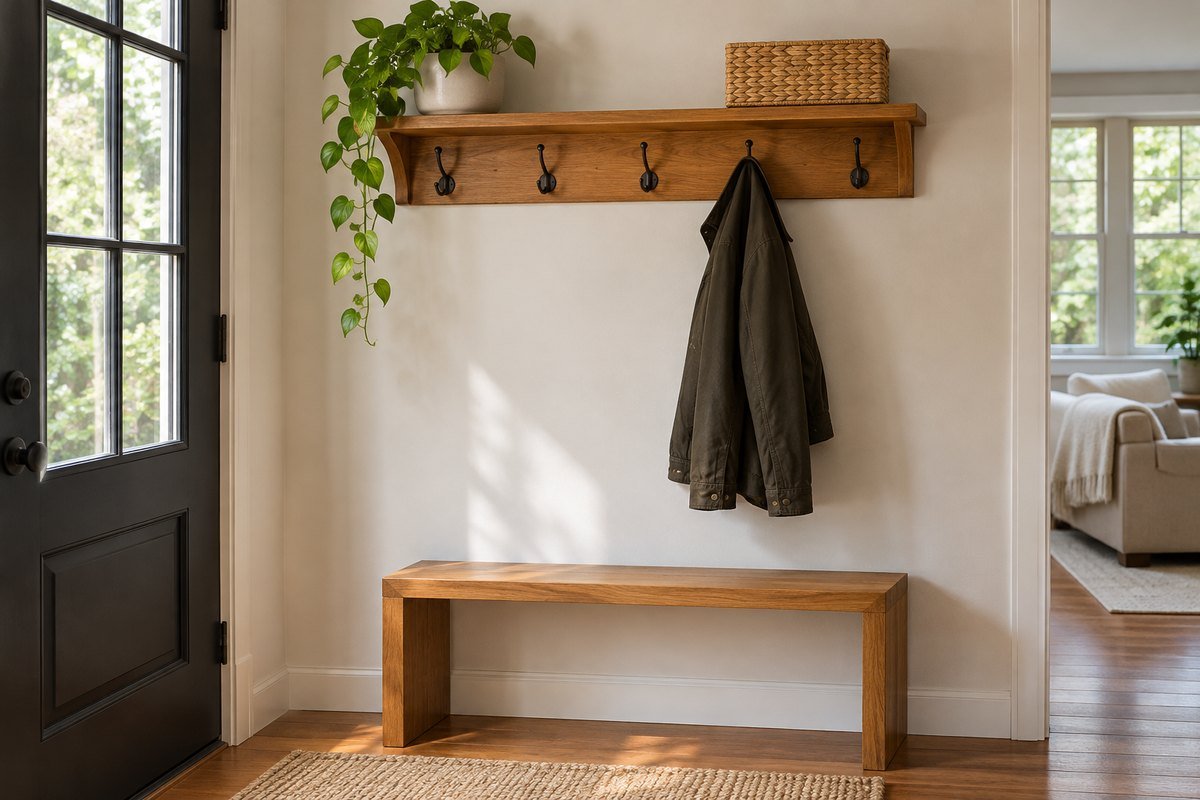
Look for the coat that never gets used, the garment repeatedly moved and the item that belongs elsewhere. Keep the positions that make returning outerwear straightforward. Review the occupied footprint again after changing furniture. Good coat rack ideas make a repeatable routine easier; the useful result may be fewer hooks and fewer objects than the first arrangement.
An occupied-rack planning card
List the garments actually used at this entrance, their appropriate hanging method and the longest hanging length. Record the complete stand base or installed wall projection, then include sleeves and straps. Add the door swing, nearby switches, usable seating and footwear access. Copy the exact product's total and any per-part load limits without dividing one into the other. For a hypothetical rack expressly limited to 12 kg total, six hooks do not automatically mean that each is approved for 2 kg; the design and distribution instructions still govern. Keep the installation, condition and care information with the card.
A practical next step
Choose coat rack ideas from the real outerwear, entrance route and product requirements. Once the occupied arrangement works, refine the finish and silhouette. A modest rack with clear daily contents can make the entrance feel more organized than a larger display that interrupts ordinary arrivals.
For the surrounding room, compare a larger mudroom locker arrangement. plan an entry bench with genuinely usable seating.
The images are original AI-generated design concepts, not photographs of tested products or verified installations.
Sources and care references
- IKEA EKRAR: model-specific total load, indoor use and care
- IKEA KUBBIS instructions: wall-dependent fixing selection
Optional digital guide for this topic
If you prefer a structured workbook, explore this related paid guide.