The most useful home recycling station ideas make a small sequence easy to complete: identify the material, prepare it as required, place it in the right container and move it to collection. Matching bins are helpful only when that sequence works for the household.
Begin with your actual collection provider's current guidance. Accepted materials and preparation requirements differ between programs, so a universal three-bin color scheme can create more confusion than clarity. These 23 ideas focus on the space and routine around the rules you confirm, from a modest kitchen bin to a separate utility-room handoff.
Contents
- 1. Choose the streams from the local collection rules
- 2. Observe the household's real packaging quantity
- 3. Place the first container near the preparation step
- 4. Keep paper in a distinct dry compartment when needed
- 5. Give flattened cardboard its own short-term slot
- 6. Use one mixed container when the program calls for it
- 7. Separate required streams with visible independent bins
- 8. Choose capacity around a comfortable emptying routine
- 9. Leave the active opening easy to use
- 10. Compare a freestanding pair before altering cabinetry
- 11. Use a complete pull-out system in a compatible cabinet
- 12. Preserve plumbing access beneath the sink
- 13. Create a modest handoff in the utility room
- 14. Keep the floor around the station easy to inspect
- 15. Plan a practical removal and care sequence
- 16. Match liners to the provider's presentation rules
- 17. Keep a current sorting guide close to the decision
- 18. Test the opening with the people who use it
- 19. Make the distinction understandable for visitors
- 20. Give overflow a defined response instead of a new pile
- 21. Keep deposit-return items distinct when required
- 22. Keep special collection out of the ordinary station
- 23. Review one complete collection-day reset
Build the sorting plan before choosing containers
Write down which ordinary materials your provider accepts, which must be separated and how they must be presented. EPA explains that a plastic resin symbol does not establish local acceptance, and plastic bags and film do not belong in ordinary household recycling bins. Check the destination before adding a stream to your station. Keep lithium-ion batteries and devices containing them out of household garbage and recycling bins; EPA directs these to separate appropriate collection. This guide plans ordinary household packaging storage, not hazardous-material handling or a universal list of accepted items.
Choose an arrangement that fits your situation
- Single accepted mixed stream: Compare one removable container with a clear emptying route rather than unnecessary sub-bins.
- Separately collected paper: Assign a distinct dry compartment and a manageable lift-out shape.
- Limited kitchen floor space: Test a compatible cabinet system or modest first container with a defined utility-room transfer.
- Frequent cardboard deliveries: Give prepared boxes a short-term slot and a confirmed removal routine outside the doorway.
1. Choose the streams from the local collection rules

List the categories your collection program actually requires and assign a position to each. One household may need a mixed recycling container; another may need separate paper and containers. Avoid buying a multi-compartment unit before making that comparison. Keep the plan simple enough to explain in a few ordinary words, and remove categories that have no confirmed destination.
2. Observe the household's real packaging quantity

Notice the ordinary accepted materials generated during a normal week and how often they leave the home. Use that observation to compare container size and emptying frequency, rather than choosing the largest matching set. An occasional delivery rush can have a separate temporary routine. The permanent station should suit everyday use without inviting a long-term pile of material that nobody can comfortably carry.
3. Place the first container near the preparation step
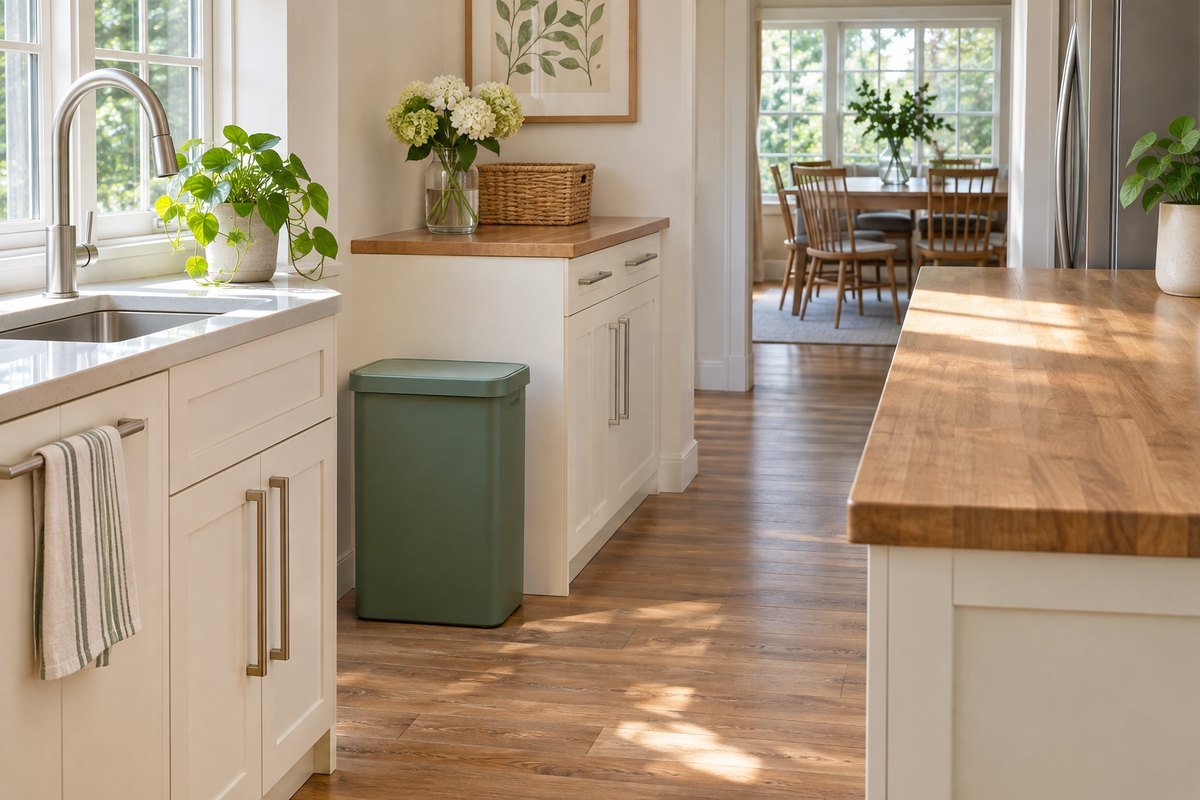
Choose a convenient location near where accepted packaging is emptied or otherwise prepared according to local guidance. Keep the bin away from the usable food-preparation surface and preserve movement around the sink. Test the sequence with an ordinary item in hand. If placing it in the station requires crossing the room or moving a stool, reconsider the position before adding decorative cabinetry.
4. Keep paper in a distinct dry compartment when needed
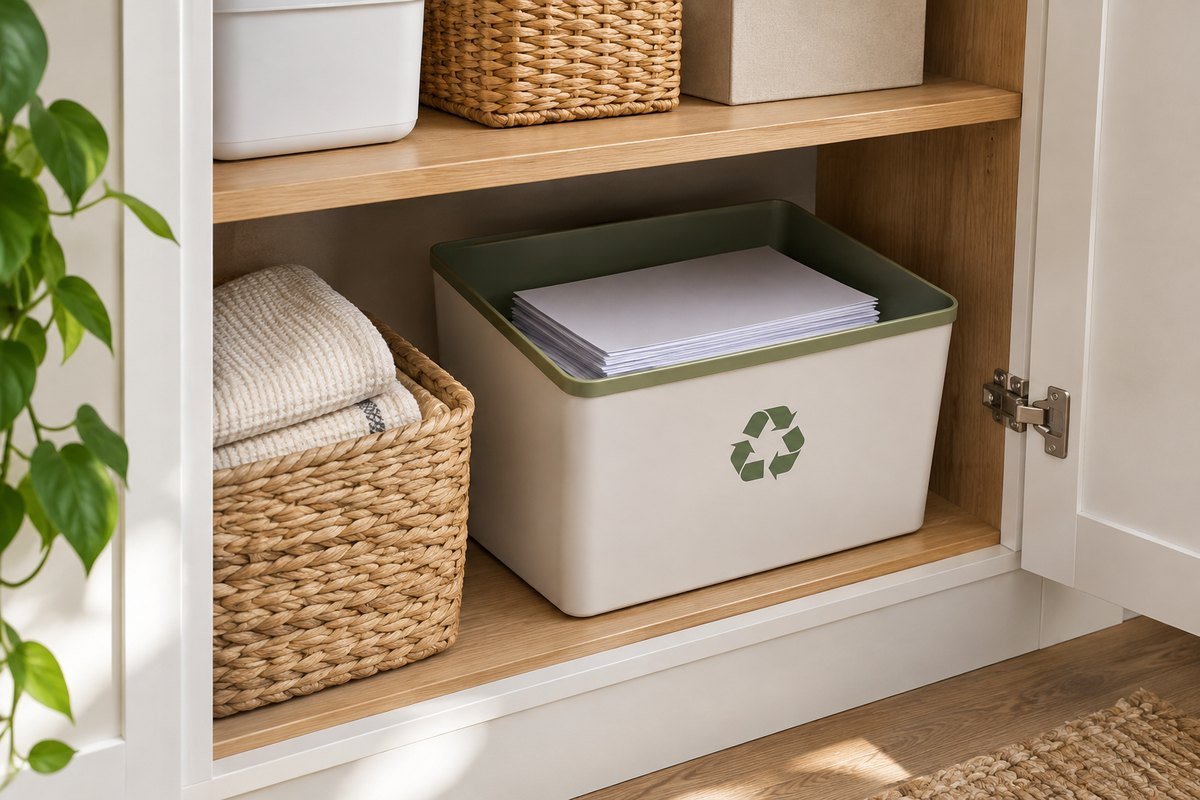
If your program requires paper separately, assign it a dry position that is easy to remove and empty. A removable rectangular container can suit the actual sheets and small boxes without wasting space around a round bin. Keep the opening available rather than burying the paper beneath unrelated supplies. Confirm any preparation rules for unusual paper items instead of treating every paper-looking surface as the same material.
5. Give flattened cardboard its own short-term slot

A defined position for prepared cardboard can stop delivery boxes from spreading across a hallway. Check how your program wants boxes presented, then choose a manageable space for the time before collection. Keep the stack modest and the exit route clear. A narrow slot is useful when cardboard can be removed directly, rather than pulled out from behind a heavy bin or stored furniture.
6. Use one mixed container when the program calls for it

A single accepted mixed stream does not need several decorative sub-bins merely to resemble a sorting photograph. Choose a removable container that suits the working quantity and collection instructions. Keep its purpose consistent so it does not become a general waste bin when other containers are full. Use the saved space to improve access and emptying rather than adding unnecessary sorting steps.
7. Separate required streams with visible independent bins

When your program requires separation, individual removable containers can make the distinction clear. Compare how each one is reached and lifted before judging the symmetry of the set. The household may need different capacities for different streams. Keep each position stable and recognizable so the sorting routine does not change whenever someone empties a container and returns it to the wrong space.
8. Choose capacity around a comfortable emptying routine

A larger station is helpful only when the contents remain practical to carry and remove. Compare the actual bin shape, handles and route to the next collection point. Do not wait for every container to be full before taking out a stream that needs attention. Adjust emptying frequency to the material and household routine instead of treating the printed volume as the only useful specification.
9. Leave the active opening easy to use

Check the lid or opening while standing where the item will be placed. A tall shelf, low counter or neighboring handle can make an otherwise well-sized container awkward. Follow the product's intended operating method and keep the access area clear. If a lid repeatedly stays open because it hits the furniture, change the arrangement rather than accepting a permanent obstruction around the station.
10. Compare a freestanding pair before altering cabinetry

A pair of suitable freestanding containers can establish the routine without changing kitchen cabinets. Choose a location that preserves door swings and ordinary passage, then observe the household using it. Refine the capacities and stream positions before investing in a fitted system. A restrained finish can connect the bins to existing hardware while keeping the main decision focused on access.
11. Use a complete pull-out system in a compatible cabinet

A fitted pull-out can conceal the station when the exact cabinet opening and system are compatible. Include the full frame, hinges, door attachment and lift-out path in the comparison. Use the manufacturer's current installation and load instructions. Do not assume two loose bins and a decorative drawer form an equivalent mechanism, or that capacity alone establishes the fit inside an existing cabinet.
12. Preserve plumbing access beneath the sink

An under-sink position needs a system designed for the actual unobstructed space. Mark the pipework and maintenance access before choosing the containers. Keep the station easy to remove as intended and avoid surrounding it with loose stored objects. If the arrangement obscures a leak or prevents ordinary access, compare a separate cabinet rather than forcing the sorting system into the remaining gap.
13. Create a modest handoff in the utility room

A secondary station can gather material from a smaller kitchen container before collection when the route is straightforward. Keep the transfer step obvious and avoid duplicating several full sorting systems around the home. Decide who empties the first container and when. The utility position should shorten the collection routine rather than become an indefinite holding area for unsorted bags.
14. Keep the floor around the station easy to inspect

Choose the location and any intended base tray with the bin and floor-care instructions in mind. Keep the containers movable or removable as designed so routine cleaning remains straightforward. Avoid an elaborate surround that traps debris in inaccessible corners. The attractive finish matters less if the station cannot be checked and maintained without dismantling several unrelated pieces of furniture.
15. Plan a practical removal and care sequence

Before settling the layout, try taking out the empty inner container, opening any access panel and returning the parts. Follow the product's care instructions rather than assuming every bin or insert tolerates the same cleaning method. Keep a temporary landing position available for removed components. A station is easier to maintain when those ordinary steps do not compete with the kitchen's busiest working surface.
16. Match liners to the provider's presentation rules

Check whether the collection program requires material loose or permits a specific bag or liner. Choose the bin routine around that answer and the product's instructions. Do not assume a bag marketed as recyclable can travel with its contents through ordinary household collection. Keep a modest compatible liner supply separately if one is needed, rather than packing extras into the removal path.
17. Keep a current sorting guide close to the decision

A concise guide from the collection provider can answer the recurring question at the station. Place it where it remains readable without filling the counter or blocking a lid. Use the current local version and replace it when the service changes. Avoid inventing a list from packaging symbols alone; the useful guide is the one that matches the actual destination of the collected material.
18. Test the opening with the people who use it

Compare grip, reach and lid movement with household members' ordinary use rather than choosing the layout from a photograph. A container tucked beneath a deep counter may be difficult to access even when its volume is adequate. Keep the system appropriate for the household, including any required child or pet precautions. Revise an awkward opening before adding another compartment that makes the station wider or deeper.
19. Make the distinction understandable for visitors

A guest should be able to tell which position serves which ordinary stream without opening several private cabinets. Use consistent positions and clear locally accurate guidance where helpful. Color can reinforce that distinction but does not have one universal meaning across collection systems. Keep the arrangement understandable after emptying, when the contents no longer provide a visual clue to the intended categories.
20. Give overflow a defined response instead of a new pile
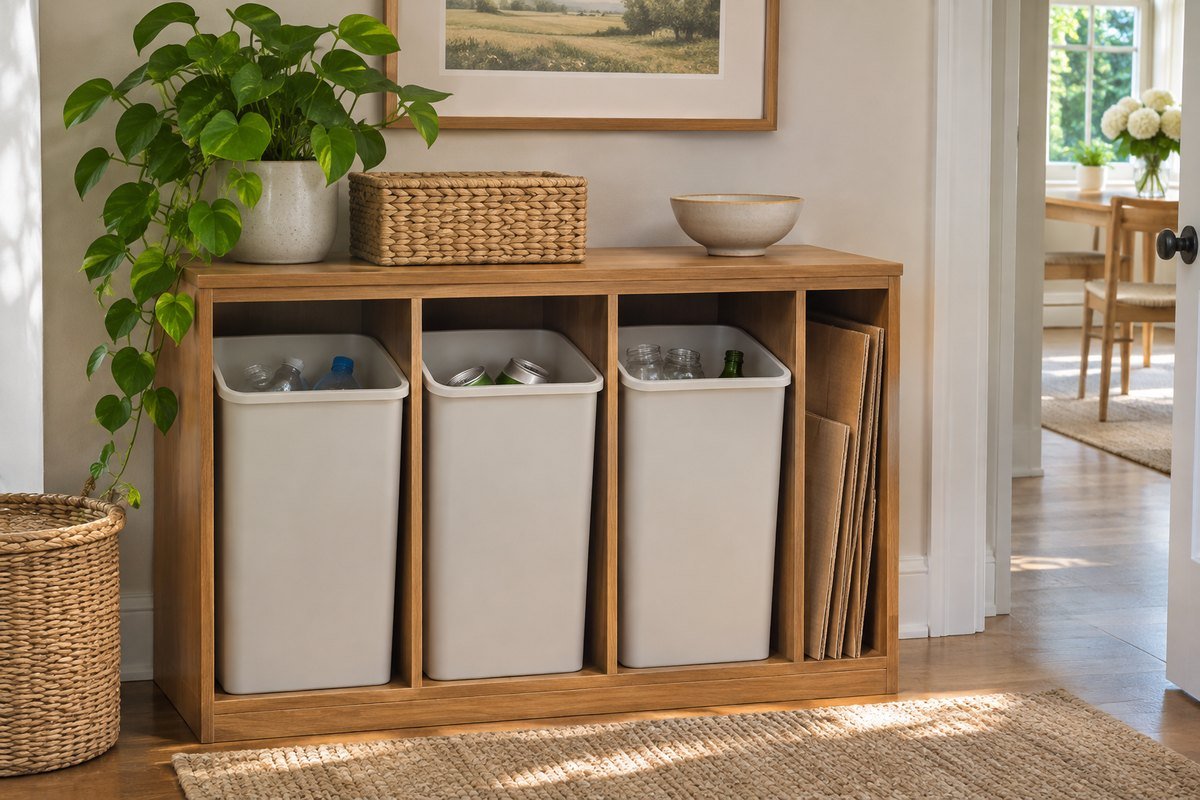
If one container repeatedly overflows, review that stream's size, preparation and collection interval. Move material to its confirmed next destination as appropriate instead of balancing it above a lid. A temporary delivery surge may need a one-time trip or different routine. Expanding the station into a doorway only hides the underlying mismatch between the household's quantity and the planned removal sequence.
21. Keep deposit-return items distinct when required

Where a separate deposit-return program applies, confirm its eligible containers and presentation requirements before assigning a position. Choose a modest removable container and a realistic return routine. Do not assume every bottle belongs in that stream or every location offers the same scheme. A separate position is useful when it supports an actual confirmed return, rather than creating another permanent category of stored packaging.
22. Keep special collection out of the ordinary station

A normal packaging station should not become a catch-all for batteries, electrical devices, chemicals or unidentified objects. Confirm the appropriate separate route with the relevant collection program and follow its handling guidance. For lithium-ion batteries or damaged devices, consult the manufacturer and responsible collection service. Do not place them among ordinary recyclables simply because they carry a recycling symbol.
23. Review one complete collection-day reset

Follow the station through a full emptying cycle: remove each stream, prepare it as required, take it to the right destination and return the empty container. Notice which step is repeatedly skipped. Improve that specific opening, carrying route or guide before adding more bins. The station works when it can return to a clear usable state on an ordinary collection day.
A collection-to-container planning card
Record the provider and date of its guidance; accepted streams; preparation and liner requirements; normal household quantity; chosen container dimensions; lid and lift-out movement; next collection position; and who completes the transfer. Add separate confirmed destinations for items outside ordinary packaging collection without storing them in these bins. Test the station through one collection day, then adjust the repeated obstacle. Recheck the guide if you move home, change provider or receive updated collection instructions.
A practical next step
Choose home recycling station ideas around confirmed collection rules, comfortable access and a routine that finishes. Use only the number of streams the household needs, keep ordinary packaging separate from special collection and test the full emptying route. A small clear station can be more useful than a large matching set whose contents never reach the right destination.
For the surrounding room, measure a compatible kitchen bin cabinet. Organize a small pantry without drilling.
The images are original AI-generated design concepts, not photographs of tested products or verified installations.
Sources and care references
- US EPA: common recyclables, local acceptance and material preparation
- US EPA: lithium-ion batteries require separate appropriate collection
Optional digital guide for this topic
If you prefer a structured workbook, explore this related paid guide.