The most useful pillow storage ideas begin with a distinction: are you putting decorative cushions aside each night, keeping a spare sleeping pillow, or storing empty covers between changes? Those groups have different shapes and access needs. Choosing one container for everything often creates an oversized bundle that is difficult to use.
These 24 arrangements focus on adult bedrooms and living areas. Match the method to the exact pillow and its care instructions. Store textiles appropriately clean and fully dry, and choose a suitable dry location. A neat container cannot correct a damp room or establish that a particular filling tolerates compression.
Contents
- 1. Give spare inserts a suitable zippered fabric case
- 2. Use an under-bed case only when the filled height fits
- 3. Use a compatible bed drawer without filling its closing path
- 4. Choose a storage bench by its usable interior
- 5. Keep a lift-off ottoman lid easy to set aside
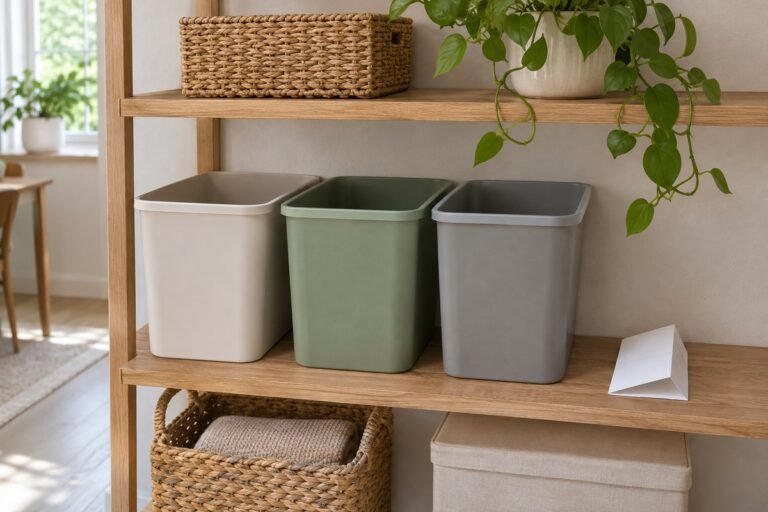
- 6. Use a lined basket for the nightly decorative pair
- 7. Give a low cubby one visible pillow group
- 8. Divide a wardrobe shelf into separate pillow bays
- 9. Keep a guest pair together in a manageable bag
- 10. Store a long bolster along its full length
- 11. Reserve an undistorted bay for a contoured pillow
- 12. Protect embellished faces from neighboring closures
- 13. Store alternate covers without duplicating every insert
- 14. File suitable plain covers in a shallow drawer
- 15. Give matching covers one loose sleeve
- 16. Keep one alternate seasonal palette as a defined set
- 17. Choose two light cases instead of one unwieldy bundle
- 18. Use a window panel when it saves opening several cases
- 19. Use a simple cue for each room or household group
- 20. Place daybed cushions close to the nightly changeover
- 21. Leave a reachable shelf for a frequently used spare
- 22. Retain cleaning access around the storage furniture
- 23. Keep care notes with the storage plan
- 24. Review the retained quantity before adding another container
Measure the pillow in the shape it should retain
Lay out the retained pillows without forcing them flat. Record their length, width and ordinary depth, then compare the usable interior of the proposed case or furniture compartment. Include the opening through which they must pass and the space needed to remove them. Check specialty fillings before choosing a vacuum bag: TEMPUR's cited care guidance says its pillows should retain their original shape in storage, with a limited travel exception for its named travel model. Instructions for one product do not establish a rule for every other fill.
Choose an arrangement that fits your situation
- Cushions need somewhere to go each night: Compare an accessible smooth-lined basket or suitable storage furniture
- Spare sleeping pillows are used occasionally: Choose a suitable roomy protective case in a dry accessible location
- A contoured or specialty pillow needs storage: Follow its exact shape and compression instructions before choosing a case
- Seasonal pillows consume the closet: Check whether compatible empty covers can rotate over retained inserts
- The case fits the shelf but cannot come out: Recheck the filled opening, handles and complete removal route
1. Give spare inserts a suitable zippered fabric case

A dedicated fabric case keeps an occasional pillow group together without mixing it with everyday laundry. Choose a size that closes around the normal pillow shape instead of depending on a compressed mound. The Company Store's cited bedding-care collection recommends breathable bags for reserve bedding. Compare the actual bag's material, closure and care instructions with the contents and storage conditions.
2. Use an under-bed case only when the filled height fits

A low bed bay can suit a modest spare pillow if its full depth fits beneath the lowest obstruction. Measure the packed center of a soft case, not just its empty edge. IKEA's cited SKUBB case includes corner ventilation panels and lists pillows among intended contents. Check the whole removal route as well as clearance beneath the frame.
3. Use a compatible bed drawer without filling its closing path

A purpose-made bed drawer can provide a separate pillow bay where the frame supports that use. Keep the pillow and its protective case below the closing line and clear of wheels or mechanisms. Match the drawer to the exact bed rather than buying from mattress size alone. Choose another location if the pillow must be squeezed or the drawer cannot open normally.
4. Choose a storage bench by its usable interior

A bedroom bench can hold nightly decorative cushions when its interior accepts their real depth. Compare the opening, hinges and required operating space with the largest cushion. Keep fabric clear of the mechanism and follow the furniture's load and use instructions. An attractive exterior length does not tell you how much unobstructed pillow space remains inside.
5. Keep a lift-off ottoman lid easy to set aside

An existing storage ottoman can serve a living-room pillow group when the contents remain easy to reach. Check where the removed lid will go and whether the filled unit stays manageable. Avoid choosing it merely to hide cushions that must be unloaded before every use. A smaller retained cushion collection may work better than a deeper container.
6. Use a lined basket for the nightly decorative pair

A reachable open basket can give cushions a temporary home while an adult bed or sofa is in use. Compare the interior for snags and use an appropriate smooth liner when needed. Keep the pair inside the basket instead of overflowing into the route. This is convenient short-term put-away, not the same protection as a closed reserve-storage case.
7. Give a low cubby one visible pillow group

A broad low shelf can hold a small decorative group without a lid-opening step. Keep the pillows fully supported and remove them without dragging against a rough edge. Choose this arrangement where everyday access matters more than closed storage. The shelf's permitted load, furniture restraint and surrounding route still depend on the actual unit.
8. Divide a wardrobe shelf into separate pillow bays

Separate bays can stop one soft group from falling into the next when a broad shelf is shared. Use dividers compatible with the shelving and allow enough width for each pillow's ordinary shape. Do not rely on a clip-on accessory to support an overloaded shelf. Try removal with the wardrobe door in its normal position before filling every bay.
9. Keep a guest pair together in a manageable bag

A defined guest pair can be easier to find than two pillows scattered among blankets. Choose a case that carries the pair without heavy items above them, and keep the set appropriate to your usual guest arrangement. Inspect it before a visit and return the clean dry contents after use. The bag does not replace the pillow's care routine.
10. Store a long bolster along its full length

A long decorative bolster needs a bay that supports its complete shape. Compare the usable length with the opening, especially in a narrow cabinet where diagonal insertion might seem tempting. Use a suitable protective covering and avoid forcing a bend to make the door shut. If the room has no appropriate bay, reconsider keeping several long cushions.
11. Reserve an undistorted bay for a contoured pillow

A specialty pillow should be stored according to its own maker's instructions. A flat shelf and a roomy compatible cover may be more suitable than a narrow rolled bag. TEMPUR's guidance is a useful reminder that storage compression and short-term travel can have different limits. Do not infer long-term storage permission from the way a new item arrived packed.
12. Protect embellished faces from neighboring closures

Decorative cushions with delicate surface details can need separation from zippers, handles or rough basket walls. Follow the cover maker's storage guidance and choose a smooth suitable barrier where appropriate. Leave enough room to remove one piece without scraping its face. A decorative image cannot prove that embroidery, beads or a fabric finish will tolerate pressure.
13. Store alternate covers without duplicating every insert

If compatible covers rotate over the same retained inserts, keep the empty set flat rather than storing another complete cushion group. Compare cover dimensions, closure and insert fit before planning the change. Keep only the alternate set you actually use. This addresses storage volume without asking an insert to tolerate unnecessary compression.
14. File suitable plain covers in a shallow drawer

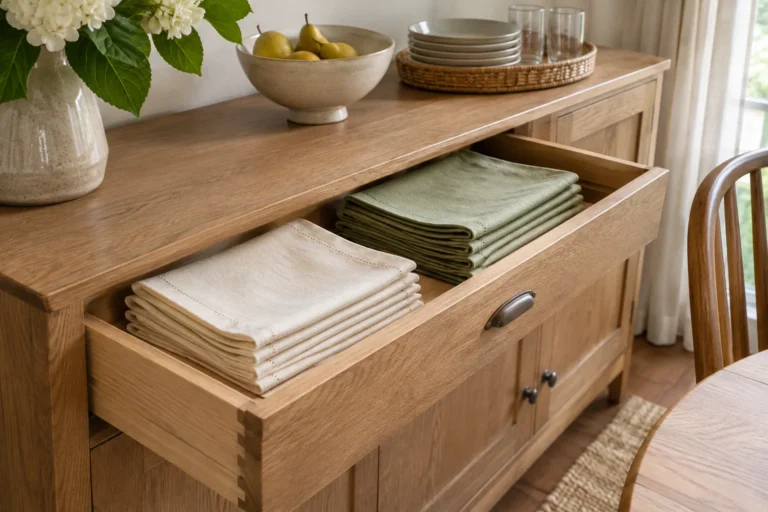
A loosely filed row can make colors easier to see than a tall stack. Choose this method only when the fabric and trim suit the fold, and keep the row relaxed enough to lift one cover out. A delicate embellished face may need a different arrangement. Adjust the division around the covers rather than folding everything to fit a tiny compartment.
15. Give matching covers one loose sleeve
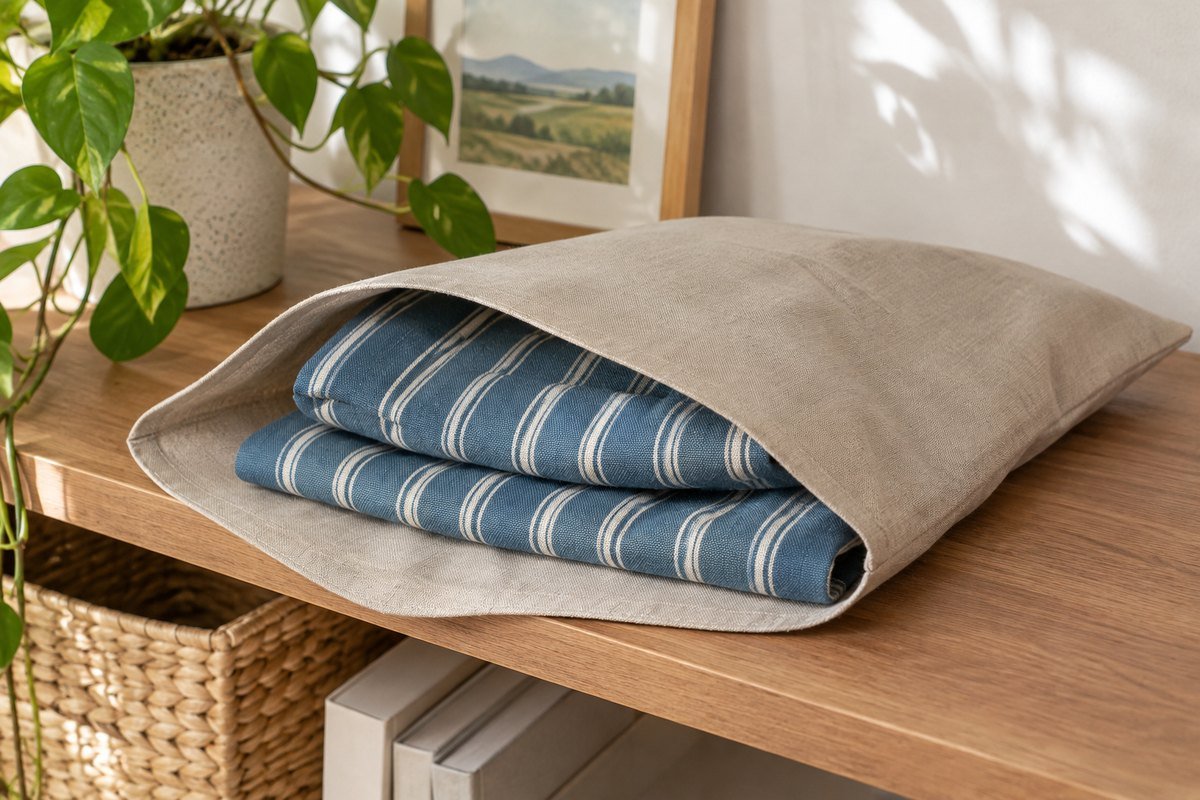
A separate sleeve or envelope-style bag can keep a matching pair together when similar neutral fabrics are difficult to distinguish. Avoid tightening a tie around delicate surfaces or hiding the whole collection in identical unmarked packets. Use one clear identification cue. Keep the sleeve easy to open so the second cover returns with the first after laundering.
16. Keep one alternate seasonal palette as a defined set

A small cover-only set can change a room without creating a reserve pile of filled cushions. Keep the pieces together and compare them with permanent upholstery before adding another set. Separate what will actually return to use from covers retained without a plan. A container should record the chosen rotation rather than justify collecting more textiles.
17. Choose two light cases instead of one unwieldy bundle

Dividing a bulky reserve can improve access through a narrow closet opening. Keep a meaningful group in each case and compare the filled weight and handle position. Test taking out the back group without balancing the front one. Two small bags are useful only when they solve access; splitting everything into many tiny packets creates a different search problem.
18. Use a window panel when it saves opening several cases

A case with a clear viewing panel can help identify a pillow shape or cover color. Check that the rest of its construction and storage conditions suit the textile. A visible panel alone says nothing about ventilation, moisture protection or washability. Choose the feature for identification rather than assuming a transparent front makes every sealed container appropriate.
19. Use a simple cue for each room or household group

When several similar cases are necessary, a short room name or a plain color tab can clarify where each belongs. Choose the same cue the household uses when looking for a pillow. Keep any written inventory outside the textile contact area. An elaborate numbering system is unnecessary for two cases that are already easy to recognize.
20. Place daybed cushions close to the nightly changeover

A daybed used for sleeping needs a place for its decorative back cushions when the bedding comes out. A suitable nearby cabinet can make the complete changeover easier than carrying a pile across the room. Compare the full cushions with the door opening and retain access to sleeping bedding. Avoid transferring the cushion pile to a chair needed for another purpose.
21. Leave a reachable shelf for a frequently used spare

A spare pillow used regularly deserves a more accessible position than a seldom-used seasonal cover. Keep it in its suitable protective case on a reachable shelf with no heavy stack above. Check that the full case clears the door and can be returned comfortably. Frequency of use is a better guide to shelf position than making every row visually identical.
22. Retain cleaning access around the storage furniture

A full pillow basket or case can become inconvenient when it blocks the area that needs routine cleaning. Check how the container comes out and where it rests while the space is cleaned. Keep it manageable rather than packing one oversized bag into the last available gap. Choose another location if inspection requires dismantling the bed or furniture.
23. Keep care notes with the storage plan

Record the cover and insert instructions separately, including any limits on folding, washing or compression. Check the container's instructions too: the cited SKUBB case is cleaned by vacuuming or a lint roller and is not washable. Those directions apply to that model, not every fabric case. Keep a short note outside the bag so the next reset does not depend on guesswork.
24. Review the retained quantity before adding another container

Count the pillows that serve a real sleeping, guest or decorative purpose, then compare the storage required. Reuse compatible inserts where appropriate and remove items no longer suitable through a responsible local route. Choose storage for the retained group rather than filling a new unit immediately. A smaller useful collection can be easier to maintain than an expanding sequence of reserve cases.
Make a pillow-and-opening fit card
List each retained group: nightly decorative pair, guest sleeping pair, specialty pillow and empty cover rotation. For each, record its normal shape, permitted storage method, case interior, opening and retrieval frequency. For an illustrative 20-inch-square decorative cushion that is 5 inches deep, a 19-inch-wide rigid opening fails the uncompressed width check even when the compartment behind it is wider. These example dimensions are not universal pillow sizes or prescribed clearances. Test the actual flexible textile and its care limits rather than treating volume in liters as proof of fit.
Record container care separately from textile care. A breathable bag, ventilated case and sealed box offer different constructions; select from the exact manufacturer's information and the room conditions. Keep everything fully dry before closing the chosen storage. A case advertised for dust protection does not establish that it is waterproof, pest-proof or suitable for a damp location. Recheck the group when it is next used, and keep the route to the shelf or under-bed bay available.
A practical next step
Choose pillow storage around the retained pillow's normal shape and the moment it must be retrieved. Separate nightly put-away from reserve storage, give empty covers a smaller defined place, and check the exact care instructions before compressing anything. The useful arrangement is the one you can open, refill and inspect without disturbing the rest of the room.
For the surrounding room, throw pillow combinations for the cushions you retain on the sofa. Under-bed storage ideas for checking the full retrieval route.
The images are original AI-generated design concepts, not photographs of tested products or verified installations.
Sources and care references
- IKEA: SKUBB 705.910.61 intended contents, ventilation, measurements and container care
- The Company Store: bedding care and breathable reserve-storage bags
- TEMPUR: product-specific pillow shape, storage and care guidance
Optional digital guide for this topic
If you prefer a structured workbook, explore this related paid guide.