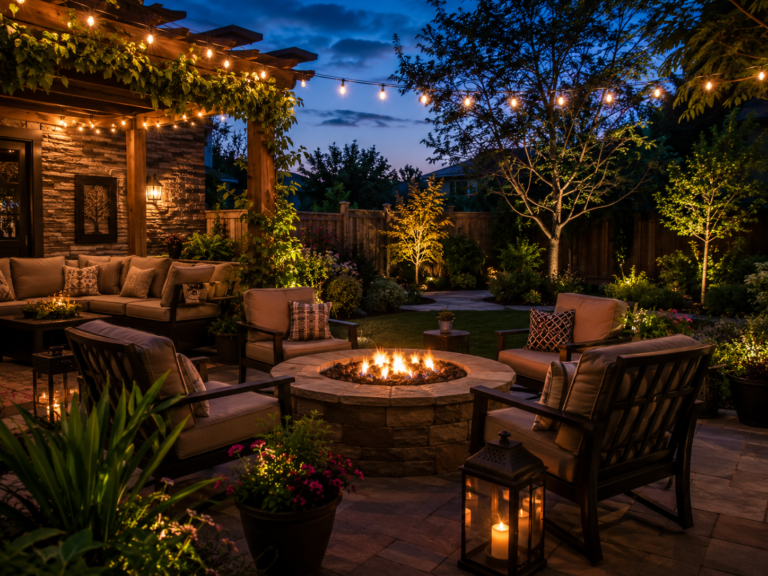
A fire pit is one of the highest-return additions you can make to a backyard, but it’s also one of the few pieces of outdoor furniture that can genuinely burn your house down if placed wrong.
Every clearance number in this guide traces back to fire safety guidelines, local fire codes, or manufacturer recommendations, not personal preference or guesswork.
This walks through exactly how far a fire pit needs to sit from your house, your fence, your trees, and your seating, along with the storage and maintenance habits that keep it safe for years.
1. Keep Wood-Burning Fire Pits 10-25 Feet from the House
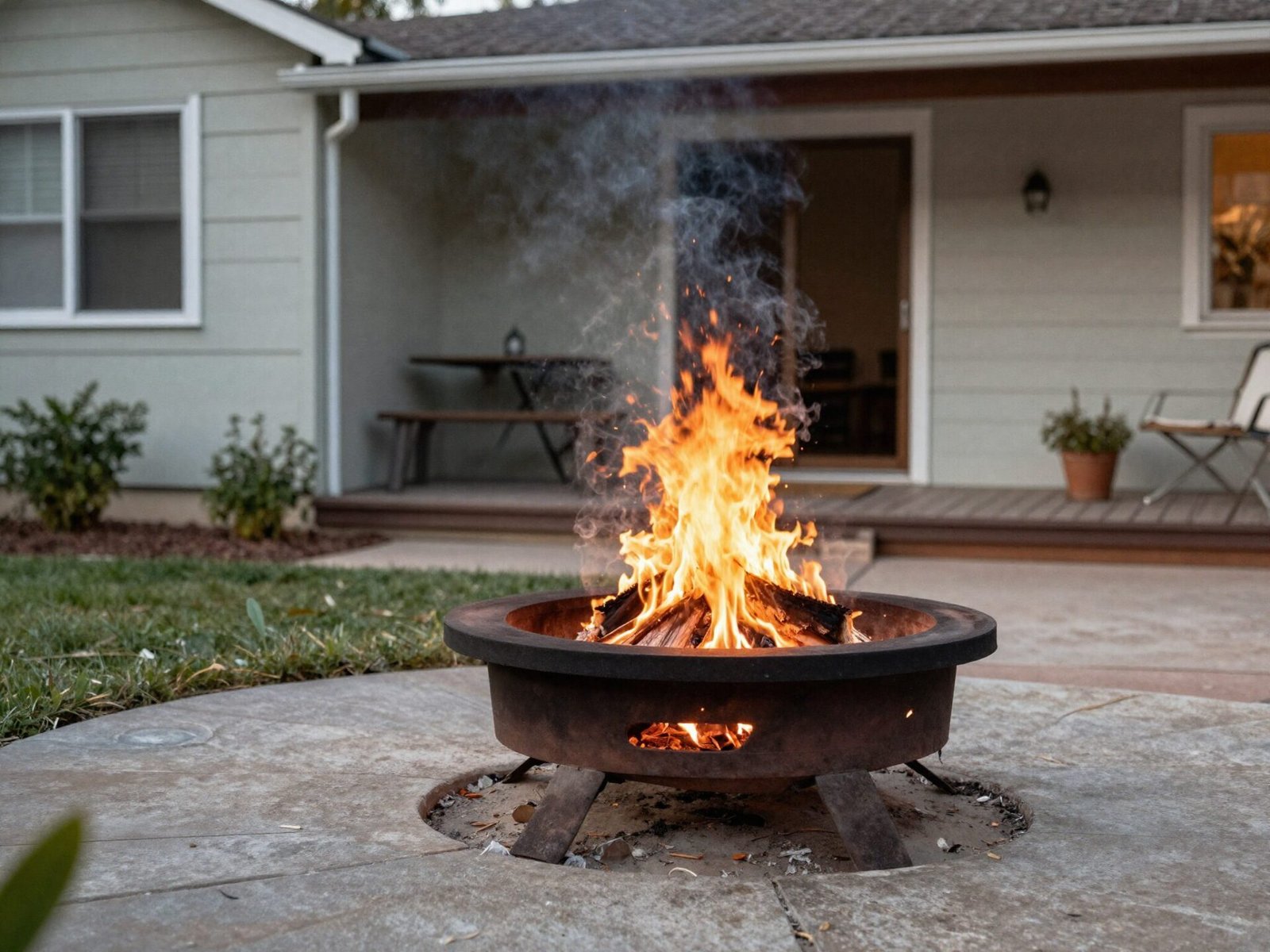
Ten feet is the bare minimum most fire safety guidelines recommend between a wood-burning fire pit and your house, garage, or any other structure.
Fifteen to twenty-five feet is the more comfortable recommended range, especially for larger pits or backyards prone to strong winds.
This distance exists because sparks and embers from an open wood flame can travel further than most people expect, especially on a breezy evening.
💡 Smart tip: If your backyard is small enough that 10 feet feels like a stretch, a smaller, well-contained pit reduces spark travel distance compared to a large open one.
⚠️ Mistake to avoid: Don’t measure this distance to the nearest point of the house only. Account for any eaves, gutters, or overhangs that extend closer than the wall itself.
2. Gas Fire Pits Can Sit Closer, But Still Need Real Clearance
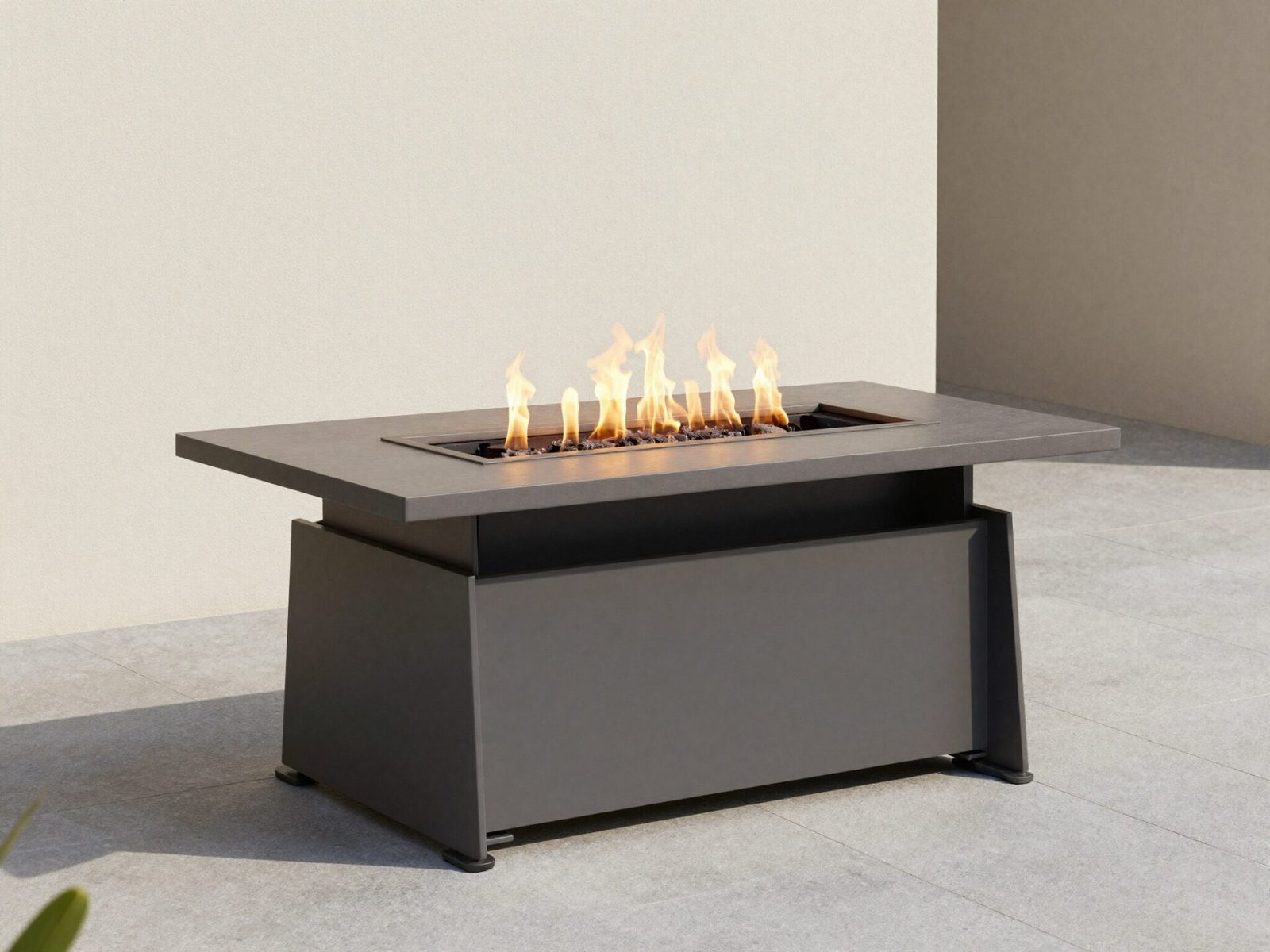
Gas fire pits produce no flying embers and far less radiant heat than wood, which is why they’re commonly allowed as close as 10 feet from structures, with some manufacturer specs permitting as little as 36 inches from a combustible wall.
This shorter clearance is a genuine advantage of switching from wood to gas, especially in smaller backyards where a full 10-25 foot buffer simply isn’t realistic.
Always check your specific unit’s manufacturer clearance rating rather than assuming every gas fire pit follows the same number.
💡 Smart tip: If you’re choosing between wood and gas specifically because of a tight backyard, gas is almost always the more space-efficient and code-friendly option.
⚠️ Mistake to avoid: Don’t assume “gas” automatically means minimal clearance rules. Check your specific model’s documentation, since ratings vary by manufacturer and BTU output.
3. Maintain Overhead Clearance Above the Fire Pit
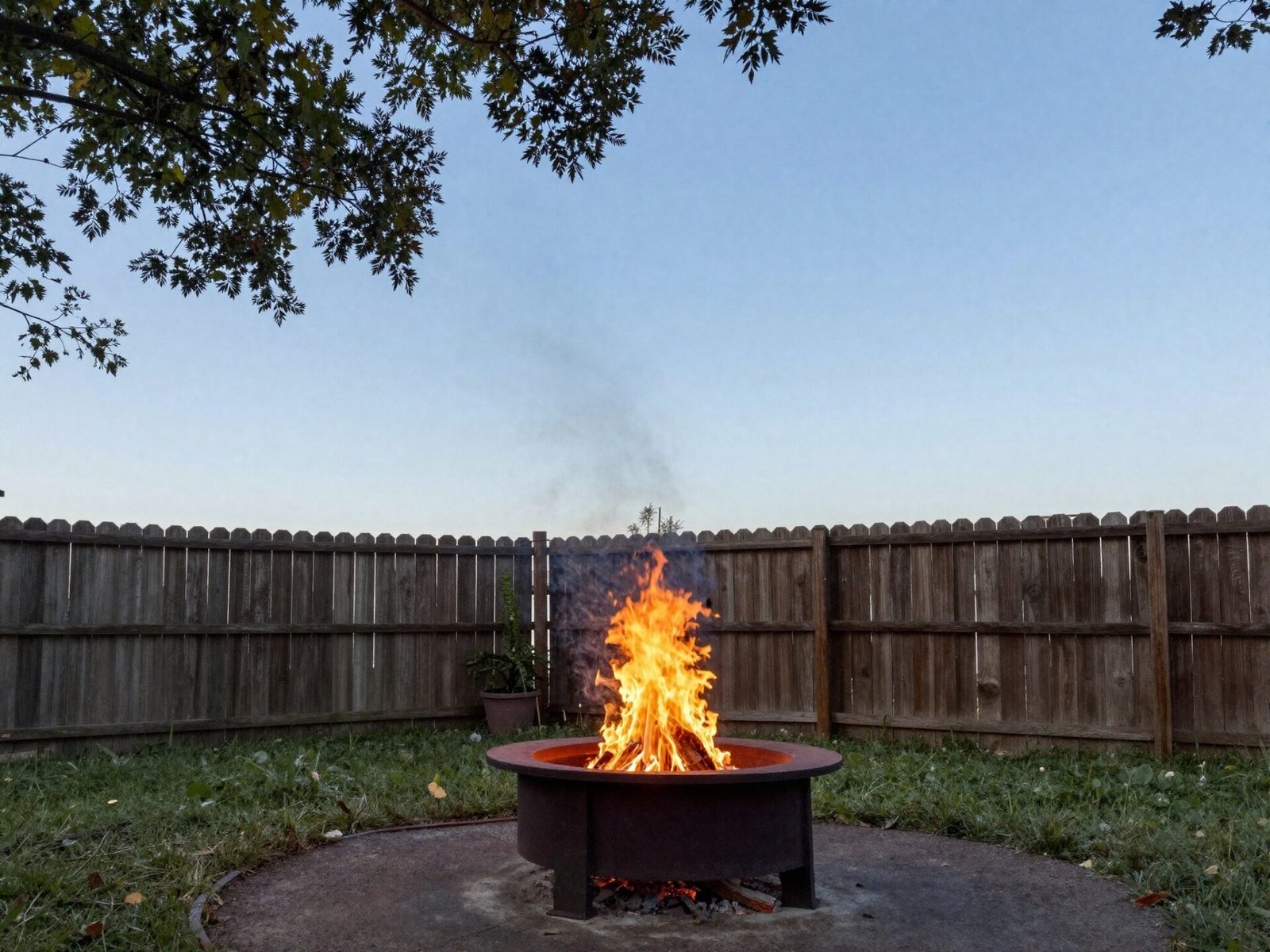
Most fire safety guidelines recommend at least 21 feet of clearance above a wood-burning fire pit to prevent overhanging branches, power lines, or patio covers from igniting.
For an overhead structure like a pergola or gazebo, a more specific minimum of 8-10 feet above the rim applies, with 10 feet being safer if the structure itself is combustible wood or fabric.
Gas fire pits need noticeably less vertical clearance, often around 6 feet for low-flame models, since they generate less radiant heat and produce no embers that could rise upward.
💡 Smart tip: Reassess overhead clearance every season — a tree that was safely distant two summers ago can grow into a genuine hazard as its canopy expands.
⚠️ Mistake to avoid: Don’t treat overhead clearance as a one-time check. Storms, tree growth, and new structures like a shed or pergola can all quietly close the gap over time.
Loving These Ideas? Get the Step-by-Step Guide
Grab the full 5-day eBook and turn these ideas into a finished room.




4. Check Property Line Setbacks (5-10 Feet)
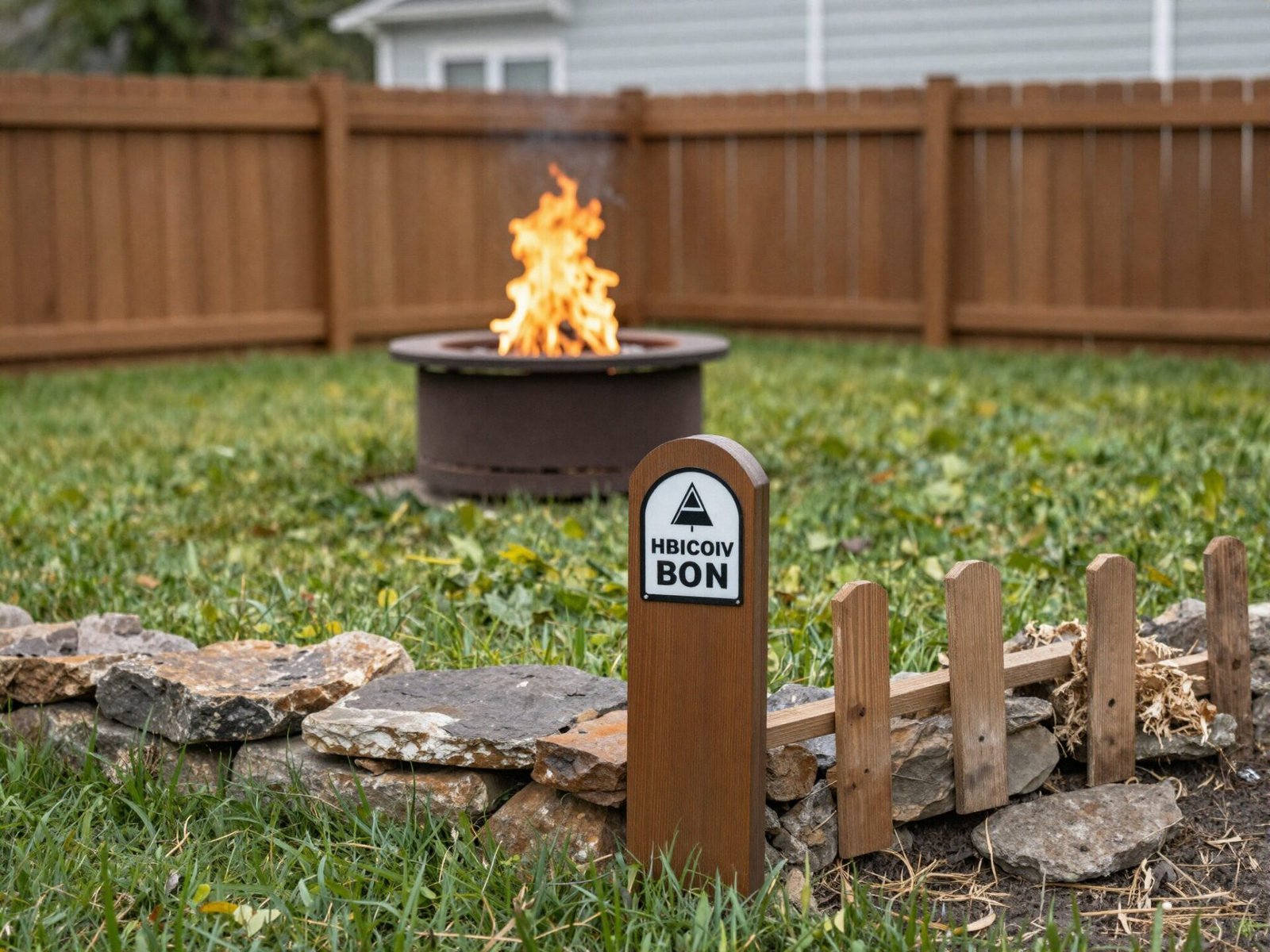
Beyond distance from your own house, most municipalities set specific setback requirements from the property line itself, typically 5-10 feet depending on local code.
This protects neighboring structures and vegetation just as much as the house-distance rule protects your own home.
Many areas treat a permanent fire feature differently from a portable one under these setback rules, so confirm which category your installation falls into.
💡 Smart tip: Contact your local building or fire department directly rather than relying on a generic online number — property line setbacks vary meaningfully by municipality.
⚠️ Mistake to avoid: Don’t assume your own property’s total size guarantees compliance. A large yard can still have a fire pit placed too close to a specific property edge.
5. Leave 10 Feet of Clearance from Trees and Vegetation
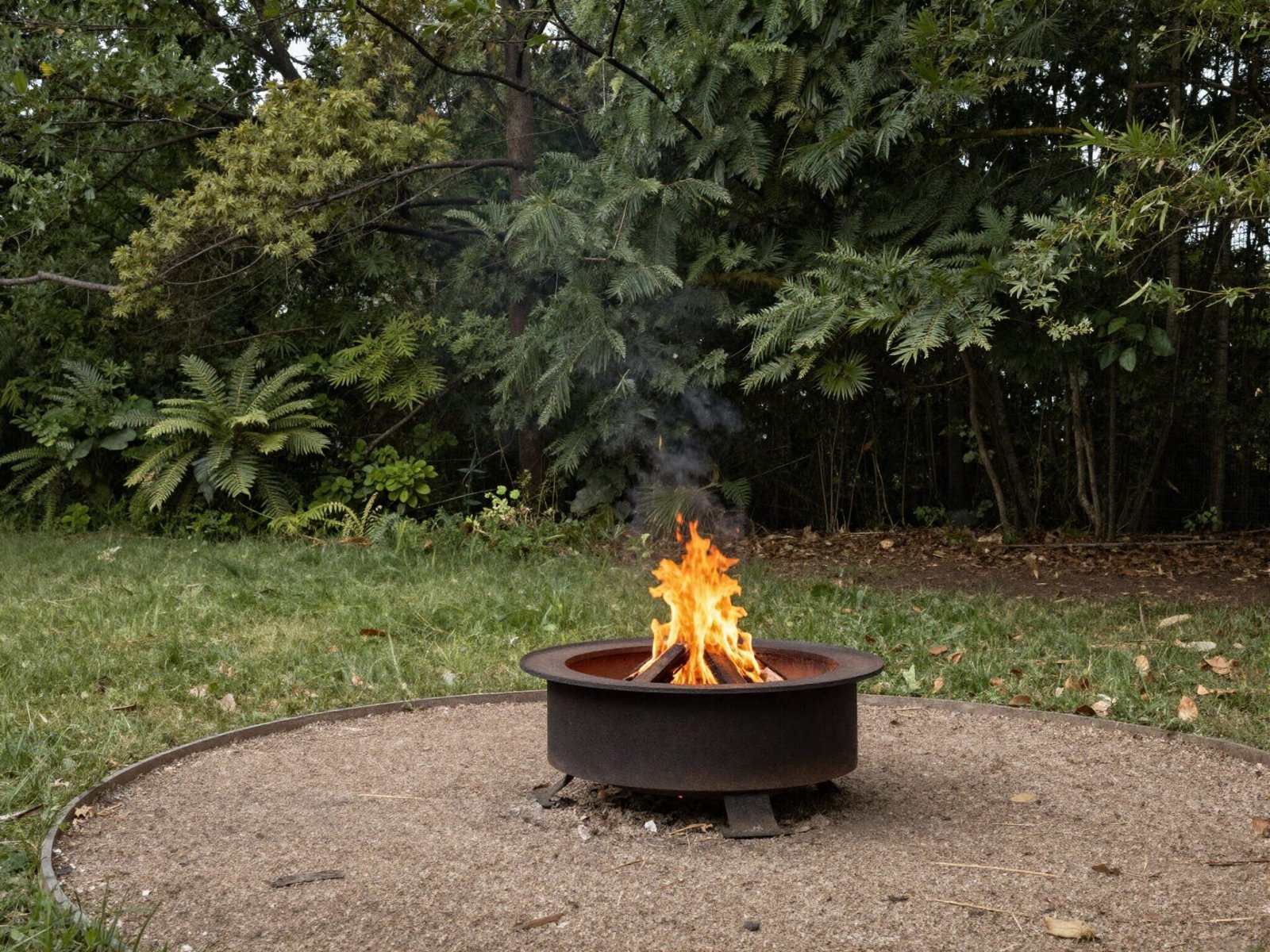
Trees, shrubs, and dense landscaping need their own 10-foot buffer from a fire pit, separate from the house and property line distances.
This applies to both the trunk’s proximity and any low-hanging branches that could dip into the overhead clearance zone discussed earlier.
Dry vegetation is particularly risky, since dead leaves, needles, or mulch near the base can ignite from a stray ember far more easily than living, moist foliage.
💡 Smart tip: Walk your planned fire pit location seasonally, not just at installation, since vegetation growth patterns shift throughout the year.
⚠️ Mistake to avoid: Don’t place a wood-burning pit under low branches or near dry, unmaintained vegetation, even if the 10-foot horizontal distance technically checks out.
6. Size Seating Distance from the Fire Pit Edge
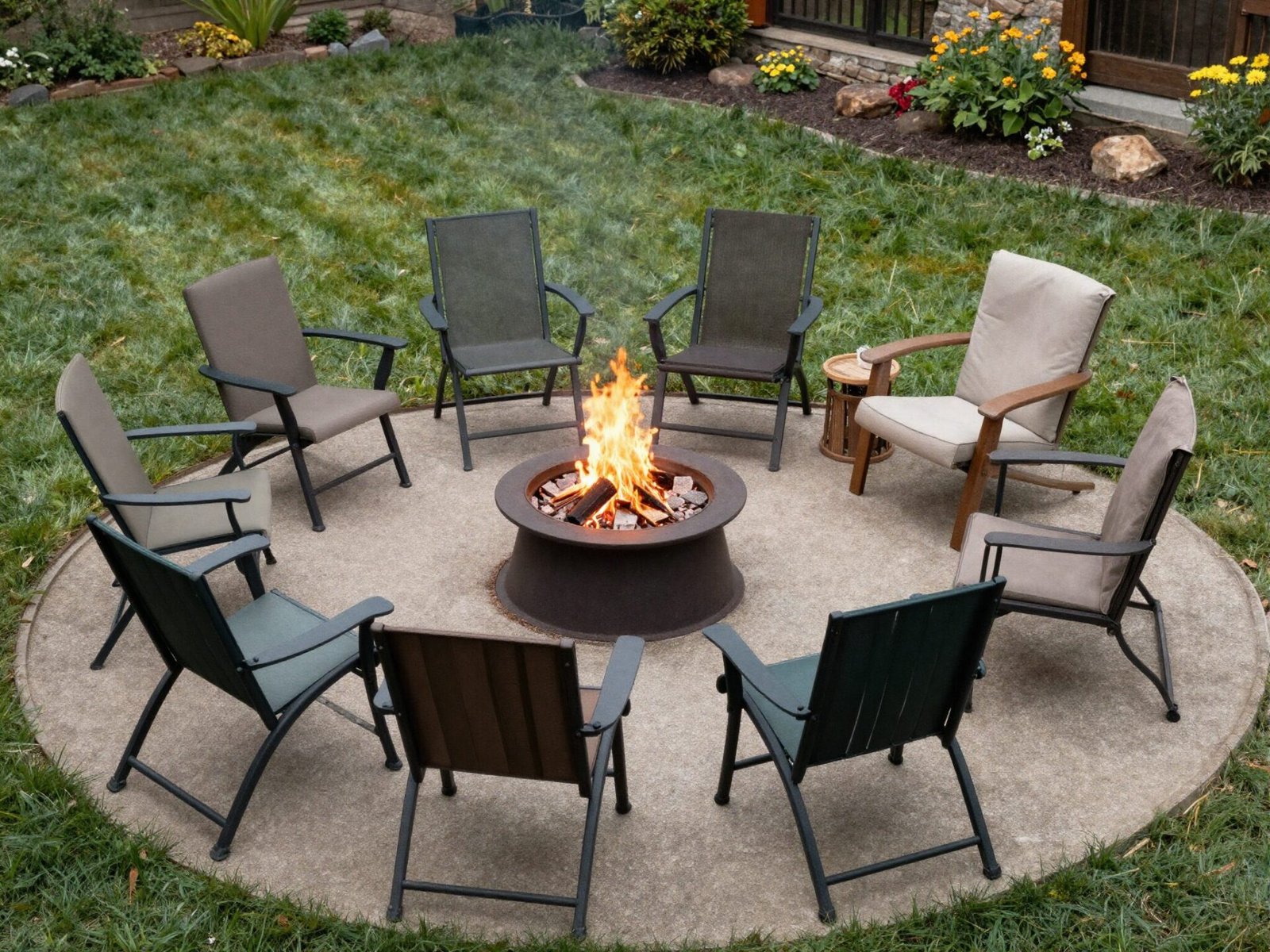
For a wood-burning pit, aim for roughly 7 feet between the fire pit’s edge and where people sit, which keeps everyone comfortable and clear of flying sparks or excessive heat.
Gas fire pits allow much closer seating, typically 15-24 inches from the pit edge, since there are no embers and the flame itself is far more predictable.
A useful layered approach for the whole layout: fire pit, then 3-4 feet of open clearance, then seating, then a 4-foot walkway around the outside of that seating.
💡 Smart tip: For a 4-foot diameter wood-burning pit, plan a total seating area diameter of roughly 18 feet, accounting for the pit itself plus 7 feet of clearance on each side.
⚠️ Mistake to avoid: Don’t apply gas fire pit seating distances to a wood-burning setup. The lack of embers and lower radiant heat from gas genuinely changes what’s safe.
7. Choose Fire Pit Diameter Based on Patio Size
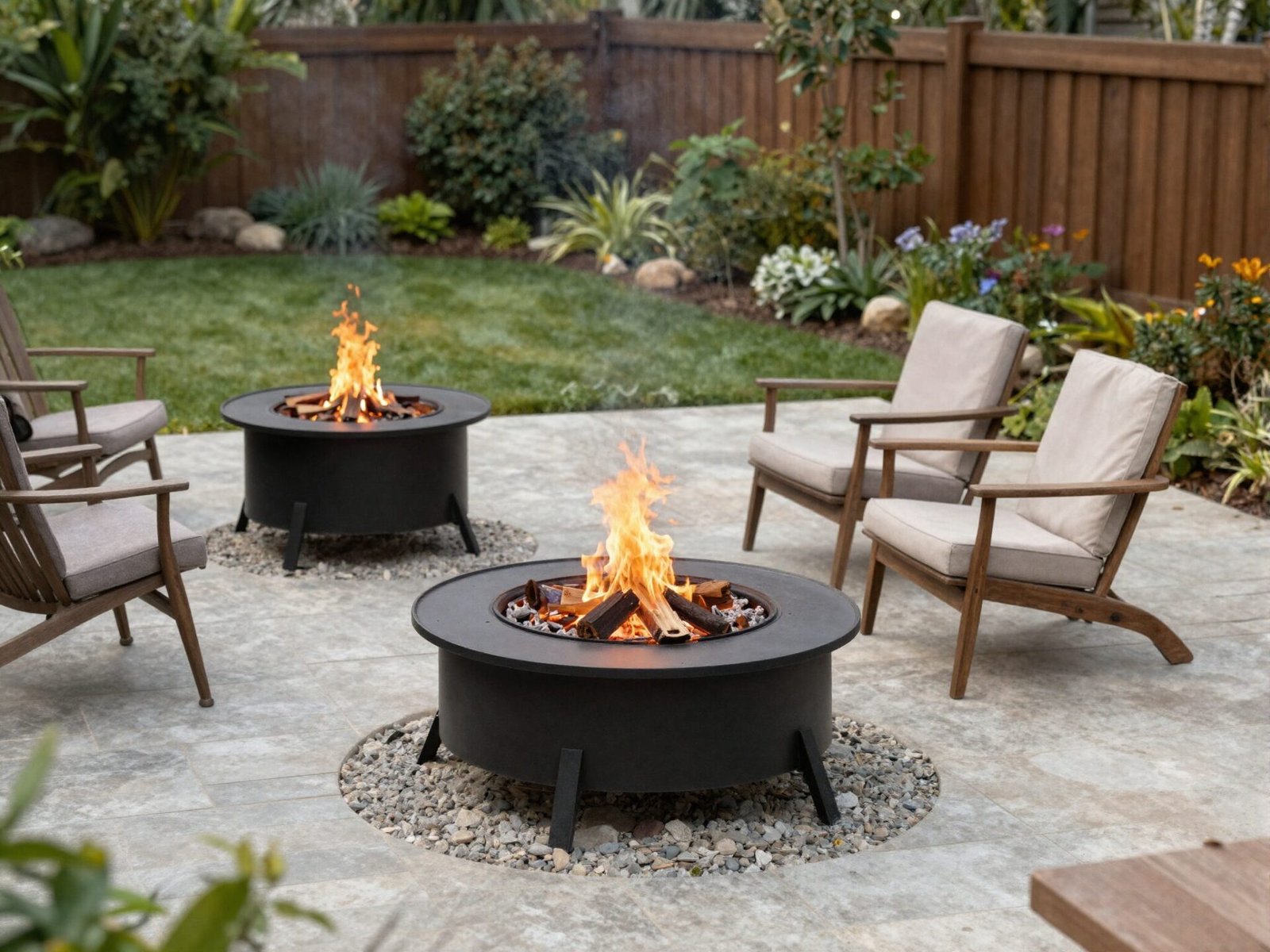
A smaller patio works best with a fire pit under 36 inches wide, which does the job without making the surrounding space feel cramped once seating is added.
A larger backyard can support 48 inches or more, adding room for extra seating and a stronger visual centerpiece for the whole space.
Sizing the pit to the space isn’t just aesthetic — an oversized pit in a small patio directly eats into the clearance and seating distances covered elsewhere in this guide.
💡 Smart tip: Measure your available patio footprint first, then work backward using the seating and clearance rules in this guide to find your realistic maximum pit diameter.
⚠️ Mistake to avoid: Don’t choose fire pit size based on visual impact alone. An oversized pit for the space compromises the safety clearances everything else in this guide depends on.
8. Clear a Non-Combustible Ring Around the Base
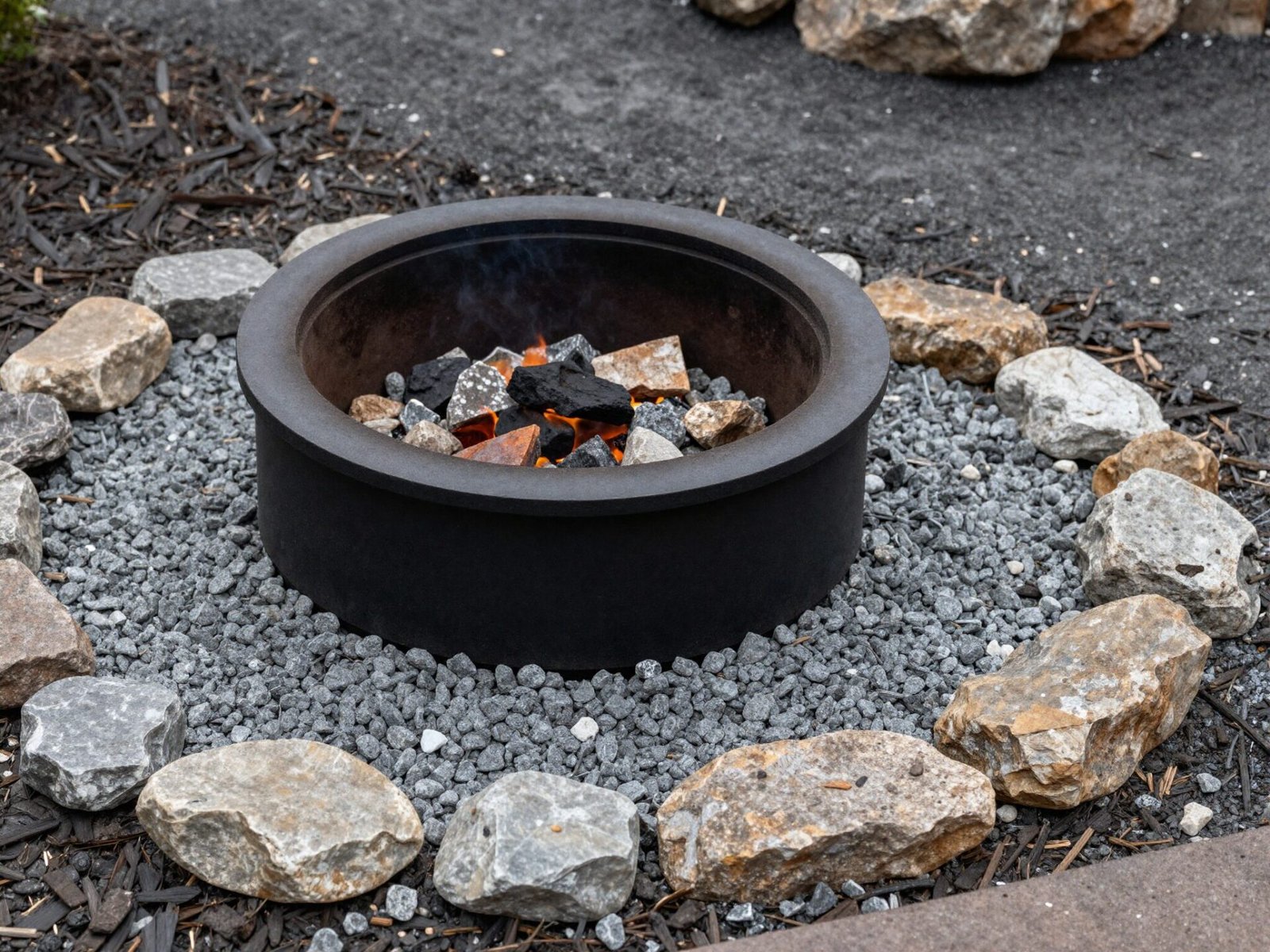
Pull back any rubber mulch, wood chips, or bark mulch at least 3 feet from the fire pit’s base, and replace that ring with gravel or stone instead.
This same 3-foot buffer applies to bushes, ornamental grasses, and any other easily ignitable plants growing close to the pit.
A gravel or stone base ring also simplifies cleanup and reduces the risk of a stray ember smoldering unnoticed in organic mulch.
💡 Smart tip: Use a contrasting stone color for this ring so it reads as an intentional design feature rather than a bare patch in your landscaping.
⚠️ Mistake to avoid: Don’t skip this ring just because your fire pit sits on an existing patio or hardscape. Combustible material along the outer edge of that surface still poses a risk.
9. Position for Wind Direction
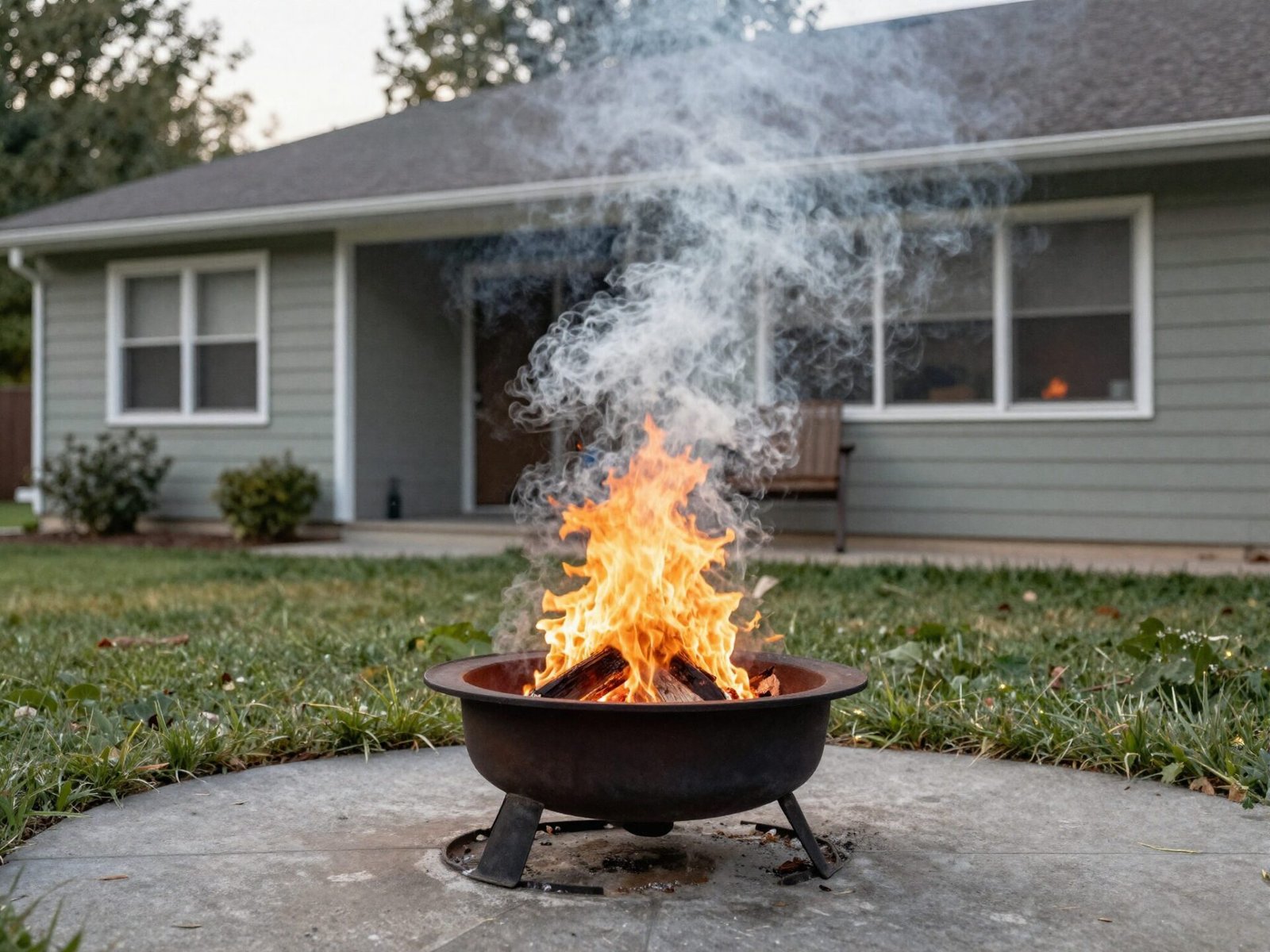
Position your fire pit so prevailing winds carry smoke and embers away from your house and any neighboring structures, not toward them.
This is especially relevant for waterfront properties or elevated decks and rooftop installations, where wind patterns tend to be stronger and more consistent.
A location somewhat sheltered from prevailing wind also gives you a steadier, more predictable flame, which matters for both safety and enjoyment.
💡 Smart tip: Observe your backyard’s typical evening wind pattern over a few days before finalizing fire pit placement, since it often differs from daytime wind direction.
⚠️ Mistake to avoid: Don’t finalize fire pit placement without considering wind at all. Even a technically compliant distance from the house can become a problem if smoke consistently blows that direction.
10. Keep Firewood Storage 10 Feet Away
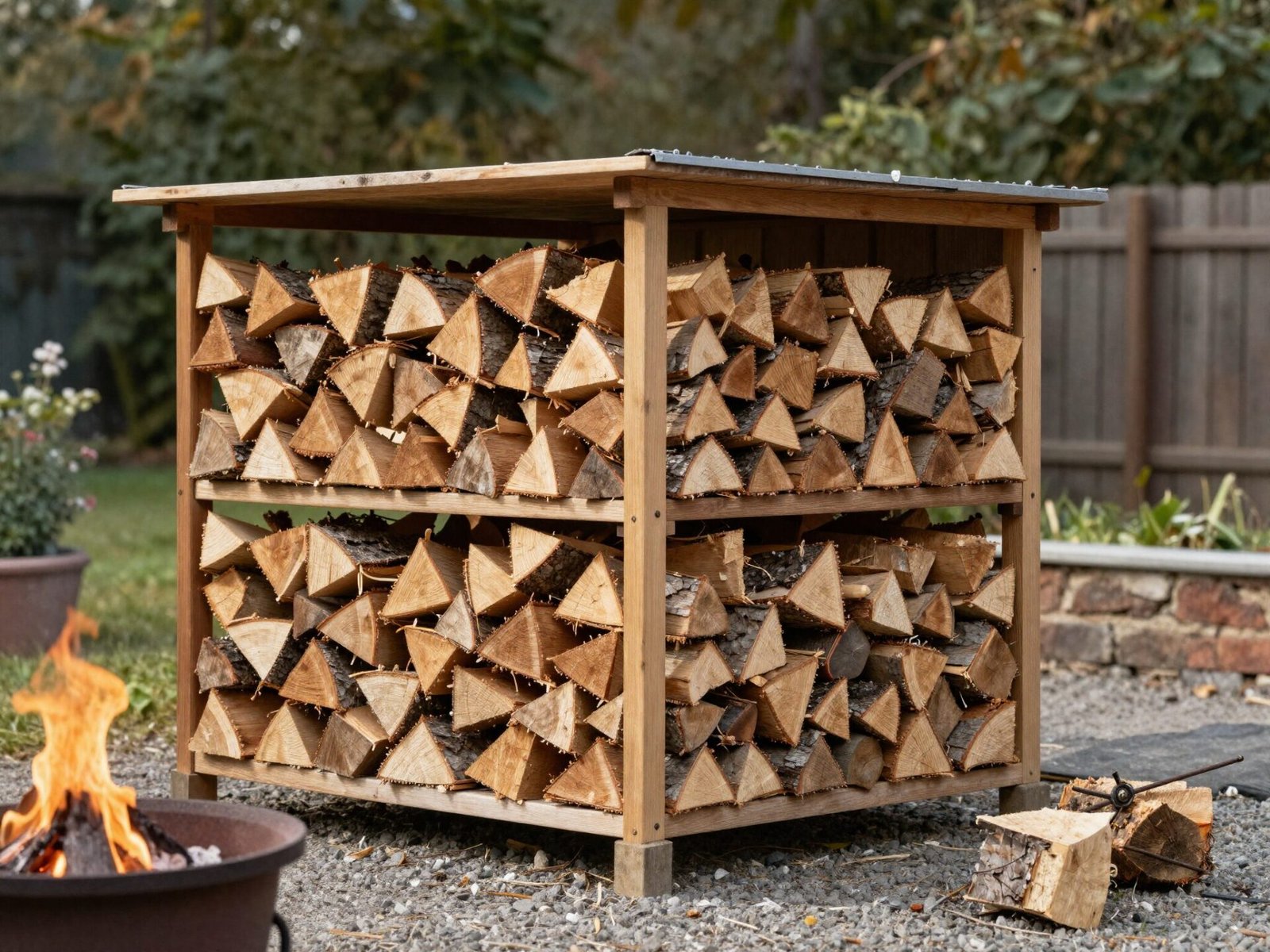
Store your firewood supply at least 10 feet from the fire pit itself, ideally on a covered, off-ground rack rather than piled directly on the ground.
This distance prevents a stray ember from igniting your entire wood supply, which would turn a contained fire into a much larger, harder-to-control situation.
Keeping wood off the ground also helps it stay dry and reduces pest issues, which is a practical bonus beyond the safety consideration.
💡 Smart tip: Position the firewood rack upwind of the fire pit specifically, using the same wind direction awareness from the previous section.
⚠️ Mistake to avoid: Don’t stack firewood conveniently close to the pit for easy access. That convenience directly conflicts with the safety distance this fuel source needs.
11. Store Propane Tanks Away from Ignition Sources
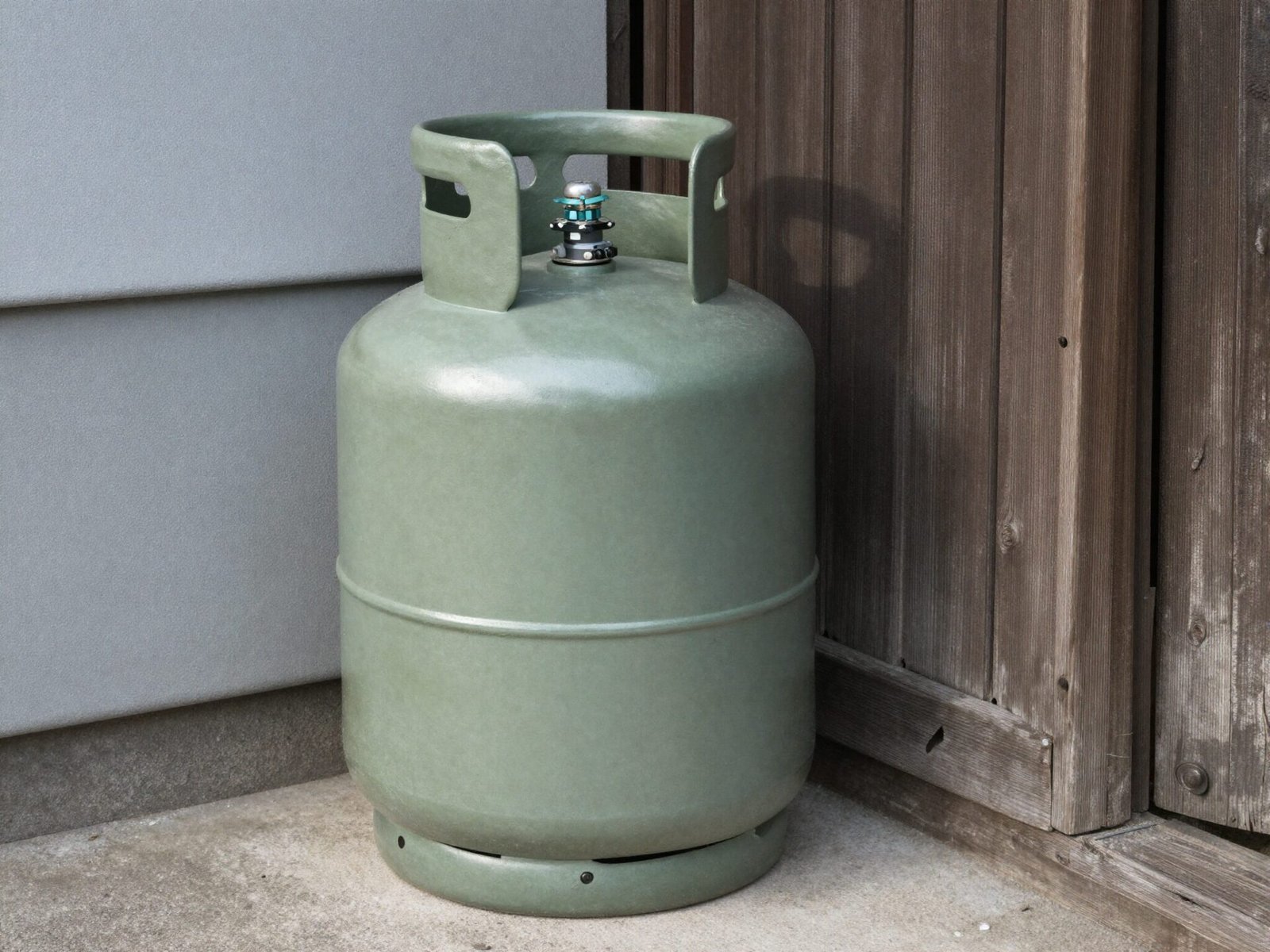
Spare propane tanks for a gas fire pit need a well-ventilated outdoor location at least 20 feet from any ignition source, and should never be stored inside the house or an attached garage.
This distance accounts for the risk of a slow leak accumulating gas near an open flame, pilot light, or electrical spark.
Proper ventilation matters as much as distance here, since propane is heavier than air and can pool in an enclosed space if a leak does occur.
💡 Smart tip: Store spare tanks upright in a shaded, well-ventilated spot, and inspect connections and hoses at the start of each season before first use.
⚠️ Mistake to avoid: Don’t store a spare propane tank in an attached garage “just for convenience.” That indoor proximity to your house defeats the entire purpose of outdoor storage distance.
12. Keep Fire Safety Tools Within Reach
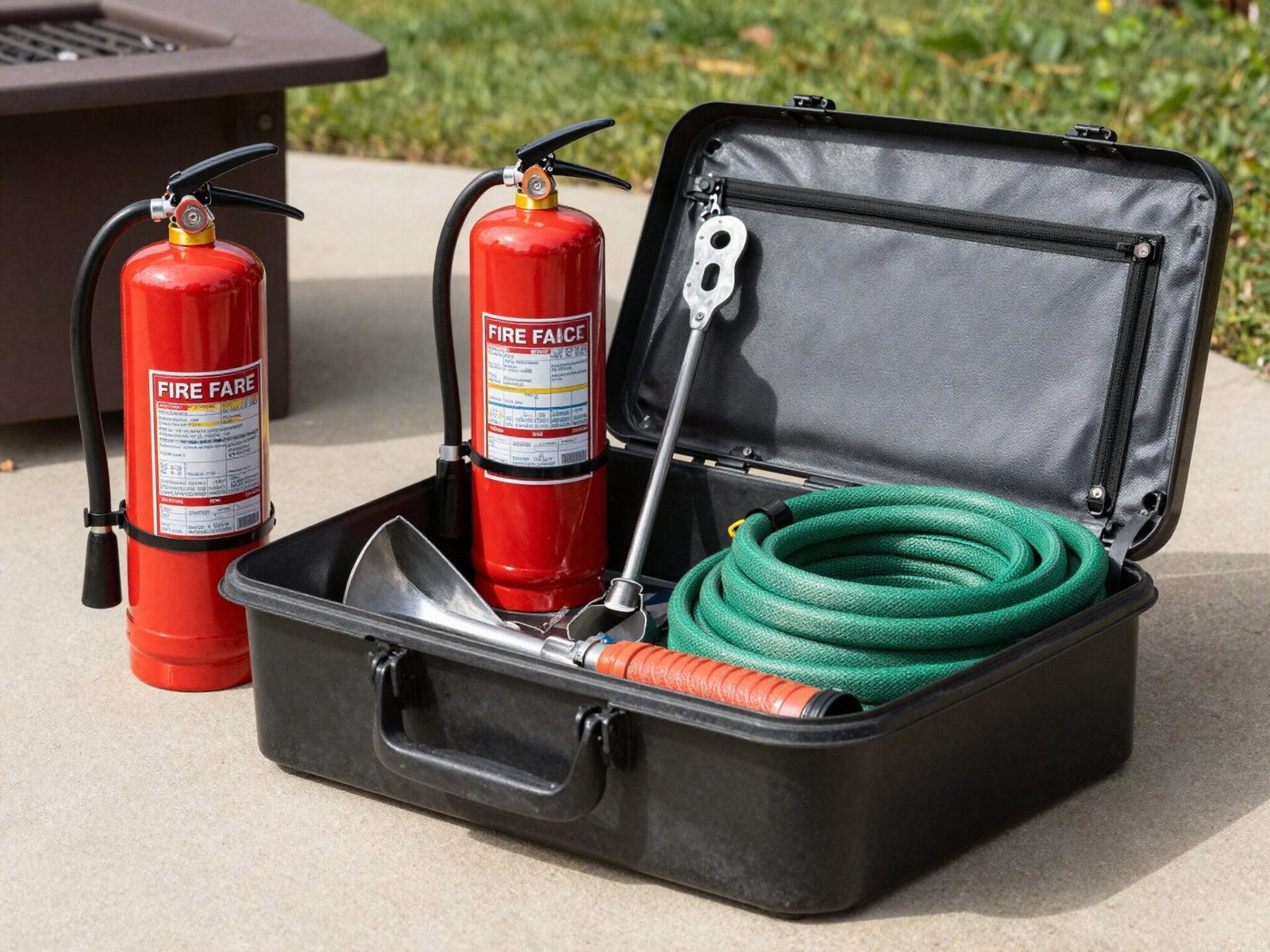
Keep a fire extinguisher rated at minimum 2A:10B:C, a pre-connected garden hose, a fireproof shovel, a metal bucket, and long-handled tools within about 6 feet of the fire pit at all times.
A spark screen sized to match your specific pit adds another meaningful layer of protection against embers escaping the fire area entirely.
Storing all of this together in a single weatherproof container keeps it accessible without cluttering the seating area itself.
💡 Smart tip: Check your extinguisher’s pressure gauge at the start of each fire pit season, not just when you happen to remember — a dead extinguisher is worse than no plan at all.
⚠️ Mistake to avoid: Don’t rely on a garden hose alone as your only safety tool. A dedicated fire extinguisher rated for the right classes handles situations water alone can’t.
13. Check Local Ordinances and Burn Bans Before Installing
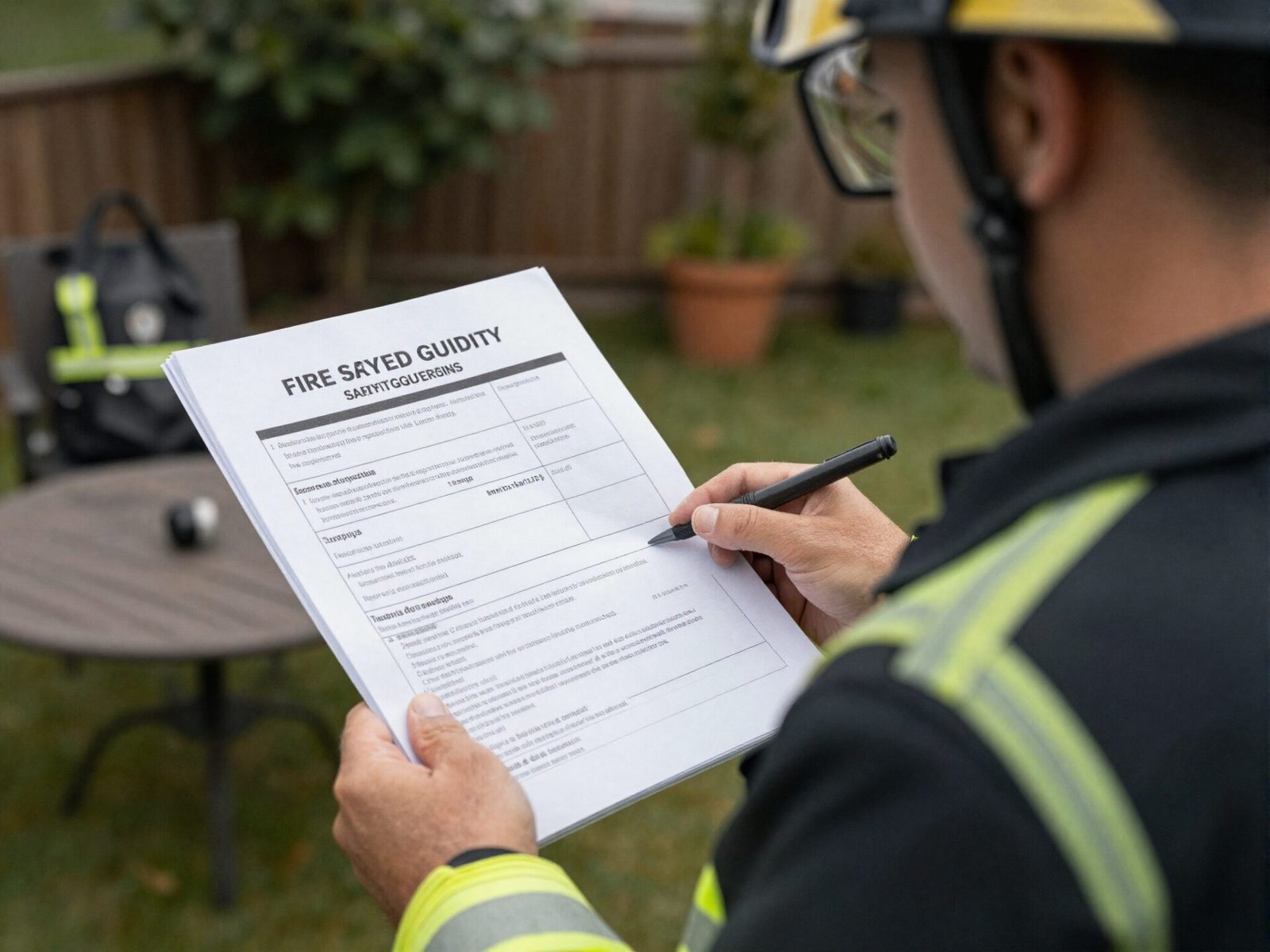
Every clearance number in this guide is a general safety guideline, but local municipalities and homeowner associations often have their own specific rules layered on top.
Some regions restrict wood-burning fire pits entirely during dry seasons through temporary burn bans, which override even a perfectly compliant permanent installation.
Many local fire departments publish these rules directly on their websites, making this one of the easiest steps to complete before any installation begins.
💡 Smart tip: Call your local fire department directly if online information seems unclear or outdated — a five-minute phone call can prevent a costly permitting or compliance issue later.
⚠️ Mistake to avoid: Don’t assume general safety guidelines automatically satisfy local code. Ordinances vary significantly by city, county, and even individual homeowner associations.
14. Common Fire Pit Placement Mistakes
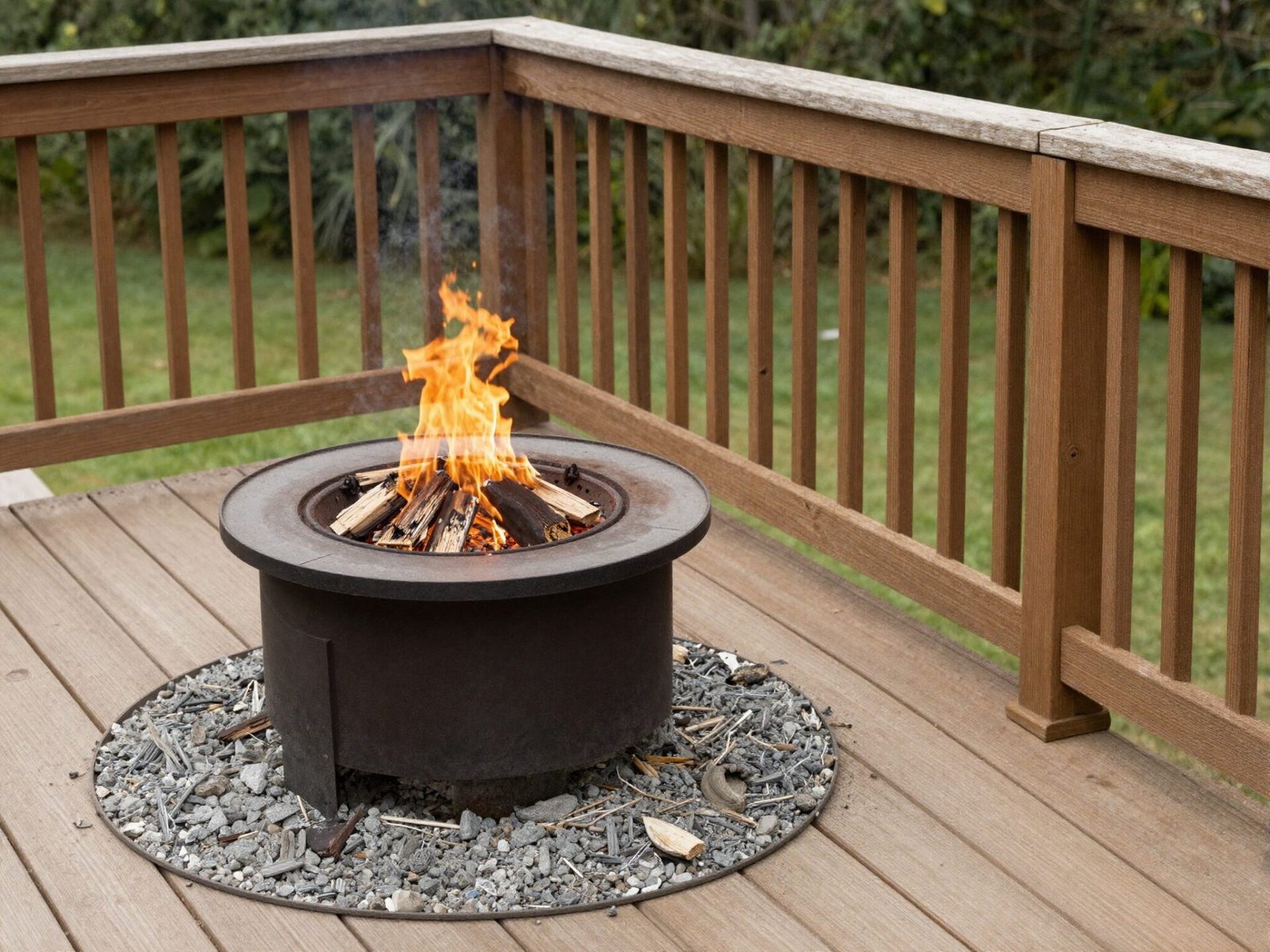
A handful of placement mistakes account for most fire pit incidents, and nearly all of them involve skipping one of the distances covered in this guide.
Placing a wood-burning pit directly on or too close to a wooden deck is one of the most common and most dangerous, since the deck material itself becomes fuel.
Underestimating how far sparks travel on a windy evening, and forgetting that clearances need rechecking as trees grow and yards change, round out the usual list.
💡 Smart tip: Walk your fire pit setup before the first use of each season, confirming every clearance in this guide still holds after a winter of growth and weather changes.
⚠️ Mistake to avoid: Don’t treat fire pit placement as a one-time decision. Revisit every clearance distance seasonally, since the conditions around your fire pit are never truly static.
Effort & Cost Snapshot
| Idea | Effort | Approx. Cost |
|---|---|---|
| 1. Distance from House (Wood) | Low | $0 (planning) |
| 2. Gas Fire Pit Clearance | Low | $300–$1,500 (unit) |
| 3. Overhead Clearance | Low | $0 |
| 4. Property Line Setback | Low | $0 (check local code) |
| 5. Tree and Vegetation Clearance | Low | $0 |
| 6. Seating Distance | Medium | $200–$800 (seating) |
| 7. Fire Pit Diameter Choice | Medium | $150–$1,200 |
| 8. Non-Combustible Base Ring | Medium | $50–$200 |
| 9. Wind Direction Planning | Low | $0 |
| 10. Firewood Storage | Low | $40–$150 (rack) |
| 11. Propane Tank Storage | Low | $20–$60 (storage box) |
| 12. Fire Safety Tools | Low | $60–$150 |
| 13. Checking Local Ordinances | Low | $0 |
| 14. Avoiding Placement Mistakes | Low | $0 |
None of these distances are arbitrary — each one traces back to how far heat, sparks, or embers can realistically travel under real conditions.
Start with distance from your house and overhead clearance, since those two alone prevent the most serious fire pit incidents.
Continue Your Home Transformation
Explore the full collection of step-by-step eBooks and get the guide that fits the room you're working on.