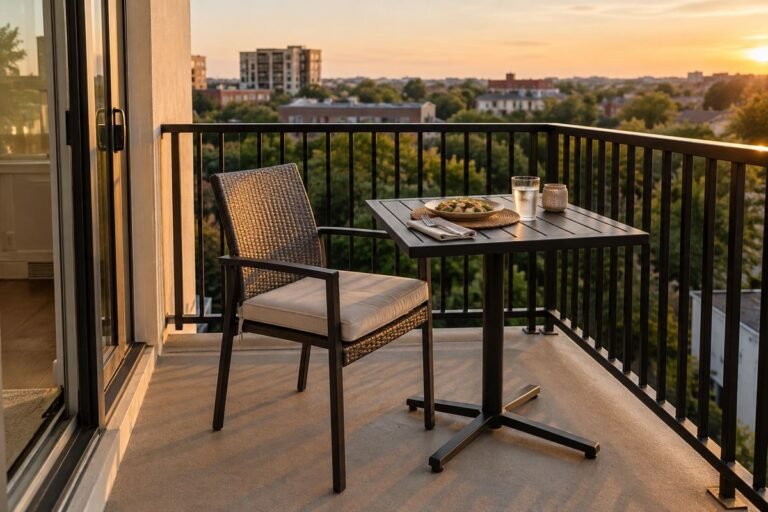
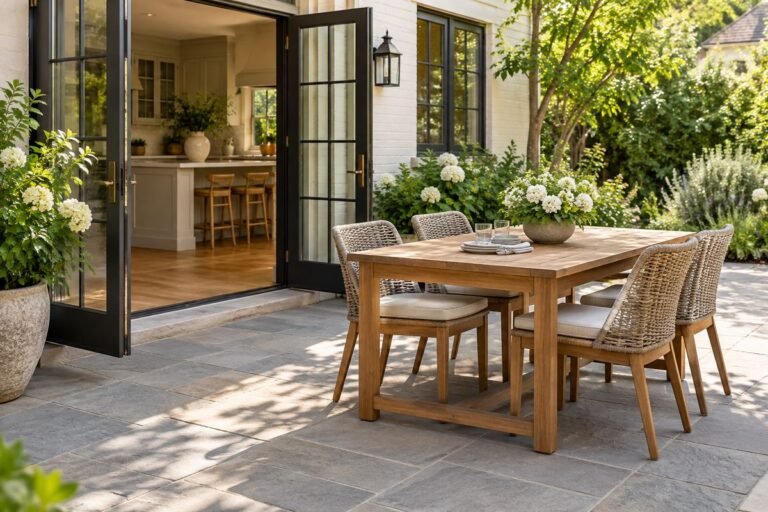
A backyard water feature adds equipment and maintenance as well as a visual focal point. Begin with its purpose, site conditions, access and the care routine you can provide before choosing the decorative form.
The images are design concepts, not verified pool, electrical or child-protection details. Have structure, water quality, power, access controls and local requirements assessed by qualified professionals for the exact installation. Never infer a safe barrier or swimming-water system from a picture.
Images are illustrative design concepts, including AI-generated replacement images. They are not installation drawings or verified product-performance evidence.
Plan Backyard Water Feature Care From the Seat and Service Route
Choose the position from the place where you will actually sit, then trace a separate practical route for cleaning and equipment access. Next, ask how the selected system is drained, inspected and serviced. For example, a striking wall finish may lose its appeal if normal maintenance requires moving heavy furniture or stepping through planted beds. Compare the ongoing work of a simpler complete fountain before adding several separate water effects.
1. Connect a Raised Pool With Surrounding Planting
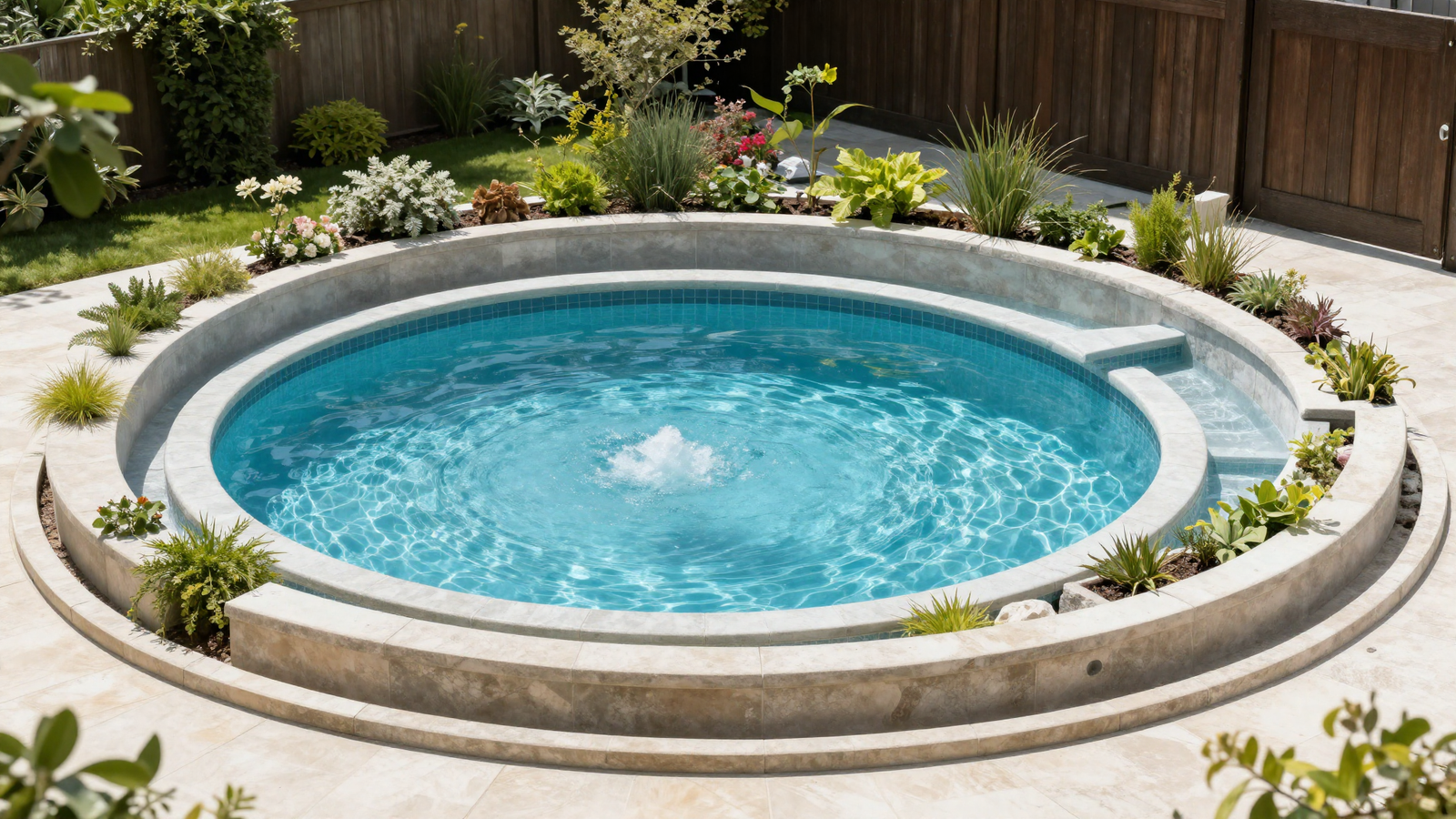
A raised edge can create a strong visual line, but pool structure, access and required barriers need a complete suitable design. Keep planters compatible with inspection and maintenance access.
Try this: Plan the whole pool area before decorative edges.
2. Treat a Swimming Pond as a Specialist Project
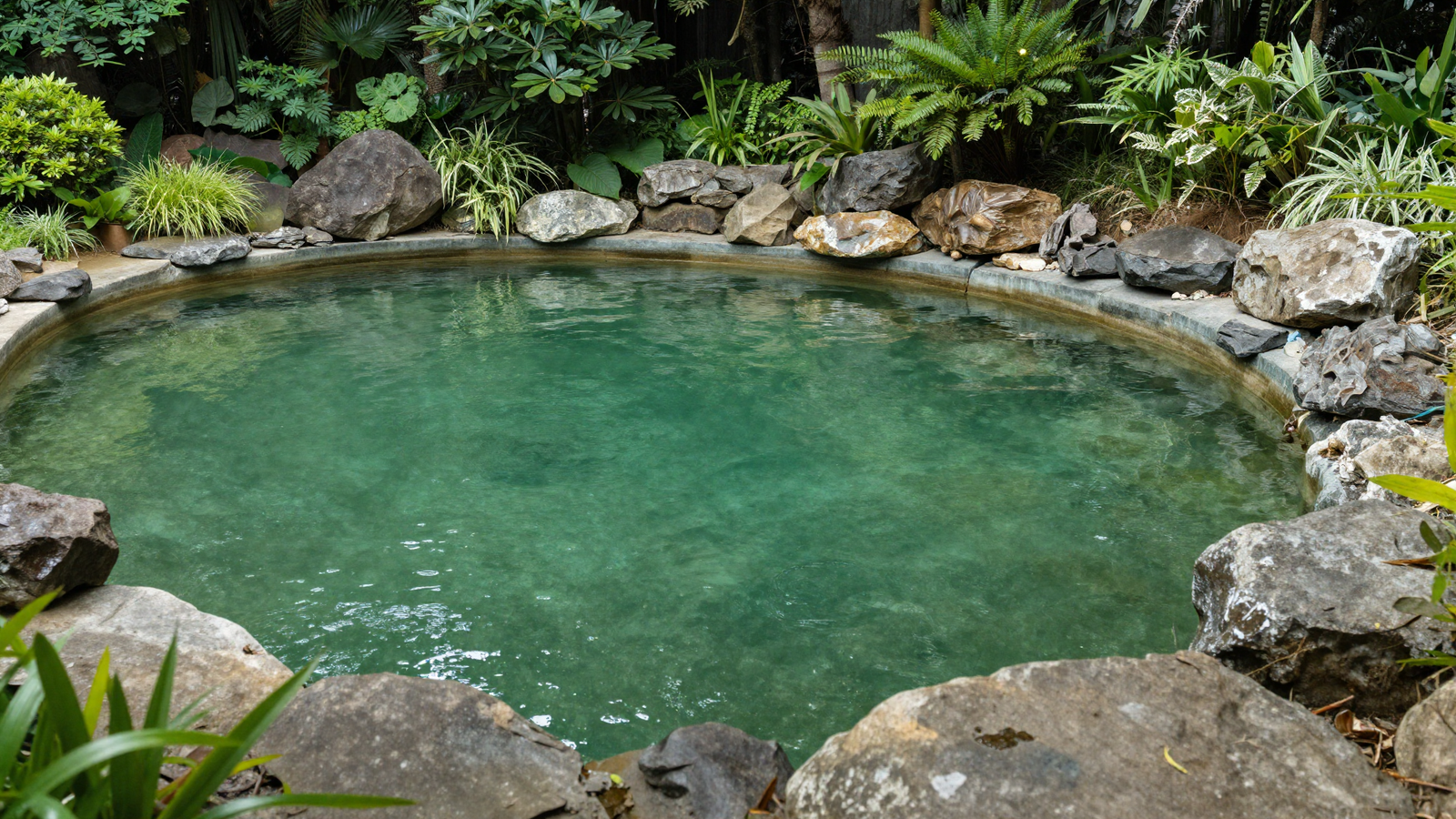
A natural-looking swimming area still needs appropriate water-quality management, structure and operation. Decorative planting alone does not establish water fit for swimming.
Try this: Use a qualified design for the actual site and use.
3. Plan Pond Access Separately From Appearance
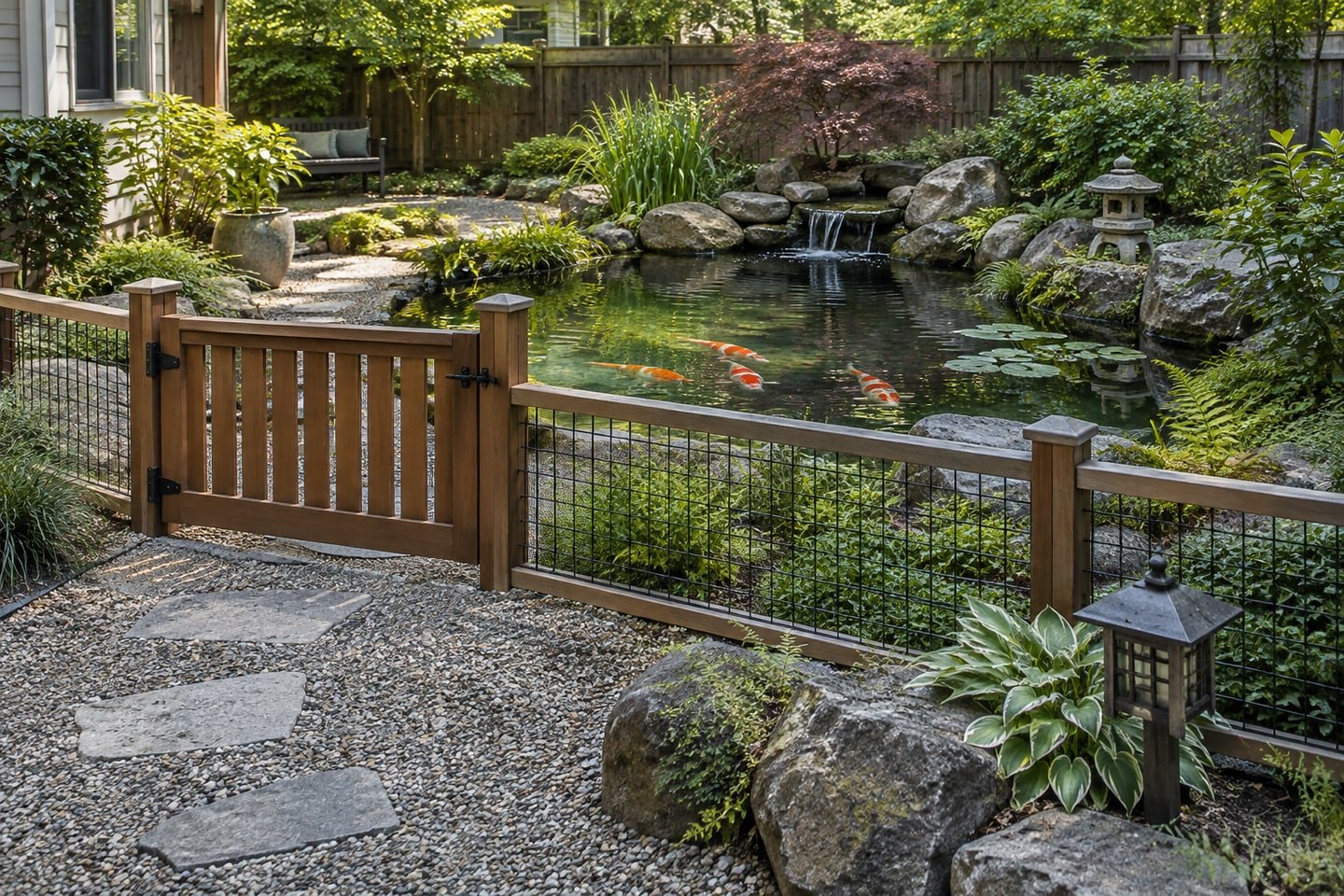
A defined garden boundary and gate can organize access around a pond. The illustration does not establish certified child protection or compliance with local requirements. Have suitable controls assessed for the household.
Try this: Do not treat decorative fencing or netting as proof of protection.
4. Assess a Pond Bridge for Its Users
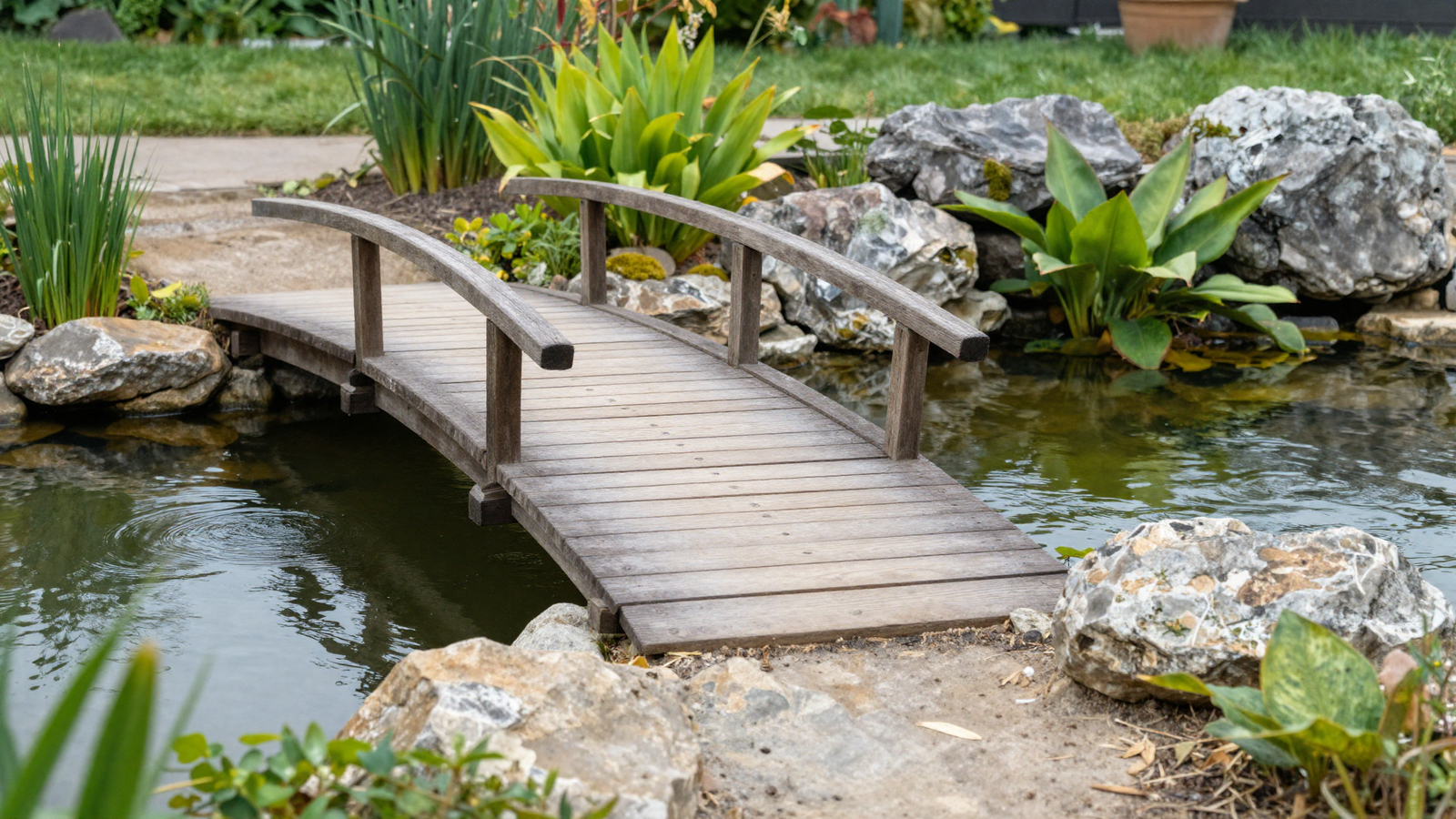
A bridge affects structure, edges and movement beside water. Choose a suitable design for the span and users rather than copying a decorative image. Keep an alternative route where appropriate.
Try this: Have support and access details assessed before construction.
5. Plan Access for Waterfall Maintenance
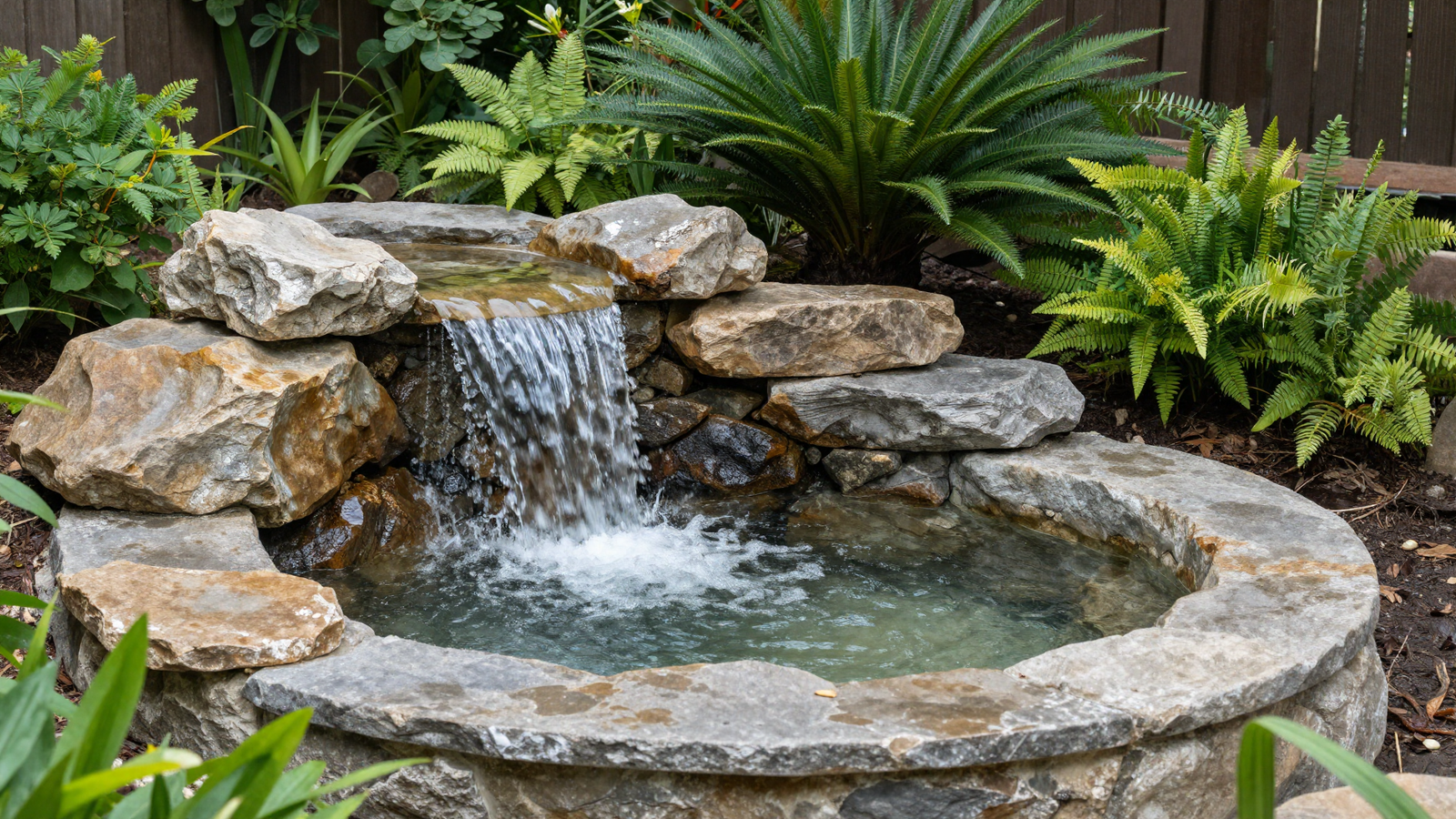
Compare a visible pond with a system that uses a concealed reservoir; each still needs water management, equipment access and appropriate controls. Keep the pump and collection area reachable. Choosing a pondless product does not remove its inspection and maintenance requirements.
Try this: Keep the reservoir and pump inspectable.
6. Use a Geometric Bubbler as One Focal Point
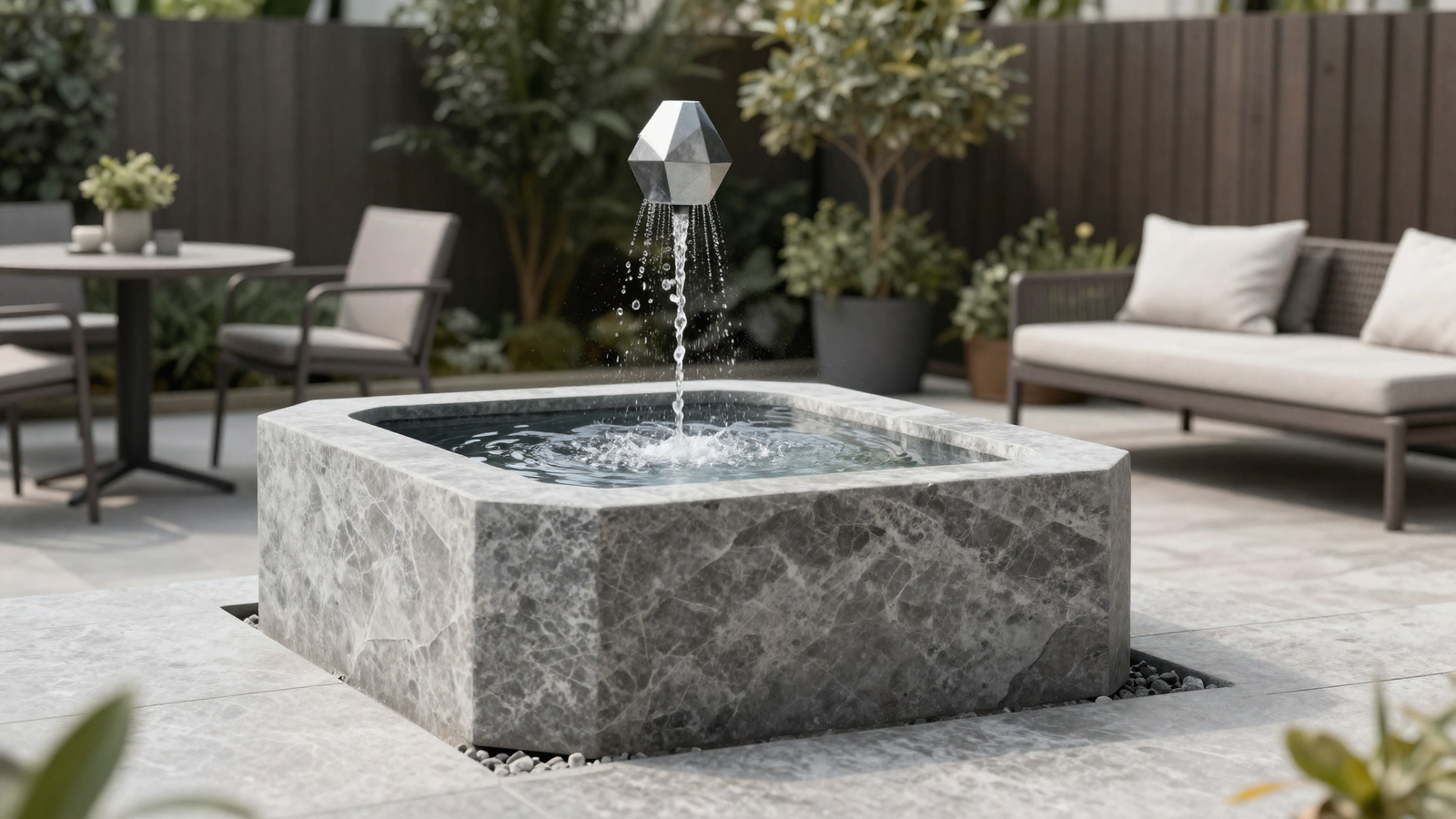
A simple fountain can suit a restrained patio composition. Choose a product and installation for the location and plan cleaning, topping up and suitable power.
Try this: Leave access around the complete feature.
7. Coordinate a Wall Fountain With Its Support
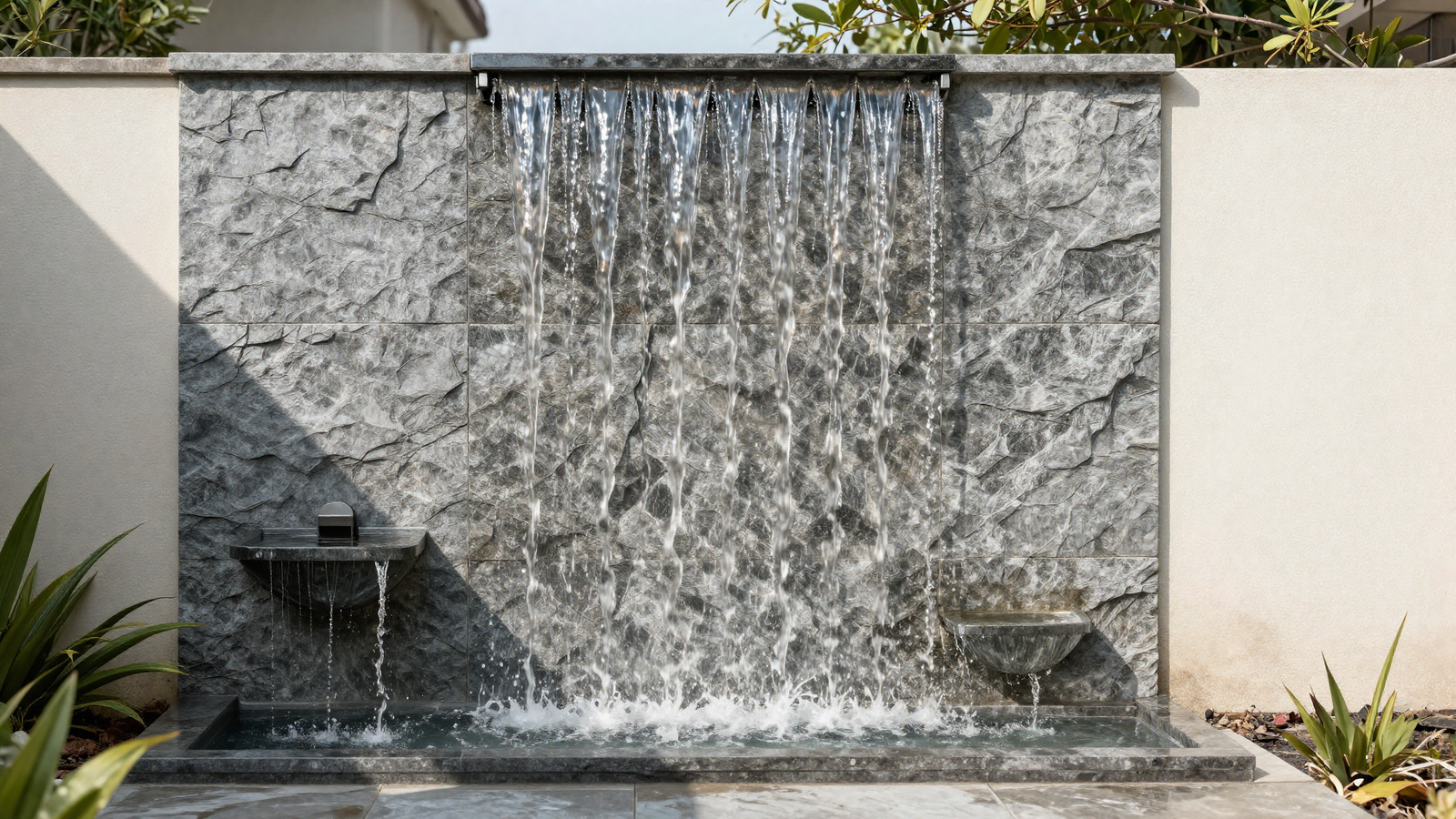
A vertical feature needs a suitable wall, waterproof detailing and access to equipment. Consider splashing and nearby building materials. Its decorative finish is one part of the installation.
Try this: Choose the system before designing the surrounding wall.
8. Assess a Barrel-Style Fountain as a Complete Product
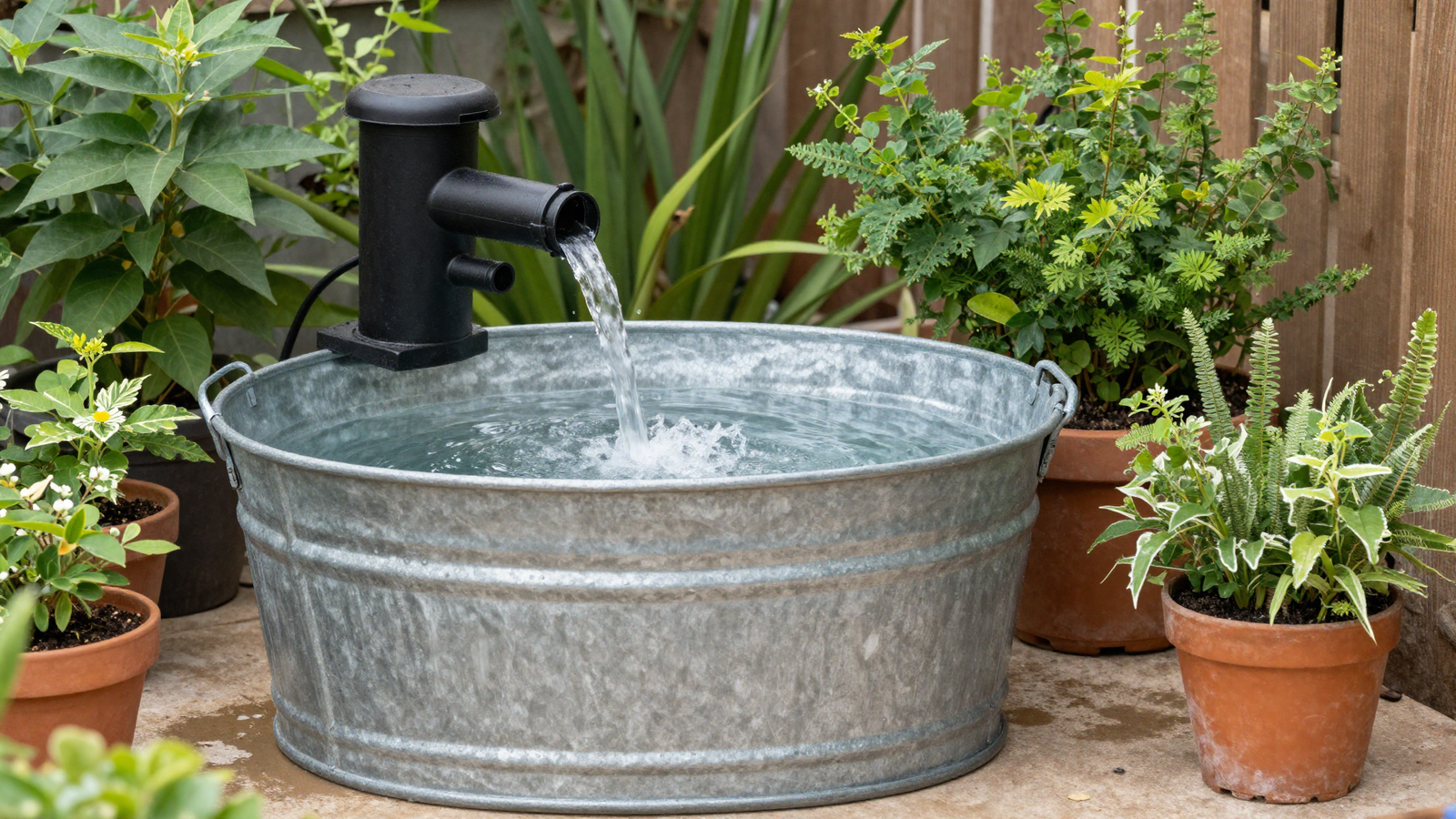
A reused-looking container can provide character, but condition, lining, support and equipment must suit the intended use. Avoid assuming any old barrel is a suitable reservoir.
Try this: Keep cleaning and drainage practical.
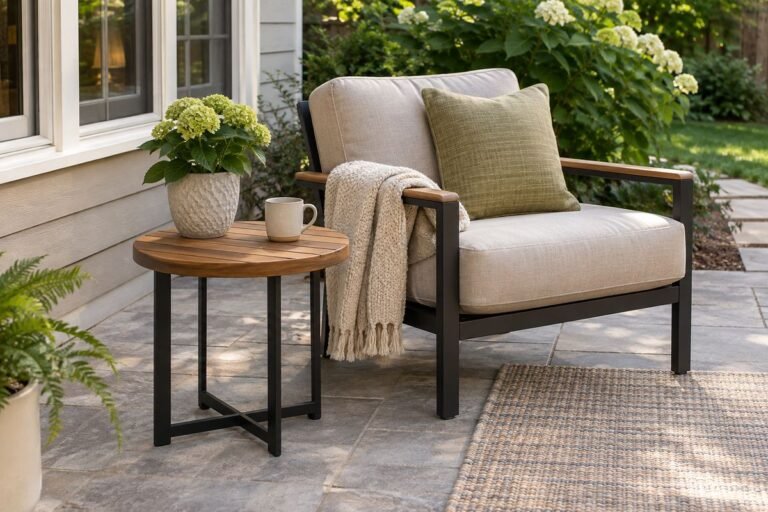
9. Separate Dry Seating From the Water Feature
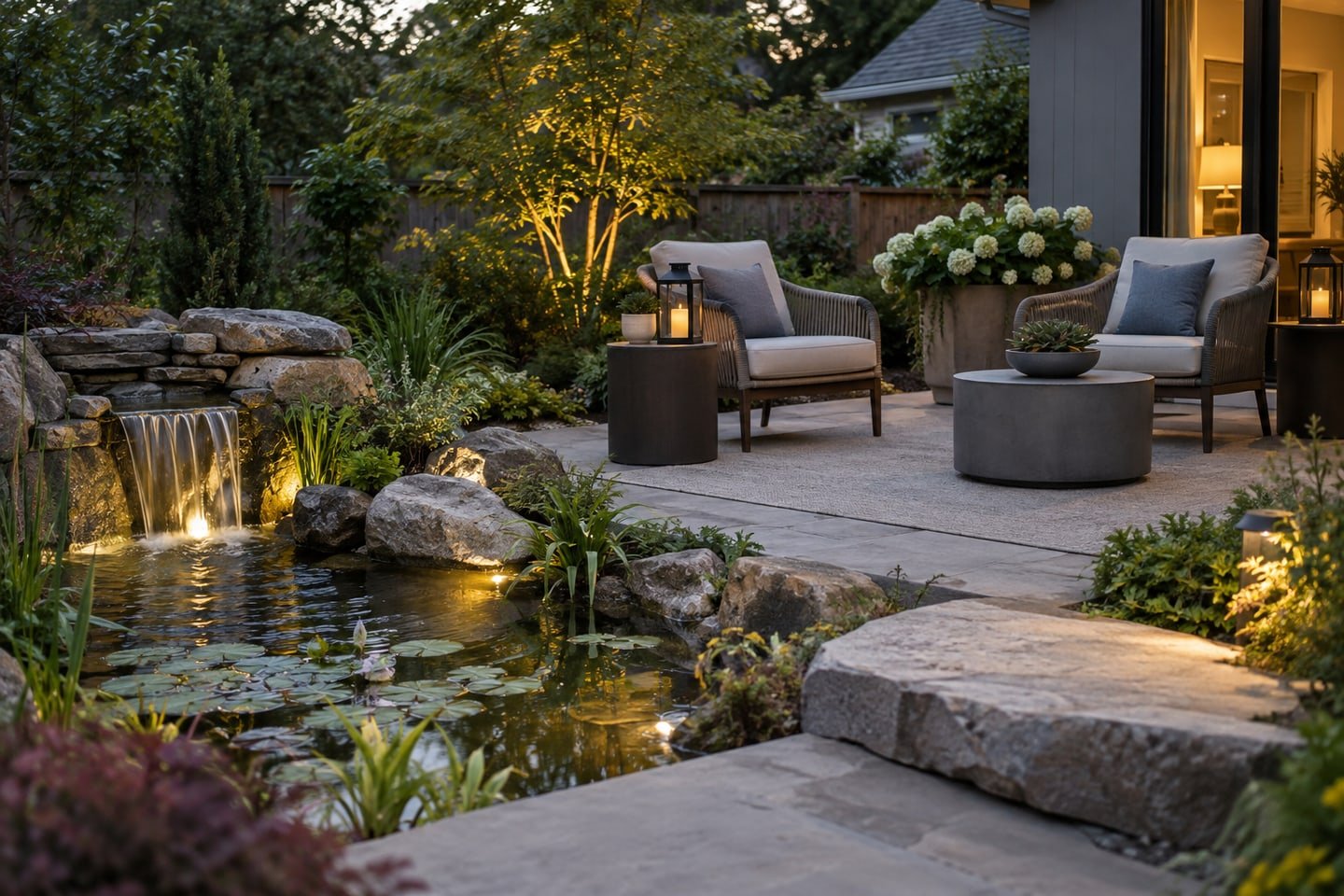
A nearby dry sitting area can enjoy the view without combining flame and water equipment. Suitable flameless lanterns can provide a decorative evening accent.
Try this: Keep the route and feature maintenance access clear.
10. Discuss Pool Entry With the Designer
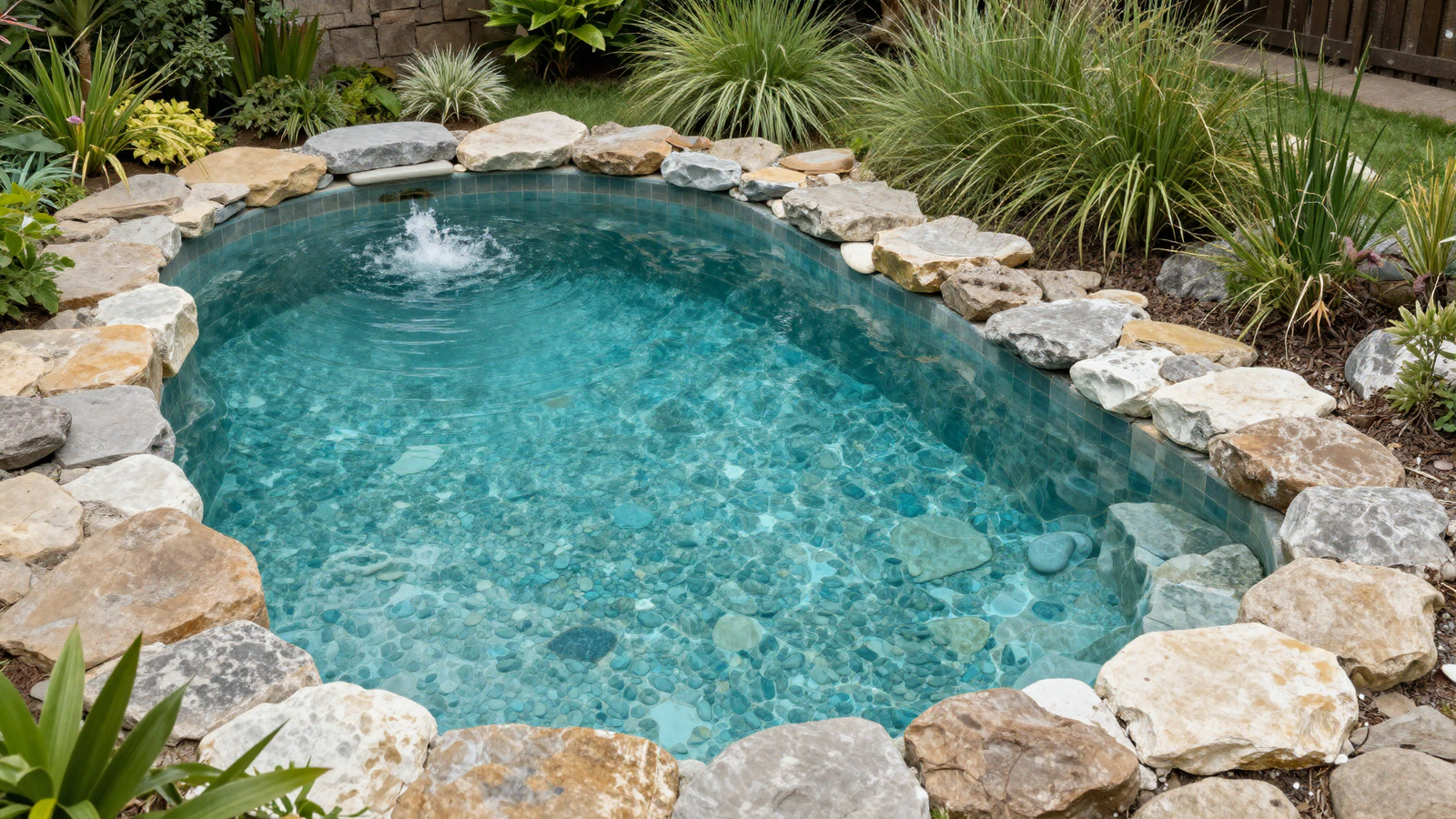
Discuss entry, depth changes and the route around the pool with the specialist rather than inferring the design from its natural-looking edge. Water treatment, surfaces, barriers and structural requirements need coordinated specification. Record the actual household needs before choosing an entry form.
Try this: Discuss the actual household needs with the designer.
11. Use a Reflecting Pond as a Deliberate Garden Element
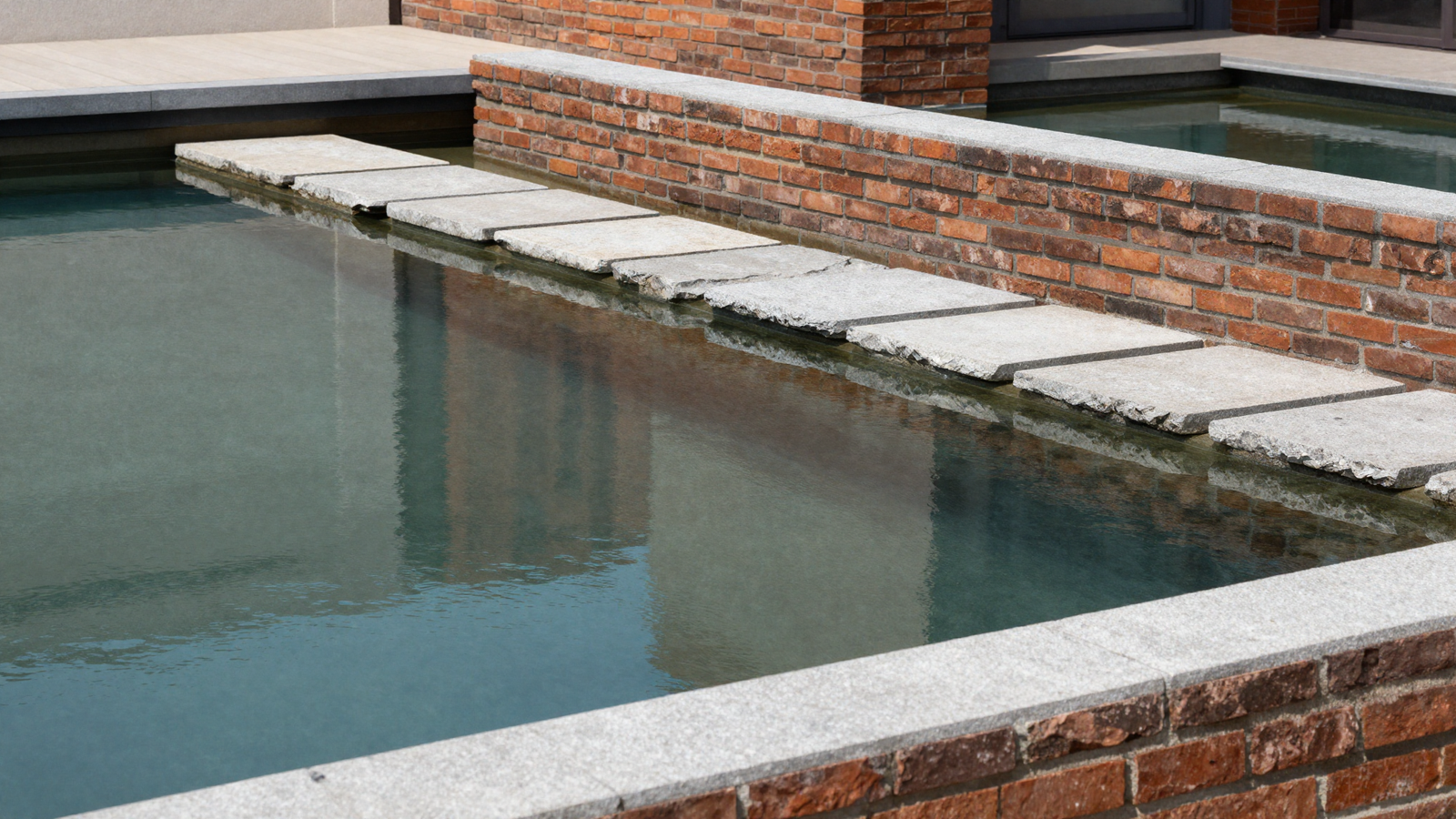
A still surface can frame a view when location and maintenance suit it. Include access controls, water management and cleaning in the design. Keep adjacent routes practical.
Try this: Check the main view from the house before fixing the location.
12. Keep Textured Water Features Accessible
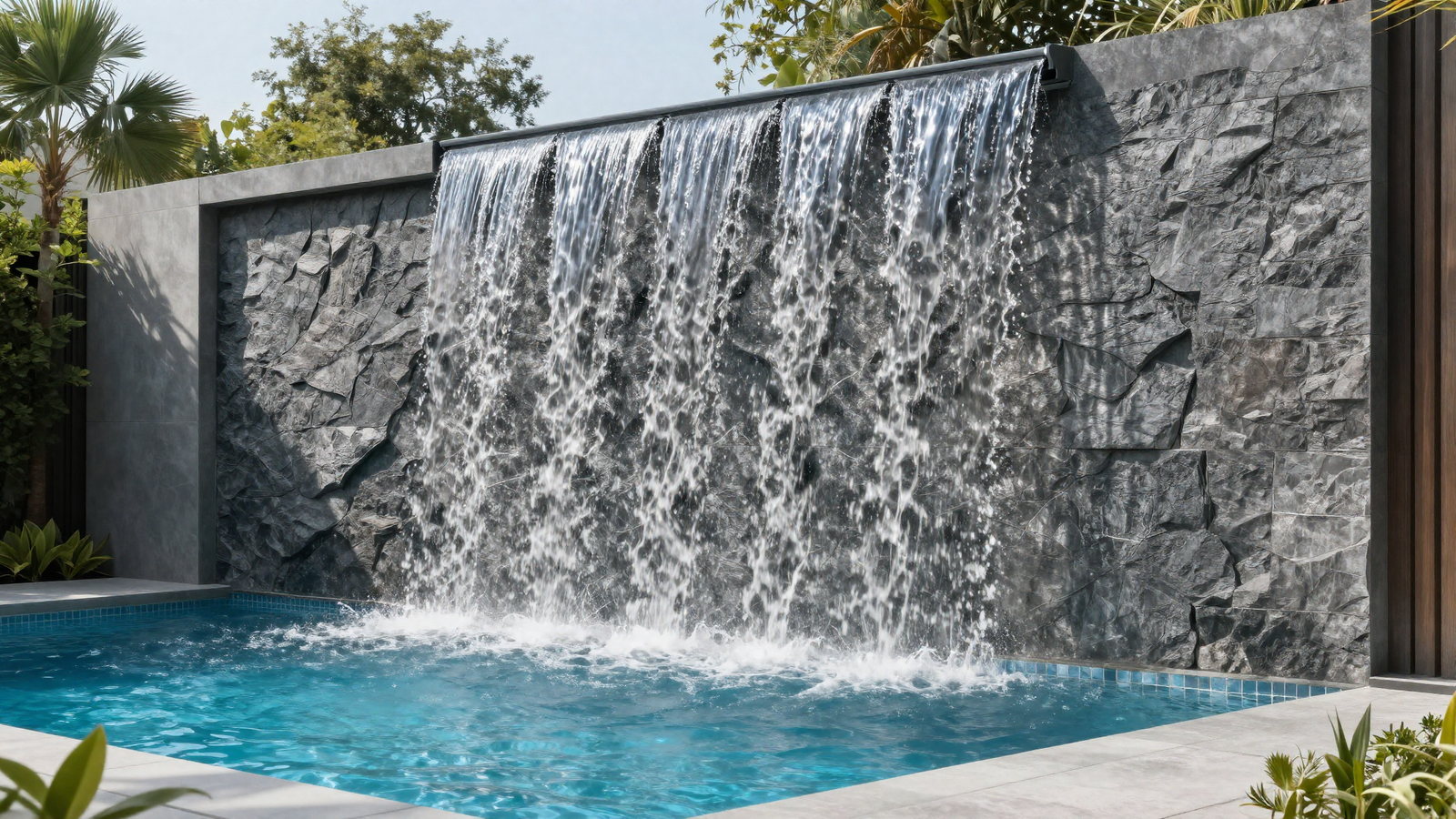
A textured surface changes how water and light appear, but it also needs suitable materials and cleaning. Coordinate the structure, collection area and equipment as one system.
Try this: Ask how the surface will be maintained.
13. Plan Dry Seating and Clear Routes
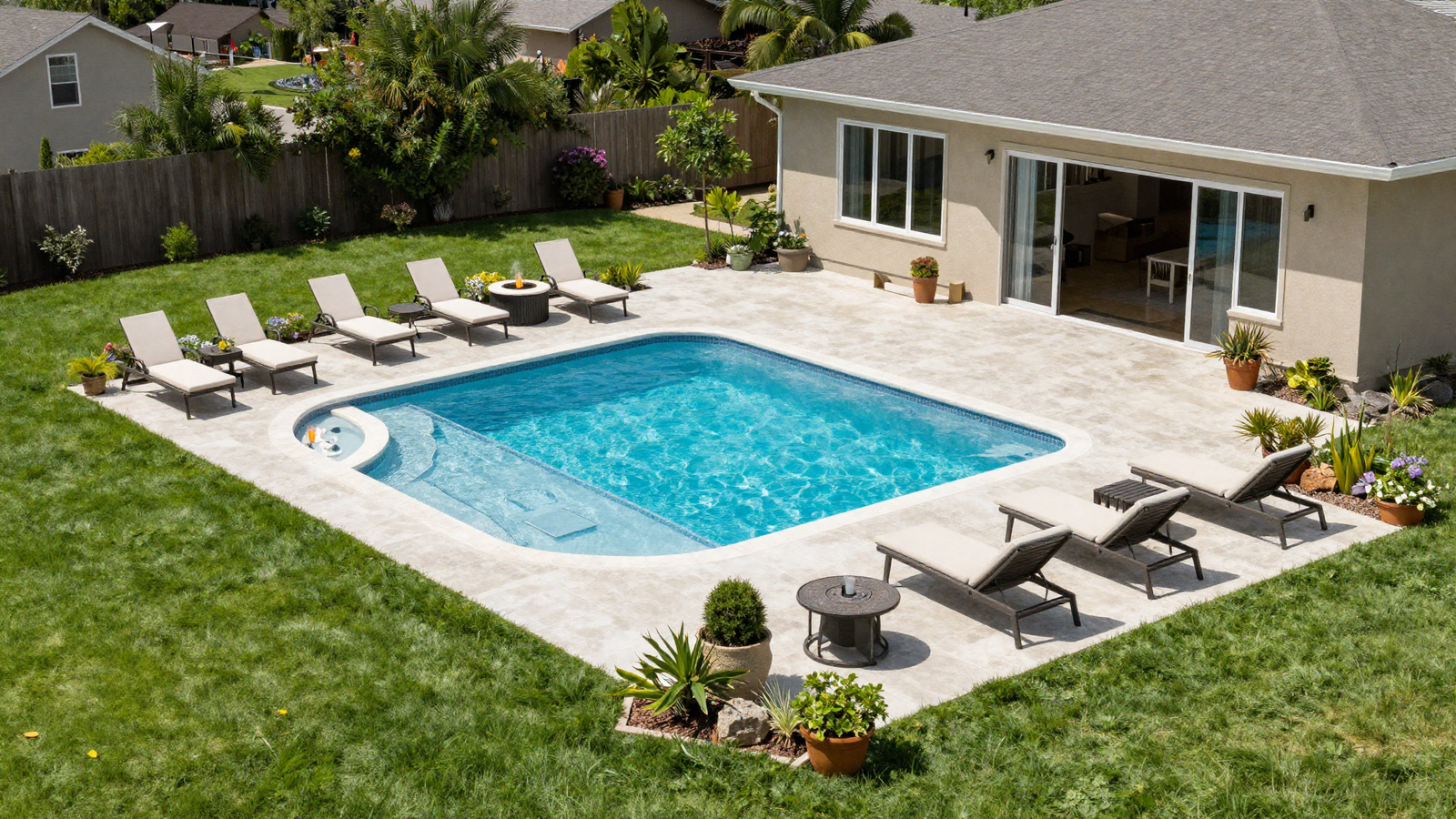
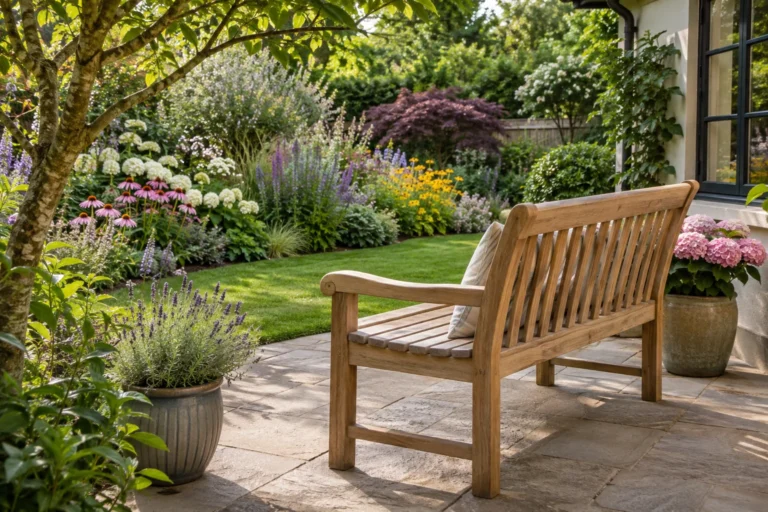
A water feature should relate to where people sit and move. Keep useful dry space and avoid placing the feature where it interrupts garden access.
Try this: Test the view from the actual seating position.
14. Keep Multiple Water Effects Manageable
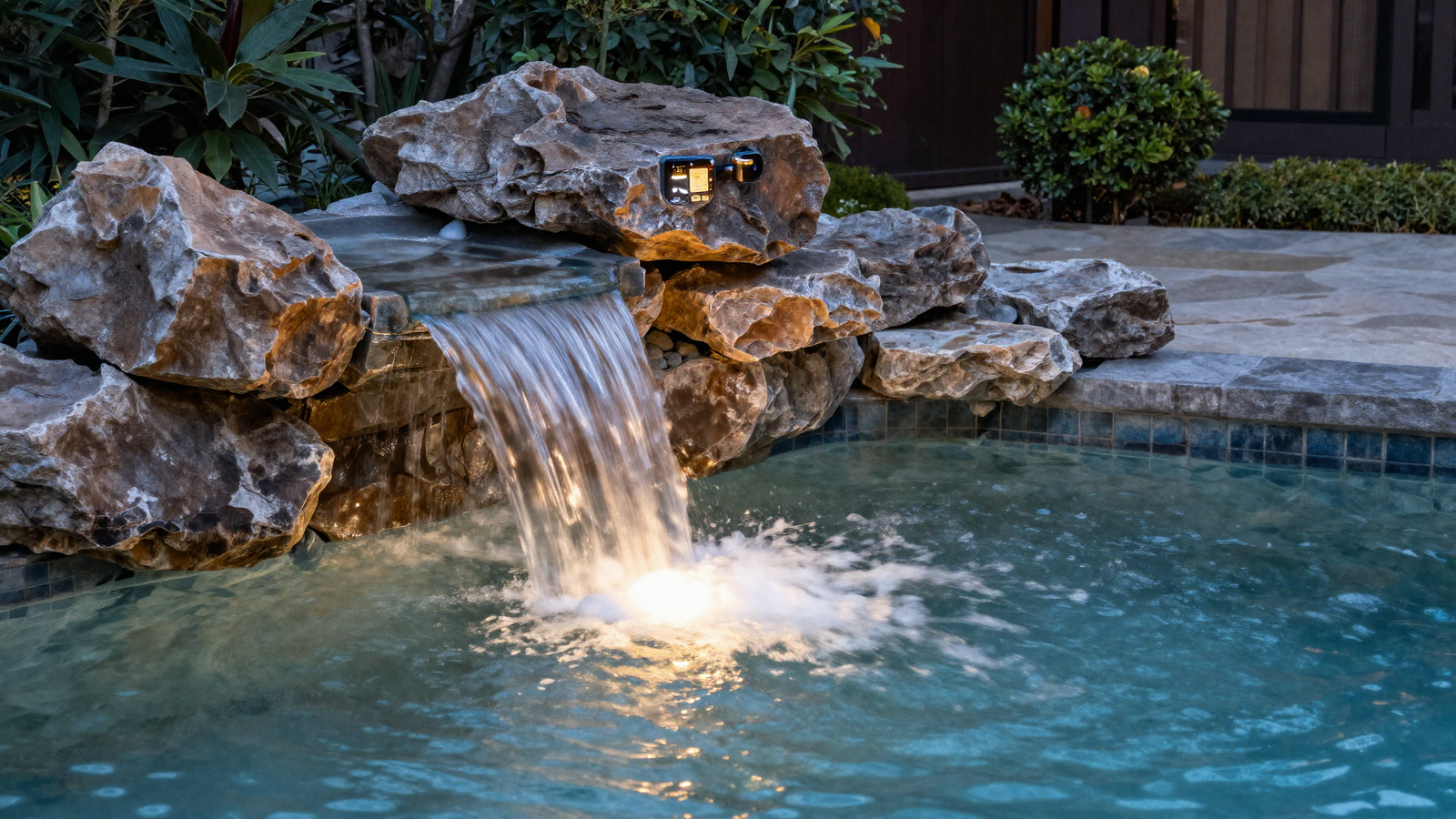
A waterfall and separate jets create more equipment and operating decisions than one simple feature. Choose a system appropriate to the site and maintenance capacity.
Try this: Compare the ongoing work before adding another effect.
15. Use Controls Without Hiding Equipment Access

Automatic or app-based controls can change operation but do not replace inspection and maintenance. Choose suitable equipment and keep enclosures, shutoffs and service access practical.
Try this: Retain the system instructions and maintenance record.
Choose a Feature You Can Maintain
Choose the water feature through a realistic discussion of installation and care. A simpler fountain or a dry focal point may suit the garden better when equipment and maintenance would be difficult.
Related Guides
- 20 Pergola Ideas for Practical Backyard Seating and Shade
- 12 Outdoor Kitchen Ideas for Preparation, Serving and Seating
- 20 Garden Ideas for a More Useful and Welcoming Backyard
Swimming Pool Safety Reference
For a pool or spa project, review supervision, access barriers and other appropriate protective measures alongside the installation plan. CPSC Pool Safely: pool and spa safety tips.
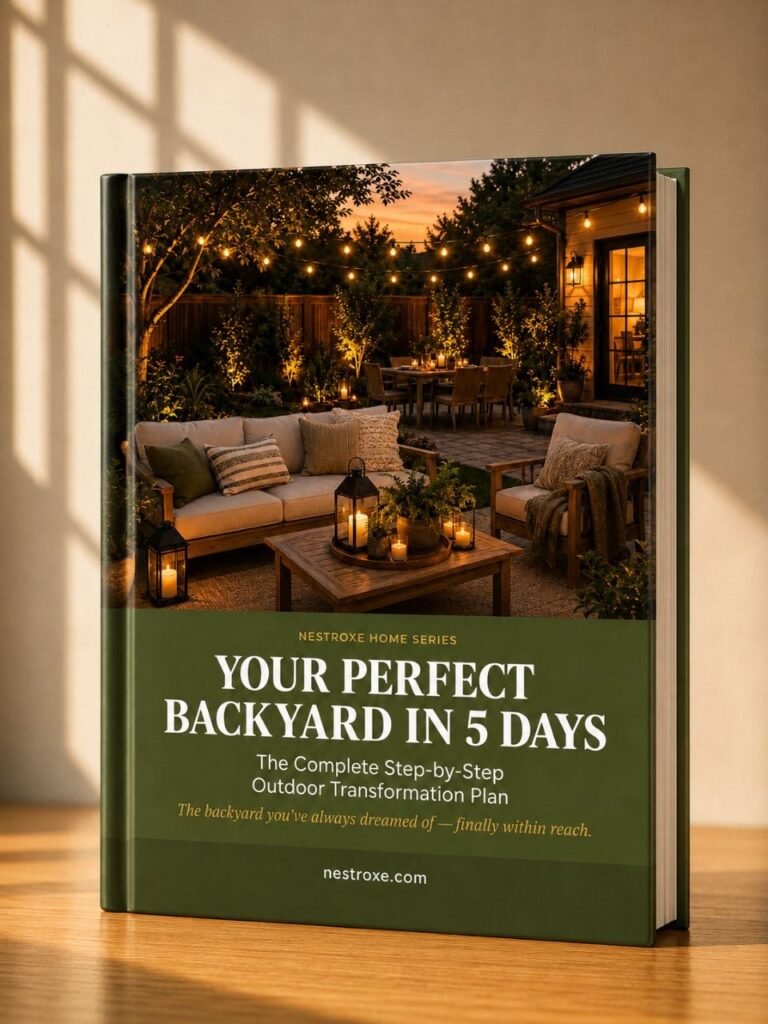
Optional digital guide for this topic
If you prefer a structured workbook, explore this related paid guide.