Seed packet storage ideas should help you find the right variety while keeping the conditions appropriate for the seed. A handsome packet file can make a collection easier to browse, but it does not automatically control moisture or temperature. Plan the organizing system and the actual storage environment together.
These 23 concepts focus on ordinary vegetable and flower seed packets, their information and the route between storage and a sowing task. Follow the supplier’s instructions and current local horticultural guidance for the seeds you have. The images are organization concepts, not tested seed-storage systems or evidence that germination will be maintained for a stated number of years.
Contents
- 1. Keep useful original packet information intact
- 2. Give opened packets a deliberate closure routine
- 3. Use a compact upright file for browsing
- 4. Divide a wider box into a few useful rows
- 5. Choose adjustable divisions for changing packet sizes
- 6. Give oversized packets their own supported position
- 7. Allow bulky seed packets more depth
- 8. Use a secondary envelope without losing identity
- 9. Compare a packet-sized inner case
- 10. Keep a sealed outer container in the plan
- 11. Choose the storage location before the decorative box
- 12. Keep refrigerated storage identifiable when appropriate
- 13. File alphabetically when names guide your search
- 14. Use crop groups for a mixed household garden
- 15. Keep sowing order in a local planning record
- 16. Keep different lots of one variety separate
- 17. Record purchase or collection dates accurately
- 18. Set aside packets awaiting a germination check
- 19. Bring out a limited working selection
- 20. Keep the packet return point dry and clear
- 21. Use one inventory to prevent duplicate purchases
- 22. Keep new arrivals separate until they are recorded
- 23. Review the collection before the next growing season
Separate seed packet storage ideas from the seed’s environmental requirements
University of Minnesota Extension describes storing different seeds in individual paper packets inside a tightly sealed glass container, with cool, dry conditions. Iowa State similarly emphasizes retaining original packet identity and using suitable sealed outer housing. Choose the organization method around those requirements instead of assuming that an open decorative box is adequate long-term protection.
Choose the organizer from the collection’s main difficulty
- A small retained collection: Compare one manageable packet file within appropriate storage conditions.
- Mixed packet sizes: Separate oversized and bulky packets rather than bending everything to one slot.
- Several seed lots of one variety: Keep the lots distinct and connect each with its own information.
- Frequent sowing tasks: Bring out a small working selection and return it appropriately.
- A growing garden inventory: Use a simple location record and review before purchasing duplicates.
1. Keep useful original packet information intact
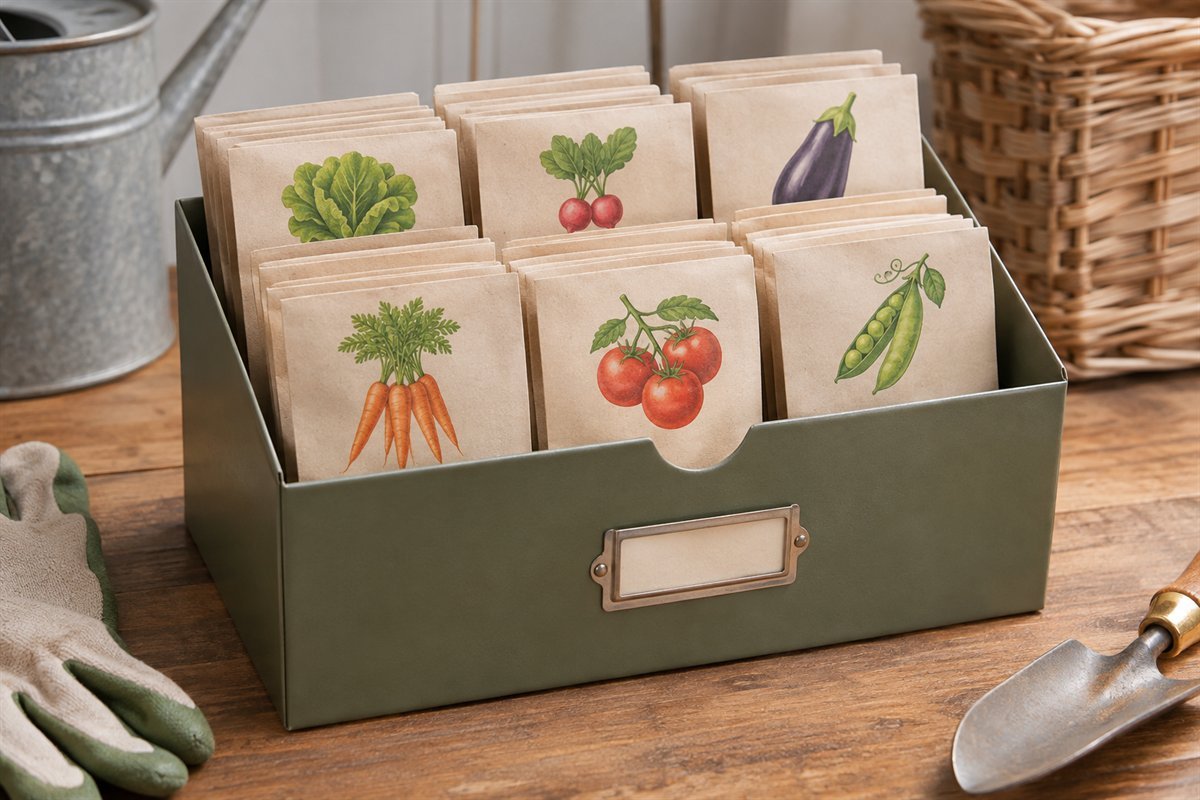
Original packaging can retain information that is easily lost when seeds are decanted into matching jars. Iowa State recommends keeping seeds in their original packets to preserve identity. Retain the supplier’s variety, lot and sowing details, following the actual packet’s resealing instructions. A plain secondary envelope should not replace useful information merely to make the collection look uniform.
Try this: Check the back of each packet before deciding what information the organizer must preserve.
2. Give opened packets a deliberate closure routine
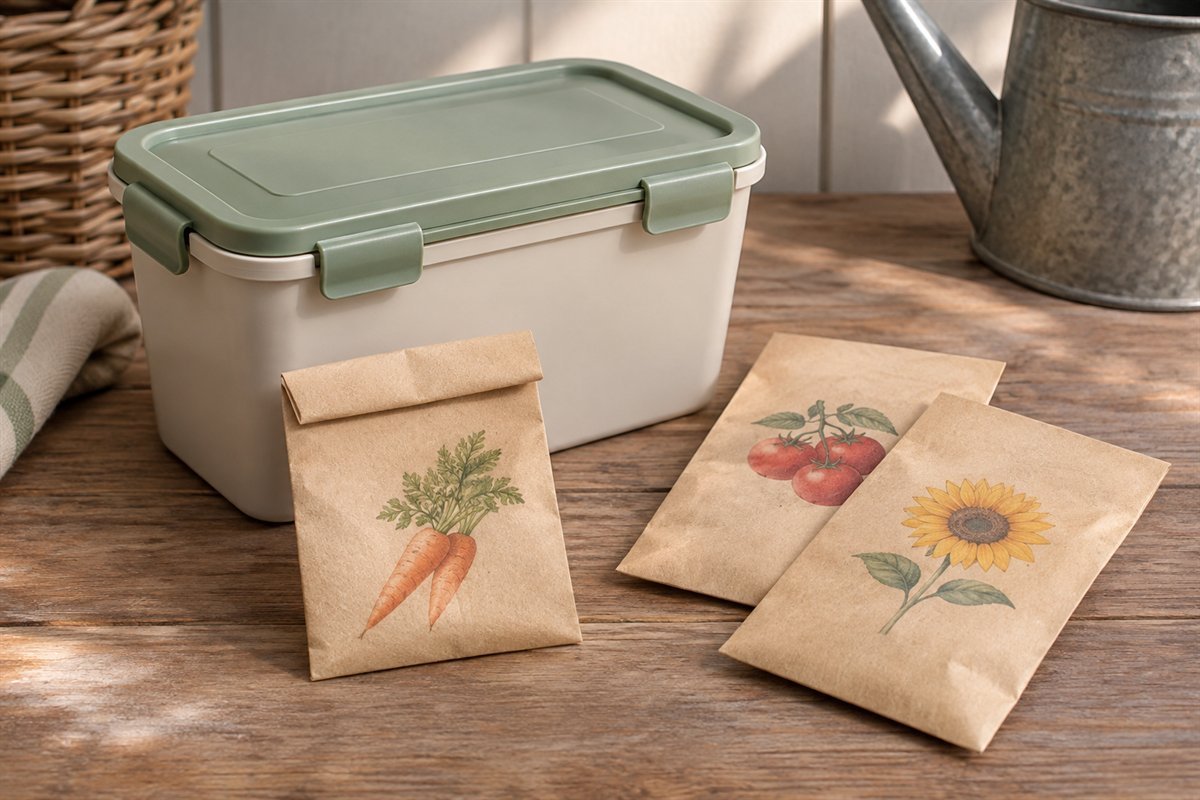
An opened packet needs a suitable closure so its remaining contents stay identified and contained. Follow the packet and seed-storage guidance rather than leaving an open corner tucked into a file. Keep the original information readable. The closure is part of the organizing routine; it does not by itself establish an appropriate moisture barrier.
Try this: Check each opened packet before it returns to its normal location.
3. Use a compact upright file for browsing

An upright file can make a modest working collection easy to browse. Compare the useful height and depth with the largest ordinary packet and leave a clear handhold. Use the file as an organizing component within a suitable overall storage plan. An open file on a potting bench should not be presented as the complete long-term storage environment.
Try this: Retrieve the middle packet without pulling out the entire row.
4. Divide a wider box into a few useful rows

A wider box can keep broad groups distinct when a single long row becomes awkward. Choose rows from the collection rather than filling every possible divider position. Keep the front and back packets supported and the openings comfortable to use. The outer container still needs to meet the seed’s actual storage requirements.
Try this: Compare two or three broad groups before designing a detailed filing scheme.
5. Choose adjustable divisions for changing packet sizes

A mixed collection may fit better with unequal openings than with identical decorative compartments. Compare the permitted divider configuration with the actual packets and the closed lid. Keep enough removal room for the widest item in each group. Use only the case’s intended configuration and do not force a packet around a fixed internal projection.
Try this: Arrange the retained packets before choosing the final compartment pattern.
6. Give oversized packets their own supported position
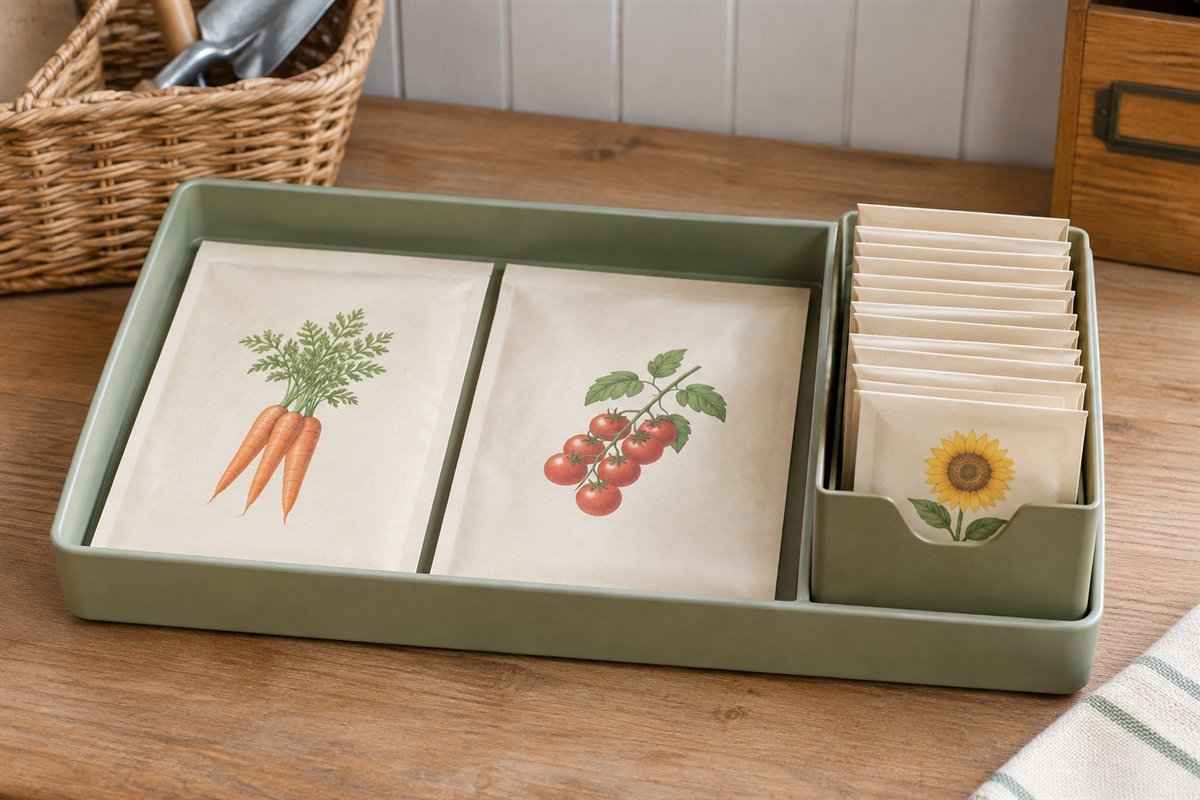
A larger packet can be inconvenient in a file designed for smaller envelopes. Give it an appropriate separate position while keeping its location in the same inventory. Avoid cutting away information or making an unnecessary fold just to match the rest of the collection. Check the complete packet shape with the opening and closure.
Try this: List the few oversized exceptions before buying a larger organizer for everything.
7. Allow bulky seed packets more depth
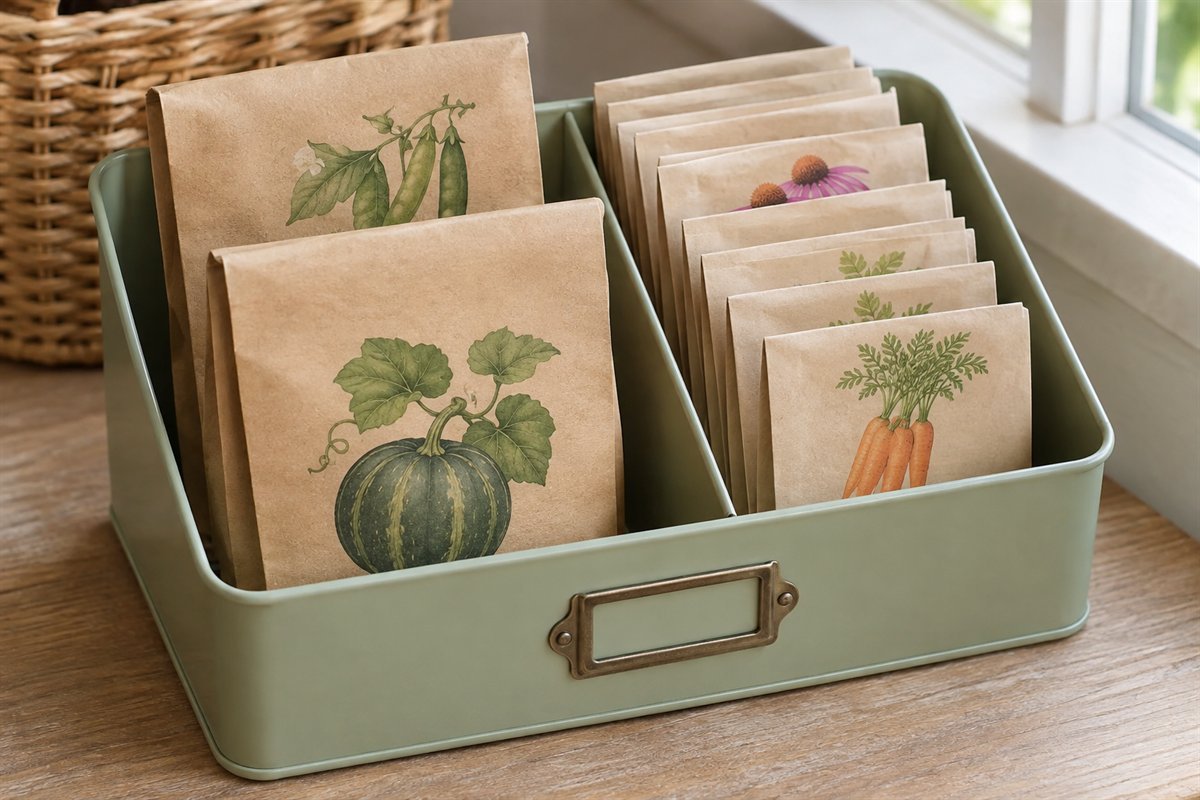
A packet containing larger seeds may need substantially more depth than a thin flower-seed envelope. Compare the filled packet rather than an empty paper template. Keep it supported without compressing the contents or stretching its closure. Do not assume that a case’s nominal packet count applies to a mixed collection with very different thicknesses.
Try this: Use the thickest retained packet when checking the row’s useful capacity.
8. Use a secondary envelope without losing identity
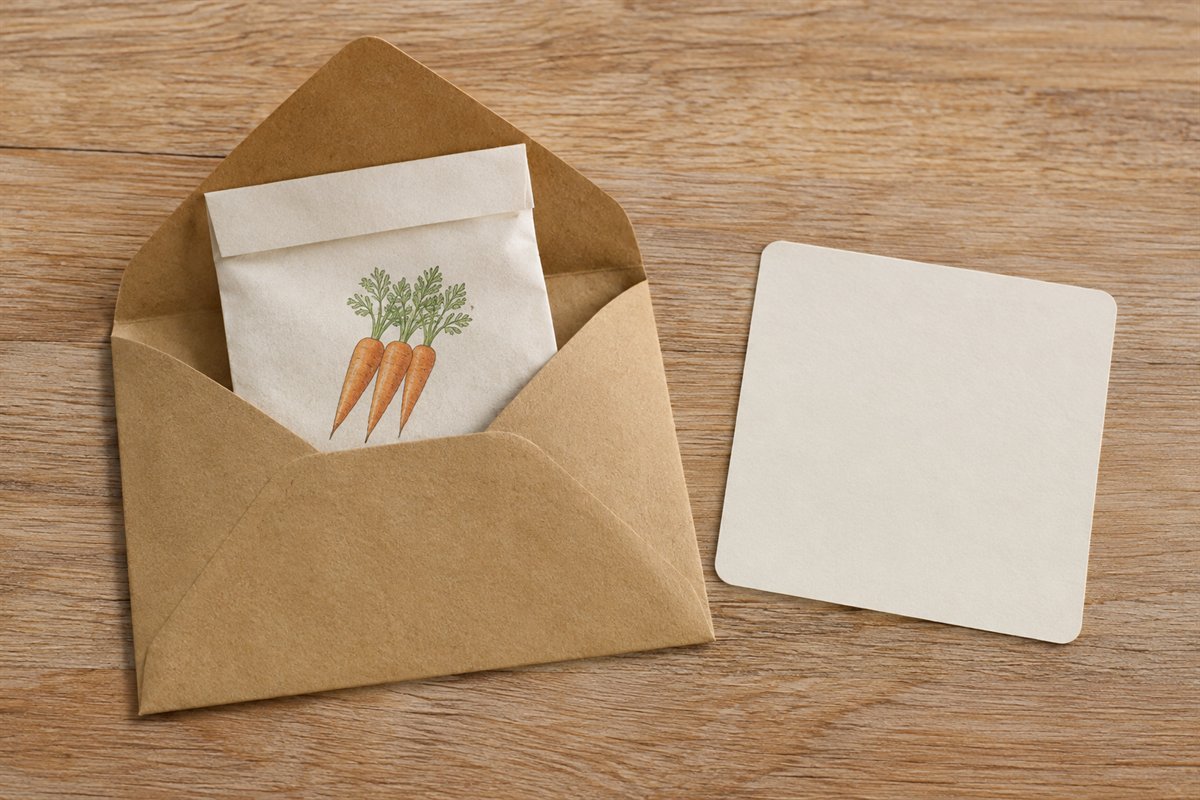
A suitable secondary envelope can help contain a small or awkward packet when it preserves the original identity and instructions. Keep the parts clearly paired and avoid mixing seed lots. It is an organizing option rather than proof of environmental protection. Where repackaging is necessary, follow the seed supplier’s guidance and record the information accurately.
Try this: Confirm that the enclosed packet can still be identified without guessing from a photograph.
9. Compare a packet-sized inner case
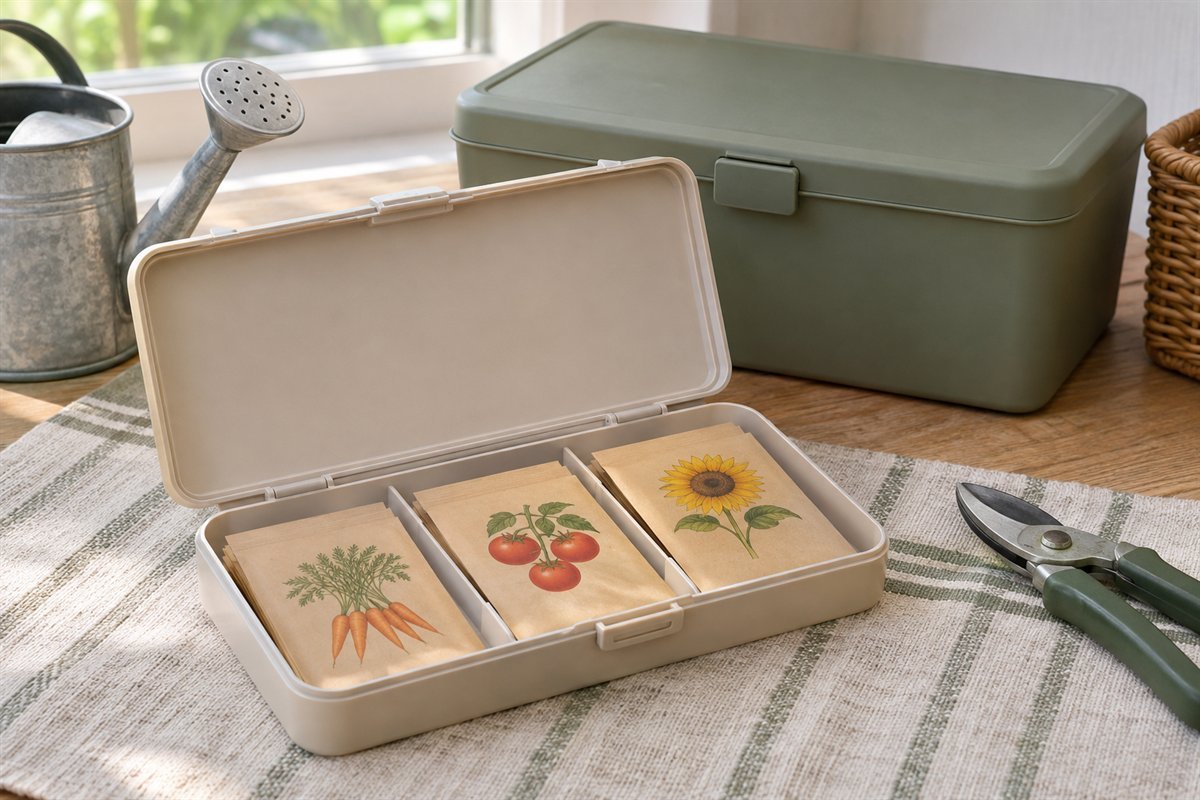
A small rigid inner case can make one group portable when the packet dimensions and seeds’ requirements allow. Compare the useful interior with the entire packet, including its closure. Keep the case identifiable within the wider collection. A photo-style organizer’s intended use does not establish that it is a suitable long-term seed-storage system.
Try this: Check the largest packet and closed-case fit before assigning a whole category.
10. Keep a sealed outer container in the plan

For seeds suited to the cited approach, appropriate outer housing can be distinct from the paper packets inside. University of Minnesota Extension describes individual packets in a tightly sealed glass container. Follow the guidance for the actual seeds and storage conditions, and choose an opening that allows removal without damage. Do not substitute appearance for a verified closure.
Try this: Check whether the complete packet group can be removed comfortably through the opening.
11. Choose the storage location before the decorative box

The organizer needs a location that meets the seeds’ requirements through the relevant storage period. Colorado State identifies seed moisture and temperature as important factors in storage longevity. A dry-looking shed photograph does not establish its actual year-round conditions. Choose the environment first, then a manageable organizer that fits it.
Try this: Record the intended storage conditions separately from the container’s dimensions.
12. Keep refrigerated storage identifiable when appropriate

Refrigeration can be part of suitable storage for the ordinary seeds covered by the cited extension guidance, but the actual seed and supplier instructions still govern. Keep the container identified and use appropriate sealed housing. Plan its removal and return without turning this organization guide into a universal temperature or acclimation protocol.
Try this: Keep the relevant supplier or extension instructions with the private inventory.
13. File alphabetically when names guide your search
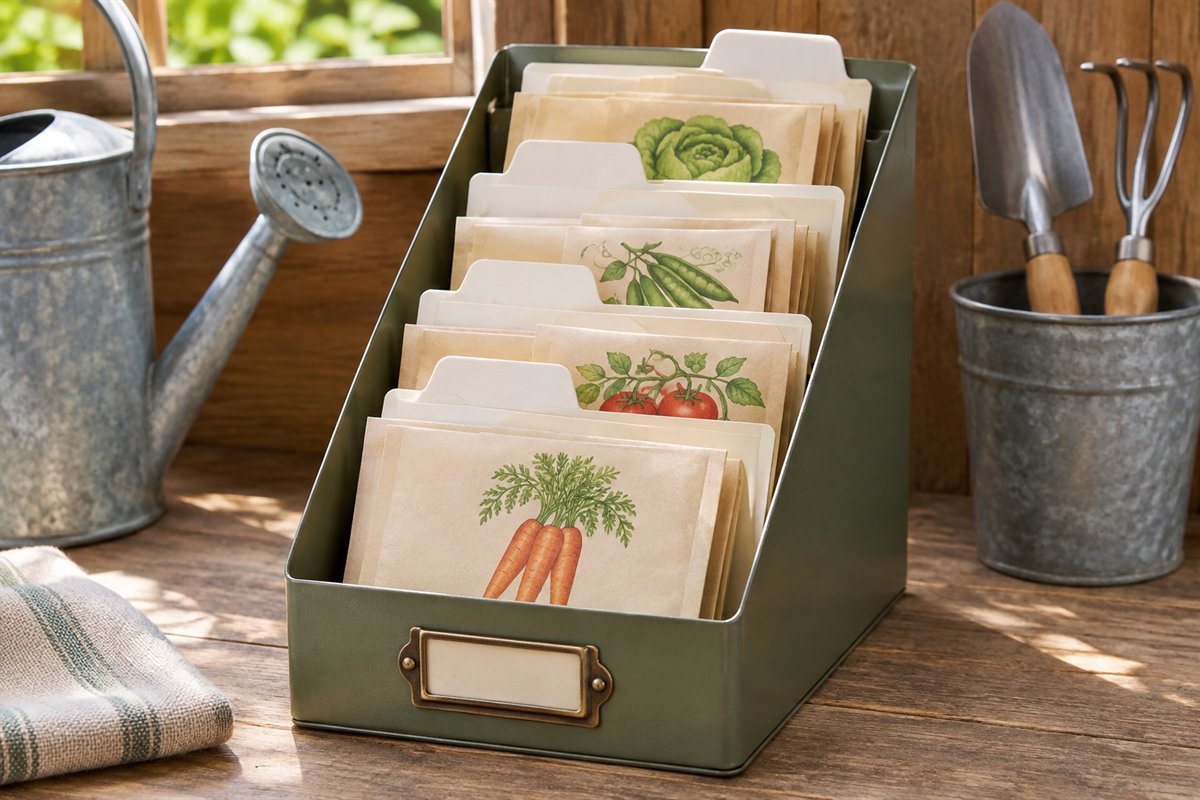
An alphabetical sequence can work when the crop or variety name is how you normally search. Decide one consistent naming rule, including how varieties sit beneath the crop name. Keep the system broad enough to restore after use. A perfect sequence is less useful if the packet’s original information is concealed or separated from the seeds.
Try this: Find a familiar crop from the same end of the file each time.
14. Use crop groups for a mixed household garden

Broad crop groups can make a mixed collection easier to share. Choose the categories from the garden you actually grow rather than a complete catalog. Keep the divisions understandable to everyone using the packets. A physical group can clarify browsing without implying that all seeds in it share identical care or sowing requirements.
Try this: Ask another gardener to return a packet using the proposed categories.
15. Keep sowing order in a local planning record

A sowing-order view can help connect the collection with an actual gardening plan. Base dates on the named crop, supplier guidance, local climate and intended growing method. Keep the original storage file intact if repeated date sorting makes it confusing. A separate planning record may be easier to update than moving every packet each week.
Try this: Note which packets belong to the next actual task without assigning universal calendar dates.
16. Keep different lots of one variety separate

Two packets with the same variety name can still have different supplier, collection or lot information. Keep them distinct so later observations can be connected to the correct seed. Do not combine leftovers simply to empty a compartment. A short lot distinction is particularly useful when reviewing older packets or recording a germination check.
Try this: Make sure the location record can distinguish the two packets.
17. Record purchase or collection dates accurately

A dated record helps explain what is retained, but it should describe an actual event. Keep purchase, collection and any supplied packing information distinct instead of assigning an invented expiry date. University of Minnesota advises recording the name, variety and collection date for saved seed. Seed condition and suitability still need appropriate assessment.
Try this: Mark an unknown date as unknown rather than filling a convenient year.
18. Set aside packets awaiting a germination check

An older or uncertain packet can have an identifiable review position rather than disappearing into the main file. Use an appropriate germination-testing method from the supplier or local extension service before relying on its contents. Record the actual method and result if you test it. An orderly box cannot demonstrate viability.
Try this: Keep the review group small enough to resolve before planning the next sowing.
19. Bring out a limited working selection

A limited working tray can keep the current sowing selection together while the main collection stays in suitable conditions. Bring out only the packets needed for that task and protect their identity during use. Keep the tray clear of wet growing medium and watering equipment. Return the packets according to their actual storage guidance afterward.
Try this: Choose the task set from the plan before leaving the storage area.
20. Keep the packet return point dry and clear

A return point makes it easier to inspect the packet before it rejoins the collection. Keep it away from water, soil and unrelated garden products. Check the closure and record what was used while the task is still fresh. The temporary tray is a step in the routine rather than a substitute for the correct storage environment.
Try this: Clear the return tray at the end of the same gardening session.
21. Use one inventory to prevent duplicate purchases
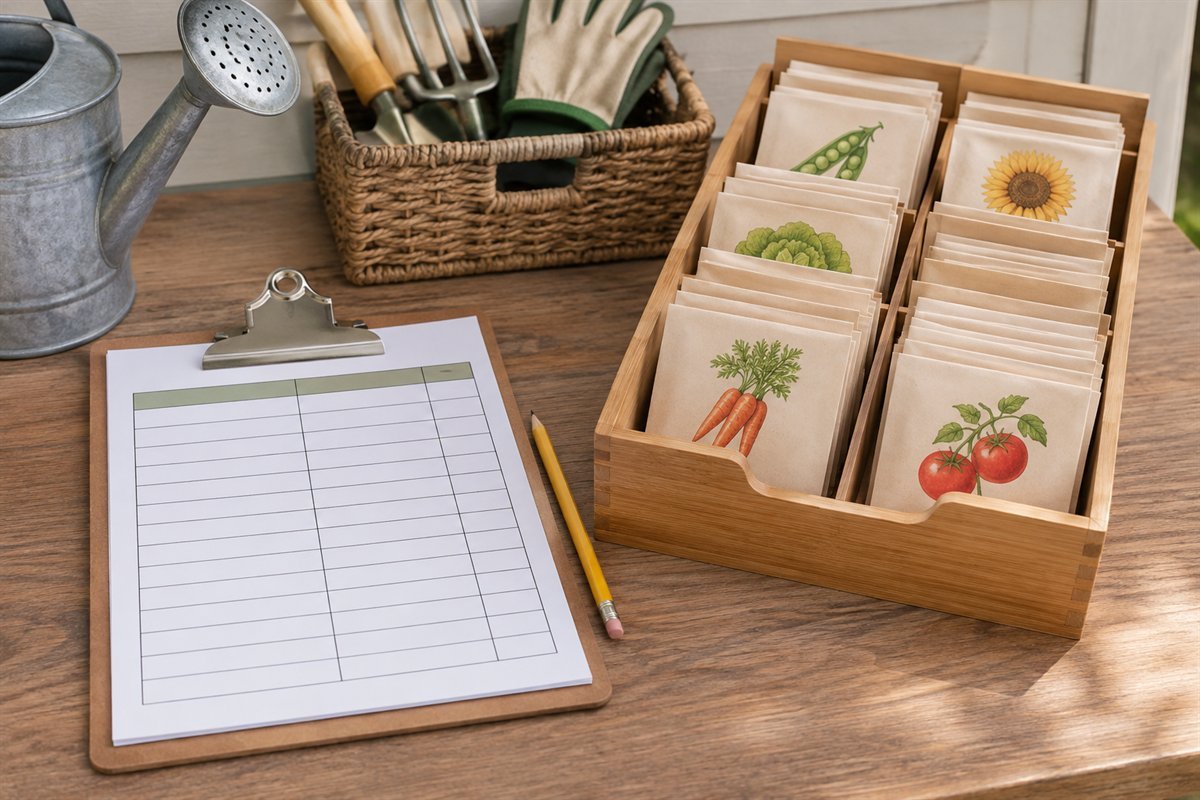
A short inventory can connect crop, variety, lot, amount retained and location. Use a level of detail you will maintain. A small collection may need only a list, while a larger one can benefit from a searchable record. Check what remains before ordering again, without assuming that a listed packet is viable or enough for every planting.
Try this: Update the quantity note after the working selection returns.
22. Keep new arrivals separate until they are recorded

An incoming position can prevent a new packet from becoming an unidentified extra inside the file. Read the supplier’s instructions, record the useful information and assign the proper storage conditions before filing it. Keep the intake group limited and clear it regularly. Do not leave seeds indefinitely on a bright display shelf simply because they have not been cataloged yet.
Try this: Complete the record and return position during the same unpacking routine.
23. Review the collection before the next growing season

A seasonal review can connect the retained packets with what you intend to grow. Confirm identities, resolve the review group and check that the actual location still meets the seeds’ needs. Colorado State and the cited extension sources describe storage outcomes as dependent on conditions and seed characteristics; this organizer is not a longevity guarantee. Retain a useful collection rather than every anonymous envelope.
Try this: Plan the garden from the reviewed list before buying additional storage.
A seed-packet identity and location worksheet
Make one row per identifiable packet or seed lot. Record crop, variety, supplier or collection source, actual date information, lot identifier where supplied, quantity note, care or storage instructions and location. Keep unknown information explicitly unknown. Do not turn the worksheet into a claim that a home-saved seed will reproduce a parent plant’s characteristics.
Measure the complete packets and choose an organizing component that fits their height, width and thickness. Distinguish the inner file from any outer housing needed for the actual storage environment. A hypothetical case that holds twenty thin envelopes may accommodate fewer bulky packets; the advertised count does not describe a mixed collection. This is a fit example rather than a tested capacity.
Write a separate line for environmental requirements. Use the supplier’s instructions and suitable extension guidance for the specific seeds and your conditions. The sources cited here discuss ordinary vegetable and flower seed storage. They do not establish one method for every species, specialized collection or seed type. This article does not prescribe oven drying, homemade desiccants, chemical treatment or universal freezer storage.
Plan the working route: choose the current packets, use them in an appropriate clean task area, update the quantity note and return them to suitable storage. Keep the inventory and the stored collection aligned. If you perform a germination check, record its actual date, sample and result rather than inferring viability from the packet’s neat appearance.
Finally, review the collection before the next purchase. Resolve missing identities and packets awaiting advice, then select the garden plan from what is appropriate to use. The most useful organizer is a small reliable system that protects information and supports the gardening routine.
Is a seed packet file enough for long-term storage?
A file organizes packets. It does not automatically provide the required moisture and temperature conditions. Choose the environment and any suitable sealed outer housing from the actual seed and supplier guidance.
Should I pour all seeds into matching jars?
Preserve original identity, lot and instructions. Separate packets inside appropriate outer housing can be easier to trace than anonymous loose contents. Keep different varieties and lots distinct.
Do these seed packet storage ideas guarantee old seeds will germinate?
No. Viability depends on the seed and its history, including storage conditions. Seek suitable testing guidance before relying on an uncertain packet; a tidy organizer is not evidence of germination.
A practical next step
Choose seed packet storage ideas that preserve useful information and fit the real packets, then provide the conditions those seeds require. Keep a small working selection, an accurate inventory and a clear return route so the collection remains practical to use.
Plan the potting shed as a workspace with distinct storage conditions. Give ordinary garden tools their own storage system.
Images are original AI-generated seed-organization concepts. They do not show tested moisture barriers, measured storage conditions or demonstrated seed viability.
Sources and care references
- University of Minnesota Extension: separate packets, identity and seed storage
- Colorado State University Extension: conditions affecting seed storage
- Iowa State University Extension: retaining packet identity and suitable outer storage
Optional digital guide for this topic
If you prefer a structured workbook, explore this related paid guide.