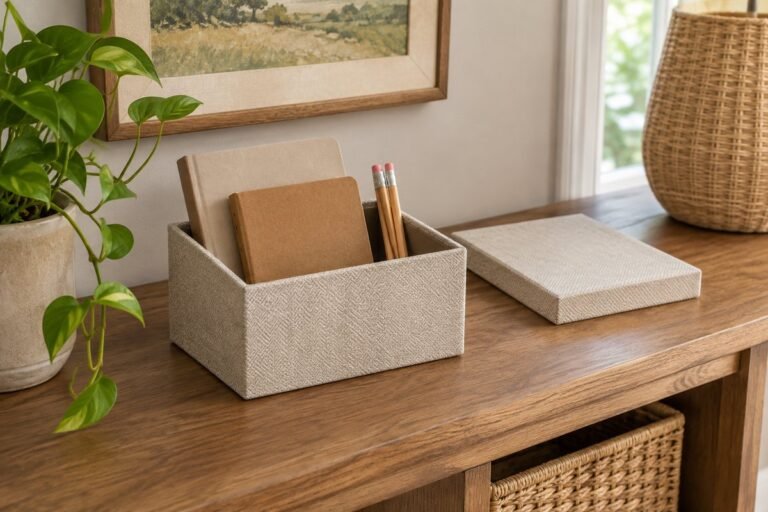
Considered candle holder decor ideas begin with a holder that suits the actual candle or display role. One low pillar holder can give a sideboard a clear outline; a pair of slender forms can frame a simple arrangement. Choose the useful footprint before multiplying the pieces.
This guide focuses on battery-operated flameless candles and empty decorative holders. The arrangements are alternatives for an ordinary home, not instructions for burning wax candles or proof that a product is suitable for every location. Follow the exact holder and electric candle instructions, including fit, operating conditions, batteries and care.
Contents
- 1. Check the real candle-to-holder fit first
- 2. Let one broad pillar holder define a small display
- 3. Use a related pair for a balanced outline
- 4. Vary height within a restrained group
- 5. Keep small tealight-style holders in one defined group
- 6. Choose a clear hurricane form for a visible silhouette
- 7. Try tinted glass as a daytime accent
- 8. Repeat a warm metal finish selectively
- 9. Use a dark holder against a pale background
- 10. Let plain ceramic quiet a detailed room
- 11. Use texture instead of another color
- 12. Display a sculptural holder without a candle
- 13. Keep a multi-arm form visually clear
- 14. Use a tray only when it improves removal
- 15. Keep a dining-table display low and easy to clear
- 16. Give a round table an arrangement seen from every side
- 17. Preserve a sideboard's serving mode
- 18. Keep an entry display away from the landing area
- 19. Use an empty holder as a bookshelf detail
- 20. Keep a bedroom's flameless arrangement manageable
- 21. Change one surrounding seasonal detail
- 22. Check a lantern-style display's actual exposure rating
- 23. Finish with an accessible care and battery routine
Choose the actual candle and holder together
The U.S. Fire Administration encourages considering battery-operated flameless candles instead of open flames. That does not make every electric product or arrangement automatically appropriate: check its instructions and condition. CPSC's 2026 warning about one flameless-candle set illustrates why an accessible coin battery in a remote also matters. Keep battery compartments secure and batteries inaccessible to children. Compare the complete candle, holder and surface, including the controls and removal route. A decorative photograph cannot establish product approval, stability during use or electrical suitability.
Choose an arrangement that fits your situation
- A compact everyday surface: Try one broad holder or an empty sculptural form before multiplying small pieces.
- A table used for meals: Keep the complete arrangement low, preserve serving space and plan removal.
- A narrow bookshelf opening: Compare an empty holder with a fully supported base and clear book access.
- An electric candle is proposed: Check the real holder fit, controls, battery security and intended operating conditions.
1. Check the real candle-to-holder fit first

Compare the candle's base, diameter and intended support with the holder's usable opening or platform. Follow both products' guidance rather than assuming a flameless candle fits wherever a wax candle once stood. Keep controls and battery access available. If the two pieces do not work together as intended, choose another compatible combination instead of wedging the candle into a decorative opening.
2. Let one broad pillar holder define a small display
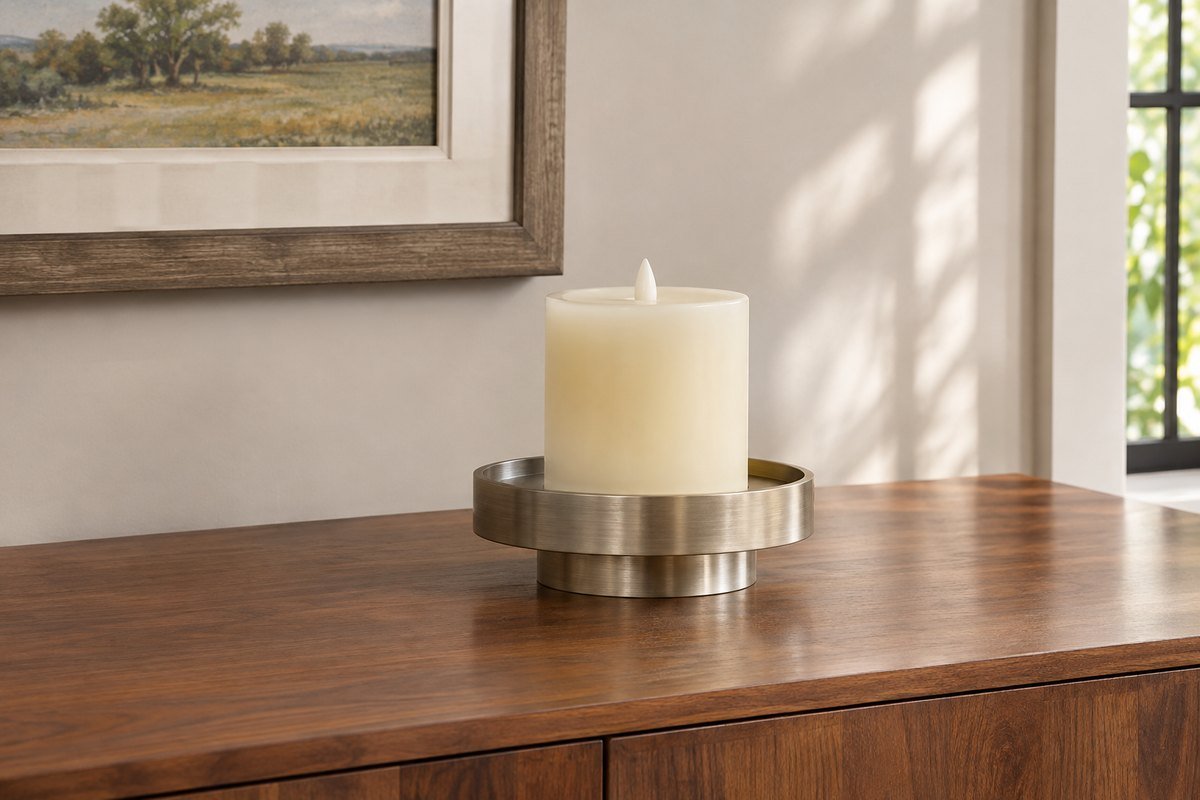
A single holder can supply enough shape for a compact surface. Choose a form whose complete base fits the location, then compare its outline with nearby artwork and furniture. Leave room to lift the candle out as directed. Keeping the arrangement small can make the holder's material and proportions clearer than adding several miniature accessories around it.
3. Use a related pair for a balanced outline

Two related holders can frame a quiet wall composition without requiring an identical collection across the room. Compare their complete bases and the space between them. Keep the middle available if the furniture has a useful serving or landing role. Balance the view from the ordinary seats and doorway rather than relying only on a close photograph of the pair.
4. Vary height within a restrained group

A few holders at different heights can create a more readable profile than a dense row of matching objects. Keep the base and useful support of each piece separate, and compare the whole group from a normal room viewpoint. Do not create height by stacking holders on loose books or boxes. Choose products that supply the intended height as complete objects.
5. Keep small tealight-style holders in one defined group

A short low group can make small holders feel intentional without scattering them over every available surface. Use compatible electric tealights only where the products permit them, and retain access for switching and maintenance. Compare the complete group with the surface's everyday task. If several tiny pieces become inconvenient to move, reduce the number before buying another tray.
6. Choose a clear hurricane form for a visible silhouette

A glass surround can give a compatible flameless candle a more substantial decorative outline. Check the opening, intended use and the complete base before placing the pieces together. Keep the candle removable without forcing it against the glass. Transparency makes dust and fingerprints visible too, so choose the arrangement with the actual permitted cleaning routine in mind.
7. Try tinted glass as a daytime accent

Amber, smoke or softly colored glass can connect a holder to timber, upholstery or another room detail even when the electric candle is off. Compare the finish in the light normally used in the room. Keep the form simple enough to remain readable. Color does not establish heat resistance, candle compatibility or suitability for any particular cleaning method.
8. Repeat a warm metal finish selectively

A brass-toned holder can relate to a picture frame, cabinet handle or lamp without requiring every metal in the room to match. Choose one controlled connection and compare the finishes together. Keep the rest of the group quieter if the holder has a detailed shape. Follow its own care instructions instead of assuming that every gold-colored finish tolerates ordinary brass polish.
9. Use a dark holder against a pale background

A black or dark-toned holder can make a clear silhouette against light timber or a plain wall. Compare the entire object from across the room before adding more dark accents. A restrained pair may be enough. Preserve the furniture's useful surface rather than spreading small contrasting objects across it merely to repeat the color several times.
10. Let plain ceramic quiet a detailed room

A simple ceramic holder can provide a calm shape beside patterned wallpaper or pronounced wood grain. Choose its intended role before deciding whether it needs a candle at all. An empty form may be a complete arrangement. Keep the base fully supported and confirm the product guidance; a ceramic appearance alone does not establish compatibility with an electric or burning candle.
11. Use texture instead of another color

Ribbing or a subtle surface pattern can give a quiet holder more detail within a limited palette. Compare the texture with the neighboring finishes and leave enough space to see the outline. Consider the permitted cleaning method before choosing deep grooves. A decorative finish is less useful when it adds a maintenance task that the everyday location cannot support.
12. Display a sculptural holder without a candle

An interesting holder can be treated as an object in its own right when that suits its intended use. Turn it to compare the silhouette from the room's ordinary viewpoints. Keep any openings clear rather than filling them with unrelated objects. An empty display also lets the shape remain the focus when a candle would make the composition taller or visually busier.
13. Keep a multi-arm form visually clear

A complete multi-arm holder can supply enough complexity without surrounding accessories. Compare its full width and height, including every arm, with the proposed surface and nearby wall artwork. Keep the object easy to lift according to its guidance. Use it empty or with an explicitly compatible flameless arrangement rather than improvising attachments to make a mismatched candle fit.
14. Use a tray only when it improves removal

A tray can define a small group and provide a planned way to clear the surface. Compare the loaded weight, handles and stability of the actual arrangement before moving it. Give the tray a suitable destination when the furniture is needed. A tray should simplify the routine rather than become another oversized object surrounding a tiny display.
15. Keep a dining-table display low and easy to clear
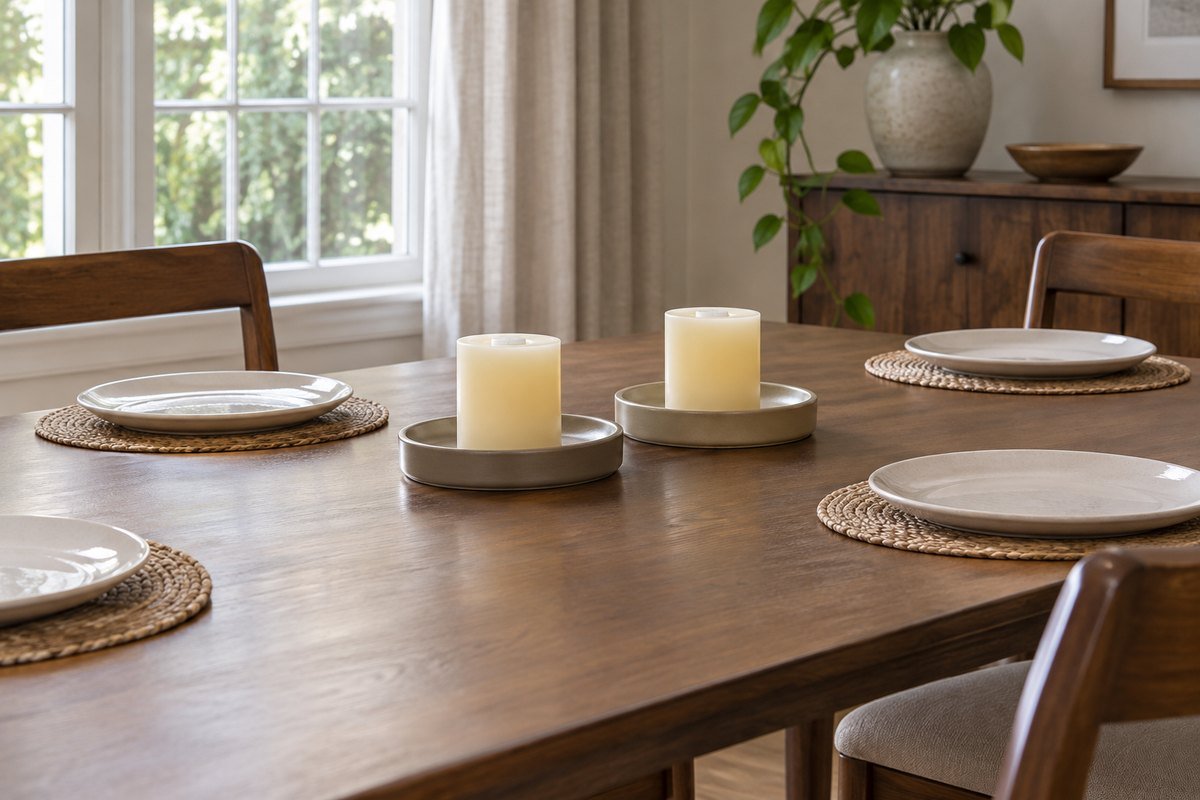
Compare the complete holders and electric candles from seated height, with the usual place settings in position. Leave the actual serving and reaching paths available. If the arrangement interrupts the meal, move it to its planned stable destination. Decorative lighting should support conversation and table use rather than requiring plates and glasses to work around a crowded display.
16. Give a round table an arrangement seen from every side

A compact low group can work with a round tabletop when each occupied seat retains a clear view and useful surface. Check the arrangement from more than the doorway. Keep each holder fully supported and avoid a front-only display that looks unfinished from half the chairs. Reduce the footprint when the table's ordinary dishes need the same central space.
17. Preserve a sideboard's serving mode

A restrained holder display can remain useful on a sideboard when it has a clear removal plan. Test the real platters and opening storage before deciding which pieces stay. Keep the group away from the furniture edge and any electrical equipment. The strongest arrangement may be a small removable pair rather than a row occupying the entire cabinet length.
18. Keep an entry display away from the landing area

An entry holder can supply a clear decorative shape without occupying the place used for everyday items. Compare it with the door swing, bag route and household needs. Keep fragile forms in an appropriate location rather than at the exposed front edge. Choose a modest empty piece if an electric candle would add controls or maintenance that the entry routine cannot accommodate.
19. Use an empty holder as a bookshelf detail

A small sculptural holder can interrupt a book row without introducing an operating display into a narrow shelf opening. Compare the object's full depth and height with the usable shelf. Keep books easy to retrieve and follow the furniture's loading guidance. One quiet shape can be sufficient; avoid stacking the holder on loose books merely to make it more visible.
20. Keep a bedroom's flameless arrangement manageable

If a suitable electric candle belongs in the bedroom, choose a position that preserves everyday access and follows its operating guidance. Keep controls, battery access and any remote manageable without adding loose objects to the bed area. The U.S. Fire Administration advises against lit candles in sleeping areas; this decorative concept uses a flameless product rather than substituting a real flame.
21. Change one surrounding seasonal detail
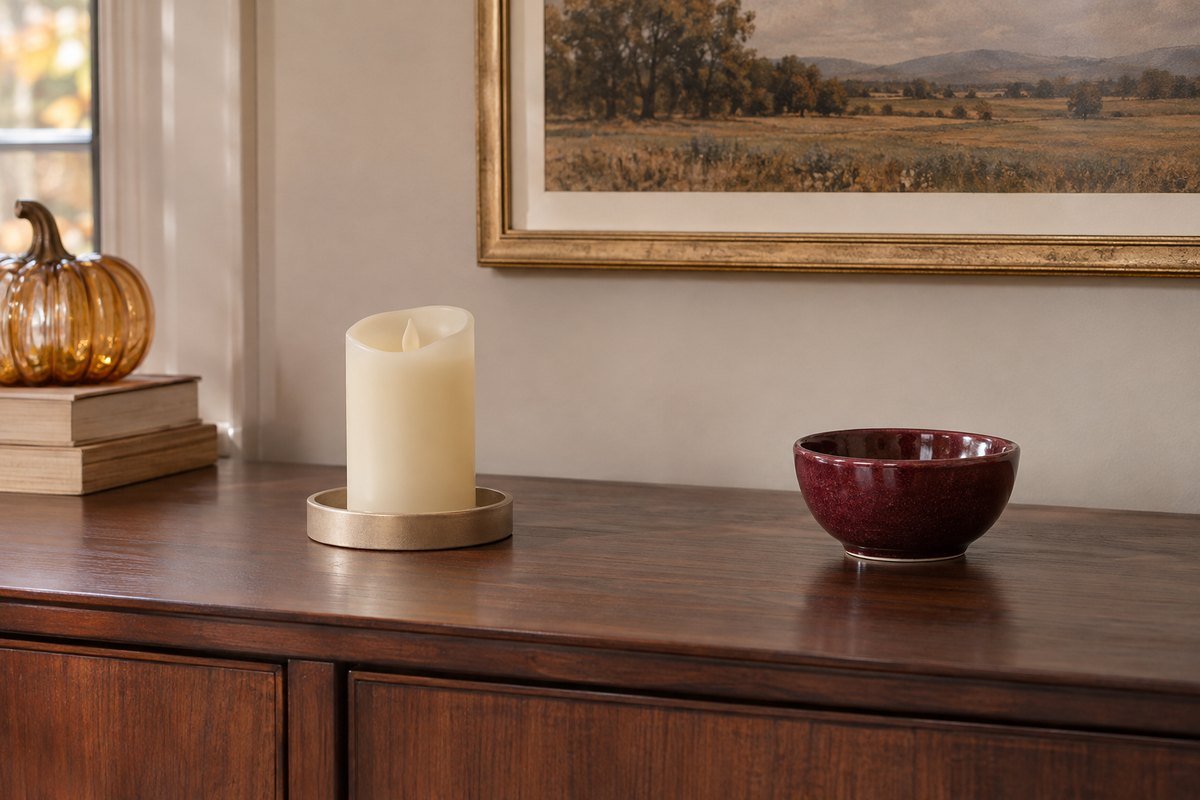
A year-round holder can work with a limited seasonal accent without requiring a new collection each time. Keep the holder's support and operating conditions unchanged and preserve access to the electric candle. Choose one nearby color change on a separate object rather than wrapping the product in improvised decorations. A small adjustment is easier to remove and maintain than several layers.
22. Check a lantern-style display's actual exposure rating

A lantern shape does not establish that its electric contents can stay outdoors or tolerate moisture. Follow the exact product's intended location, exposure and care guidance. Compare an empty decorative lantern indoors if that is the appropriate role. Keep doors, handles and the complete base usable instead of treating the lantern as a container for unrelated seasonal materials.
23. Finish with an accessible care and battery routine
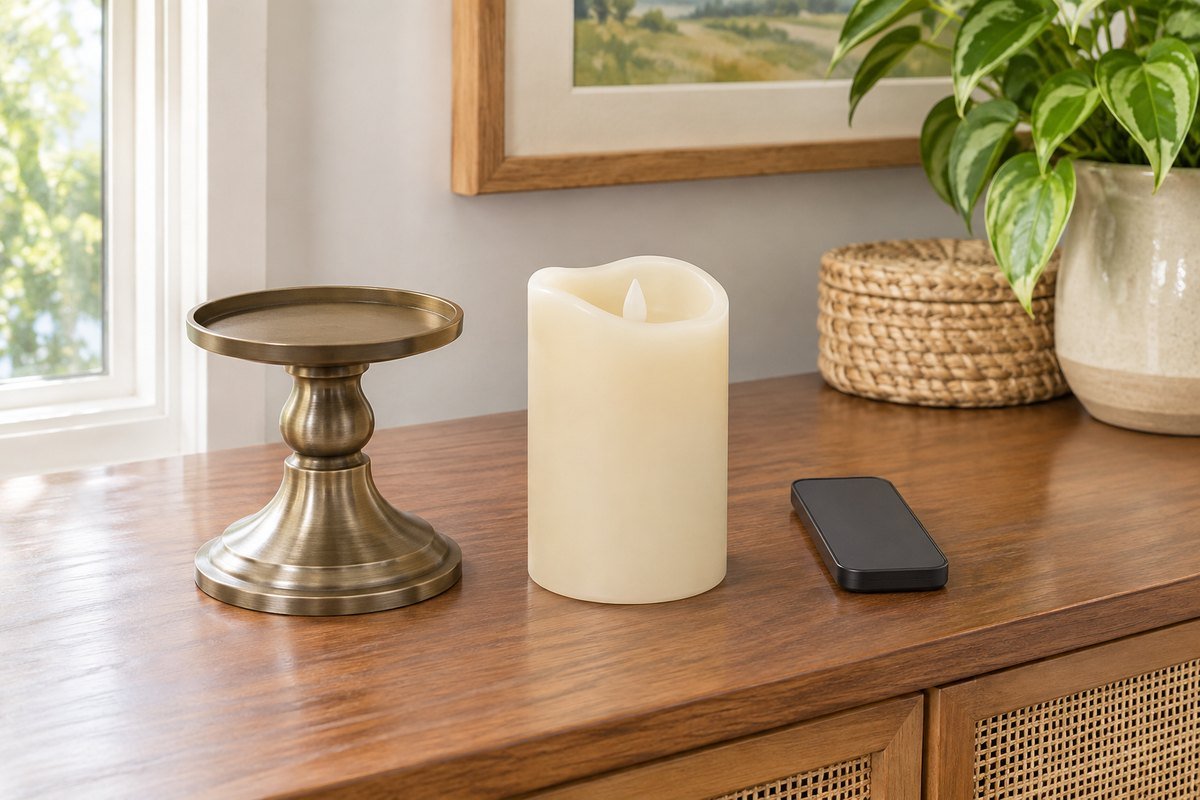
Keep the candle and holder instructions together, including the proper battery type and any remote-control guidance. Review the product's condition and secure compartments as directed, with batteries inaccessible to children. Clean each component by its permitted method rather than treating the assembled display as one washable object. Simplify the group if routine access requires dismantling several unrelated decorations.
A candle, holder and location checklist
Record whether the holder is an empty decorative piece or paired with a specific flameless candle. Compare the candle base, usable support, total height and complete holder footprint with the surface. Add the products' compatibility, operating-location and care instructions, plus how the controls and secure battery compartments remain accessible. Identify the display's stable destination when the furniture is used. Check the actual combination before repeating it across several rooms.
A practical next step
Choose candle holder decor ideas from the actual object, compatible flameless candle and useful surface. Keep the arrangement small enough to read, lift and maintain, then connect one finish or shape to the surrounding room. A restrained display can feel complete while leaving everyday furniture easy to use.
For the surrounding room, plan the wider dining table centerpiece. Balance the room's year-round mantel display.
The images are original AI-generated design concepts, not photographs of tested products or verified installations.
Sources and care references
- U.S. Fire Administration: considering flameless candles and candle fire precautions
- CPSC: 2026 example of a flameless-candle remote with an accessible coin battery
Optional digital guide for this topic
If you prefer a structured workbook, explore this related paid guide.