Useful sofa arm tray ideas start with the sofa, not the accessory. A tray that suits a broad, firm arm may be unsuitable for a rounded, sloping or very soft one. Check the actual shape and the manufacturer's fit guidance before treating the arm as another tabletop.
The 22 concepts below explore restrained finishes and everyday uses for compatible products. They are alternatives to compare, not a claim that one tray works on every sofa. Keep the seat comfortable, the route clear and the arrangement easy to remove. A separate side table may be the better solution.
Contents
- 1. Begin with a clear view of the whole arm
- 2. Choose a compact rigid tray for a suitable flat arm
- 3. Consider a flexible slatted design only within its fit guidance
- 4. Keep the top shallow beside a small seat
- 5. Use a modest rim without treating it as spill protection
- 6. Try a warm wood tone beside plain upholstery
- 7. Let a dark tray make a clear outline
- 8. Use a pale tray to soften dark seating
- 9. Repeat one existing timber detail
- 10. Keep a metal finish quiet in a detailed room
- 11. Choose one accent color instead of several accessories
- 12. Give the remote a clear return place
- 13. Keep glasses in their appropriate case
- 14. Limit a reading setup to one small item
- 15. Give a shared sofa more than one storage answer
- 16. Place a tray where the chaise routine allows it
- 17. Use a pair only when both sides need it
- 18. Keep upholstery folds out of the supporting area
- 19. Choose the finish with everyday cleaning in mind
- 20. Plan a proper place for the tray when removed
- 21. Choose a side table when the arm is unsuitable
- 22. Edit the setup after ordinary evenings on the sofa
Compare the arm and tray as a complete combination
IKEA's RÖDEBY page specifies flat arms within a stated width range for that particular model. That is a useful reminder to check shape as well as width; it is not a universal fit rule for other trays. Read the exact product instructions for support, intended contents, care and any limits. Measure the usable arm area and compare the tray's whole base, including any overhang or side sections. Upholstery that compresses or moves can change the arrangement. Do not rely on a picture to establish secure support, and do not use hot drinks or fragile objects to test an uncertain fit.
Choose an arrangement that fits your situation
- Compatible firm flat arm: Compare a tray expressly intended for its measured profile and width
- Rounded, sloping or very soft arm: Consider a separate suitable side table
- One remote: Keep a modest reachable return place
- Larger work activity: Use an appropriate work surface rather than assuming tray capacity
- Frequent removal: Plan storage before adding more accessories
1. Begin with a clear view of the whole arm

Look at the arm from above and from the end before selecting a tray. Note its slope, seams and the way its surface changes when someone sits down. Compare those features with the intended product. A generous-looking arm can still be the wrong shape. Keep your measurements with the actual tray specification rather than choosing by sofa width alone.
2. Choose a compact rigid tray for a suitable flat arm

A modest rigid form can provide a defined place for a remote without covering the entire arm. Select the product for the actual arm and intended support. Keep its usable area clear enough for the object you want to put down. If the tray rocks, slides or interferes with seating, remove it and choose a different arrangement rather than adding improvised wedges.
3. Consider a flexible slatted design only within its fit guidance

A slatted tray can have a softer visual outline than a deep box-shaped accessory. Its flexibility does not mean it is appropriate for every curved or soft surface. Check the stated arm profile and width range for the model you choose. Keep the supporting area and side sections positioned as intended, and remove the tray if normal seating disturbs it.
4. Keep the top shallow beside a small seat

A visually shallow tray can feel less intrusive beside a compact sofa. Compare the complete object with the seated elbow position, not just the size of its top. Keep edges from becoming the part of the seat someone continually avoids. If an accessory takes away useful arm support, a nearby table may serve the same purpose more comfortably.
5. Use a modest rim without treating it as spill protection

A small raised edge can define the usable surface and make a remote's return place more obvious. It does not make a tray spillproof or prevent the whole accessory from moving. Compare the rim with the objects you actually use, and keep their bases fully supported. Choose the product's intended role rather than assuming the lip solves an uncertain fit.
6. Try a warm wood tone beside plain upholstery

A warm wood surface can bring a little material contrast to a simple fabric sofa. Compare the finish with the floor and nearby furniture in the room's usual light. A deliberate related tone is enough; an exact match is unnecessary. Keep the tray small enough that the fabric and shape of the sofa still provide most of the visual character.
7. Let a dark tray make a clear outline

A dark finish can give pale upholstery a readable accent. Compare its outline from the doorway and the ordinary seat before repeating the color elsewhere. One strong contrast can be sufficient. Check the product's underside and the sofa's care guidance so the decorative choice does not introduce rough contact or an unsuitable material against the upholstery.
8. Use a pale tray to soften dark seating

A pale finish can keep the accessory from feeling heavy on a darker sofa. Choose it with the room's existing warm or cool undertones in view. Consider the permitted cleaning routine as well as the first impression. A delicate-looking surface that is inconvenient to maintain may be a poor choice for the daily objects the seat needs.
9. Repeat one existing timber detail

A tray can connect to a coffee table, picture frame or chair detail without creating another accessory group. Choose one visible relationship and let other finishes remain distinct. Judge the whole seating area rather than inspecting the tray in isolation. Its main job should remain useful support for a small daily item, not completing a matching furniture set.
10. Keep a metal finish quiet in a detailed room

A simple metal tray can offer a clean outline beside patterned upholstery. Check that the actual product is intended for the arm, including how its contact surfaces are finished. A metal appearance alone says nothing about grip, weight or protection. Keep the design restrained if the fabric already provides the room's main pattern and color.
11. Choose one accent color instead of several accessories

A colored tray can supply the small accent that a neutral seating group needs. Compare it with an existing textile or artwork before adding another decorative object. The tray does not also need a vase, bowl and ornament. Keeping the surface simple makes the color clearer and leaves it available for its ordinary purpose when someone uses the seat.
12. Give the remote a clear return place

A tray sized around the actual remote can replace the search between cushions. Put the remote where it is easy to lift while seated and where it does not fill an unstable edge. Keep only the controls normally used in that room. A tray becomes less useful when it accumulates spare cables, old batteries and objects with a different storage home.
13. Keep glasses in their appropriate case
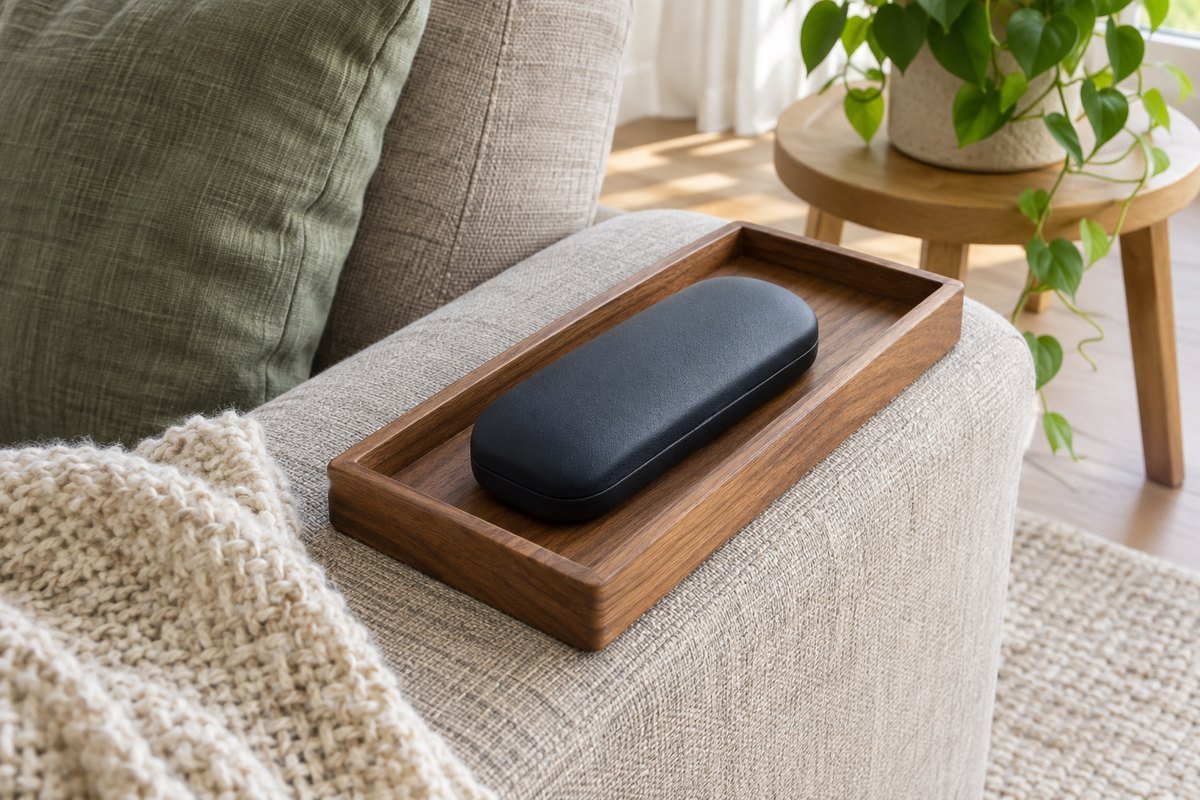
If reading glasses belong beside the seat, compare their closed case with the tray's usable dimensions. A defined return place may be more useful than leaving delicate frames loose beside other objects. Keep the case easy to reach and fully within the support area. Choose another location if the tray is regularly bumped or shared by several people.
14. Limit a reading setup to one small item

A compact tray may suit a small notebook or another lightweight reading accessory when its instructions permit that use. It is not automatically a work desk or support for a laptop. Compare the complete item with the tray and preserve comfortable seated posture. Move a larger activity to a suitable table instead of building an overloaded armrest arrangement.
15. Give a shared sofa more than one storage answer
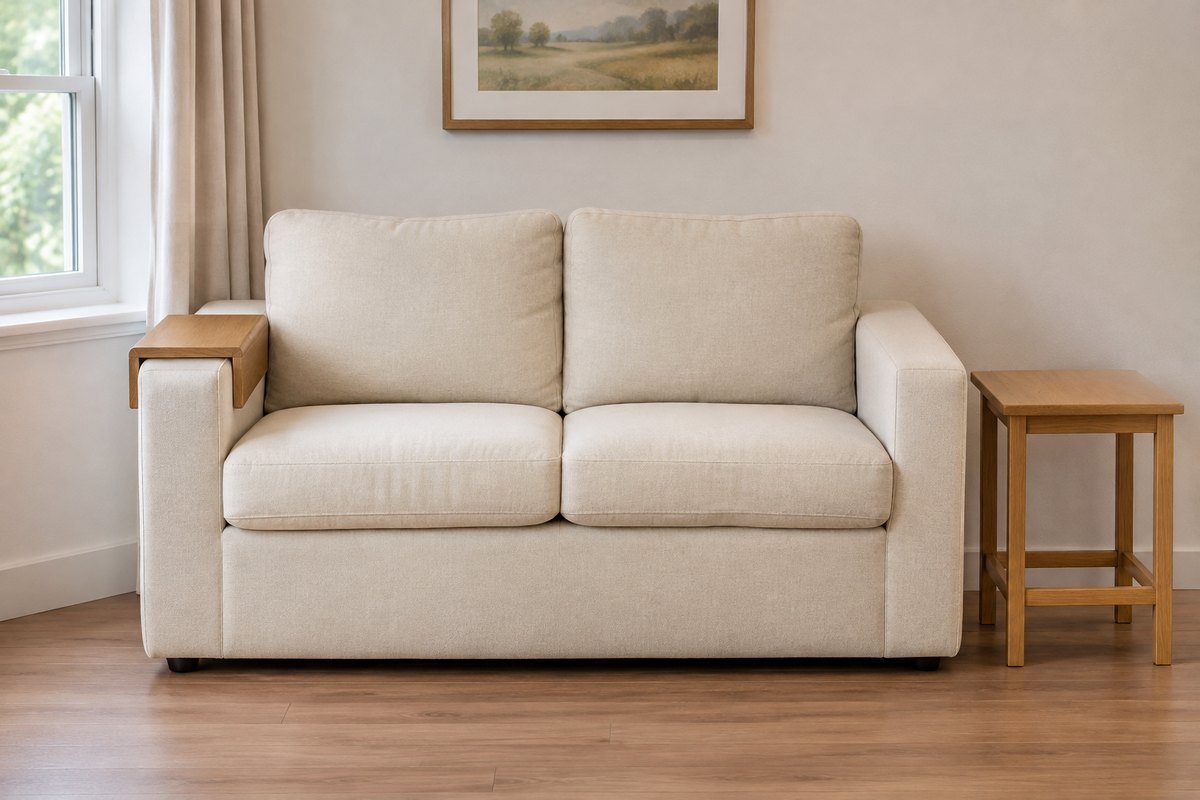
One tray on an outer arm may suit one seat while another person needs a different reachable surface. Test the arrangement from the positions actually used. Avoid stretching across someone or putting a tray on a loose middle cushion to create symmetry. An end table at the other side can provide a more useful second location without duplicating the accessory.
16. Place a tray where the chaise routine allows it

A chaise changes how people sit, stretch and get up. Compare the tray with those movements before deciding that the nearest arm is the best location. Keep blankets and cushions from pushing the accessory out of position. If the chosen side is continually disturbed, move the daily item to a separate appropriate surface instead of treating the tray as permanent decor.
17. Use a pair only when both sides need it
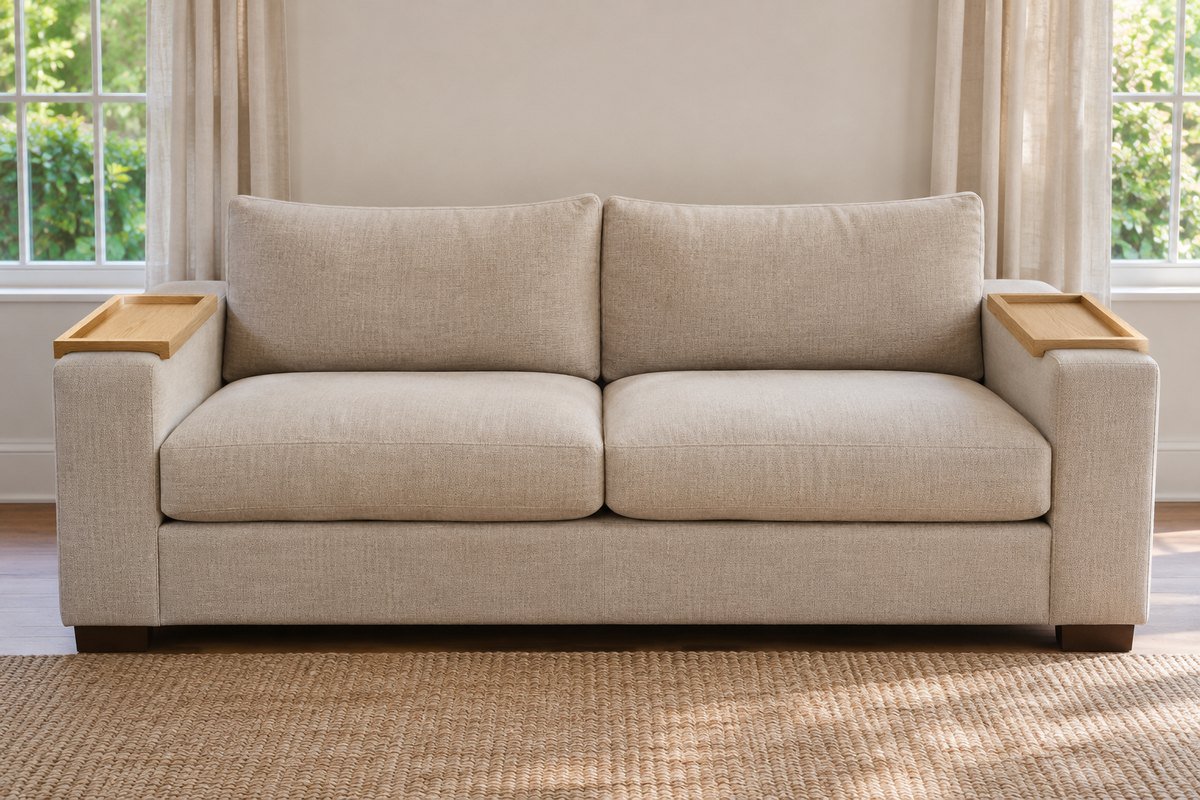
Two trays can relate through finish while supporting different small items at each end of a sofa. Confirm that both arms meet the product guidance; they may not behave identically beside a wall or doorway. Keep each top restrained. Matching accessories should earn their place through actual use rather than becoming two extra surfaces to fill with ornaments.
18. Keep upholstery folds out of the supporting area

A loose throw, cushion edge or slipcover fold can change how the tray rests. Follow the sofa and tray instructions rather than using added fabric as an improvised leveling pad. Keep the accessory's intended contact area clear. If the cover moves during ordinary use, choose a separate surface that does not depend on keeping a fold in one exact position.
19. Choose the finish with everyday cleaning in mind

Read the care instructions for the tray and the upholstery separately. IKEA's cited bamboo model, for example, calls for a damp cloth with mild cleaner followed by drying; that does not establish the right method for every finish. Remove the tray for appropriate cleaning and inspect the contact area. Avoid treating a decorative accessory as a permanent cover for neglected upholstery.
20. Plan a proper place for the tray when removed

A removable accessory needs a storage location that suits its shape and care requirements. Keep it from leaning where it can fall into the walking route or pressing against delicate objects. A foldable product may need less storage space, but follow its intended movement. Avoid forcing hinges or bending rigid parts simply to fit a narrow gap beside the sofa.
21. Choose a side table when the arm is unsuitable

A separate table can be the better answer for a rounded or very soft arm, a larger daily item or a tray that moves with normal seating. Compare the complete table base and the space needed to get up. Keep the route usable and choose the table for its actual task. Solving the need matters more than making a particular accessory fit.
22. Edit the setup after ordinary evenings on the sofa

Notice whether the tray supports a repeatable routine or is repeatedly moved aside. Keep the one useful item and remove unnecessary extras. Recheck the arrangement after changing covers, cushions or sofa position. The best sofa arm tray ideas remain modest and convenient; an empty arm can be the right result if the accessory makes the seat less comfortable.
A sofa-arm fit and use card
Record the usable arm width, length, profile and upholstery behavior, then add the exact tray model's fit limits, support requirements and intended contents. Note the complete tray footprint, the normal seat position and where the tray goes when removed. For a hypothetical example, a measured 13-inch flat arm would fall outside a model expressly limited to 4–12-inch arms, even if its overall slatted sheet is wider. That is a comparison of the stated limit with a measurement, not evidence that another tray fits. Stop at an unsuitable shape, uncertain support or interrupted seating routine and compare a separate table.
A practical next step
Choose sofa arm tray ideas around real fit, a clear everyday task and the comfort of the seat. Keep the accessory modest, follow the exact product guidance and accept a separate table when the arm does not suit the job. A useful living room needs convenient surfaces more than another place to accumulate decor.
For the surrounding room, keep a separate end table useful. compare sofa slipcovers with the seating routine.
The images are original AI-generated design concepts, not photographs of tested products or verified installations.
Sources and care references
Optional digital guide for this topic
If you prefer a structured workbook, explore this related paid guide.