The most useful cat furniture ideas give the animal appropriate choices while leaving the room comfortable for people. Start with the activities the cat already seeks: a full stretch against a scratching surface, a quiet hiding place or a familiar elevated resting position. Then choose furniture that supports those uses without crowding the room.
These 25 concepts cover different functions and placements, from a simple horizontal scratcher to a purpose-made climbing system. They are room-planning ideas rather than structural installation instructions or a promise to change behavior. Choose products for the individual cat, follow their assembly and care guidance, and ask an appropriate veterinary professional about individual mobility or welfare concerns.
Contents
- 1. Begin with an activity map of the room
- 2. Choose a stable vertical scratching post
- 3. Offer a horizontal scratching pad where appropriate
- 4. Compare an angled scratcher as a distinct shape
- 5. Place an appropriate scratcher near a resting area
- 6. Start a new scratcher near an established scratching location
- 7. Keep a small cat tree understandable
- 8. Use a freestanding window-side perch
- 9. Give a quiet cat cave its own position
- 10. Retain an open resting option
- 11. Compare a purpose-made cubby with accessible openings
- 12. Keep a floor-level hiding choice
- 13. Compare the usable area of the top platform
- 14. Consider lower supported levels for a gentler route
- 15. Treat wall-mounted furniture as a complete supported system
- 16. Keep arrivals and departures clear
- 17. Distribute options in a multi-cat home
- 18. Keep sleeping furniture distinct from toilet facilities
- 19. Use the sofa end without filling its approach
- 20. Give a home-office perch a separate footprint
- 21. Let a restrained neutral finish reduce visual competition
- 22. Repeat one existing accent color
- 23. Choose serviceable parts when the product provides them
- 24. Compare how cushions and covers are removed
- 25. Review the furniture as part of the ordinary room
Plan useful choices before a coordinated finish
Cats Protection recommends a stable scratching post that permits a full stretch and a horizontal option for cats that prefer it. RSPCA also emphasizes quiet resting, hiding and suitable elevated places, with separate options when several cats share a home. Map those functions before choosing a large all-in-one unit. Keep toilet facilities separate from eating and sleeping areas, retain clear approaches, and follow the actual furniture's ratings and restraint instructions. A photograph cannot establish structural capacity or suitability for an individual animal.
Choose an arrangement that fits your situation
- The cat prefers a horizontal scratching surface: Compare a purpose-made pad rather than assuming a taller vertical post is the answer.
- A quiet retreat is missing: Plan an appropriate hide and an undisturbed position before choosing an elaborate climbing tower.
- Wall construction or fixing suitability is uncertain: Resolve the complete installation requirements or compare a suitable freestanding alternative.
- Several cats share the room: Distribute suitable separate choices instead of concentrating everything in one corner.
1. Begin with an activity map of the room

Note the places the cat already uses for resting, watching and scratching, without assuming that the most attractive empty corner is the best destination. Compare those locations with doors, furniture movement and ordinary household noise. Choose one missing function to improve first. This keeps a new purchase focused and avoids filling the room with several decorative pieces that all offer the same unused activity.
2. Choose a stable vertical scratching post

Compare the post's usable scratching height with the individual cat's full stretch, along with the product's base, assembly and intended use. Cats Protection specifically highlights stability rather than a wobbling post. Keep its approach clear and use the specified supports. A slender-looking post can suit a room visually, but appearance alone does not establish whether the complete product remains suitable during use.
3. Offer a horizontal scratching pad where appropriate

A cat that prefers a horizontal surface may need a different option from a tall post. Compare a purpose-made pad's usable area and intended floor placement with the space available. Keep the entire pad out of the main walking line and inspect its condition as directed. A restrained flat form can fit a modest room without requiring a larger climbing structure.
4. Compare an angled scratcher as a distinct shape

An angled scratching surface offers another product form to compare with the cat's preferences rather than a universal upgrade. Include its full base and approach in the layout, not just the sloping face. Check the intended use and assembly before choosing the finish. Keep it in a stable assigned position rather than repeatedly leaning it against different furniture to clear a route.
5. Place an appropriate scratcher near a resting area

Cats Protection notes that cats often scratch and stretch after waking, making a position near a bed worth considering. Keep the bed and scratcher separately accessible rather than compressing them into a narrow gap. Choose the exact arrangement from the cat's normal use and the furniture instructions. A related finish can connect the two pieces without physically joining unrelated products.
6. Start a new scratcher near an established scratching location

Compare an appropriate scratching option near the place the cat currently scratches, following reputable behavior guidance rather than choosing a remote display corner. Keep access to the furniture and doorway practical. Observe how the arrangement is used before moving it elsewhere. If scratching suggests distress or a wider concern, seek qualified advice rather than expecting a decorative purchase alone to resolve the cause.
7. Keep a small cat tree understandable

A modest tree with a few clearly usable levels can be easier to place than an elaborate tower with many overlapping parts. Compare the base, supported platforms and approach with the individual cat and the manufacturer's guidance. Leave the surrounding floor clear. Choose the useful functions deliberately instead of assuming the largest number of platforms provides the best fit for every home.
8. Use a freestanding window-side perch

A suitable freestanding perch can provide a view without relying on an improvised shelf attached to a window. Check the product's intended use, base and restraints, then preserve window operation and an appropriate route to the perch. Review conditions at different times of day. Keep accessible blind cords and nearby hazards out of the arrangement instead of adding decorative objects to the landing.
9. Give a quiet cat cave its own position

A purpose-made hide can sit in a calmer part of the room where its entrance stays available. Keep the inside clear of stored belongings and choose its usable size for the cat. A soft cave can connect visually to upholstery without being placed beneath moving furniture. Treat the hiding place as the animal's usable choice rather than a decorative basket that also receives household clutter.
10. Retain an open resting option

An open bed provides a different choice from an enclosed hide. Compare the sleeping surface, access and care instructions rather than selecting only by its outer silhouette. Keep it in an appropriate quiet position and connect its color to an existing room detail. Avoid covering the useful area with styling pillows simply to make the bed resemble a miniature human sofa.
11. Compare a purpose-made cubby with accessible openings

A freestanding cubby can give a room a more architectural pet-furniture shape when it is designed for that use. Compare its internal space, openings and assembly with the individual cat's needs. Keep each intended opening unobstructed and follow any restraint requirements. An ordinary closed storage cabinet is not a substitute simply because a circular opening could be cut into its door.
12. Keep a floor-level hiding choice

An elevated platform need not be the only retreat in the room. Retain an appropriate floor-level hide when it suits the animal, with a clear approach and a position away from repeated disturbance. This can provide a useful alternative without requiring a tall structure in every corner. Keep the choice available even when the rest of the room is rearranged for visitors or cleaning.
13. Compare the usable area of the top platform

A platform's outer dimensions can include a raised edge or surround that reduces the usable middle. Check the actual resting surface and permitted use before choosing the tree. Keep the approach and departure practical for the individual cat. A narrow sculptural outline may look elegant from the doorway while offering less useful space than a simpler supported platform.
14. Consider lower supported levels for a gentler route

When lower stages are appropriate for the individual cat, compare a purpose-made product that provides them as part of its complete design. Do not improvise a stack of stools or loose boxes. Check platform spacing and product guidance without treating one height as suitable for every animal. Seek individual professional advice when changes in movement or access raise a concern.
15. Treat wall-mounted furniture as a complete supported system

A wall system requires more than a pleasing sequence of shelves. Use furniture intended for that purpose, with the specified fixings, compatible wall construction and competent installation where needed. Follow the actual ratings and inspection instructions. If those requirements cannot be met, compare a suitable floor-supported alternative instead of improvising a route from ordinary decorative shelves.
16. Keep arrivals and departures clear

Review the surrounding room from each intended landing position. Keep fragile displays, swinging doors and moving furniture away from the route, and compare the complete arrangement with the product's use instructions. A platform can be generously sized yet poorly placed if the next movement leads into a crowded shelf. Resolve that route before adding visual accessories around the furniture.
17. Distribute options in a multi-cat home

Several cats may need separate resting and hiding options rather than one visually impressive shared tower. Plan those locations around the household and reputable welfare guidance. Cats Protection also recommends separate scratching posts in different places. Use coordinated finishes to connect the room visually while preserving individual choices, instead of clustering every cat resource into a single decorative corner.
18. Keep sleeping furniture distinct from toilet facilities

RSPCA advises separating the litter area from eating and sleeping places. Preserve that distinction when choosing a multifunctional furniture arrangement. A compact room does not make every resource suitable for the same cabinet. Plan the actual household needs before buying an enclosure, and avoid using a styled photograph as evidence that one combined unit serves every function appropriately.
19. Use the sofa end without filling its approach

A modest scratcher or resting piece can relate to the sofa's end when both remain separately usable. Check the route to the seat and any moving parts before assigning the space. Keep the cat furniture visible rather than wedged behind the arm. A shared timber tone or upholstery color can provide the decorative connection without a custom structure built tightly around the sofa.
20. Give a home-office perch a separate footprint

A suitable resting piece can sit near the work area without occupying the desk's leg space or chair's movement. Keep cables and equipment separate from the furniture and retain access to drawers. Test the occupied room rather than an empty desk photograph. A defined side position can let the cat remain nearby while keeping the workstation practical for ordinary use.
21. Let a restrained neutral finish reduce visual competition
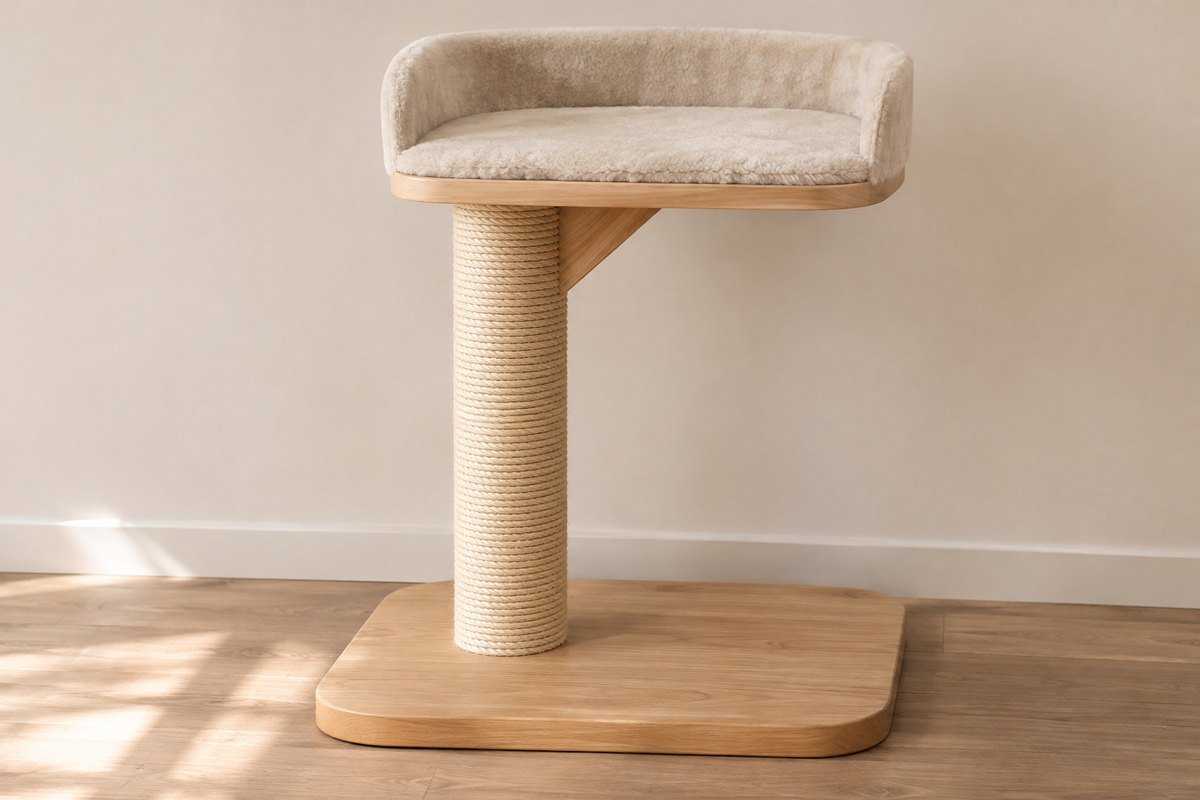
When the room already includes strong patterns or colors, a simple neutral cat-furniture finish can keep the composition calm. Compare the complete piece with the wall, floor and neighboring upholstery in ordinary light. Preserve appropriate scratching and resting surfaces even if their textures differ. Visual coordination should not mean covering a functional surface with an unsuitable decorative fabric.
22. Repeat one existing accent color

A fitted cushion or a manufacturer's available finish can echo one color already present in the room. Keep the repeat limited so the cat furniture feels connected without requiring a complete matching accessory set. Confirm that any replacement part belongs to the actual product. Choose the useful furniture first rather than accepting a poor fit solely because its color matches the curtains.
23. Choose serviceable parts when the product provides them

Check whether the manufacturer supplies compatible replacement scratching sections, cushions or other wear parts before buying the furniture. Record the exact model and part reference. This makes later care more practical than attaching arbitrary rope or fabric to a worn frame. Keep replacement instructions with the household record, and stop using damaged furniture when its condition no longer meets the maker's guidance.
24. Compare how cushions and covers are removed

Look at the care instructions for each component rather than assuming that a soft surface can be machine washed. Compare how a cushion comes out and whether the frame remains accessible for the permitted cleaning method. A restrained design can simplify the visual arrangement and the care routine. Keep unrelated household textiles off the resting furniture while its own cover is being maintained.
25. Review the furniture as part of the ordinary room

Check fastenings, worn surfaces and the furniture's condition according to its instructions, then review how the cat and household actually use the arrangement. Keep useful approaches clear as other furniture moves. If a piece remains unused, reconsider its function or position before buying another version. A smaller collection of appropriate available choices can be more useful than an elaborate display maintained only for photographs.
A cat-furniture function and placement card
For each proposed piece, write the function it supplies, the cat's observed preference, the usable surface and the complete outer footprint. Add the manufacturer's assembly, restraint, weight and care guidance. Mark the approach, landing and departure route while the surrounding room is occupied. Record separate alternatives for multiple cats and where the piece will be checked for wear. Compare the existing room before purchasing a second item that repeats the same function.
A practical next step
Choose cat furniture ideas around useful scratching, resting and movement choices, then connect the appropriate pieces to the room's palette. Keep each approach clear, follow the complete product instructions and review how the arrangement works over time. The strongest decorative result begins with furniture the cat can actually use and the household can maintain.
For the surrounding room, plan the surrounding living room corner. Keep the wider home office wall arrangement practical.
The images are original AI-generated design concepts, not photographs of tested products or verified installations.
Sources and care references
- Cats Protection: scratching preferences, post stability and placement
- RSPCA: resting, hiding and elevated choices in a suitable cat environment
Optional digital guide for this topic
If you prefer a structured workbook, explore this related paid guide.