Japanese garden ideas can begin with a thoughtful relationship between the ground, planted forms and the view from home. Choose a direction suited to the real site before collecting stones, lanterns or unfamiliar plants. A small garden can be complete without including every feature seen in a large public landscape.
These 24 original concepts are Japanese-inspired home-garden planning options. They do not reproduce a particular historic garden or provide construction, lifting, drainage or water-installation instructions. Use the site-and-maintenance brief below to connect a visual idea with the growing conditions and care your household can support.
Contents
- 1. Plan the garden from one everyday indoor view
- 2. Leave an open interval around the main stone group
- 3. Use a single stone beside a planted edge
- 4. Keep a raked display distinct from the everyday path
- 5. Give the required route its own clear material
- 6. Relate new stone to the material already present
- 7. Compare evergreen outlines in unequal groups
- 8. Choose a Japanese maple through the actual growing position
- 9. Use one red-leaf area as a seasonal color decision
- 10. Contrast one fine-leaf layer with a broader one
- 11. Let suitable groundcover replace an unsuitable moss ambition
- 12. Use locally suitable plants for the intended forms
- 13. Give a seasonal flower group a limited place
- 14. Use a plain timber boundary as a quiet background
- 15. Place a modest screen through a specific sitting view
- 16. Give one freestanding bench a complete place
- 17. Use a small container composition when that suits the site
- 18. Choose a dry focal feature before committing to water
- 19. Keep an existing distant tree in the main composition
- 20. Treat a narrow side garden as a long viewed composition
- 21. Let a tiny corner contain one complete idea
- 22. Connect a modern patio through one restrained garden edge
- 23. Check the composition after the seasonal leaves fall
- 24. Start with one manageable trial composition
Study a reference garden’s particular purpose
The RHS describes Japanese-style gardens as varied compositions whose features need considered upkeep. Portland Japanese Garden’s Flat Garden provides a specific example: it is designed around a framed viewpoint and changing seasonal relationships. That is a reason to study how a reference works, rather than copy its ornaments or assume one arrangement describes all Japanese gardens.
Match the garden ambition to the decision that needs resolving
- A view mostly enjoyed from inside: Choose the actual eye level and one clear composition.
- A necessary route passes through the garden: Resolve movement independently of the ornamental display.
- A plant is chosen for a photograph: Check its exact local suitability and mature role.
- A raked surface is part of the idea: Plan the real tending position and ordinary leaf cleanup.
- Water is being considered: Treat installation, care and use as a separate complete project.
1. Plan the garden from one everyday indoor view

Choose a view you will actually use, such as the place beside a living-room window. Compare the garden at that eye level before adding objects for a photograph taken from the lawn. Keep the foreground, main feature and background legible. One considered view can be a useful starting brief without pretending every Japanese garden is intended to be seen from a single position.
Make a simple outline from the actual seat before selecting another feature.
2. Leave an open interval around the main stone group

An open interval lets a modest stone group read clearly from the chosen view. Compare the group as a whole rather than collecting separate rocks for every empty corner. Keep the larger landscape relationships in proportion to the actual garden. Heavy placement, support and any ground work need an appropriate site plan; this is a composition idea rather than lifting guidance.
Check whether the space around the group contributes more than another ornament.
3. Use a single stone beside a planted edge

One stone can define a smaller planted edge without becoming a complete rock collection. Compare its color, outline and apparent weight with the foliage beside it. The visual relationship can stay simple when the garden is seen through a narrow window. Choose the actual material and its placement through a suitable plan instead of assuming a decorative rock can sit securely on any surface.
Photograph the proposed view before increasing the number of elements.
4. Keep a raked display distinct from the everyday path

A raked display is a deliberate surface with an upkeep routine, not unused floor that must be filled. Keep the ordinary route beside it so using the garden does not require crossing the pattern. Compare the display after wind, leaf fall and normal household activity. A smaller maintained field may suit the home more usefully than a large area selected from a public-garden photograph.
Decide who will tend the surface and where they will stand.
5. Give the required route its own clear material
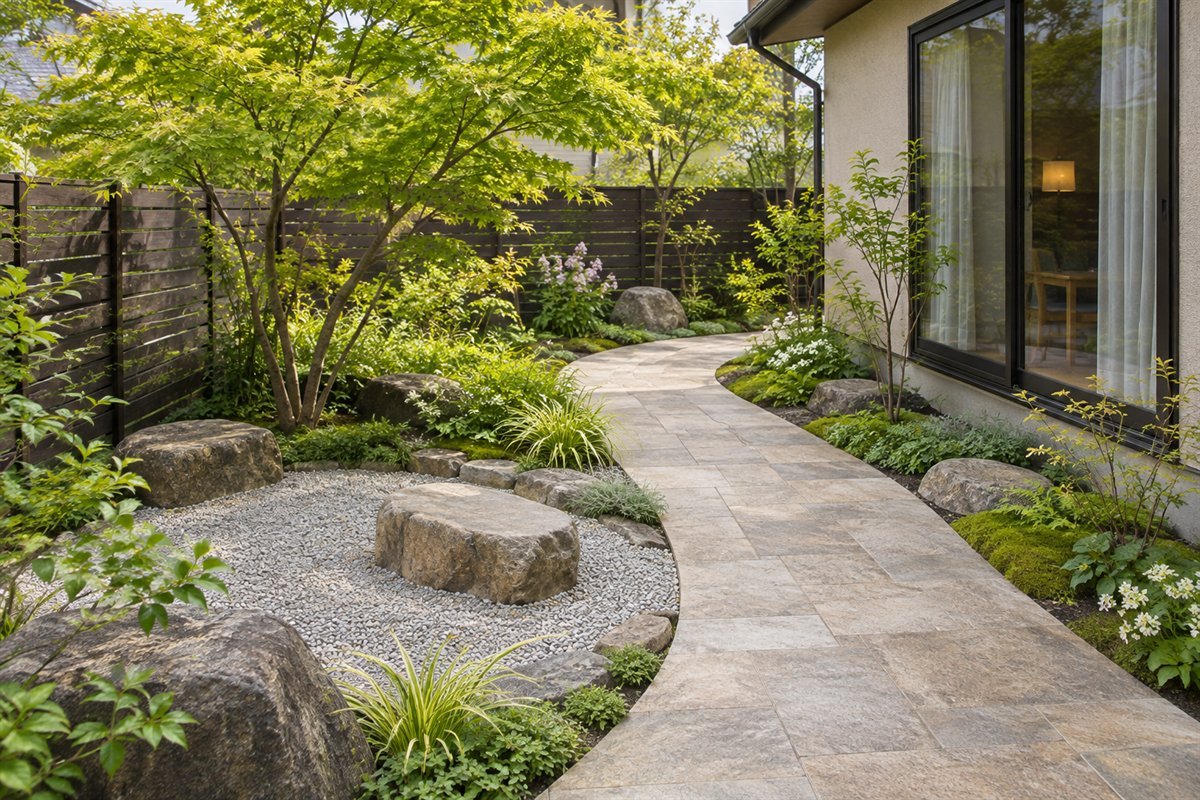
The everyday route should work for its actual users, carrying tasks and conditions. A continuous path can sit beside an inspired planted composition without copying every traditional detail. Keep its surface, drainage and access requirements appropriately resolved for the site. Do not deliberately make a necessary home route awkward in order to imitate an ornamental garden experience.
Use the garden-path guide for the separate movement brief.
6. Relate new stone to the material already present

An existing patio or wall gives the stone palette a real starting point. Compare a candidate in daylight beside that material before choosing from an isolated sample. A related tone can be enough; every piece does not have to match exactly. Keep the garden’s planted forms visible rather than making the whole project a display of several competing stone finishes.
Retain sound useful materials where the actual plan permits.
7. Compare evergreen outlines in unequal groups

A few differing evergreen outlines can give the garden a recognizable shape when flowers are absent. Compare their mature relationship before repeating a nursery-sized ball all along the edge. Select actual plants for local conditions and their long-term pruning needs. A rounded concept image is not a promise that an arbitrary shrub can be kept at that form indefinitely.
Keep the intended care method with the mature-size drawing.
8. Choose a Japanese maple through the actual growing position

A maple can be a candidate rather than a compulsory ingredient. The RHS growing guide describes differences in form and in the light needs of cultivars, with wind and soil conditions also relevant. Compare the exact selection with local guidance and mature space. Keep UK recommendations in their context rather than transferring a planting month or hardiness description to every climate.
Ask for the exact plant’s requirements before assigning it the focal position.
9. Use one red-leaf area as a seasonal color decision

A limited red-leaf area can make a restrained green composition more distinct. Compare its expected seasonal change rather than assuming the garden will hold the same color all year. The actual plant still needs a suitable growing position and long-term space. Keep other strong color areas limited if the foliage is meant to be the focal detail.
Record when the proposed color is expected to be present.
10. Contrast one fine-leaf layer with a broader one

Different leaf outlines can give a narrow planted area depth without requiring a large number of species. Start with two useful textures and compare them from the main view. Choose the real plants for the same growing position rather than pairing them solely through leaf shape. Allow the mature foliage and care access to remain separate enough to read.
Select for shared conditions before deciding how the textures meet.
11. Let suitable groundcover replace an unsuitable moss ambition

A green lower layer can connect stones and planting when the chosen groundcover suits the site. Do not assume a photograph of moss provides a growing recipe for an exposed or dry yard. Compare a suitable local planting option or a simpler unplanted surface instead. Keep the actual plant’s spread, maintenance and relationship to neighboring roots part of the decision.
Choose the growing arrangement before asking for a particular carpet effect.
12. Use locally suitable plants for the intended forms

The composition does not require importing every plant seen in a reference garden. Describe the intended role first: a low foreground, a modest airy canopy or a quiet background. Then use appropriate local plant advice to compare suitable choices. Keep the mature outline and maintenance method with each role rather than treating a broad style label as a universal plant list.
Write the role before writing the species on the brief.
13. Give a seasonal flower group a limited place

A small flower group can mark one season while the rest of the garden retains a clear structure. Choose its real growing requirements and expected display period. Compare the bed when the flowers are absent as well as when they lead the view. An entire border of unrelated blooms may serve a different brief from the restrained planted scene you intended.
Keep the off-season foliage in the comparison.
14. Use a plain timber boundary as a quiet background

A quiet boundary can make the planted outline easier to see. Compare the retained fence or wall before adding a new decorative layer. Its practical condition and site requirements still matter independently of the view. One unembellished background may support the composition more effectively than several different panels, signs and ornaments competing around the same small garden.
Inspect the existing boundary before selecting its visual treatment.
15. Place a modest screen through a specific sitting view

A screen should answer a particular view or privacy need at the seat. Compare its complete footprint and the light it changes before extending it around the whole garden. Select the full system for actual wind, support and property conditions. A slatted appearance in a concept cannot establish a suitable attachment or a guaranteed privacy result.
Draw what the seated person sees before choosing the panel.
16. Give one freestanding bench a complete place
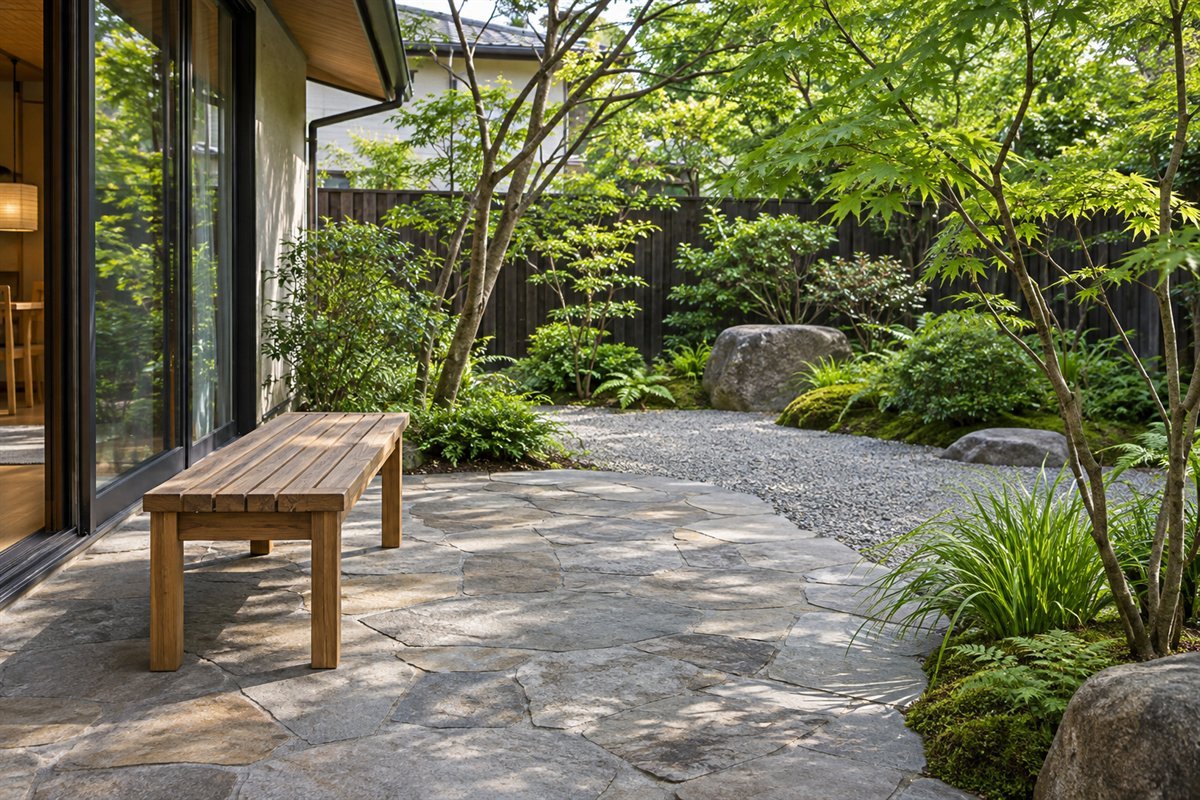
A bench can provide a useful place from which to appreciate the garden. Compare approaching, sitting and leaving with the actual furniture, keeping plant care reachable around it. Choose the outdoor bench through its product guidance rather than treating it as a loose extension of a retaining wall. A complete modest seat can be enough without a pavilion or another building.
Keep the occupied bench and its approach in the plan.
17. Use a small container composition when that suits the site

A container group can be a separate growing arrangement where the actual plants and site suit it. Choose the vessel, root space, medium and watering plan together. Repeat a restrained material rather than forcing every plant into the same pot size. Keep future handling and care practical instead of building a dense display around the hardest-to-reach container.
Compare the complete growing arrangement before refining the pot color.
18. Choose a dry focal feature before committing to water

A water feature is an optional project with its own needs. A dry stone or empty sculptural basin may provide the focal role you actually want without pretending to be a functioning pond. If water is part of the brief, plan the complete installation, care and household use separately with appropriate guidance. A finished garden image cannot establish those arrangements.
Name whether the intended role is visual, practical or genuinely water-based.
19. Keep an existing distant tree in the main composition

A retained tree beyond the immediate planting can contribute to the view. Compare its seasonal outline with your own foreground before adding another tall feature. Keep the composition useful even when its leaves change or the external view is no longer available. The garden should not depend on altering a neighboring tree or property to maintain the picture.
Draw the garden’s own structure independently of the borrowed view.
20. Treat a narrow side garden as a long viewed composition
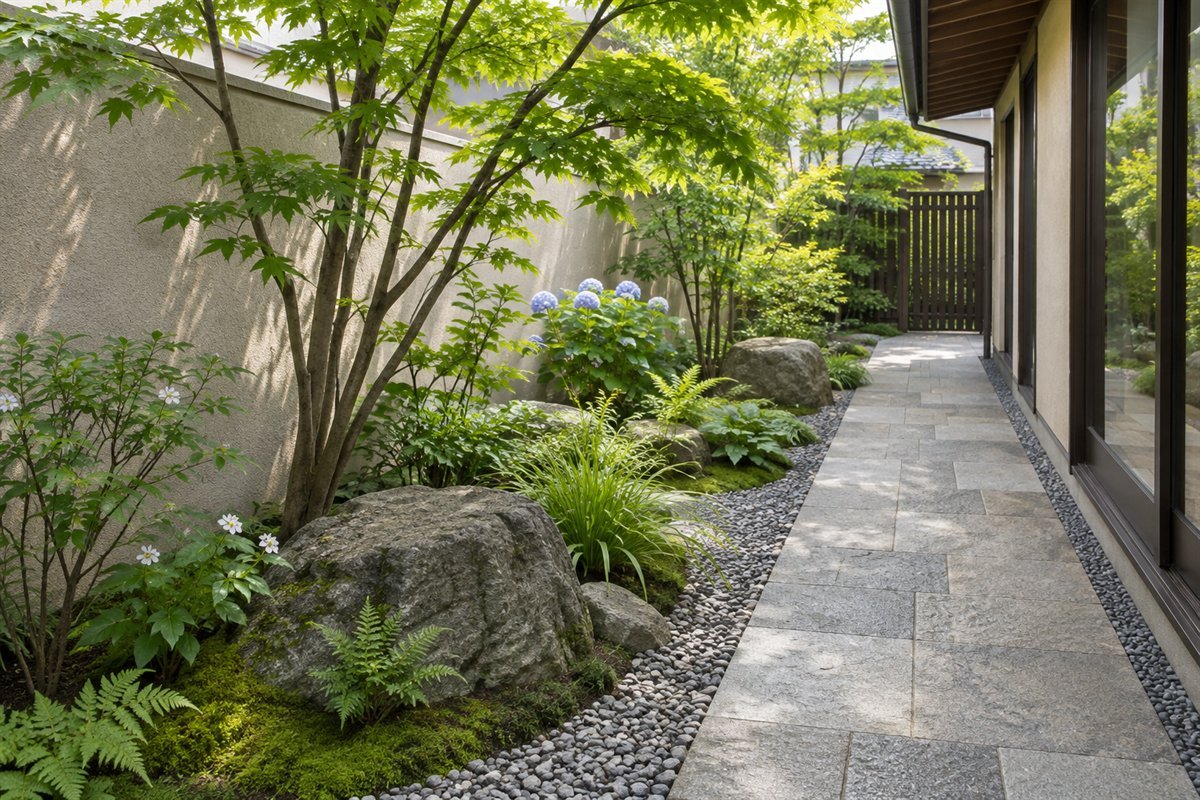
A long narrow space can have a sequence of planted shapes rather than a separate ornament at every step. Compare it from both ends and from any window looking along it. Keep required movement and maintenance access readable. If the available width only supports a small planted edge, simplify the composition instead of forcing a miniature pond or bridge into the route.
Review the far end before adding another foreground feature.
21. Let a tiny corner contain one complete idea
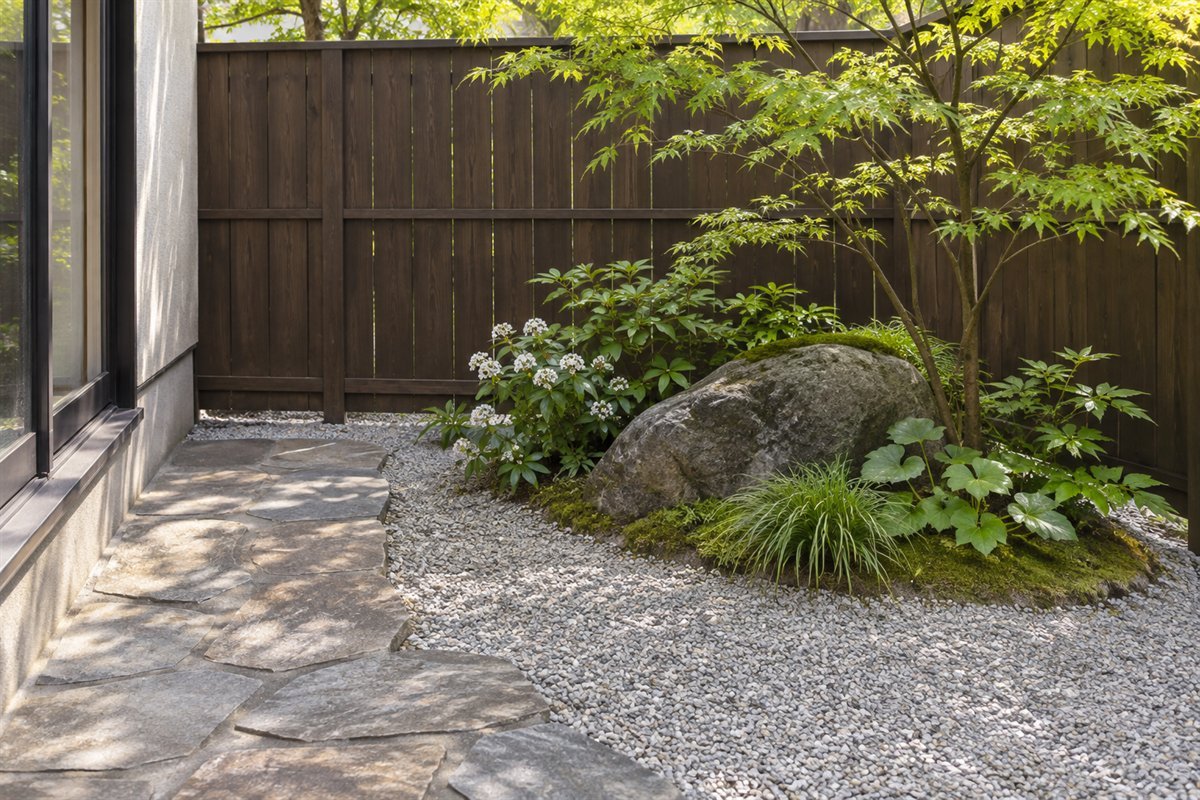
A small corner can feel complete through a single relationship between ground, stone and planting. Give those elements useful space instead of shrinking a long checklist of features into the same pocket. Compare the corner from the room or seat that actually overlooks it. A simpler version can remain easier to understand and maintain as the planting develops.
Stop adding elements when the intended relationship is clear.
22. Connect a modern patio through one restrained garden edge
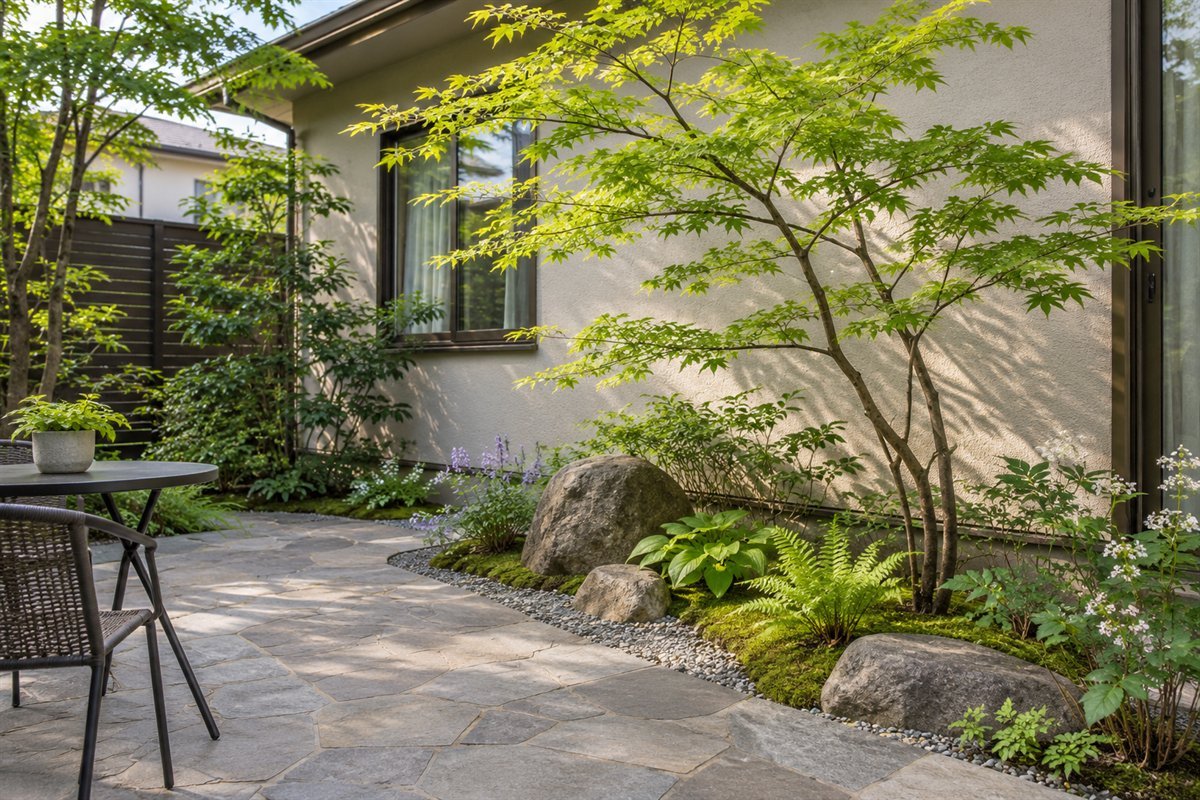
A modern house does not need a collection of historical-looking props to connect with a Japanese-inspired garden. Compare a restrained planted edge with the patio’s existing lines and materials. Keep a deliberate distinction between the useful sitting surface and the viewed planting. The relationship can come through proportion and material choice rather than imitating a ceremonial building.
Use the house you have as part of the composition.
23. Check the composition after the seasonal leaves fall
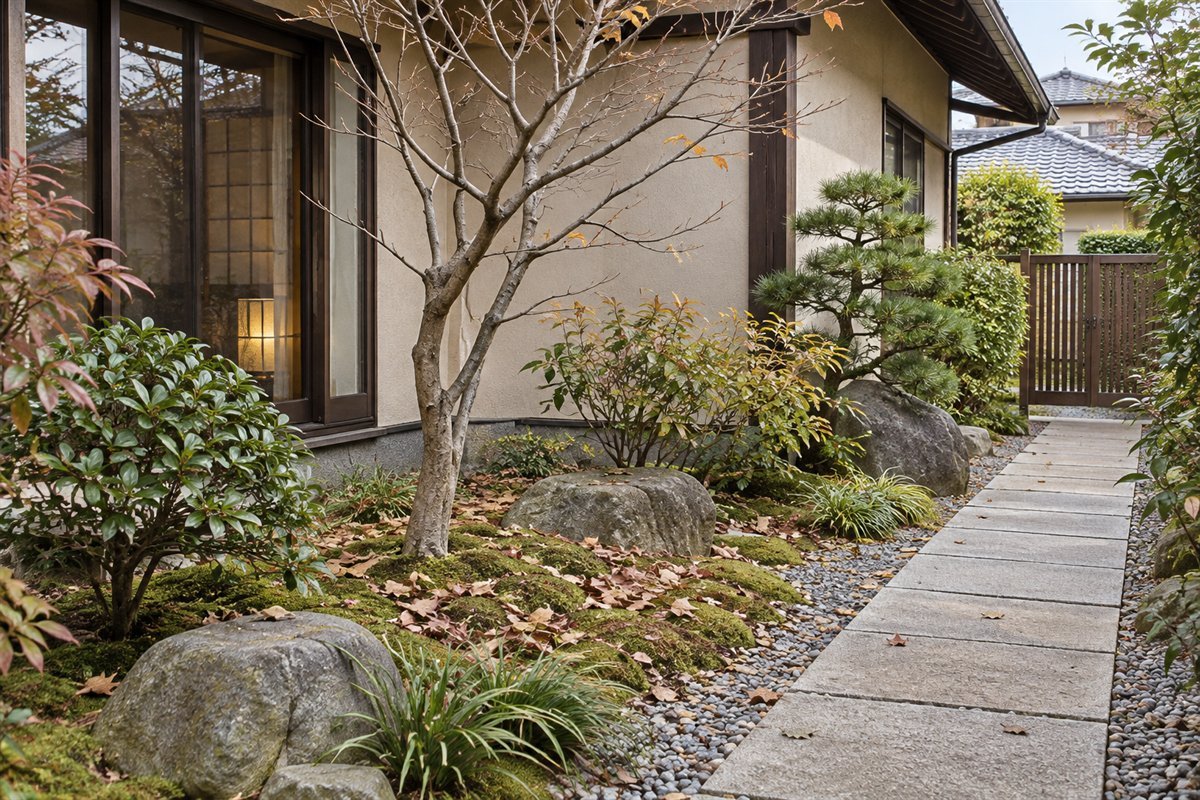
Seasonal change affects the garden’s visible layers and its care tasks. Compare the branch outline, evergreen shapes and ground surface when the strongest foliage is absent. Decide how fallen leaves will be managed in the actual garden rather than expecting a permanent display photograph. Keep paths and required access working through the same ordinary routine.
Add an off-season sketch to the main garden brief.
24. Start with one manageable trial composition

A trial area can reveal whether the intended care and visual relationship suit the household. Choose a modest complete composition and observe it through ordinary use before extending the same detail across the yard. Record the actual light, plant development and surface upkeep. Expansion is optional; a useful small garden does not need every feature in the inspiration folder.
Use the site-and-maintenance brief below before adding the next area.
Make an original site-and-maintenance brief
Begin with one measured outline of the actual garden. Mark the house openings, existing paths, boundaries, retained trees and places that must remain accessible. Note whether the proposed composition is mainly viewed, walked through or used for sitting. A garden that serves several roles needs those roles drawn together before the ornamental details are chosen.
Record the real growing positions over an ordinary observation period. Note where direct sun reaches, which locations remain shaded, where wind is noticeable and where the soil stays wet or dries sooner. Use appropriate site and local horticultural assessment for conditions you cannot establish through observation. A Japanese-inspired appearance does not change the actual climate or repair a ground problem.
Create a five-column table: proposed element, intended role, site requirements, ordinary care and unresolved decision. A small tree might provide a seasonal focal outline, while its row still needs the exact selection, mature space and local growing suitability. A raked display might provide a viewed ground surface, while its care row records reaching the field and dealing with windblown leaves. Keep the visual role separate from the practical conditions needed to support it.
Use the same table for nonliving elements. A bench row should include the real furniture, occupied approach and appropriate outdoor requirements. A screen row needs its complete support and wind plan. Stones need suitable placement through the actual site plan; the image does not tell you their mass or support. Keep permanent works in a separately assessed project instead of turning a decorative sketch into construction instructions.
Compare the main view with the care route. Can the person responsible reach the rear planting without crossing the ornamental display? Is there a place to tend the surface without blocking a necessary path? Does the chair still work when foliage reaches its intended mature outline? Simplify the first conflict rather than hiding it behind another foreground plant.
Give seasonal change one row of its own. Record what the garden is meant to offer when the chosen flowers or red leaves are absent. Keep an off-season outline beside the main drawing, and note any extra tasks such as leaf collection or the actual container’s seasonal care. Do not import another region’s month-by-month schedule without checking its fit.
Try the brief with a hypothetical small backyard. The first idea includes a raked field, a maple, a lantern and a basin. The retained path and household routines leave only one manageable viewed corner. The revised brief keeps one stone-and-planting composition, compares a locally suitable small tree and defers water. This is an illustrative decision process, not a measured client design or proof that the same choices suit another yard.
Finish with three actions: retain, investigate and defer. Retain useful existing features. Investigate the exact plant or complete installation whose needs remain unresolved. Defer optional ornaments until the first composition has worked through ordinary use. Keep the brief with photographs of the actual view and update it as the living garden changes.
Keep a plant reference in its climate context
A useful reference explains the real plant, not just the leaf shape. For example, the RHS Japanese-maple guide distinguishes forms and light preferences and discusses wind, soil and container care. Use that to identify the questions to resolve for a specific selection. It is UK guidance, so its planting calendar and hardiness context are not a universal schedule.
Compare local growing advice, the exact species or cultivar, mature spread and your available care before buying. If a particular plant does not fit, choose another suitable plant for the intended role or simplify the composition. A photograph cannot confirm plant identity, soil conditions or long-term compatibility.
Keep clipped forms and containers realistic too. A small nursery specimen may develop into a different outline, and a pot is a complete growing arrangement with changing needs. Choose the garden you can continue tending rather than relying on a permanently frozen rendering.
Can a small backyard have a Japanese-inspired garden?
Yes, through a limited composition suited to its actual view, movement and growing conditions. One complete relationship between ground, stone and planting can be more useful than a miniature checklist of features.
Does a Japanese garden need a pond?
No. Dry and planted compositions offer other directions. If water is wanted, plan the complete feature, maintenance and household use separately rather than copying only its finished appearance.
Do I need a Japanese maple or bamboo?
No plant should be compulsory when it does not suit the site. Choose exact plants through local climate, light, soil, mature space and care, then compare whether they support the intended form.
Is a raked gravel garden low maintenance?
It has a distinct upkeep routine. Compare the real tending position, leaf fall, wind and household use before choosing the field size. A restrained smaller display may be the more manageable option.
Should I copy a path made from spaced stepping stones?
Choose a necessary home route through the actual users and site conditions. A continuous suitable path can sit beside a viewed composition; ornamental movement ideas do not replace an appropriate access plan.
Do the images show named plants or verified installations?
No. They are original concept illustrations. Identify and assess real plants, materials and complete systems independently, and use the brief to record what remains unresolved.
A practical next step
Choose the garden’s main view and practical role, keep a restrained composition, and match living elements to the real site. Let the care brief shape the final size so the garden remains thoughtful as it grows and changes.
Plan an enclosed garden through its windows and growing positions. Give the everyday garden route its own practical brief. Choose a manageable layout for a small garden.
Images are original AI-generated Japanese-inspired home-garden concepts, not photographs of the cited gardens, verified plant identifications or installation diagrams. The brief and hypothetical example are original planning aids.
Sources and care references
- RHS: Japanese-style design, varied elements and upkeep
- Portland Japanese Garden: the Flat Garden’s particular viewpoint and seasons
- RHS: Japanese-maple forms, site conditions and care in a UK context
Optional digital guide for this topic
If you prefer a structured workbook, explore this related paid guide.