Garden gate ideas work best when the entrance is considered in two states: the view with the gate closed and the route with it open. The right design should belong to the fence or hedge while leaving an understandable place to approach, reach the latch and carry everyday garden items through.
These 23 original concepts compare timber, metal, pattern, color and planted settings. They focus on pedestrian garden entrances and the decisions to discuss with a supplier or installer. They are not construction drawings, vehicle-gate instructions or pool-barrier designs.
Contents
- 1. Use an open white picket gate for a visible garden entrance
- 2. Let a natural timber finish connect with existing garden wood
- 3. Choose a solid panel when the view needs a quieter boundary
- 4. Keep the upper section open above a solid lower panel
- 5. Use vertical slats to give a narrow entrance a calm rhythm
- 6. Continue a horizontal fence pattern through the gate
- 7. Frame the planting with a simple metal gate
- 8. Give an ornamental metal gate room to be the focal point
- 9. Use a mesh-filled frame for a practical kitchen-garden entrance
- 10. Add woven texture within a purpose-designed gate frame
- 11. Choose a gently arched gate leaf for a softer silhouette
- 12. Use an overhead arch as a separate garden threshold
- 13. Compare paired leaves for an opening used by larger garden items
- 14. Set the entrance back when the approach needs a waiting place
- 15. Align the opening with the route people actually take
- 16. Make an opening in a hedge read as a complete entrance
- 17. Relate a timber gate to existing brick piers
- 18. Use modest posts when the garden needs a quiet boundary
- 19. Use one deliberate paint color to mark the entrance
- 20. Make the latch and hinge finish part of the design
- 21. Place planters outside the gate's full movement area
- 22. Keep a climbing-plant feature beside the moving leaf
- 23. Frame one garden view instead of adding more entrance decoration
Make a six-field opening brief before choosing a gate
Record the existing opening, supporting structure, intended direction of movement, daily users, items carried through and the view you want to keep or soften. Photograph both approaches and include the gate fully open in your sketch. Mark anything that conflicts with the leaf, handle or standing position. Ask a suitable supplier or installer to resolve dimensions, support, hardware and site requirements before selecting decorative details.
Copy this garden entrance brief into your planning notes
- Setting: Fence, wall or hedge; existing posts or piers; exposure and ground conditions to discuss.
- Route: Where people approach, stand, open the gate and continue; note any turn immediately beyond.
- Opening: Actual measurements and finished conditions, checked with the supplier rather than inferred from a photograph.
- Daily use: Who operates the latch and which baskets, carts or other items need to pass.
- Appearance: One preferred material, a view to frame or screen, and the surrounding finish to coordinate.
- Care and specification: Ask about the complete assembly, compatible hardware, finish care, installation and applicable local requirements.
1. Use an open white picket gate for a visible garden entrance

A picket gate can mark the change from a path to a garden without concealing the planting beyond it. Compare the rhythm of its uprights with the nearby fence rather than choosing it as an isolated object. A simple rectangular top keeps the entrance easy to relate to a modest cottage or porch.
View the proposal from both sides. The hinge side, latch and supporting posts are part of the appearance too. Keep the intended opening clear of flowers and pots, and choose the actual assembly for the site; the illustration does not establish a safe enclosure for children or animals.
2. Let a natural timber finish connect with existing garden wood

An unpainted timber appearance can relate a gate to nearby raised beds, a shed or a bench. Compare samples with those existing elements in ordinary outdoor light. The useful connection may be a similar warmth rather than an exact color match across differently aged surfaces.
Select the timber, finish and care schedule for the real location with the supplier. Do not choose a material solely because a concept image shows attractive grain. Include the posts and exposed edges in that decision, so the whole entrance can be maintained as one considered assembly.
3. Choose a solid panel when the view needs a quieter boundary

A mostly solid gate can reduce the busy view into a working garden or storage corner. Begin with the view you actually want to screen. Closing the entire entrance may be unnecessary when a lower panel and a carefully placed planting bed would resolve the same visual problem.
Compare the panel with the adjoining fence from the street and inside the garden. Ask the supplier to assess the appropriate gate, posts and hardware for the exposure and opening. Visual solidity does not establish wind performance, security or a particular level of privacy in every viewing direction.
4. Keep the upper section open above a solid lower panel

A gate with a solid lower portion and open upper section can give the entrance definition while retaining a glimpse of the garden. Align the change in pattern with a considered line in the surrounding fence, rather than leaving the gate divided at an arbitrary point.
Study the view while standing on either side. The open section can frame a tree or planted border without displaying every practical item behind the gate. Have the complete design specified as a working gate; decorative openings and panel proportions are not proof of containment or code compliance.
5. Use vertical slats to give a narrow entrance a calm rhythm

Closely repeated vertical slats can suit a restrained contemporary garden. Choose the slat width and spacing alongside the fence pattern, because two unrelated rhythms at the same opening can make a small entrance feel more complicated than it needs to be.
Check how much can be seen through the gaps from an oblique angle as well as straight ahead. A slatted appearance is not the same as a fully screened panel. Keep the structural frame and hardware part of the proposal instead of assuming thin decorative strips form a complete gate.
6. Continue a horizontal fence pattern through the gate

A horizontal gate can read as part of the fence when its board lines line up with the neighboring panels. Draw the whole elevation before ordering, including the posts, because the gate alone cannot establish that alignment.
Keep the opening understandable in daily use with a visible, comfortable latch position. Check both the closed pattern and the open leaf beside the fence. The uninterrupted visual line should not require awkward access or improvised hardware, and the actual construction needs a suitable specification for its size and site.
7. Frame the planting with a simple metal gate

An open metal gate can create a defined entrance while allowing the plants behind it to remain the main view. A restrained frame with vertical bars is useful when nearby architecture already supplies pattern, color and ornament.
Compare the actual finish with railings or outdoor furniture you plan to keep. Ask about the material, coating and maintenance required for the exposure rather than assuming every dark metal gate behaves alike. Keep the threshold and opening visible so the attractive transparency also supports ordinary passage.
8. Give an ornamental metal gate room to be the focal point

A curved or patterned metal gate can suit an entrance that needs one expressive feature. Keep the surrounding posts and nearby planting quieter so the pattern remains legible from the normal approach. Repeating several ornate elements can dilute the effect.
Choose a complete working gate rather than treating decorative salvage as ready to hang. Have its condition, weight, supports and hardware assessed for the intended use. A pleasing photograph cannot confirm that an older panel is suitable for installation or that its openings meet a household's access needs.
9. Use a mesh-filled frame for a practical kitchen-garden entrance

A framed mesh gate can keep the entrance visually open beside vegetable beds. Relate the frame to the neighboring fence and leave enough visual separation from nearby trellises that the latch remains easy to identify.
Select the actual mesh and complete enclosure for the intended purpose. Different animals and household needs create different requirements; an open-looking concept is not a pest-exclusion plan. Keep useful access for a basket or garden cart part of the opening brief rather than sizing the gate only for an empty-handed walk.
10. Add woven texture within a purpose-designed gate frame

A woven-looking infill can bring a softer texture to a garden with many hard edges. Use it as one material choice within a coherent gate, rather than adding a loose decorative screen over an existing latch and hinge arrangement.
Discuss the infill's suitability, fixing and replacement with the supplier. Natural-looking texture does not establish outdoor life or structural strength. Keep adjacent furniture and planting restrained enough that the woven surface can be appreciated, and leave the moving edge free of trailing stems.
11. Choose a gently arched gate leaf for a softer silhouette
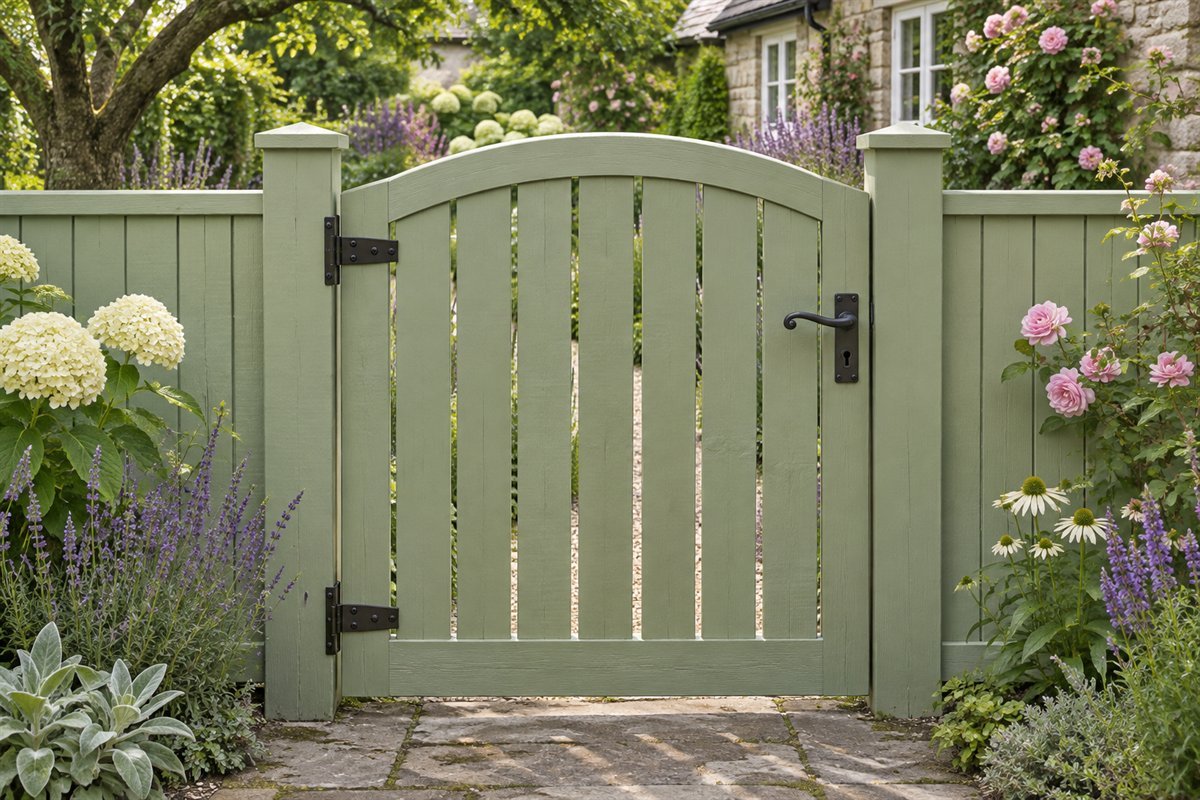
A gentle curve at the top can soften a long run of straight fencing without adding an overhead structure. Compare its highest point with the surrounding posts and nearby windows from the actual approach, where a small curve may be more convincing than an exaggerated one.
Keep the curve in the gate's overall design rather than attaching an unrelated decorative panel. The supporting frame, latch and finish still need to work as one assembly. Check how the open leaf sits beside the fence so its distinctive shape looks deliberate in both positions.
12. Use an overhead arch as a separate garden threshold

An overhead arch can announce the entrance when the garden needs a stronger change of space. Keep its structure visually distinct from the gate leaf so the two elements have clear roles: one frames the view, the other controls the opening.
Have the arch and gate supports planned for the actual site. Include any mature planting in the access and maintenance discussion, and keep foliage away from the moving leaf and latch. An arch should frame the route rather than turn it into a low or congested passage.
13. Compare paired leaves for an opening used by larger garden items

Two leaves can offer a different opening arrangement when the route also serves larger garden equipment. Decide which leaf would be used for an ordinary visit and how the second would be secured and opened when needed.
Have the full system specified, including the supporting posts, meeting edges and hardware. A pair of leaves introduces more moving parts and does not automatically make a narrow or uneven approach easier to use. Compare the route beyond the opening before choosing it only for its balanced appearance.
14. Set the entrance back when the approach needs a waiting place
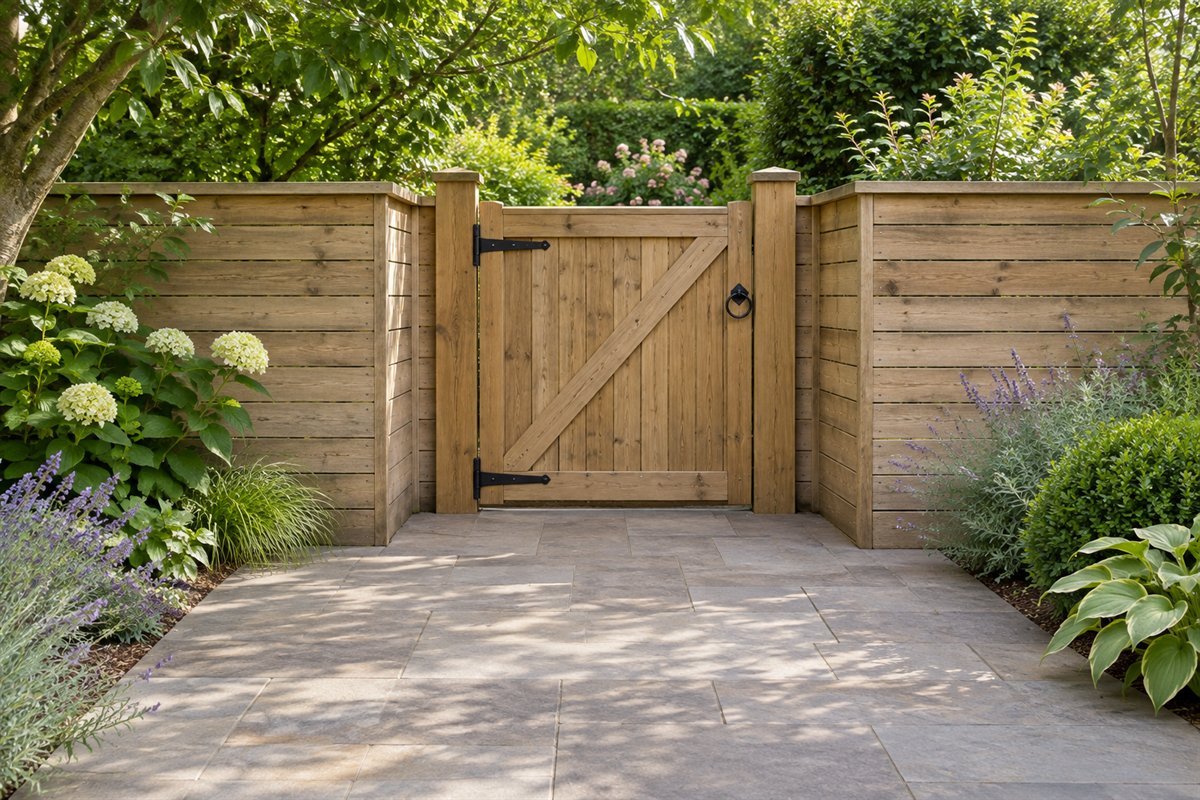
A recessed gate can create a small place to pause before entering instead of placing the leaf immediately on a busy path. Sketch where someone stands to reach the latch and where a carried basket waits while the gate moves.
Check the property boundary, required permissions and actual site constraints before changing the position. A recess is a planning option, not a universal solution. Keep it visually simple so the setback remains useful space rather than a new area filled with pots that recreates the original access conflict.
15. Align the opening with the route people actually take
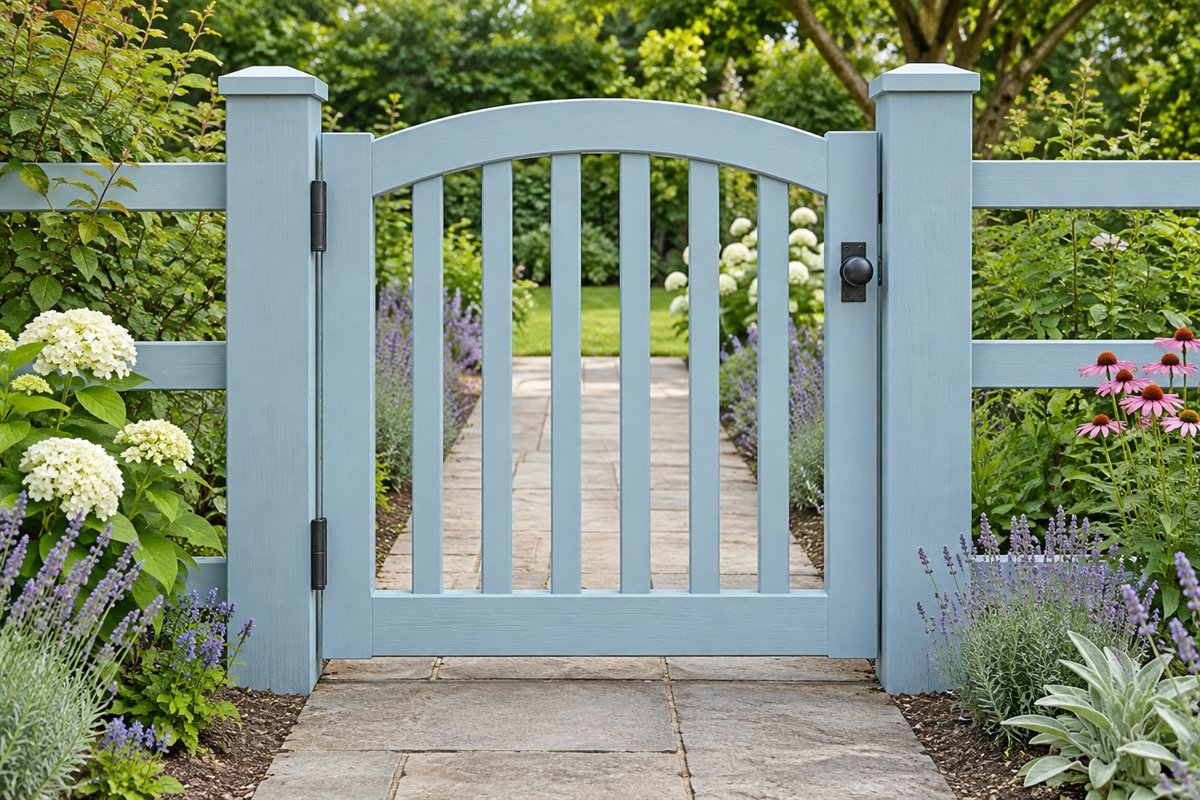
A gate looks more settled when the path leads naturally through it. Compare the opening with the approach and the route immediately beyond, rather than centering it only on a fence elevation that is viewed from a different angle.
If a direct alignment is impossible, make the turn understandable and leave the required movement space. Keep the gate choice distinct from redesigning the whole garden path. The useful decision here is where the leaf and latch sit in relation to an existing daily route.
16. Make an opening in a hedge read as a complete entrance

A hedge can supply the visual boundary while the gate gives the opening a clear identity. Compare the visible posts and gate finish with the hedge's depth, because a very slight gate can disappear when greenery surrounds it.
Keep the moving leaf, latch and supporting structure free of growth. Include access for ongoing trimming in the design discussion rather than treating a newly clipped hedge as its permanent size. The hedge and gate also need separate consideration for their actual support and maintenance requirements.
17. Relate a timber gate to existing brick piers
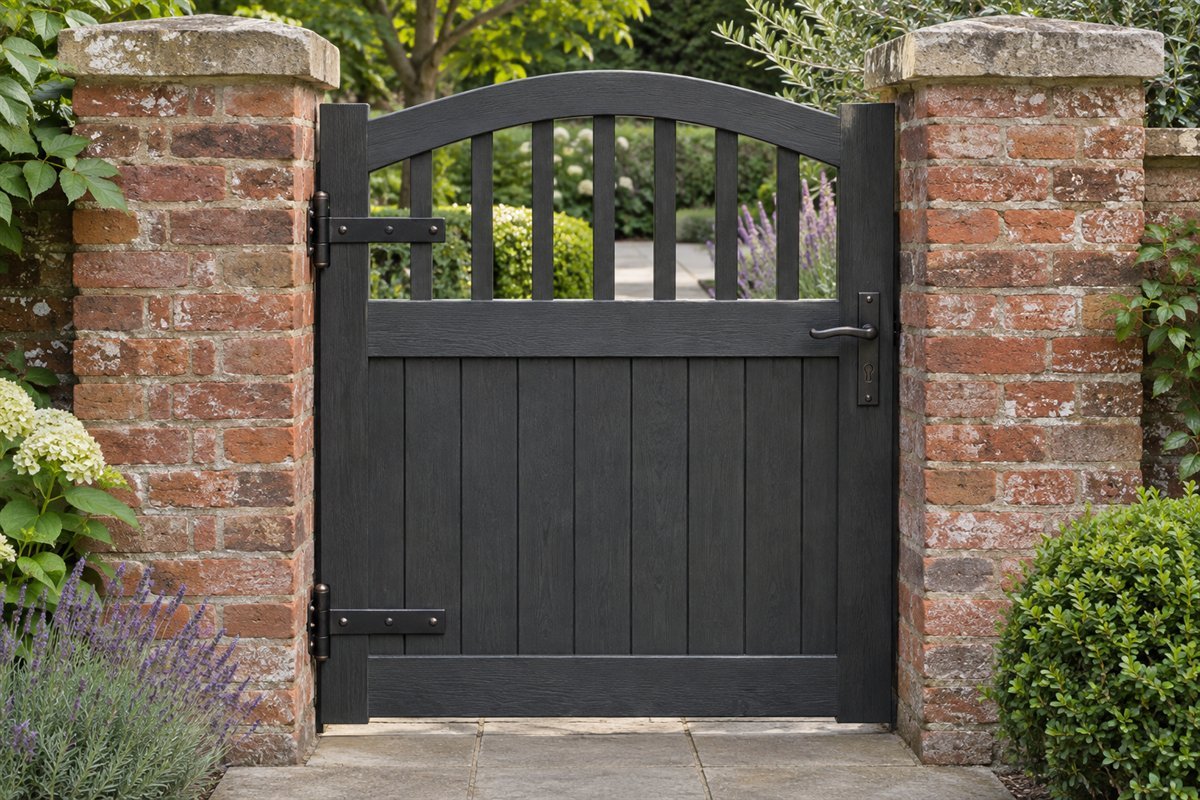
Existing brick piers can give a new gate a strong setting. Compare timber color and panel proportions against the actual brick, mortar and caps before choosing from an isolated sample. A plain gate can let the masonry supply most of the texture.
Have the piers and proposed attachments assessed before reusing them. Their appearance does not establish that they can support a particular leaf. Keep the latch and hinge positions in the specification so a visually compatible replacement also has a coherent installation plan.
18. Use modest posts when the garden needs a quiet boundary

A pair of simple posts can make a gate feel deliberate without the visual weight of large piers. Compare their visible proportion with the gate and the adjacent fence, not just with a photograph of a more formal entrance.
Ask for posts and foundations appropriate to the actual assembly and ground conditions. A narrow-looking support in an illustration is an aesthetic proposal, not a construction detail. Keep ornamental caps or extra trim limited if the aim is a quiet entrance that belongs to the garden.
19. Use one deliberate paint color to mark the entrance

A gate color can connect to the house or provide a restrained contrast with the planting. Test a real sample beside the fence and greenery in more than one light condition. A color that works on a small swatch may feel much more prominent across the entire leaf.
Choose a suitable coating system for the actual substrate and existing finish. Keep the surrounding elements comparatively simple so color does the work. There is no need to repeat the accent on every pot, bench and accessory to make the entrance look considered.
20. Make the latch and hinge finish part of the design

Visible hardware can unify a simple gate when its scale and finish are chosen with the rest of the entrance. Compare the latch location with the side you normally approach, and confirm that the intended users can operate the complete arrangement.
Specify compatible hardware for the actual gate and site with the supplier. A matching color is only one part of the decision. Avoid adding decorative fittings over working components or choosing an awkward handle solely because its silhouette looks attractive against the panel.
21. Place planters outside the gate's full movement area

Two planters can frame an entrance, but their useful position depends on the gate in motion. Sketch the complete leaf sweep and the place used to stand at the latch before placing containers in an apparently empty corner.
Include the mature spread of the plants and access for watering. One well-placed container may work better than a symmetrical pair if the approach is narrow. Keep the threshold easy to read instead of letting decorative pots obscure the working edge of the gate.
22. Keep a climbing-plant feature beside the moving leaf

A separate trellis beside the gate can connect the entrance with planting without covering the hardware. Give the trellis its own clear position in the elevation, rather than asking stems to bridge the gate and fence.
Select and maintain the planting for the actual climate, light and structure. Keep growth away from the leaf, latch and working opening. A planted entrance remains useful when its maintenance is anticipated; the illustrated vine is a visual concept, not evidence of a named species or growth performance.
23. Frame one garden view instead of adding more entrance decoration

An open gate can focus attention on a tree, planted bed or quiet garden corner beyond. Choose the view from the ordinary approach and compare it with the gate both closed and open. The destination can supply the interest while the entrance remains simple.
Keep daily access as the final test. A beautifully framed view does not compensate for an awkward latch or a leaf that conflicts with the route. Finish the opening brief first, then remove decorative additions that do not help the view or the way the entrance is used.
Compare two complete proposals rather than collecting unrelated features
For a cottage garden, compare an open picket design with a partly solid timber leaf using the same real opening. Record what each reveals from the approach and where the open gate would rest. Do not change every material at once, or it becomes difficult to see which choice improves the entrance.
For a quieter contemporary setting, compare a simple metal frame with a slatted timber gate. Keep the surrounding fence and route in both sketches. These are hypothetical comparisons, not measured projects or tested products; the actual site determines which proposal is suitable.
What the primary references help you check
Walpole Outdoors discusses gate selection through the relationship between purpose, appearance and the surrounding garden. Jacksons Fencing adds a buyer checklist covering matters such as the opening and coordination of posts and hardware. Use those prompts to prepare questions for a supplier, then obtain a specification for the actual site. Their proprietary product guarantees and location-specific planning examples are not universal requirements.
Which garden gate material is best?
Choose it for the actual location, appearance, maintenance expectations and complete assembly. Timber and metal each include many different products and finishes. A concept image cannot establish their durability, support requirements or installed performance.
Should a garden gate match the fence?
It can share the material, pattern or color, but it need not copy every detail. Choose one clear relationship. A gate that deliberately contrasts can also work when the posts, hardware and surrounding planting form a coherent entrance.
Should the gate open inward or outward?
Have the direction resolved for the real boundary, route and applicable requirements. Sketch the full movement and standing position on each approach. Do not assume a direction from a photograph or allow the leaf to obstruct space it must keep clear.
Can I add an old decorative panel as a garden gate?
Have its condition and suitability assessed first. A decorative panel is not automatically a complete gate; it still needs appropriate support, hardware, movement and a design suited to the intended use.
Can these ideas be used for a pool gate?
Pool barriers and access systems have specific local requirements. These pedestrian garden concepts do not establish compliance. Obtain a design and installation appropriate to the actual pool and location.
A practical next step
Choose two gate concepts and place each into the same opening brief. Compare the closed view, the full movement and one ordinary trip through the entrance. Resolve the complete assembly with the right supplier or installer, then refine the color and planting around that workable design.
Plan the space around a side-yard entrance. Connect the entrance to a useful garden path. Keep fence planting distinct from the moving gate.
The images are original AI-generated garden concepts, not measured installations, tested products or evidence of structural, security, accessibility or pool-barrier compliance.
Sources and care references
- Walpole Outdoors: choosing a gate for its purpose and garden setting
- Jacksons Fencing: garden gate buyer checklist
Optional digital guide for this topic
If you prefer a structured workbook, explore this related paid guide.