Pet supply storage ideas should make everyday care easier without crowding the animal’s resting space or leaving products in the wrong conditions. Begin with the supplies already used, then give each task a clear home. A useful system explains where an item goes after use as well as where to find it before the next walk or meal.
These 24 concepts focus on ordinary household dog and cat supplies. Choose appropriate products and follow their instructions for the individual animal. Food, care products and equipment can have different requirements; coordinated containers do not make them interchangeable. The guide covers organization, not veterinary treatment, feeding prescriptions or assessments of an animal’s needs.
Contents
- 1. Map supplies by the task they serve
- 2. Give the daily lead a clear return position
- 3. Keep a harness supported in its own compartment
- 4. Use shallow divisions for spare collars
- 5. Make the walk pouch easy to prepare
- 6. Contain waste-bag refills away from loose clutter
- 7. Keep clean return towels together
- 8. Provide a separate used-textile handoff
- 9. Keep grooming tools in a visible drawer
- 10. Retain original labels on care products
- 11. Choose a toy container from the retained collection
- 12. Separate a supervised toy reserve
- 13. Give plush toys room for their care routine
- 14. Keep rigid toys from pressing into soft supplies
- 15. Store puzzle toys with their permitted parts
- 16. Keep food in its original identifiable packaging
- 17. Give food utensils a separate clean home
- 18. Keep unopened supplies traceable
- 19. Give treats their own secure position
- 20. Keep feeding equipment separate from washing tasks
- 21. Make a travel-supply checklist without storing a packed mess
- 22. Keep household instructions with the supplies
- 23. Separate the seasonal set from daily supplies
- 24. Resolve items awaiting a decision
Plan pet supply storage ideas around separate household tasks
Divide the collection into ready equipment, items awaiting care, identified food supplies and products needing their own appropriate secure housing. Keep the bed and the animal’s usable resources available. Measure the actual cabinet openings and the complete supply shapes, then preserve the room’s ordinary circulation and any furniture restraint requirements.
Choose an arrangement from the supply task
- Daily walk: Keep the appropriate lead, harness and packing position recognizable.
- Clean textiles: Use a modest ready stack with a separate laundry handoff.
- Toy collection: Choose an understandable ready group and review its condition.
- Food and treats: Retain identity and product storage instructions, with secure access.
- Occasional travel: Use a current checklist rather than a forgotten permanently packed bag.
1. Map supplies by the task they serve

Pet supply storage ideas are easier to maintain when the groups follow real tasks: leaving for a walk, preparing a meal, caring for equipment and returning from outside. List the supplies actually retained before choosing furniture. Keep ordinary ready items separate from products with their own secure storage requirements. A matching row of baskets is useful only when each has a clear job.
Try this: Name the task served by each existing group.
2. Give the daily lead a clear return position

A defined return position can prevent a lead from disappearing beneath coats. Choose a suitable holder and location for the actual product, without leaving a trailing loop in the walking route. Keep the lead identifiable and follow its care and inspection instructions. A storage hook is a place to put equipment away, not a restraint point for an animal.
Try this: Check the full hanging length with the entrance in use.
3. Keep a harness supported in its own compartment

A harness can have a separate supported position instead of being tightly bundled with the lead. Compare the actual shape, fastening parts and care instructions before choosing a hook or compartment. Keep the return simple enough that straps do not spread across the surrounding shelf. Storage organization does not establish the harness’s fit or condition for use.
Try this: Give the complete harness enough room without compression.
4. Use shallow divisions for spare collars

A shallow drawer can keep retained collars visible without combining every strap into one knot. Keep identity and intended use clear, especially when several animals have different equipment. Choose divisions around the actual collars rather than forcing them into equal tiny squares. Review unused or unsuitable items separately instead of retaining them merely to fill the organizer.
Try this: Retrieve one collar without disturbing the rest.
5. Make the walk pouch easy to prepare
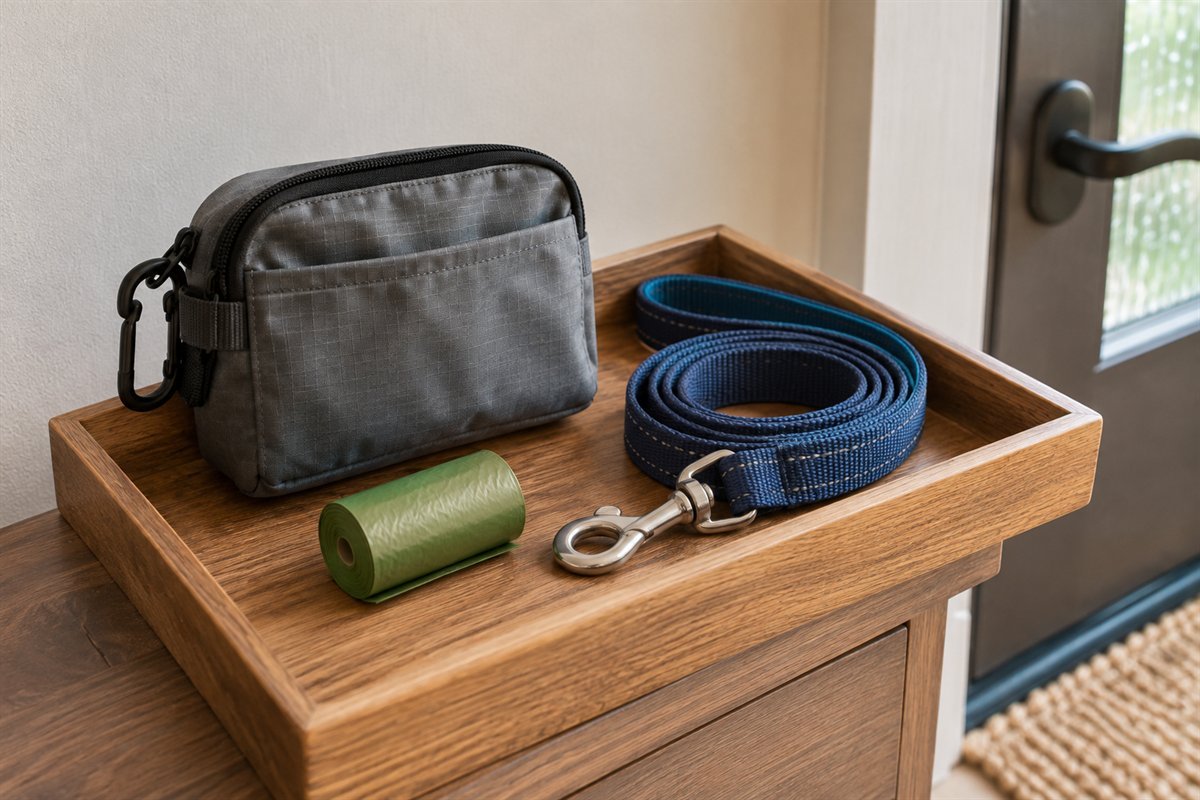
A modest walk pouch can occupy a single packing position with its ordinary compatible accessories. Empty and maintain it according to its instructions, then prepare what the actual outing requires. Keep the pouch separate from an animal’s food store. Do not leave unknown old contents inside just because the bag returns to a tidy shelf.
Try this: Check every small pocket before repacking.
6. Contain waste-bag refills away from loose clutter

Small refill rolls are easy to lose in a deep mixed drawer. Give them one appropriate closed position that the household can find, while keeping bags inaccessible where they could create a hazard. Retain only the useful quantity and separate empty packaging for disposal. Keep this supply group distinct from food, toys and clean feeding equipment.
Try this: Check the refill location before buying a duplicate pack.
7. Keep clean return towels together

Clean towels can have a small ready stack near the return routine when that location suits the household. Follow their care labels and keep them separate from textiles still awaiting washing or drying. Compare the folded size with the usable opening, and leave room to lift a single towel. Avoid using the animal’s resting surface as spare-towel storage.
Try this: Match the accessible stack to the normal routine.
8. Provide a separate used-textile handoff

Used textiles need an obvious next step rather than an automatic return to the clean stack. Choose an appropriate laundry handoff and follow the material’s actual care instructions. Keep the basket out of circulation and manageable to empty. Organization makes the task visible; it does not replace washing or establish that a textile is ready for reuse.
Try this: Test the route from arrival to the laundry routine.
9. Keep grooming tools in a visible drawer

A small drawer can make ordinary grooming tools visible while keeping them out of unrelated supply piles. Follow the maker’s cleaning and storage instructions, and choose appropriate access for the household. Keep tool surfaces from catching on loose straps. This is a storage arrangement, not guidance for using an unfamiliar tool on an animal.
Try this: Store only the retained tools used in the actual routine.
10. Retain original labels on care products
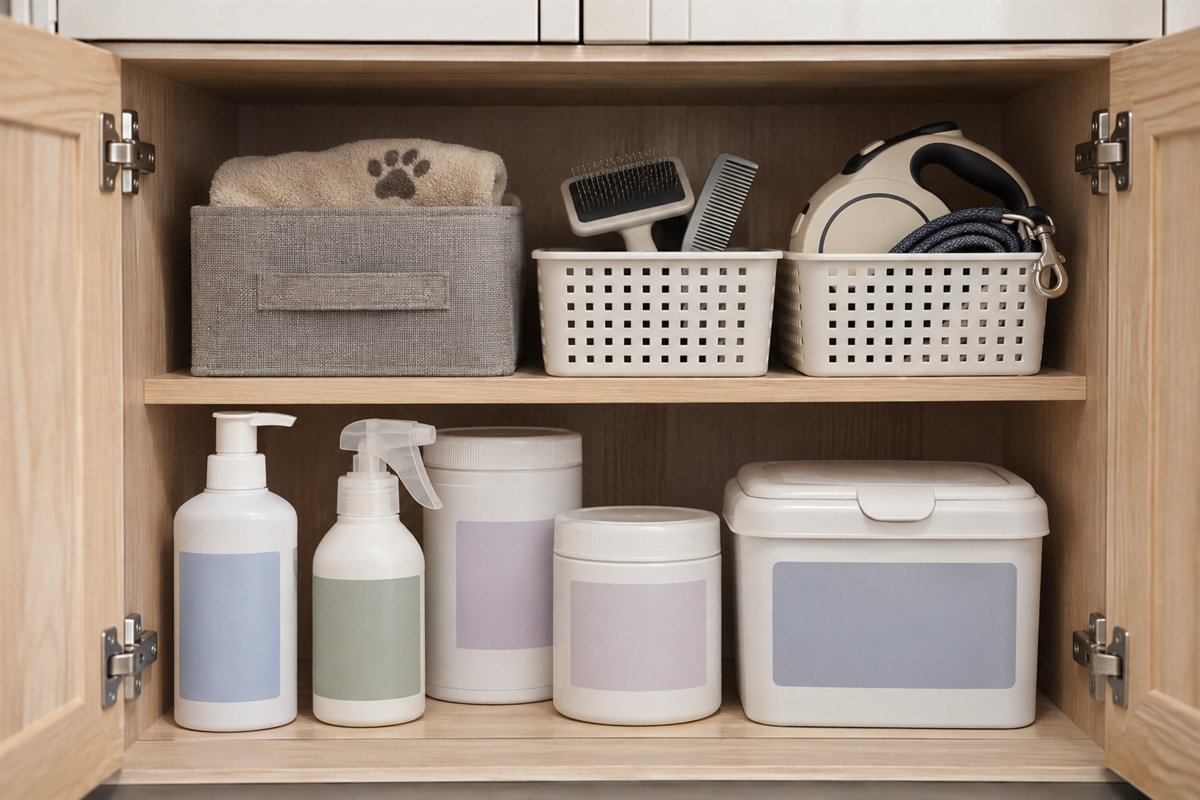
Care products should remain identifiable, with their own use and storage instructions intact. Keep them in an appropriate secure location and separate them from food, feeding equipment and ready textiles. Do not transfer an unknown product into an unmarked decorative bottle for a coordinated shelf. Compare the actual labels before grouping products together.
Try this: Keep the product information accessible to the responsible user.
11. Choose a toy container from the retained collection

A toy container should fit the actual retained toys without becoming a dense hidden pile. Compare its opening, edges and intended location with the household and animal using it. Keep unsuitable or damaged items out of the ready group. A small understandable collection is easier to review than a container that receives every object found on the floor.
Try this: Empty the container before deciding it needs to be larger.
12. Separate a supervised toy reserve
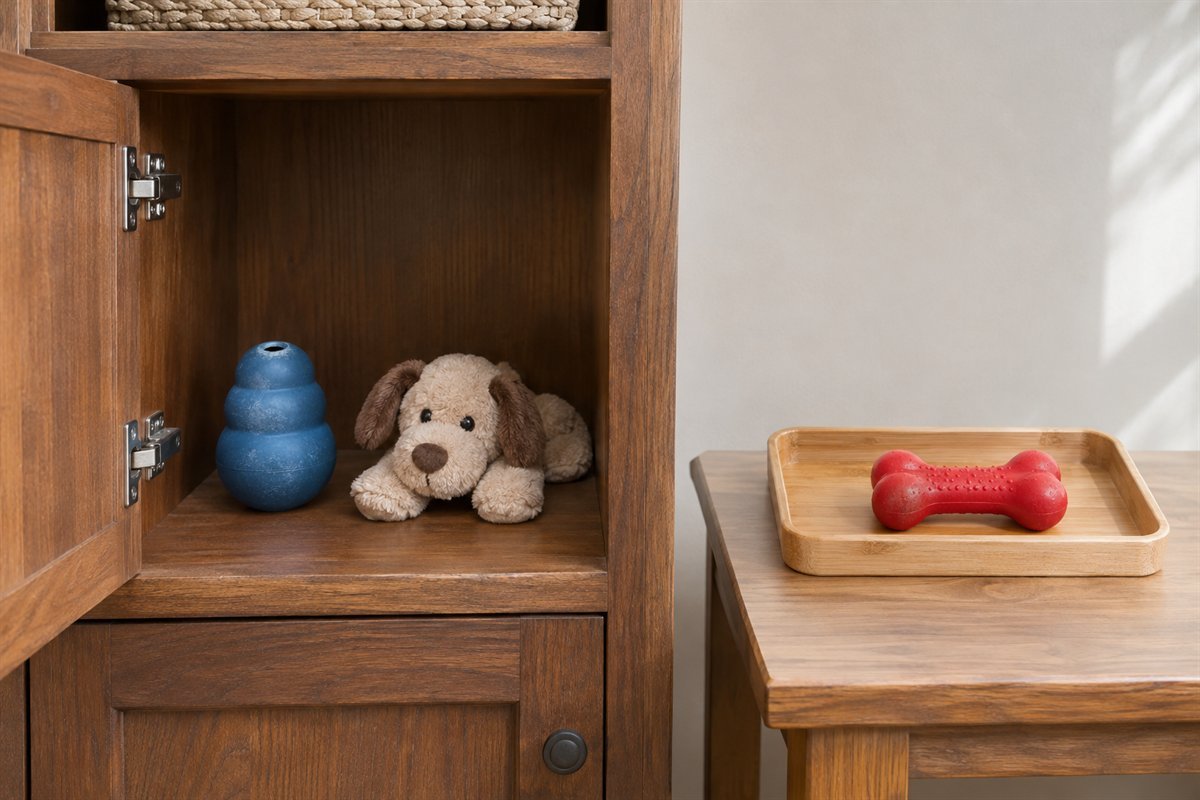
A reserve can keep some toys distinct from the current selection. Choose the arrangement around the individual animal and the toy instructions rather than promising that rotation will solve behavior concerns. KONG’s guidance emphasizes suitable products, inspection and supervision. Keep stored toys away from food and care chemicals, and review them before returning them to use.
Try this: Maintain a clear distinction between reserve and ready selection.
13. Give plush toys room for their care routine
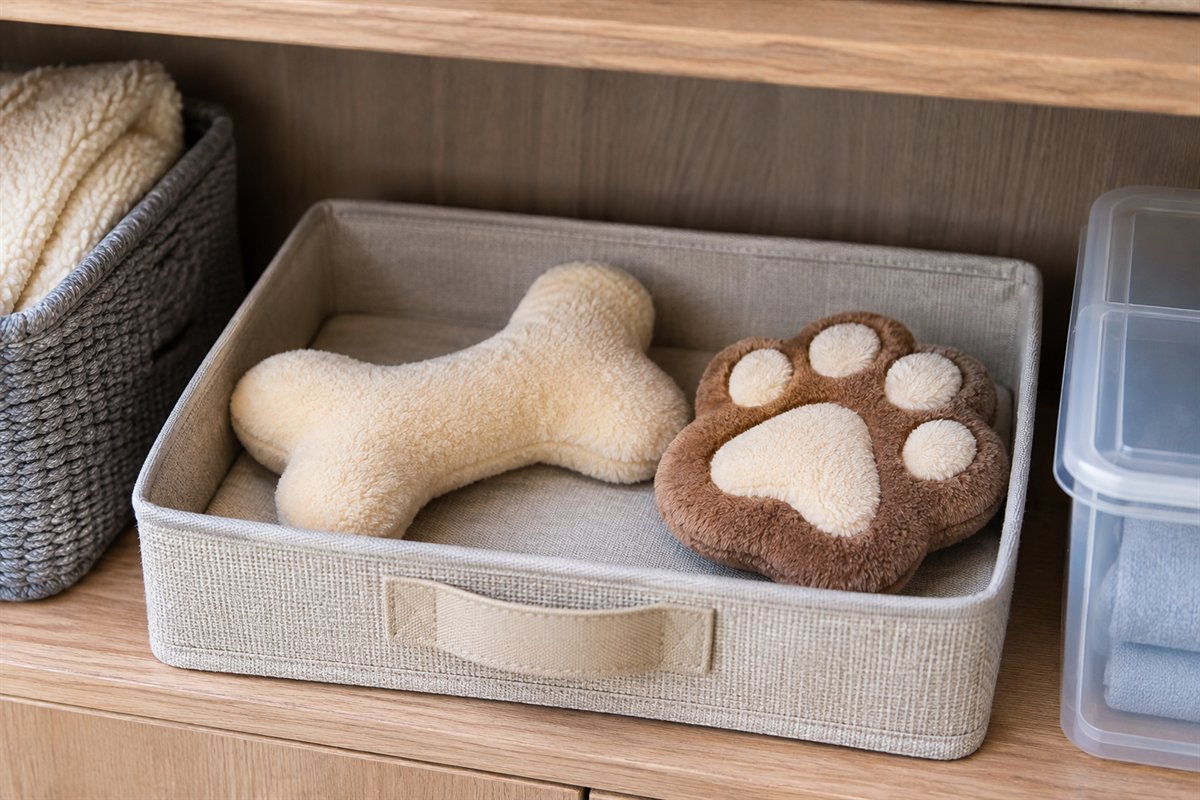
Plush toys can need different care from rubber or mixed-material products. Read the exact instructions before returning them to a closed container. Keep the group visible enough to notice changes in condition, and leave damaged toys outside ordinary play storage. Do not infer a universal washing method from the appearance of a soft fabric toy.
Try this: Keep the product’s care information with the household record.
14. Keep rigid toys from pressing into soft supplies

A separate compartment can stop rigid toys from disappearing under towels or pressing into delicate items. Choose a container suited to their actual shapes and product instructions. Keep the ready group limited to appropriate items whose care is complete. A neat arrangement should make condition checks easier, not hide worn surfaces at the bottom of a bin.
Try this: Lift each toy and check the whole visible surface as instructed.
15. Store puzzle toys with their permitted parts

A puzzle product is easier to prepare when its permitted parts remain together. Follow its instructions for disassembly, cleaning and storage, rather than removing pieces just to fit a smaller box. Keep any detachable components in appropriate secure housing. Avoid combining parts from different products merely because they look similar.
Try this: Record the exact puzzle identity before storing its instructions.
16. Keep food in its original identifiable packaging

Food packaging carries information that a decorative canister may lose. FDA recommends retaining the original bag or container and, when using an outer dry-food bin, placing the whole bag inside. Choose housing that suits the package and follow its storage instructions. Keep the supply secure from the pet rather than making food freely accessible as part of the display.
Try this: Preserve the product identity, lot and date information.
17. Give food utensils a separate clean home
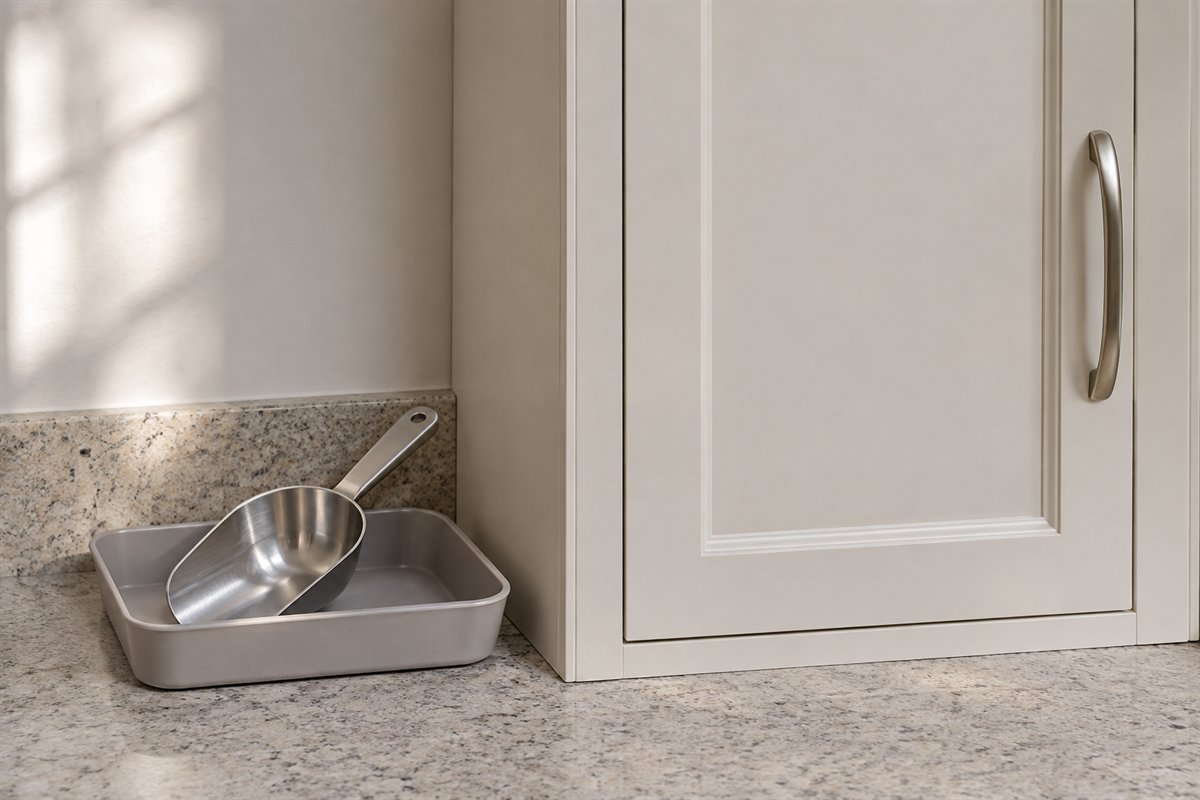
A dedicated scoop can have a defined clean return position separate from grooming tools and used feeding items. FDA’s handling guidance calls for cleaning food scoops and measuring utensils after use and using them only for pet food. Follow the actual product and household hygiene requirements. Storage should make that sequence easy to complete rather than conceal a used utensil.
Try this: Keep the clean utensil position visibly distinct from washing tasks.
18. Keep unopened supplies traceable

A modest unopened reserve is easier to review when the product and date information remain accessible. Follow each package’s storage requirements and avoid assuming every food type belongs in an ordinary cabinet after opening. Keep different products distinct. Review the real supply before a purchase instead of adding another package behind a row that has not been checked.
Try this: Keep labels visible without removing their original information.
19. Give treats their own secure position

Treats need their own appropriate identified storage rather than an anonymous jar on an animal-accessible shelf. Follow the product instructions and retain the useful packaging information. FDA advises securing treat supplies from pets. Keep the location understandable for the responsible household members, without turning the storage article into advice about portions, diets or individual feeding needs.
Try this: Check that the retained package can close as intended.
20. Keep feeding equipment separate from washing tasks
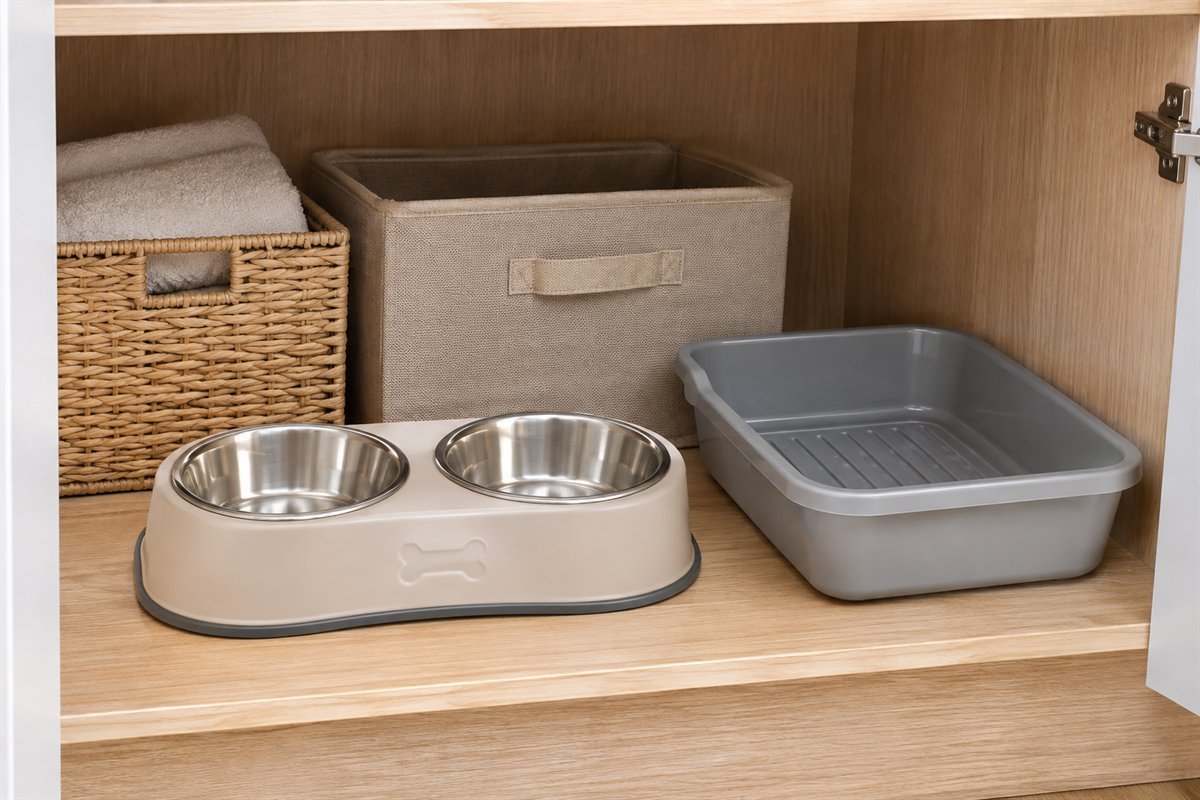
Clean feeding equipment can have a defined ready position while items awaiting washing follow a separate route. Choose a compartment that supports the complete bowls without crowding unrelated supplies. Follow the product and food-handling guidance for cleaning. A decorative feeding station and a cupboard are different tasks; plan the handoff without obstructing either one.
Try this: Return only equipment whose required care is complete.
21. Make a travel-supply checklist without storing a packed mess

A travel bag is easier to prepare when its ordinary contents have identifiable homes. Keep a checklist for the actual journey and animal, then review the bag before packing. Follow the destination and carrier requirements separately. Do not leave food, uncertain old supplies or products with special storage needs inside a permanently packed bag.
Try this: Check and empty every compartment after returning.
22. Keep household instructions with the supplies

A concise location record can help another responsible person find the right supplies. Include the appropriate product identity, storage position and instructions, while keeping private details suitably protected. Make different animals’ equipment understandable without relying only on memory. Medical records and treatment instructions belong in their appropriate separate system, not a decorative shelf checklist.
Try this: Test whether another household member can find one named item.
23. Separate the seasonal set from daily supplies

Occasional supplies can occupy a separate suitable container once their required care is complete. Keep the daily positions for items actually used and record what has moved. Choose the stored shape from the product instructions, not the tightest fold that fits. Review the collection before the season returns so an unsuitable or incomplete set is not simply carried forward.
Try this: Record the contents and the next review point.
24. Resolve items awaiting a decision
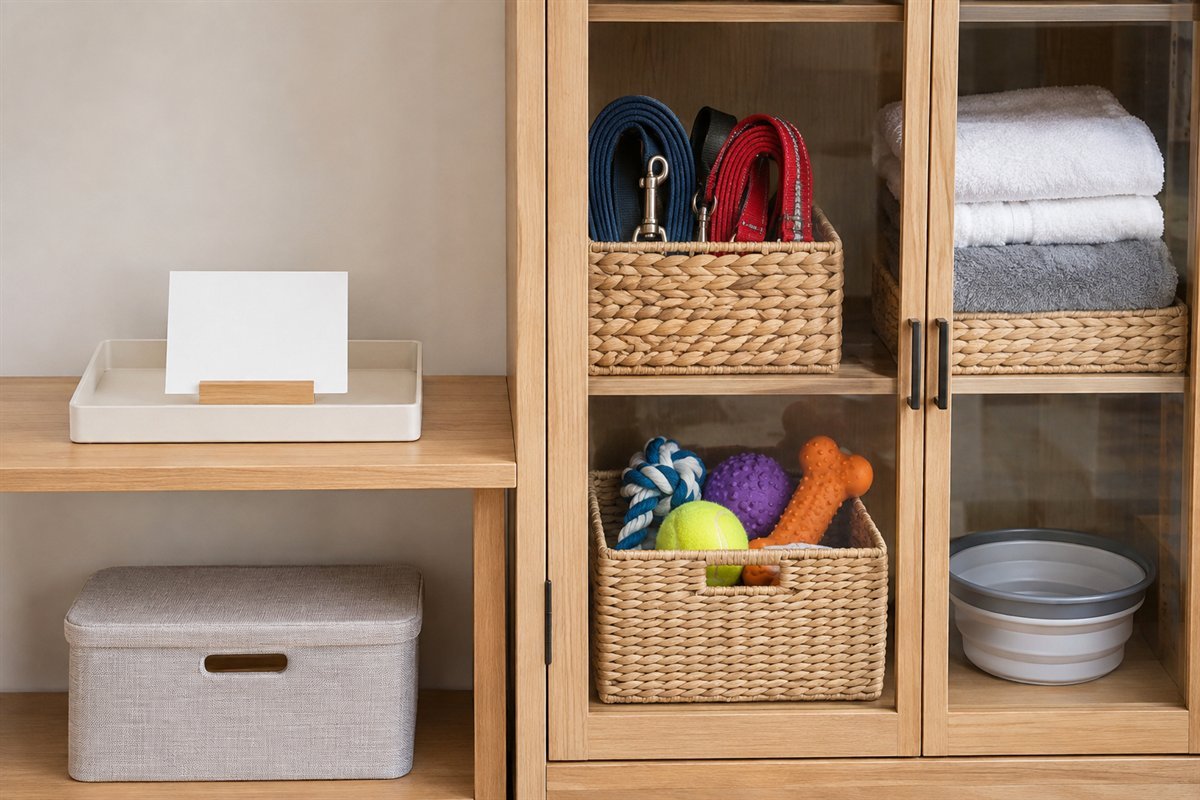
An item awaiting replacement, advice or another decision should not drift back into the ready group. Give it an appropriate distinct holding position and record the next action. Follow product guidance for damaged toys or equipment; putting an object in a clean basket does not make it suitable for use. Resolve the task before expanding the storage.
Try this: Review the unresolved group before buying another organizer.
A supply-location and return worksheet
Make one row for each ordinary task: supplies needed, exact location, required care before return, product instructions and next action. Keep the record concise enough to use. A hypothetical walking group might include the appropriate lead, harness and refill location; the actual equipment depends on the household and animal, not a universal packing list.
Measure the complete supplies before choosing bins. Compare a loose harness with the cabinet opening and the folded towel stack with the shelf height. Keep enough space to remove an item without emptying the neighboring group. A container count in a photograph does not establish capacity for a different collection.
Keep product information intact. FDA’s storage guidance explains the value of retaining food packaging details and using appropriate original packaging within outer housing. Follow the specific label and current guidance for food handling. This guide does not prescribe raw-food handling, treatment storage or a diet.
For toys, maintain a clear difference between items ready for appropriate supervised use and items removed for a decision. KONG’s own instructions distinguish care by product type and advise regular inspection. Use the instructions for the actual product rather than copying a method from a different material.
Test the system with another responsible household member. Ask them to find one supply and explain where it returns after use. Fix the unclear step before adding more containers. Keep private or medical information in the appropriate protected record, separate from a general cupboard location chart.
Should all pet supplies go in one cabinet?
Several tasks can share furniture when their requirements are met, but food, clean equipment, used textiles and care products need appropriate separation and storage. Choose from the actual products and household.
Can pet food be emptied into a decorative jar?
Follow the product label and FDA guidance. Retaining original packaging preserves useful product, lot and date information; FDA prefers placing the whole dry-food bag in an outer container when one is used.
Do pet supply storage ideas replace product care instructions?
No. The organizer supports the routine. Cleaning, inspection, secure access and storage conditions still come from the actual product and appropriate guidance.
A practical next step
Choose pet supply storage ideas that keep everyday tasks clear: ready walking equipment, a clean textile group, appropriate toy storage and identifiable food supplies. Preserve product instructions and make the return routine as practical as the retrieval.
Keep the dog’s resting area usable within the room. Plan appropriate separate cat furniture and activity choices.
Images are original AI-generated household organization concepts, not photographs of tested products or evidence of suitability for an individual animal.
Sources and care references
- FDA: original packaging, product identity and appropriate pet-food storage
- FDA: dedicated food utensils and safe handling guidance
- KONG: product-specific care, inspection and supervision guidance
Optional digital guide for this topic
If you prefer a structured workbook, explore this related paid guide.