Hat and glove storage ideas should solve the small search that happens just before you leave: finding a complete pair, the hat you actually wear and a scarf that is ready to use. Start with the entrance used most often and the winter accessories retained by the household. Keep the daily selection modest, with a clear place for everything that belongs elsewhere.
These 22 options cover entryway containers, drawers, closet positions and seasonal routines. Choose a system suited to your actual garments and space. Recently used damp items need the appropriate care before returning to ordinary storage; an attractive basket is not a drying appliance. The images illustrate arrangements rather than tested products or verified installations.
Contents
- 1. Give each regular user a modest daily bin
- 2. Sort by accessory type for a shared collection
- 3. Use a shallow drawer to keep pairs visible
- 4. Fit dividers around the real accessory sizes
- 5. Keep knit hats in a gentle folded row
- 6. Give folded scarves a broad shallow home
- 7. Choose scarf hanging only when the garment permits it
- 8. Use intended hanging pockets for a small dry selection
- 9. Check an over-door organizer with the door operating
- 10. Make low cubbies understandable without overfilling
- 11. Keep bench storage separate from the usable seat
- 12. Reserve an accessible closet shelf for the daily set
- 13. Create a separate return place for items awaiting drying
- 14. Give bulky mittens a wider compartment
- 15. Keep small ear warmers in their own visible section
- 16. Pair gloves without adding damaging clips
- 17. Leave a modest visitor basket available
- 18. Give occasional activity accessories another home
- 19. Move clean seasonal extras into appropriate storage
- 20. Identify containers without labeling the fabric
- 21. Keep a small care-and-matching queue
- 22. Reset the system after a normal winter week
Plan hat and glove storage ideas around ready-to-wear accessories
Read each item’s care label before choosing a hanging, folding or drying method. Woolmark distinguishes folded knitwear from appropriately hung woven garments and advises drying wet wool away from direct heat or sunlight. Use those material-specific principles alongside the actual accessory instructions. Keep the ready-to-wear group separate from items still awaiting care.
Choose the storage arrangement from the household routine
- Several regular users: Compare a small personal container for each person.
- One shared collection: Use a few clear type-based groups.
- A spare shallow drawer: Keep complete pairs visible with suitable dividers.
- A narrow entrance: Compare an existing closet or intended hanging organizer before adding floor furniture.
- Seasonal overflow: Keep occasional accessories in appropriate separate housing and maintain a small daily set.
1. Give each regular user a modest daily bin

A personal bin can keep the daily hat and complete glove pair together when several people share an entrance. Size it from the actual accessories rather than an equal-looking row in a photograph. Keep the opening easy to reach and the contents below its usable rim. Give occasional items a different home so each bin continues to serve an ordinary departure.
Try this: Ask each user to retrieve and return the whole daily set.
2. Sort by accessory type for a shared collection

Type-based groups can suit one person or a household that shares accessories. Use only the categories that make selection easier, and keep complete pairs together within the glove group. A few visible sections often work better than many tiny compartments. Check that the largest retained item can be removed without lifting everything above it.
Try this: Choose the categories from how you look for an item on a cold morning.
3. Use a shallow drawer to keep pairs visible

A shallow drawer can keep small accessories visible without leaving them on the entry seat. Compare its usable depth with the folded contents and the closed front. Avoid creating a hidden lower layer that has to be emptied to find a pair. Check the open drawer against the entrance route, especially when someone is putting on shoes nearby.
Try this: Open the loaded drawer with the usual seat in use.
4. Fit dividers around the real accessory sizes
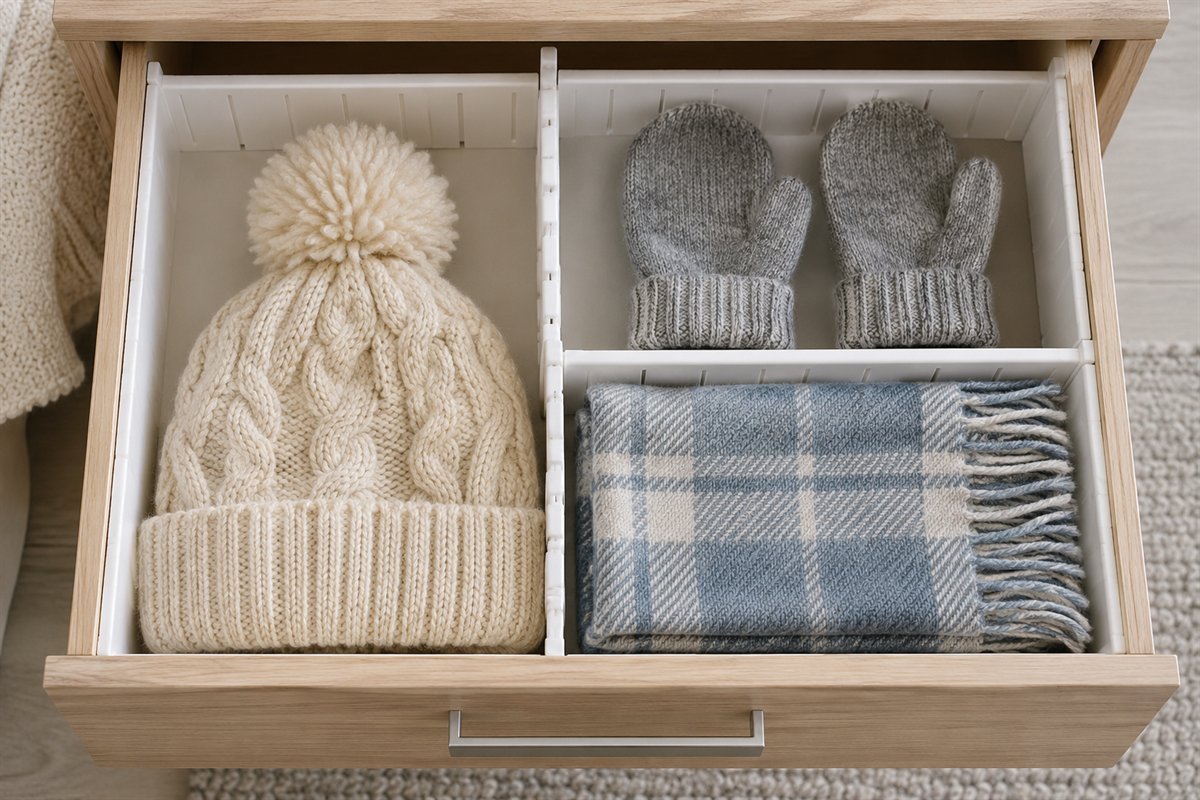
Dividers are useful when they clarify the groups without squeezing the garments. A bulky hat may need a wider compartment than a light glove pair. Compare the actual items and the drawer system’s permitted setup before buying inserts. The goal is a clear return place, not the maximum number of identical squares.
Try this: Arrange the accessories once in the empty drawer before deciding the divider positions.
5. Keep knit hats in a gentle folded row

A folded row can make knit hats easy to identify while giving each one suitable support. Follow the hat’s care information and avoid stretching its opening over a decorative peg by default. Woolmark’s general knitwear guidance favors gentle folding. Keep pom-poms or other projecting details in enough space rather than pressing them beneath a tight drawer top.
Try this: Test the bulkiest hat before assigning the rest of the row.
6. Give folded scarves a broad shallow home

A scarf’s length and thickness can make it awkward in a glove-sized compartment. Give suitable folded scarves a broad home that supports them without compressing the edges. Keep the group small enough to lift one easily. Follow the material’s instructions, especially for delicate surfaces, loose weaves or attached decoration.
Try this: Compare the proposed fold with the actual shelf opening.
7. Choose scarf hanging only when the garment permits it

A purpose-designed scarf holder can be worth comparing for woven items suited to that method. Check the contact surface, opening and usable hanging length with the actual scarf. Do not assume hanging is suitable for a heavy knit or delicate construction. Keep ends clear of the closet floor and neighboring door hardware.
Try this: Read the care label and inspect the contact point before choosing the holder.
8. Use intended hanging pockets for a small dry selection

Pockets can make a limited group visible when drawer space is unavailable. Choose an organizer intended for the location and permitted load, then compare the pocket opening with the actual items. Keep the contents easy to remove instead of pushing a bulky set through a narrow opening. Leave damp items to their appropriate separate care routine.
Try this: Fill one pocket with the largest daily set before planning the rest.
9. Check an over-door organizer with the door operating

An over-door organizer needs to suit the actual door, frame and contents. Check its full projection and the way the door opens and closes. Contain loose scarf ends so they do not catch in hardware. A system that removes floor clutter is useful only when it preserves the closet’s ordinary operation and access.
Try this: Operate the door with every intended pocket filled.
10. Make low cubbies understandable without overfilling

A reachable cubby can make a personal accessory group easy to return. Keep the arrangement appropriate for the people using it, with no universal height rule inferred from a photograph. Give the basket a clear daily job and retain its handhold. Use furniture as intended and follow any required restraint instructions.
Try this: Check that the basket can be returned without catching on the shelf above.
11. Keep bench storage separate from the usable seat

A storage bench can support the arrival routine when its seat remains available. Put suitable clean accessories in the intended compartments and keep drawers clear of someone’s legs. Follow the product’s seating and loading requirements; a low shelf should not be treated as a bench because it looks similar. Test storage and sitting together.
Try this: Sit down and retrieve a hat without moving a pile from the cushion.
12. Reserve an accessible closet shelf for the daily set

A useful closet shelf can provide the daily accessory position without adding furniture to a narrow entrance. Compare reach, the tray opening and the neighboring clothes. Keep the set where it can be found during an ordinary departure, not behind occasional luggage. An existing suitable shelf may be enough when the collection is deliberately limited.
Try this: Retrieve the set while carrying the bag normally used at that entrance.
13. Create a separate return place for items awaiting drying

Recently used damp accessories should follow their own care instructions before joining the ready-to-wear group. Provide an appropriate place for that step, separate from closed containers. Woolmark advises room-temperature drying away from direct heat and sunlight for wet wool. The correct method can differ for leather, technical fabric and mixed materials; do not improvise from the picture.
Try this: Decide where the items will wait before the first wet-weather arrival.
14. Give bulky mittens a wider compartment
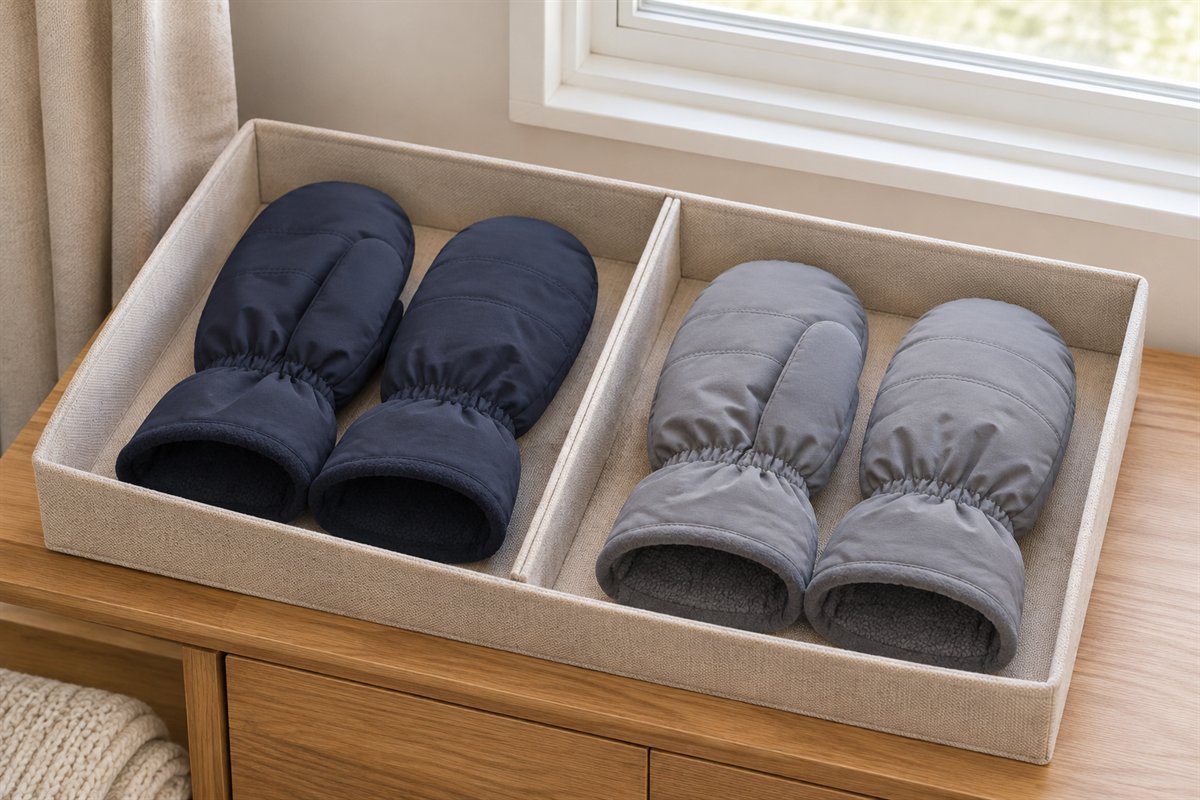
Bulky mittens can make a standard small divider inconvenient. Compare their actual shape and any permitted storage position with a wider opening. Keep the two parts of each pair identifiable without trapping them beneath several other sets. Specialized gear should follow its maker’s drying and storage instructions rather than being treated as ordinary knitwear.
Try this: Close the drawer gently with the largest pair in place.
15. Keep small ear warmers in their own visible section
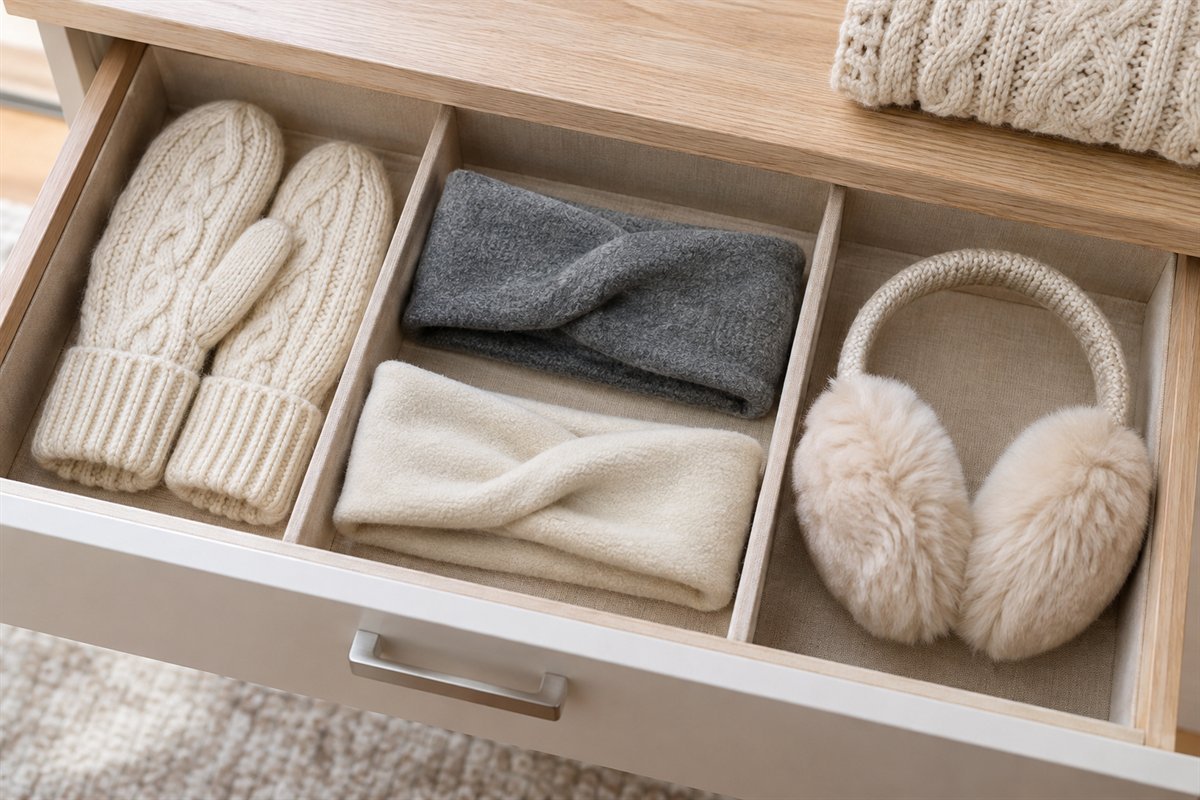
Small winter accessories can disappear into a pile of scarves. A limited dedicated section can help when those items are used regularly. Compare the support and closed height with the actual construction, especially rigid earmuffs that may not fold. Avoid forcing a shape change merely to match the neighboring compartments.
Try this: Give each unusual item a position from which it can be recognized immediately.
16. Pair gloves without adding damaging clips

Keep each pair together through its location rather than assuming a pin, strong clip or tight band suits the material. A small tray can be sufficient for a modest collection. If you use a pairing accessory, check that it is intended for the garment and does not catch or compress it. Separate uncertain singles for a short review.
Try this: Return the pair together after its appropriate care step.
17. Leave a modest visitor basket available

A visitor position can be useful when it is clearly separate from the household’s daily collection. Keep its capacity modest and its purpose easy to explain. Do not let it become permanent overflow for unmatched gloves. Choose a location that does not occupy the entry seat or interfere with the route used by guests.
Try this: Empty the visitor space again after the visit.
18. Give occasional activity accessories another home

Occasional outdoor-activity gear can crowd the daily entry set even when it is useful to keep. Give it another suitable home and retain the relevant maker’s instructions. Keep it ready for its actual activity without mixing specialist care requirements into a general hat basket. The separation helps the everyday group stay easy to inspect.
Try this: Review how often the item leaves the house before assigning the easiest position.
19. Move clean seasonal extras into appropriate storage

Seasonal extras can leave the daily entrance once they are ready for storage according to their care guidance. Woolmark advises cleaning wool garments before longer-term storage and checking their condition periodically. Choose the housing for the actual material and keep it identifiable. Do not apply one compression or hanging method to every accessory simply because the container has spare space.
Try this: Keep a short contents record so stored extras are not bought again unnecessarily.
20. Identify containers without labeling the fabric

A clear container label can explain where an accessory belongs without putting adhesive onto the garment. Choose an ordinary description, person or broad category that the household understands. Keep the visible side legible from the retrieval position. An elaborate color code is unnecessary when two simple labels would solve the search.
Try this: Test the names with the person who normally puts the accessories away.
21. Keep a small care-and-matching queue
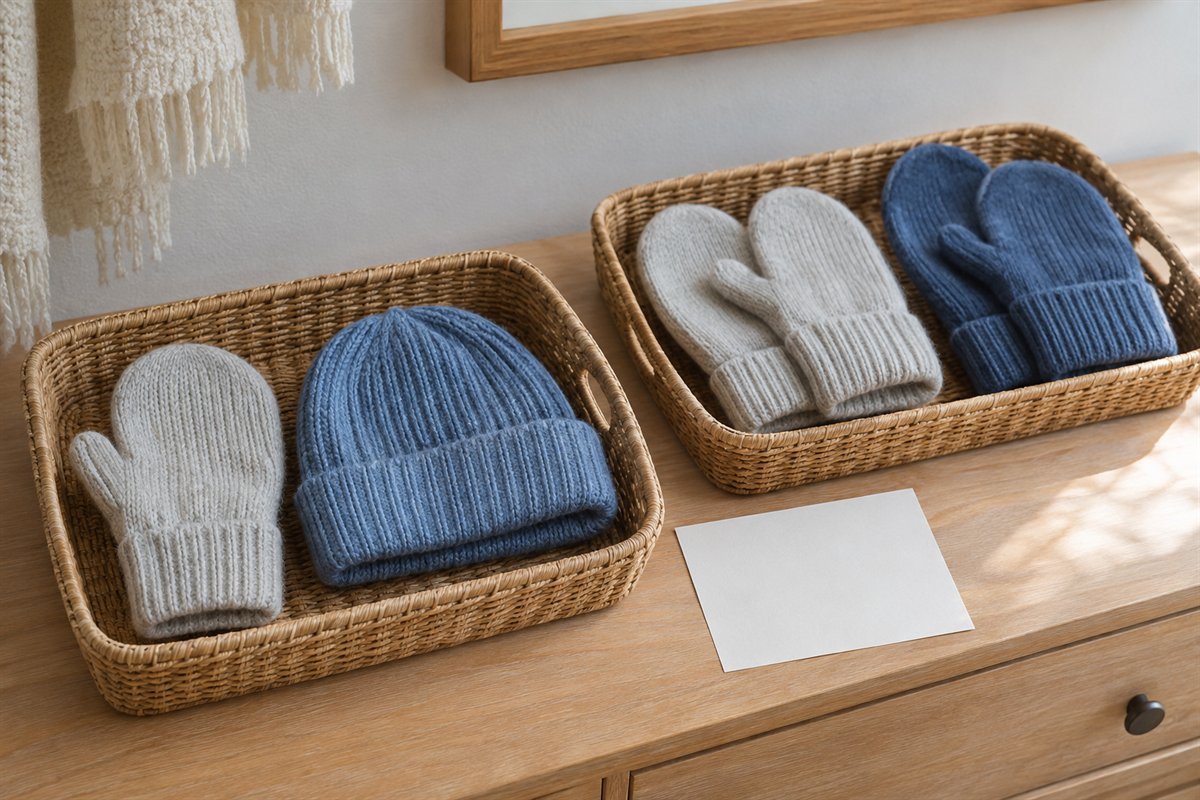
Give a missing mate or an item awaiting care a temporary identifiable position. Keep it outside the ready-to-wear group so the daily basket does not imply that everything inside is usable. Record what needs checking and resolve it through the appropriate care or repair method. Put a modest limit on the queue so it does not become another permanent pile.
Try this: Review the queue during the next ordinary laundry or wardrobe-care session.
22. Reset the system after a normal winter week

Look for the pair that is repeatedly missing, the basket no one returns and the scarf that catches in a door. Make one useful change from those observations. Reduce the daily contents or move one compartment before adding another organizer. Good hat and glove storage ideas make the whole departure-and-return routine more repeatable.
Try this: Keep the arrangement that remains easy to restore after an ordinary busy day.
A ready-to-wear accessory map
List each regular user or the shared accessory types, then write the small set actually used most often. Record the bulkiest folded hat, complete glove pair and scarf. Add any material-specific care needs and the location of relevant instructions. Treat uncertain care requirements as a question to resolve, not a reason to apply the same routine to everything.
Choose one main return position and one appropriate place for items still awaiting care. Trace the arrival sequence: remove the accessories, assess what needs drying or cleaning, then return the ready items. Reverse the route for a normal departure. If the daily set requires opening several unrelated containers, simplify the grouping before buying more storage.
Measure useful compartment dimensions and include the surrounding movement. A drawer needs its full extension; a pocket needs room for removal; a basket needs a handhold; an over-door organizer needs the door to work. These checks are about fit and use, not furniture loading or installation approval. Follow the exact product requirements separately.
For a simple hypothetical example, three regular users with one daily set each may suit three modest personal positions. That does not establish a basket size or require buying a three-bay unit. The actual folded garments, reachable location and daily routine determine whether the idea works. Keep occasional accessories elsewhere and review the arrangement when the weather or household schedule changes.
Should hats and gloves be stored by person or by type?
Choose the arrangement that matches how the household retrieves them. Personal bins can suit several regular users; a few type-based sections can suit a shared collection. Test returning complete pairs before deciding.
Can damp gloves go straight into a closed basket?
Follow the item’s drying and care instructions before ordinary closed storage. Keep items still awaiting that step separate from the ready-to-wear group; a storage basket is not a drying system.
Can these hat and glove storage ideas work without a mudroom?
Yes. Compare a modest existing drawer, suitable closet shelf or intended hanging organizer. Check the complete contents and retrieval movement before adding furniture to a narrow entrance.
A practical next step
Choose hat and glove storage ideas from the daily accessories and the entrance actually used. Keep complete ready-to-wear sets visible, respect material-specific care and use a small return routine to maintain the arrangement.
Choose a coat rack that keeps the occupied entrance usable. Plan larger mudroom locker bays around coats and bags.
Images are original AI-generated winter-accessory organization concepts, not tested products, verified installations or demonstrated drying systems.
Sources and care references
- Woolmark: knitwear folding, care labels and drying away from heat
- Woolmark: preparation and review of seasonal wool storage
Optional digital guide for this topic
If you prefer a structured workbook, explore this related paid guide.