Yarn storage ideas should help you answer three everyday questions: what is this yarn, how much is available and where will it return after a project? A beautiful color wall can still be frustrating when labels are missing or reserved skeins have been mixed into general stock. Begin with the yarn you actually own and the projects you make.
These 24 concepts combine practical storage formats with an inventory and return routine. Choose containers and conditions appropriate to the actual yarn and follow furniture and product guidance. The article does not claim that a decorative lid, cedar accessory or airtight-looking box guarantees preservation or pest protection.
Contents
- 1. Choose one defined home for the main collection
- 2. Use shallow removable boxes for everyday choices
- 3. Keep a drawer to a readable layer
- 4. Sort by fiber needs before refining the color display
- 5. Use yarn weight as a practical comparison group
- 6. Arrange color within an already identified group
- 7. Keep dye-lot information beside the actual skeins
- 8. Reserve a complete planned project quantity
- 9. Give active work a dedicated project bag
- 10. Use a seating-side basket for the current session
- 11. Keep the next-project queue deliberately small
- 12. Give each closed container a simple inventory reference
- 13. Preserve a readable copy of the original band
- 14. Keep partial skeins linked to their identity
- 15. Group a small colorwork set without mixing the ends
- 16. Store a swatch with its useful project record
- 17. Create a short incoming-review position
- 18. Keep items needing attention apart from ready stock
- 19. Separate tools that can catch the yarn
- 20. Keep the back of a shelf part of the inventory
- 21. Use a cart only when it has a real parked position
- 22. Fit a closet compartment to the full removal movement
- 23. Make a small travel project easy to check
- 24. Review the collection before expanding the storage
Plan yarn storage ideas around identity, quantity and retrieval
Keep the original yarn information with the material, including the supplied care guidance. Craft Yarn Council distinguishes yarn-weight symbols from care symbols; the weight category does not tell you everything about a yarn. Review the actual collection and reserved projects before selecting shelf and box sizes.
Start with the question you need the storage to answer
- Which yarn can I use?: Preserve product identity and separate unassigned stock.
- Do I have enough for this project?: Record quantities and distinguish measured values from estimates.
- Where did I stop working?: Keep active work and a brief project note together.
- Where are the small leftovers?: Retain the linked identity with each partial skein.
- Will the organizer work in this room?: Test retrieval and return with neighboring furniture occupied.
1. Choose one defined home for the main collection
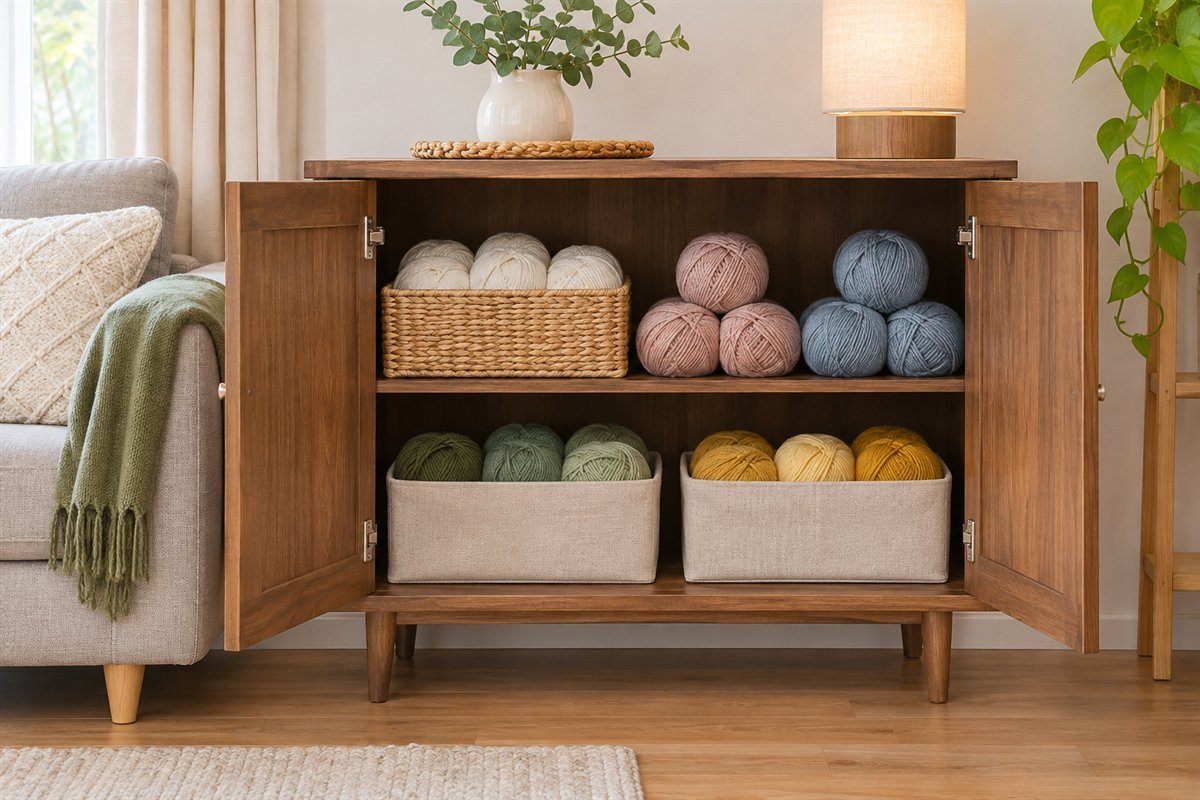
Bring the retained collection into one review before assigning a cabinet. Count the groups that need a place and measure their ordinary stored shapes. One defined home makes it easier to see whether a new purchase will fit. Keep the cabinet suited to the room, the actual materials and the furniture instructions rather than choosing it from a yarn-wall photograph.
Try this: Mark the main collection’s storage limit before buying containers.
2. Use shallow removable boxes for everyday choices

A shallow box can make one row of yarn easier to compare than a deep mixed tote. Test it with the skein sizes you actually own and leave enough room for direct removal. Choose a suitable lid and storage environment for the yarn. Transparency helps identification, but it does not establish protection from sunlight, moisture or pests.
Try this: Remove the middle skein with both neighboring groups in place.
3. Keep a drawer to a readable layer

A drawer can suit a small collection when the yarn is visible without lifting several layers. Compare its internal height with the actual skeins and keep the closure free from loose ends. If the useful group only fits when compressed, reduce the quantity or choose another compartment. A neat top layer should not conceal an unknown collection underneath.
Try this: Check the loaded drawer through its full opening and closing movement.
4. Sort by fiber needs before refining the color display

Begin with the information on the yarn’s original packaging and any maker guidance. Materials with different care or storage needs should remain identifiable even when their colors are similar. Then choose the organization that supports your projects. A continuous rainbow is less useful if it makes two different yarns indistinguishable or separates the information needed for a finished item.
Try this: Keep the original band with the group before arranging its color order.
5. Use yarn weight as a practical comparison group

When you often choose a project by yarn thickness, a weight-based group can make the first comparison easier. Craft Yarn Council describes the numbered yarn-weight symbols used on labels. Keep the actual label rather than judging from a photograph or an informal name alone. Similar category numbers do not replace the pattern’s yarn requirements or a suitable gauge check.
Try this: Keep the category information accessible without opening every skein.
6. Arrange color within an already identified group

Color sorting can become useful once the yarn type and intended use are clear. Keep the groups small enough that choosing a shade does not require unloading the whole shelf. Preserve different product identities within the color family. A few readable related tones can work better than a precise display that is difficult to restore after one project.
Try this: Return one skein after use and see whether the color grouping stays understandable.
7. Keep dye-lot information beside the actual skeins

A color name alone may not provide all the identification needed for a project. Retain the dye-lot information where it is supplied, together with the product name and color reference. Keep matching project quantities together rather than distributing them for a prettier shelf. Do not assume that visually similar skeins from separate purchases will behave or look identical in the work.
Try this: Check the identifying bands before adding another matching-looking skein.
8. Reserve a complete planned project quantity

A planned project deserves a distinct reserved group so its yarn is not accidentally used elsewhere. Keep the chosen pattern reference and the actual quantity information with that group. Verify the requirements before beginning rather than relying on a general basket size. Leave unrelated tools and samples in their own places so the reserved yarn remains easy to count.
Try this: Record the project name and what is reserved before returning the bag.
9. Give active work a dedicated project bag

Keep the current yarn, work and essential project information together in a suitable bag. Choose the bag from the real work’s shape and handling needs. A small pouch for appropriate accessories can help, while sharp tools still need their proper secure storage. The goal is to restart the project without searching the main collection for the last-used yarn.
Try this: Add a brief stopping-point note before putting the project away.
10. Use a seating-side basket for the current session

A basket beside the chair can serve a current session without becoming the permanent home of every skein. Check that its surface and openings do not catch the actual yarn. Keep the room’s normal route clear and return the group to appropriate storage afterward. An open decorative basket is a working convenience rather than a universal long-term preservation method.
Try this: Put away everything that is not part of the current project.
11. Keep the next-project queue deliberately small

A separate next-project group can make the upcoming work visible without mixing it into the active bag. Limit the queue to plans you can identify and review. A growing stack of unspecified future projects makes it harder to know what yarn is available. Keep reserved and unassigned material distinct so a shopping decision does not depend on memory.
Try this: Review the next-project group before reserving another one.
12. Give each closed container a simple inventory reference

Use a short reference that connects the container to a simple inventory. The record needs to answer where a yarn is and whether its quantity is already reserved. It does not need to document every imaginable characteristic. Keep the naming system consistent enough that another household member or your future self can return the same box correctly.
Try this: Use the same reference on the box and its inventory entry.
13. Preserve a readable copy of the original band

Keep the original yarn band whenever possible and make a readable backup if the working label is likely to separate from the skein. Include the information actually supplied rather than filling gaps from appearance. Craft Yarn Council explains that care symbols carry guidance for the finished item. Retaining that information can also help when a handmade piece is given to someone else.
Try this: Check that the backup can be connected to the correct skein.
14. Keep partial skeins linked to their identity

Leftover yarn becomes more useful when its identity remains attached to the remaining material. Keep the band or a linked record with each partial skein. Distinguish a measured remaining quantity from a visual estimate. Do not automatically treat a small ball as suitable for every scrap project; the intended work still needs compatible material and enough yarn.
Try this: Update the remaining quantity before returning the partial skein.
15. Group a small colorwork set without mixing the ends

A colorwork or small multicolor project can have one combined outer group with the individual yarns still separated. Keep enough information to identify each material and its role. Avoid winding unrelated leftovers together simply to reduce the number of objects. A readable group should make the next color easy to choose and return without creating a knot of loose ends.
Try this: Check that each color can be lifted independently.
16. Store a swatch with its useful project record

A retained swatch can be useful when its yarn and project information remain available. Give it a suitable supported position rather than stuffing it into the bottom of a yarn bin. Record what the sample actually represents and how it was handled. Do not present an unidentified swatch as a reliable gauge reference for a different yarn or project.
Try this: Keep the sample and its identifying record in the same small group.
17. Create a short incoming-review position

An incoming tray gives new material a place to be identified before it joins the collection. Compare the purchase with its intended project and assign its inventory reference. Inspect the material and follow appropriate guidance if anything needs attention. Keep the tray temporary so it does not become another untracked collection outside the main storage limit.
Try this: Enter the storage destination before moving the yarn into the cabinet.
18. Keep items needing attention apart from ready stock

If yarn is unidentified, damaged or awaiting an appropriate assessment, keep its status clear instead of quietly returning it to ready stock. Follow the relevant maker or specialist advice for the actual problem. This guide does not prescribe pest treatments or recovery methods. A separate review group is useful only when it leads to a decision rather than hiding unresolved material.
Try this: Add the next action to the record instead of giving the group a vague miscellaneous label.
19. Separate tools that can catch the yarn

Tools and yarn can share a project area without sharing an unprotected compartment. Keep pointed, sharp or snag-prone items in suitable secure storage according to the actual product and household needs. Check the loaded bag before carrying it. A decorative pocket does not establish appropriate containment, especially in a room used by children or pets.
Try this: Lift the yarn out once and check that it does not catch on a tool.
20. Keep the back of a shelf part of the inventory

A deep shelf can hide an entire second collection behind its attractive front row. If you use that rear area, make the retrieval deliberate and give it a clear inventory reference. Otherwise, leave the unused depth open. Having less on one shelf can be more useful than a dense arrangement that produces duplicate purchases because the back cannot be seen.
Try this: Check every stored group without rearranging the whole front row.
21. Use a cart only when it has a real parked position

A cart can move a small project group between useful work positions. Choose it for the actual loading, floor and route, and follow its instructions. Give it a parked position before filling its tiers. If it spends most of its time obstructing a chair or doorway, a removable project bag may solve the same problem with less furniture.
Try this: Test the occupied cart both parked and in use.
22. Fit a closet compartment to the full removal movement

A closet can house yarn where its actual conditions and storage method are suitable. Measure the opening with the box lid, handles and neighboring clothes considered. Keep the collection identifiable without bringing every container into the room. Do not assume a closed door establishes suitable temperature, dryness or material protection; assess the actual location.
Try this: Remove and replace one loaded container with the surrounding closet in normal use.
23. Make a small travel project easy to check

A travel group should contain the yarn and information needed for the specific work, with tools carried according to applicable rules and product requirements. Keep the remaining main stock at home in its proper place. Use a short check before leaving and returning so the project does not lose its label or accessory group between locations.
Try this: Check the yarn, project note and closed tool case as three separate items.
24. Review the collection before expanding the storage

Review what is unassigned, reserved, partly used and no longer needed before buying another cabinet. Decide which items still serve realistic projects and handle transfers or disposal appropriately. Keep material identity with anything that leaves the collection. A clear storage limit makes the next purchasing decision easier without requiring a continually larger wall of yarn.
Try this: Resolve one unused group before adding another storage container.
A practical yarn inventory card before the next purchase
Give each retained yarn group one simple reference. Record the product and fiber information actually supplied, color reference and dye lot where present, yarn-weight category, care information and the storage location. Keep the original band or a readable linked copy with the material. Leave unknown information marked unknown rather than guessing from texture or color.
Next, record quantity in a way that is honest about its basis. Distinguish full unopened units from partly used material. If you measure a remainder, note the method and units; do not turn a visual estimate into an exact length. Keep the pattern requirements and any necessary gauge work separate from the storage record. A tidy inventory is not proof that a yarn is a suitable substitute.
Add one status: unassigned, reserved for a named project, in active use or awaiting review. This lets a shopping decision distinguish what is in the house from what is actually available. When work changes, update the status and return destination together. Keep sharp tools and small accessories in their own appropriate secure storage.
For an illustrative example, suppose a project plan calls for five matching units and you have reserved three unopened units. Record three reserved and a shortfall of two, then verify the actual yarn, color, dye-lot information and project requirements before buying. This is a hypothetical counting example, not a tested quantity or a promise that units from different purchases will match.
Finish with the storage location and the next review action. A useful record can be a small notebook, spreadsheet or simple set of cards; it does not require a new account. Check the entry before buying and update it after a project. Keep the routine short enough that the label and location stay connected during ordinary use.
Should yarn be stored by color or weight?
Choose the first grouping from the way you select yarn and preserve material identity and care requirements. Color can be a useful second grouping, but it should not make different yarns indistinguishable.
Does a clear lidded bin guarantee yarn protection?
No. Assess the actual material, container, location and relevant storage guidance. Transparency and a lid describe the organizer, not a tested preservation or pest-control result.
How can I stop buying duplicates?
Keep a small current inventory linking identity, quantity, reserved status and location. Review it before buying and update it when material enters or leaves a project.
A practical next step
Choose yarn storage ideas from the collection you use, then keep identity, quantity and project status connected. A manageable system that makes one skein easy to choose and return is more useful than a larger display that hides what is available.
Craft room storage ideas for the surrounding materials and workspace.
Images are original AI-generated organization concepts. They do not certify furniture capacity, material preservation or pest protection.
Sources and care references
- Craft Yarn Council: yarn-weight label symbols
- Craft Yarn Council: retaining care information for handmade items
- Yarnspirations: maker examples of stash organization
Optional digital guide for this topic
If you prefer a structured workbook, explore this related paid guide.