Pond ideas should connect the water surface with a garden you can use and care for. Begin with the intended view, the actual household and the kind of pond you want. A planted wildlife pond, an ornamental water garden and a fish pond have different needs; they are not interchangeable photographs.
These 24 original concepts compare shapes, finishes and garden relationships. They add a dedicated view-and-care brief to the broader water-feature guide. They are not instructions for excavation, waterproofing, electrical work, fish care or swimming-water design.
Contents
- 1. Start with the view from an ordinary room
- 2. Use a round pond as one complete focal shape
- 3. Let a rectangular pond relate to existing paving
- 4. Soften a planted border with an oval outline
- 5. Give an irregular pond a readable main curve
- 6. Keep one foreground edge visually quiet
- 7. Give a small in-ground pond its own complete setting
- 8. Relate a raised brick pond to the garden palette
- 9. Use a stone-faced raised form with a quieter top edge
- 10. Choose a purpose-suitable container as the whole pond
- 11. Let a trough shape lead a narrow planted composition
- 12. Include a gently sloping wildlife margin in the brief
- 13. Group marginal planting instead of hiding every edge
- 14. Balance lily-like leaves with an open water interval
- 15. Use different bank textures as related layers
- 16. Compare a separate damp planted area beside the pond
- 17. Keep a formal coping line continuous in the main view
- 18. Use a few stone groups rather than a uniform necklace
- 19. Repeat one paving material at the pond setting
- 20. Give a nearby seat a complete dry position
- 21. Route ordinary movement around the feature
- 22. Make one modest cascade an optional system choice
- 23. Keep the working side reachable behind a quiet screen
- 24. Check the pond composition when flowers are absent
Plan pond ideas around the site and the household
Resolve the full site, buried services, structure, water system, access controls and any local requirements with appropriate professionals before permanent work. Water can be hazardous, including in small or raised vessels; no concept image certifies protection. Choose plants through local guidance and their exact requirements, avoid inappropriate introductions and plan ongoing care before buying.
Choose the pond question before the decorative detail
- Mainly a viewed feature: Compare the water outline from an ordinary indoor seat.
- Wildlife purpose: Discuss margins, appropriate planting and local habitat needs before ornamental extras.
- Small setting: Compare one complete modest feature with the space needed to care for it.
- Raised or container form: Confirm the complete structure, vessel and support rather than copying its appearance.
- Movement and sound: Assess the actual system and maintenance before adding a cascade.
1. Start with the view from an ordinary room

Pond ideas become easier to compare when the intended view is specific. Photograph the garden from the window or seat used most often. Place a simple outline of the proposed water surface on that view before choosing an elaborate edge. A feature visible from home may be enjoyed even when the garden is not being used.
Keep practical siting separate from this visual trial. The preferred picture still needs a suitable location, full household access plan and workable care arrangement. A view through glass does not by itself make water accessible only to adults.
2. Use a round pond as one complete focal shape

A round outline can provide a clear center in a smaller composition. Compare it with the rectangular lines already present in the patio or boundary. Leave enough of the perimeter visually readable that the circle remains a deliberate shape rather than disappearing beneath unrelated objects.
Try the view with fewer accessories before adding an ornament in the middle. A circular surface and one considered planted backdrop may already do the visual work. This concept does not specify the pond structure or its depth.
3. Let a rectangular pond relate to existing paving
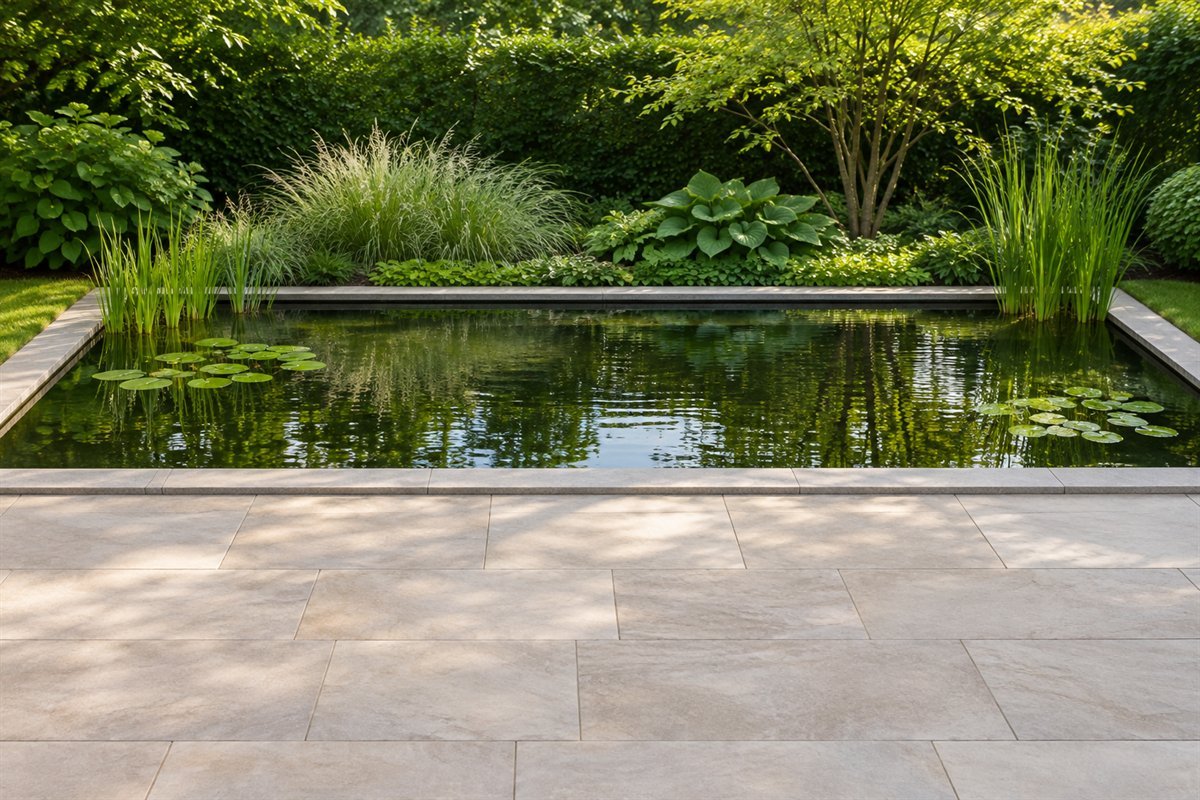
A rectangular pond can repeat the geometry of an existing patio without occupying the middle of the walking route. Compare the water line with paving joints and the main house view. Keep the composition legible as one water feature rather than a narrow accidental gap beside the building.
Resolve the actual separation from structures and the whole installation through the site plan. The picture is a visual relationship, not a drainage or foundation detail. A simpler rectangle can be preferable to several stepped shapes.
4. Soften a planted border with an oval outline

An oval pond can sit within a longer border while retaining a recognizable shape. Compare its long axis with the planting and the direction from which it will usually be seen. Avoid choosing a narrow end that disappears from the main view.
Keep the surrounding border purposeful when the water is not the brightest element. Repeated foliage groups can provide a quieter setting than a different ornament at every curve. Choose real planting through local growing advice.
5. Give an irregular pond a readable main curve
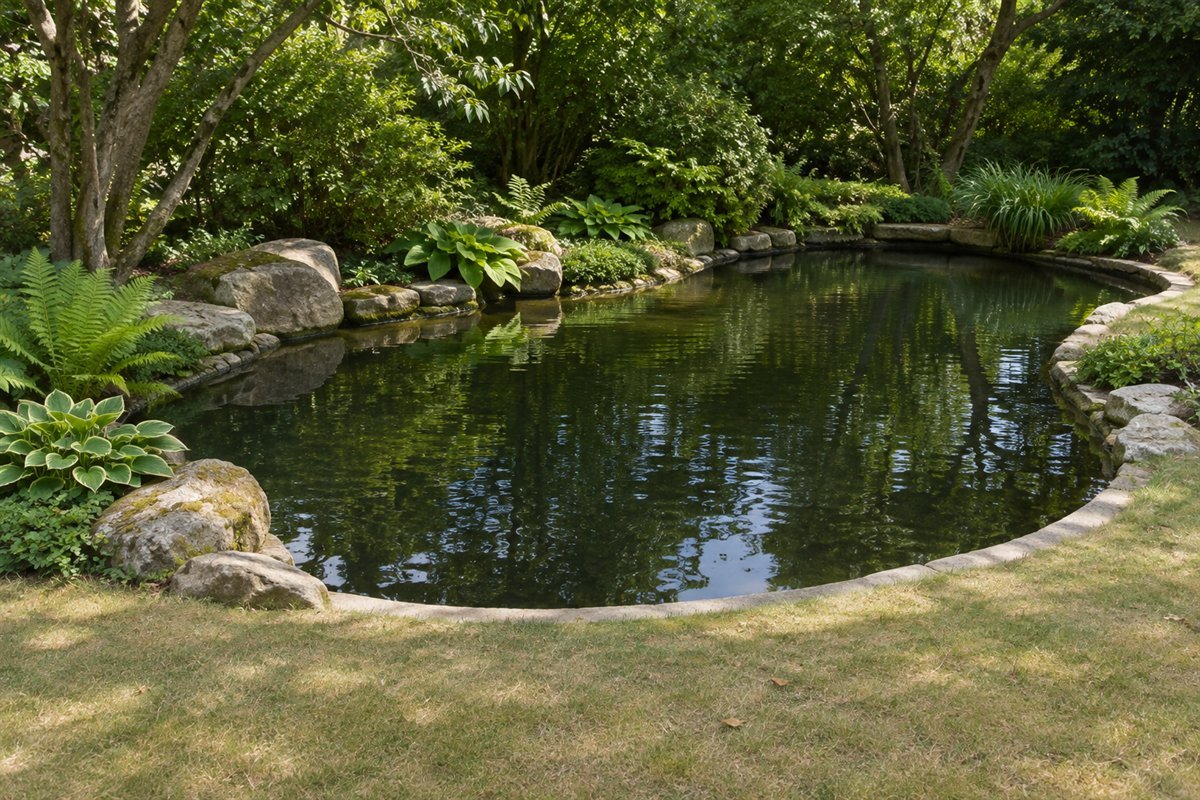
An irregular outline can relate to a less formal garden. Begin with one broad curve visible from the chosen viewpoint, then compare the smaller changes around it. Many tight indentations can make the pond difficult to read in a modest space.
Ask how each bay will actually be reached and maintained before keeping it. A natural-looking outline should not require an impractical care routine. Do not turn a decorative sketch into excavation instructions.
6. Keep one foreground edge visually quiet

A planted background and a simpler near edge can let the water remain visible from the main seat. Compare this with foliage surrounding the whole pond at the same height. The difference is especially noticeable when the feature is viewed from a low indoor position.
A quiet foreground is a composition choice, not permission to remove an appropriate protective arrangement. Have the required access controls resolved for the actual household. Keep that whole arrangement in the design rather than cropping it out of the plan.
7. Give a small in-ground pond its own complete setting

A small pond can feel intentional when it has a defined relationship with the surrounding border. Compare one complete water shape and one supporting planted area. Shrinking a large landscape photograph with several cascades and structures can produce a crowded result.
Check the real pond system and care needs independently of the apparent size. A compact photograph does not prove that the water is easy to manage. Keep fish out of the brief unless their specific needs have been properly assessed.
8. Relate a raised brick pond to the garden palette

A brick-faced raised pond can echo an existing garden wall while keeping the water feature visually distinct. Compare the actual brick color in daylight rather than matching it from a screen. A restrained coping can keep the composition from becoming a display of competing edge materials.
The raised form needs a complete suitable structure and waterproofing plan. Its height is not evidence of child protection. Keep required safeguards and care access separate from the decorative choice of brick.
9. Use a stone-faced raised form with a quieter top edge
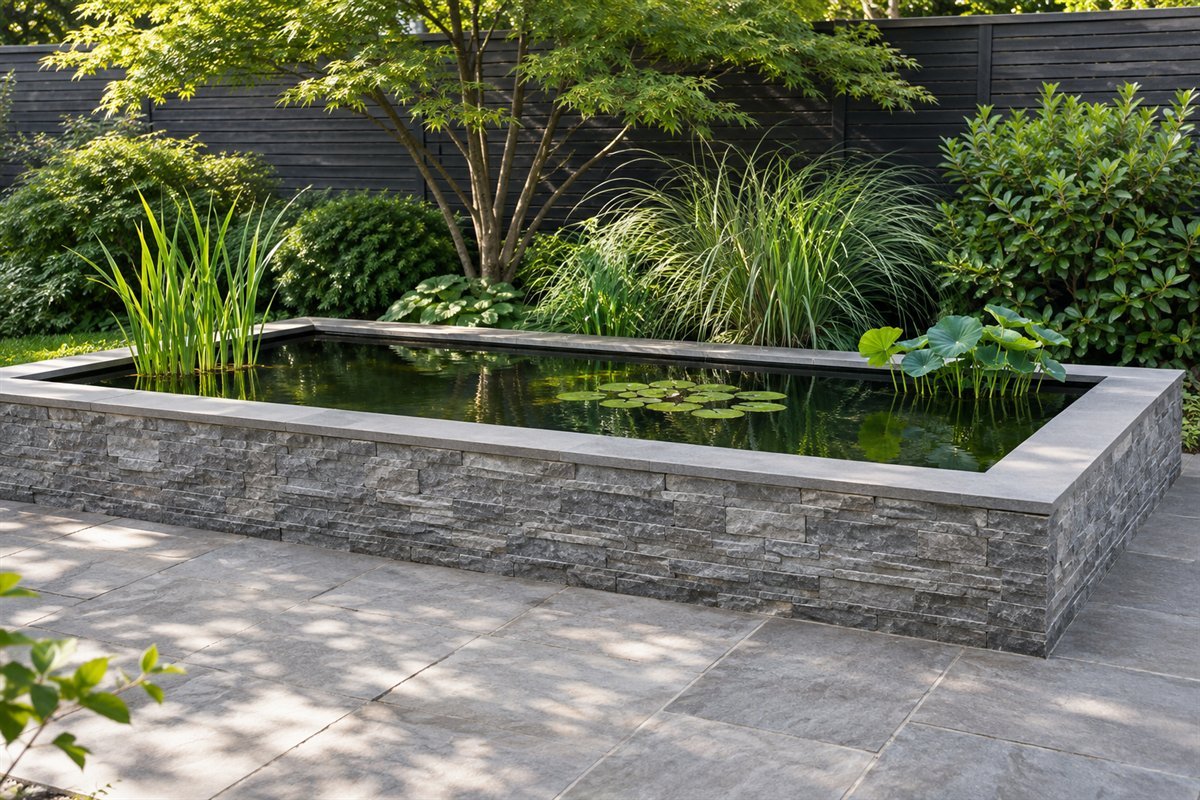
A stone-faced pond can work as a single solid garden element. Compare a textured vertical face with a simpler top line so both do not compete equally. Use a sample beside the retained paving before increasing the amount of stone around the garden.
Include inspection and future care in the full project. Do not conceal a practical access point simply to maintain a continuous decorative face. The image shows an appearance, not a tested construction detail.
10. Choose a purpose-suitable container as the whole pond

A container pond offers a different visual scale from an excavated feature. Compare a complete water-holding vessel with the surface supporting it and the surrounding garden. One substantial container may read more clearly than several unrelated small bowls.
Confirm suitability, support, weather exposure and the full water-care arrangement for the exact product. Do not assume an arbitrary decorative planter can hold water indefinitely. Keep household access considerations in the same decision.
11. Let a trough shape lead a narrow planted composition
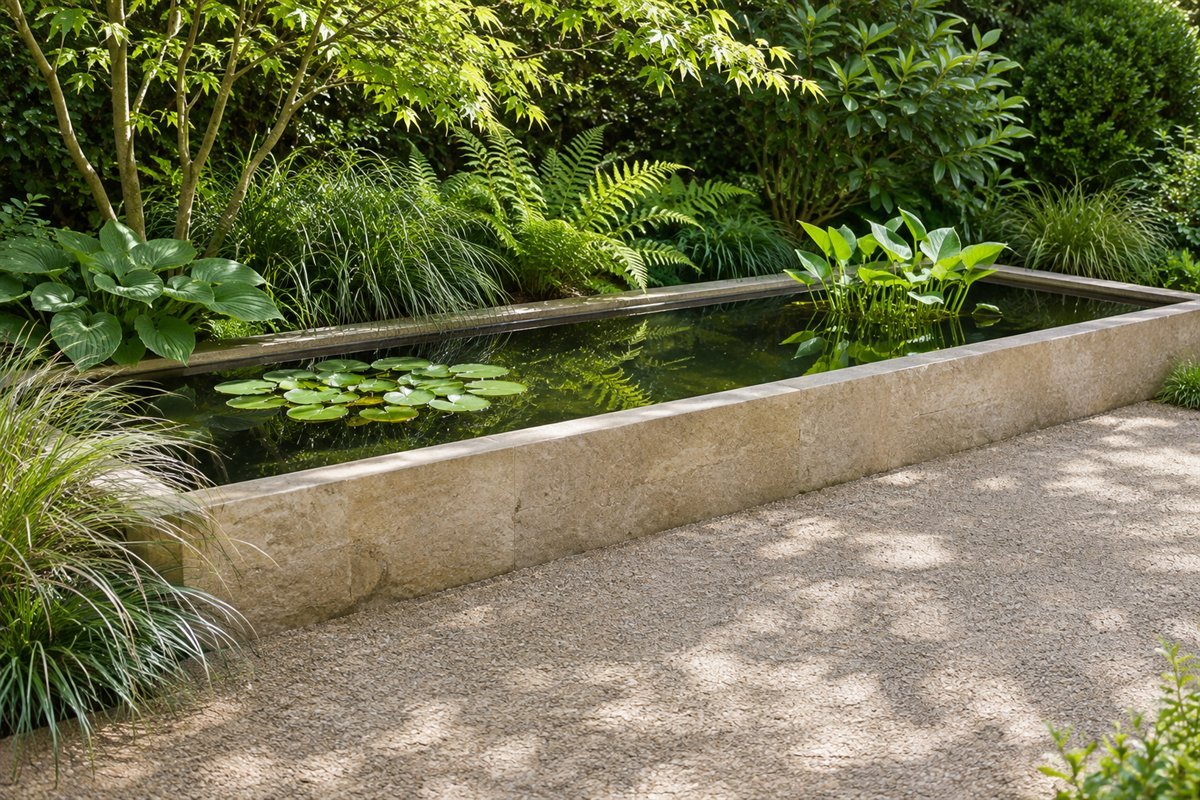
A long trough-like pond can provide a horizontal accent within a narrow viewed border. Compare its outline with a low planted backdrop rather than using it to narrow an essential passage. The feature should have its own place outside the main route.
Choose the complete vessel and support for the intended outdoor use. The visual concept does not establish that a reclaimed trough is watertight or suitable. Keep cleaning and water management practical along the full length.
12. Include a gently sloping wildlife margin in the brief
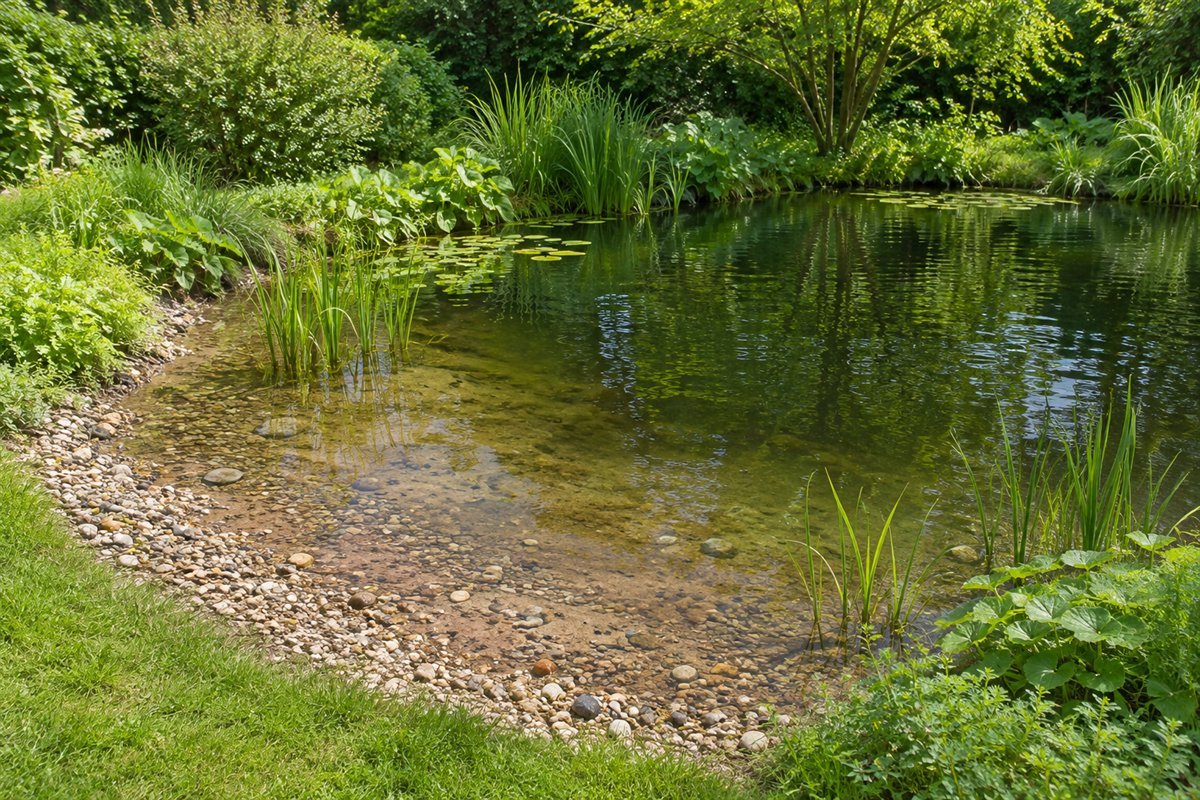
For a wildlife-focused pond, the meeting between land and water deserves its own design. RHS guidance highlights sloping access rather than treating a steep formal side as equivalent habitat. Discuss an appropriate shallow margin or escape arrangement for the complete pond.
Keep the ecological purpose explicit before choosing fish or decorative water effects. The illustration cannot establish a successful habitat or certified human protection. Ask local specialists about suitable plants and the actual site.
13. Group marginal planting instead of hiding every edge

A few deliberate planting groups can make the pond outline and foliage easier to see together. Compare the composition from the main view before distributing plants evenly all around it. Leave the selected water shape recognizable as the planting develops.
Choose exact aquatic plants for the actual depth, climate, spread and local restrictions. The concept uses plant forms rather than a verified species list. Keep future thinning and access in the same plan as the attractive first-season picture.
14. Balance lily-like leaves with an open water interval

Floating leaves can become a visual pattern on the water. Compare a limited patch with an open area that still reflects the sky. The relationship can be more considered than expecting the whole surface to remain either completely empty or completely covered.
Choose a real plant through local pond advice, including mature spread and ongoing care. This image does not identify a species or prescribe a coverage percentage. The desired picture should follow a workable living system.
15. Use different bank textures as related layers

Fine upright foliage, broader leaves and a quiet ground layer can give a pond setting depth. Compare a small number of repeated textures from the main view. The pond does not need a new plant type at every change in direction.
Select actual plants for compatible local conditions before choosing them solely through appearance. Keep the land planting and aquatic planting requirements distinct. A convincing concept image is not evidence that its depicted plants will grow together at your site.
16. Compare a separate damp planted area beside the pond
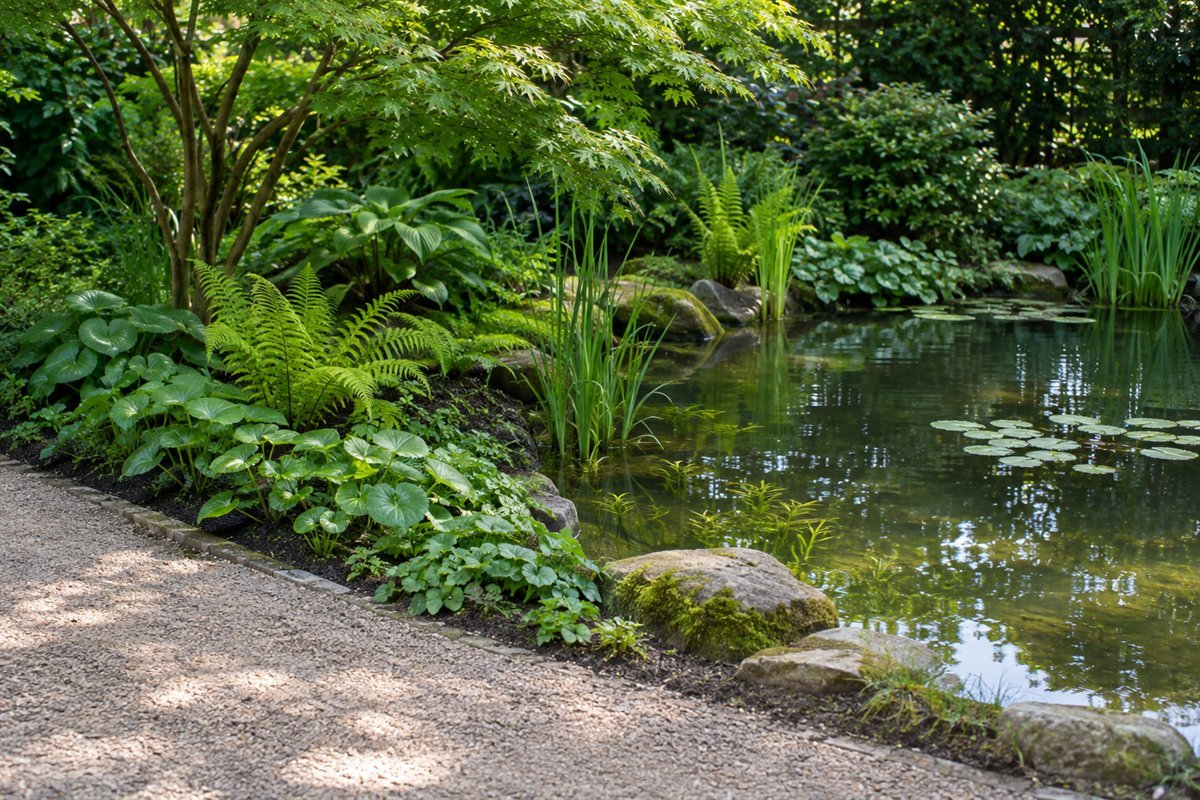
A damp garden area can provide a different planted texture beside a pond when the site and design support it. RHS water-habitat guidance distinguishes bog gardens from the water body itself. Keep that distinction in the brief rather than assuming any wet border is an overflow solution.
Have actual drainage and water relationships assessed. This concept supplies no stormwater-management design. Compare the visual connection while retaining practical access to both living areas.
17. Keep a formal coping line continuous in the main view

A plain coping can make a geometric pond feel deliberate. Compare its color and apparent thickness with the water surface and nearby paving. One continuous visual line may be enough without decorative trim, pots and lights competing along the same edge.
The complete edge still needs suitable detailing for its actual use and exposure. Keep the required protection and maintenance arrangements in the project. A clean line in a rendering does not establish material performance or appropriate access.
18. Use a few stone groups rather than a uniform necklace
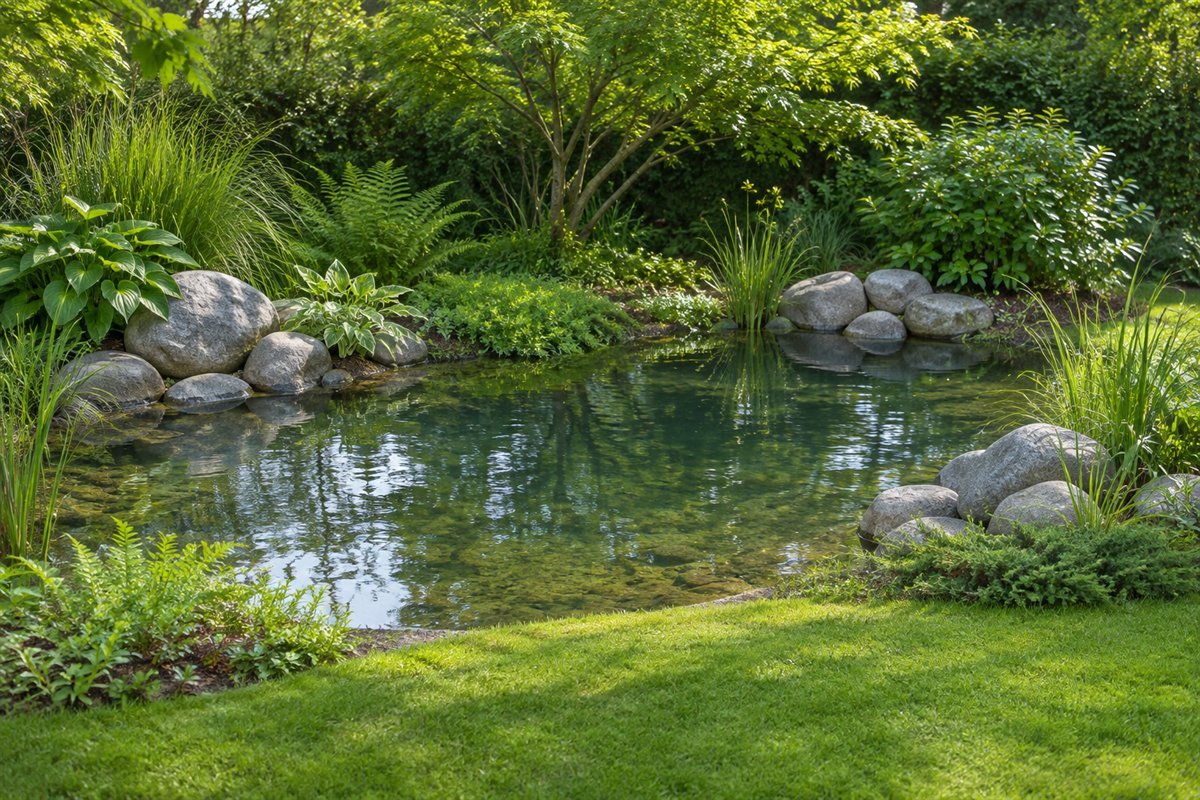
For a less formal pond, compare several coherent stone groups with an evenly repeated ring of identical pieces. The groups can give the edge a visual rhythm while allowing planted intervals. View them as part of the bank rather than isolated ornaments.
Keep real stone placement, support and the pond lining appropriately designed. A heavy-looking rock in an illustration is not a placement instruction. Avoid filling every care position merely to hide all visible working edges.
19. Repeat one paving material at the pond setting
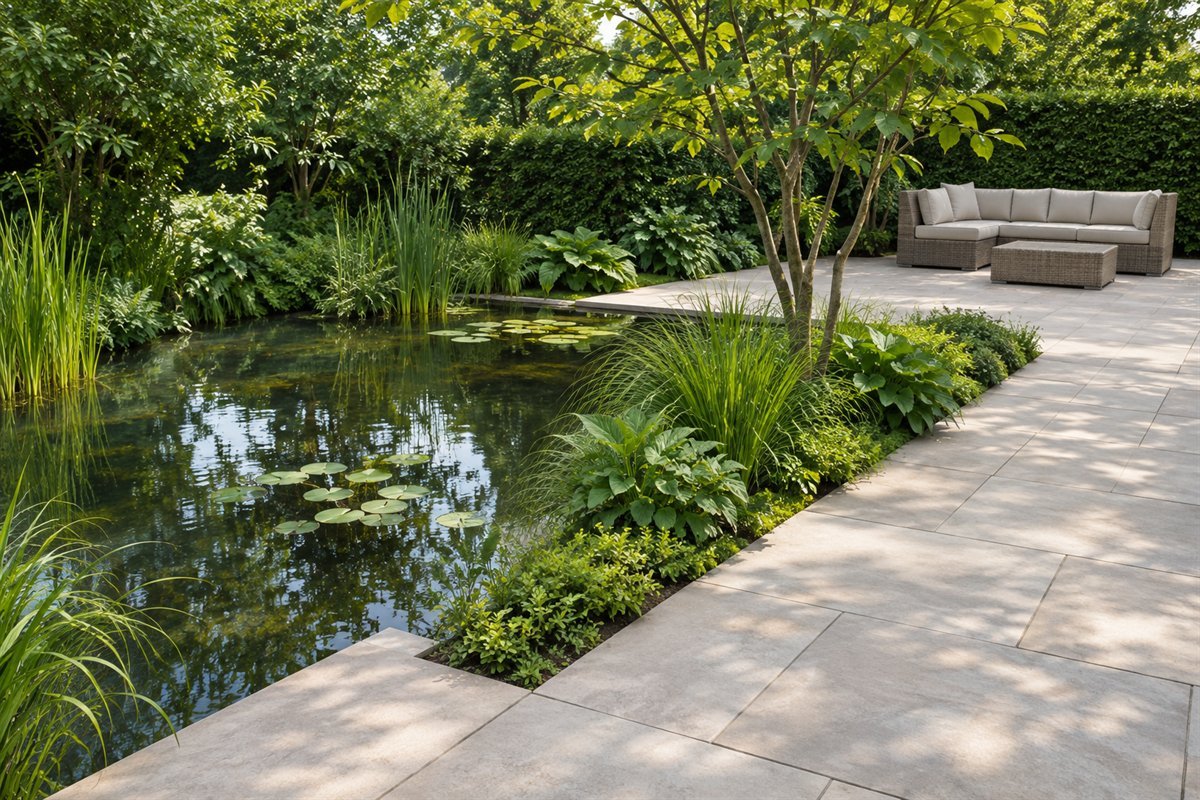
A paving material already used in the garden can connect the pond to the wider landscape. Compare a limited repeat beside the feature before surrounding every edge with a new surface. The relationship can be enough without matching every stone exactly.
Keep the everyday route useful and separate from the water. Real surfaces, drainage and access need their own specification. The material repeat is an appearance decision, not evidence that a surface is appropriate when wet.
20. Give a nearby seat a complete dry position

A seat can enjoy the pond without being built into its coping. Compare an ordinary freestanding bench or chair on a separate dry area. Check the actual sitting view, approach and room to leave the seat before adding another piece.
Keep the water feature reachable for care without moving heavy furniture. The seat location must also respect the complete household protection plan. A pleasing pond-side photograph does not determine a suitable separation distance.
21. Route ordinary movement around the feature

A pond can be a viewed destination while the ordinary path goes around it. Compare the route with groceries, garden tools and the household users in mind. There is no need for a bridge simply because a water surface creates an opportunity for one.
Use an appropriate access design for the actual ground and users. Keep the pond outside a necessary squeeze point. If the remaining route is awkward, reduce or relocate the feature before adding another decorative crossing.
22. Make one modest cascade an optional system choice

A small cascade changes the pond from a still composition into one with visible movement. Compare that change from the usual seat before adding several effects. Aquascape’s design example shows how falling water can be one element within a larger planted scene.
Choose the actual circulation, equipment, power and maintenance through the complete pond design. Sound and splash need a real-site trial rather than a promise that the feature will mask outside noise. A still pond may better serve the intended view.
23. Keep the working side reachable behind a quiet screen
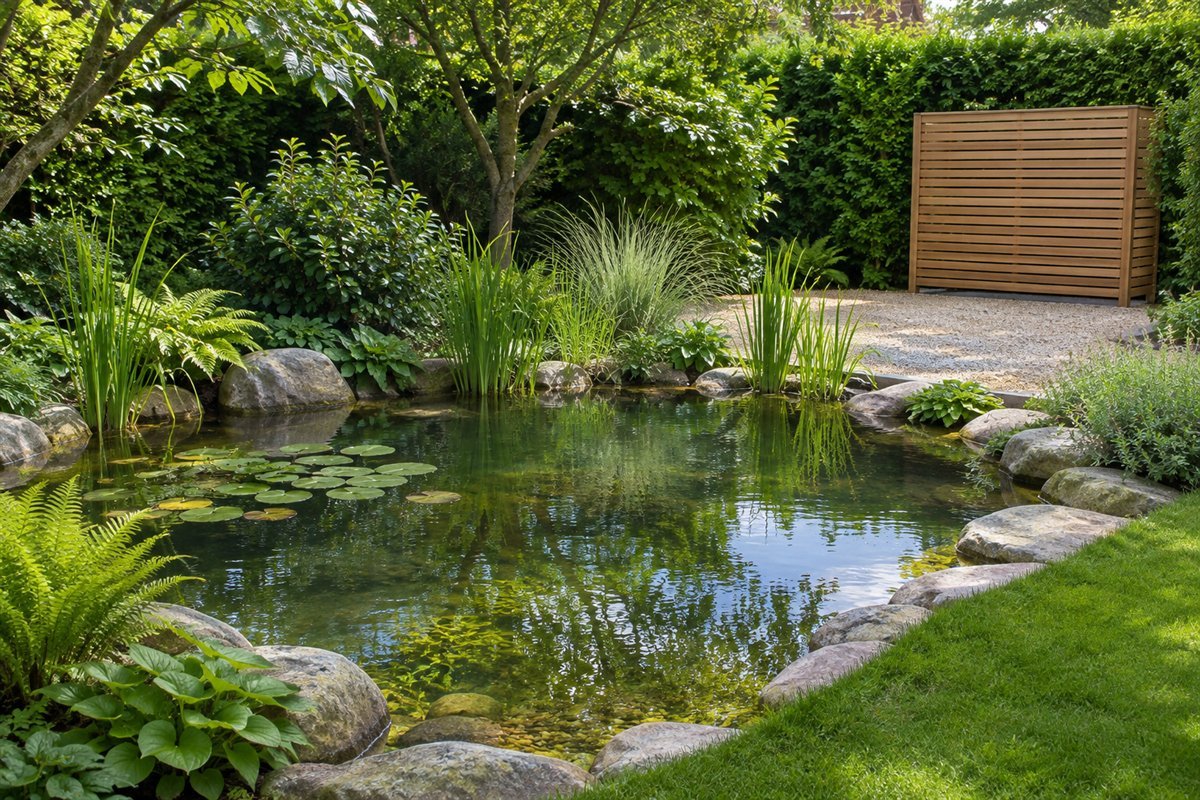
A pond can have a less prominent working side without hiding every practical opening. Compare a modest service screen with the route needed for inspection and routine care. Keep the intended access visible on the plan even when it is visually quiet from the main seat.
Choose any screen through the actual equipment and installation instructions. A decorative panel is not automatically a protective barrier. Do not seal in ventilation, controls or components merely to preserve the finished photograph.
24. Check the pond composition when flowers are absent

Compare the water outline, edge material and retained foliage when seasonal flowers are not leading the view. A pond can remain visually considered through a simple relationship between water, bank and background. This helps avoid relying on a brief display to complete the entire setting.
Make a local seasonal care plan for the actual system and plants. Do not copy another climate’s winter practice or assume the rendering shows workable freeze protection. Choose the feature you can keep caring for beyond the best photograph.
Make an original view-and-care brief before selecting the pond
Use one outline of the actual garden, with the house, existing paths, boundaries and retained planting. Mark a main viewing position and a separate working approach. These serve different purposes: the most attractive photograph may not show where someone will clean equipment or reach a plant. Keep the real approaches on the drawing as the decorative details develop.
Write a short purpose statement. Is the first priority a planted water view, a locally appropriate wildlife feature or a specifically designed fish pond? Keep the chosen purpose explicit. Do not add fish because they appear in an inspiration photograph, or assume that a decorative pond is a swimming feature. If the intended use changes, revisit the complete design rather than changing only the planting.
Make a six-column record: element, visual role, site question, care task, working approach and unresolved decision. A round water surface might provide a focal outline, while its row still needs the real pond system and required household controls. A planted margin might soften an edge, while its row needs the exact plants, mature spread and appropriate access for tending them.
For the view comparison, use photographs from the actual window and ordinary outdoor seat. Draw the same proposed pond outline on both. Check what is hidden by retained foliage and what becomes the foreground. A feature that looks generous from the lawn may become a small sliver from indoors. Adjust the composition before increasing the amount of decorative material.
For the care comparison, describe actual tasks instead of writing only that the pond should be easy to maintain. Ask how the chosen system is inspected, how plant growth is managed and where tools are brought in. Record the instructions and advice for the real installation. A concealed component still needs whatever access its manufacturer and installer require.
Keep seasonal questions separate from the first finished view. What will the visible setting contain when flowers are absent? How will local leaf fall and weather affect the selected system? Who will provide ordinary care when the household is away? Use advice for the actual climate, plants and equipment; this brief is not a winterization schedule.
Compare fewer elements before adding another effect. A second cascade or extra vessel adds a new system question as well as a new picture. If the main view already works through water, a modest edge and appropriate planting, retain that simpler proposal for comparison. It may better match the available space and care.
For a hypothetical narrow garden, the first sketch places a pond beside the only path and adds a bridge. The brief reveals that everyday movement and equipment access are competing for the same strip. A revised option moves one modest feature into a viewed border and retains a separate ordinary path. This is an illustrative decision process, not a measured access plan or construction specification.
Finish with three decisions: retain a visual relationship that works, investigate an unresolved system or site question, and defer an optional extra. Keep the photographs, actual specifications and care responsibilities together. Choosing the pond should make the whole garden clearer rather than leaving the practical work for after installation.
Read a pond reference through its actual scope
The RHS construction guide discusses siting and the distinction between formal and irregular pond forms; its water-habitat guide explains why margins and access matter to a wildlife purpose. These are useful questions to bring to a real project. UK planting and climate guidance should remain in its own context.
Oase presents in-ground, raised and container styles, while Aquascape’s finished-garden example shows the relationship between water, planting and the surrounding view. Manufacturer examples are inspiration and product context, not independent proof that a pond needs no maintenance. Their pictured plants, fish and equipment are not a ready-made specification for another home.
What is a good pond idea for a small garden?
Compare one complete modest feature with the view, required household controls and working access it needs. A suitable container or a simple in-ground form can be a candidate, but its size alone does not establish easy maintenance or safety.
Should a pond be formal or natural-looking?
Compare the shape with the retained patio, border and main viewpoint. Keep the intended pond purpose explicit, because a wildlife margin and a steep formal edge need different consideration.
Does a garden pond need fish?
No fish should be added merely for appearance. Decide the pond purpose first and obtain advice for the actual system and any animals before choosing them. The concepts here do not provide fish-stock recommendations.
Can a pond have a raised edge?
It can be a design candidate when the complete structure, water system and household requirements are appropriately resolved. A raised form is not automatically child protection.
How do I make a pond look connected to the garden?
Compare its outline from the main view, repeat a limited material and use appropriate planting in deliberate groups. Keep the working side and ordinary garden route useful while refining the appearance.
Are these pictures installation examples?
No. They are original AI-generated concepts, not photographs of the cited gardens, measured details, verified species identifications or certified protective arrangements.
A practical next step
Choose pond ideas through a clear purpose, a useful view and a care arrangement suited to the actual garden. Settle the complete site and household requirements first, then refine one readable water shape with a restrained edge and appropriate planting.
Compare other complete water-feature types before committing to a pond. Plan the separate garden route with the garden-path guide. Study the wider composition through Japanese-inspired garden ideas.
Images are original AI-generated garden-pond concepts. They do not show verified construction, protective barriers, plant identities, water quality, fish suitability or wildlife results. The view-and-care brief and hypothetical comparison are original planning aids.
Sources and care references
- RHS: pond siting, forms and complete construction considerations
- RHS: water habitats, margins and wildlife access
- Oase: in-ground, raised and container pond styles
- Aquascape: a finished pond, planting and garden-view example
Optional digital guide for this topic
If you prefer a structured workbook, explore this related paid guide.