A floor lamp occupies more than the circle its base leaves on the floor. Its shade may project over a chair, its switch may sit behind a cushion, and its cord needs a sensible route to an outlet. These living room floor lamp ideas begin with those everyday details, then use shape, color and material to make the lamp feel part of the room.
Choose the job first: a directed pool of light for a book, a shaded lamp near a conversation seat, or another layer in a room that feels flat after dark. The photographs illustrate arrangements; they do not establish a fixture's electrical specifications or a tested lighting level.
Contents
- 1. Place a shaded lamp beside the sofa arm
- 2. Give a reading chair its own directed light
- 3. Use a slender stem in a narrow gap
- 4. Let an arc reach over a seating corner
- 5. Choose a compact adjustable arm for a small room
- 6. Soften a boxy room with a round shade
- 7. Repeat one dark metal detail
- 8. Warm the corner with a quiet brass finish
- 9. Use wood to connect the lamp to the furniture
- 10. Keep a tripod away from the main passage
- 11. Use a shelf lamp only for a modest return spot
- 12. Balance a tall bookcase with a simple lamp
- 13. Put a low-profile base behind an accent chair
- 14. Light the open end of a sectional
- 15. Define a conversation pair with one shared lamp
- 16. Keep the television view clear
- 17. Use a pale shade against a colored wall
- 18. Choose a sculptural lamp for an otherwise quiet area
- 19. Echo a woven texture without hiding the light
- 20. Leave curtains room to move
- 21. Make the switch easy to find from the seat
- 22. Check the shade beside a reclining seat
- 23. Use two related lamps for separate tasks
- 24. Keep portable furniture clear of the lamp's route
- 25. Review the arrangement in daylight and after dark
Check the lamp in three dimensions
Measure the complete base, the widest shade or arm projection, and the height of the part that moves. Trace the route from the outlet to the parked position before choosing a long arc or several feet. ENERGY STAR distinguishes brightness in lumens from energy use in watts; compare the bulb's light output as well as the appearance of its shade. Use the bulb type, ratings and operating guidance specified for the actual fixture.
Compare the storage or placement options
- Small sofa gap: Compare a narrow complete footprint and a shade that stays clear of upholstery and curtains.
- Reading seat: Check beam direction, glare from the seated position, control access and normal foot space.
- Large open seating area: Consider an arc only after mapping the base location and full shade projection.
- Movable furniture nearby: Check the layout with tables, footrests and recliners actually deployed.
1. Place a shaded lamp beside the sofa arm
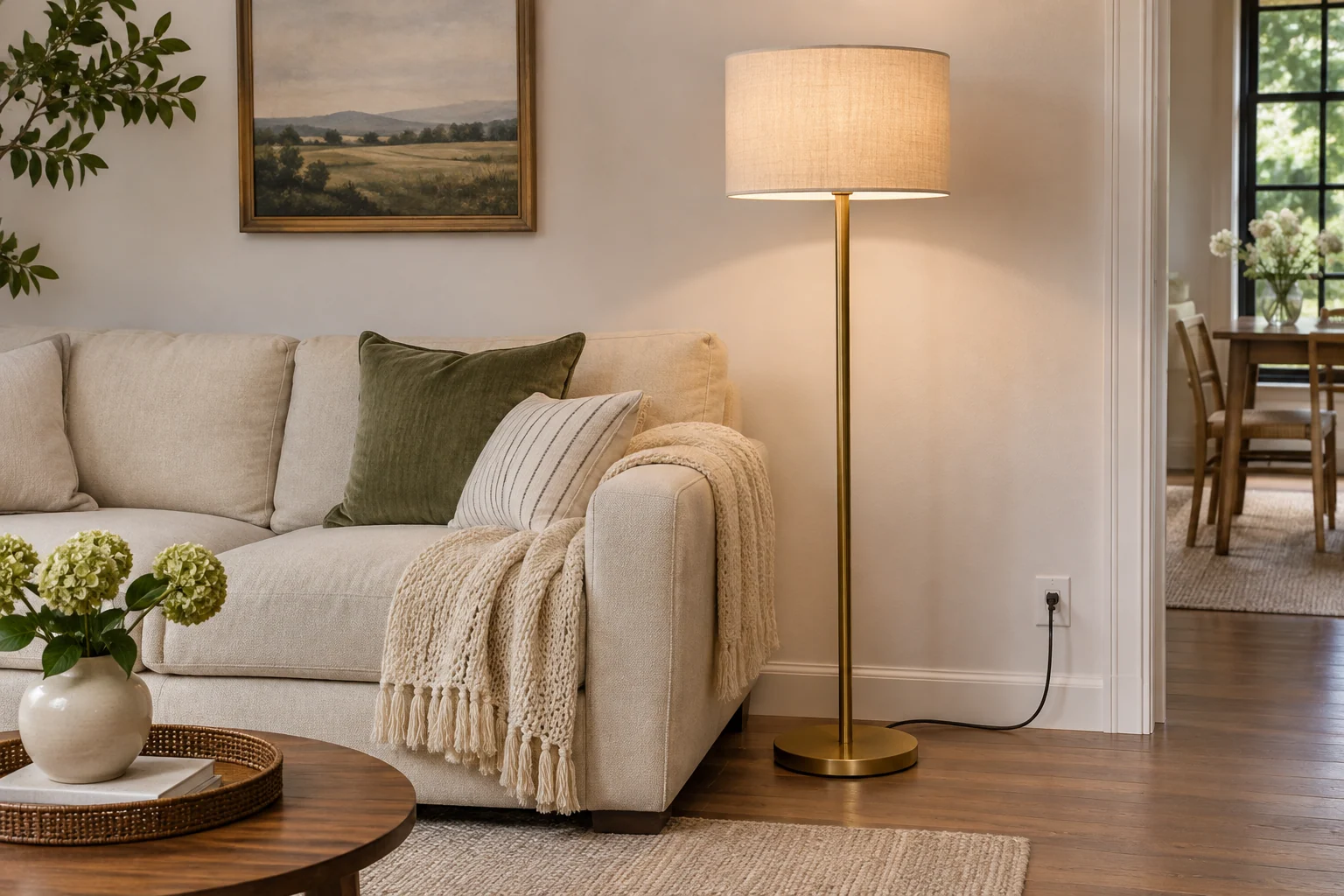
A straight-stem lamp beside a sofa can add light without using the surface of an end table. Place its complete base on a level area where it does not compete with the sofa leg or the usual approach to the seat. Let the shade relate to the arm rather than drifting into the room's main route. Sit down before deciding: the switch and light source look different from a standing viewpoint.
2. Give a reading chair its own directed light
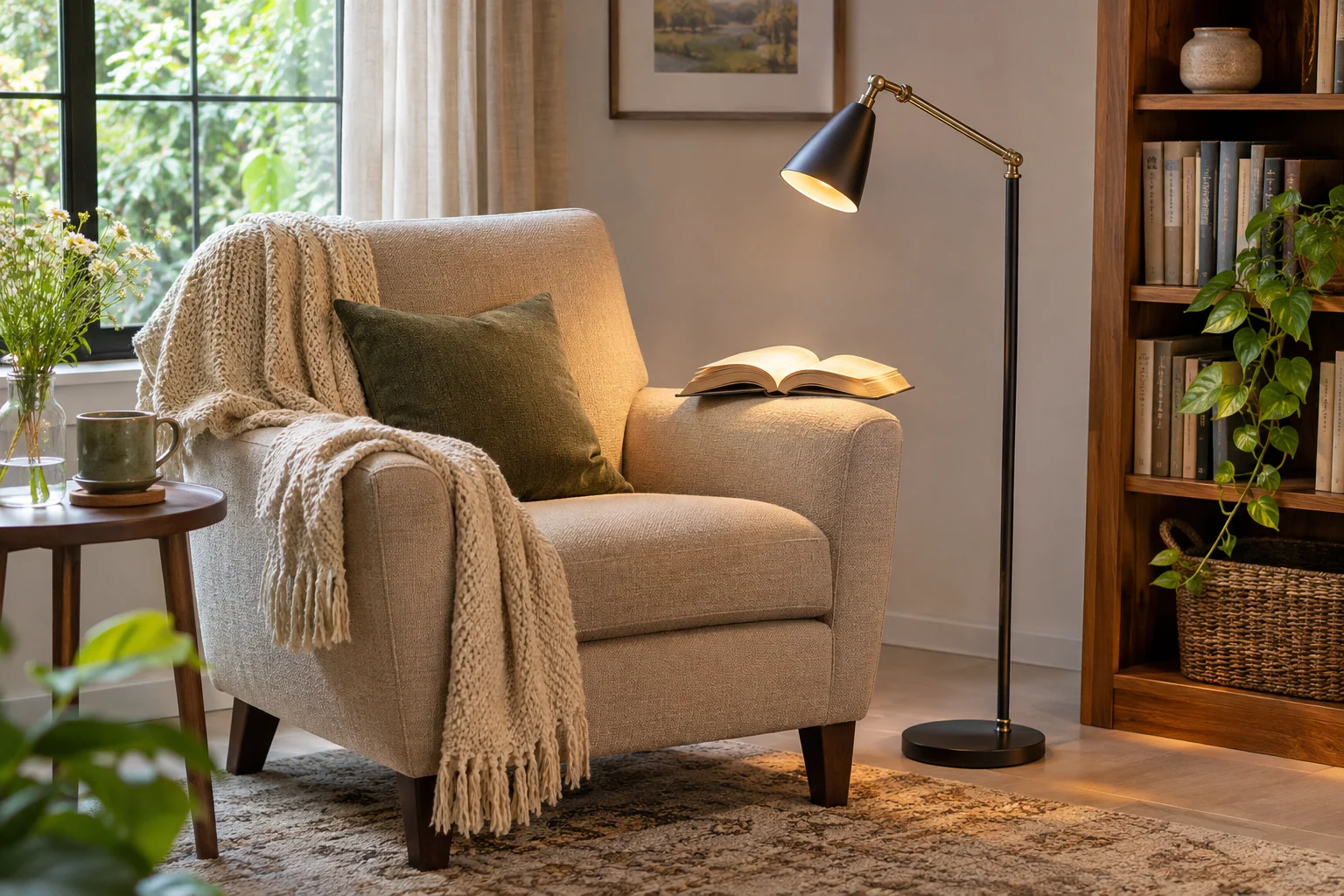
A small task head can serve a chair without lighting the entire room equally. Position the lamp so its adjustable part reaches the page while the base remains outside the place your feet normally rest. Read a page from the actual seat and check for reflected glare. A photograph of a glowing lamp cannot tell you whether the beam feels comfortable at that angle.
3. Use a slender stem in a narrow gap
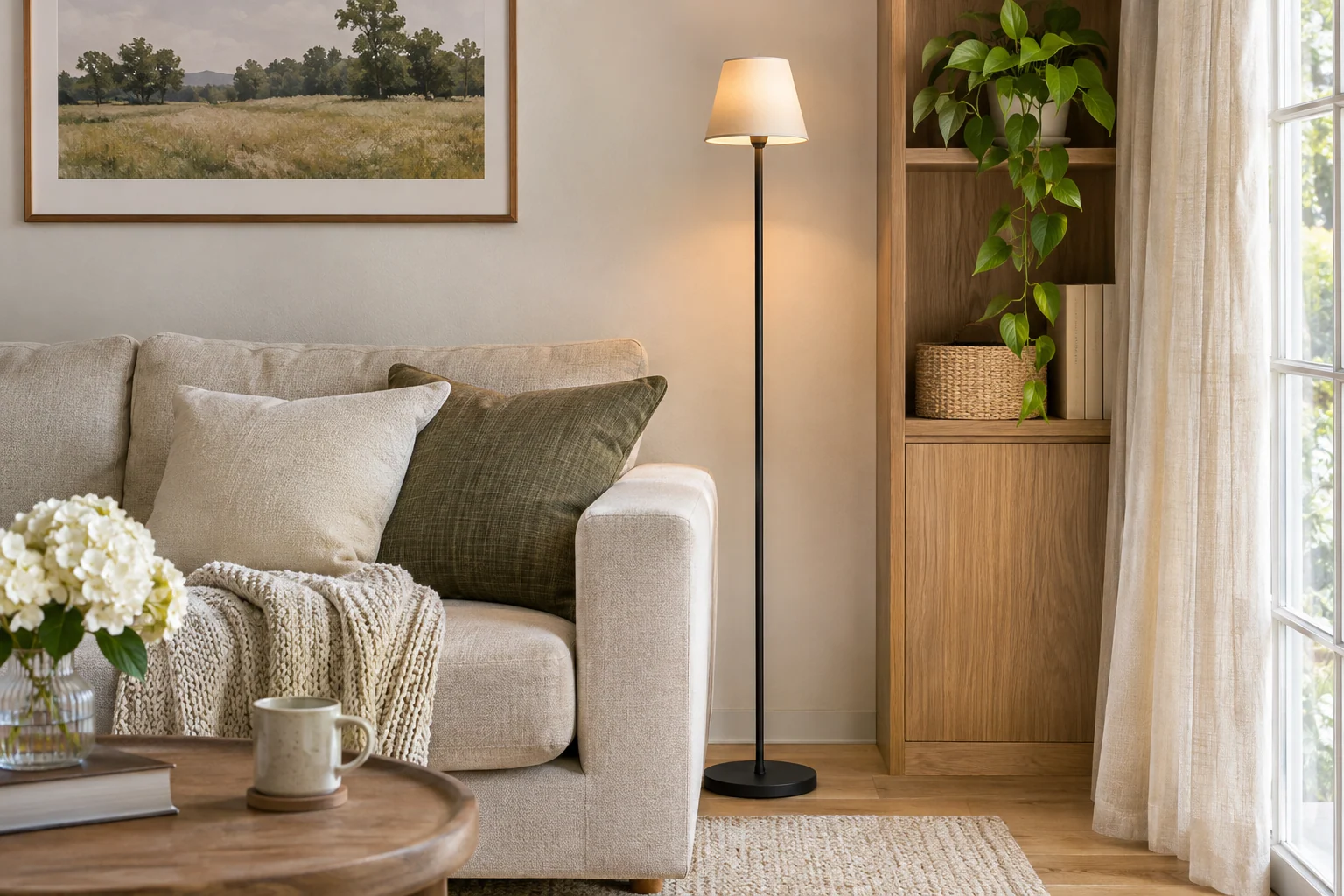
A narrow-looking lamp can work between a sofa and wall when its real base and shade fit. Measure the gap at the floor and at shade height; those openings may differ because of upholstery, trim or a nearby curtain. Leave enough access to operate the switch and clean around the base. A slim stem with a broad tripod footprint solves a different spatial problem.
4. Let an arc reach over a seating corner
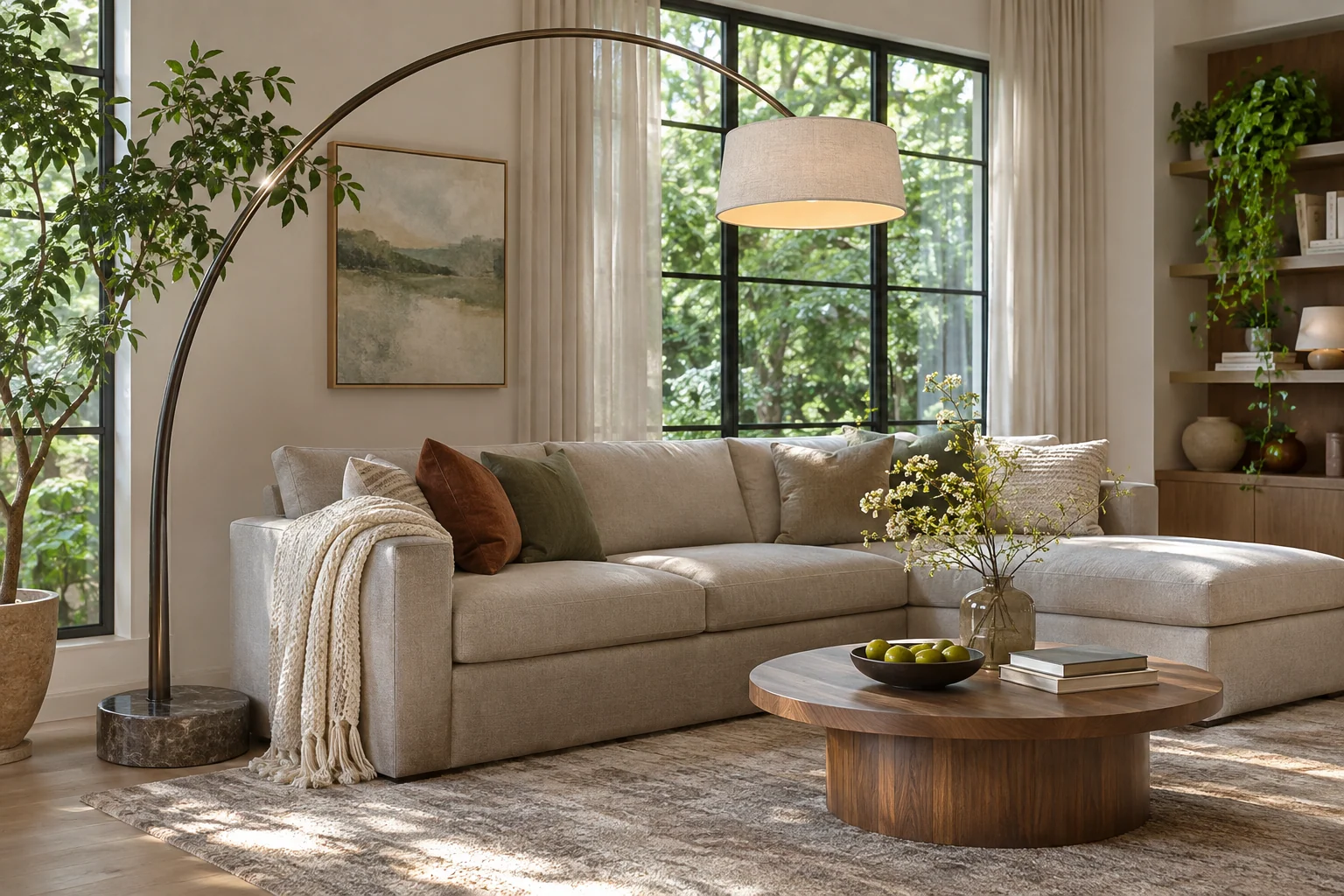
An arc can put a shade above a useful position while its base sits farther back. Plan both ends of that arrangement. The shade should remain clear of ordinary head movement, and the weighted base needs its full intended support. Choose an actual model whose reach suits the room; do not improvise a longer arm or counterweight to reproduce a styled photograph.
5. Choose a compact adjustable arm for a small room
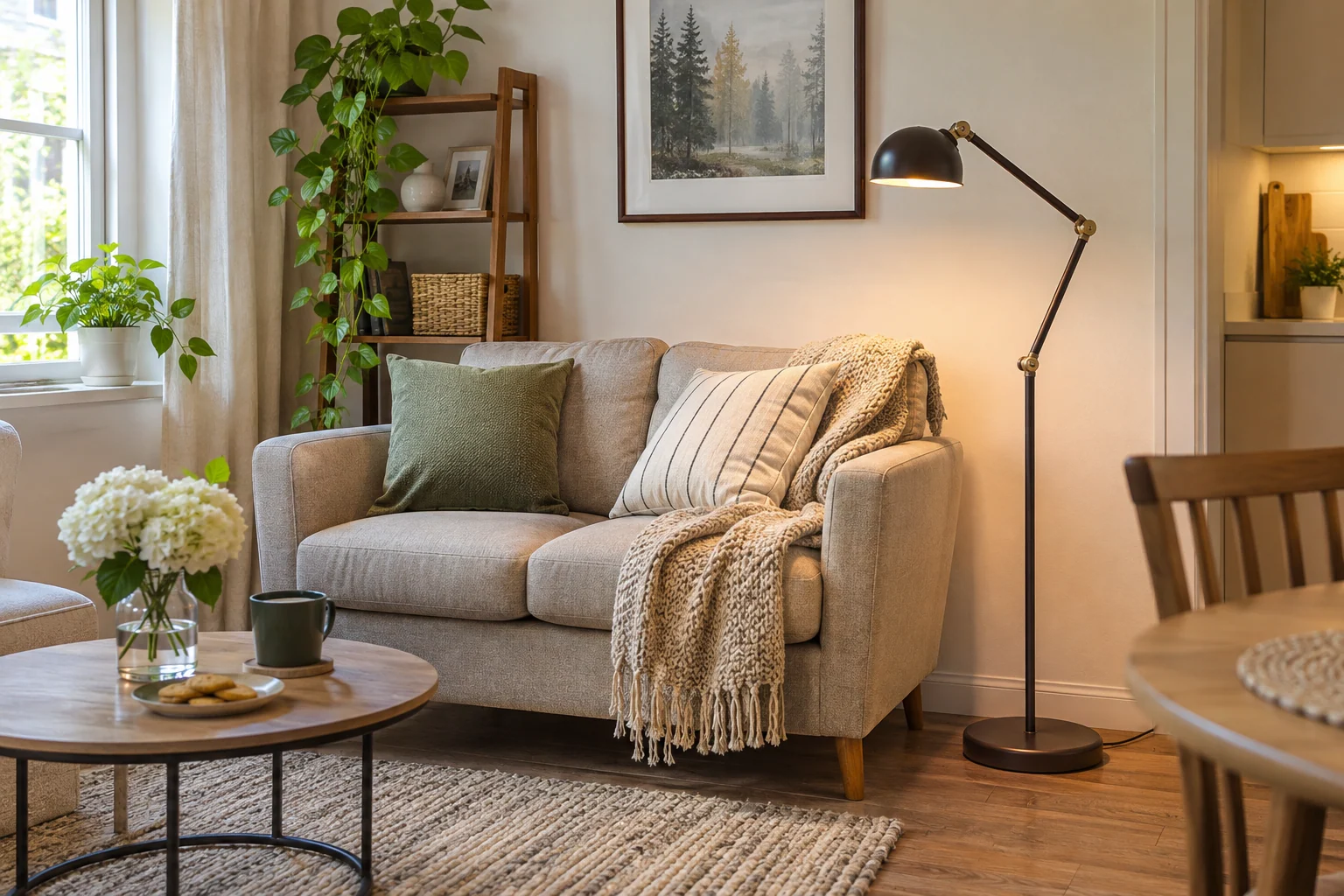
A short articulated arm can offer flexibility with less projection than a dramatic arc. Check the lamp in each position you expect to use, including the folded position. Keep its joints clear of the wall and nearby furniture. An arm that is easy to adjust from the seat can be more useful than one that technically reaches farther but requires moving the whole lamp.
6. Soften a boxy room with a round shade
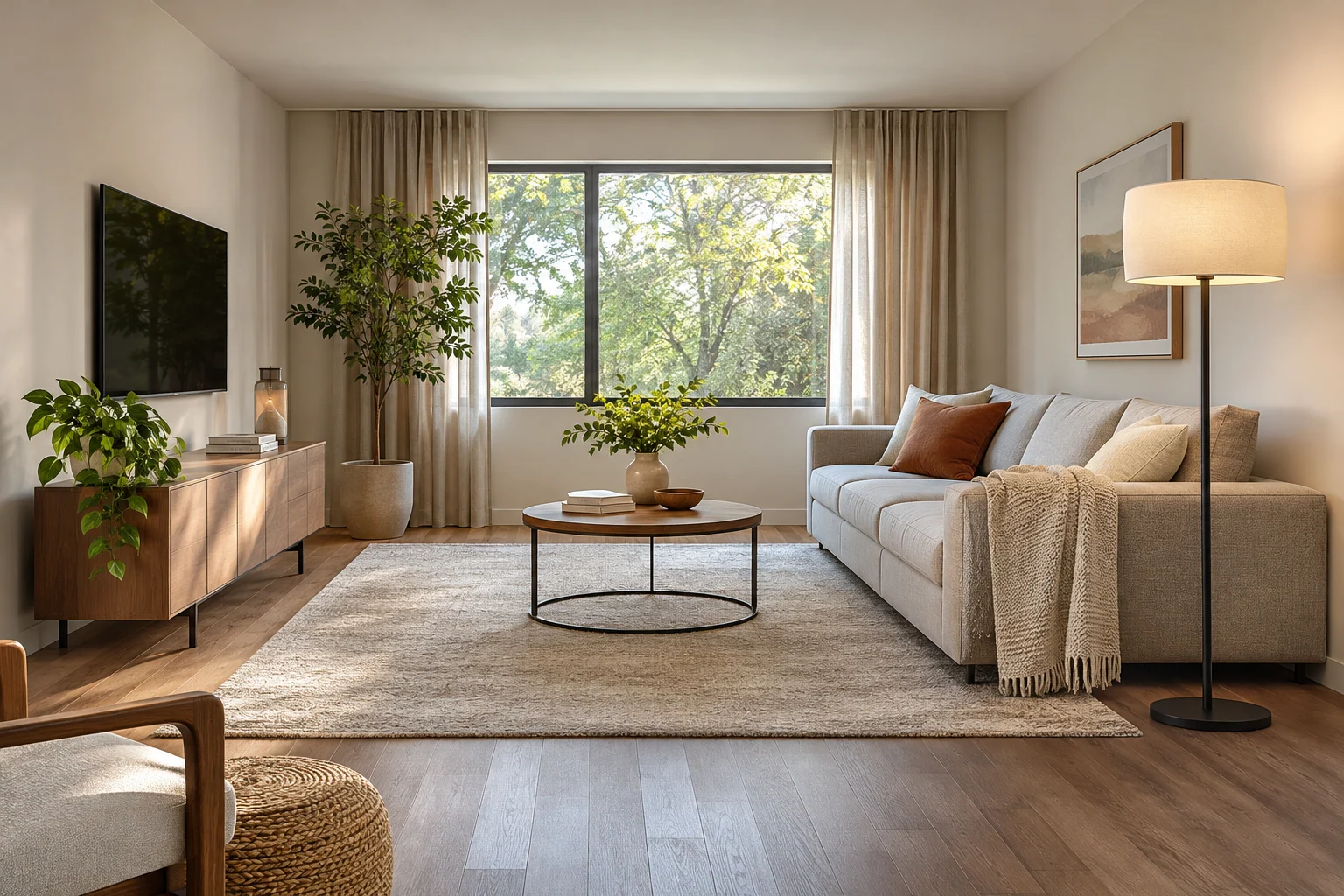
A drum or globe-shaped shade can echo a round table or cushion in a room dominated by rectangular furniture. Keep the connection subtle: the lamp does not need to repeat every curve in the room. Compare the shade's width with the gap beside the seat. A larger circle can create a pleasing silhouette while still feeling crowded when someone tries to pass.
7. Repeat one dark metal detail
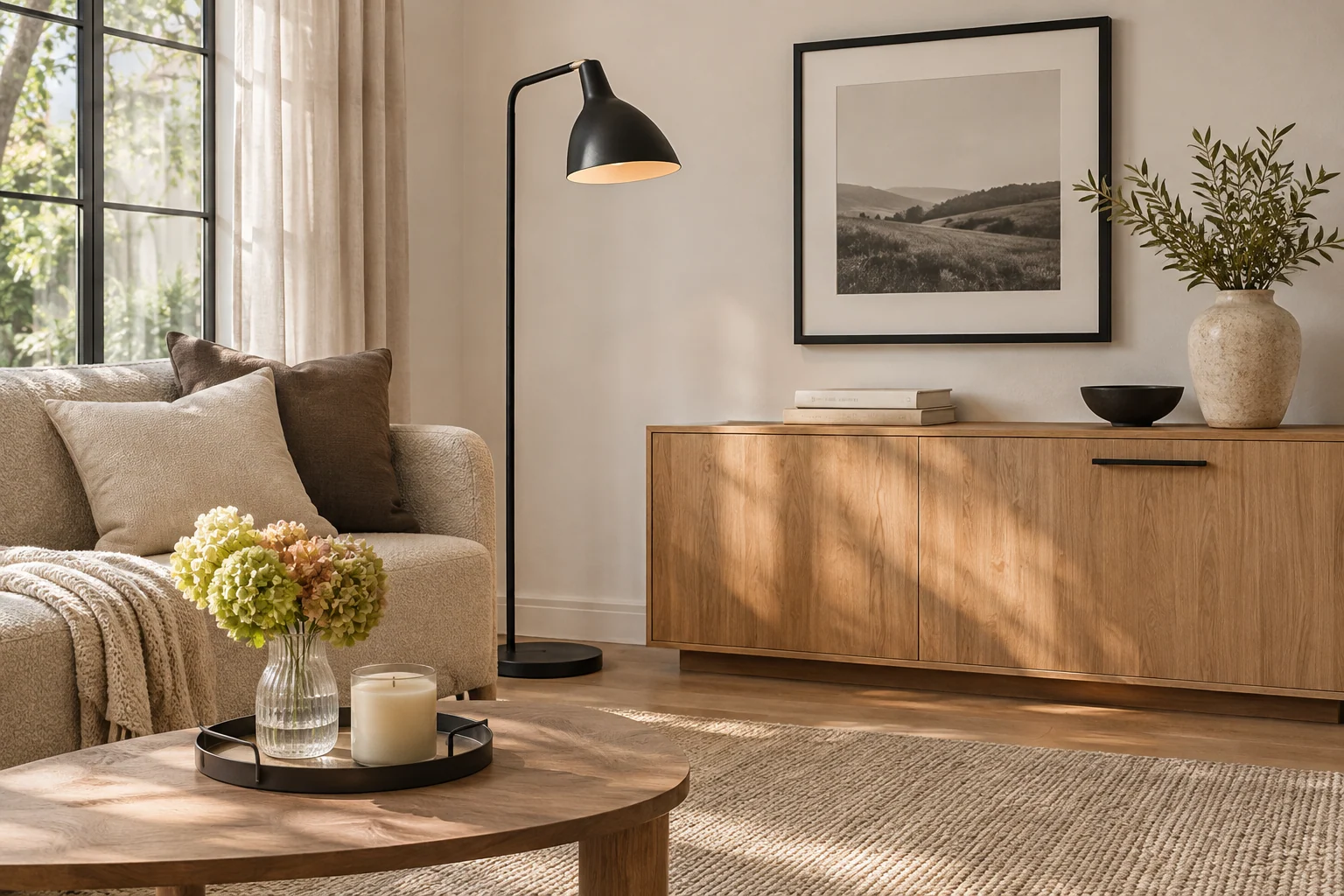
A black lamp can connect a dark picture frame, curtain rod or cabinet handle without adding another material to coordinate. Choose one or two existing details as the connection, then let the surrounding furnishings stay varied. A visually thin lamp can still cast a strong outline against a pale wall. Test that outline from the doorway as well as the main seat.
8. Warm the corner with a quiet brass finish
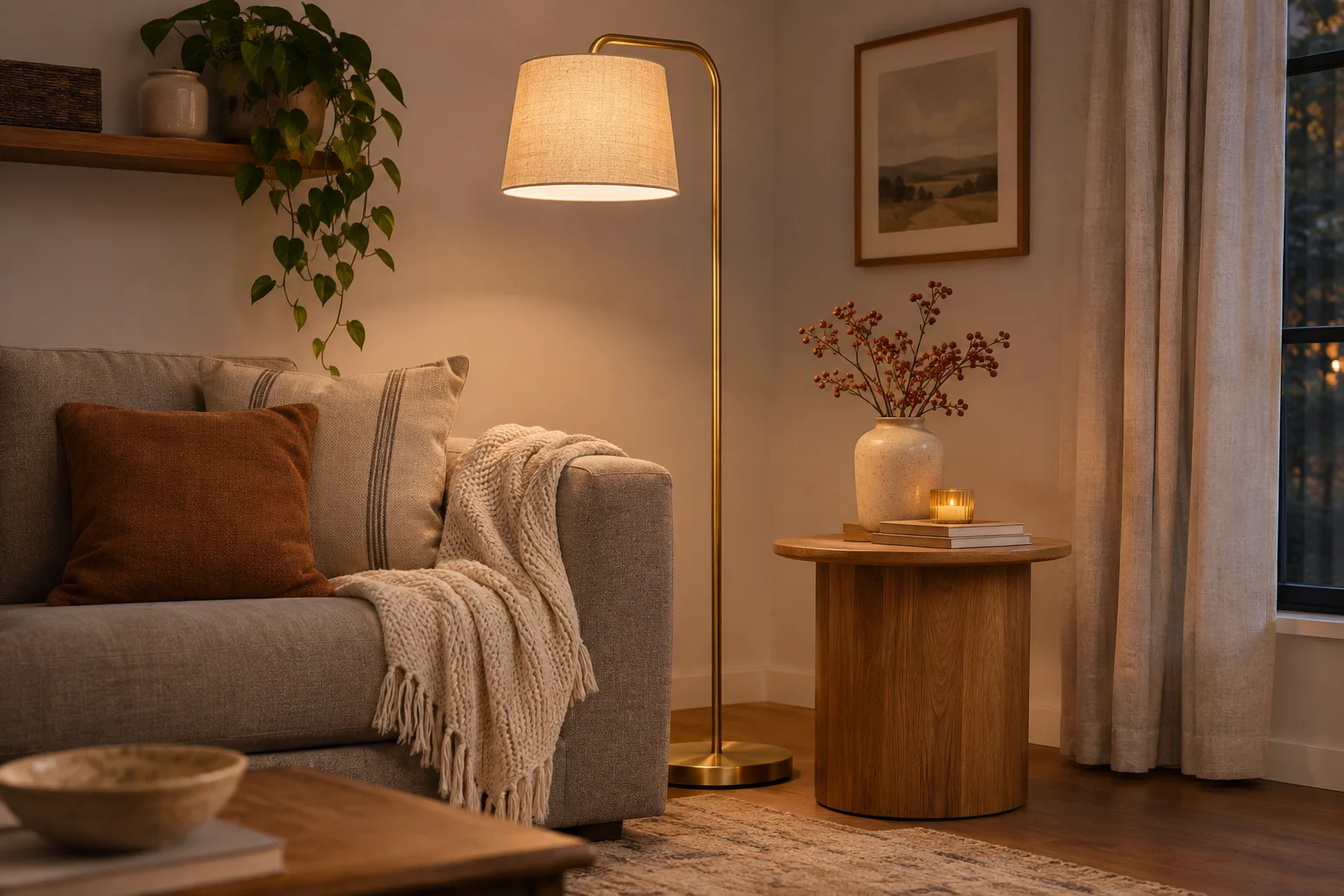
A muted brass lamp can bring a warm note to a gray, cream or wood palette. Compare it with the room's other metals under the light you normally use; shiny finishes can appear more pronounced after dark. Keep the form straightforward if the room already has several decorative pieces. The lamp can be the warm accent without becoming a large reflective sculpture.
9. Use wood to connect the lamp to the furniture
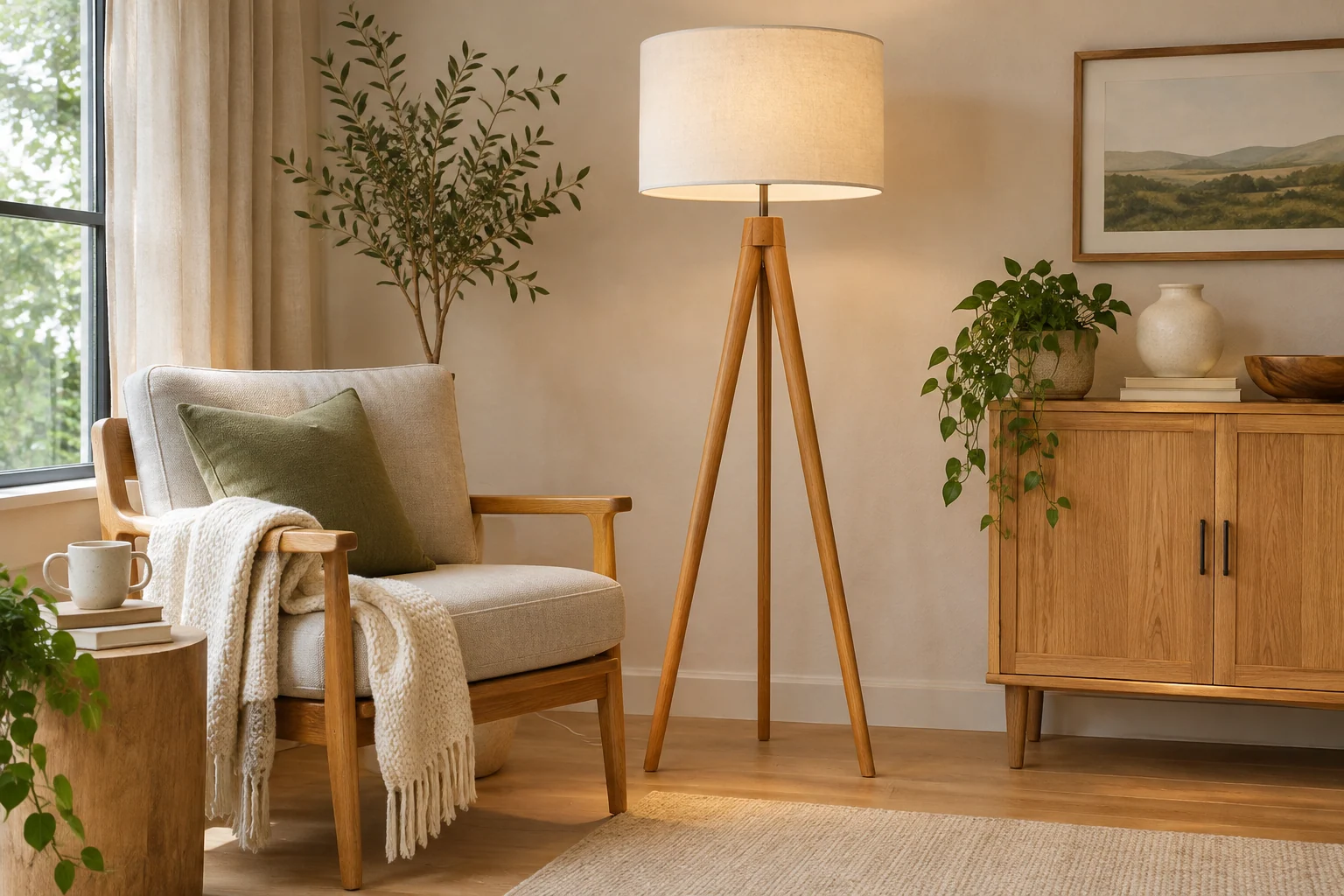
A wood-accented stem can relate to a sideboard or chair frame while the shade introduces a softer texture. Match the general warmth of the materials rather than searching for an identical stain. Check the lamp's actual footprint: wood tripod legs often extend beyond the shade's visual center. Keep those feet visible enough that the corner remains easy to navigate.
10. Keep a tripod away from the main passage
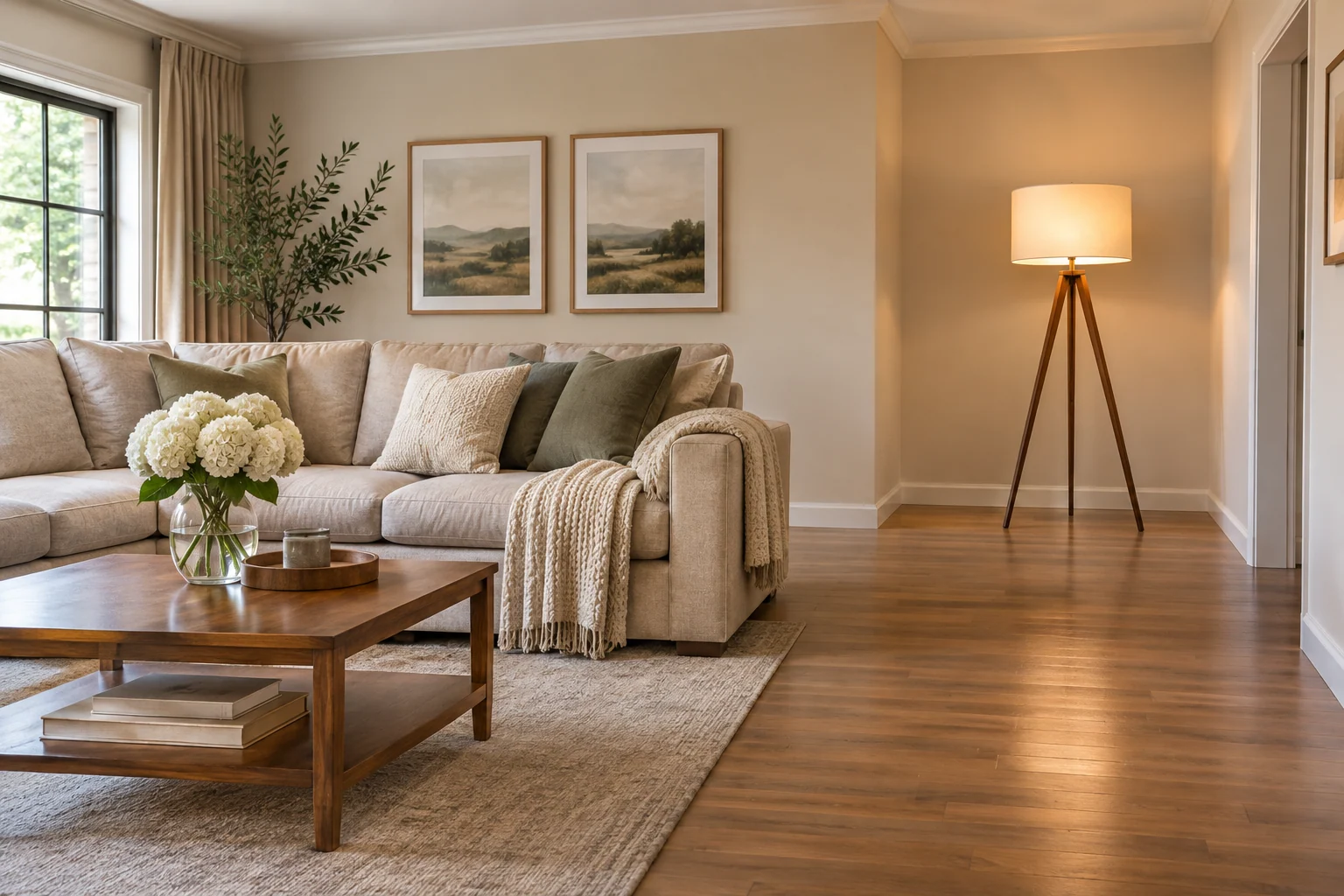
A tripod works best where its spread can be accommodated deliberately. A quiet corner beside the outside of a seating group may suit it better than the gap people cross to reach another room. Place a paper outline of all three feet on the floor before buying. Check the route with a laundry basket or other ordinary carried item, not only with an empty room.
11. Use a shelf lamp only for a modest return spot
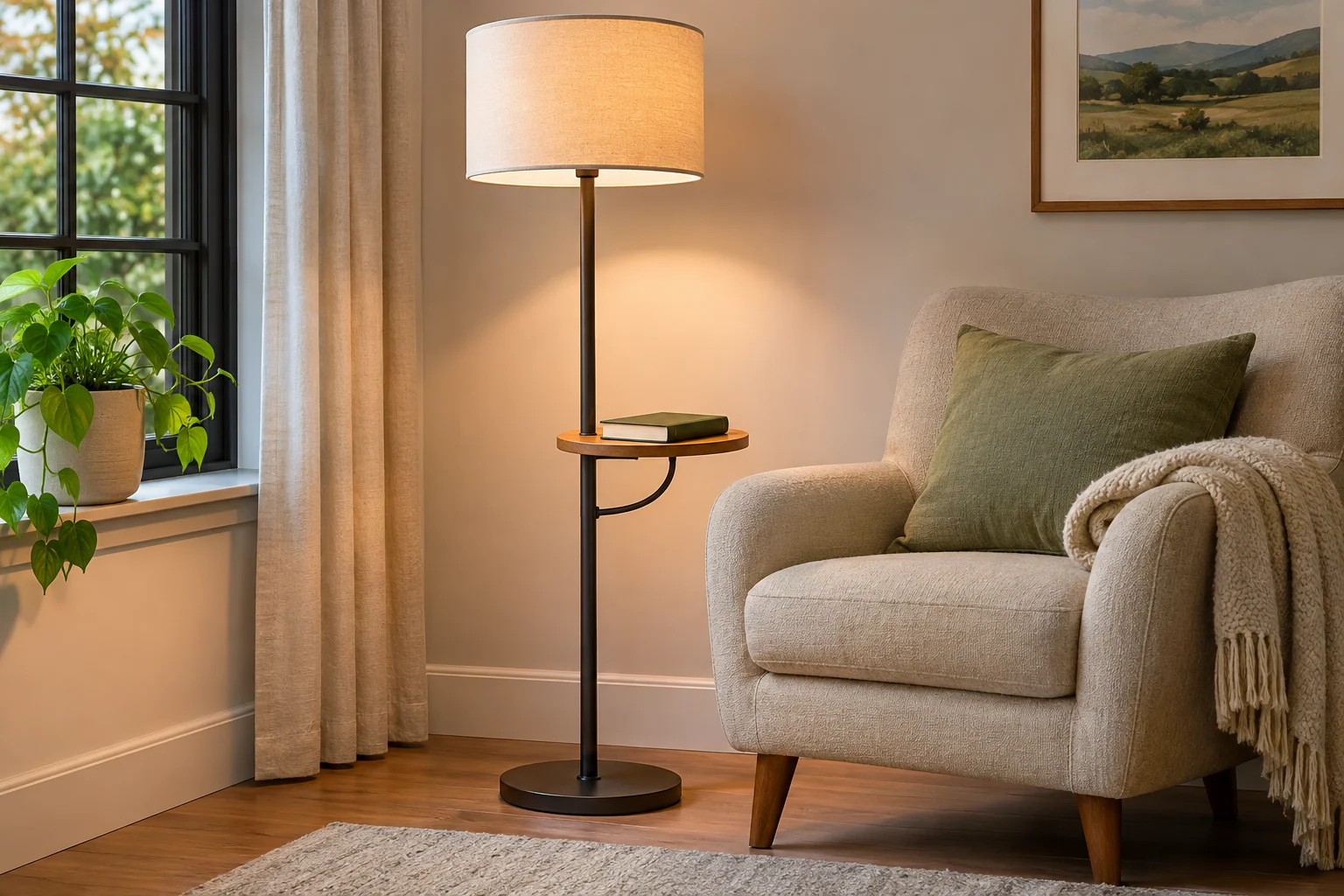
A purpose-designed floor lamp with an integrated shelf can give a reading seat a place for a small everyday object. Follow the fixture's intended shelf use and load guidance; it is not a substitute for a storage cabinet. Keep the surface restrained so the switch and lamp structure remain accessible. If the seat needs space for several drinks or books, compare it with a separate table.
12. Balance a tall bookcase with a simple lamp
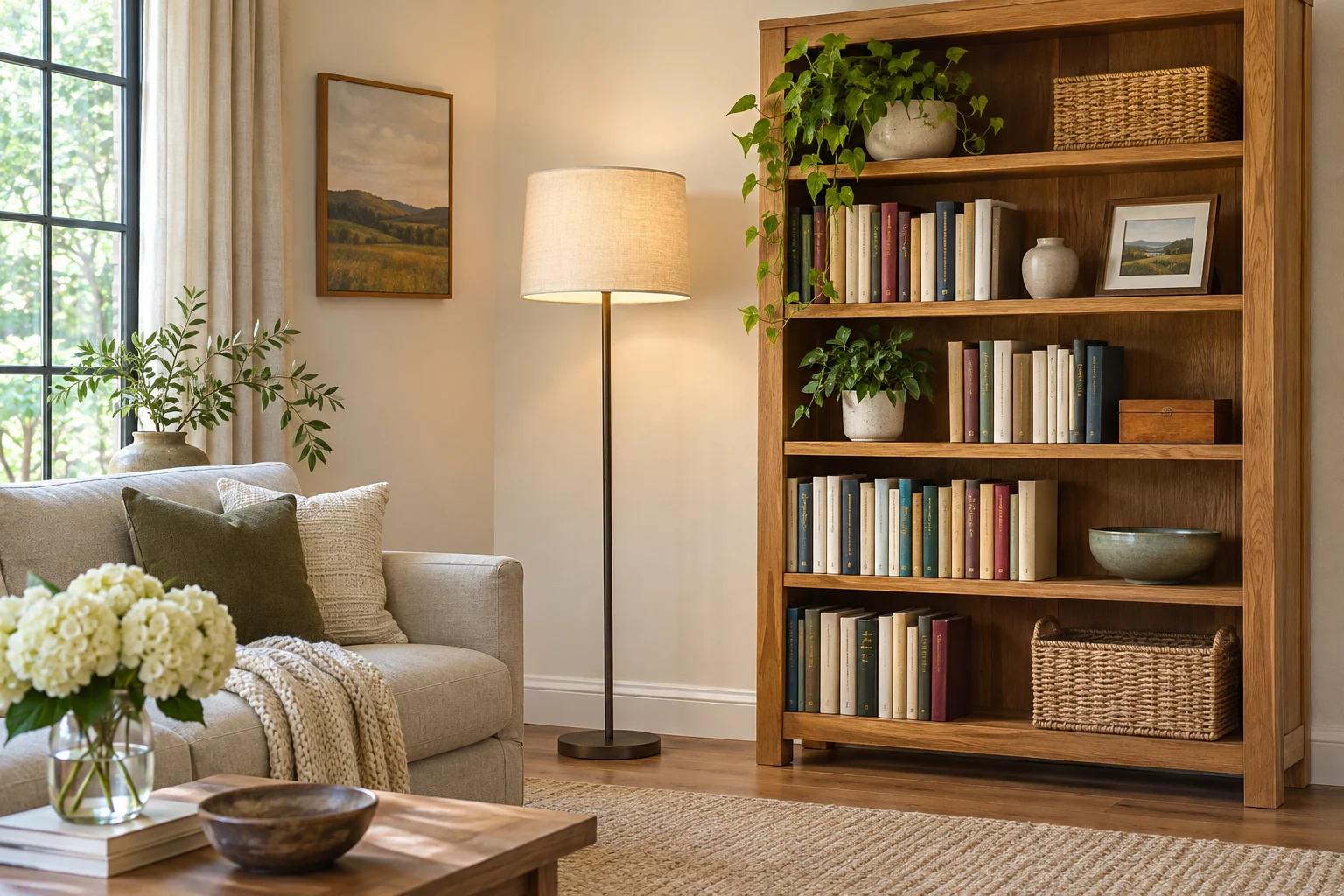
A lamp near a bookcase can continue the room's vertical rhythm without adding another large piece of furniture. Place it where the shade does not block the shelf you use most often. Leave room to remove books and open cabinet doors. A quiet lamp form usually gives a busy collection more breathing space than another intricate object beside it.
13. Put a low-profile base behind an accent chair
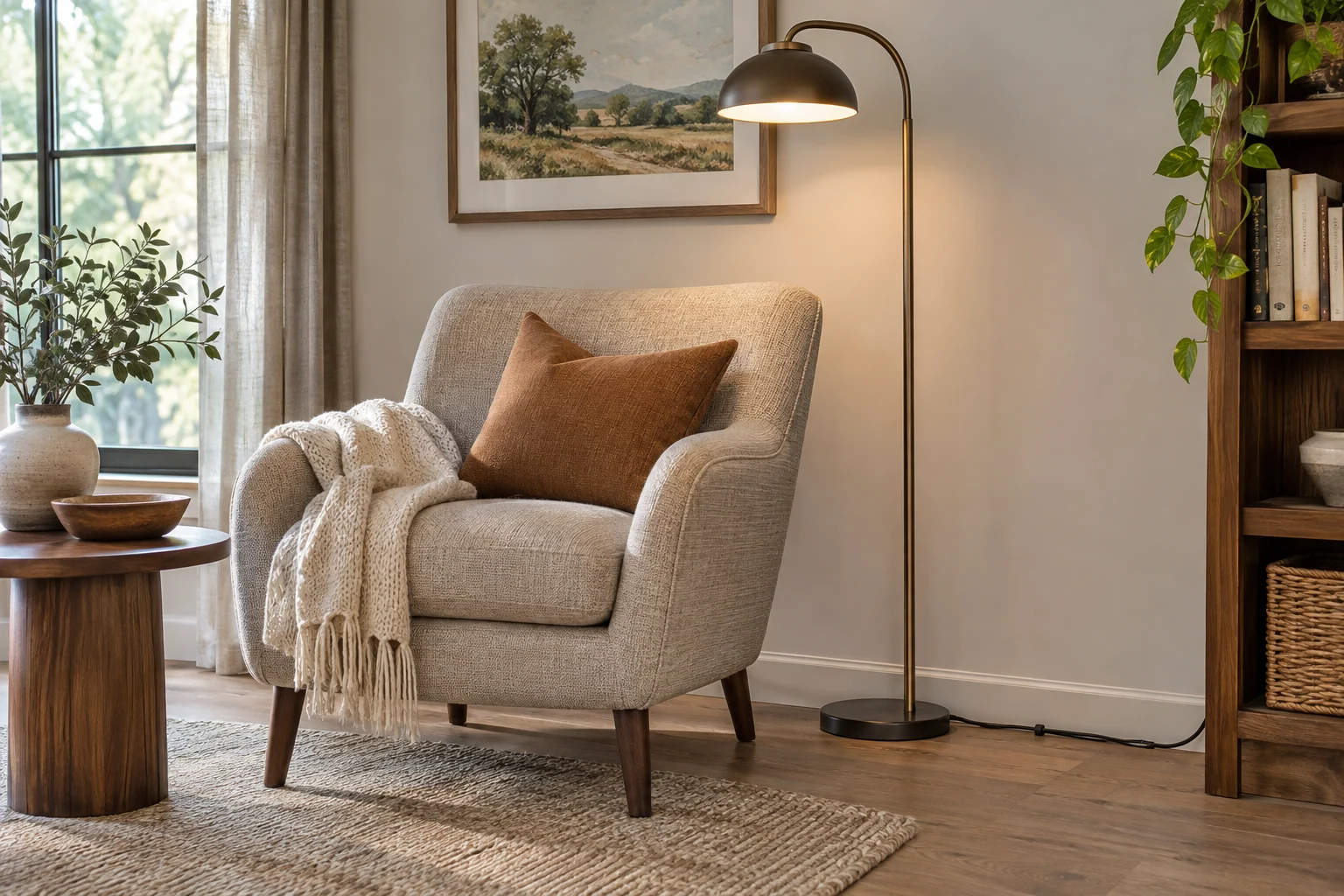
A base behind a chair may reduce visual clutter when the complete lamp is designed to work in that position. Check that the chair does not rest on the base and that rocking or swiveling movement remains clear. Look from the side to see whether the shade or arm enters the chair's movement. Keep the cord outside the chair's working footprint.
14. Light the open end of a sectional
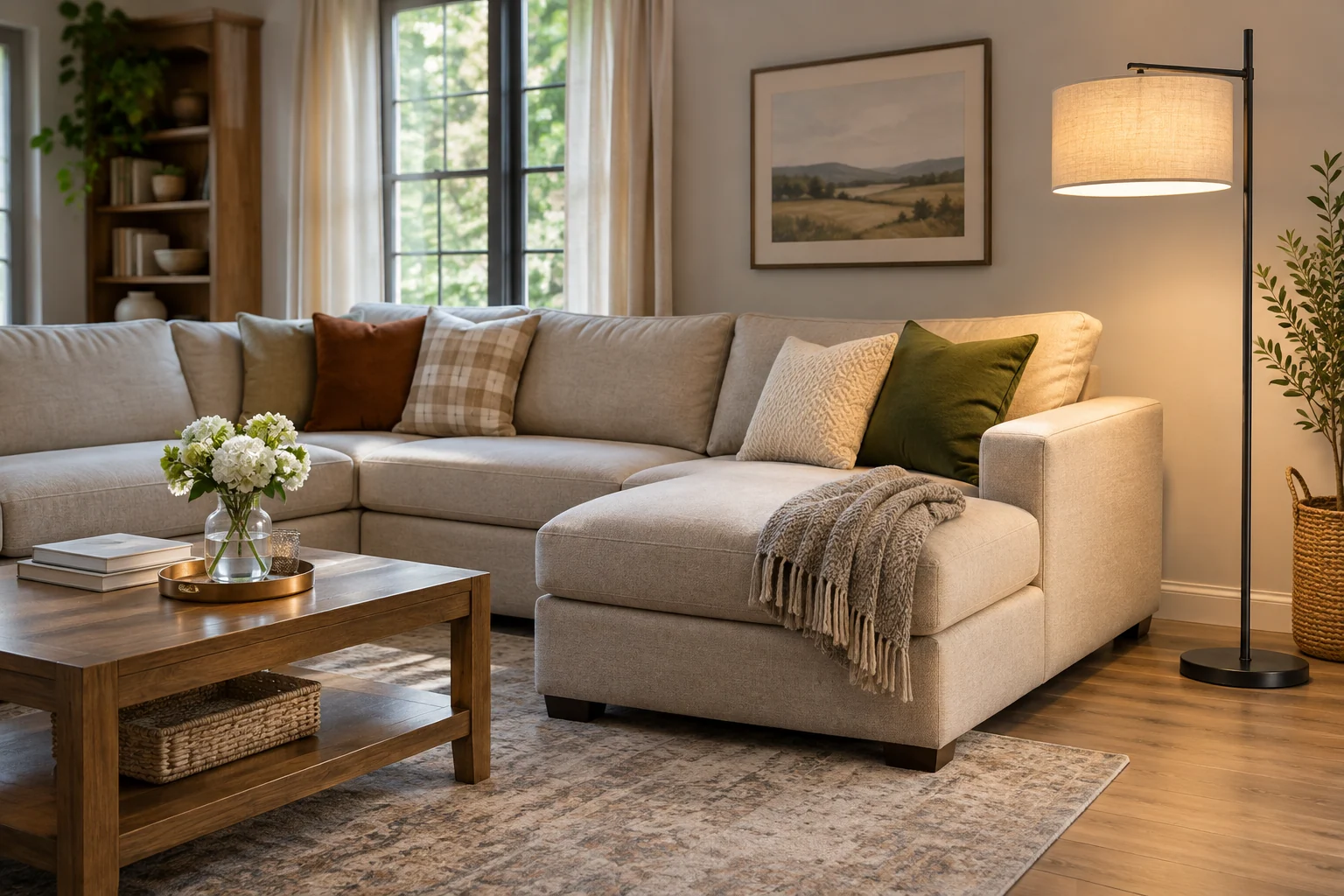
The open end of a sectional can need a different lamp position from the corner near the wall. Use the lamp to serve that seat while keeping access around the chaise or sofa end. Test its base with the usual footrest or reclining movement if applicable. When no clear position exists, a different lighting type may be more useful than forcing a freestanding lamp into the route.
15. Define a conversation pair with one shared lamp
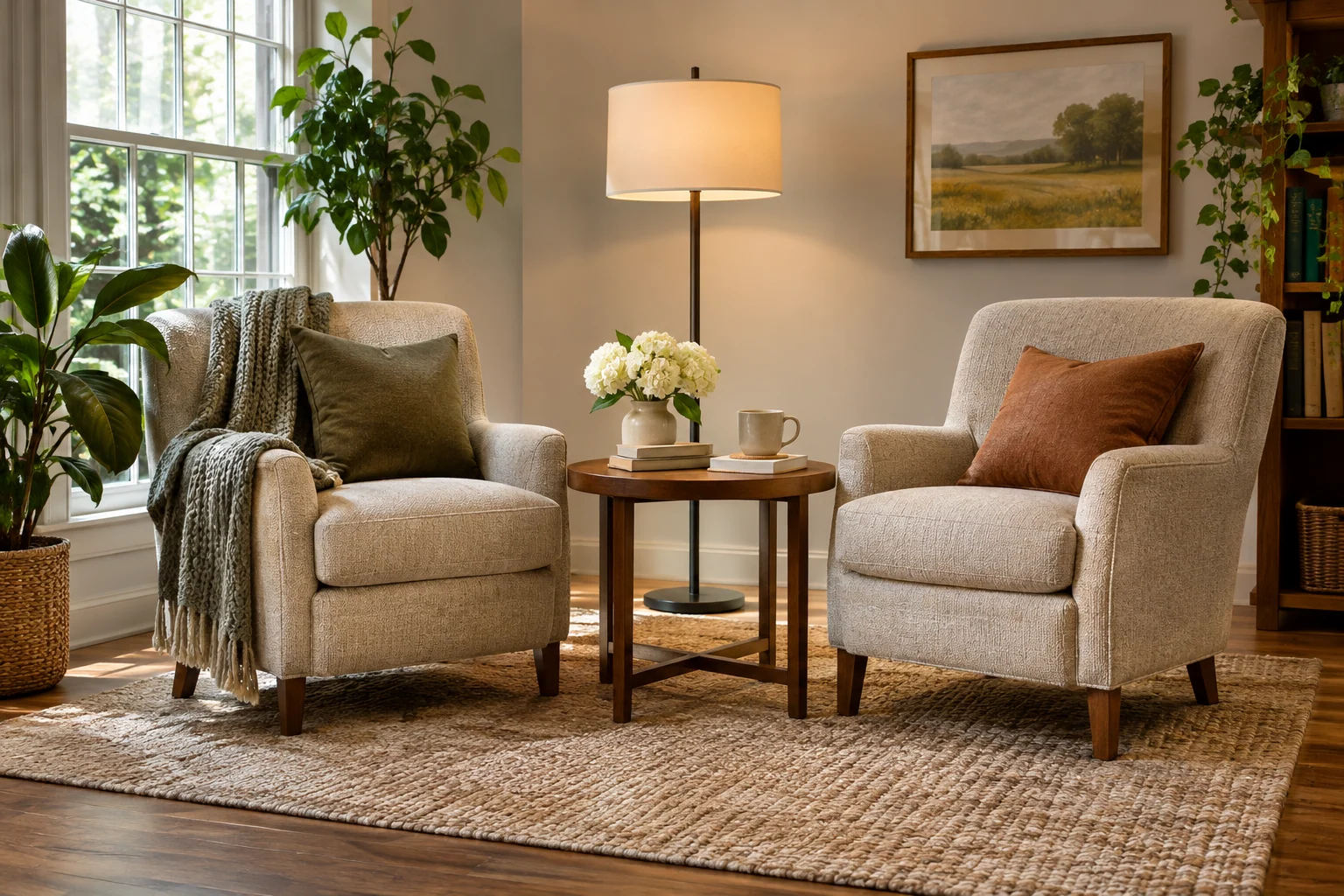
Two chairs can share a lamp when both seats receive useful light and neither blocks the switch. Place the lamp behind or beside the pair according to the room, then check the view from each chair. A central lamp may create symmetry but also require an awkward reach. Let access decide the final arrangement before making the chairs perfectly even.
16. Keep the television view clear
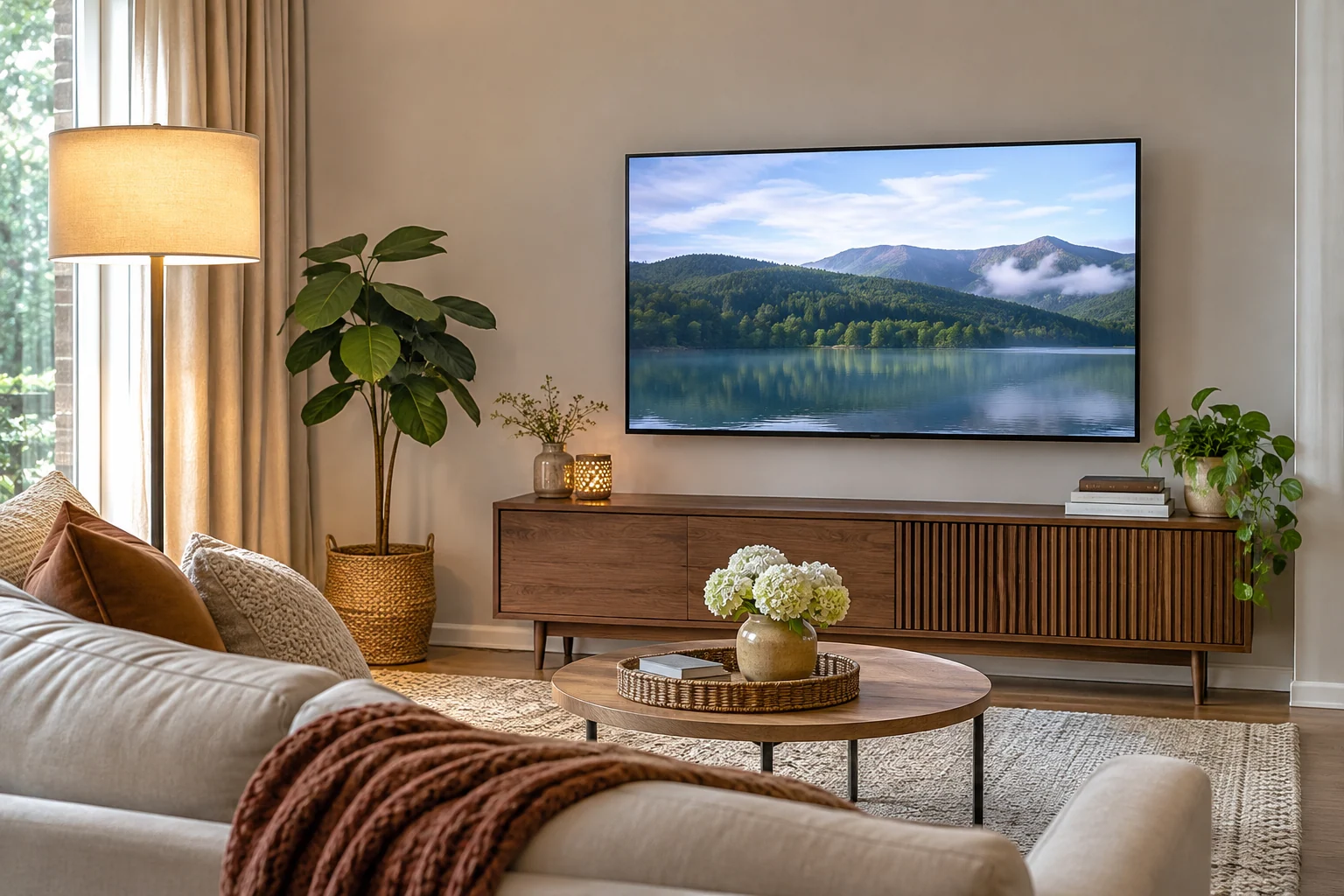
A lamp beside a television area can add another layer of light, but its position deserves a night-time check. Turn on the screen and lamp, then view the picture from the seats normally used. Move the lamp or adjust a suitable shade direction if its reflection becomes distracting. Keep the fixture out of the direct viewing line rather than treating the empty corner as an automatic location.
17. Use a pale shade against a colored wall
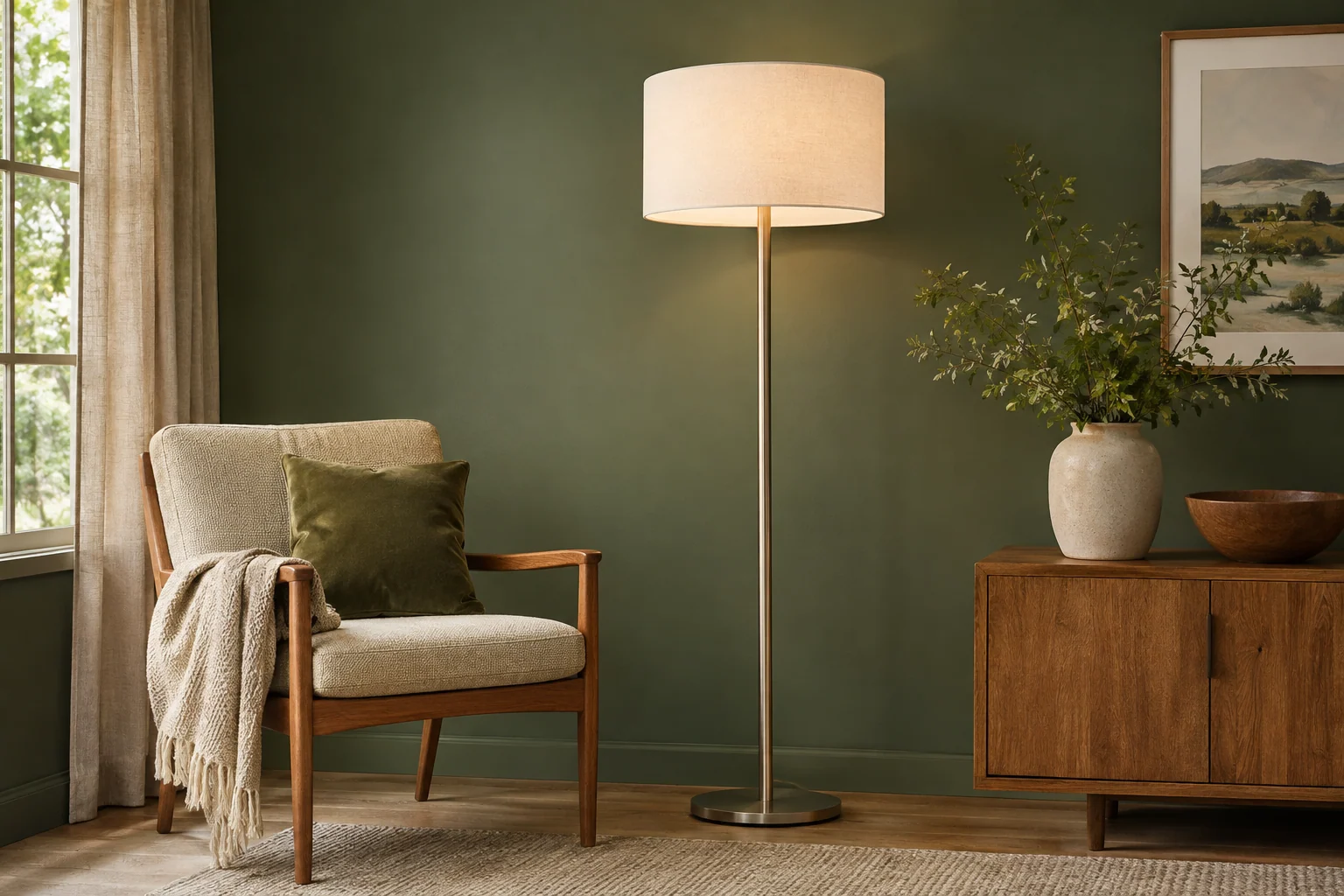
A light fabric shade can make a floor lamp easy to read against a darker paint color. Compare the shade when the lamp is off and on because its apparent tone may change. Keep the base connected to the furniture through shape or material. A single pale shade can provide contrast without adding a new accent color to the room.
18. Choose a sculptural lamp for an otherwise quiet area
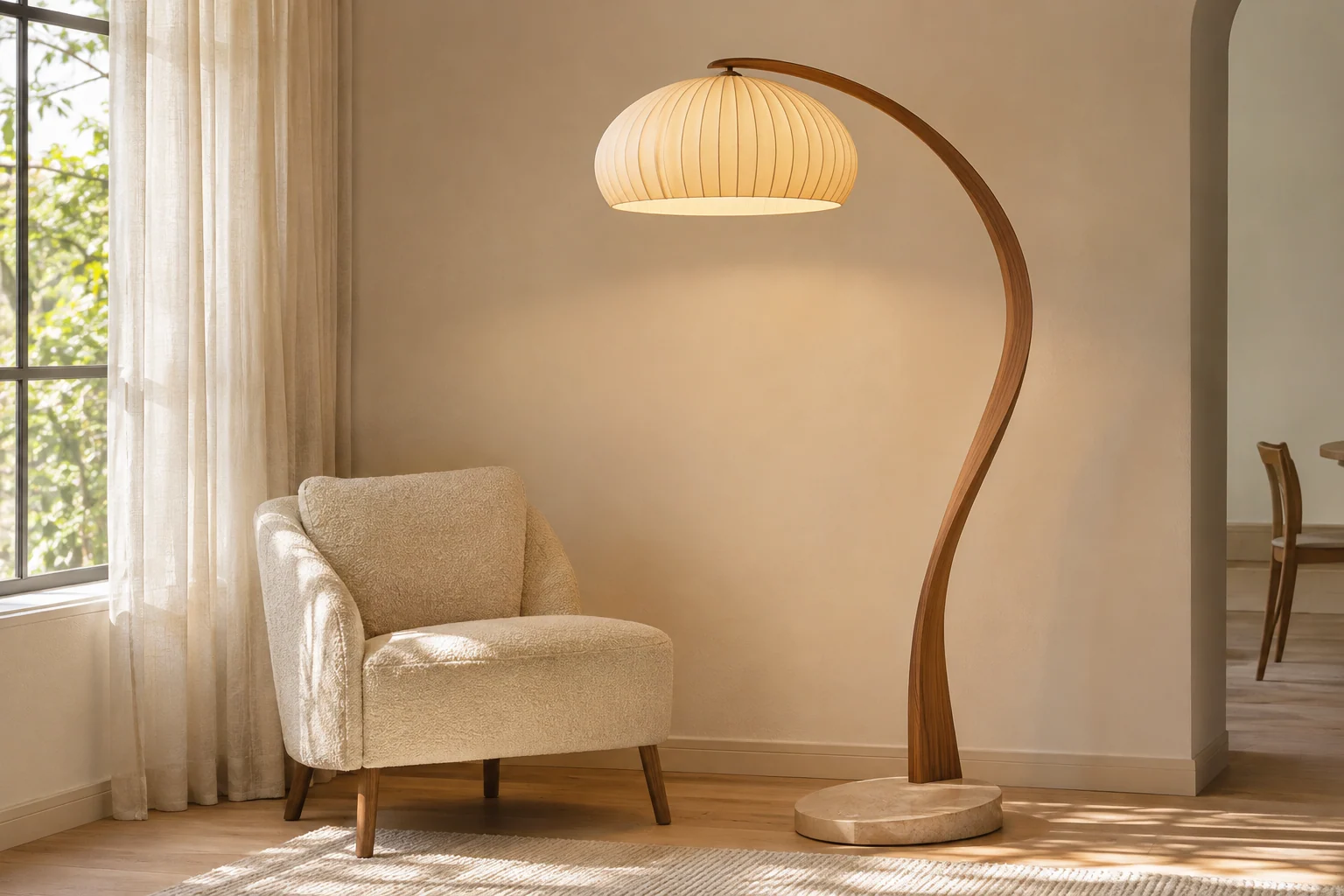
An unusual stem or shade can become the decorative feature in a restrained corner. Give it enough space to show its outline instead of surrounding it with several competing objects. Check that the visual statement still serves the seat or task nearby. A beautiful form that blocks movement or leaves the switch inaccessible may be better suited to a different position.
19. Echo a woven texture without hiding the light
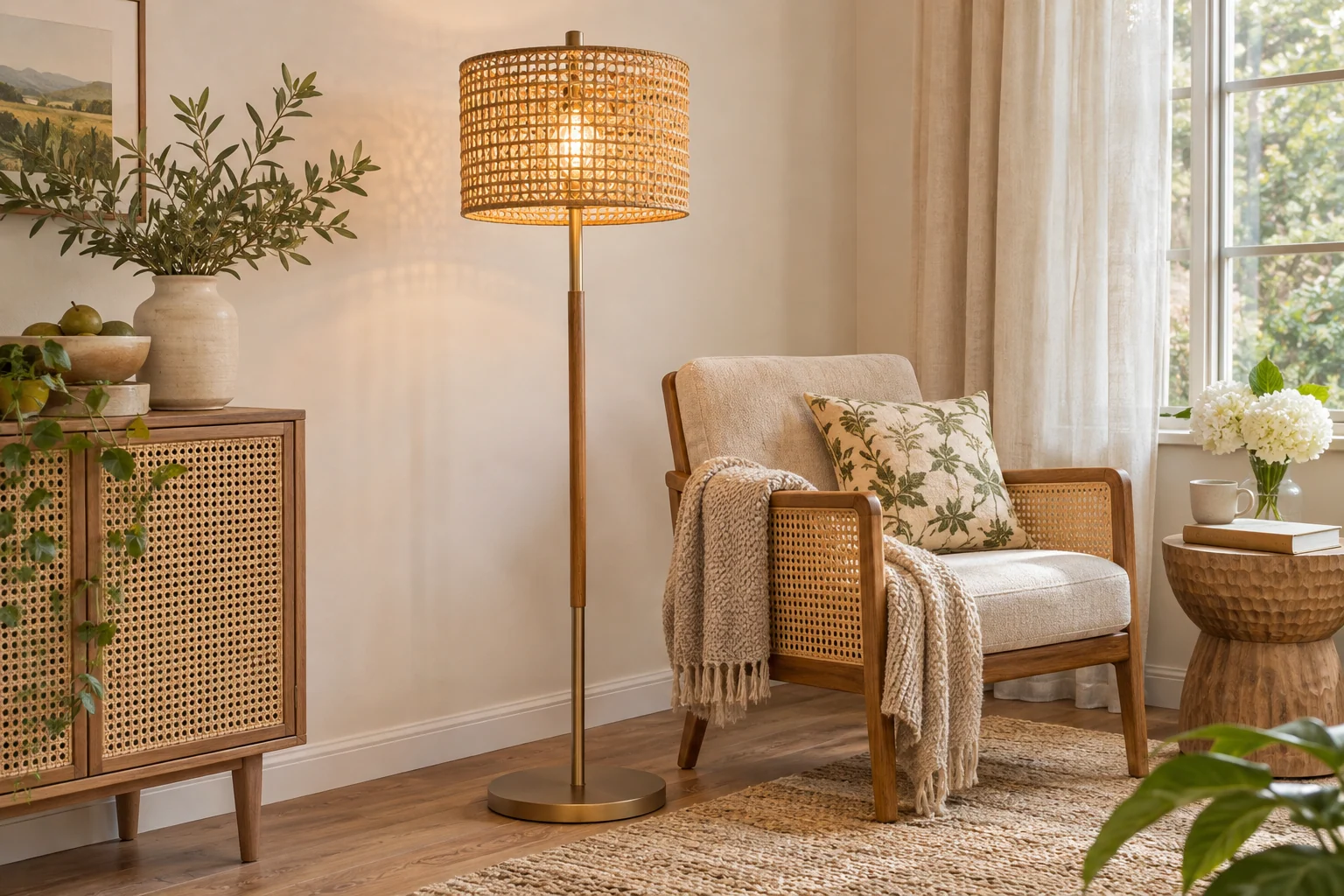
A woven shade can connect baskets, a cane chair or other textured furnishings. Consider the actual fixture and bulb together: open weaves can make the light source more visible from certain angles. View it from the seat before deciding whether it feels comfortable. Use an intended, complete shade rather than attaching loose fabric or a decorative basket to a lamp.
20. Leave curtains room to move
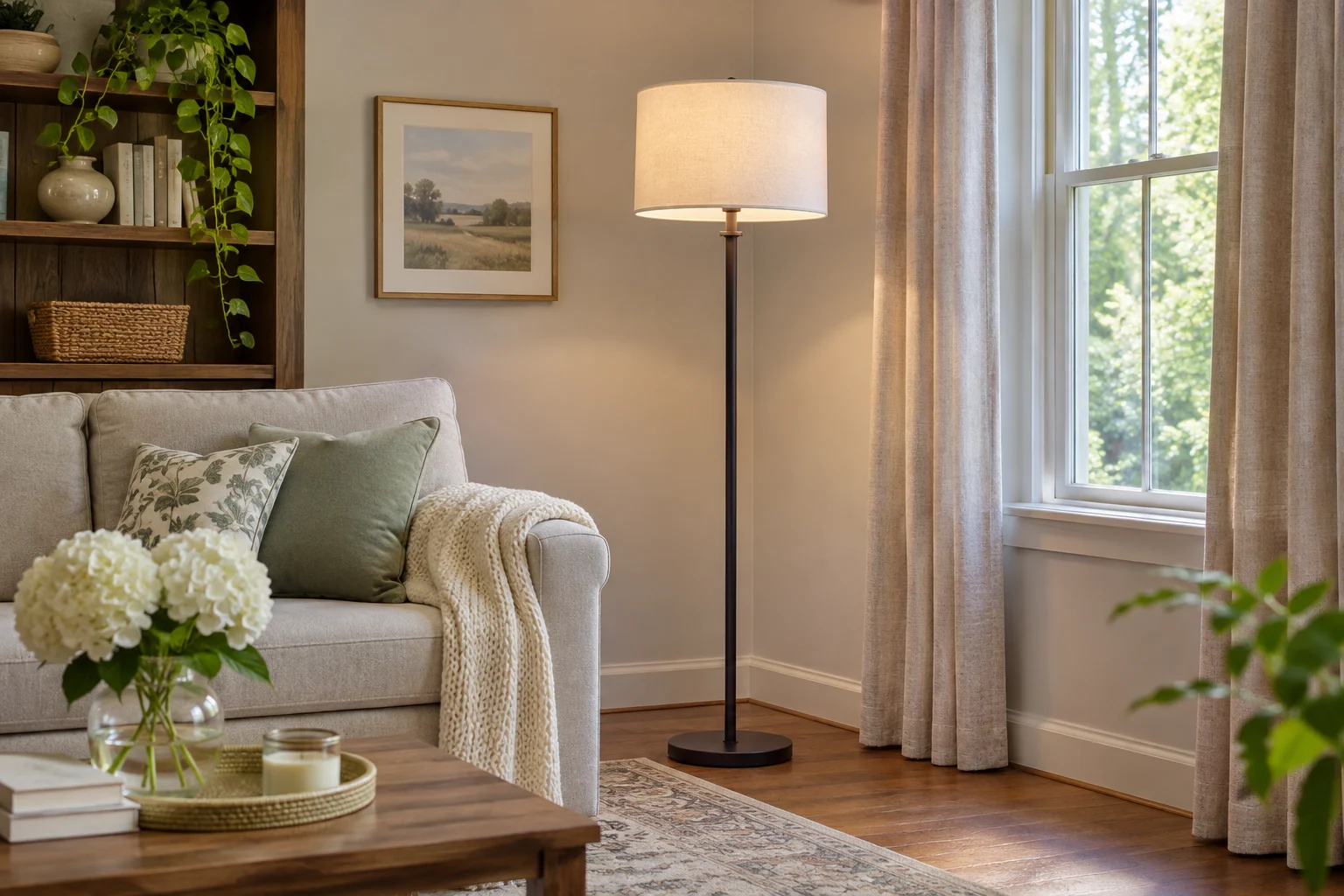
A window corner is inviting, but a lamp should not occupy the route of a curtain or blind. Open and close the window treatment through its normal movement while checking the proposed lamp position. Keep the shade and moving fabric distinct according to the fixture's guidance. If the corner is too tight, shift the lamp toward the seat or choose a smaller suitable form.
21. Make the switch easy to find from the seat
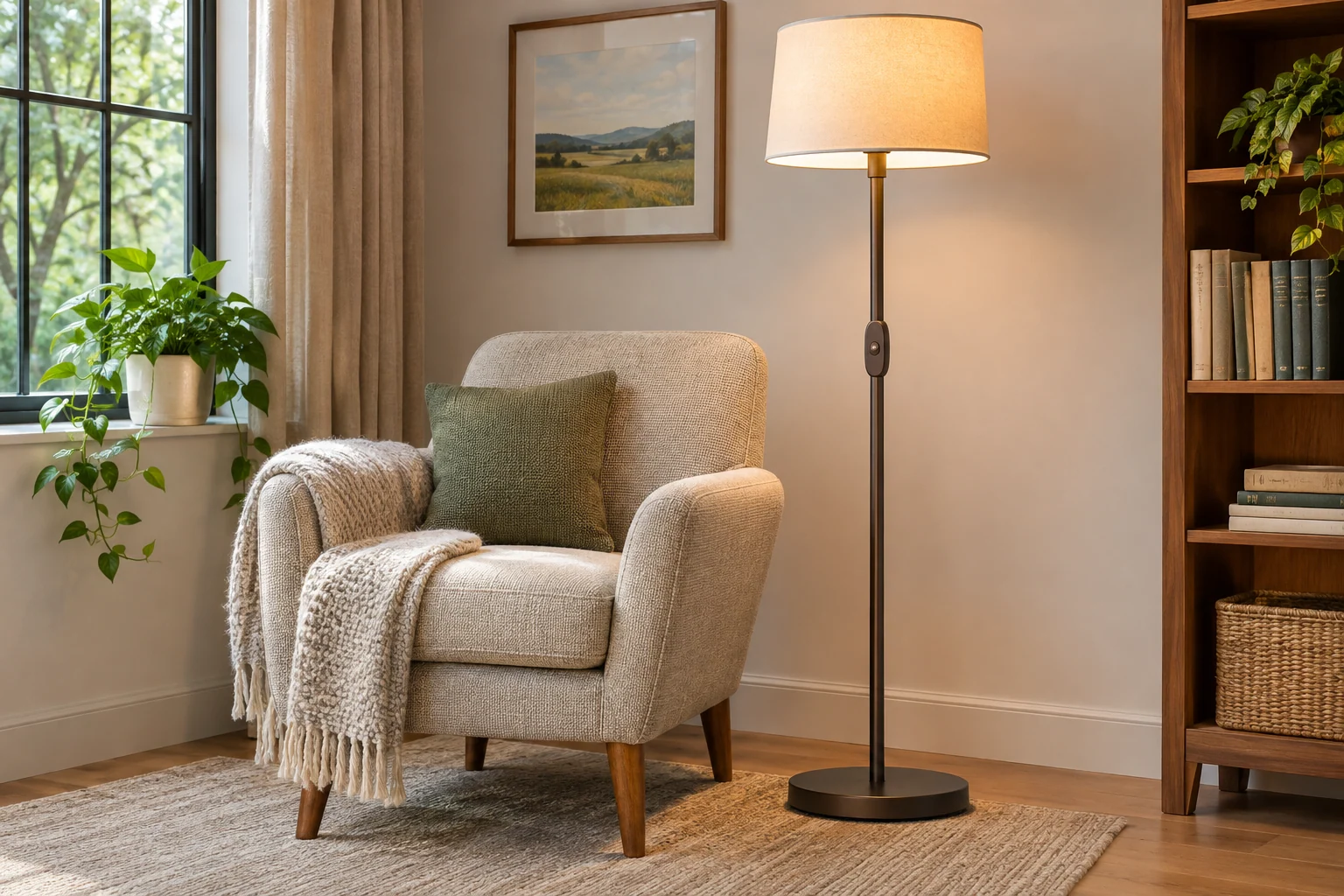
A reachable switch can matter more than a finish match. Check whether the actual lamp uses a stem switch, foot control, pull or another control, and whether you can use it comfortably in the planned position. A foot switch hidden behind a heavy sofa does not become convenient because the cord is long. Compare controls before arranging the corner around the fixture.
22. Check the shade beside a reclining seat
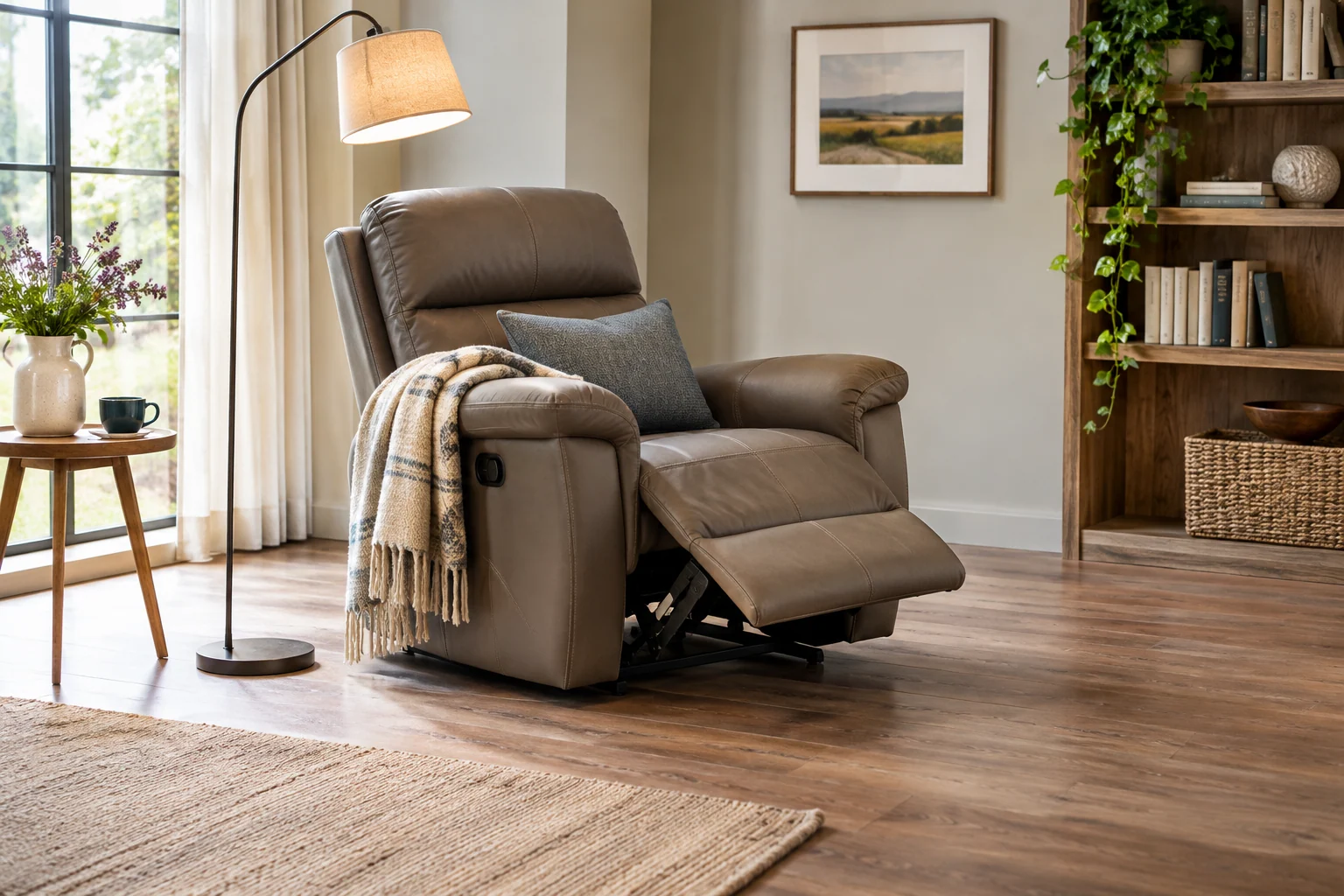
A recliner changes shape during use. Consider the footrest, back movement and the person getting in or out, then check the lamp's stationary footprint against all of them. Keep the shade outside the head and shoulder movement. A compact task lamp beside the fixed side of the chair may be easier to accommodate than a long arc crossing above it.
23. Use two related lamps for separate tasks
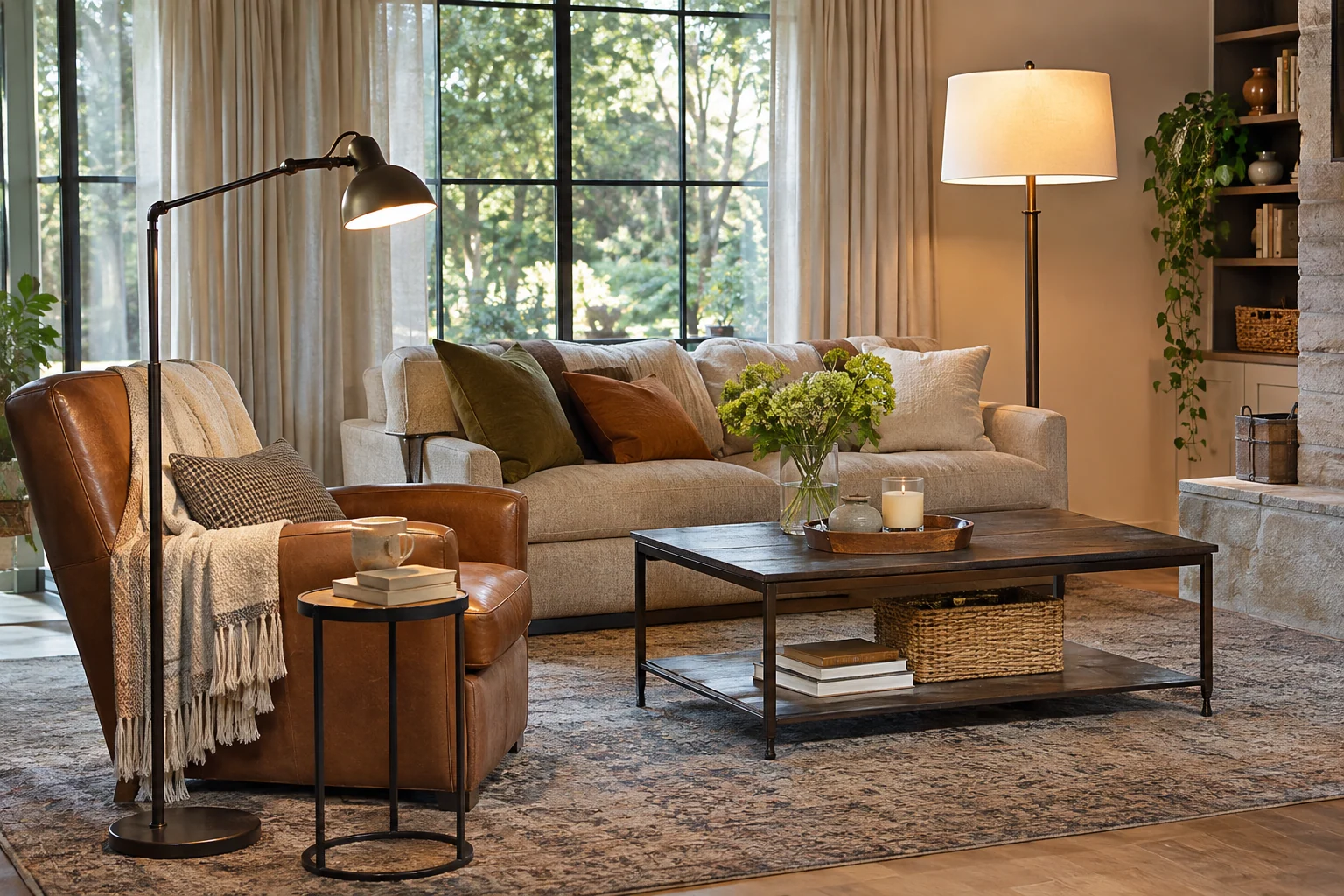
A large seating area can have two lamps without requiring identical pairs. Give each a specific job and connect them with a repeated finish, shade color or simple shape. Check their combined appearance after dark, including any controls used independently. If both lamps illuminate the same small patch while another seat stays awkward, revise their positions before buying matching accessories.
24. Keep portable furniture clear of the lamp's route
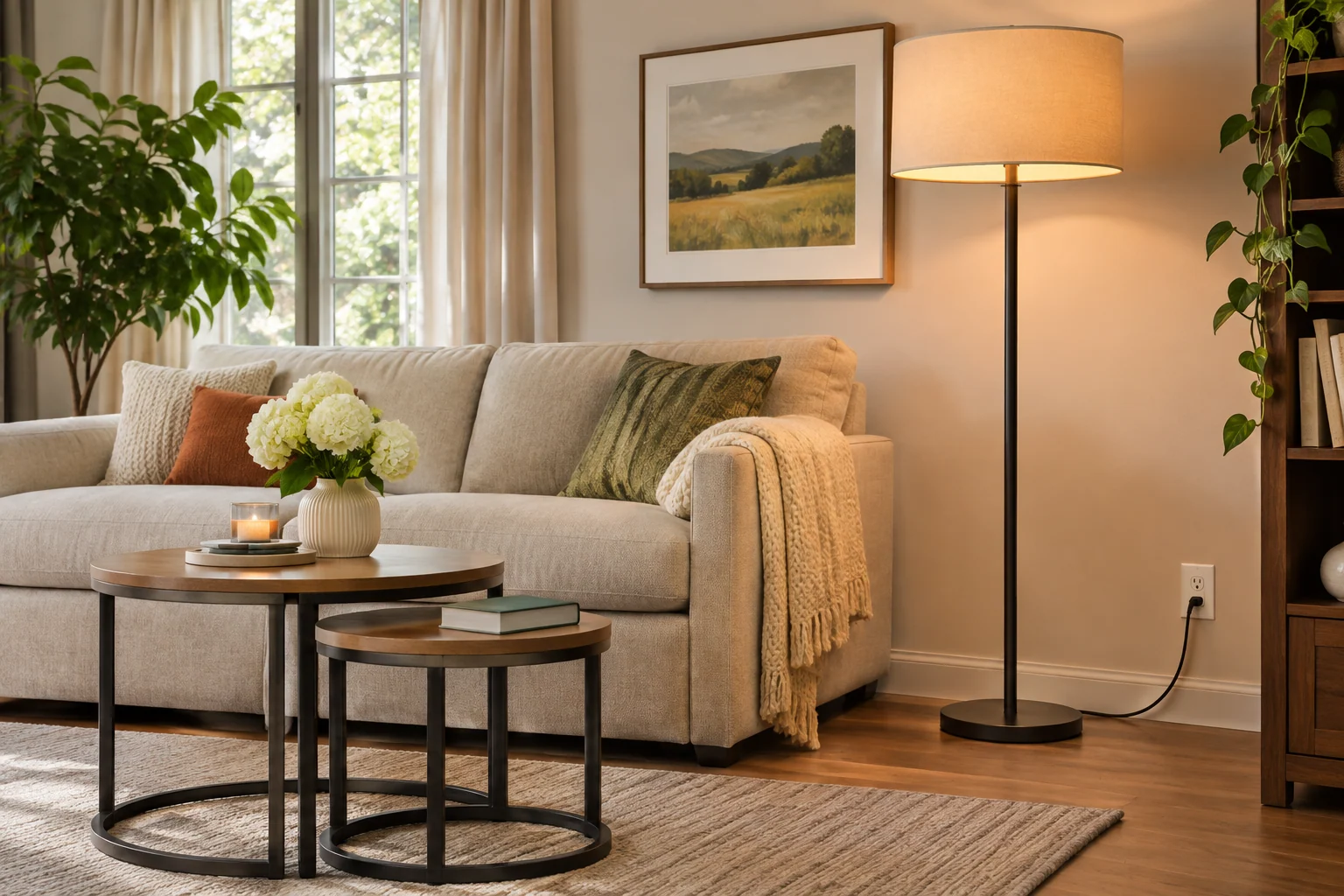
Nesting tables, movable stools and ottomans can change the space around a lamp. Try their ordinary deployed positions when checking the layout. The base and cord should not become the obstacle that appears each time an extra table is used. Park the lamp where its relationship to the room remains useful through those small daily changes.
25. Review the arrangement in daylight and after dark
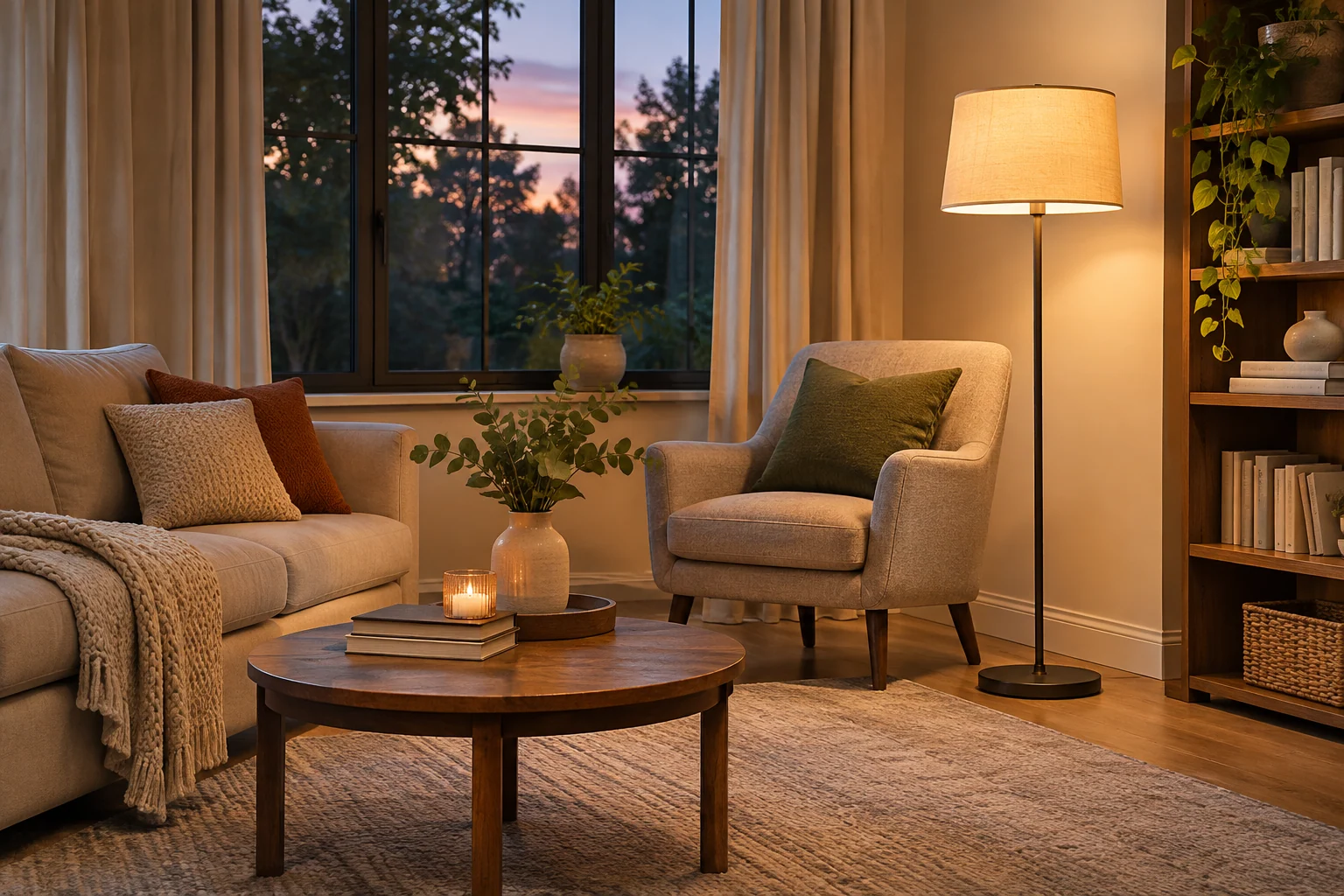
A lamp that disappears pleasantly in daylight can feel visually dominant when lit, while an appealing shade may cast light differently from what you expected. Check the room from the doorway and each main seat at both times. Note one specific problem, such as a reflected bulb or inaccessible switch, and adjust that before changing the entire lighting scheme. Keep the successful elements.
A floor-lamp fit worksheet
Record the intended job; base width and depth; shade width; maximum arm projection; switch type; outlet position; and the furniture's normal movement. Sketch both the lamp's parked and working outlines. For a hypothetical 18-inch gap, a 12-inch base leaves only 6 inches across the remaining width before other obstacles; that arithmetic does not establish a safe clearance. Measure the actual chair, trim and shade, then test comfortable use rather than adopting the example as a rule.
A practical next step
Start with the seat or activity that needs light. Choose the lamp's full footprint, reach and controls around that job, then use its finish and shade to connect it to the room. An ordinary evening test often reveals more than choosing by height or style name alone.
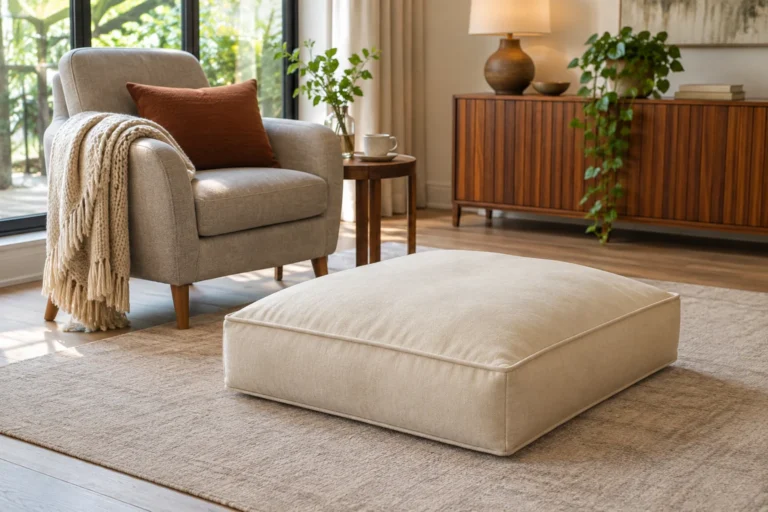
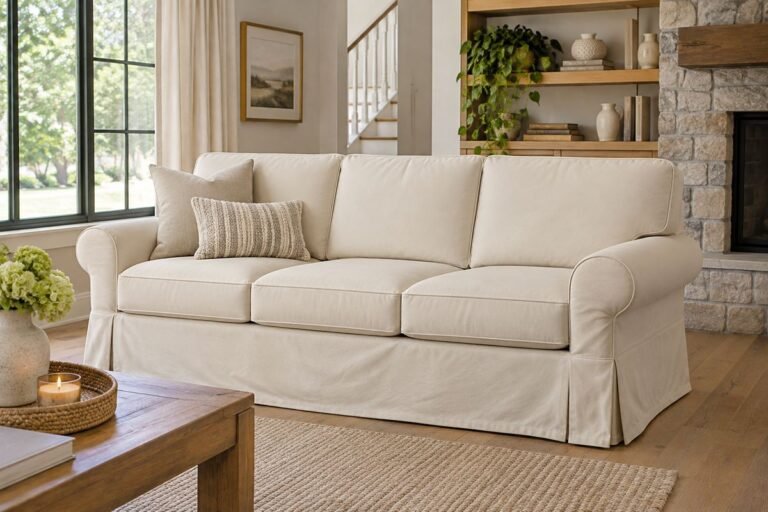
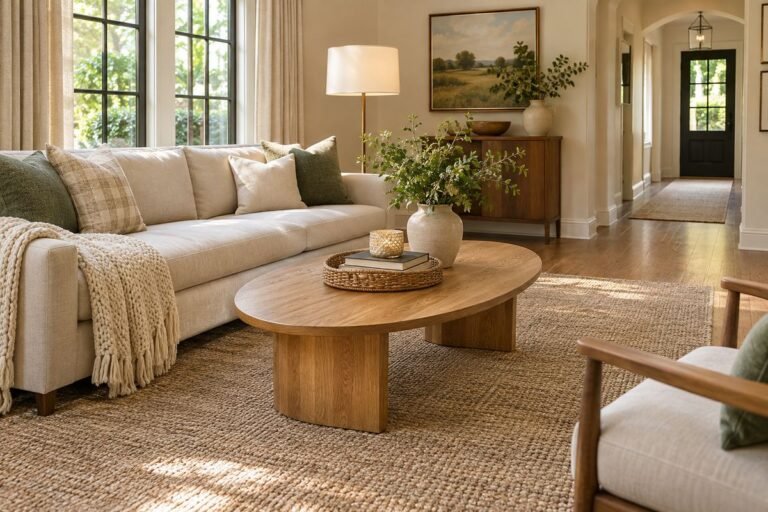
The images are original AI-generated design concepts. They illustrate arrangements rather than tested products, installations or measured performance.
Sources and care references
Related reading on Nestroxe
Optional digital guide for this topic
If you prefer a structured workbook, explore this related paid guide.